
Category: Recommended Reading
Weiner Roasted
John Cole in thetimes-tribune.com:

Adultery?
Joseph Epstein in Standpoint:

Elaine was home most nights, so she and Larry must have met during the day. Since the Feldmans had children in school, with kids coming in and out of the house through the day, they must have met at his apartment at Sandburg Village, though they could have ducked into motels. Did they do the same things in bed that in better days Elaine and Feldman did? Did Larry have a few new tricks into which he initiated Elaine? Is it possible she offered Larry favours she never bestowed upon Feldman? Like a man unable to keep his tongue from probing an aching tooth, Feldman played and replayed various pornographic scenes his wife and best friend might have enacted together. This hideous, unending little home movie played in his mind for more than a year after Elaine and he divorced. Sheer mental masochism, all this, of course — but what's a cuckold to do, if Feldman was in fact a cuckold?
More here.
Has Science Found a Way to End All Wars?
John Horgan in Discover:

War evitable? That is a minority opinion in these troubled times. For several years I’ve been probing people’s views about war. Almost everyone, regardless of profession, political persuasion, or age, gives me the same answer: War will never end. I asked 205 students at the college where I teach, “Will humans ever stop fighting wars, once and for all?” More than 90 percent said no. This pessimism seems to be on the rise; in the mid-1980s, only one in three students at Wesleyan University agreed that “wars are inevitable because human beings are naturally aggressive.”
More here.
Reflections on the Road to Harvard
Justin Porter in the New York Times:
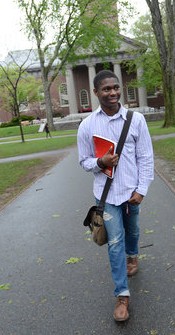
Still, my freshman year was probably one of the most troubling of my life.
I was born and raised 1,500 miles away, in a small apartment in Jackson, Miss. For my entire life, it has mainly been just my mother and me. I have a loving father, but he and my mother broke off their engagement shortly after my birth, and since he worked odd hours as a bus driver, I rarely saw him when I was growing up.
I am an only child, so my mother overpowered me with her love. For someone who sees so much beauty in the world, she worked awfully hard to protect me from it. Television, rap music, even basketball with the kids on the block were beyond consideration. It left me a bit resentful as a teenager, but I grew to appreciate her enormous sacrifices — walking me to the library every afternoon, laboring at multiple jobs to keep food on the table, telling me stories late into the night.
When I announced the summer before my senior year of high school that I had decided to apply to a school in New England, I noticed a hint of hesitation before a warm smile enveloped her face. I pretended not to see, but I was never able to forget it.
More here.
Sunday Poem
Trying to Believe in Something
These nights since your death I imagine
you might be calling from under the sweetgum
where the swallows are darting beneath the leaves
that could pass for stars in a child's drawing,
darting to scoop the seeds released
from the round, spiked fruit the child
would draw too large on her page. All right—
there is no room left in the darkness for anything
except for the Indian pipe, those solitary
plants white and transparent as silence
you used to think the Indians made flutes of.
Once, we stayed all night in this grove,
unafraid, waiting for the swallows to reappear,
watching by the pure light of those plants.
I had thought I could believe in anything.
But I have imagined the stars so cold
they might as well be ash. All I know is
the gathering sound of swallows flecking
their wings white beneath the trees.
I am going to listen to them all night
where the Indian pipe grows in lichen,
gathering the seeds, believing again
that nothing stays lost forever.
by Richard Jackson
from Worlds Apart
The University of Alabama Press, 1987
Saturday, August 3, 2013
Plant-Thinking: A Philosophy of Vegetal Life
Dominic Pettman in the Los Angeles Review of Books:
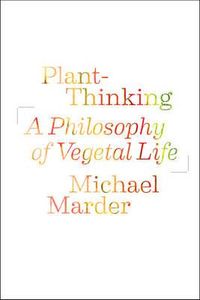
It is interesting then that plants have, on the whole, been ignored in this intellectual rush to lobby on behalf of non-human existence. And while Marder’s book is not the first to broach the subject (Jeffrey Jerome Cohen’s recent edited collection Animal, Vegetable, Mineral [2012] is of special note, as is Francis Hallé’s In Praise of Plants [2011]), it is possibly the most sustained study yet to emerge from the rather esoteric world of Continental philosophy.
More here.
Orhan Pamuk interviewed by Pankaj Mishra
From The New Republic:
Pankaj Mishra: There seem to be two common descriptions of your work in the English-speaking world. One is of you as a Turkish writer, addressing Turkey’s history. The other is of you as an international writer, engaged in the project of creating a world literature. Neither of those descriptions seems to me to be quite right. Your work seems to belong to the tradition of people like Dostoevsky or Junichirō Tanizaki, who are writing about societies where the biggest preoccupation seems to be incomplete modernity, societies that have been prescribed the project of catching up with the West.
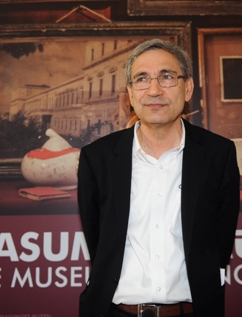
PM: What was the initial reaction in Turkey to a writer who belonged very much to the secular elite, drawing upon Ottoman history, Islamic history, in the Western art form of the novel?
OP: At first, some people were a bit upset and grumpy. I was not using the pure Turkish that the previous generation of writers had used. I used, not excessively, the language of my grandmother—including Ottoman, Persian, Arabic words, which Turks use daily. And so they were grumpy about that. I remember also when I was showing some of my early work, people would say: “Why are you interested in all this failed Ottoman history? Why won’t you catch up with today’s political problems?” I wanted to tell a romantic and dark side of Ottoman history that was also slightly political, saying to the previous generation of writers, “Look, I’m interested in Ottoman things, and I’m not afraid of it, and I’m doing something creative.”
More here.
Science, Right and Wrong: The evolution of knowledge
Sam Kean in The American Scholar:
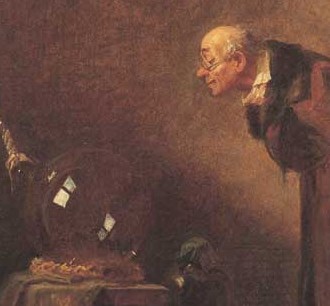
Today, the exploration of new places and new ideas seems self-evidently a good thing. For much of human history, though, priests, politicians, and philosophers cast a suspicious eye on curious folks. It wasn’t just that staring at rainbows all day or pulling apart insects’ wings seemed weird, even childish. It also represented a colossal waste of time, which could be better spent building the economy or reading the Bible. Philip Ball explains in his thought-provoking new book, Curiosity, that only in the 1600s did society start to sanction (or at least tolerate) the pursuit of idle interests. And as much as any other factor, Ball argues, that shift led to the rise of modern science.
We normally think about the early opposition to science as simple religious bias. But “natural philosophy” (as science was then known) also faced serious philosophical objections, especially about the trustworthiness of the knowledge obtained. For instance, Galileo used a telescope to discover both the craters on our moon and the existence of moons orbiting Jupiter. These discoveries demonstrated, contra the ancient Greeks, that not all heavenly bodies were perfect spheres and that not all of them orbited Earth. Galileo’s conclusions, however, relied on a huge assumption—that his telescope provided a true picture of the heavens. How could he know, his critics protested, that optical instruments didn’t garble or distort as much as they revealed? It’s a valid point.
More here.
Meditating from the floor of the Guggenheim with James Turrell’s “Aten Reign”
Our own Morgan Meis in The Smart Set:

The spell is broken when the guard finally says, “Everybody up off the floor.” We’ve all been lying on the floor of the Guggenheim Museum in NYC, the famous spiral building. The artist James Turrell has transformed the spiral into a giant art installation. The openings between the floors are covered with fabric. Hidden lights project color. Turrell calls the work “Aten Reign.” It is museum as light sculpture.
James Turrell has been working with light for a long time. He was part of the Light and Space movement that came out of Los Angeles in the 1960s. Those were the heady days of Minimalism. It was a time when artists were dissatisfied with art objects. They didn’t want to make traditional paintings or sculptures. They’d rejected the idea that art should try to represent what we see in the real world: sky, trees, buildings, people. They were even tired of abstract work in painting and sculpture. Why, they asked, do we make paintings and sculptures at all? In 1965, Donald Judd wrote an influential article called “Specific Objects.” He wrote, “Painting and sculpture have become set forms. A fair amount of their meaning isn't credible.”
More here.
Phil Hansen: Embrace the shake
eliot in letters

Who is the greatest English-language poet of the 20th century? W.B. Yeats? Robert Frost? Wallace Stevens? W.H. Auden? A good case could be made for any of them. Still, if you’d asked this question 50 or 60 years ago, most people would have said, without hesitation, T.S. Eliot (1888-1965). In 1948, he received the Nobel Prize for literature, and soon after his verse-play “The Cocktail Party” was a hit on Broadway; in 1956, 14,000 people jammed into a Minneapolis stadium to hear him speak. By then, “The Waste Land” was firmly established as modernist poetry’s supreme masterpiece, the verse analogue to “Ulysses” (both published in 1922, that annus mirabilis). It and Eliot’s other major poems, “The Love Song of J. Alfred Prufrock” and “Four Quartets,” were appearing in freshman English textbooks, next to his ground-breaking early essays, in particular “Tradition and the Individual Talent.” Every college student could recite the opening words of “The Waste Land” — “April is the cruelest month” — and many knew, thanks to “The Hollow Men,” that the world would end “not with a bang but a whimper.” And yet, as this fourth volume of his letters reminds us, Eliot was for most of his life only a part-time poet.
more from Michael Dirda at the Washington Post here.
never built LA
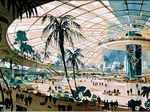
When, in the 1920s, the pioneering Southern California social critic Louis Adamic called Los Angeles “the enormous village,” he didn’t mean it as a compliment. Rather, he was referring to L.A.’s insularity, its status as what Richard Meltzer would later label “the biggest HICK Town (per se) in all the hick land,” a city of small-town values and narrow vision that “grew up suddenly, planlessly.” For Adamic, Los Angeles was defined by individual, as opposed to collective, passions, starting with its architecture. His idea of the place as a “garden city,” in which identity was less an expression of the public square than of the private home, has been echoed by nine decades of observers, from Nathanael West (“Only dynamite would be any use,” he sniffs in “The Day of the Locust,” against L.A.’s “Mexican ranch houses, Samoan huts, Mediterranean villas, Egyptian and Japanese temples”) to Norman Mailer, who, in “Superman Comes to the Supermarket,” grouses about the “pastel monotonies” of this “city without iron, eschewing wood, a kingdom of stucco, the playground for mass men.” A similar sensibility underpins “Never Built Los Angeles,” a compendium of more than 100 architectural projects — master plans, skyscrapers, transportation hubs, parks and river walks — that never made it off the ground.
more from David L. Ulin at the LA Times here.
How Soon It May Be Too Late

Death was early American photography’s killer app. Since the first pictures required long exposures, it was convenient to have a subject that held still. There was a psychological angle as well. A 19th-century photographer reported that when he visited a town in upstate New York, all the residents welcomed him except the blacksmith, who at first reviled him as a swindler. But then the blacksmith’s son drowned — and the blacksmith came begging for an image of the boy. The tale is retold by Robert Wilson, the editor of The American Scholar, in “Mathew Brady,” his patient and painstaking new biography of the portraitist and Civil War photographer. Brady wasn’t one to overlook a sales tool. “You cannot tell how soon it may be too late,” he warned in an 1856 ad that ran in The New York Daily Tribune, advising readers to come sit for a portrait while they still could. When the Civil War began in 1861, thousands of new soldiers and their families became acutely aware that it might soon be too late. They were willing to pay a dollar apiece for tintypes, and Wilson reports that at Brady’s Washington studio, “the wait was sometimes hours long.”
more from Caleb Crain at the NY Times here.
An Uncertain Glory: India and its Contradictions
From The Telegraph:
How apt that the English word “juggernaut” is borrowed from Sanskrit. The India that emerges from this illuminating and powerfully argued book by the economists Jean Drèze and Amartya Sen has the look of one. India’s shining cupola is perched on a dilapidated chassis, crushing those who fall under its wheels. From one angle, it appears to be conquering the world. From another, it is rolling steadily towards the edge of a cliff.
The travel writing cliché about India being a “land of contrasts” persists because it is true. Its shockingly unequal patterns of development, say Drèze and Sen, are “making the country look more and more like islands of California in a sea of sub-Saharan Africa”. Despite a massive number of Indians prospering – well over 100 million of them, “a larger group than the population of most countries in the world” – so many of India’s 1.27 billion people remain disadvantaged that overall social indicators have hardly improved. In some cases, they seem to be in reverse: “The history of world development offers few other examples, if any, of an economy growing so fast for so long with such limited results in terms of reducing human deprivations.” Nearly half (43 per cent) of Indian children under five are underweight, compared with four per cent in China and two per cent in Brazil. India’s central government spends four times more on petroleum and fertiliser subsidies than on health care. When investigators visited schools in 1996 and 2006, half of them had no teaching activity at all. None of the world’s top 200 universities is in India. Ninety per cent of the country’s labour force works in the “informal sector” – under the official radar.
More here.
New Statesman
Garry Wills in The New York Times:
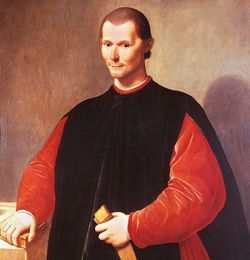
Machiavelli fits into Bobbitt’s scheme because he is the expounder of the first of the six state systems in “The Shield of Achilles,” the princely one (Machiavelli even graced the form with its Bobbittian name). Bobbitt believes that legal systems are changed by military strategies, often by military technology. So, in 1494, when Charles VIII brought bronze cannon into Italy, threatening fortress walls and smashing the governments that relied on them, Machiavelli had to propose new walls, along with new states to defend them. This must mean that Machiavelli was interested in new technologies for war — though in fact he was not very interested in forts (he thought they were less vulnerable to siege than to inner rebellion). In the encyclopedic “Art of War,” he suggests an improved design for forts, but he is still concerned with inner rebellion (he forbids an inner keep where the residents can hole up and tells us starvation is more effectual than siege). Nor did he invest his time or energy in the technological innovations of Leonardo (their one collaboration, diverting a river, was an ancient concept, and it failed).
More here.
Friday, August 2, 2013
Selling of the Egyptian Coup to Liberals

The truth is that the secularists beloved of the American political class have little support among Egyptians. Mohammed ElBaradei, who settled for the post of vice president after the military initially chose him to lead the “interim” regime, had returned to the country after the mass demonstrations that led to the overthrow of Hosni Mubarak in 2011. “If [people] want me to lead the transition, I will not let them down,” he said at the time. But the people didn’t want him to lead. Though he declared his intention to run for the presidency, he withdrew when it became clear he didn’t have anywhere near the support he would need to be elected, and Morsi ultimately won the race in 2012.[1] [1] In a post-coup interview with the New York Times in which he defended the arrests of Muslim Brotherhood members and the shutdown of Islamist television, ElBaradei said, “We just lost two and a half years. As Yogi Berra said, ‘It’s déjà vu all over again,’ but hopefully this time we will get it right.” In Egypt, only two forces genuinely possess the ability to rule at the moment: the army, by virtue of the bayonet; or the Muslim Brotherhood, by virtue of the ballot. Morsi angered many (including his own supporters) with his actions, but he was also facing down the impossible expectations of a populace desperate for change after decades of military rule, and he had not lost his legitimacy. Parliamentary elections had been scheduled for later this year; those elections were the proper vehicle for a change of government, not a coup.
more from Ken Silverstein at Harper’s here.
great expectations
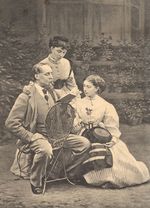
In 1850 Dickens invented a little game for his seventh child, three-year-old Sydney, the tiniest boy in a family of short people. Initially, in fun, Dickens had asked Sydney to go to the railway station to meet a friend; innocent and enterprising, to everyone’s amusement the boy set off through the garden gate into the street; then someone had to rush out and bring him back. The joke was repeated, and the five-year-old Alfred was sent with him; but when the boys had got used to being rescued, Dickens changed the rules, closed the gate after them, and hid in the garden with some of the older children. In Great Expectations: The Sons and Daughters of Charles Dickens, Robert Gottlieb quotes the letter in which Dickens explains to his wife what happened: ‘Presently, we heard them come back and say to each other with some alarm: “Why, the gate’s shut, and they are all gone!” Ally began in a dismayed way to cry out, but the Phenomenon [Sydney], shouting “Open the gate!” sent an enormous stone flying into the garden (among our heads) by way of alarming the establishment.’ ‘This,’ Gottlieb remarks of the anecdote with a warmth he sustains throughout his book, ‘was a boy after his father’s heart.’
more from Tim Parks at the LRB here.
degas preferred taking the bus
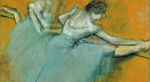
Degas’s propensity for saying one thing and doing another is undoubtedly linked to his inveterate experimentalism (or opportunism, as Feyerabend would put it), his propensity to try anything that might lead to new ways of reinterpreting and revising his customary subjects and compositions. Consequently, for all their pungency and quotability, his quips—which I don’t intend to stop quoting—cannot be taken as entirely descriptive of his practice. Pedersen and her colleagues are not as careful about this as they should be. They take at face value the artist’s repeated assertions that, contrary to his fellow Impressionists, he had upheld the classical tradition of draftsmanship as transmitted through Ingres: “I’ve always tried to urge my colleagues to seek for new combinations along the path of draftsmanship, which I consider a more fruitful field than that of color. But they wouldn’t listen to me and have gone the other way.” Degas’s drawings are marvelous, and the early ones, cool and linear, show Ingres’s unmistakable influence. But in the practice of drawing, Degas radically departed from the method of Ingres and the academic tradition of which his work is the apotheosis.
more from Barry Schwabsky at The Nation here.
The Cost of Our Drone War in Pakistan
An Interview with Ambassador Akbar Ahmed.
Wajahat Ali in the Boston Review:
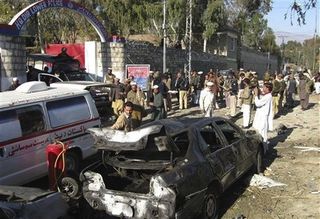
Akbar Ahmed: I am critical on several counts, not least legal ones involving international borders. What worries me the most, however, are the moral grounds. The fact that every drone strike kills not only the intended target but also many more totally innocent people—too often women and children—is troubling. The consequences of U.S. drone policy are clear to see: It feeds into already high levels of anti-Americanism. It sustains a long line of young suicide bombers seeking revenge. Finally, along with the military actions of the central government and the deadly attacks of suicide bombers, it forces large sections of the local population to flee their homes. Already destitute communities are now scattered in the bigger towns and cities trying to survive with limited financial resources. I fear that an entire generation is being thrown into turmoil and there is little doubt that there will be many angry, confused, and even vengeful men emerging from them. Violence is therefore almost inevitable.
We must do everything possible to check present and possible future violence. Drones, however, have proved to be ineffective in doing so, as I have explained in The Thistle and the Drone. The study relied on 40 case studies of societies beset with violence as a result of the breakdown of relations between the periphery and the central government. Granted, the crisis in these societies already existed before 9/11 and is not a consequence of drones—drones are just one highly symbolic and emotionally charged aspect of the violence in these societies.
More here.