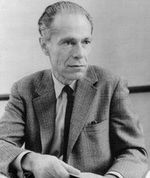
the new gandhi

53372562

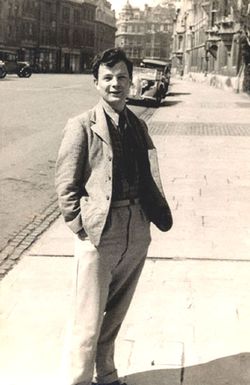
IN CONVERSATIONS, social theorist Ashis Nandy fondly recalls an exchange between philosopher Ramachandra Gandhi and poet Umashankar Joshi. The philosopher argued that MK Gandhi was inconceivable without his spiritual strivings, while the poet—and one suspects Ashis Nandy too—insisted that Gandhi’s significance lay in his willingness to engage and transform the “slum of politics”. This divide between the religious, spiritual Gandhi and the political one or, more aptly, the divide between Gandhi the ashramite and Gandhi the satyagrahi has come to shape not only our academic engagement with the life and thought of Gandhi, but also our memory of the man whom we revere, revile or remain indifferent to. The dichotomy is a superficial one. Gandhi saw himself as a satyagrahi and an ashramite. His politics was imbued with spiritual strivings and his relationship with religion was a deeply political one. A long, rich and diverse biographical tradition, which has deepened our understanding of Gandhi’s life and his strivings, has not escaped this divide either.

more from Tridip Suhrud at The Caravan here.

diving from unspeakably beautiful gold cliffs

PAR197719_jpg_470x629_q85

I used to think that it was a bad thing to mention dreams in fiction. I’d read an essay by John Leonard, I believe it was, in The New York Times Book Review sometime in the late Seventies, in which he said that dreams in novels were a mistake. But I rejected that notion ages ago. Dreams are part of the truth of life and the job of a book is to feel its way forward through a character’s days and nights. In the book I just finished writing, I included a dream in which my narrator finds an old bicycle horn on a set of subway stairs somewhere near Columbia. Why not? It’s a dream I actually had a few years ago. The letter O is a good dream letter. It begins the word “oneiric,” which is a dark interesting sharp-edged word that college professors used to use in class in place of “dreamlike.” I used to dream fairly frequently and oneirically that my mouth was full of masses of unchewable, exhausted, flavorless chewing gum. I realized that what I was dreaming about was my own boring tongue. I wrote about this dream in a novel and because I wrote about it, the dream stopped recurring and I missed it.

more from Nicholson Baker at the NYRB here.

Dred Scott v. Sandford

From BlackPast:

Dredscott 2This is certainly a very serious question, and one that now for the first time has been brought for decision before this court. But it is brought here by those who have a right to bring it, and it is our duty to meet it and decide it. The question is simply this: Can a negro, whose ancestors were imported into this country, and sold as slaves, become a member of the political community formed and brought into existence by the Constitution of the United States, and as such become entitled to all the rights, and privileges, and immunities, guarantied by that instrument to the citizen? One of which rights is the privilege of suing in a court of the United States in the cases specified in the Constitution.

… It may be safely assumed that citizens of the United States who migrate to a Territory belonging to the people of the United States, cannot be ruled as mere colonists, dependent upon the will of the General Government, and to be governed by any laws it may think proper to impose. The principle upon which our Governments rest, and upon which alone they continue to exist, is the union of States, sovereign and independent within their own limits in [60 U.S. 393, 448] their internal and domestic concerns, and bound together as one people by a General Government, possessing certain enumerated and restricted powers, delegated to it by the people of the several States, and exercising supreme authority within the scope of the powers granted to it, throughout the dominion of the United States. A power, therefore, in the General Government to obtain and hold colonies and dependent territories, over which they might legislate without restriction, would be inconsistent with its own existence in its present form. Whatever it acquires, it acquires for the benefit of the people of the several States who created it. It is their trustee acting for them, and charged with the duty of promoting the interests of the whole people of the Union in the exercise of the powers specifically granted….

But the power of Congress over the person or property of a citizen can never be a mere discretionary power under our Constitution and form of Government. The powers of the Government and the rights and privileges of the citizen are regulated and plainly defined by the Constitution itself. And when the Territory becomes a part of the United States, the Federal Government enters into possession in the character impressed upon it by those who created it. It enters upon it with its powers over the citizen strictly defined, and limited by the Constitution, from which it derives its own existence, and by virtue of which alone it continues to exist and act as a Government and sovereignty….

Upon these considerations, it is the opinion of the court that the act of Congress which prohibited a citizen from holding and owning property of this kind in the territory of the United States north of the line therein mentioned, is not warranted by the Constitution, and is therefore void; and that neither Dred Scott himself, nor any of his family, were made free by being carried into this territory; even if they had been carried there by the owner, with the intention of becoming a permanent resident.

More here. (Note: At leas t one daily post throughout February will be devoted to African American History Month)

Liberal Zionists Should Support BDS

Jerry Haber in The Magnes Zionist:

ScreenHunter_114 Feb. 19 14.40Liberal Zionists want to end Israeli control of the West Bank and Gaza, abolish institutional discrimination between the Jewish and non-Jewish citizens of Israel, and witness the establishment of a Palestinian state that will allow Palestinians to live as a free and secure people in their own homeland. As liberals, they insist on preserving the civil and human rights of both Israeli Jews and Palestinian Arabs. These objectives are virtually identical with two of the three aims of the Palestinian BDS National Committee. The sticking point is the third, which is “respecting, protecting, and promoting the rights of Palestinian refugees to return to their homes and properties as stipulated in U.N. resolution 194.”

I don’t agree with Mira Sucharov that an endorsement of the Palestinian right of return is incompatible with the State of Israel having a Jewish character or that such an endorsement will lead to millions of Palestinians returning to their homes and properties. Conjuring up that scenario (which has zero likelihood of coming about) allows Zionists to justify the demographic cap of “only 20 percent Arab” that they consider necessary for the continued existence of a Jewish ethnic state.

Still, I realize that the right of return is a red flag for the vast majority of liberal Zionists, who use it to explain why they won’t endorse the Palestinian BDS movement. So let me argue why I think this is the wrong approach for them to take.

More here. [Thanks to Huw Price.]

Obama Seeking to Boost Study of Human Brain

John Markoff in the New York Times:

ScreenHunter_113 Feb. 19 14.21The Obama administration is planning a decade-long scientific effort to examine the workings of the human brain and build a comprehensive map of its activity, seeking to do for the brain what the Human Genome Project did for genetics.

The project, which the administration has been looking to unveil as early as March, will include federal agencies, private foundations and teams of neuroscientists and nanoscientists in a concerted effort to advance the knowledge of the brain’s billions of neurons and gain greater insights into perception, actions and, ultimately, consciousness.

Scientists with the highest hopes for the project also see it as a way to develop the technology essential to understanding diseases like Alzheimer’s and Parkinson’s, as well as to find new therapies for a variety of mental illnesses.

Moreover, the project holds the potential of paving the way for advances in artificial intelligence.

The project, which could ultimately cost billions of dollars, is expected to be part of the president’s budget proposal next month.

More here.

The agonies of Bangladesh come to London

Nick Cohen in The Observer:

ScreenHunter_112 Feb. 19 14.12The Shahbag junction in Dhaka has become Bangladesh's Tahrir Square. Hundreds of thousands of young protesters are occupying it and raging against radical Islamists. Even sympathetic politicians cannot control the movement. The protesters damn them as appeasers, who have compromised with unconscionable men.

Theirs is a grassroots uprising for the most essential and neglected values of our age: secularism, the protection of minorities from persecution and the removal of theocratic thugs from the private lives and public arguments of 21st-century citizens

Naturally, the western media show little interest in covering the protest. The indifference is all the more telling because the Shahbag movement is a response to a crime westerners once deplored, but have almost forgotten.

The young in Dhaka have revolted over the war crimes trials of members of Jamaat-e-Islami. That useful leftwing term “clerical fascist” might have been invented to describe what they did. In 1971, the oppressed “eastern wing” of Pakistan rose against its masters to form Bangladesh. The Pakistani army responded with a campaign of mass murder and mass rape, which shocked a 20th century that thought it had seen it all.

More here.

Beer’s bitter compounds could help brew new medicines

From RDMag:

BeersbittercResearchers employing a century-old observational technique have determined the precise configuration of humulones, substances derived from hops that give beer its distinctive flavor. That might not sound like a big deal to the average brewmaster, but the findings overturn results reported in scientific literature in the last 40 years and could lead to new pharmaceuticals to treat diabetes, some types of cancer, and other maladies. “Now that we have the right results, what happens to the bitter hops in the beer-brewing process makes a lot more sense,” says Werner Kaminsky, a University of Washington research associate professor of chemistry. Kaminsky is the lead author of a paper describing the findings, published in Angewandte Chemie International Edition. There is documentation that beer and its bittering acids, in moderation, have beneficial effects on diabetes, some forms of cancer, inflammation, and perhaps even weight loss.

Kaminsky used a process called X-ray crystallography to figure out the exact structure of those acids, humulone molecules, and some of their derivatives, produced from hops in the brewing process. That structure is important to researchers looking for ways to incorporate those substances, and their health effects, into new pharmaceuticals.

More here. (Note: Thanks to dear friend Carol Westbrook)

Tuesday Poem

To a Love Poet

I

Fortysomething did you say? Or more?
By now, no one could care less either way.
When you swoop into a room, no heads turn,
no cheeks burn, no knowing glances are exchanged,

no eye contact is made. You are no longer
a meaningful contender in the passion stakes.
But a love poet must somehow make love,
if only to language, fondling its contours,

dressing it in slinky tropes, caressing
its letters with the tongue, glimpsing it darkly
as though through a crackling black stocking
or diaphanous blouse, arousing its interest,

varying the rhythm, playing speech against
stanza like leather against skin, stroking words
wistfully, chatting them up, curling fingers
around the long flowing tresses of sentences.

II

Never again, though, will a living Muse
choose you from the crowd in some romantic city —
Paris, Prague — singling you out, her pouting lips
a fountain where you resuscitate your art.

Not with you in view will she hold court to her mirror,
matching this halterneck with that skirt, changing her mind,
testing other options, hovering between a cashmere
and velvet combination or plain t-shirt and jeans,

watching the clock, listening for the intercom or phone.
Not for your eyes her foam bath, hot wax, hook-snapped lace,
her face creams, moisturisers, streaks and highlights.
Not for your ears the excited shriek of her zip.

Look to the dictionary as a sex manual.
Tease beauty’s features into words that will assuage
the pain, converting you — in this hour of need —
to someone slim and lithe and young and eligible for love again.

by Dennis O'Driscoll
from New and Selected Poems

Monday, February 18, 2013

Sunday, February 17, 2013

The Brooklyn College BDS debacle highlights the perils of pro-Israeli overkill

Chemi Shalev in Haaretz:

ScreenHunter_110 Feb. 18 09.00Far more Americans know of the Palestinian BDS (Boycott, Divestment and Sanctions) movement today than did a week ago. Many millions of people have been exposed for the first time to the idea that Israel should be boycotted, divested and sanctioned for its occupation of the territories. Many more Americans, one can safely assume, have formed a positive image of the BDS movement than those who have now turned against it.

Tafasta merube lo tafasta, the Talmud teaches us: grasp all, lose all. The heavy-handed, hyperbole heavy, all-guns-blazing campaign against what would have been, as Mayor Bloomberg put it, “a few kids meeting on campus” mushroomed and then boomeranged, giving the hitherto obscure BDS activists priceless public relations that money could never buy.

Rather than focusing attention on what BDS critics describe as the movement’s deceitful veneer over its opposition to the very existence of Israel, the disproportionate onslaught succeeded in casting the BDS speakers who came to the Brooklyn campus as freedom-loving victims being hounded and oppressed by the forces of darkness.

More here.

A Theory of Theory of Mind

Michael Bérubé reviews Getting Inside Your Head: What Cognitive Science Can Tell Us about Popular Culture by Lisa Zunshine, in American Scientist:

9781421406169_p0_v1_s260x420Lisa Zunshine has a theory—a theory about theory of mind. It goes something like this (and in order to paraphrase it, I have to exemplify it, by getting inside her head as best I can): Our brains evolved in such a way as to render us all eager but flawed mind readers. Whenever we see each other, we try to figure out what other people are thinking; it is a necessary skill in a deeply social species—or, rather, we are a deeply social species precisely because we have this skill. We try to read each other by look, posture, expression, gesture. And, to make things more complicated (and/or fun), we know this about each other, so we also try deliberately to produce certain readings in others by feigning certain looks, postures, expressions and gestures. All the world’s a stage—and the world we have created includes millions of actual stages, where actors embody the principle that all the world’s a (self-reflexive) stage.

Zunshine’s earlier book, Why We Read Fiction, argued that we read fiction in order to give our restless brains a good workout: In novels and short stories, we are given up-close and intensely personal representations of how characters succeed or fail at reading each other’s motives and desires. For extra added cognitive benefit, we watch characters succeed or fail at reading other characters’ attempts to read other characters’ motives and desires. According to Zunshine, the mental exercise involved in reading fiction serves an evolutionary purpose, deploying our theory of mind so as to flex and build the cognitive muscles that will help us navigate a bewilderingly complex world of subtle social cues. Drawing widely and judiciously on recent research in neuroscience, Getting Inside Your Head expands this theory to cover all of human culture, from novels to films, plays, musicals, paintings and reality shows.

More here.

THE MAKING OF THE IDEA OF RACE

Kenan Malik in Pandaemonium:

Crania-americanaIn my last post, on The Enlightenment’s “Race Problem”, I questioned the idea that the modern roots of the idea of race lie in the Enlightenment. The relationship between race and the Enlightenment is, I argued, far more complex than much contemporary discussion allows for. It was the transformation of Enlightenment attitudes through the course of the nineteenth century that helped mutate the eighteenth century discussion of human variety into the nineteenth century obsession with racial difference. This is the story of that transformation.

In March 1800, Captain Nicholas Baudin proposed to the French Institut National a journey of scientific exploration to New Holland (as Australia was then known). The Institut agreed to sponsor the expedition and asked the newly-formed Société des Observateurs de l’Homme for help in preparing instructions for the study of the ‘physical, intellectual and moral’ bearing of the indigenous peoples.

The Société provided two memoirs of instruction for Baudin’s voyage. The first,Considerations on the Diverse Methods to Follow in the Observation of Savage Peoples was written by the philosopher and educator Joseph-Marie Degerando. The second, An Instructive Note on the Researches to be Carried out Relative to the Anatomical Differences between the Diverse Races of Men, was penned by Georges Cuvier. Cuvier was one of the founders of the science of palaeontology and would become France’s most distinguished scientist of the early nineteenth century. Where Degerando was a child of the French Revolution, and a great believer in education as a motor of social change, Cuvier was deeply conservative in both his politics and his science, a lifelong opponent not just of revolution, but also of evolution. In the space between the respective views of Degerando and Cuvier emerged the nineteenth century concept of race.

More here.

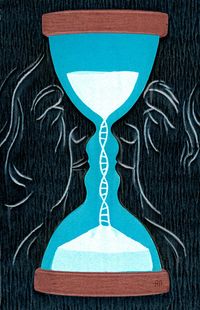
The discovery of a microscopic world shook the foundations of theology and created modern demons

Philip Ball in Aeon:

ScreenHunter_109 Feb. 17 15.18When the Dutch cloth merchant Antonie van Leeuwenhoek looked at a drop of pond water through his home-made microscope in the 1670s, he didn’t just see tiny ‘animals’ swimming in there. He saw a new world: too small for the eye to register yet teeming with invisible life. The implications were theological as much as they were scientific.

Invisibility comes in many forms, but smallness is the most concrete. Light ignores very tiny things rather as ocean waves ignore sand grains. During the 17th century, when the microscope was invented, the discovery of such objects posed a profound problem: if we humans were God’s ultimate purpose, why would he create anything that we couldn’t see?

The microworld was puzzling, but also wondrous and frightening. There was nothing especially new about the idea of invisible worlds and creatures — belief in immaterial spirits, angels and demons was still widespread. But their purpose was well understood: they were engaged in the Manichean struggle for our souls. If that left one uneasy in a universe where there was more than meets the eye, at least the moral agenda was clear.

More here.

Sunday Poem

Nina's Blues

Your body, hard vowels
In a soft dress, is still.
.
What you can't know
is that after you died
All the black poets
In New York City
Took a deep breath,
And breathed you out;
Dark corners of small clubs,
The silence you left twitching
.
On the floors of the gigs
You turned your back on,
The balled-up fists of notes
Flung, angry from a keyboard.
.
You won't be able to hear us
Try to etch what rose
Off your eyes, from your throat.
.
Out you bleed, not as sweet, or sweaty,
Through our dark fingertips.
We drum rest
We drum thank you
We drum stay.
.
by Cornelius Eady
from Hardheaded Weather: New and Selected Poems
published by Putnam, 2008

An Unknown Free Black Author Describes Slavery In 1789

From BlackPast:

Slave1(1)Yes—and it is said we are men, it is true; but that we are men addicted to more and worse vices than those of any other complexion; and such is the innate perverseness of our minds that nature seems to have marked us out for slavery.—Such is the apology perpetually made for our masters and the justification offered for that universal proscription under which we labor. But I supplicate our enemies to be, though for the first time, just in their proceedings toward us, and to establish the fact before they attempt to draw any conclusions from it. Nor let them imagine that this can be done by merely asserting that such is our universal character. It is the character, I grant, that our inhuman masters have agreed to give us and which they have so industriously and too successfully propagated in order to palliate their own guilt by blackening the helpless victims of it and to disguise their own cruelty under the semblance of justice. Let the natural depravity of our character be proved—not by appealing to declamatory in¬vectives and interest representations, but by showing that a greater proportion of crimes have been committed by the wronged slaves of the plantation than by the luxurious inhabitants of Europe, who are happily strangers to those aggravated provocations by which our passions are every day irritated and incensed. Show us that, of the multitude of Negroes who have within a few years transported themselves to this country, and who are abandoned to themselves; who are corrupted by example, prompted by penury, and instigated by the memory of their wrongs to the commission of crimes show us, I say (and the demonstration, if it be possible, cannot be difficult), that a greater proportion of these than of white men have fallen under the animadversions of justice and have been sacrificed to your laws. Though avarice may slander and insult our misery, and though poets heighten the horror of their fables by representing us as monsters of vice—that fact is that, if treated like other men, and admitted to a participation of their rights, we should differ from them in nothing, perhaps, but in our possessing stronger passions, nicer sensibility, and more enthusiastic virtue.

Before so harsh a decision was pronounced upon our nature, we might have expected—if sad experience had not taught us to expect nothing but injustice from our adversaries—that some pains would have been taken to ascertain what our nature is; and that we should have been considered as we are found in our native woods rend not as we now are—altered and perverted by an inhuman political institution. But instead of this, we are examined, not by philosophers, but by interested traders; not as nature formed us, but as man has depraved us—and from such an inquiry, prose¬cuted under such circumstances, the perverseness of our dispositions is said to be established. Cruel that you are! you make us slaves; you implant in our minds all the vices which are in some degree inseparable from that condition; and you then impiously impute to nature, and to God, the origin of those vices, to which you alone have given birth; and punish in us the crimes of which you are yourselves the authors.

More here. (Note: At leas t one daily post throughout February will be devoted to African American History Month)

A Cardiac Conundrum

From Harvard Magazine:

MA13_28_01-2000The first randomized clinical trial of bypass surgery’s efficacy, using data from a collaboration of Veterans Administration hospitals, was not published until 1977. Such trials were then becoming the gold standard of medical research (and still are). “Surgeons said trials were totally unnecessary, as the logic of the procedure was self-evident,” says Jones. “You have a plugged vessel, you bypass the plug, you fix the problem, end of story.” But the 1977 paper showed no survival benefit in most patients who had undergone bypass surgery, as compared with others who’d received conservative treatment with medication. “There was a firestorm of controversy,” Jones says. “There was lots of money, institutional power, and lots of lives at stake. The surgeons dismissed the trial for technical reasons. So, many other trials were done, all more or less showing the same thing: bypass surgery improved survival for a few patients with the most severe forms of coronary artery disease, but for most others it relieved symptoms but did not extend lives.” The results raise a philosophical question of the goal of medical treatment: alleviating symptoms or lengthening lives? “How much is it worth investing in a surgical procedure, with all its risks,” he asks, “if all you’re doing is relieving symptoms?”

The advent of angioplasty in the 1980s complicates the story. With angioplasty, instead of bypassing the plugged artery, “you use a balloon to compress the plug,” Jones explains, “and (as it’s done today) you leave a stent behind to keep the blood vessel open, and so restore blood flow to the heart.” Like bypass surgery, angioplasty went from zero to 100,000 procedures annually with no clinical trial to assess long-term outcomes—based on the logic of the procedure and patients’ reports of how much better they felt. Yet the first clinical trials, which appeared in the early 1990s, showed no survival benefit of elective angioplasty as compared with medication.

…Furthermore, “patients are wildly enthusiastic about these treatments,” he says. “There’ve been focus groups with prospective patients who have stunningly exaggerated expectations of efficacy. Some believed that angioplasty would extend their life expectancy by 10 years! Angioplasty can save the lives of heart-attack patients. But for patients with stable coronary disease, who comprise a large share of angioplasty patients? It has not been shown to extend life expectancy by a day, let alone 10 years—and it’s done a million times a year in this country.” Jones adds wryly, “If anyone does come up with a treatment that can extend anyone’s life expectancy by 10 years, let me know where I can invest.” “The gap between what patients and doctors expect from these procedures, and the benefit that they actually provide, shows the profound impact of a certain kind of mechanical logic in medicine,” he explains. “Even though doctors value randomized clinical trials and evidence-based medicine, they are powerfully influenced by ideas about how diseases and treatments work. If doctors think a treatment should work, they come to believe that it does work, even when the clinical evidence isn’t there.”

More here.