.
would notice
but every time
you pass
up the corridor
Lenin’s statue
levitates slightly
to get a better view
of the remarkable ease
with which you fill
curved space.
from End of Part One – New & Selected Poems
publisher: Dedalus, Dublin, 2006
From Human Rights Watch:
The lynching of four Shia by a mob apparently led by Salafi sheikhs in the village of Abu Musallim in Greater Cairo on June 23, 2013, came after months of anti-Shia hate speech at times involving the ruling Muslim Brotherhood and its political party, Human Rights Watch said today. The episode shows that the government needs to recognize that Shia in Egypt are at risk and to take protective measure to ensure their protection and equal rights.
The investigation ordered by President Mohamed Morsy needs to look into the police failure over a period of three hours to intervene to halt the mob attack on a house where a group of Shia had gathered for a religious feast. The investigation also should address the role played by Salafi sheikhs against Shia families in Abu Musallim, Human Rights Watch said. Morsy should state unequivocally that Shia in Egypt have the right to practice their religious beliefs without fear and intimidation, something he has failed to do, Human Rights Watch said.
More here.
Ed Yong in Not Exactly Rocket Science:
In 1969, an American biologist named Walter Auffenberg moved to the Indonesia island of Komodo to study its most famous resident—the Komodo dragon. This huge lizard—the largest in the world—grows to lengths of 3 metres, and can take down large prey like deer and water buffalo. Auffenberg watched the dragons for a year and eventually published a book on their behaviour in 1981. It won him an award. It also enshrined a myth that took almost three decades to refute, and is still prevalent today.
Auffenberg noticed that when large animals like water buffalo were injured by the dragons, they would soon develop fatal infections. Based on this observation, and no actual evidence, he suggested that the dragons use bacteria as a form of venom. When they bite prey, they flood the wounds with the microbes in their mouths, which debilitate and kill the victim.
This explanation is found in textbooks, wildlife documentaries, zoo placards, and more. It’s also wrong. “It’s an enchanting fairy tale, which has been taken as gospel,” says Bryan Fry from the University of Queensland.
In 2009, Fry discovered the true culprit behind the dragon’s lethal bite, by putting one of them in a medical scanner. The dragon has venom glands, which are loaded with toxins that lower blood pressure, cause massive bleeding, prevent clotting and induce shock. Rather than using bacteria as venom, the dragons use, well, venom as venom.
More here.
Terry Eagleton in The Guardian:
It is no surprise that Bono and Bob Geldof, the two leading celebrity philanthropists of our time, are both Irish. The Ireland into which they were born in the 1960s was caught between third and first worlds, and so was more likely to sympathise with the wretched of the earth than were the natives of Hampstead. As a devoutly Christian nation, it also had a long missionary tradition. Black babies were a familiar object of charity in Ireland long before Hollywood movie stars began snapping them up. Bono himself was a member of a prayer group in the 1970s, before he stumbled on leather trousers and wrap-around shades. Scattered across the globe by hunger and turmoil at home, the Irish have long been a cosmopolitan people, far less parochial than their former proprietors. Small nations cannot afford the insularity of the great.
Besides, if you were born into this remote margin of Europe and yearned for the limelight, it helped to have an eye-catching cause and a mania for self-promotion. Rather as the Irish in general were forced by internal circumstance to become an international people, so men like Bono and Geldof could use their nationality to leap on to the world stage.
Bono belongs to the new, cool, post-political Ireland; but by turning back to the old, hungry, strife-torn nation, now rebaptised as Africa, he could bridge the gap between the two. Even so, he has not been greatly honoured in his own notoriously begrudging country, or elsewhere. Harry Browne recounts the (perhaps apocryphal) tale of the singer standing on stage clapping while declaring: “Every time I clap my hands, a child dies.” “Then stop fucking doing it!” yelled a voice from the crowd.
More here.
There’s a less elaborate argument for gay marriage: it’s good for gays. It provides role models for young gay people who, after the exhilaration of coming out, can easily lapse into short-term relationships and insecurity with no tangible goal in sight. My own guess is that most gays would embrace such a goal with as much (if not more) commitment as straights. Even in our society as it is, many lesbian relationships are virtual textbook cases of monogamous commitment. Legal gay marriage could also help bridge the gulf often found between gays and their parents. It could bring the essence of gay life–a gay couple–into the heart of the traditional straight family in a way the family can most understand and the gay offspring can most easily acknowledge. It could do as much to heal the gay-straight rift as any amount of gay rights legislation. If these arguments sound socially conservative, that’s no accident. It’s one of the richest ironies of our society’s blind spot toward gays that essentially conservative social goals should have the appearance of being so radical. But gay marriage is not a radical step. It avoids the mess of domestic partnership; it is humane; it is conservative in the best sense of the word. It’s also about relationships. Given that gay relationships will always exist, what possible social goal is advanced by framing the law to encourage those relationships to be unfaithful, undeveloped, and insecure?
more from Andrew Sullivan at Slate here.
There is something appealing—even romantic—about the Justice’s legal vision, demarcating as it does intimate worlds and dignified individuals threatened by a distant bureaucracy. But—at least since the Civil War—Americans are citizens of the nation first, and creatures of a national legal culture. For better and worse, in times of war and peace, this culture shapes their bodies and minds, their moral views and life choices. The problem with DOMA is not that it is a powerful regulation of sexuality, but that it is an unfair one. In questioning Solicitor General Donald Verrilli about the federal government’s authority to pass DOMA, Chief Justice Roberts recognized the complex relationship between sex and public power: “you agree that Congress could go the other way, right? Congress could pass a new law today that says, We will give Federal benefits. When we say ‘marriage’ in Federal law, we mean committed same-sex couples as well, and that could apply across the board.” Verrilli replied in the affirmative, and someday soon, the nation—whether through Congress or the Court—will hopefully “go the other way.”
more from Jeremy K. Kessler at n+1 here.
In interviews, Krasznahorkai presents himself as a yogi of aesthetic severity. “The reader must content themselves with these lone concrete, but vague, indications, quite simply because what I describe…can happen anywhere.” For after all: “Time and space aren’t very important. Only the situation counts.”3 This aesthetic of restriction has its modernist history—in the novels of Franz Kafka or Samuel Beckett—but I think that Krasznahorkai’s fiction is in fact more mischievous than his statements might imply. It isn’t simply that he leaves information out; he also presents the information he does offer in a systematically oblique way. Satantango is structured in two parts, two halves of six chapters each, which form a quilt of both time frames and perspectives, moving from character to character, all arranged around this particular evening at the local bar and the following couple of days. The second chapter of Satantango, for instance, begins a little further back in time than the first. This isn’t, however, made clear until toward the chapter’s end. It is also written from the perspective of new characters: two men who sit waiting in the corridor of what appears to be a government office. After four pages, the reader discovers that one of them is Petrina; after another five, that the other is Irimiás—the two men whose arrival at the collective farm so excites Futaki and Mr. and Mrs. Schmidt.
more from Adam Thirlwell at the NYRB here.
From The Atlantic:
Only the self-aware can have charm: It’s bound up with a sensibility that at best approaches wisdom, or at least worldliness, and at worst goes well beyond cynicism. It can’t exist in the undeveloped personality. It’s an attribute foreign to many men because most are, for better and for worse, childlike. These days, it’s far more common among men over 70—probably owing to the era in which they reached maturity rather than to the mere fact of their advanced years. What used to be called good breeding is necessary (but not sufficient) for charm: no one can be charming who doesn’t draw out the overlooked, who doesn’t shift the spotlight onto others—who doesn’t, that is, possess those long-forgotten qualities of politesse and civilité. A great hostess perforce has charm (while legendary hostesses are legion—Elizabeth Montagu, Madame Geoffrin, Viscountess Melbourne, Countess Greffulhe—I can’t think of a single legendary host), but today this social virtue goes increasingly unrecognized. Still, charm is hardly selfless. All of these acts can be performed only by one at ease with himself yet also intensely conscious of himself and of his effect on others. And although it’s bound up with considerateness, it really has nothing to do with, and is in fact in some essential ways opposed to, goodness. Another word for the lightness of touch that charm requires in humor, conversation, and all other aspects of social relations is subtlety, which carries both admirable and dangerous connotations. Charm’s requisite sense of irony is also the requisite for social cruelty.
…More important, charm, for all its appeal, isn’t a moral virtue—it’s an amoral one. Americans, especially American men, have always been, for some very good reasons, ambivalent about charm. It’s an attribute alien to many men because they are ingenuous, a quality that can itself be either admirable or unlovely. Many American military men deserve our esteem; the many I have known indeed do, but I have never met one with an ounce of charm. Indeed, what American hero has possessed it? The quintessential modern American hero, the eternally jejune and earnest Charles Lindbergh, who became a god when not yet a man, was in every way the antithesis of charm. America’s entire political history has been in some basic way a struggle between Jefferson—self-righteous, humorless, prickly, at once intellectually ardent and woolly—and Hamilton, a man foreign-born, witty, stylish, coolly brilliant, generous, possessed of a rare rapport with and an understanding of women. And just as Hamilton’s political vision triumphed, so did Jefferson’s political style.
More here.

From HowStuffWorks:
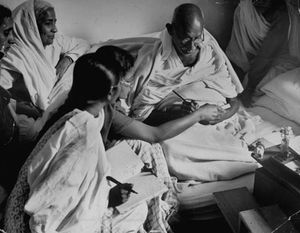
The question of how long you can go without food depends on a lot of factors. Will and determination definitely play a part. Political prisoners on hunger strikes and fasting religious leaders have been known to go for weeks at a time without any food. Gandhi fasted for 21 days while in his 70s. People lost in the wild have also survived for long periods of time without eating. Medically speaking, most doctors agree that healthy humans can go up to eight weeks without food as long as they have water. People have gone longer and been fine, and people have starved to death in less time. Being strong and in good physical shape can help you survive longer, but so does having extra body fat. The body stores energy needed to live in the form of fat, carbohydrates and proteins. The carbs are the first thing to be used up without more food coming in. The fat goes next, which explains why people with more of it can survive longer. Then the proteins go. If you get to the point that your body is using up proteins, basically the body itself, then you're in bad shape.
…Now back to the question at hand. How long can you go without water? Assuming you're in reasonable shape and in ideal conditions — that is, not in the heat or cold and not exerting, a human can probably live for about 3 to 5 days without any water. Healthier humans can live another day or so longer.
More here.
Be a Valley
Be a valley to which, by nature,
water flows
Be an example to which, by nature,
the lives of others flow
Keep in view the child’s mind which,
like water, flows
To be whole see whole
Consider opposites
See finite and infinite
Be newborn
Being man
understand being’s portal, woman,
through which new life flows
See dark and light
In honor be humble
In strength be weak
To have integrity means to know outer and inner
because to each the roots of selfhood reach
In the newborn, as in an uncarved block,
are imminent possibilities waiting to be formed
Wisdom keeps its wholeness
being many
.
from the Tao Te Ching of Lao Tzu, V. 28
adaptation by R.Bob
Carl Zimmer in The Loom:
From time to time, I get letters from people thinking seriously about becoming science writers. Some have no idea how to start; some have started but want to know how to get better. I usually respond with a hasty email, so that I can get back to figuring out for myself how to be a science writer. I thought it would be better for everyone—the people contacting me and myself—to sit down and write out a thorough response. (I’m also going to publish a final version of this on my web site, here.)
First a caveat: I am probably the wrong person to ask for this advice. I stumbled into this line of work without any proper planning in the early 1990s, when journalism was a very different industry. The answer to “How do I become a science writer?” is not equivalent to “How did you become a science writer?”
I was the sort of kid who wrote stories, cartoons, and failed imitations ofWatership Down. By college, I was working on both fiction and nonfiction, majoring in English to learn from great writers while trying to avoid getting sucked into the self-annihilating maze of literary theory. After college, I spent a couple years at various jobs while writing short stories on my own, but I gradually realized I didn’t have enough in my brain yet to put on the page.
More here.
Mohamed El Baradei in Foreign Policy:
Two years after the revolution that toppled a dictator, Egypt is already a failed state. According to the Failed States Index, in the year before the uprising we ranked No. 45. After Hosni Mubarak fell, we worsened to 31st. I haven't checked recently — I don't want to get more depressed. But the evidence is all around us.
Today you see an erosion of state authority in Egypt. The state is supposed to provide security and justice; that's the most basic form of statehood. But law and order is disintegrating. In 2012, murders were up 130 percent, robberies 350 percent, and kidnappings 145 percent, according to the Interior Ministry. You see people being lynched in public, while others take pictures of the scene. Mind you, this is the 21st century — not the French Revolution!
The feeling right now is that there is no state authority to enforce law and order, and therefore everybody thinks that everything is permissible. And that, of course, creates a lot of fear and anxiety.
You can't expect Egypt to have a normal economic life under such circumstances.
More here.
William Saletan in Slate:
Background checks are back. Last week, Vice President Joe Biden said that five U.S. senators—enough to change the outcome—have told him they’re looking for a way to switch their votes and pass legislation requiring a criminal background check for the purchase of a firearm. Sen. Joe Manchin, the West Virginia Democrat who led the fight for the bill, is firing back at the National Rifle Association with a new TV ad. The White House, emboldened by polls that indicate damage to senators who voted against the bill, ispushing Congress to reconsider it.
The gun control debate is certainly worth reopening. But if we’re going to reopen it, let’s not just rethink the politics. Let’s take another look at the facts. Earlier this year, President Obama ordered the Centers for Disease Control and Prevention to assess the existing research on gun violence and recommend future studies. That report, prepared by the Institute of Medicine and the National Research Council, is now complete. Its findings won’t entirely please the Obama administration or the NRA, but all of us should consider them. Here’s a list of the 10 most salient or surprising takeaways.
1. The United States has an indisputable gun violence problem. According to the report, “the U.S. rate of firearm-related homicide is higher than that of any other industrialized country: 19.5 times higher than the rates in other high-income countries.”
More here.
There are a thousand pocket worlds in Johannesburg, rubbing up against each other. The students and arts scene in Brixton and Braamfontein, the black hipster hang-out of Newtown around the Market Theatre and Café Sophiatown, the suits and shiny cars in Bank City by the Diamond Building. Hillbrow has always been a separate animal. The twin towers of High Point used to be the most desirable blocks in the most cosmopolitan neighbourhood with restaurants and bars and clubs. When my dad was considering divorce in the 70s, he planned to buy an apartment here as the perfect swinging bachelor pad. That was before Hillbrow turned bohemian: sex and drugs and rocking disco soul thanks to the likes of Brenda Fassie, the madonna of the townships, who hung out here, got high here, made love here, in the middle of the hip multi-racial scene of artists and musicians and gays and lesbians in the 80s and 90s. Now it’s the place people bring their hopes, packed up in amashangaan, the ubiquitous cheap plastic rattan suitcases used by refugees and immigrants from small towns in the rural areas, looking for work, looking to break in. Low income, high aspirations.
more from Lauren Beukes at Granta here.
While religion is a very important factor in the recent events—as in virtually all political conflicts in contemporary Turkey—to see the protests through the secular-vs.-religious framework is to overlook the complexity of what is actually going on. It is also to miss the transformative potential and the genuine novelty of the Occupy Gezi movement. Surely, the prompt and widespread mobilization of the protesters, many with no prior experience in activism, is partly due to the accumulated resentment that people with non-conservative lifestyles as well as religious minorities feel toward the policies of the government. The most emblematic issue here is the government’s imposition of increasingly strict regulations on the sale and consumption of alcohol. Although the alcohol consumption rate in Turkey is the lowest among the OECD countries and its taxes on alcohol are some of the highest in Europe, the government has recently proposed new legislation that will place further restrictions on the retail sale and public consumption of alcohol. Erdoğan defended the recent legislative proposal in his typical style, declaring that he does not want “a generation that drinks and wanders about wasted day and night,” and suggested that this was a regulation, not a ban: “if you are going to drink, then drink your alcoholic beverage at home.” The proposal followed the removal of outdoor tables in the Beyoğlu district—the heart of entertainment and nightlife in Istanbul—by the AKP-controlled municipal government last summer, as well as Erdoğan’s infamous remark that his government aims to “raise religious generations.”
more from Ateş Altınordu at Immanent Frame here.
Like many Chinese who grew up during the Cultural Revolution, Liao was more or less self-educated in literature, although he received a grounding in the Chinese classics from his father, a schoolteacher. His memoir is sprinkled with the names of Western writers—Orwell, Kundera, Proust—some of whose works penetrated even the prison walls in Chongqing. Among them, amazingly, was Orwell’s “Nineteen Eighty-Four.” In Liao’s words, “On the page was an imaginary prison, while all around me was the real thing.” Unlike his friend Liu Xiaobo, a Nobel Prize-winning critic and a writer with strong political convictions, Liao never wished to stick his neck out. He describes himself as an artist who simply wanted to be free to write in any way he liked. As recently as 2011, he told the journalist Ian Johnson, “I don’t want to break their laws. I am not interested in them and wish they weren’t interested in me.” But, in 1989, he put himself “on a self-destructive path” by performing his poem in bars and dance clubs, howling and chanting in the traditional manner of Chinese mourning.
more from Ian Buruma at The New Yorker here.
From The Daily Beast:
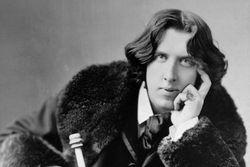
It is little surprise that Wilde, a fad avant la lettre—whose celebrity largely preceded his principal accomplishments—owed his American tour to a satirical skewering of which he was the target. Gilbert and Sullivan had just composed their operetta Patience, an all-purpose mockery of aestheticism whose Reginald Bunthorne was a direct parody of Wilde, with the character spouting sentiments such as: “The meaning doesn’t matter if it’s only idle chatter of a transcendental kind.” Wilde, with no less aplomb than you would imagine, promptly embraced the play. (As Morris reminds us, “the only thing worse than being talked about, he said, was not being talked about.”) Richard D’Oyly Carte, the producer of the show, saw an immediate opportunity to capitalize on the American run, and proposed that Wilde give a lecture tour. Imagine, say, Robert Penn Warren’s publisher arranging a lecture tour for Huey Long, or the Comedy Central Bill O’Reilly tour. Wilde promptly accepted. Wilde set sail from Liverpool with letters of introduction from James Russell Lowell and Edward Burne-Jones. (Lowell wrote to Oliver Wendell Holmes, “he should need no more introduction than a fine day.”) The passage does not seem to have been a pleasant one. “I am not exactly pleased with the Atlantic,” Wilde declared. A letter subsequently appeared in the Pall Mall Gazette, reading: “‘I am disappointed in Mr. Wilde,’ signed ‘The Atlantic Ocean.’” He arrived in New York amidst the trial of Charles Guiteau, recent assassin of President James Garfield, and unwittingly played a hand in a Supreme Court case: he sat for several photos with the eminent photographer Napoleon Sarony, who would later sue a lithographic company for the unwarranted replication of these photos, winning in the case Burrow-Giles Lithographic Co. v. Sarony, which established early copyright protections for photographs.
More here.
Uncommon Beauty
I did not ask for uncommon beauty in afterlife.
Only one that restores the life I had in you.
Do not bury me in your yard after you slay me.
Mad after me, why should the world find you?
I will get around to love’s grand gestures too.
Past ordinary sorrows, I will be back for you.
Must we go with Khizer, that hoary travel guide?
I will grant he is a sage and he looks out for you.
I have called on lovers to look out for Ghalib.
He is a good man, better poet and hurting like you.
.
by Ghalib
from Southern Review, Summer 2013
translation by M. Shahid Alam