On Being an Octopus

Godfrey-Smith_header

Peter Godfrey-Smith in Boston Review:

If octopuses did not exist, it would be necessary to invent them. I don’t know if we could manage this, so it’s as well that we don’t have to. As we explore the relations between mind, body, evolution, and experience, nothing stretches our thinking the way an octopus does.

In a famous 1974 paper, the philosopher Thomas Nagel asked: What is it like to be a bat? He asked this in part to challenge materialism, the view that everything that goes on in our universe comprises physical processes and nothing more. A materialist view of the mind, Nagel said, cannot even begin to give an explanation of the subjective side of our mental lives, an account of what it feels like to have thoughts and experiences. Nagel chose bats as his example because they are not so simple that we doubt they have experiences at all, but they are, he said, “a fundamentally alien form of life.”

Bats certainly live lives different from our own, but evolutionarily speaking they are our close cousins, fellow mammals with nervous systems built on a similar plan. If we want to think about something more truly alien, the octopus is ideal. Octopuses are distant from us in evolutionary terms, have a nervous system of very different design, and bodies with no bones and little fixed shape at all. What is it like to be an octopus? The question is intrinsically interesting and, beyond that, provides a good way to chip away at the problem Nagel raised for a materialist understanding of the mind.

Saturday, June 22, 2013

the unwinding

General-Views-Of-Tobacco--010

The Unwinding is the right title for George Packer’s epic, sad and unsettling history of the last four decades in the US. His topic is the coming apart of something in the national fabric: the unravelling of unspoken agreements about the limits to Wall Street’s greed; about what a congressman would or wouldn’t do for the right price; about what a company owes its workers, or what the wealthy should contribute in tax. The result of all this unwinding is more personal freedom than ever before: “Freedom to change your story, get your facts, get hired, get fired, get high, marry, divorce, go broke, begin again, start a business, have it both ways, take it to the limit, walk away from the ruins, succeed beyond your dreams.” But it is the loneliest sort of freedom. What Packer’s disparate characters share – as his narrative moves up and down the spectrum of inequality, from inner-city Ohio to Silicon Valley, to the exurban McMansions of Florida, to Washington’s corridors of power – is that each is fundamentally on his or her own.

more from Oliver Burkeman at The Guardian here.

bad boy

0623-Kipnis-articleInline

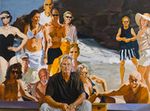
For Fischl, the suppurating wound was his mother. Depressed, alcoholic, beautiful, creatively thwarted, subject to fits of epic rage for which she blamed her children and husband, she should have had her own chapter in “The Feminine Mystique.” Betty Friedan reported mordantly on suburban women who suddenly go berserk and run shrieking through the streets naked; Fischl’s mother actually was picked up by the police running through the streets of suburban Long Island naked. She walked around the house naked too, throwing her adolescent son off kilter. After threatening for years to kill herself, she finally succeeded, driving her car into a tree. His family’s secrecy and shame about these ordeals migrated into the anxious, discomfiting iconography of Fischl’s paintings. At first he wasn’t aware of it, embarking on a series of crude images about an imaginary near-eponymous family he called “the Fishers,” whose story grew increasingly miserable. As his process became more free-associational, what eventually emerged were the “psychosexual suburban paintings” he became famous for. “Bad Boy” doubles as the title of a potent early example, a vaguely incestuous scene of a young boy stealing something from the pocketbook of an inattentive naked woman, who lies spread-eagle on a bed.

more from Laura Kipnis at the NY Times here.

The Faraway Nearby

51+jbXtiB4L._SL110_

Stories are compasses and architecture,” writes Rebecca Solnit in The Faraway Nearby, “we navigate by them, we build our sanctuaries and our prisons out of them, and to be without a story is to be lost in the vastness of a world that spreads in all directions like arctic tundra or sea ice.” Much of Solnit’s work is concerned to locate her, and consequently us, within the world by telling stories about it. At its best her writing is an exhilarating form of literary cartography, meandering through subjects as diverse as the development of photography, the philosophy of popular protest and the history of walking while always keeping us in touch with the people at the centre of those stories. The Faraway Nearby, her 14th book, is in some respects a consummation of her method. It is composed of a series of loosely connected essays – on love, trauma, family and fairy tales – which nestle within one another like matryoshka dolls. The loose structure is held together with threads of metaphor and allusion, enacting something of the aimless meanderings of grief itself.

more from Jon Day at the FT here.

Friends of Rousseau

Leo Damrosch in Humanities:

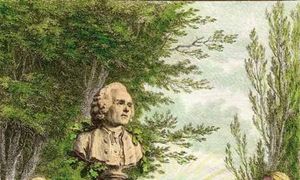
RouWhen I was finishing a biography of Jean-Jacques Rousseau some years ago, I was struck by the comment of someone who had known him: “the friends of Rousseau are as though related to each other through his soul, which has joined them across countries, ranks, fortune, and even centuries.” many people who have barely heard of him are indeed friends of Rousseau, because his ideas have had a pervasive influence in our culture. Quite astoundingly, this Genevan watchmaker’s son, with no formal education at any level, arrived at profound insights that continue to challenge and inspire. and not just in one area or field, either, but in a whole range that might normally seem unconnected. I will briefly describe his legacy in three of them: in political thought, in psychology, and in the philosophy of education.

Rousseau’s first great work was a Discourse on the Origin and Foundations of Inequality among Men, written in 1749 as an entry in a prize competition (he didn’t win—the judges said his submission was too long). the expected answer in those days would have been that God created us to be unequal, or else that nature did. Either answer would confirm the rightness of social hierarchy and privilege. Rousseau, far more pessimistic than Marx would later be, accepted the truth that inequality is inseparable from human culture, but he wanted to know why. The answer was the idea that would underlie everything Rousseau ever wrote: man is naturally good, but society has made him wicked. That is to say, we are not corrupted by original sin as the churches taught, or driven by instinct to dominate each other as Thomas Hobbes taught. If we are indeed selfish and competitive and possessive, it is because we have been conditioned to be. Rousseau imagined a pre-civilized state of nature in which our ancestors, more like apes than like ourselves, had no need or opportunity to exploit and enslave each other. As hunter-gatherers they could be essentially self-sufficient. The irrevocable change came with the invention of metallurgy and agriculture, twin foundations of a developed civilization. (Interestingly, Jared Diamond says much the same thing in Guns, Germs, and Steel.) Each of these advances has contributed to our material well-being, but they are only possible in an organized society in which the many are controlled by the few. What then develops, accordingly, is bureaucracies, legal systems, and organized religions that teach people to accept their lot in this vale of tears.

More here.

Falling short: seven writers reflect on failure

From The Guardian:

Diana Athill:

Diana-athill-003From the age of 22 to that of about 39 I knew myself to be a failure. For many of those years I was not positively unhappy, because I was doing work I enjoyed, was fond of my friends and often had quite a good time; but if at any moment I stood back to look at my life and pass judgment on it, I saw that it was one of failure. That is not an exaggeration. I clearly remember specific moments when I did just that. They were bleak moments. But they did lead to a subdued kind of pride at having learned how to exist in this condition – indeed, at having become rather good at it. The reason for it was banal. Having fallen in love when I was 15, and become engaged to marry the man I loved three years later, I had known exactly what my future was to be. As soon as I finished my education at Oxford (not before, because I was enjoying it so much) we would be married. I would join him wherever he happened to be stationed (he was an officer in the RAF) and my life as a wife would begin. I didn't doubt for a moment that it would be happy. My childhood and teenage years had been very happy so I was a young woman who expected the answer “Yes”. And then, not suddenly, but with excruciating slowness, I got the answer “No”.

He was stationed in Egypt. After three months he stopped answering my letters. His silence endured for month after month, reducing me to a swamp of incredulous misery, until at last a letter came, asking me to release him from our engagement because he was marrying someone else. Like, I am sure, most young women at that time, I had seen giving my life over to a man, living his life, as “happiness”. Doing that was what, as a woman, I was for. And this I had failed to do. I did, of course, see that the man had behaved badly, cruelly in fact, in leaving me in limbo without any explanation for so long, until (I guessed) being advised that he ought to guard against me “making trouble”. But I was so thoroughly the victim of current romantic attitudes that, in spite of that recognition, I was unable to withstand a sickening feeling that a woman worth her salt would have been too powerfully attractive to allow this disaster to happen. And I was not that woman.

More here.

The Third Culture: The Power and Glory of Mathematics

Strata_3_diptych

Ian Stewart in New Statesman:

[C.P.] Snow’s lecture [on the gulf between the two cultures of arts and sciences] was based in part on an article he had written for the New Statesman in 1956. He was continuing a tradition that goes right back to the magazine’s first editorial, which adopted a broad cultural stance: “We shall deal with all current political, social, religious, and intellectual questions . . . We shall strive to face and examine social and political issues in the same spirit in which the chemist or the biologist faces and examines her test-tubes or his specimens, ignoring none of the factors, seeking to demonstrate no preconceived proposition, but trying only to find out and spread abroad the truth whatever it may turn out to be.”

Perhaps not wishing to alarm potential readers too much, the editorial expanded on its scientific metaphor: “Social problems may not be – indeed, are not – susceptible of scientific analysis in the popular acceptation of that term, since human beings are not to be weighed in balances nor measured with micrometers . . .” It was a reasonable view then, but times have changed. Today very few social problems are not tackled by measuring aspects of human attitudes, behaviour or bodily form. Consider the current concerns about an obesity epidemic, backed up by extensive statistics in which people are literally weighed in – on balances.

The NS editor clearly had an inkling that such changes were imminent and continued: “. . . unless there can be applied to [social problems] something at least of the detachment of the scientific spirit, they will never be satisfactorily solved. The cultivation of such a spirit and its deliberate application to matters of current controversy is the task which the New Statesman has set for itself.” It was a worthy task, pursued with aplomb and considerable success; it is a task not yet finished, and if anything it is now even more vital than it was a century ago.

The cultural divide between art and science has narrowed perceptibly since Snow delivered his lecture and the issues have been thrashed out extensively, so we now have a better understanding of their nature. However, it might be more accurate to say that the divide has been spanned by a number of bridges, rather than made smaller.

The New French Philosophy

9780745648057

Richard Marshall reviews Ian James's The New French Philosophy:

Ian James sets out to show that in the new French philosophy the idea of ‘new’ is its subject, where new is understood in terms of ‘rupture’ and ‘discontinuity’ and ‘novelty.’ The French philosophers wonder how the new is possible. Gilles Deleuze started this in the 1960’s in his philosophy of ‘difference.’ Lyotard, Derrida and Foucault continued. Lyotard’s ‘event’ seeks to explain how discourses are contested and thinking is transformed. Jeff Malpas thinks this ‘the founding moment of any postmodernism.’ Lyotard’s ‘The Different’ is defined as an instability in language and discourse. It is supposed to create ‘new addressees, new addressors, new significations and new referents’ and ‘new phrase families and new genres of discourse.’ Derrida’s late ‘Spectres of Marx’ is about going beyond existing research programmes, ‘… beyond any possible programming, new knowledge, new techniques, new political givens.’ Foucault talks about epistemic breaks as an ‘event’ in ‘The Order of Things.’ He asks, ‘ how is it that thought has a place in the space of the world, that it has its origin there, and that it never ceases to begin anew?’ He suggests a process that ‘… probably begins with an erosion from the outside, from a space which is, for thought, on the other side but in which it has never ceased to think from the very beginning.’

James discusses seven new French philosophers; Jean-Luc Marion, Jean-Luc Nancy, Bernard Stiegler, Catherine Malabou, Jacques Ranciere, Alain Badiou and Francois Laruelle. This is intended to be neither exhaustive nor up to date but rather an indicative group in support of an argument about a paradigm shift. These seven all agree with Foucault that the new comes from ‘an erosion from the outside.’ Five of them established themselves in the 1970’s. Two are younger and not yet established as much.

In the 1970’s the philosophers moved away from a linguistic paradigm which had dominated Derrida, Lyotard and Foucault. Signifiers, signifieds, the symbolic, discourse, text, writing, arche-writing were recast in terms of materiality, the concrete, ‘… worldliness, shared embodied existence and sensible-intelligible experience.’ The paradigm of structuralism and post structuralism as being a literary genre was subjected to its own ‘event’.

Friday, June 21, 2013

How Long Can You Wait to Have a Baby?

Mag-article-large

Jean Twenge in The Atlantic [h/t: Maeve Adams]:

The widely cited statistic that one in three women ages 35 to 39 will not be pregnant after a year of trying, for instance, is based on an article published in 2004 in the journal Human Reproduction. Rarely mentioned is the source of the data: French birth records from 1670 to 1830. The chance of remaining childless—30 percent—was also calculated based on historical populations.

In other words, millions of women are being told when to get pregnant based on statistics from a time before electricity, antibiotics, or fertility treatment. Most people assume these numbers are based on large, well-conducted studies of modern women, but they are not. When I mention this to friends and associates, by far the most common reaction is: “No … No way. Really?

Surprisingly few well-designed studies of female age and natural fertility include women born in the 20th century—but those that do tend to paint a more optimistic picture. One study, published in Obstetrics & Gynecology in 2004 and headed by David Dunson (now of Duke University), examined the chances of pregnancy among 770 European women. It found that with sex at least twice a week, 82 percent of 35-to-39-year-old women conceive within a year, compared with 86 percent of 27-to-34-year-olds. (The fertility of women in their late 20s and early 30s was almost identical—news in and of itself.) Another study, released this March in Fertility and Sterility and led by Kenneth Rothman of Boston University, followed 2,820 Danish women as they tried to get pregnant. Among women having sex during their fertile times, 78 percent of 35-to-40-year-olds got pregnant within a year, compared with 84 percent of 20-to-34-year-olds. A study headed by Anne Steiner, an associate professor at the University of North Carolina School of Medicine, the results of which were presented in June, found that among 38- and 39-year-olds who had been pregnant before, 80 percent of white women of normal weight got pregnant naturally within six months (although that percentage was lower among other races and among the overweight).

not a laughing matter

Cover00

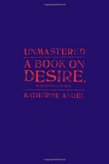
Once in a while a book appears that’s so bad you want it to be a satire. If you set out to produce a parody of postfeminist mumbo jumbo, adolescent narcissism, excruciating erotic overshares, pseudopoetry, pretentious academic jargon, and shopworn and unshocking “dirty talk,” you could not do better than Unmastered: A Book on Desire, Most Difficult to Tell. One wishes that Katherine Angel, a historian of female sexual dysfunction at Warwick University, had, in fact, found this tale a little more “difficult to tell.” But Angel can’t stop telling and writing about herself—or about herself writing: “I have written a lot today,” she tells her lover complacently hundreds of lines into the stream-of-consciousness diary jottings that constitute her desultory exploration of female desire and feminism. “He knows,” she explains to her readers, that “I am writing about sex.” He does not, however, seem to grasp until that moment (if then) that his own sexual exchanges with Angel provide the book’s only tenuous narrative thread. “‘You know,’” he says with the innocence of Candide, “‘I have just now put these things together: you and I have sex, and you are writing about sex.’ He laughs.”

more from Cristina Nehring at Bookforum here.

slim john

Slim-Jim-600

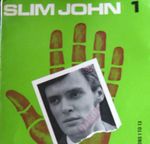
At Bókin, the used bookstore in 101 Reykjavik where Bobby Fischer spent his endgame, the clutter goes all the way up to the ceiling, from which hang collages of magazine clippings picturing Halldor Laxness and the great beauties of the world (an eighties-era Miss Iceland poses with the collected works of her favorite author, William Shakespeare). Christmas-tree lights adorn a waist-high pyramid of hardcovers next to the register. The English-language section, right by the door when you come in, is half blocked off by unsorted boxes and piles of new acquisitions with pages already curling, glue already dissolving. In Iceland, it’s traditional to open presents on Christmas Eve: a new article of clothing, so the Yule Cat doesn’t get you, and a new book to curl up with. So it was that last December I angled my way into the English stacks, scanned the green spines of Fay Weldon novels and Van Der Valk mysteries sold on by British backpackers, and found Slim John. Published in 1969, with a cover betraying the influence of Penguin under the swinging, Saul Bass-esque art direction of Germano Facetti, Slim John is in fact the companion volume to a serial of the same name produced by the BBC for overseas broadcast as part of their English by Television initiative.

more from Mark Asch at Paris Review here.

“celebrating” in Moscow

Moscow1

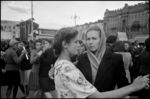
Slavic scholar Grisha Freidin is a child of Moscow – he and his family emigrated to the U.S. when he was teenager. So that means he recalls the city’s 800th birthday party on September 7, 1947. “I remember playing with the colorful commemorative insignia (few things were colorful then) and hearing my parents, probably in answer to my questions, refer to the celebrations with uncharacteristic ebullience. Clearly it was a major landmark of the post-war years in Stalin’s Russia.” The era’s most famous war photographer, Robert Capa, was on hand to document the event with John Steinbeck – and add a little nuance to the official party line of a a people looking inexorably forward to a glorious future. Grisha looked up Capa’s photos, and has a compelling essay over at his blog, The Noise of Time: And yet, whatever the restrictions, this war photographer was able to convey the atmosphere of the 1947 Moscow. Indeed, many images are composed to give expression to the wrenching tension between the ordinary folks’ desire to cash in a little of that great WWII victory – to ease gently into the long-deferred private life – and the unspoken command shouting at them from every poster: “Attention! To the Glory of the Empire, March!”

more from Cynthia Haven at The Book Haven here.

Want to Learn How to Think? Read Fiction

From Pacific Standard:

Big-bookAre you uncomfortable with ambiguity? It’s a common condition, but a highly problematic one. The compulsion to quell that unease can inspire snap judgments, rigid thinking, and bad decision-making. Fortunately, new research suggests a simple antidote for this affliction: Read more literary fiction. A trio of University of Toronto scholars, led by psychologist Maja Djikic, report that people who have just read a short story have less need for what psychologists call “cognitive closure.” Compared with peers who have just read an essay, they expressed more comfort with disorder and uncertainty—attitudes that allow for both sophisticated thinking and greater creativity. “Exposure to literature,” the researchers write in the Creativity Research Journal, “may offer a (way for people) to become more likely to open their minds.”

Djikic and her colleagues describe an experiment featuring 100 University of Toronto students. After arriving at the lab and providing some personal information, the students read either one of eight short stories or one of eight essays. The fictional stories were by authors including Wallace Stegner, Jean Stafford, and Paul Bowles; the non-fiction essays were by equally illustrious writers such as George Bernard Shaw and Stephen Jay Gould. Afterwards, each participant filled out a survey measuring their emotional need for certainty and stability. They expressed their agreement or disagreement with such statements as “I don’t like situations that are uncertain” and “I dislike questions that can be answered in many different ways.” Those who read a short story had significantly lower scores on that test than those who read an essay. Specifically, they expressed less need for order and more comfort with ambiguity. This effect was particularly pronounced among those who reported being frequent readers of either fiction or non-fiction.

More here.

Your Fruits and Vegetables Can Tell Day from Night

From Smithsonian:

CarrotsYou probably don’t feel much remorse when you bite into a raw carrot. You might feel differently if you considered the fact that it’s still living the moment you put it into your mouth. Of course, carrots—like all fruits and vegetables—don’t have consciousness or a central nervous system, so they can’t feel pain when we harvest, cook or eat them. But many species survive and continue metabolic activity even after they’re picked, and contrary to what you may believe, they’re often still alive when you take them home from the grocery store and stick them in the fridge.

The most recent evidence of this surprising phenomenon? A new paper, published today in Current Biology by researchers from Rice University and UC Davis, found that a range of harvested fruits and vegetables—including cabbage, lettuce, spinach, zucchini, sweet potatoes, carrots and blueberries—behave differently on a cellular level depending on their exposure to light or darkness. In other words, these fresh produce have an internal “body clock,” or circadian rhythm, just like we do. Previously, Rice biologist and lead author Danielle Goodspeed had found that some plants depend on light cycles and their internal circadian rhythm to fend off predatory insects, at least while still in the ground. In experiments, she had noticed that thale cress plants used reliable daily exposure to sunlight as a basis for anticipating the arrival of insects during the day, and were able to build up reserves of defensive chemicals beforehand, during the night.

More here.

Save Rhinos by Selling Their Horns

Rhino-dehorned

Jennifer Abbasi in Discover:

CONVENTIONAL WISDOM: Because rhinoceroses are endangered, buying and selling their horns should be banned.

CONTRARY VIEW: Legalizing the trade in rhino horns is our best chance to save the species.

Purported to treat a variety of ailments, from fevers to measles to epilepsy, rhinoceros horns have been prized ingredients in Chinese medicines for thousands of years. Sought after for their horns, white rhinos saw their population fall to 100 animals in South Africa by 1910, and only 2,410 black rhinos remained there in 1995.

In South Africa and Namibia, a strong conservation ethic — coupled with financial incentives for ownership, management and protection of rhinos for tourism and legal trophy hunting — gradually helped to reduce poaching and restore rhino numbers. But today, Africa’s rhinos once again are facing extinction, despite a 1977 ban on the selling of rhino parts by the Convention on International Trade in Endangered Species (CITES).

Ironically, legalizing a highly regulated trade in rhino horns might actually end up saving the animals. “The trade ban is failing because of persistent and growing demand for horn,” says Duan Biggs, a conservation biologist at the University of Queensland in Australia who argued for lifting the ban earlier this year in the journal Science. “The ban artificially restricts supply in the face of this demand growth, which pushes up the price for horn and the incentives for poachers.”

Robot Evolution

Quadrupedal-robot

Emily Monosson in Aeon:

In a laboratory tucked away in a corner of the Cornell University campus, Hod Lipson’s robots are evolving. He has already produced a self-aware robot that is able to gather information about itself as it learns to walk. Like a Toy Story character, it sits in a cubby surrounded by other former laboratory stars. There’s a set of modular cubes, looking like a cross between children’s blocks and the model cartilage one might see at the orthopaedist’s – this particular contraption enjoyed the spotlight in 2005 as one of the world’s first self-replicating robots. And there are cubbies full of odd-shaped plastic sculptures, including some chess pieces that are products of the lab’s 3D printer.

In 2006, Lipson’s Creative Machines Lab pioneered the Fab@home, a low-cost build-your-own 3D printer, available to anyone with internet access. For around $2,500 and some tech know-how, you could make a desktop machine and begin printing three-dimensional objects: an iPod case made of silicon, flowers from icing, a dolls’ house out of spray-cheese. Within a year, the Fab@home site had received 17 million hits and won a 2007 Breakthrough of the Year award fromPopular Mechanics. But really, the printer was just a side project: it was a way to fabricate all the bits necessary for robotic self-replication. The robots and the 3D printer-pieces populating the cubbies are like fossils tracing the evolutionary history of a new kind of organism. ‘I want to evolve something that is life,’ Lipson told me, ‘out of plastic and wires and inanimate materials.’

Thursday, June 20, 2013

AFTER GEZI PARK

William Harris in The Point:

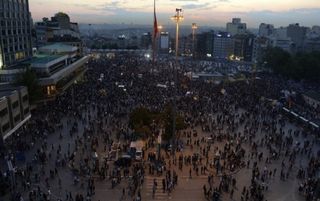
Gezi3The peculiarity of the modern religious conservative gives rise to different shades of Erdoğan. Views of the controversial Prime Minister vary across the ideological spectrum. There’s the religious conservative Erdoğan, who called Turkey’s founder and most popular political figure a drunk; there’s neoliberal Erdoğan, who insisted, even as a court has delayed the “renovation” of Gezi Park, that a mall will be built; there’s pro-democracy Erdoğan, who fired military leaders allegedly involved in plotting a coup against him; there’s dictatorial Erdoğan, who fired those same officers (throughout modern Turkish history, the military was the protector of Kemalism, pulling coups, as it claimed, in order to restore democracy) in a scheme to amass more power; and there’s conspiracy-theorist Erdoğan, who lashed out against a mythical interest-rate lobby when foreign investors reacted negatively to a bloody police crackdown on protestors, and who has blamed the protests on the sinister alcohol lobby.

The strength of the protests has been their pluralism, banding together labor unions, liberals, anti-capitalists, feminists and environmentalists. They’ve been able to combine critiques of each shade of Erdoğan. Meanwhile, in a major break from Occupy Wall Street, the protestors have been quite clear on their demands: to preserve Gezi Park as it is; to free those involved in the protests who have been detained (including more than 50 lawyers at an Istanbul courthouse and a number, more recently, of volunteer doctors); and to end the violent police repression of the protests. Perhaps Erdoğan’s absolute refusal to compromise can be traced back to these demands—or, if not to the demands themselves, then to the form in which they reached him: If people out in the street can influence policy, what might they ask for next?

More here.

Is Islam a More Radical Religion?

Kaveh Mousavi in The Proud Atheist:

If you define moderate as “not-Taliban” or “not-Al-Qaeda,” then yes, most Muslims are moderate. If you have a broader definition which is “not-terrorist,” then yeah, most Muslims are not terrorists. If you consider moderate “not-actively-violent,” then OK. But let me tell you, your standard bar is pretty low.

The geographical context is also important here. I don’t know anything about Western Muslims. They might be as moderate as the majority of Western Jews and Christians. I don’t know. I’m talking about people I know and have lived with.

The point is, if you define moderate the same way you define it in your own culture, then the vast majority of (Eastern) Muslims are extremists. You normally define moderate based on tolerance, acceptance, their view towards freedom of speech and religion, their commitment to the separation of church (mosque) and state, and their dosage of sexism and homophobia. We would sorely fail at every criterion on this list. That stinks, but it’s true.

In order to make this concrete for you, imagine a radical Christian. Would you consider Rick Santorum radical enough? OK. Now, what if he had the exact same beliefs but he was a Muslim? Then, he would be a moderate. Radically moderate (if that makes sense), he would be called an atheist even.

Do you think he was a homophobe because he compared homosexuality to bestiality? Well, at least he doesn’t believe that gays deserve to be hanged.

More here.