Music is the greatest means we have of digesting time

Craft_351383k

I t is scarcely believable that The Rite of Spring, and before it The Firebird and Petrushka, were written by a composer still in his twenties, and that this was only slightly more than a decade after the death of Johannes Brahms. The unanticipated creation of Petrushka (1911), written in seven months, intervened between the conception and the composition of The Rite, which Igor Stravinsky had envisioned while completing Firebird in 1910. The theophanic experience likely dates from December 1909, when Alexandre Benois and Nikolai Roerich persuaded the composer of the merit of Mikalojus Ciurlionis’s paintings. At their urging Stravinsky visited the St Petersburg exhibition of the Lithuanian artist’s temperas. Roerich, himself a painter, ethnographer and authority on pre-Christian rituals of Slavic Russian tribes, had compiled a book on Ciurlionis. Mesmerized by the paintings, Stravinsky purchased one, the “Sonata of the Pyramids” (1908). Bernard Berenson classified Ciurlionis simply as an abstractionist, which is of no help in understanding his use of strange forms, geometric conglomerations, quasirealistic trees, and, primarily, the sense of skyward movement. In July 1961 Stravinsky wrote to a Lithuanian art critic, emphasizing the difficulty in conveying the originality of the art: “It is not easy to describe a picture of this flight of growing-upwards extending rows of pyramids toward the horizon, the subject of this powerful work”.

more from Robert Craft at the TLS here.
a splendid resetting of the compass

A_560x375

The new installation reveals itself in complex, unforced ways like a cosmos of multitudes blossoming before our ­astonished, grateful eyes. I saw indefinable essences I’d never seen before on each trip. But I wanted to put the installation to the test. Rather than taking the new paths that will be most traveled—the glorious trails that take us through the flowerings of Florentine or Sienese Renaissances; or the ones that lead us through Netherlandish and Northern painting to the Dutch—­including the endorphin-releasing gallery containing five of Vermeer’s 36 known paintings, works that alight on your body like tender healing mercies—I took the Goya-to-­Gainsborough route that used to perplex me. Now, after Tiepolo’s convoluting space, you can go straight to sixteenth-century Rome. A wall of four large works by lesser-known Panini has views of Rome: shrewdly conceived spatial arrangements that give us Roman collectors and dealers packaging their ancient and contemporary wares and ruins for the moneyed English tourists then making their way to Italy. This gallery has two more entry points. Take one and you see artists doing a similar thing to Venice. Canaletto’s vertiginous organized space hypnotizes; Guardi’s traffic jams on the Grand Canal are muddy and mouthwatering. Look at these paintings; recall the hotel you stayed in; point it out to whoever’s beside you; you will both feel like citizens of the world.

more from Jerry Saltz at New York Magazine here.

On Friendship

Edward Hoagland in The American Scholar:

MaureenLunn_flickr-e1357846788342We need roommates to get through college and afterward somebody to leave our keys and goldfish with. Friends may indulge us a little because they know our soft spots—the son in limbo after a meth arrest, the mortgage underwater, the trial separation, the cancer scare. Gossipmongers, by contrast, are permitted in polite society because they furnish narratives of indignity where but for the grace of God go I. We’ll tug a restaurant check away from a friend and bump shoulders in the parking lot, but when in love our eyes fix unqualifiedly upon the other person’s, wide open for inspection, not veiling hurt, confusion, or longing. A current flows, impulses are telegraphed, a flutter of distress crimps the mouth even before we know why. By middle age, our countenances contain a toolkit of engraved expressions, from deadpan stoicism to blithe equanimity. At weddings, funerals, we sit in the pew, while, as on a much-plowed family farm, the grooves to accommodate whatever is tossed at us lie in our faces already.

Friendship is protean. Your children, foodstuffs, and weak points are safe with me, and I’ll keep watch while you sleep, was how it all began; and primeval wellsprings of suspicion are still aroused when people lack friends. It’s why we brag about how many friends we have on Facebook, or how many people might put us up all over the world. Allies are necessary in early jobs to speak up for you, explain the ropes, and then it’s a leisurely, exploratory process where you lay your cards on the table, gradually seeing if they complement the other bloke’s. Yet loneliness peeps over the horizon for most of us eventually.

More here.

Thursday Poem

.
you receive a letter
which is so flat
that it’s nearly
empty

so white
and flat
that it cuts
itself into you
unread

into your eye
tightens your throat
turns your stomach inside out

stop,
says the child

I don’t want
this letter

yes, I say
it’s already written

it’s already on its way
into your eye

by Monica Aasprong
from Et diktet barn
publisher: Cappelen Damm, Oslo, 2010
translation: May-Brit Akerholt

Simple molecule prevents mole rats from getting cancer

From Nature:

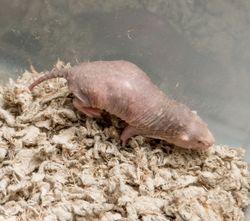
MoleThe same molecules that endow naked mole rats with springy, wrinkled skin also seem to prevent the homely rodents from contracting cancer. Research published on Nature's website today identifies a sugary cellular secretion that stops the spread of would-be tumours1. Naked mole rats (Heterocephalus glaber), which are more closely related to porcupines than rats, are freaks of nature. The short-sighted creatures spend their lives in subterranean colonies in the service of a single breeding queen — H. glaber is one of only two 'eusocial' mammals ever discovered. The rodent doesn’t feel the sting of acids or the burn of chilli peppers, and seems to be the only mammal that is unable to regulate its body temperature.

However, the animal's longevity and impunity to cancer are the reason why biologist Andrei Seluanov keeps around 80 naked mole rats in a special facility near his lab at the University of Rochester in New York state. The rodents have been known to live for up to 32 years, and scientists have never seen one with cancer. Mice, by comparison, rarely live past the age of four and do often die of cancer. In 2009, Seluanov’s team reported that the naked mole rat's fibroblasts (a cell type found in connective tissue) are sensitive to the presence of other cells, and in Petri dishes they grow less crowded than mouse fibroblasts do2. To the annoyance of his lab workers, the broth they used to nurture the cells often turned so viscous that it clogged the drains. “Our lab technician was unhappy because she needed to disassemble the system and clean all this gooey stuff,” Seluanov recalls. “I told my graduate student that we have to find out what the gooey substance is — it should be related to their cancer resistance. Of course, at that time it was just a wild guess.” The team soon discovered that the plumbing problem was the result of a sugar called hyaluronic acid (HA). Fibroblasts ooze HA and, along with collagen and other chemicals, it forms the extracellular matrix that gives tissues their shape and makes skin elastic. Naked mole rats, Seluanov’s team discovered, produce large amounts of long chains of HA.

More here.

4 Quarks Daily

Devin Powell in Nature:

1.13225_IHEP_BESIII_W020090715392811800793Physicists have resurrected a particle that may have existed in the first hot moments after the Big Bang. Arcanely called Zc(3900), it is the first confirmed particle made of four quarks, the building blocks of much of the Universe’s matter.

Until now, observed particles made of quarks have contained only three quarks (such as protons and neutrons) or two quarks (such as the pions and kaons found in cosmic rays). Although no law of physics precludes larger congregations, finding a quartet expands the ways in which quarks can be snapped together to make exotic forms of matter.

“The particle came as a surprise,” says Zhiqing Liu, a particle physicist at the Institute of High Energy Physics in Beijing and a member of the Belle collaboration, one of two teams claiming the discovery in papers published this week in Physical Review Letters1, 2.

Housed at the High Energy Accelerator Research Organization (KEK) in Tsukuba, Japan, the Belle detector monitors collisions between intense beams of electrons and their antimatter counterparts, positrons.

More here.

Fight Clubs

9780684855103

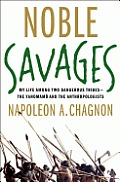
Peter C. Baker reviews Napoleon A. Chagnon's Noble Savages My Life Among Two Dangerous Tribes—The Yanomamö and the Anthropologists, in The Nation:

In December 1919, Franz Boas, the German-born academic widely recognized as the father of American anthropology, published a letter in this magazine accusing four of his American colleagues—whom he did not identify—of having used their research positions as cover for engaging in espionage in Central America during the recently concluded war. Ten days later, the governing council of the American Anthropological Association voted 20 to 10 to censure Boas, claiming that his highly public letter was unjustified and in no way represented the AAA’s position. Boas was a founding member and former president of the association, so the censure was doubly humiliating; it essentially forced him to resign from both the AAA’s governing body and the National Research Council.

The Boas incident was the prelude to a century in which anthropology has been haunted by questions of means and ends. What sorts of alliances with power are worth it? What responsibilities (if any) do anthropologists have to the populations they study? Above all, to what extent has Western anthropology been fatally compromised by its associations—direct and indirect, public and covert—with a violent and imperial foreign policy? In several books, the anthropologist David Price has cataloged the substantial sums of money funneled from the military and intelligence community to academic anthropology over the years, as well as the contribution of American anthropologists to every significant war effort in modern US history. Most recently, ethnographers have joined the Army’s Human Terrain System program, designed to aid military operations in Iraq and Afghanistan by decoding the nuances of local culture. Price notes that although the revelation of these collaborations has often sparked heated short-term controversy, the disputes have passed without prompting broad, discipline-wide reform—or even conversation. After all, what anthropologist wants to spend time discrediting anthropology, a discipline that relies on trust, most importantly the trust of foreign governments and the subject populations that are the source of the discipline’s prized product of local knowledge? At what point are the ethical costs of doing anthropology too high, for ethnographers as well as the people they study?

That last question applies equally to anthropologists who may not work directly for the military or do fieldwork in areas explicitly labeled war zones. There is no better example than the career of Napoleon Chagnon, author of the bestselling anthropological text of the twentieth century, a slim volume called Yanomamö.

Can Pornography be Art?

154342928Tabatha Leggett in New Statesman:

Lovelace, a film starring Amanda Seyfried as Linda Lovelace, a porn star who was famously abused by her peers, is coming out this August. Its release is inevitably going to prompt a whole wave of journalism debating the merits and failings of an industry that, let’s face it, is not going anywhere. Some journalists will claim that the porn industry perpetrates sexism. Others will argue that as long as no one is being abused, there’s nothing wrong with a woman choosing to be a porn star. How. Very. Boring.

A far more interesting question, which is increasingly being asked by aestheticians, concerns porn’s status as art. This debates centres around the idea that the process of making porn is not relevant to judging the artistic value of the end result. According to this logic, judging the artistic value ofDeep Throat, the profoundly unsettling film that made Linda Lovelace famous, according to how Linda was treated during its making, misses the point.

So here’s a biggie: what counts as art, and what makes it valuable?

How Do You Describe Bad Economics Eeporting?

Clay Shirky over at Crooked Timber:

A couple of weeks ago, my friend Tamar Gendler introduced me to the the problem of easy knowledge, the notion that if you believe a particular assertion, you can produce inductive chains that lead to overstated conclusions. “I own this bike” can be seen as an assertion that the person you bought it from was its previous owner.

But of course you don’t know if that guy in the alley had the right to sell it, so an assertion that you own the bike can generate easy knowledge about whether he did. Instead, “I own this bike” should be seen as shorthand for “If the guy in the alley was the previous rightful owner, then I am its current rightful owner.” (Oddly, this also describes the question of the Elder Wand inHarry Potter Vol. 7, pp 741 ff. Tom Riddle died of easy knowledge.)

I was reminded of easy knowledge while reading Thomas Edsall’s NY Times column on
Can’t We All Be More Like Nordics? Asymmetric Growth and Institutions in an Interdependent World, a paper by the economists Daron Acemoglu, James Robinson and Thierry Verdier. (Acemoglu goes on to discuss this work in a post titled Choosing your own capitalism in a globalised world?.)

In their paper, Acemoglu, Robinson and Verdier model a technologically interdependent world where countries can chose either cutthroat or cuddly capitalism (the US and Sweden being the usual avatars) and each country can be a technological leader or follower but those choices are not orthogonal.

They then examine this model, and discover that:

…interpreting the empirical patterns in light of our theoretical framework, one may claim (with all the usual caveats of course) that the more harmonious and egalitarian Scandinavian societies are made possible because they are able to benefit from and free-ride on the knowledge externalities created by the cutthroat American equilibrium. Not just the US but indeed the whole world would be worse off if we had public health care, because we have to treat poor people badly if Larry Page is to get rich, so that the Swedes can copy us. Because innovation.

Now there’s nothing too surprising in this sentiment—the headline “Neo-Liberalism Woven into Fabric of Universe, say Economists” could have run unaltered in every year since 1977. What is surprising—or at least what Tamar made me see with new eyes—is that the entire exercise is a machine for smuggling easy knowledge into public discourse.

Wednesday, June 19, 2013

Walt Whitman’s American Philosophy

Justin E. H. Smith in his blog:

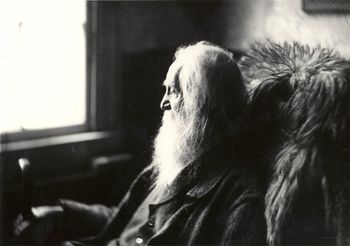
6a00d83453bcda69e20192ab469d14970d-350wiI am able to read Walt Whitman only in small doses, for fear of being overpowered by a sort of rapturous assent, tears in my eyes, unable to comprehend how it is even possible to agree so fully with someone else. I’ve only known Whitman for a few years. When I was in my twenties, it was all Dostoevsky and Kafka and Beckett and Thomas Bernhard: the period of European literature that extends from that continent’s extreme unction up through its longwinded funeral orations. (Next came several years, wasted, in which I did not read any literature at all.) Now it's all Melville and Whitman and the ecstatic birth of the American empire. But especially Whitman. Only he manages to channel this history through his own body, to make himself into the living instance of both the work he is in the process of creating, as well as of the national destiny for which he, with stunning grandiosity, believes his work is a prophecy.

More here.

How to End the Stalemate With Iran

Seyed Hossein Mousavian and Mohammad Ali Shabani in the New York Times:

The stunning election of a pragmatic former Iranian nuclear negotiator, Hassan Rowhani, has offered the Obama administration a once-in-a-lifetime chance to end the atomic stalemate with Iran.

In the West, Mr. Rowhani is widely seen as a turbaned politico from inside the establishment. One of us has worked for him directly, as his deputy in nuclear talks. The other has conducted research at the think tank he runs. We can attest that he is wary of a purely ideological approach to foreign policy and is driven by more than simple expediency in pursuit of the national interest. After seeing the nuclear deal he was attempting to negotiate with the European Union fall apart in 2005, Mr. Rowhani is now seeking to resolve the nuclear issue once and for all, and also to redeem himself politically.

Mr. Rowhani’s victory demonstrates that there is now real momentum toward the initiation of direct talks between Iran and the United States. Despite remarks he has made to appease hard-liners since his victory, Mr. Rowhani’scampaign rhetoric made clear his desire to change the hostile relationship with America. In recent months, even Iran’s supreme leader, Ayatollah Ali Khamenei, has given permission for direct negotiation — although he has not expressed optimism about its prospects.

The single biggest threat to this unique window for dialogue is misguided perceptions of each side’s respective strengths and weaknesses. To avoid squandering this opportunity, President Obama and President-elect Rowhani, who takes office in August, must resist and debunk the false impressions that have been promoted by extremists on both sides.

More here.

in the pool

David_Hockney_575px3

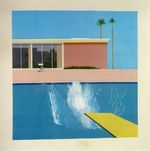
In 1978, David Hockney began work on a series entitled Paper Pools, including twenty-nine color pictures created by pressing paper pulp. As Nikos Stangos writes, the project allowed Hockney to bring “together many of the themes he most loves: the paradox of freezing in a still image what is never still—water, the swimming pool, this man-made container of nature, set in nature which it reflects, the play of light on water, the dematerialized diver’s figure under water.” Hockney recalls, “As the time had gone on and the sun wasn’t coming out as much now and the days were cloudy, the water began to look a bit different and the tones were all-over blue. It rained and when it rained the steps started with a deep blue at the top and the blue faded as the water got more opaque because of the rain, and I thought the water looked wetter, it was all wet, now it was all about wetness.” In one Polaroid picture that Hockney used as inspiration for an image entitled “Pool with Cloud Reflections,” the water is nearly indistinguishable from the sky it reflects. The clean-lined shadow of a building amplifies the bright lines of an overhead cloud, making it difficult to know whether the sky is being reflected on the water or, through the trick of glass and shadow, water is being reflected onto the sky. The picture encapsulates what must have drawn Hockney to return, time and time again, to this particular subject: “Depending on the weather, whether it was cloudy or sunny—each day was different—you could look right through it, into it, onto it.”

more from Aisha Sabatini Sloan at Guernica here.

visiting the bishop

Extensioncord

There are thirteen addresses in Manhattan where devout readers can stalk Elizabeth Bishop’s ghost: seven hotels and six apartments. Because no historical plaques have been hung to mark them, vigilance is crucial. You could pass by any one of them without realizing one of America’s greatest poets once called it home, or some version thereof. If these locales are not enough, peruse the writer’s several thousand letters for additional jaunts. At the entrance to the public library’s main reading room, for example, you can sit on the bench where, in 1936, Elizabeth arranged to meet Marianne Moore. The city is dirty enough that a small remnant of the writer, if only the dust on her soles, might linger there. The compulsion to visit Elizabeth’s former residences is the same one that drives Shakespeare lovers to Stratford-upon-Avon and Thoreau converts to Walden Pond. Oscar Wilde’s lipstick-covered tomb proves such journeys are never simply educational field trips, but affairs of deep passion. Accordingly, I begin a pilgrimage: I will visit all these addresses.

more from Laura C. Mallonee at Paris Review here.

stumbling through

130624_r23650_p233

“The Principle of the Hiding Hand,” one of Hirschman’s many memorable essays, drew on an account of the Troy-Greenfield “folly,” and then presented an even more elaborate series of paradoxes. Hirschman had studied the enormous Karnaphuli Paper Mills, in what was then East Pakistan. The mill was built to exploit the vast bamboo forests of the Chittagong Hill Tracts. But not long after the mill came online the bamboo unexpectedly flowered and then died, a phenomenon now known to recur every fifty years or so. Dead bamboo was useless for pulping; it fell apart as it was floated down the river. Because of ignorance and bad planning, a new, multimillion-dollar industrial plant was suddenly without the raw material it needed to function. But what impressed Hirschman was the response to the crisis. The mill’s operators quickly found ways to bring in bamboo from villages throughout East Pakistan, building a new supply chain using the country’s many waterways. They started a research program to find faster-growing species of bamboo to replace the dead forests, and planted an experimental tract. They found other kinds of lumber that worked just as well. The result was that the plant was blessed with a far more diversified base of raw materials than had ever been imagined.

more from Malcolm Gladwell at The New Yorker here.

Six Strings

Beenish Ahmed in The Morning News:

Growing up in Ohio, far from the homeland of her parents, a girl puzzles over her identity, until the strings of a sitar create a connection.

Six-stringsA stack of weathered National Geographics sat inviolably on the bookshelves of my childhood home. I don’t think my parents ever subscribed, and, anyway, the set was strikingly incomplete: It included only issues featuring places that bordered Pakistan, the country of their birth, and its neighbors. I remember clearly one with a photo of the Rajasthani boy tending his camel, and of course the beguiling image of the Afghan girl draped in a tattered burgundy shawl, her eyes hollowly aglow. We even kept an issue featuring Sita, a Bengal tiger, for its views of India’s jungles, women in saris squatting amid the shrubs. But I was most captivated by a cover showing a woman like a Mughal miniature brought to life, a cascade of pearls and gems hanging over her thick black hair to match the hues of her silken dress, seated amidst the sandstone columns of a palace court in Lahore. Tahira Syed sings elegiac melodies in a voice that shared the desperate and delicate dance of a butterfly caught in a jar. She is Pakistan’s most famous sitarist, but even before I heard her music, I saw her on the cover of that tattered magazine which had existed for longer than I had. I revered that single image of her the way most girls did Disney princesses.

It would be years before I discovered Syed’s voice, and many more before I could begin to understand what she was singing about. Somewhere in between, my brother began to play the tabla, a set of hand drums that sets the harmony for musical styles across South Asia. I joked with him about learning to play sitar so that we might travel the world as a brother-sister duo. It was sometime after that when I actually began to listen to the sitar and hear its range of emotions: the sounds as sultry as silk that slowly transitioned into lovers’ moans, the soft whimpering that turned into a frenzy of self-loathing. Some exposure to the sitar was natural enough, at least as the background of melodies that floated through backseat brawls on road trips, or bid sleeping passengers to wake up on flights to Pakistan. I can’t say that the instrument was the strange and seductive curiosity to me that it is to many other people. It’s music itself that has always been a little foreign to me―a language I could understand but never speak.

More here.

Gathering Emotional Intelligence

Jason Goldman in Conservation Magazine:

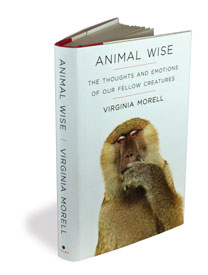
Animal-wiseIt was just after six o’clock in the evening on an autumn day in Kenya’s Samburu National Reserve. A researcher watched a female elephant known as Eleanor collapse. She was a matriarch, an elder within female-dominated elephant society. Her swollen trunk dragged on the ground. One of her tusks was broken, evidence of another recent fall. Another matriarch, Grace, ran toward her and tried to stabilize the ailing pachyderm with her tusks. But Eleanor’s back legs were too weak to support her massive body, and she fell again. The rest of her herd had continued their journey, but Grace stayed with Eleanor as day turned into night. By eleven o’clock the next morning, Eleanor was dead. Over the next few days, no fewer than five other elephant groups visited Eleanor’s carcass. Several of these, like Grace, were completely unrelated to her. They poked at her lifeless body, sniffed it, and felt it with their feet and with their trunks. Did they know that they were touching death? Do elephants grieve? This story is well known among animal cognition researchers, and it is one that Virginia Morell beautifully—almost poetically—recounts in her book Animal Wise. “Her six-month-old calf never left its mother’s side, even after park rangers cut out her tusks to make sure they did not fall into the hands of poachers,” she writes. By the calf’s ninth month, researchers had lost track of it and assumed it was “probably killed by a predator.” Like us, elephants are lost without their mothers.

But we’ve only just come to recognize this. Comparative cognition laboratories have historically relied upon just three animals. Morell recounts a conversation with one cognitive scientist who pointed out that decades of research were built upon “rats, pigeons, and college sophomores—preferably male.” It’s laughable now, but this is the thinking that dominated the fields of psychology and cognition for so long. Cognitive scientists have since adopted other species into their research programs, examining critters more familiar to anthropologists, ethologists, or evolutionary biologists.

More here.

Why Steven Pinker Is Wrong

2013_0611sp_

Stephen Corry makes the case in Truthout:

Let's start at the beginning for a perfect example of how Pinker leads us on. He takes only a single page of preamble before he tries to sell us his grisly thesis, which as far as I can understand it, is that everyone was once generally violent and horrible (tribal people still are, because apparently they are living relics of the past). Darwinian selection favored the most aggressive towards outsiders, and nicest to insiders. They had lots of children who went on to create states, which were generally nice, and imposed peace and “prosperity.”(1)

Better Angels opens with a rhetorical question, “What is it about the ancients that they couldn't leave us an interesting corpse without resorting to foul play?”

Exhibit number one is the 5,200 year-old “Iceman,” nicknamed “Ötzi.” As Pinker breathes with Hitchcockian crescendo, “[Ötzi] had not fallen in a crevasse and frozen to death, as scientists had originally surmised; he had been murdered.” Here is Pinker's very first “Murder Most Foul.”

Introducing Ötzi with a list of his kit, “ax and backpack, a quiver of fletched arrows, a wood-handled dagger… ,” Pinker's deduction seems straightforward. But, although scientists have come up with dozens of guesses about how Ötzi met his end, Pinker offers us just one “reconstruction:” He thinks Ötzi “belonged to a raiding party that clashed with a neighboring tribe.”(2)

I will avoid bending the facts to fit a hypothesis, and cross-examine the evidence. The Iceman had three significant wounds: a cut hand; an arrowhead in his back, and a blow to his head. It was a violent death, but did it result from a clash between tribes?

Democracy, Solidarity And The European Crisis

Habermas-200x139

Jurgen Habermas in Social Europe Journal:

The European Union owes its existence to the efforts of political elites who could count on the passive consent of their more or less indifferent populations as long as the peoples could regard the Union as also being in their economic interests, all things considered. The Union has legitimized itself in the eyes of the citizens primarily through its outcomes and not so much by the fact that it fulfilled the citizens’ political will. This state of affairs is explained not only by the history of its origins but also by the legal constitution of this unique formation. The European Central Bank, the Commission, and the European Court of Justice have intervened most profoundly in the everyday lives of European citizens over the decades, even though these institutions are the least subject to democratic controls. Moreover, the European Council, which has energetically taken the initiative during the current crisis, is made up of heads of government whose role in the eyes of their citizens is to represent their respective national interests in distant Brussels. Finally, at least the European Parliament was supposed to construct a bridge between the political conflict of opinions in the national arenas and the momentous decisions taken in Brussels – but this bridge is almost devoid of traffic.

Thus, to the present day, there remains a gulf at the European level between the citizens’ opinion and will formation, on the one hand, and the policies actually adopted to solve the pressing problems, on the other. This also explains why conceptions of the European Union and ideas of its future development have remained diffuse among the general population. Informed opinions and articulated positions are, for the most part, the monopoly of professional politicians, economic elites, and scholars with relevant interests; not even public intellectuals who generally participate in debates on burning issues have made this issue their own. What unites European citizens today is the Eurosceptic mindset that has become more pronounced in all of the member countries during the crisis, albeit in each country for different and rather polarizing reasons. This trend may be an important fact for the political elites to take into account; but the growing resistance is not really decisive for the actual course of European policy-making which is largely decoupled from the national arenas. The actual course of the crisis management is pushed and implemented in the first place by the large camp of pragmatic politicians who pursue an incrementalist agenda but lack a comprehensive perspective.