A Countryside of Concentration Camps: Burma could be the site of the world’s next genocide

Graeme Wood in The New Republic:

ScreenHunter_468 Jan. 24 19.09The U.S. government has sent diplomats to monitor Arakan, and at key junctures in the blossoming of bilateral relations, Obama has brought up the Rohingya issue. But the Rohingya are, so far, unlucky casualties of progress, and their ongoing ethnic-cleansing hasn’t been enough to sour Obama’s rapport with the Burmese president, Thein Sein. Nor, it seems, has it managed to stir the outrage of Aung San Suu Kyi, whose lack of comment has made activists, once piously reverent, now treat her as something between demoness and fool.

With Suu Kyi silent, and the international community collectively golf-clapping as Burma edges toward freedom, the Rohingya are nearly friendless in their displaced-person camps and grim ghettos, with few real champions other than a handful of Muslim countries (Saudi Arabia, Malaysia) not known for their capacity to deal with humanitarian crises. Obama closed his Rangoon speech on what he no doubt meant as a cheery note: “I stand here with confidence that something is happening in this country that cannot be reversed.” Increasingly, it sounds like a prophecy of doom.

More here.

Should physicists stop looking for fundamental laws?

Ashutosh Jogalekar in Scientific American:

ScreenHunter_467 Jan. 24 18.53Physics, unlike biology or geology, was not considered to be a historical science until now. Physicists have prided themselves on being able to derive the vast bulk of phenomena in the universe from first principles. Biology – and chemistry, as a matter of fact – are different. Chance and contingency play an important role in the evolution of chemical and biological phenomena, so beyond a point scientists in these disciplines have realized that it’s pointless to ask questions about origins and first principles.

The overriding “fundamental law” in biology is that of evolution by natural selection. But while the law is fundamental on a macro scale, its details at a micro level don’t lend themselves to real explanation in terms of origins. For instance the bacterialflagellum is a product of accident and time, a key structure involved in locomotion, feeding and flight that resulted from gene sharing, recombination and selective survival of certain species spread over billions of years. While one can speculate, it is impossible to know for certain all the details that led to the evolution of this marvelous molecular motor. Thus biologists have accepted history and accident as integral parts of their fundamental laws.

Physics was different until now.

More here.

Classical music in America is dead

Mark Vanhoenacker in Slate:

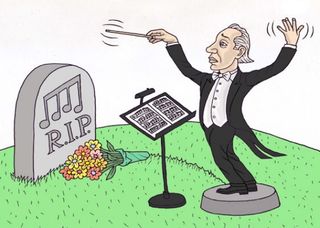
140122_CBOX_ClassicalDead.jpg.CROP.promo-mediumlargeClassical music has been circling the drain for years, of course. There’s little doubt as to the causes: the fingernail grip of old music in a culture that venerates the new; new classical music that, in the words of Kingsley Amis, has about as much chance of public acceptance as pedophilia; formats like opera that are extraordinarily expensive to stage; and an audience that remains overwhelmingly old and white in an America that’s increasingly neither. Don’t forget the attacks on arts education, the Internet-driven democratization of cultural opinion, and the classical trappings—fancy clothes, incomprehensible program notes, an omerta-caliber code of audience silence—that never sit quite right in the homeland of popular culture.

The holiday season typically provides a much-needed transfusion. But the most recent holidays came after an autumn that The New Yorker called the art form’s “most significant crisis” since the Great Recession. Looking at the trend lines, it’s hard to hear anything other than a Requiem.

Let’s start by following the money. In 2013, total classical album sales actually rose by 5 percent, according to Nielsen. But that's hardly a robust recovery from the 21 percent decline the previous year. And consider the relative standing of classical music. Just 2.8 percent of albums sold in 2013 were categorized as classical. By comparison, rock took 35 percent; R&B 18 percent; soundtracks 4 percent. Only jazz, at 2.3 percent, is more incidental to the business of American music.

More here.

twain and jumping frogs

Jumping frogBen Tarnoff at Lapham's Quarterly:

“Jim Smiley,” subsequently retitled “The Celebrated Jumping Frog of Calaveras County,” lifted Twain to fame and laid the foundation for his later triumphs, but it isn’t especially funny anymore. What once made bankers in New York and boatmen in Baton Rouge laugh out loud would now at best elicit a halfhearted chuckle from a generous reader. It’s hard to say exactly why. Humor eludes elaborate theorizing, but it usually relies on context: on shared assumptions about the permissible and the taboo, the familiar and the strange. Some humor stays funny because its underlying truths remain in force—the flirty banter in The Taming of the Shrew, for instance, or the dick jokes inTristram Shandy. A large part of the pleasure in laughing at old material is realizing how little has changed. Other humor, by contrast, loses its power as its context fades.

“Jim Smiley” drew upon a context that has changed beyond recognition: the American West. More than just a place, the West was an idea; it spawned national legends, bestselling authors, and a menagerie of pop-culture entertainments, from the nineteenth century “horse operas” performed on Broadway to the dime novels featuring frontier outlaws. What made “Jim Smiley” such a hit was Twain’s upending of the conventions of this world, with a picture of the West at once recognizable and not.

more here.

Getting Dressed

ID_COHEN_GETTI_CO_001Paula Marantz Cohen at The Smart Set:

The items that constitute a “basic” makeup regimen are variable from person to person, though the conventional prerequisites are as follows: moisturizer, concealer, foundation, mascara, eyeliner, blush, and lipstick. All the above also happen to be umbrella categories for a vast empire of additional products. There are many varieties of concealer, for example: for blemishes, for scars, for sun discoloration, for broken blood vessels, for dark circles. Lipstick can range from practically indelible to the sheerest gloss, in flavors from watermelon to key lime pie (an ideal snack for the anorexic), and have secondary functions like lining, moisturizing, and plumping. Foundation can be liquid, spray, or powder, under the assumption that the skin is a complex geographical terrain that must be treated with different agents for different strata. The eyes have an entire phalanx of products too numerous to go into. And I haven’t even started in on products to tighten pores, fill in wrinkles, and counteract redness — all minor industries in themselves. It is also possible to use makeup the way doctors use drugs off-label: blush as shadow, lipstick as blush. And there are folkloric co-optations with things like soy sauce and wasabi. I can personally recommend toothpaste as an overnight pimple remedy.

A relatively recent cosmetic innovation that intrigues me is foundation primer. Someone in the bowels of the cosmetic industry must have had the revelation that just as an artist primes a canvas before beginning a picture, one ought to similarly prepare the skin before putting on makeup.

more here.

Richard Strauss: a reluctant Nazi collaborator

201402straussMichael Kennedy at The New Statesman:

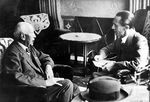
In 1933, Hitler became Germany’s chancellor at the head of the National Socialist Party. The non-political Strauss professed not to be worried, telling his family that this government would not last long. “I made music under the kaiser,” he told them. “I’ll survive under this lot, as well.” Strauss’s beloved daughter-in-law, Alice, was Jewish and she had two sons; his publisher, Adolf Fürstner, was Jewish and he was working on the libretto for his next opera with the Austrian-Jewish playwright Stefan Zweig, a comedy based on Ben Jonson’s The Epicene (Die Schweigsame Frau) and intended for a premiere in Dresden.

In 1933, Joseph Goebbels, the minister of propaganda who was responsible for all aspects of cultural activity, set up departments to deal with each section of the arts; in November, he appointed Strauss president of theReichsmusikkammer, overseeing music. Asked later why he accepted, Strauss said: “I hoped that I would be able to do some good and prevent worse misfortunes.”

more here.

the gratitude visit

Martin Seligman in delancyplace:

BookA generation ago, the study of psychology was dominated by a focus on the abnormal and the negative. But more recently, there have been academic movements that have undertaken a data and research-based study of the positive dimensions of psychology, with a view toward prescribing activities that can be imbedded into a person's life and increase that person's structural level of happiness. One such effort comes from Martin Seligman and the University of Pennsylvania. The following is a sample of the type of activity this academic school of thoughts recommends based on its own systematic studies to deal with the increasing prevalence of depression in our society:

“Here's a brief exercise that will raise your well-being and lower your depression: The gratitude visit. Close your eyes. Call up the face of someone still alive who years ago did something or said something that changed your life for the better. Someone who you never properly thanked; someone you could meet face-to-face next week. Got a face? Gratitude can make your life happier and more satisfying. When we feel gratitude, we benefit from the pleasant memory of a positive event in our life. Also, when we express our gratitude to others, we strengthen our relationship with them. But sometimes our thank you is said so casually or quickly that it is nearly meaningless. … Your task is to write a letter of gratitude to this individual and deliver it in person. The letter should be concrete and about three hundred words: be specific about what she did for you and how it affected your life. Let her know what you are doing now, and mention how you often remember what she did. Make it sing! Once you have written the testimonial, call the person and tell her you'd like to visit [him or] her, but be vague about the purpose of the meeting; this exercise is much more fun when it is a surprise. When you meet her, take your time reading your letter.

“You will be happier and less depressed one month from now. …

More here.

Breakthrough allows scientists to watch how molecules morph into memories

From MedicalXpress:

BrainIn the research described in the two Science papers, the Einstein researchers stimulated neurons from the mouse's hippocampus, where memories are made and stored, and then watched fluorescently glowing beta-actin mRNA molecules form in the nuclei of neurons and travel within dendrites, the neuron's branched projections. They discovered that mRNA in neurons is regulated through a novel process described as “masking” and “unmasking,” which allows beta-actin protein to be synthesized at specific times and places and in specific amounts. Neurons come together at synapses, where slender dendritic “spines” of neurons grasp each other, much as the fingers of one hand bind those of the other. Evidence indicates that repeated neural stimulation increases the strength of synaptic connections by changing the shape of these interlocking dendrite “fingers.” Beta-actin protein appears to strengthen these synaptic connections by altering the shape of dendritic spines. Memories are thought to be encoded when stable, long-lasting synaptic connections form between neurons in contact with each other.

More here.

Thursday, January 23, 2014

The Iran Nuclear Accord Is Good for Human Rights

Akbar Ganji is an Iranian journalist often referred to as Iran's “pre-eminent political dissident” after spending 6 years in jail for his human rights activities.

Akbar Ganji in The Huffington Post:

The nuclear agreement between Iran and the P5+1 has provoked considerable debate. The proponents of diplomatic resolution of the standoff with Iran have praised the accord. Its opponents, such as Israel and Saudi Arabia, have harshly criticized it. As a former Iranian political prisoner who spent six years in the Islamic Republic's jails and whose writings have been banned in Iran, I support the Geneva agreement. The question is, what is the goal of continuing the standoff with Iran, if not reaching an agreement with it?

If the goal is regime change in Iran, we must recall that 13 years of backbreaking sanctions did not topple Saddam Hussein's regime in Iraq; the military invasion of 2003 did. The sanctions did kill at least half a million Iraqi children, and prompted the infamous statement by Madeleine Albright, President Bill Clinton's secretary of state, that getting rid of Saddam Hussein was worth the huge cost in terms of human suffering in Iraq.

If the Iranian regime's respect for human rights is made the necessary condition for a nuclear accord, there will be no agreement at all, because it will prove the claim by Supreme Leader Ayatollah Ali Khamenei that the real goal of the United State is regime change, and that the nuclear program and claims about Iran wanting to “wipe Israel off the map” are only excuses. So long as there is an external threat that endangers its survival, no regime will agree to reform itself and become democratic.

National security and economic prosperity are prerequisites for the emergence of a democratic regime. Destroying the infrastructure of a nation through harsh economic sanctions and war will not bring about a transition to democracy. Afghanistan, Iraq, Libya and Syria are prime examples of the failure of such thinking. In the first 11 months of 2013 alone, more than 8,000 people were killed in Iraq as a result of terrorism. Libya has been transformed into a lawless country controlled by various militia, with some having separatist tendencies. Syria has been completely destroyed, with an estimated 120,000 people killed. It has also become an operation center for some of the most extreme terrorist groups. In fact, as a result of the regime-change crusade of the past 12 years, jihadi groups of the Middle East have become stronger, not weaker.

More here.

Let Us Take A Walk In the Brain: Carl Zimmer’s Cover Story For National Geographic

Carl Zimmer in his excellent blog, The Loom:

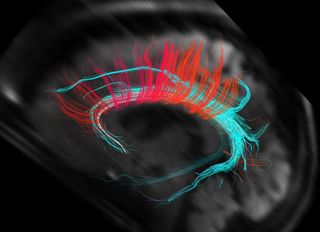
Zimmer-550Over the past year, I’ve spent a lot of time around brains. I’ve held slices of human brains preserved on glass slides. I’ve gazed through transparent mouse brains that look like marbles. I’ve spent a very uncomfortable hour having my own brain scanned (see the picture above). I’ve interviewed a woman about what it was like for her to be able to control a robot arm with an electrode implanted in her brain. I’ve talked to neuroscientists about the ideas they’ve used their own brains to generate to explain how the brain works.

This has all been part of my research for the cover story in the current issue of National Geographic. You can find it on the newsstands, and you can also read it online.

On Monday, I was interviewed on KQED about the story, and you can find the recording here.

National Geographic has been doing a lot of interesting work to adapt their magazine stories for the web and tablets. For my story, the great photographs from Robert Clark are accompanied by some fine video.

More here.

The Truths Behind “Dr. Strangelove”

Eric Schlosser in the New Yorker:

NuclearHalf a century after Kubrick’s mad general, Jack D. Ripper, launched a nuclear strike on the Soviets to defend the purity of “our precious bodily fluids” from Communist subversion, we now know that American officers did indeed have the ability to start a Third World War on their own. And despite the introduction of rigorous safeguards in the years since then, the risk of an accidental or unauthorized nuclear detonation hasn’t been completely eliminated.

The command and control of nuclear weapons has long been plagued by an “always/never” dilemma. The administrative and technological systems that are necessary to insure that nuclear weapons are always available for use in wartime may be quite different from those necessary to guarantee that such weapons can never be used, without proper authorization, in peacetime. During the nineteen-fifties and sixties, the “always” in American war planning was given far greater precedence than the “never”…

In December, 1960, fifteen members of Congress serving on the Joint Committee on Atomic Energy had toured NATO bases to investigate how American nuclear weapons were being deployed. They found that the weapons—some of them about a hundred times more powerful than the bomb that destroyed Hiroshima—were routinely guarded, transported, and handled by foreign military personnel. American control of the weapons was practically nonexistent. Harold Agnew, a Los Alamos physicist who accompanied the group, was especially concerned to see German pilots sitting in German planes that were decorated with Iron Crosses—and carrying American atomic bombs. Agnew, in his own words, “nearly wet his pants” when he realized that a lone American sentry with a rifle was all that prevented someone from taking off in one of those planes and bombing the Soviet Union.

Read the rest here.

A New Physics Theory of Life

Plagiomnium_affine_laminazellen-300x225

Natalie Wolchover in Quanta Magazine:

From the standpoint of physics, there is one essential difference between living things and inanimate clumps of carbon atoms: The former tend to be much better at capturing energy from their environment and dissipating that energy as heat. Jeremy England, a 31-year-old assistant professor at the Massachusetts Institute of Technology, has derived a mathematical formula that he believes explains this capacity. The formula, based on established physics, indicates that when a group of atoms is driven by an external source of energy (like the sun or chemical fuel) and surrounded by a heat bath (like the ocean or atmosphere), it will often gradually restructure itself in order to dissipate increasingly more energy. This could mean that under certain conditions, matter inexorably acquires the key physical attribute associated with life.

“You start with a random clump of atoms, and if you shine light on it for long enough, it should not be so surprising that you get a plant,” England said.

England’s theory is meant to underlie, rather than replace, Darwin’s theory of evolution by natural selection, which provides a powerful description of life at the level of genes and populations. “I am certainly not saying that Darwinian ideas are wrong,” he explained. “On the contrary, I am just saying that from the perspective of the physics, you might call Darwinian evolution a special case of a more general phenomenon.”

More here.

We Need Smarter Prostitution Laws

Sex_work_top_image

Jill Filipovic in Al Jazeera:

Current sex workers — at least those who are active on the Internet, arguably an English-speaking, financially stable and educated sliver representing sex workers who are significantly more privileged than the average global sex worker — seem to populate the pro-decriminalization group more heavily. This is not surprising, considering the perils sex workers face when their trade is outlawed, with rapes and assaults that cannot be reported to police, abuse at the hands of police, control by pimps or organized criminal cartels, arrests and criminal records that make other work impossible, murders no one cares about. (Street sex workers, for instance, are underrepresented in mainstream media stories but account for about 20 percent of sex workers in the U.S. and face much higher levels (PDF) of extreme poverty, homelessness, desperation and substance abuse than the general population — and even the overall sex-work population — does.)

It is clear that outlawing prostitution has not worked. Legalization, it would seem, would be a solution. Regulate sex work like any other job and treat sex workers with the dignity afforded to any other worker, and you undercut the assumption on the part of some johns that they can rape, abuse and rob, and you empower sex workers to go to the police without fear of arrest. In theory, legalization would even cut down on human trafficking and coercive practices. Regulation would make it easier to identify those who are in the trade voluntarily versus those who are not. Taking sex work out of the shadows would cast more light on those people who are being abused.

More here. Also see Aziza Ahmed in Foreign Policy:

Abolitionists typically insist that criminalization is imperative. Some have pushed for making the sale of sex illegal. Others, however, including feminists who oppose prostitution, support a different model: outlawing only the purchase of sex. They argue that criminalizing clients will force the sex industry out of business, liberating sex workers but not treating them as criminals.

Already, this model has achieved legislative success. Sweden outlawed buying sex in 1999; Norway and Iceland later followed suit. France is on the verge of joining the club, and a debate on the issue is even gaining steam in Germany. Feminist Kathleen Barry, author of Female Sexual Slavery and co-founder of the Coalition Against Trafficking in Women, has even called for an international treaty that would mandate “arresting, jailing and fining johns.” (She first introduced the idea in the early 1990s, but has recently revived it.)

In reality, there is no convincing evidence that punishing “johns” decreases the incidence of commercial sex. Troublingly, Sweden's sex workers report that criminalization has simply driven the sex industry underground, with dangerous consequences: Clients have more power to say when and where they want to have sex, inhibiting workers' ability to protect themselves if need be.

More here.

the love of pigeons

84b31690-8386-11e3-_400700hJennie Erin Smith at the Times Literary Supplement:

On a chilly autumn morning in Ozone Park, Queens, Carmine Gangone, an Italian-American veteran of the Second World War, sends his rooftop flock of pigeons into the sky, screaming “Climb, you bastards!” as he waves a bamboo pole after them. Across town in Brooklyn, a man who calls himself Tony the Terminator releases his own birds in the hope that they will “tangle” with flocks like Gangone’s and return with a pigeon or two more. Elsewhere in New York, hundreds of people casually toss chunks of bagel or pizza crust at feral pigeons; others carry whole bags of bread to feed them with, despite long-standing efforts by city officials to discourage the practice.

In The Global Pigeon, his ethnography of human–pigeon encounters, Colin Jerolmack makes an imaginative and convincing case against interpreting any of these activities as “driven by a singular deep-seated need to connect to nature”, as environmental scholars persuaded by the biophilia hypothesis might. Jerolmack, too, first thought of the rooftop pigeon coops as a way for their owners to “escape the concrete jungle and find solace in intimate relations with the ‘natural world’”. But people like Gangone quickly disabused him of the idea. Instead, Jerolmack found, after spending thousands of hours with pigeon flyers, feeders, and racers – mostly in New York but also in Berlin, London, Venice and South Africa – that people who interacted with pigeons did so mainly to reinforce their connections to other people.

more here.

On Afrikaner Dance Music

ImageTrevor Sacks at n+1:

Boeremusiek usually has no vocals, and its central instrument is the crunchy, droning concertina, an originally European free-reed instrument replete with bellows—much like an accordion, but smaller and perhaps cuter. As with some forms of American folk music, guitar, banjo, occasionally violin, and bass or cello accompany it. It could be considered the bluegrass of South Africa, although perhaps it’s closer in sound to Cajun music, or polka mixed with Parisian cafe kitsch.

A typical boeremusiek song, like the traditional “Sonop” (“Sunrise”) as played by Die Oudag Boere-Orkes (The Old-Time Boere Orchestra), begins with a short figure played on a lone concertina, increasing in tempo like a wind-up record, before the rest of the band joins in. An acoustic guitar provides rhythm along with a bouncing, plucked cello to mark the bassline; while a second concertina provides harmonic lines and chord stabs. As in bluegrass, a banjo adds extra jauntiness, tripping atop the guitar rhythm. In the traditional bands, no drums feature, though they do in bands like The Klipwerf Orkes, perhaps the most successful current boeremusiek act. Their drummer adds plenty of splashy accents to the relentless, chugging rhythm in their version of “Sonop,” and they’ll often include clean electric guitars, synthesizers and pianos.

more here.

the greatness of herzog

BellowKevin Stevens at The Dublin Review of Books:

“If I’m out of my mind, it’s all right with me, thought Moses Herzog.”

So begins Saul Bellow’s Herzog, a half-century in print and still funny, intense, personal, and contradictory from its opening sentence. Still contemporary. Imbued with two thousand years of learning yet crackling with wiseass Chicago wit. Cerebral and earthy, dense and free-flowing, brilliant, imaginative, hilarious. Thoroughly Jewish yet thoroughly American. And, though many might argue otherwise, the great postwar American novel.

Great works of literature are both representative and unique. Representative because, at least in the Western mimetic tradition, they depict, via genre, rhetoric, and habit of thought, the cultural and political realities of their time. And while full of the detail of the historical moment, the best works also transcend the moment, giving narrative or lyric the scope and depth of the timeless, so that meaning and relevance persist as history fades.

Uniqueness is mediated by language – not simply as style, though that is important, but as the medium through which idea, image, and narrative are captured and conveyed. Language, as Richard Ford puts it, is what happens in literature.

more here.

Thursday Poem

Evolution

Once I was a Paleolithic painter, a sensual hunter
plundering the earth, living from hand to mouth,
drawing at one end of the cave, all my worries ordinary.
I was faithful to nature, transmitting pure and honest beauty,
my drawings of movement were snapshots.
I saw the finest nuances of color
and didn’t know what shadows were.
I didn’t believe in gods or the world to come,
I lived in an age of deeds
and afterwards I split in two and divided the world
into reality and the beyond,
the seen world and the hidden one
the mortal body and the soul.

by Yediot Aharonot
from Ra'ad ha-ear
Publisher: Yediot Aharonot, Tel Aviv, 2013
translation, Lisa Katz

The Happiness Index: Putting people before profit in Bhutan

Gretchen Legler in Orion Magazine:

Happiness_magnet011DRUK YUL, the DRAGON KINGDOM, has been incognito for a long, long time. A country roughly the size of Vermont and New Hampshire combined, but with less than half the population, it sits sandwiched between its giant neighbors, China and India. It has never been colonized by a foreign power and was only once unsuccessfully intruded upon by the British. It has remained a place apart—a secret, secluded jewel of a Buddhist kingdom in the lap of the Himalayas, ruled by a family of kings and queens whose pictures adorn nearly every household. Suddenly, however, it has burst upon the global scene, not only as an elite tourist destination, but as a champion in the quest for human happiness and sustainable economics, its leaders making international headlines as they invite other nations to wake up and get on board with the pursuit of Gross National Happiness. GNH, as the Bhutanese call it, was conceived of by the country’s fourth king, Jigme Singye Wangchuck, who, in the mid-1970s, realized Bhutan could no longer remain hidden from the rest of the world like a real-life Shangri-La, but would need to modernize or risk being erased entirely. How could this be done without wrecking Bhutan’s diverse and precious natural resources, subjecting its people to unfettered capitalism, or prostituting its complex and rich Tibetan Buddhist culture to tourism? His answer was Gross National Happiness, and he is famously quoted as saying, “Gross National Happiness is more important than Gross National Product.”

…In Bhutan, happiness is not a perfect life softly cocooned in pillows of cleanliness, security, and abundance. “I like to start by translating what happiness means in our language,” he says. “Ghakey—the first syllable, gha, is a word that you can use when you say you like something, when you say you love someone; it can also be used to describe a state of elation. The second syllable, key, means peace. When we refer to happiness, we are talking about harmony, striking a balance, so you’re not just focusing on individual emotion but the enabling conditions that will facilitate an individual pursuit of happiness.” Can a country that claims in its brand-new constitution that happiness is more important than money survive, let alone thrive, in a global economy that measures everything by the dollar? How do you measure happiness? Can governments actually help people be happy? Can this tiny hermit kingdom really serve as a model for change for the rest of the world? You could argue that these are some of the most vital questions of our time.

More here.