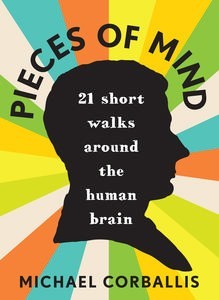
21 Short Walks Around the Human Brain

David Schoonmaker in American Scientist:

BookMany successful authors answer questions we long ago articulated and have wished we could answer. Michael Corballis goes at least a step further: He poses questions we wouldn’t have thought to ask and then answers them with clarity and wit. And what could be more fascinating to a human being than the human brain?

A Very Short Tour of the Mind exemplifies truth in advertising—it is very short, both in overall length and in the duration of each chapter, the longest of which barely makes it to the sixth page. Yet the book is packed with surprises. Did you know, for example, that left-handedness is generally considered by psychologists to be a lack of handedness? Or that the ratio of neocortex (the home of higher-order functions) to overall brain volume in primates is related to social-group size? Corballis ranges widely within and beyond his subject. He muses about bipedalism and why it may have been adaptive; explores why and how we are so skilled at recognizing faces; and closes with a chapter called “Lies and Bullshit,” in which he wonders why we are so very intolerant of the former but readily accepting of the latter. With his usual self-effacement, he ends with an admission about his own career as psychologist, educator and communicator that may bear on the question.

More here.

In the Sontag Archives

Benjamin Moser in The New Yorker:
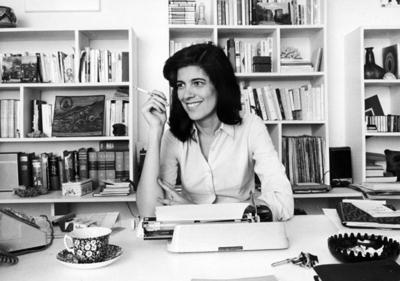
SontagAny biographer knows the unease, sometimes verging on nausea, that extended research into a single person’s life brings. I never met Sontag or Clarice Lispector, the subject of my last book. But after years of research, interviews, reading, and travelling, I probably know more about both of them than anyone outside their most intimate circles. I know about their sex lives and finances and medical records and professional failures, about their difficulties with their children and their parents, about the painful secrets that they desperately longed to conceal.

Even without these struggles, which are part of every life, the form, too, imposes choices. Just as history is not the past itself but a story about the past, biography is not a life but a life story. Just as a novelist gets to know his or her characters, a biographer gets to know his, too, and, in the face of the sprawling chaos of an entire life, knows that whatever he can tell about the subject is only a small selection that fits a narrative chosen according to his own tastes and interests.

He is also always aware that the biographer’s position, which necessarily involves judgments about the subject’s character and the choices she made, is profoundly unjust, for the simple reason that the subject herself cannot be consulted.

I am familiar with these concerns, and have always borne them in mind. Still, reading papers and manuscripts is one thing. Looking through someone’s e-mail is quite another, and the feeling of creepiness and voyeurism that overcame me as I sat with Gonzalez struggled with the unstoppable curiosity that I feel about Sontag’s life. To read someone’s e-mail is to see her thinking and talking in real time. If most e-mails are not interesting (“The car will pick you up at 7:30 if that’s ok xxx”), others reveal unexpected qualities that are delightful to discover. (Who would have suspected, for example, that Sontag sent e-mails with the subject heading “Whassup?”) One sees Sontag, who had so many friends, elated to be in such easy touch with them (“I’m catching the e-mail fever!”); one sees the insatiably lonely writer reaching out to people she hardly knew and inviting them to pay a call. In their reactions, one reads their bemusement, how hesitant they were to bother the icon, with her fearsome reputation.

Read more here.

Friday Poem

The Gift

Give me what you have on you.
Neither keys nor money.
Make it something temporary.

The hastily scribbled phone number.
The dry-cleaned piece of paper in your coat pocket.
The button about to fall off.

The words you just held back from saying.
Your strength too much to open a door.
All the things you no longer need.

Give me the rustle of your cotton.
The wind can do without.

by K. Schippers
from tellen en wegen
publisher: Querido, Amsterdam, 2011
Translation: 2012, Willem Groenewegen

Thursday, January 30, 2014

Are We Too Close to Making Gattaca a Reality?

4348941910_8f09fe9672_z-300x195

Ferris Jabr in Scientific American (photo: Katie Tegtmeyer, Flickr):

Preventing and treating diseases are not the only reasons people have turned to pre-implantation genetic diagnosis. PGD also makes it possible for parents to predetermine characteristics of a child to suit their personal preferences. In a few cases, people have used PGD to guarantee that a child will have what many others would consider a disability, such as dwarfism or deafness. In the early 2000s, lesbian couple Sharon Duchesneau and Candy McCullough—both deaf from birth—visited one sperm bank after another searching for a donor who was also congenitally deaf. All the banks declined their request or said they did not take sperm from deaf men, but the couple got what they were looking for from a family friend. Their son, Gauvin McCullough, was born in November 2001; he is mostly deaf but has some hearing in one ear. Deafness, the couple argued, is not a medical condition or defect—it is an identity, a culture. Many doctors and ethicists disagreed, berating Duchesneau and McCullough for deliberately depriving a child of one of his primary senses.

Much more commonly, hopeful parents in the past decade have been paying upwards of $18,000 to choose the sex of their child. Sometimes the purpose of such sex selection is avoiding a disease caused by a mutation on the X chromosome: girls are much less likely to have these illnesses because they have two X chromosomes, so one typical copy of the relevant gene can compensate for its mutated counterpart. Like Marie and Antonio Freeman in Gattaca, however, many couples simply want a boy or a girl. Perhaps they have had three boys in a row and long for a girl. Or maybe their culture values sons far more than daughters. Although the U.K., Canada and many other countries have prohibited non-medical sex selection through PGD, the practice is legal in the U.S. The official policy of the American Society of Reproductive Medicine is as follows: “Whereas preimplantation sex selection is appropriate to avoid the birth of children with genetic disorders, it is not acceptable when used solely for nonmedical reasons.” Yet in a 2006 survey of 186 U.S. fertility clinics, 58 allowed parents to choose sex as a matter of preference. And that was seven years ago. More recent statistics are scarce, but fertility experts confirm that sex selection is more prevalent now than ever.

“A lot of U.S. clinics offer non-medical sex selection,” says Jeffrey Steinberg, director of The Fertility Institutes, which has branches in Los Angeles, New York and Guadalajara, Mexico. “We do it every single day. We did three this morning.”

More here.

Mourning Tongues: How Auden Was Modified in the Guts of the Living

Auden1-243x350

Nina Martyris in the LA Review of Books:

ON THIS DAY 75 years ago — January 28, 1939 — “something slightly unusual” occurred in the annals of English poetry. William Butler Yeats died, and his death gave birth to a poem that set off one of the most extraordinary elegiac conversations of our time.

The poem was W. H. Auden’s “In Memory of W. B. Yeats,” and this is the story of its astonishing afterlife — how three separate elegies in three different countries were modeled on it; how Auden’s words were quite literally, in Auden’s line from the poem, “modified in the guts of the living,” and how, in a feat that even someone as reputedly self-anointing as Auden could not possibly have foreseen, it went on to link a multicultural pantheon of greats: Yeats, Auden, T. S. Eliot, Joseph Brodsky, Derek Walcott, and Seamus Heaney.

Auden was a natural master of the elegy. His pen was ready, generous, candid, and quick to rhyme. He shot off elegies on Freud, Henry James, Ernst Toller, Louis MacNeice, and JFK, and his “Funeral Blues,” a fine example of the coherence of grief, has become part of crematoria cool after it was sentimentalized by Hollywood. But of all his requiem compositions, it is his magnificent and measured elegy for Yeats that has a seminal place in the canon.

More here.

Our Quantum Reality Problem

Quantum

Adrian Kent in Aeon:

Here’s the basic problem. While the mathematics of quantum theory works very well in telling us what to expect at the end of an experiment, it seems peculiarly conceptually confusing when we try to understand what was happening during the experiment. To calculate what outcomes we might expect when we fire protons at one another in the Large Hadron Collider, we need to analyse what – at first sight – look like many different stories. The same final set of particles detected after a collision might have been generated by lots of different possible sequences of energy exchanges involving lots of different possible collections of particles. We can’t tell which particles were involved from the final set of detected particles.

Now, if the trouble was only that we have a list of possible ways that things could have gone in a given experiment and we can’t tell which way they actually went just by looking at the results, that wouldn’t be so puzzling. If you find some flowers at your front door and you’re not sure which of your friends left them there, you don’t start worrying that there are inconsistencies in your understanding of physical reality. You just reason that, of all the people who could have brought them, one of them presumably did. You don’t have a logical or conceptual problem, just a patchy record of events.

Quantum theory isn’t like this, as far as we presently understand it. We don’t get a list of possible explanations for what happened, of which one (although we don’t know which) must be the correct one. We get a mathematical recipe that tells us to combine, in an elegant but conceptually mysterious way, numbers attached to each possible explanation. Then we use the result of this calculation to work out the likelihood of any given final result. But here’s the twist. Unlike the mathematical theory of probability, this quantum recipe requires us to make different possible stories cancel each other out, or fully or partially reinforce each other. This means that the net chance of an outcome arising from several possible stories can be more or less than the sum of the chances associated with each.

More here.

The Elusive Tagore

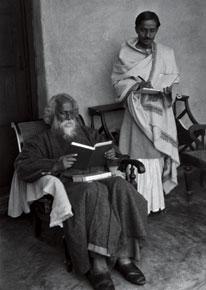
13352.tagore1

Philip Nikolayev in Open The Magazine:

When John Berryman, the great American poet, gave a lecture tour of India in 1957, he fell ill ‘with virus and a high fever’. When he reached Ahmedabad, his condition worsened; by then he had become noticeably thin, already having lost ten pounds. Still, he decided to proceed with his scheduled lecture. Berryman’s biographer Paul Mariani writes of this fascinating moment:

‘As Munford finished his talk, he saw Berryman standing in the doorway, trembling, his face drained of color. Then Berryman walked up to the podium and delivered a lecture unlike anything he’d given so far on his trip. For six weeks, he told his small audience, he had been told over and over by his Indian hosts that America had produced no poetry and that the Indians were the most poetic people in the world. But what he’d seen of Indian poetry seemed nothing more than a loose sort of “spiritual sentimentality.” Now he was going to tell them what real poetry was. He quoted a passage from Rilke in German and then a passage from Lorca in Spanish, translating into English afterward for his audience. Great poetry, he explained, sprang only from the pain and anguish of human experience. The audience sat listening to his stunning, fevered performance. If they felt angry or patronised, they did not show it.’

In this case, Berryman’s fever was the likely cause of his bluntness. He had come to Ahmedabad directly from Kolkata. Tagore would have been on his mind. There can be little doubt that in speaking of “spiritual sentimentality”, Berryman was referring to Tagore, whom he would have read in translation. That’s exactly how Tagore comes off in English.

But it does not take a Westerner to question Tagore’s importance.

More here.

Capitalism vs. Democracy

29edsal-chart-articleLarge

Thomas B. Edsall in the NYT:

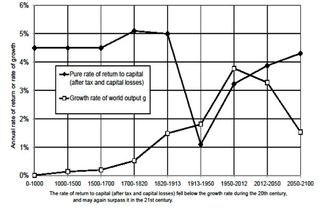
Thomas Piketty’s new book, “Capital in the Twenty-First Century,”described by one French newspaper as a “a political and theoretical bulldozer,” defies left and right orthodoxy by arguing that worsening inequality is an inevitable outcome of free market capitalism.

Piketty, a professor at the Paris School of Economics, does not stop there. He contends that capitalism’s inherent dynamic propels powerful forces that threaten democratic societies.

Capitalism, according to Piketty, confronts both modern and modernizing countries with a dilemma: entrepreneurs become increasingly dominant over those who own only their own labor. In Piketty’s view, while emerging economies can defeat this logic in the near term, in the long run, “when pay setters set their own pay, there’s no limit,” unless “confiscatory tax rates” are imposed.

Piketty’s book — published four months ago in France and due out in English this March — suggests that traditional liberal government policies on spending, taxation and regulation will fail to diminish inequality. Piketty has also delivered and posted a series of lectures in French and English outlining his argument.

Conservative readers will find that Piketty’s book disputes the view that the free market, liberated from the distorting effects of government intervention, “distributes,” as Milton Friedman famously put it, “the fruits of economic progress among all people. That’s the secret of the enormous improvements in the conditions of the working person over the past two centuries.”

Piketty proposes instead that the rise in inequality reflects markets working precisely as they should: “This has nothing to do with a market imperfection: the more perfect the capital market, the higher” the rate of return on capital is in comparison to the rate of growth of the economy. The higher this ratio is, the greater inequality is.

More here. For more, see here in The Economist.

Japan’s Great Zoo Massacre

B55c8cca-8905-11e3-_402570hJulia Adeney Thomas at The Times Literary Supplement:

Behind the curtain of empire, horrors lurk. At the Tokyo Imperial Zoo on September 4, 1943, two starving elephants remained silent, obedient to their trainers, while a religious service on the other side of a red-and-white awning prematurely memorialized their sacrifice for Japan’s imperial cause. Buddhist monks, government officials and schoolchildren made offerings of food to the elephants’ spirits and to the spirits of other captive animals killed by order of the government. This unprecedented ceremony known as the “Memorial Service for Martyred Animals” was held on the zoo’s grounds where nearly a third of the cages stood empty. Lions from Abyssinia, tigers representative of Japan’s troops, bears from Manchuria, Malaya and Korea, an American bison, and many others had been clubbed, speared, poisoned and hacked to death in secret. Although the zoo’s director had found a way to save some of the condemned creatures by moving them to zoos outside Tokyo, Mayor Ōdaichi Shigeo insisted on their slaughter. Ōdaichi himself, along with Imperial Prince Takatsukasa Nobusuke and the chief abbot of Asakusa’s Sensōji Temple, presided over the carefully choreographed and highly publicized “Memorial Service”, thanking the animals for sacrificing themselves for Japan’s war effort.

But the elephants were not dead. Tonky and Wanri had been holding out for ten days against their keepers’ attempts to poison them with strychnine-laced food and cyanide-permeated water, refusing to eat or drink.

more here.

In Praise of Mediocrity

200px-Viktor_Hartman-150x150James Matthew Wilson at Front Porch Republic:

Mediocrity makes visible something about tradition that greatness can often obscure. It is one thing to say, for instance, that the West possesses a valuable tradition because, within it, we find a sampling of awesome geniuses, from Homer and Plato, to Dante, Shakespeare, and Nietzsche. But this hardly explains the value of tradition. Traditions are self-authenticating. They are good in themselves. To live within and participate in a tradition is, again, to keep something alive and to draw things and persons together, across time, in a community of knowledge and love. The second-rate imitator of Keats in Kentucky, the belated composer of an oratorio in Ohio, may seem derivative, as if merely preserving the shadow of greatness in amber. But, to the contrary, they take their place in a way of being and keep that way open for others to tread.

Authors’ names not withstanding, art, technology, and science, the whole world of work and culture, are starkly impersonal enterprises. The anonymous mediocrity, no less than the legendarymaestro, gives his life in the service of keeping a tradition alive; in being himself forgotten he helps something else to be remembered. What a blessed thing to do.

more here.

The extraordinary life of William S. Burroughs

140203_r24576_p233Peter Schjeldahl at The New Yorker:

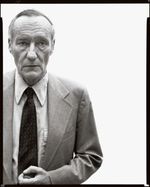
“Virtually all of Burroughs’s writing was done when he was high on something,” Miles writes. The drugs help account for the hollowness of his voices, which jabber, joke, and rant like ghosts in a cave. He had no voice of his own, but a fantastic ear and verbal recall. His prose is a palimpsest of echoes, ranging from Eliot’s “Preludes” and “Rhapsody on a Windy Night” (lines like “Midnight shakes the memory / As a madman shakes a dead geranium” are Burroughsian before the fact) to Raymond Chandler’s marmoreal wisecracks and Herbert Huncke’s jive. I suspect that few readers have made it all the way through the cut-up novels, but anyone dipping into them may come away humming phrases. His palpable influence on J. G. Ballard, William Gibson, and Kathy Acker is only the most obvious effect of the kind of inspiration that makes a young writer drop a book and grab a pen, wishing to emulate so sensational a sound. It’s a cold thrill. While always comic, Burroughs is rarely funny, unless you’re as tickled as he was by such recurrent delights as boys in orgasm as they are executed by hanging.

Some critics, including Miles, have tried to gussy up Burroughs’s antinomian morality as Swiftian satire. Burroughs, however, wages literary war not on perceptible real-world targets but against suggestions that anyone is responsible for anything. Though never cruel in his personal conduct, he was, in principle, exasperated with values of constraint. A little of “Nothing is true, everything is permitted” goes a long way for many readers, including me. But there’s no gainsaying a splendor as berserk as that of a Hieronymus Bosch painting. When you have read Burroughs, at whatever length suffices for you, one flank of your imagination of human possibility will be covered for good and all.

more here.

LIKE NOTHING ON EARTH: Landscapes of the Mind

Robert Macfarlane in More Intelligent Life:

LoM%20-%20MarsThough I am nearing 40, it remains an ambition of mine to climb a previously unclimbed mountain. I have in mind possible peaks in Bhutan, Sichuan and north-western Tibet—all of them elegant in their architecture and severe in their remoteness. But my first choice would be the shield volcano Olympus Mons. Its main slopes present little difficulty to the mountaineer, rising as they do at an average angle of five degrees. Its summit is a caldera, or collapsed crater, whose jagged upper rim requires no ropework to reach. Seen on a plan-view map, indeed, it appears to offer little obstacle to an easy ascent. Except that Olympus Mons is on Mars.

I first heard of the mountain in a Pixies song: “Sun shines in the rusty morning/Skyline of the Olympus Mons/I think about it sometimes”, yowled Black Francis, setting my teenage self dreaming. Research revealed its astonishing statistics: the second-highest peak in the solar system, three times the altitude of Everest, one hundred times the mass of Mauna Loa (the largest volcano on Earth), the size of Arizona in area, encircled by an escarpment up to eight kilometres high, and its peripheries engulfed by dust storms that can last for decades. The ludicrous notion of climbing Olympus Mons only occurred to me when I read Kim Stanley Robinson’s remarkable work of areology, “Red Mars” (1992). The first of a trilogy of novels, it begins in the year 2027, when a hundred-strong team of humans make landfall on Mars. Their task is to terraform the red planet from a frozen and irradiated wasteland into a habitable environment, ready to receive future waves of colonists from Earth.

More here.

A 3D window into living cells

From KurzweilAI:

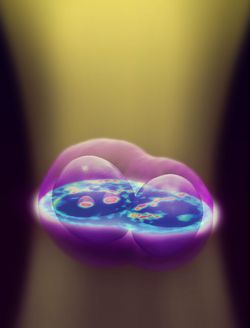
Cell University of Illinois researchers have developed a new imaging technique that needs no dyes or other chemicals, yet renders high-resolution, three-dimensional, quantitative imagery of cells and their internal structures using conventional microscopes and white light.

Called white-light diffraction tomography (WDT), the imaging technique opens a window into the life of a cell without disturbing it and could allow cellular biologists unprecedented insight into cellular processes, drug effects and stem cell differentiation. The team, led by electrical and computer engineering and bioengineering professor Gabriel Popescu, published their results in the journal Nature Photonics. “One main focus of imaging cells is trying to understand how they function, or how they respond to treatments, for example, during cancer therapies,” Popescu said. “If you need to add dyes or contrast agents to study them, this preparation affects the cells’ function itself. It interferes with your study. With our technique, we can see processes as they happen and we don’t obstruct their normal behavior.”

More here.

Wednesday, January 29, 2014

Wondering more about the Coen Brothers’ latest film? Don’t ask them; they’re not talking

Our own Morgan Meis in The Smart Set:

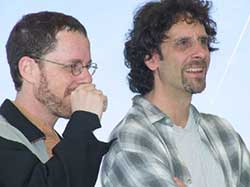
ID_IC_MEIS_COEN_AP_001The Coen Brothers are no help and never will be. Go ahead and ask them. Fresh Air’s Terry Gross recently tried. She asked them how they write their films. “It’s mostly napping,” Ethan Coen answered. The Coen Brothers have been evading answers for about 30 years now, since Blood Simple came out in 1984. Asked about The Big Lebowski a few years ago, Joel Coen said, “That movie has more of an enduring fascination for other people than it does for us.” This is a game, and the Coen Brothers play it well. Other artists have played the same game at even higher stakes. Thomas Pynchon has been in hiding for 40 years. J. D. Salinger hid for about 50, until his death a couple of years ago. The Coen Brothers simply hide in plain sight. They answer by not answering.

This is a good state of affairs. It is good because the Coen Brothers make many enjoyable films. And they are aware that people who make enjoyable films, like the aforementioned The Big Lebowski, should avoid discussing the serious and philosophical themes of their enjoyable films. That’s to say, the art of many Coen Brothers films is in the artlessness. For artless artists, there is nothing worse than too much talk, too much analysis. Artless artists have felt this way for a long time. The Roman poet Catullus had a special word for his artful artlessness. He called it “lepidus.” Lepidus is a hard word to translate. It means something like charming, witty, easy, sophisticated. More than anything, a poem that is lepidus should appear effortless, especially if it is not. Catullus worked very hard on his poetry. But he wanted his poems to read as if they’d been hardly worked upon. He wanted them to seem dashed off, cast out with a flick of the wrist on a summer’s day.

More here.

Understanding the boycott of Israel’s universities

Vijay Prasad in the Washington Post:

ScreenHunter_475 Jan. 29 18.45The growing movement for boycott, divestment and sanctions of Israeli universities has struck a chord in Israel. Justice Minister Tzipi Livni said recently that the boycott campaign, which drew new attention when it was joined last month by the American Studies Association (ASA) , “ is moving and advancing uniformly and exponentially .” If Israel does not respond, Livni said, it will turn itself into “ a lone settlement in the world .”

Livni meant that criticism of the Israeli occupation of Palestinian lands should be taken seriously. Finance Minister Yair Lapid concurred, writing, “The world seems to be losing patience with us. . . . If we don’t make progress with the Palestinians, we will lose the support of the world and our legitimacy.”

The boycott movement is a caution to Israel that it must be less obdurate in its relations with the Palestinians — a position far removed from the toxic response to the ASA within the United States, where many groups long have opposed any discussion of the reality of Israel’s occupation. In 2010, the collegiate group Hillel informed its members that its branches were not permitted to invite speakers who “support boycott of, divestment from, or sanctions against the State of Israel.”

More here.

Dogs Are Not People

Colin Dayan in the Boston Review:

Dayan-dogMRI-webBooks abound on dog love, loving dogs, what it means to have or be with a dog. With all the writing about dogs, it might seem that we are too much infatuated with their unique qualities. But that is not it at all.

Even while we are ostensibly doing everything in our power to ascertain the nature and desires of dogs, the questions we ask obscure or betray what is most salient about them and necessary to their lives. And through it all—the testing and the loving, the ownership and the training, the argument for dog rights and the facts of their disposal—we never question the status of the human as a problem not a privilege.

To say, as Gregory Berns does in his new book How Dogs Love Us and his recent New York Times op-ed “Dogs are People, Too,” that dogs have the reasoning capacity of a young child is to continue to ignore what it is that dogs possess that we do not. Dogs are not people. Dogs are not humans. But we are desperate to appropriate whatever it means to be dog and to make that over in our image.

The urge to characterize dogs as like ourselves speaks to our ignorance and to the failure of imagination. As humans who control the arena of judgment, we cannot brook the humility demanded in confronting what we cannot understand, what we do not know.

More here.

david cronenberg thinks he’s a bug

Kafka-metamorphosisDavid Cronenberg at Paris Review:

I woke up one morning recently to discover that I was a seventy-year-old man. Is this different from what happens to Gregor Samsa in The Metamorphosis? He wakes up to find that he’s become a near-human-sized beetle (probably of the scarab family, if his household’s charwoman is to be believed), and not a particularly robust specimen at that. Our reactions, mine and Gregor’s, are very similar. We are confused and bemused, and think that it’s a momentary delusion that will soon dissipate, leaving our lives to continue as they were. What could the source of these twin transformations possibly be? Certainly, you can see a birthday coming from many miles away, and it should not be a shock or a surprise when it happens. And as any well-meaning friend will tell you, seventy is just a number. What impact can that number really have on an actual, unique physical human life?

In the case of Gregor, a young traveling salesman spending a night at home in his family’s apartment in Prague, awakening into a strange, human/insect hybrid existence is, to say the obvious, a surprise he did not see coming, and the reaction of his household—mother, father, sister, maid, cook—is to recoil in benumbed horror, as one would expect, and not one member of his family feels compelled to console the creature by, for example, pointing out that a beetle is also a living thing, and turning into one might, for a mediocre human living a humdrum life, be an exhilarating and elevating experience, and so what’s the problem?

more here.

John Ashbery’s tribute to Jane Freilicher

Freilicher-2John Ashbery at Poetry Magazine:

I met Jane Freilicher the day I arrived in New York in the summer of 1949, just after I graduated from college and decided to move here on the advice of my friendKenneth Koch. He was away at the time but said I could stay in his apartment until he got back. I could pick up the key from Jane, who lived on the floor above his. Thus I found myself ringing the bell of a not very prepossessing-looking small loft building on Third Avenue near 16th Street. Jane came down to let me in and invited me up for coffee. I think that was the first time 
I saw her paintings, though it might have been slightly later. In any case, 
I wasn’t terribly interested in contemporary painting then, and 
I have only a vague memory of some partly geometric, partly loose semi-abstract landscapes. I certainly wasn’t aware that the year 1949 was going to be a momentous one, not just for me, but for American art, which had been slowly coming to a boil for several years thanks to the efforts of de Kooning, Kline, Pollock, Motherwell, and a handful of other revolutionary geniuses. It was in 1949 that LIFE magazine, unwillingly no doubt, tipped the balance in their favor with a splashy article about Pollock, topped with a half-sarcastic, half-serious headline: “Is he America’s greatest living painter?”

more here.

In Jaipur in winter, master wordsmiths regale readers

Satish Padmanabhan in Outlook India:

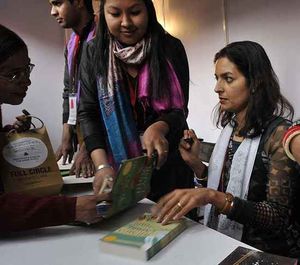
Jhumpa_lahiri_20140203_jpgIt’s the coldest day of the year in Jaipur. Schools have been closed for five days but there are many children standing in a queue that cuts across the entire Front Lawns of Diggi Palace, breathing out little puffs of white vapour, clutching copies of Interpreter of Maladies or The Lowland to get them signed by Jhumpa Lahiri. She can’t keep pace with the number of hands thrusting books at her, so her minders collect them and Jhumpa signs them in assembly-line mode. She has just had a session on The Global Novel with the Ethiopian writer Maaza Mengiste, Jonanthan Franzen, Jim Crace and Chinese-British writer Xioaola Guo. Franzen starts to talk about how, for someone like him, born in 1959 in Midwest America, there was only the American Novel, and how in his lifetime so much American culture has been exported. He suddenly stops mid-sentence, pau­ses to look down at his foot, looks up again at moderator Chandrahas Chaudhury and resumes speaking: “There’s no real point to that statement but you cornered me with a question. Maybe you can come back later for some deep thoughts on the history of the novel and how television relates to all of this.”

Franzen is a big man with a slow, gentle demeanour and a deep, American Midwest drawl, who rarely makes eye contact and speaks mostly looking down at his knees with his hands hunched together. He reminds you of Stephen King with more kempt hair. He lingers thoughtfully on what he is trying to say, as well as what you’ve asked him. He talks about short stories and how it’s a most difficult art form. “Reading a short story is like confronting death. You know it’s going to end soon and my eyes start to moisten.” His standout moment of last year was when Alice Munro won the Nobel Prize for literature and he wonders why her stories are not made into films. He says books are far tougher to make into films; he can count the number of great book-based films on the fingers of one hand. The conversation then veers towards social media. Suddenly, Fran­zen’s solid frame crumbles. He gets very animated. “I can’t understand editors who are telling reporters to tweet, tweet, tweet, get likes, likes, likes, send your pictures, upload your videos,” he imitates these editors in a high-strung squeaky voice, shaking all over. Soon, he calms down. “The notion that Twitter is some egalitarian force is flawed. Yes, it’s very popular, but even there a few people have a lot of followers, just like the real world.” Franzen is a birder and what he is really looking forward to is to go to Bharatpur, Sariska and later Kaziranga in Assam to watch birds after his sessions are over. I tell him about a bit of news I recently read about how three Amur Falcons with satellite tags had flown over the Arabian Sea non-stop for three-and-a-half days on their way from Nagaland to South Africa. Franzen finally makes eye contact.

More here.