
Category: Recommended Reading
Your Guide to Working Off Those Holiday Calories
Alexandra Sifferlin in Time:

- 1 hour of running at 5 m.p.h.
- 2 hours of skiing
- 1 hour and 26 minutes of rowing
- 2 hours of walking at 3.5 m.p.h.
- 1 hour of football
- 1 hour and 43 minutes of resistance weight training
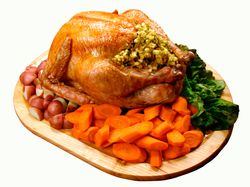
3 scoops of gravy (150 calories)
- 15 minutes of running
- 29 minutes of skiing
- 20 minutes of rowing
- 29 minutes of walking at 3.5 m.p.h.
- 16 minutes of football
- 25 minutes of resistance weight training
More here.
Three Unpublished J.D. Salinger Stories Have Leaked Online
The leaker says the source was a mysterious eBay auction, and Salinger scholar Kenneth Slawenski has confirmed for BuzzFeed that they are truly Salinger’s unpublished stories.Three unpublished stories by J.D. Salinger — “The Ocean Full of Bowling Balls,” “Paula,” and “Birthday Boy” — have been available to read at research libraries, but have never been seen in print or online before today.
Summer Anne Burton in BuzzFeed:
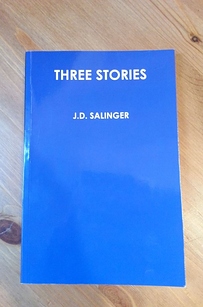
The first story is “The Ocean Full of Bowling Balls,” widely thought of as Salinger’s greatest unpublished work and is a prequel of sorts to the author’s most popular book, Catcher In The Rye.
The short story has been available to read at the Princeton library, under supervision, in a special reading room. PJ Vogt, a producer at On The Media, read the Princeton manuscript a few years ago and is fairly certain this is the same story. In an email tonight, he wrote “I definitely remember that first line: ‘His shoes turned up.’ And I remember the detail about the India ink on the catcher’s mitt. And that Holden has a cameo from camp.” The story concerns the death of Kenneth Caulfield, a character who was developed into Holden’s brother Allie in Catcher. The story was written for Harper’s Bazaar, but Salinger withdrew it before it was published.
More here.
Friday Poem
We Sinful Women
It is we sinful women
who are not awed by the grandeur of those who wear gowns
who don’t sell our lives
who don’t bow our heads
who don’t fold our hands together.
It is we sinful women
while those who sell the harvests of our bodies
become exalted
become distinguished
become the just princes of the material world.
It is we sinful women
who come out raising the banner of truth
up against barricades of lies on the highways
who find stories of persecution piled on each threshold
who find that tongues which could speak have been severed.
It is we sinful women.
Now, even if the night gives chase
these eyes shall not be put out.
For the wall which has been razed
don’t insist now on raising it again.
It is we sinful women
who are not awed by the grandeur of those who wear gowns
who don’t sell our bodies
who don’t bow our heads
who don’t fold our hands together.
.
by Kishwar Naheed
from We Sinful Women: Contemporary Urdu Feminist Poetry (with original Urdu poems)
Publisher: The Women’s Press Ltd, London, 1991
Thursday, November 28, 2013
Fire-eaters: The search for the hottest chili
Lauren Collins in The New Yorker:
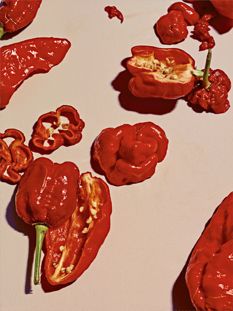
In recent years, “superhots”—chilis that score above 500,000 on the Scoville scale—have consumed the attention of chiliheads, who debate grow lights on Facebook (“You can overwinter with a few well-placed T-8s”), swap seeds in flat-rate boxes (Australian customs is their nemesis), and show up in droves at fiery-foods events (wares range from Kiss My Bhut hot sauce to Vanilla Heat coffee creamer). Chilis, in general, are beautiful. There is a reason no one makes Christmas lights in the shape of rutabagas. Superhots come in the brightest colors and the craziest shapes.
More here.
johnny cash – a thanksgiving prayer
William S. Burroughs – A Thanksgiving Prayer
Hollywood’s pact with Hitler
We begin, as film treatments so often say, in a screening room in Berlin in 1933.
“At the front of the room was Dr. Ernst Seeger, the chief censor from long before Hitler came to power. Next to Seeger were his assistants: a conductor, a philosopher, an architect and a pastor. Further back were the representatives of a film distribution company and two expert witnesses. The movie they were about to watch came all the way from America, and it was called King Kong.”
After the projection of the film, Dr Seeger asked Professor Zeiss, from the German Health Office, “In your expert opinion could this picture be expected to damage the health of normal spectators?”. Zeiss inquired whether the company trying to sell the film was German or American. When told that it was German, “Zeiss erupted. ‘I am astounded and shocked,’ he yelled, ‘that a German company would dare to seek permission for a film that can only be damaging to the health of its viewers . . . this film is NOTHING LESS THAN AN ATTACK ON THE NERVES OF THE GERMAN PEOPLE! . . . It provokes our racial instincts to show a blonde woman of the Germanic type in the hands of an ape. Itharms the healthy racial feelings of the German people’”.
more here.
Joyce Carol Oates on Mike Tyson
In the New York Review of Books:
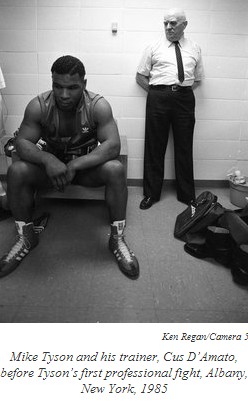
On the first day, I achieved a forty-two-second KO. On the second day, I punched out the front two teeth of my opponent and left him out cold for ten minutes. Then on the third day, the reigning tournament champ withdrew from the fight.
To see Tyson’s early fights, both amateur and professional, is to see young boxers stalked, cornered, and swiftly beaten into submission by a younger boxer who pursues them across the ring with the savagery and determination of Dempsey, whose nonstop, combative, and punitive ring style Tyson imitated under D’Amato’s guidance. To see these fights in quick succession, the shared incredulity of the boxers who have found themselves in the ring with the relatively short, short-armed Tyson, their disbelief and astonishment at the sheer force of their opponent as he swarms upon them, is to witness a kind of Theater of the Absurd, which is perhaps the most helpful way to understanding boxing.
More here.
Forget what Léger can offer the city; what can the city offer the painter?
Our own Morgan Meis in The Smart Set:
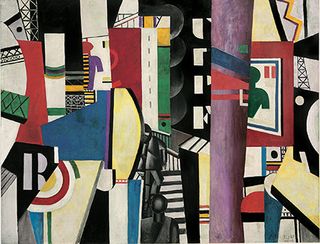
You can see why Léger’s art is approached sociologically when you look at his most famous painting “The City,” painted in 1919. “The City” is owned by the Philadelphia Museum of Art. The current exhibit at the Philadelphia Museum, “Léger: Modern Art and the Metropolis,” features “The City” as its central work. It is because of this painting that Léger is often called “the painter of the modern city.”
In “The City” we see, well, the city. We see the jumble of shapes and colors, the snatches of advertisements, the confusion of content that had already become, by the early decades of the 20th century, characteristic of the urban environment. In paintings like “The City,” and in any number of canvases Léger painted in following years, we find a painter coming to terms visually with the new and startling aspects of that urban environment. It makes sense that Léger was startled. He’d been sent off to fight WWI in 1914, like so many other young Frenchmen. The sights and sounds of the Great War pulverized his sensibilities. When he got back to Paris a few years later, his sensibilities were pulverized some more. The city was being lit up and mechanized with all sorts of new fangled devices, just like the battlefields.
More here.
Women writers are far outnumbered by men in magazines and book reviews, but why?
Miriam Markowitz in The Nation:

“Veedah. Veeedaahh….”
If you are an accredited member of the magazine world or else a vigilant fellow traveler, chances are that you already know about VIDA. You have heard of the Count, which tallies bylines by gender at publications that “are widely recognized as prominent critical and/or commercial literary venues.” You have opinions about what the numbers mean and how magazines should or will respond to them. If you are a partisan of the Count, or a feminist, or a woman writer, there is a good chance that, having read the opening paragraph of this essay, you are puzzled or angry. If you are a reactionary, an embattled editor or a plain old contrarian, you may already be cheering: Look, here we go, a woman writer and editor socking it to those sourpuss byline-counters! It is easy to incite, in the small community that cares about such things, indignation or delight, because the battle lines have been drawn, it seems—demands issued, sops and reassurances offered—and little has changed.
More here.
Robert Pinsky Read’s “The Volunteer’s Thanksgiving” by Lucy Larcum
Bond, Jeeves and Philip Marlowe return
Laura Miller in Salon:
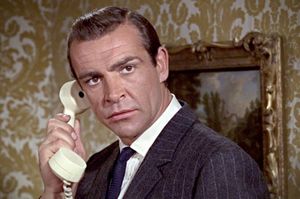
Lately, though, publishers have been pulling out some mighty big guns in the series revival game. This fall, two celebrated British novelists, Sebastian Faulks (“Birdsong”) and William Boyd (“Any Human Heart”) have published a new Jeeves and Wooster and a new James Bond novel, respectively. Come spring, the Booker Prize-winning novelist John Banville will publish a new Philip Marlowe novel under the pseudonym he uses for his own detective fiction, Benjamin Black. All three of these authors can be counted among the most esteemed British literary novelists alive today — which is a far cry from pen-for-hire jobbers like Ripley.
More here.
Big brains are all in the genes
Marie Daniels in PhysOrg:

Dr Humberto Gutierrez, from the School of Life Sciences, University of Lincoln, UK, led research which examined the genomes of 39 species of mammals with the aim of better understanding how brains became larger and more complex in mammals. To do this, the scientists focussed on the size of gene families across these species. Gene families are groups of related genes which share similar characteristics, often linked with common or related biological functions. It is believed that large changes in the size of gene families can help to explain why related species evolved along different paths. The researchers found a clear link between increased brain size and the expansion of gene families related to certain biological functions. Dr Gutierrez said: “We found that brain size variations are associated with changes in gene number in a large proportion of families of closely related genes. These gene families are preferentially involved in cell communication and cell movement as well as immune functions and are prominently expressed in the human brain. Our results suggest that changes in gene family size may have contributed to the evolution of larger brains in mammals.”
More here.
Wednesday, November 27, 2013
This Is the Man Bill Gates Thinks You Absolutely Should Be Reading
Clive Thompson in Wired:
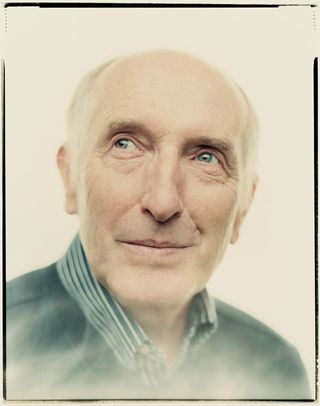
His conclusions are often bleak. He argues, for instance, that the demise of US manufacturing dooms the country not just intellectually but creatively, because innovation is tied to the process of making things. (And, unfortunately, he has the figures to back that up.) WIRED got Smil’s take on the problems facing America and the world.
You’ve written over 30 books and published three this year alone. How do you do it?
Hemingway knew the secret. I mean, he was a lush and a bad man in many ways, but he knew the secret. You get up and, first thing in the morning, you do your 500 words. Do it every day and you’ve got a book in eight or nine months.
More here.
Man vs. Corpse
Zadie Smith in the NYRB:
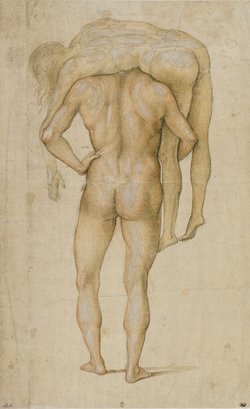
One September night, running home from dinner to meet a babysitter, I took off my heels and hopped barefoot—it was raining—up Crosby Street, and so home.Hepatitis, I thought. Hep-a-ti-tis. I reached my building bedraggled, looking like death. The doorman—who’d complimented me on my way out—blushed and looked down at his smart phone. In the lobby, on a side table, sat a forlorn little hard-backed book. The World’s Masterpieces: Italian Painting. Published in 1939, not quite thirty pages long, with cheap marbled endpapers and a fond inscription in German: Meinem lieben Schuler…. Someone gave this book to someone else in Mount Carmel (the Israeli mountains? the school in the Bronx?) on March 2, 1946.
The handwriting suggested old age. Whoever wrote this inscription was dead now; whoever received the book no longer wanted it. I took the unloved thing to the fifteenth floor, in the hope of learning something of Italian masterpieces. Truthfully I would much rather have been on my iPhone, scrolling through e-mail. That’s what I’d been doing most nights since I bought the phone, six months earlier. But now here was this book, like an accusation. E-mail or Italian masterpieces?
As I squinted through a scrim of vodka, a stately historical process passed me by: Cimabue, Giotto, Fra Angelico, Fra Filippo, Raphael, Michelangelo. Dates of birth and death, poorly reprinted images, dull unimpeachable facts. (“The fifteenth century brought many changes to Italy, and these changes were reflected in the work of her artists.”) Each man more “accurate” with his brush than the last, more inclined to let in “reality” (ugly peasants, simple landscapes). Madonnas held their nipples out for ravenous babies and Venice was examined from many different angles. Jesus kissed Judas. Spring was allegorized. The conclusion: “Many changes had taken place in Italian art since the days of the great primitive, Cimabue. The Renaissance had opened the way for realism and, at last, for truth as we find it in nature.”
More here.
How to Waste a Crisis
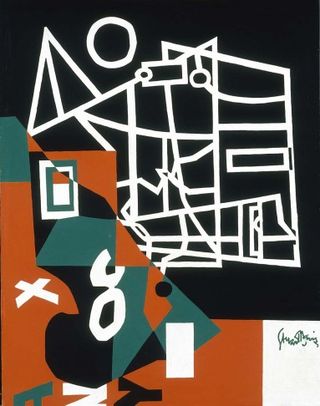
Mike Konczal reveiws Philip Mirowski’s Never Let a Serious Crisis Go to Waste in The New Inquiry:
In 1978, in a series of lectures at the Collège de France, philosopher Michel Foucault told the gathered students that they should start reading University of Chicago economists. Almost 30 years before management consultants like Tom Peters would start promoting the value of people measuring their own human capital, Foucault walked his audience through obscure journal articles on the economics of the self by the idea of human capital’s intellectual progenitor, Gary Becker.
Decades before neoliberalism would become a widespread intellectual crutch word, Foucault declared, “Neoliberalism is not Adam Smith; neoliberalism is not market society.” So what is it then? What are the term’s stakes? And why does the condition it describes seem to lumber on despite the economic devastation of the past five years, which might have spelled its definitive end? This question forms the core of Never Let a Serious Crisis Go to Waste, the most recent book by economic historian and philosopher Philip Mirowski.
Mirowski’s book can be thought of as two long essays stitched together. The first is about defining what neoliberalism is and what it is not, as well as a background history on the institutions that have come to be associated with it. The second documents where the economics profession stands in the aftermath of the financial crisis: how it has resisted reform and may even be beyond it, despite economists’ embarrassing failures.
More here.
Jeff Bezos and the Age of Amazon
Deborah Friedell reviews a biography of Bezos in the London Review of Books:
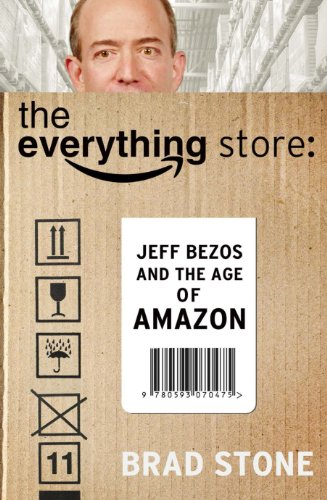
The company’s motto was ‘Get Big Fast’. The Amazon isn’t just the largest river in the world: it’s larger than the next seven largest rivers combined. Bezos preferred the name Relentless.com, but friends persuaded him that it sounded sinister. (Type Relentless into an address bar and you still get directed to Amazon.) He also considered Bookmall.com (but he knew that soon enough he wouldn’t only be selling books) and Cadabra.com (sounded too much like ‘cadaver’). Naturally he couldn’t set up the business in New York – too many potential customers lived there, and he didn’t want to charge them all sales tax – but somewhere isolated would make it difficult to hire engineers. The compromise was Seattle: at least Microsoft was nearby.
More here.
London Time Lapse
Restless Nights from Paul Richardson on Vimeo.
Nathaniel Hawthorne’s ”John Inglefield’s Thanksgiving”
Our own Morgan Meis in The Smart Set:
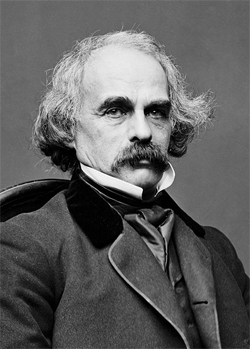
When the devil is on your doorstep, however, thanks takes on a different timbre. The American most consistently preoccupied with thoughts of Satan was probably Nathaniel Hawthorne. Hawthorne never trusted in the good times. He saw the devil lurking in every moment of pleasure, waiting for the chance to pounce on the unsuspecting reveler when his guard was down. Hawthorne's story, “John Inglefield's Thanksgiving,” is appropriately evil-obsessed. Utterly bleak, it is a difficult fit in the traditional American story of goods asked for, goods delivered, thanks given.
More here.