Wednesday Poem

One used to be able to say
what Seneca said to Nero:
“However many people you kill
you can never kill your successor.”
But now the joke may not
be necessarily true: we might
have done it already. So let's
remember what the poet Oppian said:
“The hunting of dolphins is immoral
and the man who willfully kills them
will not only not go to the gods
as a welcome sacrifce, or touch
their altars with clean hands, but will
even pollute the people under his own roof.”

by Alan Dugan
from New and Collected Poems 1961-1983
Ecco Press, 1983

Tuesday, December 3, 2013

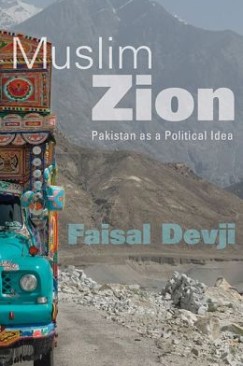
Hannah Harris Green on Muslim Zion: Pakistan as a Political Idea by Faisal Devji

Hannah Green in the Los Angeles Review of Books:

Muslim-Zion-243x366In his most recent work, Muslim Zion: Pakistan as a Political Idea, Faisal Devji offers a detailed analysis of the various political and ideological forces that were at play in the buildup to Pakistan’s creation. Devji’s larger project seems to be to mitigate the tendency to look at historical phenomena from the 20th and 21st centuries isolated from their global context. In The Impossible Indian: Gandhi and the Temptation of Violence (2012), he presented an alternative biography of the Mahatma, partly by rejecting the notion that this London-educated man was purely influenced by Indian thinkers and had purely Indian goals. In Landscapes of the Jihad (2005), Devji suggested that al-Qaeda and bin Laden took their cues from global media trends much more than they did from any tribal Islamic tradition.

Muslim Zion is perhaps more expansive than either of these works, as it deals not with one specific movement or figure but the confluence of movements and figures that led to the formation of a nation. Devji prioritizes the trajectory of ideas over all other historical forces. Ideologies of communism and Zionism (which Devji uses in a somewhat idiosyncratic way) were important in the middle of the 20th century, Devji argues, because they made it possible for nation-states to define themselves based on ideas rather than territorial or hereditary attachments. Both were significant catalysts in Pakistan’s foundation. Israel is Pakistan’s closest twin in this type of national movement, as both nations were conceived as homelands for people who didn’t necessarily have any familial connection to the territory, and both used religion as the common ground that would define their citizenry. The connection between the two ideologies, Devji suggests, was not a coincidence.

More here.

the letters of anna and sigmund freud

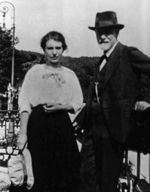
Pick_12_13Daniel Pick at Literary Review:

'Have you read that cholera has already reached Naples? Will you be giving it a wide berth?' So wrote Anna Freud (aged 14) in September 1910 to her father, then travelling in the south. Anna was Sigmund's youngest child and the only one of his six to train as a psychoanalyst. She became a custodian of his movement, a pioneer of child analysis, and co-founder of the Hampstead Nurseries, which offered refuge to homeless families during the Second World War. She was well known for her fierce quarrels with Melanie Klein, whose ideas were to have a profound impact on British psychoanalysis. Anna also proved influential in this country and to a still greater extent in the United States. She never married, nor did she ever permanently leave her parental home. After she died in 1982, her – their – residence in London became the Freud Museum. Sigmund called Anna his 'Antigone', which captured something of her unswerving dedication.

Their letters, postcards and occasional telegrams to one another, spanning a 34-year period, have been assembled in this remarkable book, just translated from the German. In that same teenage letter mentioned above, Anna expressed her fears that Sigmund's then travelling companion and colleague, Sándor Ferenczi, was not looking after him. Perhaps it was not surprising, given that Sigmund's gastrointestinal problems were not infrequently mentioned in his correspondence to her and others, that she inquired so particularly after the state of his stomach.

more here.

the male nude

ID_VS_POLCH_NUDE_CO_001James Polchin at The Smart Set:

In the 18th and early 19th centuries, the male body was crucial to academic painting, anchoring the ideals of ancient Greek and Roman aesthetics. One of the more compelling works early in this show is Jacques-Louis David’s Patroclus (1780). David, the icon of early 19th century Neoclassical painting, used heroic, naked males in many of his historical paintings, composing large canvases filled with muscled subjects, their crotches often covered in subtle ways, all rendered with realist precision. Unlike David’s more crowded historical scenes, this work offers a quiet intimacy between viewer and the subject sitting on the ground in a weakened state, his torso twisted away from us, leaving us gazing at him from behind. In Homer’s Iliad Patroclus was the comrade of Achilles fighting alongside him in the Trojan Wars where he was killed. Their relationship has often been considered a romantic one. The painting conjures the beauty of Patroclus’ body as something idealized, as if David is asking us to gaze upon the defeated warrior in the same loving way as Achilles himself might have done. But beauty and nakedness here serves another purpose as well: a heroic ideal that captures not just our attraction but also our empathy.

Not far from this work you find Picasso’s Adolescents (1906), a muted orange oil painting of two naked figures against a flat background. They float on the canvas, their bodies blending with the atmosphere around them, their bodies shaped in thick lines. Just around the corner is Gustave Moreau’s Prometheus (1868), the figure bound to the mountain’s edge, his body taunt and tired, his face determined as he looks off into the distance, echoing more the image of a Christ figure than that of a Greek god.

more here.

brodsky’s reading list

Josef_BrodskyCynthia Haven at The Book Haven:

We had the W.H. Auden reading list here, so now – ta DUM! – we present the Joseph Brodsky list, thanks to Monica Partridge, a Los Angeles writer and a former Brodsky student from Mt. Holyoke, where the Nobel poet taught for years. With her blog, called The Brodsky Reading Group, she seems to have formed something of a cultus around the list, and with her acolytes she is attempting to work through the whole slog of books. More power to her. I’d heard rumors of such a list before, but never saw the actual artifact. I include the list below, having spent some time correcting the references and the spellings (always a dangerous thing to do, someone is sure to find a mistake in my rendering). The list he gave her class was handwritten – perhaps he just scribbled it out, errors and all.

At any rate, eventually the list was typed out, errors still intact. Open Culture has already printed the list here, so you can see for yourself. On the site, author Jennifer K. Dick‘s contributed her own memories in the comment section:

When I was a student of Joseph Brodsky’s at MHC between 1989 and 1993 for course on Russian Lit and Lyric Poetry, we were distributed a similar list. However, it was not given as a basis for “conversation” at that time, but rather he said that anyone who had not already completed the reading of that list by 18 would certainly never be able to become a great poet, because the list was a basis for that. This, of course, meant that all of us who might have been aspiring authors were already doomed. So, like everything else with him, you had to take it with a grain of salt. He asked us to write poems based on works by Auden and Frost on occasion. He also made us memorize many poems, as Partridge mentions, including many by Auden, Frost, A.E. Housman and most memorably (no pun intended) all of Lycidas by Milton.

more here.

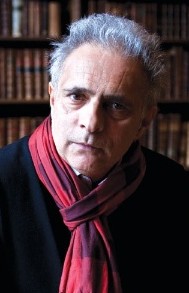
Q&A with Hanif Kureishi

John Elmes in Times Higher Education:

ScreenHunter_438 Dec. 03 13.56The protagonist in the film Le Week-End is an academic; do academics make good fictional characters?
Yes, they make fantastic characters because they’re thoughtful – if you’re lucky. They’ve devoted their life to instructing others, which seems to me to be a worthwhile thing to do.

You’re a busy writer (and now teacher): what do you do to relax?
I’ve got kids; that’s what I’ve been doing for the last few years – looking after my kids. It’s really fun; I really like doing it.

Would you consider giving up writing to solely focus on parenting?
Well, I’ve got to support them, haven’t I?

Is there anyone from history you’d like to meet?
I don’t know; I’ve not really thought about it. You mean [someone] like Leonardo da Vinci?

…someone who you might have wanted to have met or had a conversation with…
I can’t believe you can’t think of better questions than this dude, I really can’t.

More here.

Montana: Big Sky country at an environmental crossroads

Nate Schweber at Al Jazeera America:

ScreenHunter_437 Dec. 03 13.47In the kitchen of a small white farmhouse down a corrugated dirt road, through a sea of grass, Irene Moffett pointed at chalky buttes on the blue horizon. For generations, her family has worked this land. Now, one mile from her property, a Canadian company hopes to lay the Keystone XL pipeline, which would siphon crude oil from Canada's tar-sand mines to a seaport on the Gulf of Mexico.

“Most jobs won't last after the pipeline's built, and what happens if there's a spill?” said Moffett, 77. “Why should we put up with the pollution, the disruption of agricultural lands? What's in it for Montana?”

Across this massive state, with scenery ranging from snowy mountains to virgin prairies, a diverse collection of Montanans, in love with their land, is opposing new transportation infrastructure for coal and oil.

Three proposed projects — the Keystone XL pipeline, a new coal railroad and a trucking route for mining equipment the size of apartment buildings — have triggered protests in different regions of the state, and not just from people who dislike fossil fuels.

Ranchers, Native Americans, farmers and environmentalists say they don't want the industrialization of the land that comes with moving the fuels and with the equipment needed for their extraction.

More here.

Tuesday Poem

Loss

Something in me repeats in an obsessive beat
that I may have lost something
or left it behind
in the café or the bookstore
where I’d been
I searched my possessions
and no loss was found
nor did I discover what had been lost
but the loss
kept asserting its existence
through palpitations and minor fits
Athenian sophists philosophized:
“A thing you haven’t lost
is necessarily in your possession
you haven’t lost a tail—therefore, you have a tail
or vice versa
what you’ve lost was necessarily yours”
but what have I lost?
I must look for my loss
in order to know what I’m looking for
is it an object or a thing or the thing
and was it mine before it was lost
or is it that some inner authority
is trying to bequeath me, like a Hellenistic sophist,
something I had never possessed
as for example a chance
as if I ever stood a chance
.
.
by Mordechai Geldman
from Halachti Shanim Le-Tzidcha
publisher: Hakibbutz Hameuchad, Mossad Bialik, Tel Aviv, Jerusalem, 2011
translation: 2013, Tsipi Keller

GIVING MAKE-UP A SLAP

Rebecca Willis in More Intelligent Life:

Applied%20fashion,%20onlineRecently I went to a party as a panda. It wasn't fancy dress—I just put on too much of a new, smudgy eyeliner that I'd never used before. Special occasions prompt us to want to look our best, and make-up, like clothes, offers the chance to choose what that might be. But where on the spectrum from natural to mask-like artificiality do we want to sit?

…In her fascinating book “Bodies” (Profile Books), Susie Orbach describes how the culture we live in determines the marks we make—or “inscribe”— on ourselves. The world we live in is literally written on our bodies. The objective of make-up nowadays seems to be to mimic the smooth, even-toned skin of youth, and, to quote make-up artists and shop assistants, to “open up the eye” (singular). They all talk about opening up the eye; this is not a surgical procedure, thank goodness, but seems to mean making it look brighter and above all bigger. No one could tell me why that should be so desirable. Then I read that the distance between eyeball and eyebrow is a key factor in gender perception, and is much greater in women than men. To enlarge that distance is to exaggerate your femininity. And when the eye itself is widened it is a sign of submission, so opening up the eye makes us kittenishly vulnerable. No wonder early feminists went bare-faced. Narrowing my eyes, I picked up a book on body language. “The use of lipstick”, it read, “is a technique thousands of years old that is intended to mimic the reddened genitals of the sexually aroused female.” Was ever a sentence more likely to give you pause before whipping a stick of Chanel’s Rouge Allure out of your handbag? We might just want to reflect a moment on these things before we hand over the contents of our wallets to the billion-dollar cosmetic industry, and slap our purchases, in the name of improvement, onto our party-going faces.

More here.

Learning to Defuse the Aorta

Gina Kolata in The New York Times:

TankFor families who have recently learned that a child has Marfan syndrome, Dr. Dietz’s discoveries and the clinical trial he designed have divided their world into before and after, dread and hope. Daniel Speck of Knoxville, Md., was given a diagnosis of Marfan six years ago, when he was 8, after his pediatrician noticed his spine was curved and suggested a test for scoliosis. It turned out that the curvature was caused by Marfan syndrome. “We were blindsided,” said his mother, Amy Speck. Daniel was furious when he couldn’t play basketball anymore. By then, Dr. Dietz and his colleagues had finally found the gene mutation that causes Marfan. It had been a slow and frustrating process: The sequencing machines now used to quickly map DNA had not been invented. Researchers had to sort through every gene in large regions of DNA shared by members of families in which someone had the syndrome. Yet when the researchers first found the mutation, in 1990, it seemed to lead to a dead end. The mutation was in fibrillin-1, a protein in connective tissue, suggesting that the tissue was falling apart because its molecular rivets did not work.

…About 10 years ago, he and his colleagues discovered the answer in another protein, T.G.F.-beta, short for transforming growth factor beta, which tells cells how to behave during development and is used in repairing wounds. The protein’s function depends on fibrillin-1, the very protein that is altered in Marfan syndrome. Normally, fibrillin-1 hooks T.G.F.-beta to connective tissue. But in someone with Marfan, the researchers discovered, the fibrillin-1 is defective, and the process goes awry. Instead of attaching to the connective tissue, T.G.F.-beta drifts away from it. Floating free in the bloodstream, it makes cells behave abnormally, leading to many of the problems caused by Marfan, including excessive growth of the aorta. In short, the rivet model was entirely wrong. “That,” Dr. Dietz said, “was one of the few ‘aha’ moments in my life.” He tested his theory in mice, giving them the mutated fibrillin-1 gene. Sure enough, levels of the T.G.F. protein were very high. The mice showed Marfan symptoms, including emphysema, weak skeletal muscles and a thickening of the mitral valve in the heart. He sought a way to block the function of T.G.F.-beta and found a widely used blood pressure drug, losartan, that did just that.

More here.

Humanism for a Globalised World

Said11

A segment of Priyamvada Gopal's forthcoming article in New Humanist:

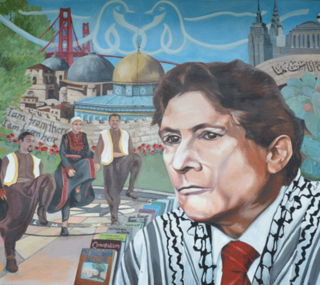
While he was a fierce critic of empire, Said was profoundly interested in what could be done with a concept like humanism, laden as it is with the baggage of colonial civilisational missions and Eurocentrism, the worldview that assesses the rest of the world through the lens of European and white superiority. Perhaps surprisingly, at least for those who (despite his vocal protestations) read him as the originator of a postmodern and postcolonial approach to culture, Said describes himself as a humanist, insisting that “attacking the abuses of something is not the same thing as dismissing or entirely destroying that thing.” He himself remained unaffected by the antihumanism that characterised academic postmodernism with its “dismissive attitudes” to ideas such as enlightenment and emancipation. What then is the humanism that Said wishes to not have thrown out with the bathwater of discredited colonial or racist projects? For him, “the core of humanism is the secular notion that the historical world is made by men and women, and not by God and that it can be understood rationally … Or to put it differently, we can really only know what we make.”

Given that terms like “reason” and “secularism” have often been and continue to be used as sticks with which to beat apparently backward cultures and communities, what would prevent this reclaimed project of “critical humanism” from falling prey to precisely the same abuses that bedevilled a more familiar Western “high humanism”? Integral to Said’s advocacy of a critical and democratic humanism is the understanding that the ideas underpinning humanist practice are not, in fact, exclusive to one culture or the other; they are part of a “collective human history”. Engaging carefully with a variety of traditions and contexts across the world will make clear that aspirations to liberty, learning, justice and equality are genuinely universal. All societies are capable of change and change is always enacted by those who resist the depredations of power, whether in the form of despotism and tyranny or unjust war and military occupation.

Humanism has also to be wrenched from its association with and deployment by selective elites, “be they religious, aristocratic, or educational”, and returned to its democratic provenance because it is ultimately about the capacity of the human mind to free itself. The human capacity for discovery, self-criticism and engaging in “a continuous process of self-understanding” means that no one is incapable of humanistic thinking and nothing is exempt from humanism’s critical reach, whether religious fanaticism, atheist dogmatism or “manifestly imperial plans for domination” that might otherwise pass for entirely rational and necessary. Those who use humanism or secularism as weapons for asserting dominance or superiority over other cultures generally miss “what has long been a characteristic of all cultures, namely, that there is a strong streak of radical antiauthoritarian dissent in them.” What makes all cultures and civilisations interesting is actually “their countercurrents, the way that they have had of conducting a compelling dialogue with other civilisations”.

More here.

Monday, December 2, 2013

perceptions

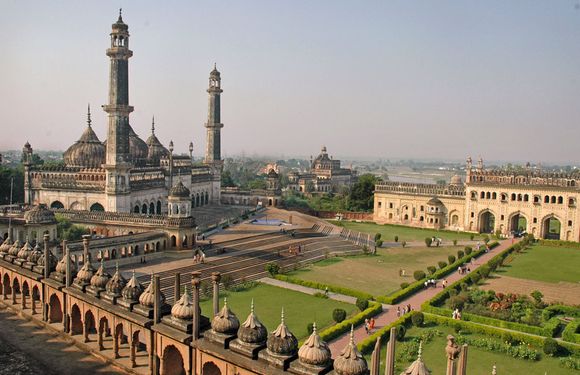
Asfi_mosque_imambara_lucknow

Bara Imambara, Lucknow. A “complex built by Asaf-ud-daulah, Nawab of Lucknow, in 1784, also called the Asafi Imambara.” Architect Hafiz Kifayat ullah Shahjahanabadi.

In honor of Syed Ali Raza, who would have been 100 on November 29th, 2013. He was born just outside this “city of Nawabs” and attended Shia College in Lucknow maturing into a most exceptionally gifted, unique, and principled man. Abbas, Azra, and I, along with our 4 older siblings are exceedingy fortunate to be his children!

Do read about the then novel idea of “Food for Work” and the bold architectural design of this amazing structure here and here.

Sunday, December 1, 2013

The Man Who Designed Pakistan’s Bomb

Pervez Hoodbhoy in Newsweek:

ScreenHunter_432 Dec. 02 08.05When Riazuddin—that was his full name—died in September at age 82 in Islamabad, international science organizations extolled his contributions to high-energy physics. But in Pakistan, except for a few newspaper lines and a small reference held a month later at Quaid-e-Azam University, where he had taught for decades, his passing was little noticed. In fact, very few Pakistanis have heard of the self-effacing and modest scientist who drove the early design and development of Pakistan’s nuclear program.

Riazuddin never laid any claim to fathering the bomb—a job that requires the efforts of many—and after setting the nuclear ball rolling, he stepped aside. But without his theoretical work, Pakistan’s much celebrated bomb makers, who knew little of the sophisticated physics critically needed to understand a fission explosion, would have been shooting in the dark.

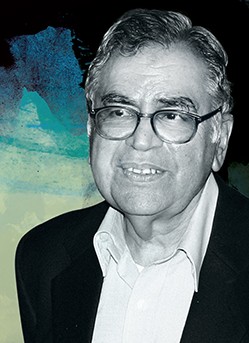
A bomb maker and peacenik, conformist and rebel, quiet but firm, religious yet liberal, Riazuddin was one of a kind. Mentored by Dr. Abdus Salam, his seminal role in designing the bomb is known to none except a select few.

More here.

How to Burst the “Filter Bubble” that Protects Us from Opposing Views

From the MIT Technology Review:

ScreenHunter_431 Dec. 02 08.00The term “filter bubble” entered the public domain back in 2011when the internet activist Eli Pariser coined it to refer to the way recommendation engines shield people from certain aspects of the real world.

Pariser used the example of two people who googled the term “BP”. One received links to investment news about BP while the other received links to the Deepwater Horizon oil spill, presumably as a result of some recommendation algorithm.

This is an insidious problem. Much social research shows that people prefer to receive information that they agree with instead of information that challenges their beliefs. This problem is compounded when social networks recommend content based on what users already like and on what people similar to them also like.

This the filter bubble—being surrounded only by people you like and content that you agree with.

And the danger is that it can polarise populations creating potentially harmful divisions in society.

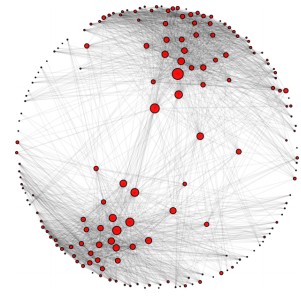
Today, Eduardo Graells-Garrido at the Universitat Pompeu Fabra in Barcelona as well as Mounia Lalmas and Daniel Quercia, both at Yahoo Labs, say they’ve hit on a way to burst the filter bubble. Their idea that although people may have opposing views on sensitive topics, they may also share interests in other areas. And they’ve built a recommendation engine that points these kinds of people towards each other based on their own preferences.

More here.

Must We Give Up Understanding to Secure Knowledge in Economics?

20130104

Alex Rosenberg and Tyler Curtain in 3:AM Magazine:

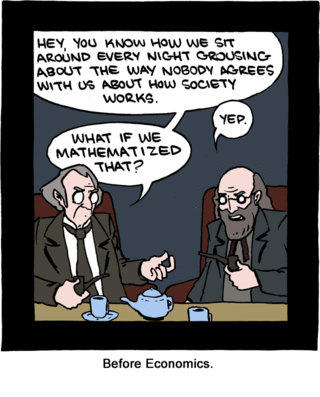
In physics our knowledge exceeds our understanding. In economics the reverse is true. Seeing why helps us make sense of both of these disciplines.

In physics we’ve reached the point where we know the nature of things to twelve decimal places. We reached that point by starting with common sense and correcting its predictions until we arrived at quantum mechanics—a theory that we literally can’t understand, despite the fact that we know it to be as close to the truth as any theory we have in any science. It took about 350 years—from Newtonian gravity to Schrödinger’s cat—to get to the point where knowledge exceeds understanding in physics.

Economics is harder than physics. It must be. It’s not much younger a science, having gotten its start with Adam Smith in 1776, a good 83 years before Darwin was able to put biology on a scientific footing. If economics were as easy as physics, it would have made more progress by now.

As far back as John Stuart Mill philosophers of science have been trying to figure out exactly why economics is harder than physics. They have given a variety of answers.

We think a large part of the reason is that unlike the physicists, the economists have been unwilling or unable to let go of the notion that their understanding of economic affairs counts as knowledge about economic behavior. Like physics, economics starts with common sense—in this case firm convictions about how we are driven to make choices by our desires and our beliefs, which the economists label preferences and expectations.

Giving up firmly held convictions isn’t just a problem for economics. Physics had the same problems: humans have difficulty relinquishing the conviction that motion requires force, that there is a preferred direction in space, that every event has a cause. But progress—as measured by prediction—required relinquishing our sense that we already know how things work. In the social sciences, it’s been almost impossible to give up trying to explain things by making sense of them in the form of stories we understand.

More here.

Some Damn Foolish Thing

1369271345113.cached

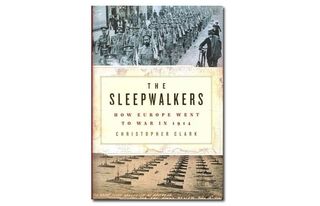
Thomas Laqueur reviews Christopher Clark's The Sleepwalkers: How Europe Went to War in 1914, in the LRB:

Fifty years ago, Barbara Tuchman’s bestseller The Guns of August taught a generation of Americans about the origins of the First World War: the war, she wrote, was unnecessary, meaningless and stupid, begun by overwhelmed, misguided and occasionally mendacious statesmen and diplomats who stumbled into a catastrophe whose horrors they couldn’t begin to imagine – ‘home before the leaves fall,’ they thought. It was in many ways a book for its time.

Tuchman’s story begins with Edward VII’s funeral on 20 May 1910. The king’s sister-in-law, the empress consort of Russia, Maria Feodorovna, wife of Alexander III, was there. So was the Archduke Franz Ferdinand, heir apparent to the aged Emperor Franz Joseph of Austria. And so was Edward’s least favourite nephew, Wilhelm II of Germany. Wilhelm loved and admired the British and they loved the kaiser: to him, the Timessaid, belongs ‘the first place among all the foreign mourners’; even when relations were ‘strained’, he ‘never lost his popularity amongst us’. Four years before Armageddon the German emperor was decidedly not the antichrist he would become. The book ends with the Battle of the Marne – ‘one of the decisive battles of the war’ – which ended the German hope for a quick victory and set the stage for four years of deadlock and misery.

Tuchman says nothing about Austria-Hungary and Serbia on the eve of the war, and nothing about the Russo-Austrian and Serbo-Austrian fronts once it began. ‘The inexhaustible problem of the Balkans divides itself naturally from the rest of the war,’ she thinks, and in any case nothing much happened there in the period she covers. More surprising is that in the first third of the book there isn’t a word about Serbia. The assassination of the archduke in Sarajevo on 28 June 1914 goes by in two sentences, one of which, a quotation from the oracular Bismarck, may be all she needs: ‘some damn foolish thing in the Balkans’ would ignite the next war.

Why was this story so compelling in the 1960s? I think because at the height of the Cold War the world needed and embraced a morality tale of the sort Tuchman offered.

More here.

The Threat to British Curry

Huma Yusuf in The New York Times:

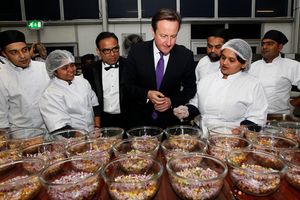
Latitude-1129-yusuf-blog480LONDON — Upon first moving here from Pakistan two years ago, I was inundated with restaurant recommendations: Tayyabs and Lahore Kebab House, Daawat and Brilliant. I spent many weekends sampling curries and kebabs in the east and halwa in the south. In the end, I settled on a Drummond Street standby. For members of the South Asian diaspora, having a favorite curry restaurant is like belonging to a tribe: It requires absolute loyalty and the occasional sacrificial ritual, like waiting in line for a table for two hours in cold, wet weather. But the appeal extends far beyond homesick immigrants. London now has more curry shops than Mumbai. Across Britain, some 10,000 restaurants and takeout joints serve kormas, vindaloos and other variants. At the British Curry Awards this week more than 40,000 nominations poured in from fans. (Among the winners, Karma, in Whitburn, for Best Spice Restaurant Scotland, and Shampan 4 at the Spinning Wheel, in Westerham, Kent, for Best Newcomer.) Prime Minister David Cameron took the stage between choreographed dance sequences and declared the foreign dish now central to British identity: “To all those who think being British depends on your skin color, wake up and smell the curry!”

But now curry is under threat, both from the state and the market. Cameron’s favorite curry house in Oxfordshire was raided by border officials last month, and three Bangladeshis suspected of immigration infractions were arrested. Stringent laws have made it nearly impossible for restaurants to bring chefs from India, Pakistan and Bangladesh, creating a shortfall of qualified talent. Acknowledging the scale of the problem at the curry awards ceremony, the prime minister pledged to help: “So let me promise you this: We will work through this together. We’ll continue to help you get the skilled Asian chefs you need.”

More here.