
Erica Getto and Charles Atlas at Bomb Magazine:
Sketch out Charles Atlas’s career, and the result might look like one of his multi-stream videos: disparate projections that, taken together, create a coherent portrait. To some, the artist and filmmaker is best known for these video collages and installations, featuring digitized numbers, people in motion, and abstract or geometric figures. Others might recognize him as a public broadcasting renegade whose TV specials bucked conventions of on-air programming with propulsive dancing, drag queens, chroma key, and startling audio. Since 2003, he’s drawn attention for his experiments with live multimedia performance. As a dance writer and film and television producer, I’ve long wanted to speak with Atlas about his pioneering work in “media-dance,” or dance on camera.
For nearly fifty years, Atlas has collaborated with choreographers and dancers to create vibrant, technically rigorous dance films. He first picked up a Super 8 camera in the early 1970s while stage-managing for the Merce Cunningham Dance Company and, soon after, became the company’s resident filmmaker. His early works with Cunningham involved technical challenges like filming in a mirrored studio without revealing the camera, or interspersing video monitors across a dance space.
more here.
Enjoying the content on 3QD? Help keep us going by donating now.
 You can predict the outcome of the 2024 US presidential election by tracking the laughter in the room. Laughter glides on the edge of the unspeakable. It flirts with taboo obscenity and unbearable trauma while toeing the line and somehow lightening the tone. When Donald Trump absurdly accused Haitian migrants in Ohio of eating people’s pets, silly videos of
 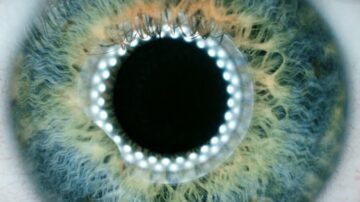 Seeing is believing. Our perception of the world heavily relies on vision.
 I
I “Math is power” is the tag line of a new documentary, “
 The 2024 election will be “decided by podcasts,” Bobby Kennedy
 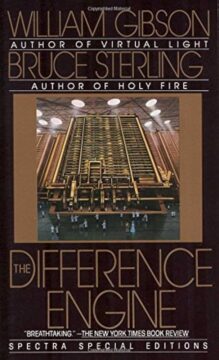 In 1990, Gibson and Bruce Sterling wrote “
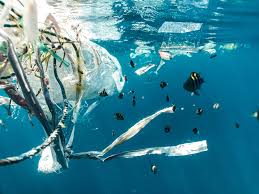 Harvard University reports engineering strategies, including solar radiation management, carbon dioxide removal, and ocean fertilization, that can
 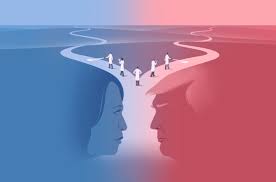 In their bid to become the next U.S. president, Democrat Kamala Harris and Republican Donald Trump have staked out fundamentally different positions on such divisive topics as reproductive rights, immigration, the economy, and the wars in the Middle East and Ukraine. But they have said almost nothing about science. That’s typical for a presidential campaign. But their silence doesn’t mean the winner of the 5 November election won’t have a significant effect on the U.S. research enterprise. Their views on science-heavy issues such as climate change and public health will get wide attention. But outside the spotlight, the country’s 47th president will need to address other issues that directly affect the research community.
 H
H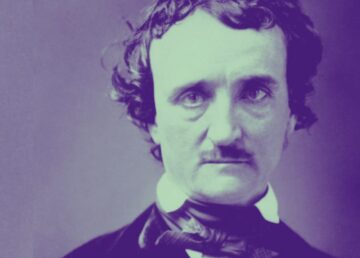 By 1964, Vietnam had been bisected for a decade. Fierce fights between the US-backed South and the communist North had marred the country, and with US forces officially entering the war that August, it seemed things were only getting worse. From the West Lake in Hanoi, the poet Chế Lan Viên wrote to decry American war crimes and made sure to specify their perpetrators:
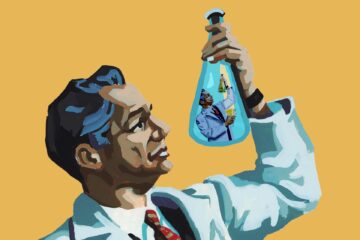 At first, it looked like a paradigm of science done right. A group of behavioral scientists had repeated the same experiments over and over in separate labs, following the same rigorous methods, and found that 86 percent of their attempts had the results they expected.