
The Keeper of Sheep
—excerpt
I don’t believe in God because I’ve never seen him.
If he wanted me to believe in him,
He would doubtless come and talk to me
and walk in through my front door
Saying, Here I am!
(This may sound ridiculous to the ears
Of someone who, because he doesn’t know what it is to look at things,
Doesn’t understand someone who speaks of them
In the way that noticing things teaches us.)
But if God is the flowers and the trees
And hills and the sun and the moonlight,
Then I do believe in him,
I believe in him at all hours,
And my whole life is one long prayer and mass,
And a communion with the eyes and ears.
But if God is the trees and the flowers
And the hills and the moonlight and the sun,
Why do I call him God?
I call him flowers and trees and hills and sun and moonlight;
Because if, so that I might see him, he made himself
Sun and moonlight and flowers and trees and hills,
If he appears to me as trees and hills
And moonlight and sun and flowers,
It’s because he wants me to know him
As trees and hills and flowers and moonlight and sun.
And that’s why I obey him
(What more do I know of God than God knows of himself?),
I obey him, living spontaneously,
Like someone opening his eyes and seeing,
And I call him moonlight and sun and flowers and trees and hills,
And I love him without thinking about him,
And I think him by seeing and hearing,
And I walk with him at all hours.
by Fernando Pessoa
from The Complete Works of Alberto Caeiro
New Directions Books, 2020
Enjoying the content on 3QD? Help keep us going by donating now.
 On October 10, 2024
 One afternoon in January 2011,
 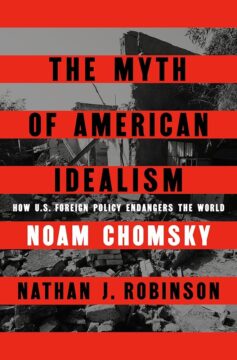 The basic principles of contemporary American strategy were laid out during World War II. As the war came to its end, American planners were well aware that the United States would emerge as the dominant power in the world, holding a hegemonic position with few parallels in history. During the war, industrial production in the US more than tripled; meanwhile, its major rivals were either severely weakened or virtually destroyed.
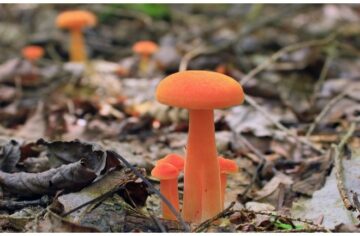 For thousands of years, people have been using fungi to bake bread and brew beer (yeasts), as nutritious foods (mushrooms and truffles), and, more recently, as a source of life-saving antibiotics (penicillin, neomycin and many more). And yet, an estimated 95% of all fungus species remain undiscovered. Fortunately, thousands of energetic citizen scientists like you can help explore this diverse and fascinating kingdom of organisms, thanks to projects like FUNDIS, Mushroom Observer and others featured in this newsletter. And in many parts of the world, October is prime mushroom season.
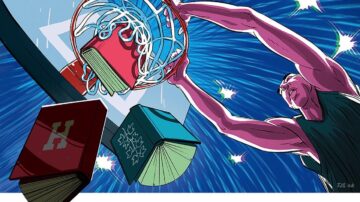 With one minute
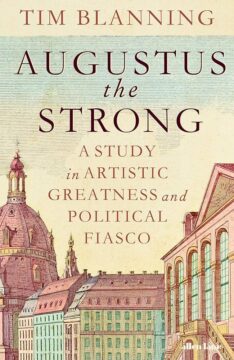 Unsuccessful in politics and war, Augustus turned to culture. He transformed Dresden into a city which, even after the notorious bombing raid of February 1945, is still handsome. The highlights include the Zwinger, a palace complex that served as a setting for festivities, the Frauenkirche and the 437-metre-long Augustus Bridge, which linked the centre with the New Town on the other side of the Elbe, helping to create an integrated urban landscape. Next door to the Zwinger, Augustus built the largest opera house in Germany. Blanning enthuses about his success in attracting architects, artists and musicians to Saxony, the most famous being Johann Sebastian Bach, who arrived in Leipzig, Saxony’s other main city, in 1723.
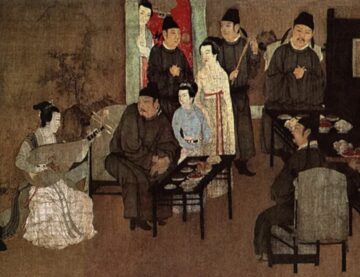 A painting is not something we step into. We might crave a landscape, a room, a street, a scene or a background, but we can’t inhabit the painter’s vision of it. Our eyes inch closer as they focus on areas of the work, but the view stops there: We remain outsiders, left out in the cold.
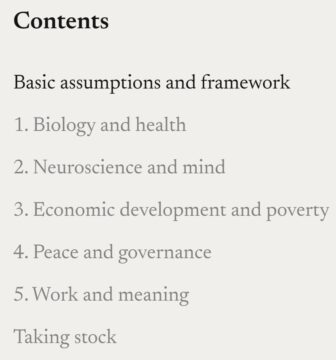 I think and talk a lot about the risks of powerful AI. The company I’m the CEO of, Anthropic, does a lot of research on how to reduce these risks. Because of this, people sometimes draw the conclusion that I’m a pessimist or “doomer” who thinks AI will be mostly bad or dangerous. I don’t think that at all. In fact, one of my main reasons for focusing on risks is that they’re the only thing standing between us and what I see as a fundamentally positive future. I think that most people are underestimating just how radical the upside of AI could be, just as I think most people are underestimating how bad the risks could be.
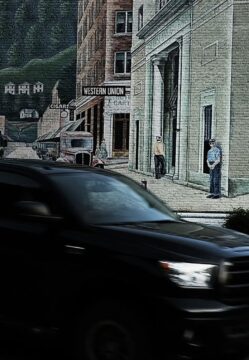 Alongside equality, freedom and opportunity, fear has long played a powerful role in political discourse. In ordinary life, fear is often a fitting response to danger. If you encounter a snake while out on a hike, fear will lead you to back away and exercise caution. If the snake is poisonous, fear will have saved your life. By contrast, the fears that dominate political discourse are less concrete. We are told to fear elites, terrorists, religious zealots, godless atheists, sexists, feminists, Marxists and the enemies of democracy. Yet even as these purported poisons are less obviously lethal, political rhetoricians have long understood that making them salient is a powerful way to shape citizens’ motivations. As Donald Trump told Bob Woodward: real power is fear.
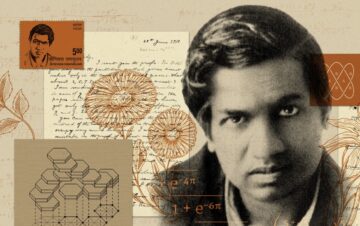
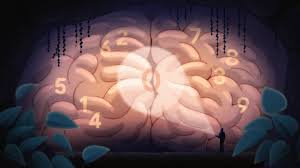 Around 2,500 years ago, Babylonian traders in Mesopotamia impressed two slanted wedges into clay tablets. The shapes represented a placeholder digit, squeezed between others, to distinguish numbers such as 50, 505 and 5,005. An elementary version of the concept of zero was born.
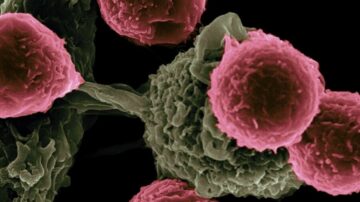 For the first time, an off-the-shelf CAR T cell therapy has been used to treat potentially life-threatening autoimmune disorders in three people. With a single shot,