
Charlie Wood at Quanta:
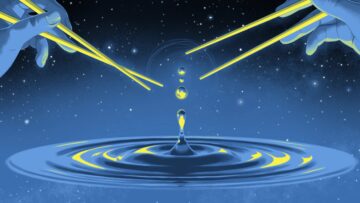 Detecting a graviton — the hypothetical particle thought to carry the force of gravity — is the ultimate physics experiment. Conventional wisdom, however, says it can’t be done. According to one infamous estimate, an Earth-size apparatus orbiting the sun might pick up one graviton every billion years. To snag one in a decade, another calculation (opens a new tab) has suggested, you’d have to park a Jupiter-size machine next to a neutron star. In short: not going to happen.
A new proposal overturns the conventional wisdom. Blending a modern understanding of ripples in space-time known as gravitational waves with developments in quantum technology, a group of physicists has devised a new way of detecting a graviton — or at least a quantum event closely associated with a graviton. The experiment would still be a herculean undertaking, but it could fit into the space of a modest laboratory and the span of a career.
More here.
Enjoying the content on 3QD? Help keep us going by donating now.
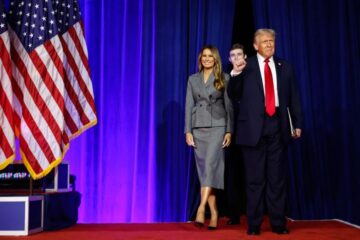 Back in 2016, the whiff of aberration hung over Trump’s success. His opponents could claim that his victory was some strange historical fluke. They could put it down to foreign interference or to Russian hackers. Political scientists confidently pronounced that he represented the final, Pyrrhic victory of a declining electorate—the last, desperate stand of the old, white man.
 Electing Donald J. Trump once could be dismissed as a fluke, an aberration, a terrible mistake—a consequential one, to be sure, yet still fundamentally an error. But America has now twice elected him as its President. It is a disastrous revelation about what the United States really is, as opposed to the country that so many hoped that it could be. His victory was a worst-case scenario—that a convicted felon, a chronic liar who mismanaged a deadly once-in-a-century pandemic, who tried to overturn the last election and unleashed a violent mob on the nation’s Capitol, who calls America “a garbage can for the world,” and who threatens retribution against his political enemies could win—and yet, in the early morning hours of Wednesday, it happened.
 P
P We’re living at an exceptional moment in history. And this year’s US election is the most consequential I have witnessed since I became aware of American elections in 1980. Reagan’s two victories were critical to reviving American unity of purpose, breathing life into the economy and accelerating the demise of the Soviet Union.
 Adam Przeworski, a political scientist, left his native Poland a few months before the 1968 Prague Spring uprising and found he could not return home. To avoid being arrested as a dissident by the Communist government, he accepted a job abroad at a university in Santiago, Chile — only to watch his adopted country collapse into autocracy a few years later. In 1973, a violent coup installed a military dictatorship, led by Gen. Augusto Pinochet, wiping out Chilean democracy in one brutal stroke. “Nobody expected that it would be as bloody as it was,” Przeworski told me. “Or that it would last for 17 years.”
 Tomorrow – if we are so lucky – there will be a result. The great function that has consumed us for so long will return 0 or 1. The pundits who guessed 51-49 will be hailed as prophets; the pundits who guessed 49-51 will get bullied out of public life. The winner’s campaign operatives will be praised as world-historic geniuses, the loser’s mocked forever as utter nincompoops. Thousands of lifelong public servants who backed Mr. 49% will be tossed from DC like used toilet paper and replaced with thousands of hacks who backed Mr. 51%. Funding streams will go dry. Whole lands will turn to economic deserts. Fortunes will be destroyed. A few people will make good on their exile and suicide threats. Most won’t. The Union will either survive or not. If it survives, we’ll do it all over again four years later.
 Drama serial Kabhi Main Kabhi Tum has driven its audience to a riotous appreciation that reaches far beyond the nation’s borders. Amassing millions of views on each episode uploaded on YouTube, the series takes us through the unsteady domestic lives of Sharjeena and Mustafa, who navigate the difficulties of love and honour in tandem after an eleventh-hour marital compromise. The narrative explores the bearing of financial and familial burdens on unprepared married couples, as well as the consequences of denouncing tradition to rescue dignity. Fans have praised the drama for its poised portrayal of an ordinary love story. Here’s a thorough breakdown of why the series has acquired international love.
 Welcome to the healthier, happier world of 2030. Heart attacks and strokes are down 20%. A drop in food consumption has left more money in people’s wallets. Lighter passengers are saving airlines 100 million litres of fuel each year. And billions of people are enjoying a better quality of life, with improvements to their mental and physical health.
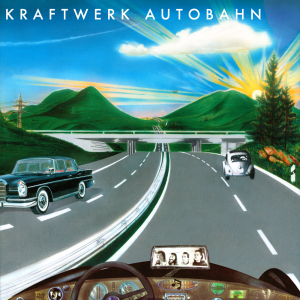 Fifty years ago in West Germany, a country at the heart of the growing European Communities, several innovations jumped off the production line. One was a government led by a new, outward-looking chancellor, Helmut Schmidt, who helped set up the first World Economic Summit in 1975. Another was the Volkswagen Golf, a car with an in-built radio and cassette player, perfect for cross-continental drives.
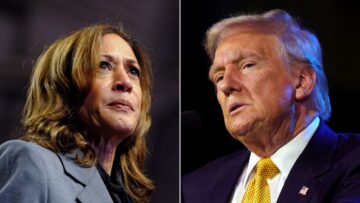
 I always try to assess facts as objectively as I can, and I always present my view of the world openly and honestly. But this is not a neutral or nonpartisan blog. I strongly endorse Kamala Harris for President, and I think the Democrats — despite some flaws — are a better choice than the Republicans at this moment in history.
 I mostly stand by the reasoning in my 2016 post,
  Several surveys suggest that many Americans still believe crime is
 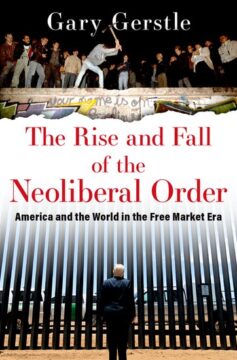 In his book “