Cradle of Civil Disobedience

0511-bks-THOTTAM-tmagSF

Jyoti Thottam reviews Ramachandra Guha's ‘Gandhi Before India’ in the NYT (image MSMDNYC):

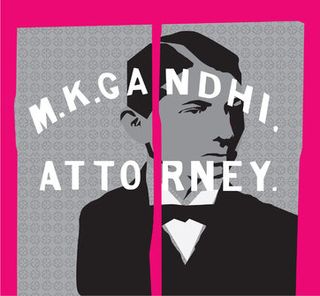
At the end of the 19th century, Mohandas Gandhi was a young lawyer living in Durban, South Africa. He left his house in Beach Grove every morning for an office on Mercury Lane, where he spent much of the day helping his fellow Indian immigrants navigate the onerous colonial bureaucracy. He kept meticulous records, including a logbook of correspondence — from an English missionary and local planters, and a series of letters exchanged with the Protector of Indian Immigrants about the treatment of indentured laborers. In January of 1897, and again a few months later, he heard from another lawyer who was, like him, a Gujarati who had studied in England and then struggled to establish a practice in Bombay. The contents of these letters are unknown. In a remarkable new biography, “Gandhi Before India,” Ramachandra Guha gingerly speculates about what they might have been. Expressions of support for Gandhi’s nascent activism? Or perhaps “explorations of interest in a possible career in South Africa”? Guha wisely stops there. What is not in doubt is the name in Gandhi’s logbook — “M. A. Jinnah,” Muhammad Ali Jinnah, who would become the founder of Pakistan. “All we now know is that, a full 50 years before partition and the independence of India and Pakistan, the respective ‘Fathers’ of those nations were in correspondence.”

More here.

Philosophers of Babel

Ross Perlin in The New Inquiry:

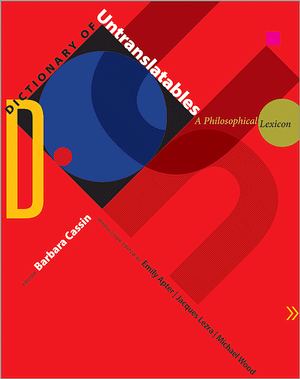
K10097[The Dictionary of Untranslatables] is at its best not so much when unpacking keywords from disparate national traditions or when wading into the depths of wide-angle comparative philosophy, given that a deep comparison of European “nature” with Chinese ziran would pose many more problems than anything attempted here. But the Dictionary is revealing for the way it sketches, lexically, a set of parallel but alternate intellectual traditions. What language teachers call “false friends” are everywhere, inspiring a constant alertness to nuance. Did you know that French classicisme summons up Versailles (which we’d call baroque) but it was German Klassizismus that crystallized our idea of the “neoclassical”? Or that the vital feminist distinction between “sex” and “gender,” current in English since the 1970s, was “nearly impossible to translate into any Romance language,” not to mention the problems posed by the German Geschlecht, as Judith Butler writes in the Dictionary? Further probing may even make us wonder whether the nature/culture distinction so sharply drawn (and now promoted) by the English idea of “sex” vs. “gender” is the right distinction—the languages of the world offer many other possibilities.

This is the kind of “philosophizing through ­languages” that the Dictionary’s editors have in mind, and they’re right: philosophy has always been about bending (and coining) words to work in particular ways, about consciously harnessing and creating abstraction out of linguistic systems already engaged willy-nilly in much the same task. A century ago, analytic philosophers such as Bertrand Russell and Ludwig Wittgenstein saw the problems of philosophy as all boiling down to unclear language; contributors to the Dictionary lay a similar stress on words but revel in their contested indeterminacy. They chart a middle course between Anglo-American “ordinary language philosophy,” which harvests the way we actually talk, and quasi-mystical etymology spinning and neologism making in the style of Martin Heidegger (though the Dictionary doesn’t shrink from taking on such translation-proof Heideggerisms as Dasein and Ereignis). Though generally grounded in intellectual and linguistic history, the Dictionary’s authors sometimes seem to forget that they’re handling actual words rooted in and shaped by spoken languages, not just talismans passed down and swapped back and forth by a transnational philosopher tribe. Occasional cross-referencing with Urban Dictionary is strongly recommended, likewise Raymond Williams’s Keywords and Flaubert’s Dictionary of Received Ideas.

Read the rest here.

Hans Christian Andersen: European Witness

Robert Douglas-Fairhurst in The Telegraph:

Andersen-pea_2905060bOn June 11 1857, Hans Christian Andersen arrived at Charles Dickens’s house, having previously arranged to stay for a week. A month later he was still there. “We are suffering a great deal from Andersen,” Dickens wrote to a friend on July 10, and when his guest finally left he put a note on the mantelpiece that read: “Hans Andersen slept in this room for five weeks – which seemed to the family AGES!” His daughter Katey was even harsher, declaring that Andersen was “a bony bore” who “stayed on and on”.

While Andersen was undeniably a difficult man – vain, self-absorbed and painfully insecure – he might have expected a more sympathetic reception from Dickens. Both were writers at the top of their profession who had fought their way up from the depths. Andersen’s father was a shoemaker who had died of tuberculosis, his mother was an alcoholic washerwoman who ended up being committed to an asylum, and when little Hans was put to work in a cloth mill, the other employees, on hearing him sing, tore off his clothes to find out if he was a boy or girl.

More here.

the topic of revolution

ThirdofmayLewis Lapham at Lapham's Quarterly:

To look back to the early 1960s is to recall a society in many ways more open and free than it has since become, when a pair of blue jeans didn’t come with a radio-frequency ID tag, when it was possible to appear for a job interview without a urine sample, to say in public what is now best said not at all. So frightened of its own citizens that it classifies them as probable enemies, the U.S. government steps up its scrutiny of what it chooses to regard as a mob. So intrusive is the surveillance that nobody leaves home without it. Tens of thousands of cameras installed in the lobbies of office and apartment buildings and in the eye sockets of the mannequins in department-store windows register the comings and goings of a citizenry deemed unfit to mind its own business.

The social contract offered by the managing agents of the bourgeois state doesn’t extend the privilege of political revolt, a point remarked upon by the Czech playwright Vàclav Havel just prior to being imprisoned in the late 1970s by the Soviet regime then governing Czechoslovakia: “No attempt at revolt could ever hope to set up even a minimum of resonance in the rest of society, because that society is ‘soporific,’ submerged in a consumer rat race…Even if revolt were possible, however, it would remain the solitary gesture of a few isolated individuals, and they would be opposed not only by a gigantic apparatus of national (and supranational) power, but also by the very society in whose name they were mounting their revolt in the first place.”

more here.

Grand Unified Theory of Female Pain

800x725xjamison_01_cmyk.jpg,qitok=IcFue6cb.pagespeed.ic.zThWl5ud3vLeslie Jamison at VQR:

Different kinds of pain summon different terms of art: hurt, suffering, ache, trauma, angst, wounds, damage. Pain is general and holds the others under its wings; hurt connotes something mild and often emotional; angst is the most diffuse and the most conducive to dismissal as something nebulous, sourceless, self-​indulgent, and affected. Suffering is epic and serious; trauma implies a specific devastating event and often links to damage, its residue. While wounds open to the surface, damage happens to the infrastructure—​often invisibly, irreversibly—​and damage also carries the implication of lowered value. Wound implies en media res: The cause of injury is in the past but the healing isn’t done; we are seeing this situation in the present tense of its immediate aftermath. Wounds suggest sex and aperture: A wound marks the threshold between interior and exterior; it marks where a body has been penetrated. Wounds suggest that the skin has been opened—​that privacy is violated in the making of the wound, a rift in the skin, and by the act of peering into it.

more here.

W.G. Sebald’s A Place in the Country

Ehrenreich_singleluminescence_ba_img_0Ben Ehrenreich at The Nation:

The book is structured in roughly chronological order, beginning with an essay on Johann Peter Hebel (born 1760, died 1826: forgive yourself if you’ve never heard of him) and ending with the contemporary German painter Jan Peter Tripp. Rousseau was Hebel’s elder by nearly half a century, but starting with Hebel allows Sebald to open by juxtaposing an already anachronistic prelapsarian notion of a “world in perfect equilibrium”—the lapse in this case being the French Revolution, and the beginning of the modern era—against an “eschatological vision unparalleled in German literature.” From that vantage point—“the doom-laden glimmering of a new age which, even as it dreams of humanity’s greatest possible happiness, begins to set in train its greatest possible misfortune”—the essays that follow trace the downward spiral of modernity, which is, seen from another angle, the confident ascendancy of the European bourgeoisie.

Via the Romantic poet Eduard Mörike, we witness the taming of the radical aspirations of the late eighteenth century in “the becalmed waters” of the post-Napoleonic years. Via the Swiss novelist and poet Gottfried Keller, we read of the defeat of the revolutions of 1848 and the growing “havoc which the proliferation of capital inevitably unleashes upon the natural world, upon society, and upon the emotional life of mankind.” The grand cataclysms of the twentieth century remain outside the frame, bracketed by Tripp and Walser, whose descent into madness Sebald reads as an act of “inner emigration,” a flight from Europe’s looming implosion.

more here.

Time to settle the synthetic controversy

Volker ter Meulen in Nature:

Syn_bio_logoThe creation of an artificial yeast chromosome shows that synthetic biology is getting closer to what most scientists want: to be able to deliver benefits to society. The field has already found cheaper ways to produce medicines, and is making progress in applications from water purification to materials design. The topic is, however, controversial, and that is jeopardizing its promise. Environmental groups argue that it poses risks to health and the environment and have called for a global moratorium. We have been here before: exaggerated fears and uncritical acceptance of claims of the risks of genetic modification led to excessively cautious regulation and a block on innovation that not only slowed the development of new products, but also deterred basic science. The debate over synthetic biology is now entering a critical phase.

…In the case of synthetic biology, the world needs to commit to addressing several priorities. First, the scope of synthetic biology needs be determined. We describe it as the construction of customized biological systems to perform new and improved functions, through the application of principles from engineering and chemical synthesis.

More here.

Why Language and Thought Resemble Russian Dolls

Gary Stix in Scientific American:

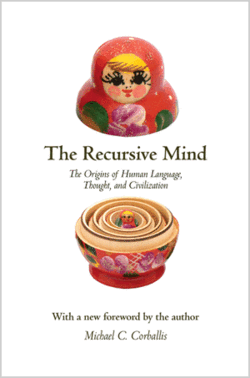
K10297You wrote a book in the last few years called The Recursive Mind. What is recursion and why is it important?

Recursion can refer to a procedure that references itself or similar procedures, or to a structure that contains an embedded structure of the same type. It is important because it allows one to build entities of theoretically unlimited complexity by progressively embedding structures within structures.

Some scholars think that language may be built on the use of recursive building blocks. Isn’t that a fundamental tenet of the modern linguistics pioneered by Noam Chomsky.

Yes, Chomsky’s view of language is that it is recursive, and this gives language its potential for infinite complexity—or what he has also called “discrete infinity.” In recent formulations, this is achieved through an “unbounded Merge,” in which elements are merged, and the merged elements can then themselves be merged—a process that can be repeated without bounds. To Chomsky, though, language is essentially internal thought, a mental monologue, known as I-language, and not a means of communication. The structure of language is therefore a by-product of internal thought. This implies a common structure, called “universal grammar,” that underlies all languages. But there is growing doubt as to whether such a structure exists.

More here.

Friday Poem

Bull Song

For me there was no audience
no brass music either,
only wet dust, the cheers
buzzing at me like flies,
like flies roaring.

I stood dizzied
with sun and anger,
neck muscle cut,
blood falling from the gouged shoulder.

Who brought me here
to fight against walls and blankets
and the gods with sinews of red and silver
who flutter and evade?

I turn, and my horns
gore blackness.
A mistake, to have shut myself
in this cask skin,
four legs thrust out like posts.
I should have remained grass.

The flies rise and settle.
I exist, dragged, a bale
of lump flesh.
The gods are awarded
the useless parts of my body.

For them this finish,
this death of mine is a game:
not the fact or act
but the grace with which they disguise it
justifies them.

by Margaret Atwood

Thursday, May 8, 2014

Thomas Piketty answers David Brooks: The best-selling economist sounds off to Salon

Josh Eidelson in Salon:

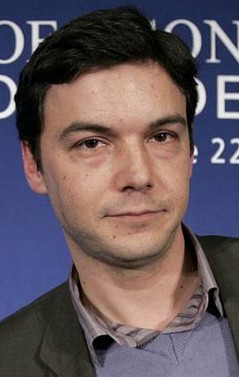
David Leonhardt, in his New York Times Magazine essay on your book, writes that rather than a wealth tax, there’s “another, more politically plausible force that can disrupt [Piketty’s] first law of inequality: education. When a society becomes more educated, many of its less-wealthy citizens quickly acquire an ephemeral but nonetheless crucial form of capital — knowledge — that can bring enormous returns.” Do you share that view?

ScreenHunter_609 May. 08 16.50I do share partly that view. As I say in the book, education and the diffusion of knowledge are the primary forces towards reduction in inequality…

The question is, is that going to be sufficient?

…You need education but you also need progressive taxation.

It’s not an all-or-nothing solution. I think a lot can be done at the national level. We do already have progressive taxation of income, progressive taxation of inherited wealth, at the national level. We also have annual taxation of wealth at the national level. For instance, in the U.S. you have a pretty big property tax… Technically, it is perfectly possible to transform it into a progressive tax on net wealth…

The main difficulty is not so much to make it a global tax. The main difficulty is not international tax competition. The main difficulty is more internal political [obstacles]… Right now the property tax is a local tax, and so the federal government cannot do anything. You know, it was the same with the income tax one century ago.

So I don’t share the pessimistic view that a progressive wealth tax will never happen.

More here.

Concern for the Destiny of the Country: Indian Feminist Novels

Elen Turner in Critical Flame:

3546874366_6a5bc5a355_oIndian literary critic Meenakshi Mukherjee has said that the essential concern of the twentieth-century Indian novelist was the changing national scene and the destiny of the country. She was referring to novels of the first half of the twentieth century, but these same concerns continue to operate today. It is only the definition of what the “destiny of the country” means that has changed over the decades. The concerns to which she refers are not confined to the Independence struggle, but increasingly turn toward problems of class and gender. Three novels—Urdu author Qurratulain Hyder’s classic My Temples, Too, English-language author Shruti Saxena’s Stilettos in the Boardroom, and Tamil author Vaasanthi’s Birthright; all published by India’s two leading feminist presses, Zubaan and Women Unlimited—highlight the changing nature of national destiny. Though these novels differ in both style and content, their central characters face renegotiations of youth, class, and gender, in the shadow of post-Independence national identity. These works not only reveal the shifting ground of Mukherjee’s concern, but also demonstrate that there is no such thing as a representative Indian feminist novel. In these titles, diversity is privileged above adherence to ideology. Each one expresses a different India—newly independent, ruling class, revolutionary, Muslim; urban, globalising, corporate; rural, educated, tradition-bound—all with women’s experiences at their center.

Qurratulain Hyder (1928-2007) wrote Mere Bhi Sanamkhane in 1947 at age nineteen. She was unusual in translating (or “transcreating,” the term she preferred,) many of her novels herself: Mere Bhi Sanamkhane was transcreated as My Temples, Too. The novel is set in Lucknow, long a cosmopolitan center with a combination of Muslim and Hindu inhabitants, in the lead-up to and aftermath of Indian Independence. Founded in 1775 when the Muslim nawabs of Avadh shifted court there, Lucknow had a large and well-educated Hindu middle-class. Though the monarchy fell to the British in 1856, the traditional feudal system that upheld high-cultural traditions (poetry, arts, and music) lasted until Independence in 1947. My Temples, Too depicts a post-Independence period of growing suspicion and animosity between religious groups, when large numbers of Punjabi refugees were entering Lucknow. Hyder’s novel documents the rapid disintegration of the city—and, by extension, India—as an ideal of Hindu-Muslim unity that would prove unattainable.

More here.

A Foreign Policy for the Left

1396847598kosovo_bldg_antonis_lamnatos_666Michael Walzer at Dissent:

Is there such a thing as a leftist foreign policy? What are the characteristic views of the left about the world abroad? When have leftists, rightly or wrongly, defended the use of force? The arguments about what to do in Syria have led me to ask these questions, but I am after a more general answer, looking not only at the left as it is today but also at the historical left. The questions aren’t easy—first, because there have been, and there are, many lefts; and second, because left views about foreign policy change more often than left views about domestic society. Relative consistency is the mark of leftism at home, but that’s definitely not true abroad. Still, it’s possible to make out a kind of default position and then to describe the various alternative positions and the arguments for and against them. I want to join those arguments and suggest why they have gone well, sometimes, and very badly at other times.

The basic position appears early in recorded history. I first discovered it when reading the biblical prophets, who have often been an inspiration to Western leftists. The prophets argued that if the Israelites obeyed the divine commandments, stopped grinding the faces of the poor, and established a just society, they would live in their land forever, safe against Assyrian and Babylonian imperialism.

more here.

Georges Simenon returns

P3_Barnes1_Web_1066817kJulian Barnes at the Times Literary Supplement:

What do “literary” novelists admire in Simenon? The combination of a positive and a negative, perhaps: a mixture of what he can do better than they, and of what he can get away with not doing. His admirable positives: swiftness of creation; swiftness of effect; clearly demarcated personal territory; intense atmosphere and resonant detail; knowledge of, and sympathy with, les petites gens; moral ambiguity; a usually baffling plot with a usually satisfactory denouement. As for his enviable negatives: Simenon got away with a very restricted and therefore very repetitive vocabulary (about 2,000 words, by his own estimation) – he didn’t want any reader to have to pause over a word, let alone reach for the dictionary. He kept his books very short, able to be read in one sitting, or (often) journey: none risks outstaying its welcome. He eschews all rhetorical effect – there is rarely more than one simile per book, and no metaphors, let alone anything approaching a symbol. There is text, but no subtext; there is plot but no subplot – or rather, what appears to be possible subplot usually ends up being part of the main plot. There are no literary or cultural allusions, and minimal reference to what is going on in the wider world of French politics, let alone the international arena. There is also – both admirable positive and enviable negative – no authorial presence, no authorial judgement, and no obvious moral signposts. Which helps make Simenon’s fiction remarkably like life.

Though his romans durs may be superior, it was the seventy-five Maigret novels that were best known during Simenon’s lifetime, and continue to be so.

more here.

Karl Ove Knausgaard’s epic struggle

Cover00Meghan O'Rourke at Bookforum:

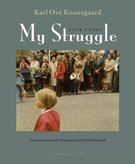
My Struggle,the celebrated six-volume novel (or memoir) by the Norwegian writer Karl Ove Knausgaard, is—like nearly all grand endeavors—one of those books that shouldn’t work, but somehow does. He finished the project in 2009 in his adopted homeland, Sweden, where it was both a best seller and a lightning rod for literary debate. Three volumes have now been translated in the United States. The novel draws explicitly from Knausgaard’s own life—the narrator is named Karl Ove Knausgaard—and uses the real names of his wife, children, parents, and friends. Nearly four thousand pages, it is packed with the kind of quotidian detail that is hardly the stuff of high drama: some one hundred pages on the teenage narrator trying to buy beer; long descriptions of the mechanics of cleaning house and of a fight with his wife over the dishes. Knausgaard has said he wrote My Struggle fast and without much revision. He is not averse to cliché, his metaphors are mixed (“His fury struck like a wave, it washed through the rooms, lashed at me, lashed and lashed and lashed at me”); he often gets “needlessly” bogged down in exposition about who is walking where and exactly how his mother turns the key in the ignition and backs out of the driveway. Scenes that seem as if they are building to a crescendo, making the reader worry (will his mother get in an accident?), often just stop. On the face of it, Knausgaard seems to be making every mistake a novelist is taught not to make.

In lesser hands, these qualities would strike readers as boring and self-indulgent, but My Struggle is a revolutionary novel that is highly approachable, even thrilling to read. The book feels like a masterpiece—one of those genuinely surprising works that alters the tradition it inherited.

more here.

Looking for convict heritage

Clare Anderson in Carceral Archipelago
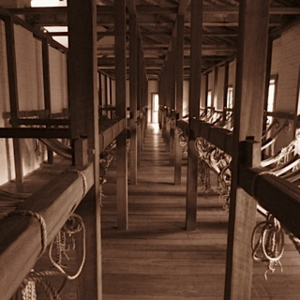
Photo2

Convict hammocks at Hyde Park Barracks Museum. Photo: Eureka Henrich

These manifestations of convict heritage are indicative of my generation. By the 1980s, fuelled by a resurgence in family history, an embrace of the ‘new nationalism’ and the opening of state archives, Australians were discovering their convict ancestors anew – no longer shameful skeletons best kept in the closet, they could now be regarded as a badge of honour, or even as the founders of the nation (hence the naming of the iconic ferries). During the official celebration of the Bicentenary of British colonisation, convicts were even cast as the first migrants, credited with kicking off the ‘nation of immigrants’ in a similar fashion to the Mayflower pilgrims in America. But the government-choreographed 1988 celebrations were also marked by a profound collective unease. Could our convict ancestors be founders, as well as invaders? The gulf between stories of settler survival against the odds, and the mounting historical evidence of the violent dispossession that was part of that ‘survival’, could no longer be ignored or glossed over. As a result, the History I leant at school was vastly different to the previous generation of Australian schoolchildren. While explorers and empires still held sway, they were joined by other historical actors – workers, women, migrants and Indigenous Australians, each with a compelling claim to belonging in the story of the nation.

Since I began to research representations of transportation at convict heritage sites in Australia for the CArchipelago project, I’ve gained a new appreciation of the heritage I unknowingly soaked up as a child. As an Australian without direct ancestral links to convicts, I wonder whether I would feel differently if the connections were familial, as well as cultural. And what about international visitors to Australia – what kind of convict heritage do they encounter? And how has it changed over recent years? Heritage – or ‘things worth saving’, in David Lowenthal’s apt words – can encompass the tangible, such as places, and the intangible, such as songs; the visible, such as buildings, and the hidden, such as archaeological remains. But most importantly, the designation of ‘heritage’ significance infers an opinion, a ‘worth’, a judgement on the past and a construction of that past for a present audience or consumer. These constructions are constantly changing, making the study of convict heritage sites a fascinating window onto the ways that Australians have related to their carceral past and presented that past to others. And now is a particularly interesting time to conduct this research, as eleven of Australia’s historic places were in 2010 recognised by UNESCO as being of ‘outstanding universal value’. Encompassing colonial homesteads, probation stations, barracks, penitentiaries, female factories and coal mines, across New South Wales, Western Australia and Tasmania, these places now form the Australian Convict Sites World Heritage Property. I have been studying these sites and others from afar, combing through the writings of historians, archaeologists, tourism researchers and heritage practitioners to gain an overview of the main themes and debates in the field. A recent trip to Sydney afforded me the opportunity to experience two of these sites in person: Hyde Park Barracks, and the Old Great North Road on the Hawkesbury River. Both sites are included in the World Heritage listing, and both date from a similar period in the history of the colony, however they represent very different ‘experiences’ for a visitor, as I discovered.

Read the rest here.

first living organism that transmits added letters in DNA ‘alphabet’

From Scientific American:

DNAScientists at The Scripps Research Institute (TSRI) have engineered a bacterium whose genetic material includes an added pair of DNA “letters,” or bases, not found in nature. The cells of this unique bacterium can replicate the unnatural DNA bases more or less normally, for as long as the molecular building blocks are supplied. “Life on Earth in all its diversity is encoded by only two pairs of DNA bases, A-T and C-G, and what we've made is an organism that stably contains those two plus a third, unnatural pair of bases,” said TSRI Associate Professor Floyd E. Romesberg, who led the research team. “This shows that other solutions to storing information are possible and, of course, takes us closer to an expanded-DNA biology that will have many exciting applications — from new medicines to new kinds of nanotechnology.”

The report on the achievement appears May 7, 2014, in an advance online publication of the journal Nature. Romesberg and his laboratory have been working since the late 1990s to find pairs of molecules that could serve as new, functional DNA bases — and, in principle, could code for proteins and organisms that have never existed before. The task hasn't been a simple one. Any functional new pair of DNA bases would have to bind with an affinity comparable to that of the natural nucleoside base-pairs adenine-thymine and cytosine-guanine. Such new bases also would have to line up stably alongside the natural bases in a zipper-like stretch of DNA. They would be required to unzip and re-zip smoothly when worked on by natural polymerase enzymes during DNA replication and transcription into RNA. And somehow these nucleoside interlopers would have to avoid being attacked and removed by natural DNA-repair mechanisms.

More here.

Mind Games: Making the case for an academic calling

Siva Vaidhyanathan in Bookforum:

Cover00“I’M GONNA WASH THAT MAN RIGHT OUTTA MY HAIR,” I sang in a full voice from the back row of a University of Texas lecture hall, over the heads of fifty cringing undergraduates. It was the spring of 1995, and I was the oldest student (by at least five years) in a history course called United States Culture, 1945–Present. That day we had a guest lecturer, an American-studies professor who had produced award-winning books on documentary expression in the 1930s and on postwar Broadway musicals. His lecture was on the importance of the latter. He had just asked the room if any of us knew any Rodgers and Hammerstein numbers. Swept away by the enthusiasm of the moment more than by my affection for Oklahoma! or South Pacific, I raised my hand and sang my reply. Professor William Stott smiled and held his arms akimbo. He paused. Then responded. “I’m just a girl who can’t say no.” His voice was rich and joyful. We had broken the fourth wall of academic performance protocols; the expert’s lecture had somehow threatened to become a song swap. The already befuddled younger students in the class were now on the verge of horror, as this pair of aged show-tune enthusiasts shared a moment of mutual recognition with passion, confidence, and a complete lack of embarrassment.

That’s when I first began to recognize my calling as a scholar of the humanities—a vocation that these days is steeped in a corrosive identity crisis, seemingly never-ending job insecurities, and no small amount of wider cultural embarrassment. But from my outsider’s perch as a hitherto aimless humanities student rebounding from a dismaying false start to my career in the no-less-precarious field of journalism, this fugitive communion in song persuaded me, on some other-than-conscious level, that there was real joy to be had in the academic calling. And when I met with Professor Stott in his office after class, his ebullient description of his scholarly passions helped me grasp this crucial point more clearly.

More here.

Thursday Poem

The Dead Man Walking

They hail me as one living,

But don't they know
That I have died of late years,
Untombed although?

I am but a shape that stands here,
A pulseless mould,
A pale past picture, screening
Ashes gone cold.

Not at a minute's warning,
Not in a loud hour,
For me ceased Time's enchantments
In hall and bower.

There was no tragic transit,
No catch of breath,
When silent seasons inched me
On to this death ….

— A Troubadour-youth I rambled
With Life for lyre,
The beats of being raging
In me like fire.

But when I practised eyeing
The goal of men,
It iced me, and I perished
A little then.

When passed my friend, my kinsfolk,
Through the Last Door,
And left me standing bleakly,
I died yet more;

And when my Love's heart kindled
In hate of me,
Wherefore I knew not, died I
One more degree.

And if when I died fully
I cannot say,
And changed into the corpse-thing
I am to-day,

Yet is it that, though whiling
The time somehow
In walking, talking, smiling,
I live not now.
.

by Thomas Hardy