Why Neil deGrasse Tyson is a philistine

Damon Linker in The Week:
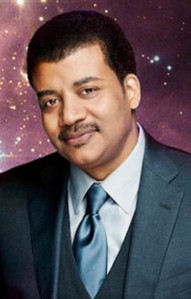
ScreenHunter_608 May. 07 21.49Neil deGrasse Tyson may be a gifted popularizer of science, but when it comes to humanistic learning more generally, he is a philistine. Some of us suspected this on the basis of the historically and theologically inept portrayal of Giordano Bruno in the opening episode of Tyson's reboot of Carl Sagan's Cosmos.

But now it's been definitively demonstrated by a recent interview in which Tyson sweepingly dismisses the entire history of philosophy. Actually, he doesn't just dismiss it. He goes much further — to argue that undergraduates should actively avoid studying philosophy at all. Because, apparently, asking too many questions “can really mess you up.”

Yes, he really did say that. Go ahead, listen for yourself, beginning at 20:19 — and behold the spectacle of an otherwise intelligent man and gifted teacher sounding every bit as anti-intellectual as a corporate middle manager or used-car salesman. He proudly proclaims his irritation with “asking deep questions” that lead to a “pointless delay in your progress” in tackling “this whole big world of unknowns out there.” When a scientist encounters someone inclined to think philosophically, his response should be to say, “I'm moving on, I'm leaving you behind, and you can't even cross the street because you're distracted by deep questions you've asked of yourself. I don't have time for that.”

“I don't have time for that.”

With these words, Tyson shows he's very much a 21st-century American, living in a perpetual state of irritated impatience and anxious agitation. Don't waste your time with philosophy! (And, one presumes, literature, history, the arts, or religion.) Only science will get you where you want to go! It gets results! Go for it! Hurry up! Don't be left behind! Progress awaits!

More here.
Peter Matthiessen’s Orientalism

Joel Whitney in the Boston Review:

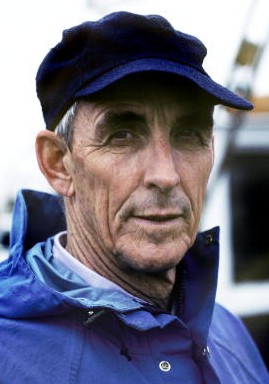
ScreenHunter_607 May. 07 19.52When Peter Matthiessen died of leukemia on April 5, The Snow Leopard was one of the standout books of his career. Published in 1978 to wide acclaim, it was twice awarded the National Book Award. But while Matthiessen’s dive into Buddhist lore is fascinating, it is also troubling.

On September 28, 1973, Matthiessen sets out from Pokhara, Nepal for a two-month trek in the mountains, accompanied by the cranky field biologist George Schaller. They plan to observe the blue sheep’s fall rut and, if they’re lucky, glimpse the very rare snow leopard. In truth, though, Matthiessen and Schaller, like hordes of explorers before them, are searching for more than the elusive cat: a nebulous native authenticity, an encounter with pure life, whether in wilderness or in “the country folk,” as Matthiessen calls them.

When Matthiessen turns his gaze on some of these country folk—the Sherpa porters traveling with him—the book’s difficulties begin. He repeatedly projects apprehensions and urges onto them. He imagines that they wish him hurt or dead and fantasizes about holding them by their pigtails, beating them into bloody submission.

Much of this could be written off as an attempt to leaven the book’s Buddhist mystique with a bit of Western muscle. But it is an incessant thread that bespeaks deeply woven cultural tendencies. The porters are fellow Buddhists who, by Matthiessen’s own account, do their tasks well, with hospitality and good cheer. Yet he dubs one in particular a “red-faced devil,” a “yellow-eyed” “evil monk,” a “sorcerer.” The rest are “childlike” or “unsophisticated.” Matthiessen reveals himself as part of a long tradition of Orientalist writers who see themselves as gods, saviors, and knowledge bearers.

More here.

Unprepared: Rob Lowe on sending his son off to college

Rob Lowe in Slate:

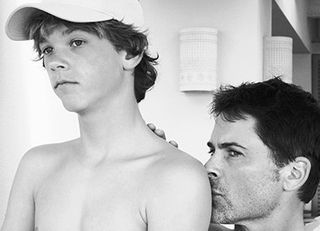
ScreenHunter_606 May. 07 19.48Today is my son Matthew’s last night home before college.

I have been emotionally blindsided. I know that this is a rite many have been through, that this is nothing unique. I know that this is all good news; my son will go to a great school, something we as a family have worked hard at for many years. I know that this is his finest hour. But looking at his suitcases on his bed, his New England Patriots post­ers on the wall, and his dog watching him pack, sends me out of the room to a hidden corner where I can’t stop crying.

Through the grief I feel a rising embarrassment. “Jesus Christ, pull yourself together, man!” I tell myself. There are parents sending their kids off to battle zones, or putting them into rehabs and many other more legitimately emotional situations, all over our country. How dare I feel so shattered? What the hell is going on?

One of the great gifts of my life has been having my two boys and, through them, exploring the mysterious, complicated and charged relationship between fathers and sons.

More here.

Wednesday Poem

Vanity Flare

Don’t get me wrong: I know
that knowledge is power,
that mystery’s water,
that hunger makes
a gargantuan
lover,
and yes, I’ve drunk
of the river Lethe,
from the breath of the Celts,
from the echo of
the bugling elk,

and yet,

alas,
here I be,
small and twee,
all liquored up
on song and love,
hard as rails
and light as air,
expecting the heavens
to throw down a flare,
to send in the clowns,
to burn a bush,
strike up the sea,
anything

that might mean
those cloudy bastards
have noticed me.
.

by Wendy Videlock
from Poetry, Vol. 193, No. 5, February
publisher: Poetry, Chicago, 2009

the return of theology

Simone-Weil-and-Theology1John Caruana at the LA Review of Books:

THIS IS AN ODD TIME in history to be reading and discussing theology. On the one hand, Richard Dawkins — a rock star, if atheists ever had one — avers with the utmost confidence that no sane, educated person could possibly take theology seriously. Thinking about God, for him — and a significant segment of the educated classes — is akin to mulling over the existence of unicorns. The only measure of truth is empirical observation: if we can’t observe it, it ain’t real.

On the other hand, some of the most brilliant secular minds of our time have stumbled on theology and discovered it to be an indispensable tool. These late-comers to theology see in it an important antidote to the ethical and political cul-de-sac brought about by the past century’s fashionable intellectual bandwagons. Ironically, just as organized religion has effectively collapsed in Western Europe, some of the most important European thinkers have been insisting that theology offers invaluable critical resources for thinking about the most vexing problems we face today.

For many of these philosophers, the turn to theology is not motivated by a newfound faith (most are self-declared atheists), but rather a recognition that theological questioning allows us access to ways of thinking that conventional philosophy might otherwise foreclose. Thinkers such as Giorgio Agamben, Jean-Luc Nancy, Simon Critchley, and Slavoj Žižek have defended, sometimes vociferously, the necessity to engage with theology.

more here.

the descent of the celebrity profile

Article_petersenAnne Helen Petersen at The Believer:

One didn’t have to be friends with the stars to write about them. Rex Reed’s “Do You Sleep in the Nude?,” a profile of aging star Ava Gardner, serves as the lead essay to The New Journalismcollection. Much like Capote’s profile of Brando, it flips the genre on its head. Reed describes her “Ava elbows” and declares her “gloriously, divinely barefoot,” claiming that “at forty-four, she is still one of the most beautiful women in the world.” But Reed also manages to make her look like what today’s gossip columnists would call a “hot mess.” After kicking her press agent out of the room (“Out! I don’t need press agents!”) she queries Reed: “You do drink—right, baby? The last buggar who came to see me had the gout and wouldn’t touch a drop.” She then pours herself a “champagne glass full of cognac with another champagne glass full of Dom Perignon, which she drinks successively, refills, and sips slowly like syrup through a straw.”

The whirlwind interaction that follows—in which several men come to call and the assembled group leaves the hotel room, avoids swarms of autograph-seekers, and retreats to the Regency Hotel bar—seems to oscillate, dreamily, between Gardner’s cynical analysis of her career and palpable evidence of her charisma. When Reed asks of her tenure at MGM, she responds, “Christ, after seventeen years of slavery, you can ask that question? I hated it, honey. I mean, I’m not exactly stupid or without feeling, and they tried to sell me like a prize hog. They also tried to make me into something I’m not then and never could be.”

more here.

Patrick Leigh Fermor and the Underground War to Rescue Crete from the Nazis

Lewis_05_14Jeremy Lewis at Literary Review:

Dramatised in the 1957 film Ill Met by Moonlight, in which Dirk Bogarde rather improbably played the leading role, Patrick Leigh Fermor's kidnapping of a German general in Crete in the spring of 1944 was one of the most dashing and unconventional episodes of the Second World War. Leigh Fermor published little on the subject during his lifetime – a very brief account is provided in his 2003 collection of essays, Words of Mercury – but Wes Davis's book usefully plugs the gap. First published in America last year, too early to benefit from Artemis Cooper's biography of Leigh Fermor, it draws on previously unpublished papers in the National Archives and the Imperial War Museum, as well as on Antony Beevor's exhaustive history of the German invasion and occupation of Crete, and on the published memoirs of other veterans of the long guerrilla war. The result is an exciting, fast-moving and crisply written adventure story.

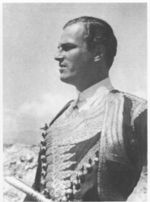
Leigh Fermor's mentor and precursor as a Cretan resistance leader was John Pendlebury, a Cambridge-educated archaeologist with a glass eye who had worked on the Minoan excavations at Knossos before the war and liked to wear traditional Cretan clothes, complete with cloak and turban. Pendlebury was captured and executed shortly after the German invasion of the island in May 1941, and Leigh Fermor took his place fighting alongside the andartes ('guerrillas') of the Cretan resistance.

more here.

Behavioural training reduces inflammation

Heidi Ledford in Nature:

MeditationDutch celebrity daredevil Wim Hof has endured lengthy ice-water baths, hiked to the top of Mount Kilimanjaro in shorts and made his mark in Guinness World Records with his ability to withstand cold. Now he has made a mark on science as well. Researchers have used Hof’s methods of mental and physical conditioning to train 12 volunteers to fend off inflammation. The results, published today in the Proceedings of the National Academy of Sciences1, suggest that people can learn to modulate their immune responses — a finding that has raised hopes for patients who have chronic inflammatory disorders such as rheumatoid arthritis and inflammatory bowel disease.

In 2010, as a graduate student, Kox was exploring how the nervous system influences immune responses. That's when he first learned that Hof had said that he could regulate not only his own body temperature, but also his immune system. “We thought, ‘Alright, let’s give him a chance’,” says Kox. “But we thought it would be a negative result.” Kox, and his adviser, physician and study co-author Peter Pickkers, also at Radboud University Medical Center, invited Hof to their lab to investigate how he would react to their standard inflammation test. It involves exposure to a bacterial toxin, made by Escherichia coli, to induce temporary fever, headache and shivering. To Kox’s surprise, Hof’s response to the toxin was milder than that of most people — he had less severe flu-like symptoms, for example, and lower levels of inflammatory proteins in his blood2.

More here.

Superstition and self-governance

Peter T. Leeson on OUPblog:

Portrait_of_a_Franciscan_Friar_oil_on_canvas_painting_by_Jacopo_Bassano_Jacopo_dal_PonteIn eras bygone, in societies across the globe, governments didn’t exist—or weren’t strong enough to provide effective governance. Without governments to govern them, the members of such societies relied on self-governance.

Self-governance refers to privately supplied institutions of property protection—whether designed by individuals expressly for the purpose, such as the “codes” that pirates forged to govern their crews in the eighteenth-century Caribbean, or developed “spontaneously,” such as the system of customary law and adjudication that emerged to govern commerce between international traders in medieval Europe. Reliance on such institutions, especially in historical societies, is well known. Less widely recognized or understood is historical societies’ reliance on superstition—objectively false beliefs—to facilitate self-governance.

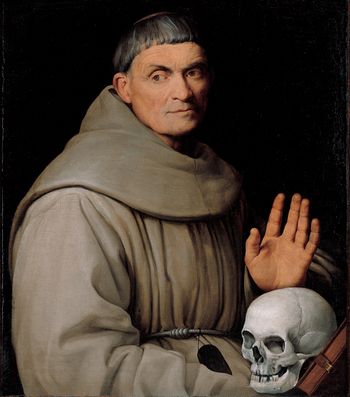
Consider the case of medieval monks. Today monks are known for turning the other cheek and blessing humanity with brotherly love. But for centuries they were known equally for fulminating their foes and casting calamitous curses at persons who crossed them. These curses were called “maledictions.”

Read the rest here.

Tuesday, May 6, 2014

the birth of Sun Ra

ID_PI_GOLBE_SUNRA_AP_001Stefany Anne Golberg at The Smart Set:

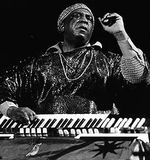
The birth of Herman Poole Blount on May 22, 1914 was, for him, the least significant of all his births. Blount begat Bhlount and Bhlount begat Ra and Herman begat Sonny and Sonny begat Sun. Sun Ra left Alabama for Chicago and Chicago for Saturn, until he never quite understood how he got to planet Earth in the first place. The name ‘Ra’ — the Egyptian god of the sun — brought him closer to the cosmos. Each rebirth erased the one before it, until Sun Ra’s past became a lost road that trailed off into nothingness. The past was passed, dead. History is his story, he said, it’s not my story. My story, said Sun Ra, is mystery. Sun Ra’s lived life between ancient time and the future, in something like the eternal now. He told people he had no family and lived on the other side of time. Rebirth might not be the right word for the journey that Sun Ra took. Awakening is more precise, like how the ancient Egyptians were awakened. As Jan Assaman wrote in Death and Salvation in Ancient Egypt, to be a person in ancient Egypt meant to exercise self-control. In powerlessness, unconsciousness or sleep, a person is dissociated from the self. The sleeping person, then, is like a dead person. But the awakened one is a person risen.

A great one is awakened, a great one wakes,
Osiris has raised himself onto his side;
he who hates sleep and loves not weariness,
the god gains power…

Sun Ra believed that the whole of humanity was in need of waking up. He wanted to slough off old ideas and habits, brush off sleepy clothing and shake off drowsy food. Because present time mattered little to Sun Ra, they say he rarely slept.

more here.

The logic of Buddhist philosophy

Graham Priest in Aeon:

AEON-ZENWestern philosophers have not, on the whole, regarded Buddhist thought with much enthusiasm. As a colleague once said to me: ‘It’s all just mysticism.’ This attitude is due, in part, to ignorance. But it is also due to incomprehension. When Western philosophers look East, they find things they do not understand – not least the fact that the Asian traditions seem to accept, and even endorse, contradictions. Thus we find the great second-century Buddhist philosopher Nagarjuna saying:

The nature of things is to have no nature; it is their non-nature that is their nature. For they have only one nature: no-nature.

An abhorrence of contradiction has been high orthodoxy in the West for more than 2,000 years. Statements such as Nagarjuna’s are therefore wont to produce looks of blank incomprehension, or worse. As Avicenna, the father of Medieval Aristotelianism, declared:

Anyone who denies the law of non-contradiction should be beaten and burned until he admits that to be beaten is not the same as not to be beaten, and to be burned is not the same as not to be burned.

One can hear similar sentiments, expressed with comparable ferocity, in many faculty common rooms today. Yet Western philosophers are slowly learning to outgrow their parochialism. And help is coming from a most unexpected direction: modern mathematical logic, not a field that is renowned for its tolerance of obscurity.

Read the rest here.

The 100 best novels: No 33 – Sister Carrie

Robert McCrum in The Guardian:

Laurence-Olivier-and-Jenn-009Sister Carrie is one of several novels in this series that address the American dream, and it does so in a radical spirit of naturalism that rejected the Victorian emphasis on morality. In some ways it's crude and heavy-handed, blazing with coarse indignation, but in its day it was, creatively speaking, a game-changer. Later, America's first Nobel laureate, Sinclair Lewis, said that Dreiser's powerful first novel “came to housebound and airless America like a great free Western wind, and to our stuffy domesticity gave us the first fresh air since Mark Twain and Whitman”.

…The novel opens with Caroline – Sister Carrie – Meeber moving from the country to the city, taking the train to Chicago to realise her hopes for a better, more glamorous future. En route, she meets a travelling salesman, Charles Drouet, who soon releases her from the drudgery of machine-work in the heartless city by making her his mistress. This is the first in a succession of Carrie's fruitless attempts to find happiness. Henceforth, she becomes the victim of increasingly desperate relationships which, combined with a starstruck fascination with the stage, take her to New York and the life of a Broadway chorus girl. The novel ends with Carrie changing her name to Carrie Madenda and becoming a star just as her estranged husband, George Hurstwood, gasses himself in rented lodgings. The closing chapters of the book, in which Hurstwood is ruined and then disgraced, are among the most powerful pages in a novel of merciless momentum, whose unsentimental depiction of big-city life sets it apart. Contemporary readers were baffled, however, and Sister Carrie did not sell well.

More here.

Young Blood May Hold Key to Reversing Aging

Carl Zimmer in The New York Times:

Mouse-effect-circulation-young-bloodTwo teams of scientists published studies on Sunday showing that blood from young mice reverses aging in old mice, rejuvenating their muscles and brains. As ghoulish as the research may sound, experts said that it could lead to treatments for disorders like Alzheimer’s disease and heart disease. “I am extremely excited,” said Rudolph Tanzi, a professor of neurology at Harvard Medical School, who was not involved in the research. “These findings could be a game changer.” The research builds on centuries of speculation that the blood of young people contains substances that might rejuvenate older adults. In the 1950s, Clive M. McCay of Cornell University and his colleagues tested the notion by delivering the blood of young rats into old ones. To do so, they joined rats in pairs by stitching together the skin on their flanks. After this procedure, called parabiosis, blood vessels grew and joined the rats’ circulatory systems. The blood from the young rat flowed into the old one, and vice versa. Later, Dr. McCay and his colleagues performed necropsies and found that the cartilage of the old rats looked more youthful than it would have otherwise. But the scientists could not say how the transformations happened. There was not enough known at the time about how the body rejuvenates itself. It later became clear that stem cells are essential for keeping tissues vital. When tissues are damaged, stem cells move in and produce new cells to replace the dying ones. As people get older, their stem cells gradually falter.

In the early 2000s, scientists realized that stem cells were not dying off in aging tissues. “There were plenty of stem cells there,” recalled Thomas A. Rando, a professor of neurology at Stanford University School of Medicine. “They just don’t get the right signals.” Dr. Rando and his colleagues wondered what signals the old stem cells would receive if they were bathed in young blood. To find out, they revived Dr. McCay’s experiments. The scientists joined old and young mice for five weeks and then examined them. The muscles of the old mice had healed about as quickly as those of the young mice, the scientists reported in 2005. In addition, the old mice had grown new liver cells at a youthful rate.

More here.

Gary Becker (December 2, 1930 – May 3, 2014), an Appreciation by Michel Foucault

450px-GaryBecker-May24-2008

Gary Becker died on May 3rd. Over at Crooked Timber, Kieran Healy on Michel Foucault's appreciation of Becker (image from Wikimedia commons).

Foucault lectured on Becker and related matters in the late 1970s. One of the things he saw right away was the scope and ambition of Becker’s project, and the conceptual turn—accompanying wider social changes—which would enable economics to become not just a topic of study, like geology or English literature, but rather an “approach to human behavior“. Here is Foucault in March of 1979, for instance:

In practice, economic analysis, from Adam Smith to the beginning of the twentieth century, broadly speaking takes as its object the study of the mechanisms of production, the mechanisms of exchange, and the data of consumption within a given social structure, along with the interconnections between these three mechanisms. Now, for the neo-liberals, economic analysis should not consist in the study of these mechanisms, but in the nature and consequences of what they call substitutible choices … In this they return to, or rather put to work, a defintion [from Lionel Robbins] … ‘Economics is the science of human behavior as a relationship between ends and scarce means which have alternative uses’. … Economics is not therefore the analysis of the historical logic of processes [like capital, investment, and production]; it is the analysis of the internal rationality, the strategic programming of individuals’ activity.

Then comes the identification not just of the shift in emphasis but also point of view:

This means undertaking the economic analysis of labor. What does bringing labor back into economic analysis mean? It does not mean knowing where labor is situated between, let’s say, capital and production. The problem of bringing labor back into the field of economic analysis … is how the person who works uses the means available to him. … What system of choice and rationality does the activity of work conform to? … So we adopt the point of view of the worker and, for the first time, ensure that the worker is not present in the economic analysis as an object—the object of supply and demand in the form of labor power—but as an active economic subject.

At first glance it seems strange to see Foucault emphasize the “active economic subject” here. A standard—indeed, clichéd—critique of Becker’s approach is that economic agents are calculating robots that bear little resemblance to real human beings and that, furthermore, their disembedded and completely systematic choice-making takes us far away from any sort of first-person point of view of labor in the economy. If we want a proper account of economic action on the ground surely we will have to look elsewhere. Wasn’t Marx supposed to have been doing something like this, for example?

More here. Also here, you can find Becker on Foucault on Becker.

A Manifesto for Europe

Euro-banknotes-being-coun-009

Thomas Piketty with others in The Guardian (Photograph: Toby Melville/PA):

The European Union is experiencing an existential crisis, as the European elections will soon brutally remind us. This mainly involves the eurozone countries, which are mired in a climate of distrust and a debt crisis that is very far from over: unemployment persists and deflation threatens. Nothing could be further from the truth than imagining that the worst is behind us.

This is why we welcome with great interest the proposals made at the end of 2013 by our German friends from the Glienicke group for strengthening the political and fiscal union of the eurozone countries. Alone, our two countries will soon not weigh much in the world economy. If we do not unite in time to bring our model of society into the process of globalisation, then the temptation to retreat into our national borders will eventually prevail and give rise to tensions that will make the difficulties of union pale in comparison. In some ways, the European debate is much more advanced in Germany than in France. As economists, political scientists, journalists and, above all, citizens of France and Europe, we do not accept the sense of resignation that is paralysing our country. Through this manifesto, we would like to contribute to the debate on the democratic future of Europe and take the proposals of the Glienicke group still further.

It is time to recognise that Europe's existing institutions are dysfunctional and need to be rebuilt. The central issue is simple: democracy and the public authorities must be enabled to regain control of and effectively regulate 21st century globalised financial capitalism. A single currency with 18 different public debts on which the markets can freely speculate, and 18 tax and benefit systems in unbridled rivalry with each other, is not working, and will never work. The eurozone countries have chosen to share their monetary sovereignty, and hence to give up the weapon of unilateral devaluation, but without developing new common economic, fiscal and budgetary instruments. This no man's land is the worst of all worlds.

More here.

The Great Extinction

Justin E. H. Smith in the Chronicle of Higher Education:

ScreenHunter_605 May. 06 09.27There is a great die-off under way, one that may justly be compared to the disappearance of dinosaurs at the end of the Cretaceous, or the sudden downfall of so many great mammals at the beginning of the Holocene. But how far can such a comparison really take us in assessing the present moment?

The hard data tell us that what is happening to animals right now is part of the same broad historical process that has swept up humans: We are all being homogenized, subjected to uniform standards, domesticated. A curiosity that might help to drive this home: At present, the total biomass of mammals raised for food vastly exceeds the biomass of all mammalian wildlife on the planet (it also exceeds that of the human species itself). This was certainly not the case 10,000 or so years ago, at the dawn of the age of pastoralism.

It is hard to know where exactly, or even inexactly, to place the boundary between prehistory and history. Indeed, some authors argue that the very idea of prehistory is a sort of artificial buffer zone set up to protect properly human society from the vast expanse of mere nature that preceded us. But if we must set up a boundary, I suggest the moment when human beings began to dominate and control other large mammals for their own, human ends.

More here.

Squelching Boltzmann Brains (And Maybe Eternal Inflation)

Sean Carroll in Preposterous Universe:

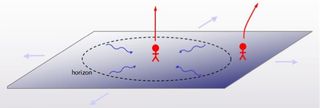
HorizonThere’s no question that quantum fluctuations play a crucial role in modern cosmology, as the recent BICEP2 observations have reminded us. According to inflation, all of the structures we see in the universe, from galaxies up to superclusters and beyond, originated as tiny quantum fluctuations in the very early universe, as did the gravitational waves seen by BICEP2. But quantum fluctuations are a bit of a mixed blessing: in addition to providing an origin for density perturbations and gravitational waves (good!), they are also supposed to give rise to Boltzmann brains (bad) and eternal inflation (good or bad, depending on taste). Nobody would deny that it behooves cosmologists to understand quantum fluctuations as well as they can, especially since our theories involve mysterious aspects of physics operating at absurdly high energies.

Kim Boddy, Jason Pollack and I have been re-examining how quantum fluctuations work in cosmology, and in a new paper we’ve come to a surprising conclusion: cosmologists have been getting it wrong for decades now. In an expanding universe that has nothing in it but vacuum energy, there simply aren’t any quantum fluctuations at all. Our approach shows that the conventional understanding of inflationary perturbations gets the right answer, although the perturbations aren’t due to “fluctuations”; they’re due to an effective measurement of the quantum state of the inflaton field when the universe reheats at the end of inflation. In contrast, less empirically-grounded ideas such as Boltzmann brains andeternal inflation both rely crucially on treating fluctuations as true dynamical events, occurring in real time — and we say that’s just wrong.

All very dramatically at odds with the conventional wisdom, if we’re right. Which means, of course, that there’s always a chance we’re wrong (although we don’t think it’s a big chance).

More here.

Is There Anything Beyond Quantum Computing?

Computer_620

Scott Aaronson in PBS [h/t: Jennifer Ouellette] (image Credit: Marcin Wichary/Flickr, under a Creative Commons license):

[S]ome physicists are already beginning to theorize about what might lie beyond quantum computers. You might think that this is a little premature, but I disagree. Think of it this way: From the 1950s through the 1970s, the intellectual ingredients for quantum computing were already in place, yet no one broached the idea. It was as if people were afraid to take the known laws of quantum physics and see what they implied about computation. So, now that we know about quantum computing, it’s natural not to want to repeat that mistake! And in any case, I’ll let you in on a secret: Many of us care about quantum computing less for its (real but modest) applications than because it defies our preconceptions about the ultimate limits of computation. And from that standpoint, it’s hard to avoid asking whether quantum computers are “the end of the line.”

Now, I’m emphatically not asking a philosophical question about whether a computer could be conscious, or “truly know why” it gave the answer it gave, or anything like that. I’m restricting my attention to math problems with definite right answers: e.g., what are the prime factors of a given number? And the question I care about is this: Is there any such problem that couldn’t be solved efficiently by a quantum computer, butcould be solved efficiently by some other computer allowed by the laws of physics?

Here I’d better explain that, when computer scientists say “efficiently,” they mean something very specific: that is, that the amount of time and memory required for the computation grows like the size of the task raised to some fixed power, rather than exponentially. For example, if you want to use a classical computer to find out whether an n-digit number is prime or composite—though not what its prime factors are!—the difficulty of the task grows only like n cubed; this is a problem classical computers can handle efficiently. If that’s too technical, feel free to substitute the everyday meaning of the word “efficiently”! Basically, we want to know which problems computers can solve not only in principle, but in practice, in an amount of time that won’t quickly blow up in our faces and become longer than the age of the universe. We don’t care about the exact speed, e.g., whether a computer can do a trillion steps or “merely” a billion steps per second. What we care about is the scaling behavior: How does the number of steps grow as the number to be factored, the molecule to be simulated, or whatever gets bigger and bigger?

More here.