Dr. Zhivago’s CIA Connection and the Pope

Kirsch61214620Adam Kirsch at Tablet:

The Zhivago Affair, by Peter Finn and Petra Couvee, is a detailed reconstruction of one of the most fascinating of the Cold War’s cultural skirmishes. Today the novel Doctor Zhivago, by Boris Pasternak, sits placidly on the shelves of Russian classics, alongside War and Peaceand Crime and Punishment. Most people, if they know the story at all, probably know it from David Lean’s widescreen film epic, starring Omar Sharif and Julie Christie and the balalaika-heavy “Lara’s Theme.” But when it was published in 1957, Doctor Zhivago touched off a worldwide controversy, as the Soviet Union tried ineffectually to stop the book from appearing and then reacted with outrage when Pasternak was awarded the Nobel Prize. No book except The Gulag Archipelago, which Aleksandr Solzhenitsyn would publish some 15 years later, caused more anguish to the Soviets during the whole Cold War.

What made Doctor Zhivago such a bitter pill for Khrushchev’s regime to swallow? Unlike Solzhenitsyn’s book, which was a head-on indictment of Soviet crimes, Pasternak’s novel was a poetic and abstract work, most of whose literary energy goes into miraculously vivid descriptions of weather and nature. Indeed, Doctor Zhivago was Pasternak’s first and only novel; before he started writing it, in 1945, he had been famous as a lyric poet and translator of Shakespeare. It was partly Pasternak’s great stature as a poet—he was nominated for the Nobel Prize in Literature several times on the strength of his verse alone—that made it difficult for the Soviet leadership to deal with him. If even Stalin, in his massacre of Soviet writers, had taken care to spare Pasternak, how could Khrushchev—who was supposed to be presiding over a “thaw” in Soviet cultural life—dare to silence or jail him?

more here.

How stress can clog your arteries

Sarah C.P. Williams in Scientific American:

BloodStudying the effect of stressful intensive care unit (ICU) shifts on medical residents, biologist Matthias Nahrendorf of Harvard Medical School in Boston recently found that blood samples taken when the doctors were most stressed out had the highest levels of neutrophils and monocytes. To probe whether these white blood cells, or leukocytes, are the missing link between stress and atherosclerosis, he and his colleagues turned to experiments on mice. Nahrendorf’s team exposed mice for up to 6 weeks to stressful situations, including tilting their cages, rapidly alternating light with darkness, or regularly switching the mice between isolation and crowded quarters. Compared with control mice, the stressed mice—like stressed doctors—had increased levels of neutrophils and monocytes in their blood. The researchers then homed in on an explanation for the higher levels of immune cells. They already knew that chronic stress increases blood concentrations of the hormone noradrenaline; noradrenaline, Nahrendorf discovered, binds to a cell surface receptor protein called β3 on stem cells in the bone marrow. In turn, the chemical environment of the bone marrow changes and there’s an increase in the activity of the white blood cells produced by the stem cells. “It makes sense that stress wakes up these immune cells because an enlarged production of leukocytes prepares you for danger, such as in a fight, where you might be injured,” Nahrendorf says. “But chronic stress is a different story—there’s no wound to heal and no infection.”

In mice living with chronic stress, Nahrendorf’s team reported today in Nature Medicine, atherosclerotic plaques more closely resemble plaques known to be most at risk of rupturing and causing a heart attack or stroke. When the scientists blocked the β3 receptor, though, stressed mice not only had fewer of these dangerous plaques, but also had reduced levels of the active immune cells in their plaques, pinpointing β3 as a key link between stress and atheroscelerosis. The finding could lead to new drugs to help prevent cardiovascular disease, suggests biologist Lynn Hedrick of the La Jolla Institute for Allergy and Immunology in San Diego, California. “I think this gives us a really direct hint that the β3 receptor is important in regulating the stress-induced response by the bone marrow,” Hedrick says. “If we can develop a drug that targets the receptor, this may be very clinically relevant.”

More here.

Tuesday Poem

My little bastard, impious offspring
in case it must be said to you again
here it is said again what should
be said again and again: negotiation
for a non-negotiable end, negotiate
all that’s non-negotiable. Cut
this slogan into your flesh, score
it on your forehead with a record needle
put your boots back on and go back
to the burning star you came from.

by Martín Gambarotta
from Para un plan primavera
publisher: Libros del Perro Negro, Santiago, 2013

Dulce cabroncito, impío vástago
por si debe sértelo dicho otra vez
acá queda dicho otra vez lo que debe
serte dicho una y otra vez: negociación
para un fin no negociable, negociar
todo por lo innegociable. Inflígete
esta consigna en la carne, grábatela
en la frente con una púa de tocadiscos
cálzate otra vez las botas y regresa
a la estrella cáustica de la que viniste.

.

Sean Carroll: Physicists Should Stop Saying Silly Things about Philosophy

Sean Carroll in Preposterous Universe:

ScreenHunter_708 Jun. 24 11.24The last few years have seen a number of prominent scientists step up to microphones and belittle the value of philosophy. Stephen Hawking, Lawrence Krauss, and Neil deGrasse Tyson are well-known examples. To redress the balance a bit, philosopher of physics Wayne Myrvold has asked some physicists to explain why talking to philosophers has actually been useful to them. I was one of the respondents, and you can read my entry at the Rotman Institute blog. I was going to cross-post my response here, but instead let me try to say the same thing in different words.

Roughly speaking, physicists tend to have three different kinds of lazy critiques of philosophy: one that is totally dopey, one that is frustratingly annoying, and one that is deeply depressing.

    • “Philosophy tries to understand the universe by pure thought, without collecting experimental data.”

This is the totally dopey criticism. Yes, most philosophers do not actually go out and collect data (although there are exceptions). But it makes no sense to jump right from there to the accusation that philosophy completely ignores the empirical information we have collected about the world. When science (or common-sense observation) reveals something interesting and important about the world, philosophers obviously take it into account. (Aside: of course there are bad philosophers, who do all sorts of stupid things, just as there are bad practitioners of every field. Let’s concentrate on the good ones, of whom there are plenty.)

More here.

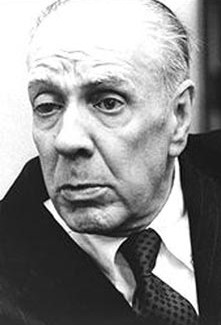
Why Did Borges Hate Soccer?

Shaj Mathew in The New Republic:

“Soccer is popular,” Jorge Luis Borges observed, “because stupidity is popular.”

At first glance, the Argentine writer’s animus toward “the beautiful game” seems to reflect the attitude of today’s typical soccer hater, whose lazy gibes have almost become a refrain by now: Soccer is boring. There are too many tie scores. I can’t stand the fake injuries.

ScreenHunter_707 Jun. 24 11.18And it’s true: Borges did call soccer “aesthetically ugly.” He did say, “Soccer is one of England’s biggest crimes.” And apparently, he even scheduled one of his lectures so that it would intentionally conflict with Argentina’s first game of the 1978 World Cup. But Borges’ distaste for the sport stemmed from something far more troubling than aesthetics. His problem was with soccer fan culture, which he linked to the kind of blind popular support that propped up the leaders of the twentieth century’s most horrifying political movements. In his lifetime, he saw elements of fascism, Peronism, and even anti-Semitism emerge in the Argentinean political sphere, so his intense suspicion of popular political movements and mass culture—the apogee of which, in Argentina, is soccer—makes a lot of sense. (“There is an idea of supremacy, of power, [in soccer] that seems horrible to me,” he oncewrote.) Borges opposed dogmatism in any shape or form, so he was naturally suspicious of his countrymen’s unqualified devotion to any doctrine or religion—even to their dear albiceleste.

Soccer is inextricably tied to nationalism, another one of Borges’ objections to the sport. “Nationalism only allows for affirmations, and every doctrine that discards doubt, negation, is a form of fanaticism and stupidity,” he said.

More here.

The Drone Philosopher

Marco Roth in n + 1:

RothArt-DOWFrom the thumbnail headshot accompanying his essay in the Times, “the drone philosopher,” as I’ve begun to think of him, appears to be in his late twenties, or a boyish 30. In an oddly confessional-style first paragraph, he recalls what it was like to watch the second Iraq War from his college dorm television. He has clean-shaven Ken-doll looks and a prominent squarish jaw, recalling the former Republican vice-presidential candidate and representative from Wisconsin’s First Congressional District, Paul Ryan. I doubt the drone philosopher would be flattered by the comparison. The tone of his article makes him out to be a thoughtful liberal, more interested in weighing complexities than in easy solutions, simultaneously attracted by and wary of power, not unlike the commander in chief he hopes will one day read his papers.

I can make out a bit of wide-striped collegiate tie, a white collar, and the padded shoulders of a suit jacket in the photograph. I know I’m being unfair, but I don’t trust his looks. Since Republicans have become so successful at branding themselves the party of white men, I now suspect that any white guy in a suit may harbor right-wing nationalist tendencies, much as the CIA’s rules governing drone strikes have determined that groups of “military age” men in certain regions of Pakistan and Yemen may be profiled as terrorists.

More here.

Monday, June 23, 2014

The Winners of the 3QD Arts & Literature Prize 2014

Arts & lit 2014 Hamid Top WinnerArts2014 Winner-2014-charm-Quark2

Mohsin Hamid has picked the three winners from the nine finalists:

  1. Top Quark, $500: Ali Eteraz, The Death of the Urdu Script
  2. Strange Quark, $200: Olga Tokarczuk, Everywhere and Nowhere
  3. Charm Quark, $100: Matthew Jakubowski, Honest work: an experimental review of an experimental translation

Here is what Mohsin had to say about them:

It was a great collection of pieces — a real pleasure to read during a hot summer week in Lahore. Here are the winners.

1. Ali Eteraz, “The Death of the Urdu Script” (Medium). Typography, a “murder” mystery, geopolitics, history, D.E.I.T.Y., Apple vs Microsoft vs Twitter, a third way between Arabization and the West, penmanship — this piece had it all. Succinctly far-ranging and wonderfully poignant, I hope it's widely read and helps save the script it champions.

2. Olga Tokarczuk, “Everywhere and Nowhere” (n + 1). For the traveler in each of us. A lovely flow, supple musings. Fabulous. “Fluidity, mobility, illusoriness–these are precisely the qualities that make us civilized. Barbarians don't travel. They simply go to destinations or conduct raids.”

3. Matthew Jakubowski, “Honest work: an experimental review of an experimental translation” (3:AM Magazine). A brief flickering of something that brings to mind “Pale Fire,” this text about a text about a text about a text is magical and wise. It shimmers.

Congratulations also from 3QD to the winners (remember, you must claim the money within one month from today–just send me an email). And feel free, in fact we encourage you, to leave your acceptance speech as a comment here! And thanks to everyone who participated. Many thanks also, of course, to Mohsin Hamid for doing the final judging.

The three prize logos at the top of this post were designed by Sughra Raza, me, and Carla Goller. I hope the winners will display them with pride on their own blogs!

Details about the prize here.

Sunday, June 22, 2014

Is Real Inclusiveness Possible?

Justin E. H. Smith in the New York Times:

United-colors-of-benetton-secularism-diversity11Like many institutions that have become more concerned with equality in the past few decades, academic philosophy today aims to be more inclusive. In general, university departments are now striving to consider the experiences and concerns of a broader range of people than have traditionally played the social and professional role of the philosopher. This makes sense. In an increasingly global intellectual landscape, the removal of barriers to entry for previously excluded groups of people and schools of thought is productive and fair.

It may be, however, that the full implications of the project of inclusiveness have not fully been grasped by the people promoting it. A dwindling number believe that it would be enough to simply change the make-up of philosophy departments without changing the content. Increasingly, these two projects are seen as connected: philosophy will not attract long-excluded groups of people if members of these groups do not see themselves — their traditions, standpoints, and idioms — represented in syllabi and in publications. But what would it mean to reconceive philosophy in order to adequately represent these?

Let us start by doing some math: not the number-crunching of human resources or admissions offices, but the mathematics of infinite series.

There is a formula for calculating the value of π that runs as follows:

1 – 1/3 + 1/5 – 1/7 + 1/9 – … = π/4.

This, to be precise, is an alternating series that converges toward a value of the ratio of the circle’s circumference to its diameter.

More here.

Chasing the Elusive Arrow of Time with Computer Algorithms

Michael Byrne in Motherboard:

ScreenHunter_705 Jun. 23 09.05What direction is time heading in at this very moment? Are you sure? Of course you are. Life is just a constant barrage of causes and effects, things happening beforeother things that, had they not occurred, would have prevented the other, subsequent things from happening. No one goes through their life thinking about this, the directionality of time, because it's beyond evidence and buried in the brain's deepest intuitions: you were born before you die and it could hardly be the other way around. Time moves forward.

As it is with really all of the mind's deepest intuitions, this directionality is not so easy. It's possible to imagine a wide variety of schemes involving information and information hiding that make time's arrow less clear. In fact, physics, at its smallest, deepest roots has really no interest in forward and backward; it could really go either way. Time, or the direction of time, arises as physics gets bigger and more complicated. Zoom way in, all the way in actually, and what you'll find is enviable oblivian: cause-effects, effect-causes, effect-effects, cause-causes. Something like that.

More here.

66 Facts You May Not Have Known About The English Language

Paul Anthony Jones in the Huffington Post:

1. In the 17th century, magpies were nicknamed pie-maggots.

2. The part of a wall between two windows is called the interfenestration.

3. If you were to write out every number name in full (one, two, three, four...), you wouldn't use a single letter B until you reached one billion.

4. The part of your back that you can't quite reach to scratch is called the acnestis.It's derived from the Greek word for “cheese-grater.”

5. A hecatompedon is a building measuring precisely 100ft × 100ft.

6. A growlery is a place you like to retire to when you're unwell or in a bad mood. It was coined by Charles Dickens in Bleak House (1853).

7. There was no word for the color orange in English until about 450 years ago.

8. The infinity sign, ∞, is called a lemniscate. Its name means “decorated with ribbons” in Latin.

9. A Dutch feast is one at which the host gets drunk before his hosts do.

10. Schoolmaster is an anagram of “the classroom.”

More here.

Why Obama’s $5 Billion Counterterrorism Fund Will Actually Support Terrorism

Alex de Wall in the Boston Review:

ScreenHunter_704 Jun. 23 08.55There are four variants to the threat that arises when the U.S. supports local military establishments. First, the government receiving the funds may manipulate counter-terror operations for its own political purposes. Take Ethiopia, for instance. Close observers of militant Islamism in the Horn of Africa say that al-Qaeda affiliates were largely defeated before September 11—their cells broken, their sponsors intimidated. Small numbers of Islamist extremists were hiding out in Somalia—but unlike Afghanistan, Somalia is a commercially open society where anonymity is impossible. But Ethiopia was also fighting a proxy war with Eritrea, with Somalia as the battleground, and was deeply fearful of Eritrea’s capacity to destabilize the region. In December 2006, espying Eritrean advisers in Mogadishu, Ethiopia sent its troops into Somalia. To garner U.S. support, it announced that it was targeting al-Shabaab. The United States bought the ruse and ended up as partner and sponsor in a military mission. Seven and a half years later, there is no end in sight.

More here.

Happy are the Happy

Louise Jury in The Independent:

HappyThe works for which Yasmina Reza is best known are her tightly structured plays, 'Art' and God of Carnage, and her new novel follows them in deploying a very specific form. It begins with a laugh-out-loud rendering of a lethal domestic row between journalist Robert Toscano and his lawyer wife, Odile, over the purchase of cheese in a supermarket. In its deathly ridiculousness, the description, told from the perspective of the husband, confirms Reza as a sharply observant wit. Yet just as she professed herself surprised when English-speaking audiences saw 'Art' as a comedy, the mood remains more melancholic than humorous as over a further 20 chapters and 210 pages, 18 characters get a chapter each – with three granted a second say – to recount a vignette from their lives.

…Yet, somewhat surprisingly, the strictures of the structure do allow some emotions to flow. The Hutners appear to have the perfect life but it proves anything but. At the end, the widow's reaction to the sudden end of her loveless marriage is genuinely moving and believable. The title speaks of happiness but it is the sadnesses that prevail. Paola visits the marital home of her lover Luc, surveys the decor and immediately concludes he will never leave his wife. It is hard not to agree with Jeannette Blot that “women are attracted to appalling men”. “Happy are the happy” is the second half of a quote by Jorge Luis Borges with which the novel begins and reads, more fully: “Happy are the loved ones and the lovers and those who can do without love.” So the happinesses are small; the medical secretary's memory of a cigarette shared with the son of a patient; the lover biting his tongue when the woman he realises he genuinely cares for demonstrates a painful lack of self-knowledge; the husband who throws away his newspaper of racing tips to agree to a museum visit with the wife he has publicly shamed. Most significantly, perhaps, at the end, the pleasure of two friends fishing. Reza is the mistress of subtle detail.

More here.

war made into a poem: a remarkable Iraq memoir

Joanna Bourke in The Telegraph:

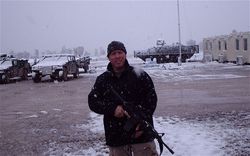
Turnur_in_mosul_2947502bIn 2003, an earnest American army sergeant called Brian Turner was deployed to fight in Iraq. Unusually, he stuffed an anthology of Iraqi poems into his rucksack. One of the poems was titled “Every Morning the War Gets Up from Sleep” by Fadhil al-Azzawi, a highly acclaimed Iraqi poet and novelist. In the early hours of the morning, Turner recalls how he and his fellow soldiers would kick in the doors of suspected Iraqi insurgents; they would force the men to kneel; they would zip-tie them with flexi-cuffs and pull sandbags over their heads; they would offer chocolates to the terrified children. They would then turn off their night-vision goggles and read al-Azzawi’s poem:

“Every morning the war gets up from sleep.

So I place it in a poem, make the poem into a boat, which I throw into the Tigris.

This is war, then.”

This extraordinary image of heavily armed soldiers reciting the exquisitely sensitive poetry of an Arab intellectual appears about a third of the way through Turner’s memoir of military service in Iraq, My Life as a Foreign Country. Turner doesn’t mention al-Azzawi by name, but he does cite parts of his poem. In an interview al-Azzawi gave last year, he recalled that his mother had not been impressed when he confessed that his ambition in life was to become a writer. “What is the real job of the Arab poets?” she scoffed. Surely it was “nothing but selling their praise poems full of lies, to this sheikh or that governor, to this vizier or that king”. The young al-Azzawi solemnly replied: “I promise you, I will not be like these people.” That is the reason a soldier like Turner reads his poems. Like al-Azzawi, Turner also refuses to write “praise poems full of lies”. His memoir is an uncompromising story of violence and beauty, searing trauma and a dreamlike circulation between the past and the present. There is no future.

More here.

Sunday Poem

Grief

When grief comes to you as a purple gorilla
you must count yourself lucky.
You must offer her what’s left
of your dinner, the book you were trying to finish
you must put aside
and make her a place to sit at the foot of your bed,
her eyes moving from the clock
to the television and back again.
I am not afraid. She has been here before
and now I can recognize her gait
as she approaches the house.
Some nights, when I know she’s coming,
I unlock the door, lie down on my back,
and count her steps
from the street to the porch.
Tonight she brings a pencil and a ream of paper,
tells me to write down
everyone I have ever known
and we separate them between the living and the dead
so she can pick each name at random.
I play her favorite Willie Nelson album
because she misses Texas
but I don’t ask why.
She hums a little,
the way my brother does when he gardens.
We sit for an hour
while she tells me how unreasonable I’ve been,
crying in the check-out line,
refusing to eat, refusing to shower,
all the smoking and all the drinking.
Eventually she puts one of her heavy
purple arms around me, leans
her head against mine,
and all of a sudden things are feeling romantic.
So I tell her,
things are feeling romantic.
She pulls another name, this time
from the dead
and turns to me in that way that parents do
so you feel embarrassed or ashamed of something.
Romantic? She says,
reading the name out loud, slowly
so I am aware of each syllable
wrapping around the bones like new muscle,
the sound of that person’s body
and how reckless it is,
how careless that his name is in one pile and not the other.

by Matthew Dickman
from American Poetry Review, 2008