Wonder Woman: The Weird, True Story

Kerr_1-112014_jpg_250x1377_q85

Sarah Kerr in NYRB:

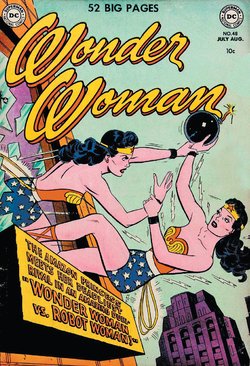
Wonder Woman stories showed women shackled in endless yards of ropes and chains—a constant theme in art from decades earlier demanding the right to vote. The traditional allegory of an island of Amazon princesses appears in feminist science fiction early in the twentieth century; the rhetoric of a nurturing, morally evolved strongwoman opposed to the war god Mars goes back even further. At the same time, the early comics often included a special insert, edited by a young female tennis champion and highlighting women heroes. Those chosen ranged from white suffragettes to Sojourner Truth to Elizabeth Barrett Browning, professional and sports pioneers, and a founder of the NAACP. It’s unlikely that any platform for American girls’ role models was as popular as this one until three decades later.

Wonder Woman was, in short, an explicitly feminist creation. Yet younger generations of feminists have lacked an awareness of the degree to which this is so, just as 1970s feminists were baffled when asked to identify pictures of the early suffragettes. So Wonder Woman is also the symbol of a culture-wide amnesia, part of the more general problem that American feminists can’t be inspired or taught the most useful lessons by their past until they gain a more cohesive sense of it.

On a literal level, too, Lepore has telling details to add to the feminist backstory of Wonder Woman. Officially, the comic (not a comic strip in a newspaper but a book following the serial adventures of a hero or in this case a heroine) was launched in 1941 by a man named William Moulton Marston. Marston, working under the name Charles Moulton, was without doubt the creator, but in practice he was assisted by his wife, Sadie Elizabeth Holloway Marston (sometimes called Sadie, sometimes Betty), and by a younger woman, Olive Byrne, who had lived with the married couple for years. After Marston died, in 1947, Sadie and Olive would live together for several more decades. The trio’s domestic arrangement has often been called “polyamorous,” a shorthand label that doesn’t quite capture its alternating vibes of sexual fluidity, personal and professional fusion, and the convenience of its work–life balance.

In any case, Olive became the main rearer of both women’s children by Marston. And Olive was none other than the niece of Margaret Sanger.

More here.

Wednesday, November 5, 2014

Chicago Fear

May Rice in The Morning News:

Chicago-fear-storyHow scary is Chicago? People usually talk about how dangerous it is instead, and that’s certainly the more quantifiable trait. You can use police data to model the probability of being murdered: seven or 18 in 100,000 as of 2013, depending how you do the math. Fear matters to quality of life, too, though, and it’s tied to the same crime data. It’s just conceptually different. Danger is the probability you’ll be the victim of a crime; fear is the probability you see crime as a real possibility in your daily life, something worth thinking about and taking precautions against. Fear is being the friend of a friend of a murder victim, or hearing gunshots while you’re making dinner. Each crime generates a lot less danger than fear.When I first started thinking about fear in Chicago—around the time I was seeing alley guy in the street a lot—I looked mostly at murder numbers. They’re tough to fudge, and there’s a database worth of them, laid out on a beautiful interactive map, on the Chicago Tribune site. But the stats prompt more questions than they answer.

In 2013, Chicago had 440 murders. That’s less than half the 900-ish homicides per year the city endured in the 1990s. In fact, as Andrew Papachristos noted, Chicago’s recent violent crime rates put it in the middle of the pack for American cities—eons from the country’s murder capital, which is currently Detroit. Chicago’s on track for even fewer homicides in 2014 than it had in 2013. Still, over this year’s Fourth of July weekend, there was a towering murder spike: 14 people killed in one weekend, and 84 shot. It was bad enough that Roland S. Martin argued, in the Daily Beast, that Obama should send the National Guard to Chicago. Not a popular opinion, but in a Gawker roundtable critiquing Martin’s “narrow-minded” solution, no one contested the problem’s magnitude. Jason Parham referred to it as “the terror taking place.”

More here.

William Basinski’s evocative tape art

141110_r25736-320-439Sasha Frere-Jones at The New Yorker:

Basinski’s music is difficult to classify. Minimalist composers and sampling artists are related, but only somewhat. His loops are being voiced neither by humans—who repeat figures in a way that involves a fairly high level of variation—nor by digital devices like samplers and software programs, which come close to no variation at all. Basinski’s music is based on the flutter in the machine. Digital technology flattened out the analog machine: tape-deck speeds vary, but the speed of iTunes doesn’t. Basinski’s innovation was to step back not a hundred years, and pick up a banjo or a steel guitar, but maybe forty or so years, and find the organic change—the aging, if you will—at the heart of early audio machinery. Basinski’s loops are defined by the fact that machines are always in the process of failing, and that change itself is a form of composition. Like hip-hop producers, who develop sample banks of favored snares and hi-hats from old songs, Basinski has built a career from fragments of thirty-year-old tape.

The changes in his loops are infinitesimal and almost imperceptible, very close to the adjustments a musician might make when repeating a phrase, but slightly more dependable. It’s a loose repetition: a train going across the tracks, the sound of coins dropping into a farebox on a city bus, the flutter of an oscillating fan in summer.

more here.

Humans have innate grasp of probability

Ewen Callaway in Nature:

MayaPeople overrate the chances of dying in a plane crash and guess incorrectly at the odds that a coin toss will yield 'heads' after a string of several 'tails'. Yet humans have an innate sense of chance, a study of indigenous Maya people suggests. Adults in Guatemala who have never learned a formal number system or a written language did as well as formally educated adults and children at estimating the probability of chance events1, the researchers found.

Children are born with a sense of number, and the roots of our mathematical abilities seem to exist in monkeys, chickens and even salamanders. But evidence has suggested that the ability to assess the chances of a future event is not as innate. In a 1972 study, Daniel Kahneman, a psychologist at Princeton University in New Jersey, and the late psychologist Amos Tversky found that educated adults incorrectly judged the sequence of coin tosses 'heads-heads-heads-tails-tails-tails' as less probable than 'heads-tails-heads-tails-tails-heads'2. (Any such sequence has the same exact probability, 1/64, of occurring.) Other researchers have pointed to the fact that the mathematics of probability were not worked out until the seventeenth century to argue that probabilistic reasoning is not innate and relies on formal education. More recent research has pointed to a primitive sense of probability. In a study published in December 2013 and titled “Apes are intuitive statisticians”, researchers found that chimpanzees, gorillas and other great apes made decisions on the basis of the chances of receiving a preferred treat such as a banana over a less-coveted carrot3.

More here.

Patrick Leigh Fermor in crete

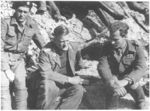
Morris_11_14Jan Morris at Literary Review:

In death as in life, Sir Patrick Michael Leigh Fermor, DSO, etc., etc., marches epically on.

Paddy (as he is known to nearly one and all) left us three years ago, but since then he has been commemorated by majestic obituaries everywhere, a magnificent biography, a reconstructed final volume of his own masterpiece of travel writing, an eager book of travel that follows in his footsteps and a website largely dedicated to his memory. Now we have a book that specifically commemorates him not as an adolescent adventurer, or as a scholar-linguist, or as a gypsy-wanderer, or as a legendary hero, or even as the wonderful writer that he ultimately became, but as a soldier. Not so much as a regimental soldier – he would surely have been a curse to stickler adjutants – but as a born guerrilla, in a military métier that the British enthusiastically adopted in the Second World War.

When they found themselves outgunned, outnumbered and often outfought in that conflict, they threw, with Churchill's keen support, many talents into the unconventional ranks of the Special Operation Executive, formed particularly to wage war behind the enemy lines. It was this cloudy outfit that in 1942 sent Captain Leigh Fermor as an undercover operative into German-occupied Crete.

more here.

the nudes of Egon Schiele

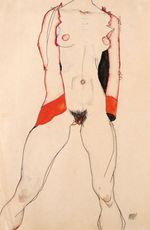
2014+43 egon schiele left pic2Craig Raine at The New Statesman:

John Updike has unnecessarily acquitted Schiele of the charge of pornography, on the grounds that his women are too gaunt and too ugly to be arousing. Julian Barnes, in a paroxysm of primness at the end of a piece about Lucian Freud’s nudes, claimed that Freud’s women are so mercilessly, so punitively exposed that it would be difficult to masturbate to them successfully. Really? Both writers seem to me to be lying about male interest in sexual fundamentals, in genitalia, and the role that obscenity and ugliness play in sexual excitement. Beauty isn’t a requirement and sometimes, like love, it can be a disadvantage. Look at Lucian Freud’s breathtaking and definitive Portrait Fragment (1971) and contemplate the undiluted sexual impulse. It is a painting of pure male desire in all its impurity. To the fore, a pair of open thighs and the indelicate, fundamental female thing in all its inextinguishable power. It is the business. The rest of the body – torso, breasts, the underside of the chin – is there but it’s beside the point.

There is very little Schiele in England – one drypoint etching in Birmingham and one in the V&A. So this exhibition is important. The 38 nudes on show at the Courtauld are deliberate provocations to desire – contorted, splayed, semi-clothed and often, therefore, candidly pornographic. The models display themselves to the painter and us “as to a midwife”, in the words of John Donne’s “To His Mistress Going to Bed”.

more here.

Organised Hypocrisy on a Monumental Scale

West_Bank_&_Gaza_Map_2007_(Settlements)

Robert Wade on the economic occupation of the West Bank in the LRB:

[O]n a dusty dirt road outside Nablus, with the Israeli security fence on one side and an olive grove on the other, I met two brothers walking towards the town some three kilometres away, where they lived. They had been working on their (ancestral) land on the Israeli side of the fence. The Israelis manned a gate closer to the town, they said, but opened it for only one hour in the early morning, one hour at midday and one hour in the late afternoon. If they wanted to come or go at other times they walked, or sometimes drove a tractor, several kilometres to the next gate, which had more extended opening hours. They also each needed a permit to cross the fence. The permits didn’t last long. The period varied but was commonly about two months. When it expired the men had to apply for another permit, which could take weeks. Last year they applied for a permit to cover the period for harvesting their greenhouse tomatoes, their main source of income. But it took 40 days to arrive, by which time the crop had rotted. They had two more brothers who were not allowed to cross the fence under any circumstances, because years before they had been jailed for protesting against Israeli rule.

On to a nearby herder community, where fifty households tend several thousand head of sheep and goats on barren land. Electricity lines run overhead, water and sewage pipes run below, but the herders have no access to them. They buy water from an Israeli-owned water depot some distance away. They can pay for an Israeli-owned tanker to bring water to their cistern; but it was cheaper for them to tow their own water container to the depot behind a tractor, fill it, and pull it back home. In 2008 the Israeli authorities confiscated their water container, saying it did not meet standards. Now they pay the extra for the Israeli-owned tanker delivery.

The Palestinian Hydrology Group, an NGO, has been working for more than twenty years to improve water and sanitation facilities throughout the West Bank. The Nablus office has provided toilets to fifty poor communities, including this settlement of herders. In Israeli eyes the toilets are illegal, because built without a permit. The PHG knows from experience that the chances of getting a permit are practically zero. So, backed by Spanish aid, it built quickly collapsible toilet cabins. With just a few minutes’ notice the components can be spirited out of sight and reassembled when the soldiers are gone. In Area C of the West Bank (more than 60 per cent of the territory) it is illegal even to mend a failing water cistern without a permit – which is rarely given. Solar panels would require a permit, too.

The same restrictions mean that areas A and B of the West Bank (40 per cent of the territory), where Palestinians have greater scope for self-government, cannot be connected to scale-efficient infrastructure networks for electricity and water. The areas are fragmented (ghettoised) into small enclaves surrounded by area C land, where infrastructure projects require Israeli permits, which are rarely given. This greatly increases the cost of infrastructure services and restricts their supply to most of the West Bank population.

More here.

Borges and God

Borges-sicily_jpg_250x1412_q85

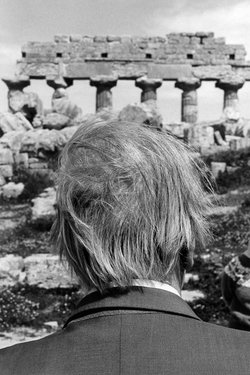
Jorge Luis Borges and Osvaldo Ferrari in the NYRB blog (Ferdinando Scianna/Magnum Photos):

Osvaldo Ferrari: Many people still ask whether Borges believes in God, because at times they feel he does and at times that he doesn’t.

Jorge Luis Borges: If God means something in us that strives for good, yes. If he’s thought of as an individual being, then no, I don’t believe. I believe in an ethical proposition, perhaps not in the universe but in each one of us. And if I could I would add, like Blake, an aesthetic and an intellectual proposition but with reference to individuals again. I’m not sure it would apply to the universe. I remember Tennyson’s line: “Nature red in tooth and claw.” He wrote that because so many people talked about a gentle Nature.

Ferrari: What you have just said confirms my impression that your possible conflict about belief or disbelief in God has to do with the possibility that God may be just or unjust.

Borges: Well, I think that it’s enough to glance at the universe to note that justice certainly does not rule. I recall a line from Almafuerte: “With delicate art, I spread a caress on every reptile, I did not think justice was necessary when pain rules everywhere.” In another line, he says, “All I ask is justice / but better to ask for nothing.” Already to ask for justice is to ask for much, too much.

Ferrari: Yet, you also recognize in the world the existence of happiness—in a library, perhaps, but other kinds of happiness too.

Borges: That, yes, of course. I would say that happiness can be momentary but that it also happens frequently, it can happen, for instance, even in our dialogue.

More here.

Tuesday, November 4, 2014

Ashura 2014: Dates, Rituals And History Explained

From The Huffington Post:

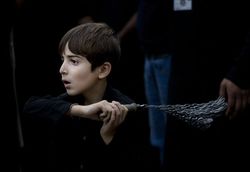
AshuraAshura, an optional fast day for Muslims that commemorates different things for Sunnis and Shiites, falls on Nov. 2-3, 2014. The word itself, ashura, means 10, and the holiday is the 10th day of the Islamic month of Muharram. The Islamic calendar is lunar, so the date of Ashura can vary depending on sighting of the moon. Ashura marks many things: the creation of the world, Noah's departure from the ark, Moses' flight from Egypt and the martyrdom of the Prophet Muhammad's grandson, Hussein ibn Ali, in 680 A.D. Sunni Muslims consider Ashura a fast day for two reasons: Muhammad fasted then and Moses fasted in appreciation of the successful Exodus for Egypt. Shiite Muslims mark Ashura as a day of mourning for the Prophet Muhammad's grandson. In fact, Hussein's martyrdom is one of two major events that led to the Sunni-Shiite split in Islam. Shiites, who constitute Islam's second-largest denomination (about 10-15 percent of the world Muslim population), consider Hussein to be the one true heir of Muhammad's legacy. Shiite Muslims observe Ashura through mourning rituals such as self-flagellation and reenactments of the martyrdom. Many travel to Karbala in Iraq, where Hussein was killed, as a pilgrimage on Ashura. Most observers wear black and march through the streets chanting and hitting themselves in the chest. Some use whips and chains — or cut themselves on the forehead — to ritually punish their bodies. This practice has been condemned by some Shiite leaders, so Ashura blood drives are often organized as a substitute.

More here.

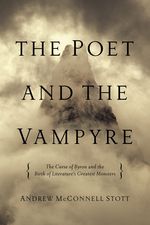
The Curse of Byron and the Birth of Literature’s Greatest Monsters

71kBg-qSh3LMichael Dirda at the Washignton Post:

Friday night, at least a few vampires and Frankenstein monsters will knock on our doors even as old Boris Karloff and Bela Lugosi films play once more in darkened family rooms. Some of us may even sit down to reread Mary Shelley’s “Frankenstein” or Bram Stoker’s “Dracula.”

But how many people even know about John Polidori’s “The Vampyre” (1819), the first story in English about a magnetically charismatic aristocrat who acquires renewed vitality by preying thirstily on beautiful young women? While Polidori may call this fiend Lord Ruthven, he nonetheless obviously is modeled after the poet who was notoriously “mad, bad, and dangerous to know”: Lord Byron.

In “The Poet and the Vampyre­,” Andrew McConnell Stott, a professor of English at the University at Buffalo, has produced a learned, constantly entertaining and deliciously gossipy account of the erotic and personal entanglements that led up to, and away from, the most famous wet evening in Romantic literature: As the rain poured down outside the Villa Diodati in Switzerland on June 16, 1816, the restless, self-exiled Byron announced to a group of friends, “We will each write a ghost story.”

more here.

‘graceland’ and the rothko chapel

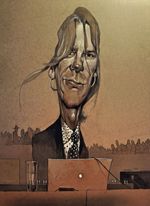
42-62371123-rothko-2Nathan Dunne at Aeon Magazine:

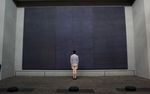
Rothko’s paintings, and their context within the chapel, resonate in ways not dissimilar to Graceland. The chapel allows for contemplation and prayer through painting, where the album embeds notion of inequality, alienation and racism among spritely 1980s synths and loose dance rhythms. Put simply, apartheid is burbling under the surface of Graceland, while in the Rothko Chapel the paintings create a highly personal response, one that, at least in Timothy’s case, resonates with the plight of the disfranchised and the unseen.

The landscape, the nude or the teapot generally require the viewer to see a certain object. Rothko’s abstraction allowed Timothy to hear the subject of representation

Perhaps there is something inherently musical in the experience of abstract art. Wassily Kandinsky’s abstractions were the result of a lifelong preoccupation with the relationship between sound and colour. He discovered his synaesthesia at a performance of Richard Wagner’s opera Lohengrin in Moscow: ‘I saw all my colours in spirit, before my eyes. Wild, almost crazy lines were sketched in front of me.’ Synaesthesia unites the senses in such a way that the stimulation of one acts like a powerful domino for the others, involuntarily collapsing them together.

more here.

What next for Nepal?

2014-09-06-bullet_and_the_ballot_box_Roman Gautem at Caravan:

NEPAL WAS FIRST PROMISED a constitution written by a democratically elected assembly in 1951. A popular movement had just returned to power King Tribhuvan Shah, ending a century of autocratic, hereditary rule by the Ranas, chief ministers who exercised effective control while keeping an ostensibly sovereign monarch on the throne. Tribhuvan had allied against the Ranas with forces such as the Nepali Congress and the Communist Party of Nepal, banned parties founded on Indian soil, many of whose activists cut their teeth in the Indian independence struggle. Though Nepal was never colonised, the Ranas were in many ways servile to the British; among other things, they supplied cheap mercenaries to the British military, deferred much foreign policy to the British government, and sent troops to help quell the 1857 uprising in India. After 1947, the new Indian government threw its weight behind the anti-Rana coalition. As part of his elevation, Tribhuvan agreed to usher in multi-party democracy, and hold elections for a constitutional assembly.

Tribhuvan died in 1955, his promises unfulfilled, and left the throne to his son Mahendra. A struggle ensued between the new king and a Congress-led transitional government formed in 1951. In 1959, Mahendra unilaterally promulgated a multi-party constitution that preserved much of the monarchy’s power, which the political parties accepted in return for the guarantee of democratic elections. When the Congress swept those polls, Mahendra seized power by force, banned all parties, and suspended the constitution.

more here.

Why Innocent People Plead Guilty

Rakoff_2-112014_jpg_600x701_q85

Jed S. Rakoff in the NYRB (Brittany Murray/Long Beach Press-Telegram/AP Images):

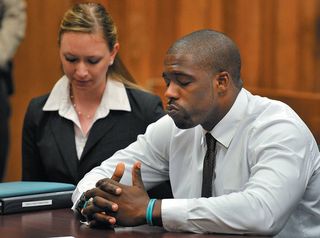
[T]he information-deprived defense lawyer, typically within a few days after the arrest, meets with the overconfident prosecutor, who makes clear that, unless the case can be promptly resolved by a plea bargain, he intends to charge the defendant with the most severe offenses he can prove. Indeed, until late last year, federal prosecutors were under orders from a series of attorney generals to charge the defendant with the most serious charges that could be proved—unless, of course, the defendant was willing to enter into a plea bargain. If, however, the defendant wants to plead guilty, the prosecutor will offer him a considerably reduced charge—but only if the plea is agreed to promptly (thus saving the prosecutor valuable resources). Otherwise, he will charge the maximum, and, while he will not close the door to any later plea bargain, it will be to a higher-level offense than the one offered at the outset of the case.

In this typical situation, the prosecutor has all the advantages. He knows a lot about the case (and, as noted, probably feels more confident about it than he should, since he has only heard from one side), whereas the defense lawyer knows very little. Furthermore, the prosecutor controls the decision to charge the defendant with a crime. Indeed, the law of every US jurisdiction leaves this to the prosecutor’s unfettered discretion; and both the prosecutor and the defense lawyer know that the grand jury, which typically will hear from one side only, is highly likely to approve any charge the prosecutor recommends.

But what really puts the prosecutor in the driver’s seat is the fact that he—because of mandatory minimums, sentencing guidelines (which, though no longer mandatory in the federal system, are still widely followed by most judges), and simply his ability to shape whatever charges are brought—can effectively dictate the sentence by how he publicly describes the offense. For example, the prosecutor can agree with the defense counsel in a federal narcotics case that, if there is a plea bargain, the defendant will only have to plead guilty to the personal sale of a few ounces of heroin, which carries no mandatory minimum and a guidelines range of less than two years; but if the defendant does not plead guilty, he will be charged with the drug conspiracy of which his sale was a small part, a conspiracy involving many kilograms of heroin, which could mean a ten-year mandatory minimum and a guidelines range of twenty years or more. Put another way, it is the prosecutor, not the judge, who effectively exercises the sentencing power, albeit cloaked as a charging decision.

The defense lawyer understands this fully, and so she recognizes that the best outcome for her client is likely to be an early plea bargain, while the prosecutor is still willing to accept a plea to a relatively low-level offense. Indeed, in 2012, the average sentence for federal narcotics defendants who entered into any kind of plea bargain was five years and four months, while the average sentence for defendants who went to trial was sixteen years.

More here.

Hollaback and Why Everyone Needs Better Research Methods

1-Izg_oJjZD8thdNFnBiuWMQ

Zeynep Tufekci in Medium:

I’ve taught “introduction to research methods” to undergraduate students for many years, and they would sometimes ask me why they should care about all this “method stuff”, besides having a required class for a sociology major out of the way. I would always tell them, without understanding research methods, you cannot understand how to judge what you see.

The Hollaback video shows us exactly why.

The Hollaback video also shows why “data” without theory can be so misleading—and how the same data can fit multiple theories. Since all data collection involves some form of data selection (even the biggest dataset has selection going into what gets included, from what source), and since data selection is always a research method, there is always a need for understanding methods.

First, let’s list all the hypothesis compatible with the “data”, this video:

Hypothesis 1- Men of color are disproportionately more likely to catcall, especially to a white, conventionally attractive female.

Hypothesis 2- All men are equally likely to catcall but the makers of the video were biased, consciously or unconsciously, against black men (and edited out men of other races on purpose.)

2.a Consciously: they are racists and are playing to the “white women endangered by black men” trope — which has a long and ugly history, hence the concern raised by many over the past week.

2.b Unconsciously: There is a methodological twist to the research which creates this outcome.

2.c. Both 2.a. and 2.b are true.

Hypothesis 3- It’s a spurious correlation: there is some other reason that caused these two events to go together

The important methodological point is that the video, without further reflection, can support all three wildly incompatible propositions. In other words, if you just look at the video, you can believe any three, and you will likely choose whichever fits your existing conclusions and prejudices.

Let’s start with 3, the easiest to dismiss.

A spurious correlation occurs when a third, unrelated variable, causes a change in other variables, which then seem like they are causally connected even though they are not. And since the human brain is a narrative writing machine, seeing A and B together makes people write stories that tie A and B. A silly, but correct, example is the correlation between ice cream and murder: during months when more people eat ice cream, there are more murders. This is not because popsicles are good murder devices. This spurious correlation caused by a confounding variable: the season.

More here.

Infinity and Beyond: The Ultimate Test

-nas-wp-www-cluster-1275-quanta-wp-content-files_mf-cache-915f3d84ec89f011f4c64ec05e66d59a_BubbleUniverses_OS

Natalie Wolchover and Peter Byrne in Quanta (image Olena Shmahalo/Quanta Magazine):

If modern physics is to be believed, we shouldn’t be here. The meager dose of energy infusing empty space, which at higher levels would rip the cosmos apart, is a trillion trillion trillion trillion trillion trillion trillion trillion trillion trillion times tinier than theory predicts. And the minuscule mass of the Higgs boson, whose relative smallness allows big structures such as galaxies and humans to form, falls roughly 100 quadrillion times short of expectations. Dialing up either of these constants even a little would render the universe unlivable.

To account for our incredible luck, leading cosmologists like Alan Guth and Stephen Hawking envision our universe as one of countless bubbles in an eternally frothing sea. This infinite “multiverse” would contain universes with constants tuned to any and all possible values, including some outliers, like ours, that have just the right properties to support life. In this scenario, our good luck is inevitable: A peculiar, life-friendly bubble is all we could expect to observe.

Many physicists loathe the multivere hypothesis, deeming it a cop-out of infinite proportions. But as attempts to paint our universe as an inevitable, self-contained structure falter, the multiverse camp is growing.

The problem remains how to test the hypothesis. Proponents of the multiverse idea must show that, among the rare universes that support life, ours is statistically typical. The exact dose of vacuum energy, the precise mass of our underweight Higgs boson, and other anomalies must have high odds within the subset of habitable universes. If the properties of this universe still seem atypical even in the habitable subset, then the multiverse explanation fails.

But infinity sabotages statistical analysis. In an eternally inflating multiverse, where any bubble that can form does so infinitely many times, how do you measure “typical”?

More here.

A Fight for the Young Creationist Mind

Jeffery DelViscio in The New York Times:

NyeIn February, William Sanford Nye, better known as Bill Nye the science guy, stepped onto a stage in Kentucky and faced down a hostile crowd in a debate that pitted evolution against creationism. It wasn’t his first time in the ring in science’s corner. In recent years, Mr. Nye has transitioned from the zany, on-screen face of an educational show on PBS, which ran from 1993 to 1998, to a hardened warrior for science on cable news programs and speaking tours of colleges and universities around the United States. In the news media, the final scorecard at the end of the science versus creationism debate was itself debated. Some said Mr. Nye won. Some suggested the in just showing up, he lost. One certainty did come from it: Mr. Nye said that it compelled him to drop everything he was doing to write a book. That book, “Undeniable: Evolution and the Science of Creation” has just been released. I talked to Mr. Nye, 58, last month about bumblebees, the debate and why it made him think of death and the need to write the book. Here is an edited and condensed version of our conversation.

Q: Talk about the title, “The Science of Creation.” It seems like clever wordplay with creation science. Is that what you meant?

A: Well, creation for me is all that we can see. It’s the universe, all the stars, and I guess now the dark matter and dark energy and you and me. And I would claim that it’s an older, more traditional use of the word creation. It’s nature.

You bring up nature early in your book and you talk about the flight of bumblebees and how that fascinated you at a young age.

It still does. If you ever look at a bumblebee, it’s a pretty big rig. It’s a pretty big abdomen, thorax head situation with these tiny wings. And yet they’re able to flop and fly like crazy, hover backwards and forwards, up and down, find their way to flowers, fill up the pollen basket. If you really take time and watch a bee with a pollen basket, it’s full. I mean, it’s carrying a load like a couple buckets of water slung over your shoulder. To me, it’s remarkable.

More here.

Tuesday poem

Just There

We have not given up hope
though we know
in the end
we will live in the place
we do not wish to.

At the beginning
we will be unhappy
even restless,
we will not like –
the peepul tree opposite,
the ever-coughing neighbour,
children yelling out film songs
tunelessly,
hordes of pariah dogs barking
throughout the night,
the unseasonal weather too.

Then we will reassure ourselves
what have we to do with all this –
a few days more
and we move on.

As time passes
in the evenings
we too will sit on the platform
under the peepul tree,
greet, with folded hands,
the old man passing by,
scatter grains in the courtyard
for birds to peck at.

Read more »

Monday, November 3, 2014

Speech by Dr. Azra Raza: Our Collective Spiritual Suicide

On May 24 of this year, the Dow Medical College (Karachi) Graduate Association of North America (DOGANA) held a function in Philadelphia honoring the “Women of Dow”. My sister Azra is a Dow alumna and was presented with an award for “Distinguished Services in the Field of Research and Clinical Medicine” and was also invited to be the Keynote Speaker at the ceremony. She has kindly allowed me to publish some of her powerful remarks from that occasion here today. —S. Abbas Raza

by Azra Raza

BloodyLabCoatA moment comes, which comes seldom in one’s life, when staying silent and uncritical is tantamount to suicide. That moment for us is here, now. Today, instead of telling a few light hearted stories of our innocent days at Dow, with jokes and poetry, I want to take the road less traveled by, and speak about the painful truth piercing at the heart of every one of us. Today, you have bestowed upon me a fantastic award and I am humbled by this, but frankly, at the same time, I feel greatly saddened to be lauded for my achievements while inside I feel like an imposter, a phony, a fraud. How can we be celebrating knowing full well that while we are congratulating each other and carrying home awards, our fellow doctors in Pakistan are being forced to carry guns with their stethoscopes? With these very achievements, if I was to be in Karachi today, I would be in danger of receiving a barrage of bullets from a Ghazi’s AK47 who could gun me down in broad daylight in a public function and walk off without being apprehended. Why? Because I am not just a doctor. I am a Shia doctor.

There. Now I have said it and committed the crime of voicing the unspeakable. I know, I know. We are not supposed to criticize anything while we are standing on foreign soil because this will further weaken the Umma and play right into the hands of the foreigners with vested interests. How long are we going to hide behind such cowardly, delusional shields? How long are we going to continue to bury our heads in the sand and distract ourselves through award ceremonies while our beloved country is being slashed and burned? Where is the outrage? What are we afraid of?

Yay kis azaab say khaif mera qabeela hay
Kay khoon mal kay bhi chahroun ka rang peela hay
Yay kaisay zehr ki baarish hui hay abkay baras
Kay meray saaray gulaboun ka rang Neela hay

(What calamity is my tribe so afraid of
That despite the blood splattered on their faces, they remain pale
What poison has rained from the sky this year
That even my roses have turned blue?)

My friends, genocides do not start with guns and gas chambers. They start with words. Words of hate directed at groups which dehumanize them to such an extent that any and all cruelties are justified. My friends, today, there is a similar poisonous atmosphere being created in Pakistan. It is not just the Shia doctors being slaughtered mercilessly. There is a country-wide invasion by the lethal disease of intolerance and religious persecution. The terrorists are killing minorities and targeting outspoken members of the community. Need I name Malala Yusufzai, Raza Rumi, Hamid Mir? Therefore, it is inaccurate and dishonest to present this as some sort of a sectarian issue. This is the systematic murder of targeted individuals by a small murderous group. But the state whose job it is to protect the people is complicit through its inaction. How many more doctors and lawyers, women and children have to be gunned down without a single individual being apprehended for these barbaric crimes? There is no controversy about who is responsible for these killings. The perpetrators proclaim it proudly from the rooftops. What level of genocide is needed for us to wake up to reality, six million? When are we going to realize that we are ALL guilty of being Neros playing the fiddle while Pakistan burns?

Read more »

Perceptions: A Tribute to Imran Mir

Breathing sculpture

Imran Mir. Untitled. 2014.

Photo sent to me by the artist in March 2014.

Imran Mir, pre-eminent Pakistani graphic designer; serious, inspired, thoughtful, whimsical, prolific artist; a man of great heart, and an immensely generous soul; died on October 28, 2014.

At Bentota

Photo taken by Sughra Raza in Bentota, Sri Lanka, Jan 2010.

When I joined the Central Institute of the Arts Council in Karachi as a first year student, Imran, a senior student, immediately became a friend and an inspiration. For the next forty plus years while I moved to the US and took a different path, Imran never for a moment faltered in his encouragement and insistence that I continue to be an artist. Because of Imran, my Karachi identity was forever as an artist rather than a doctor and I loved that respite!

The thought of Karachi without Imran feels painfully hollow. His incredible loyalty, generosity, thoughtfulness, creativity, sense of humor, and passionate joie de vivre is etched in his wife and sons, and will continue to be deeply cherished by family and countless friends.

With deepest appreciation for the very fine human being you were, and for your love of music, Imran, I offer this most sublime lament, Beethoven's Opus 131, string quartet #14: https://www.youtube.com/watch?v=kW8wdpfkpM0

The following is from Imran's forthcoming memoir (printed here with permission from Nighat Mir and Noorjehan Bilgrami). Imran had planned the book launch for November 22nd, 2014.

Read more »