Everything and Moore

AeonMoore-sized

Tim Martin in Aeon (Illustration by Lee Moyer):

Alan Moore is waiting when I get off the train in Northampton, a majestically bearded figure in a hoodie, scanning the crowd that pushes through the turnstiles with a look of fearsome intent. When I wave, the glare becomes a beaming smile. ‘How are you, mate?’ he booms. ‘Splendid, splendid. I thought we’d go for a bit of a walk, so I can show you around and we can work up an appetite.’

Off we go up the hill. Moore swings his stick – a wooden snake coiled around the handle to symbolise his enthusiastic worship of Glycon, a second-century Macedonian snake god – and keeps up a constant flow of arcane local chatter. This station car park, he tells me, used to be King John’s castle, where the First Crusade began. That charmless glass-and-steel building was once a Saxon banqueting hall. Over there was a pub where, ‘if you’d come along here on a Sunday afternoon in the 1920s or ’30s, you’d have found a zebra tied up outside it.’

Before long, tramping through the riverside mud under a railway bridge, we’ve moved on to grander concerns. Moore has embarked on a potted summary of eternalism, the philosophical concept of time that ran through Kurt Vonnegut’s novel Slaughterhouse-Five (1969), played a part in his own revolutionary superhero comic Watchmen (1986-87), and is the central conceit behind ‘Jerusalem’, the million-word mega-novel the first draft of which he has now, after more than a decade, shepherded to its conclusion.

In essence, eternalism proposes that space-time forms a block – ‘imagine it as a big glass football’, Moore suggests – where past and future are endlessly, immutably fixed, and where human lives are ‘like tiny filaments, embedded in that gigantic vast egg’. He gestures around him at the rubbish-strewn path, his patriarch’s beard waving in the wind. ‘What it’s saying is, everything is eternal,’ he tells me. ‘Every person, every dog turd, every flattened beer can – there’s usually some hypodermics and condoms and a couple of ripped-open handbags along here as well – nothing is lost. No person, no speck or molecule is lost. No event. It’s all there for ever. And if everywhere is eternal, then even the most benighted slum neighbourhood is the eternal city, isn’t it? William Blake’s eternal fourfold city. All of these damned and deprived areas, they are Jerusalem, and everybody in them is an eternal being, worthy of respect.’

If this mixture of local history, cosmological speculation and messianic mysticism sounds bewildering, then perhaps you haven’t been reading enough Alan Moore lately.

More here.

Dear White People’s Missed Opportunities

Dear_white_people2_850_478

Michael Collins in In These Times:

Set in the present day, the film follows the lives of five black people on the fictitious Ivy League college Winchester as they navigate race, love and ever-shifting personal identities. Broken into a series of blithely titled chapters, the film is billed as “a satire about being a black face in a white place.”

The film, however, is less a satire in the sense of using “wit to expose stupidity” as much as it is a mockumentary whose humor comes from its earnestness, in the vein of films like Best in Show. Perhaps this is because, as the title suggests, the work is narrowly pointed at white America. Or, more specifically, the type of liberal white America that prefaces racist statements with “I’m not racist, but…” and when challenged responds, “But my best friend is a black!” For those who already know that all black people aren’t the same (we have different names for a reason!), and that race, class and sexuality are complex parts of a greater whole, the film will have little critical edge. But for those who haven’t taken Race in America 101, the film may yet be productive.

Through a series of occasionally disjointed chapters, we are presented with a host of college archetypes: the charismatic jock played by the astonishingly beautiful Brandon Bell; the black militant played by Tessa Thompson, the pushover nerd played convincingly by Tyler Williams ofEverybody Hates Chris fame, the society queen with a terrible secret (and an amazing wardrobe of pearl necklaces and backless dresses) played by Teyonah Parris, and the incorrigible dean played by Dennis Haysbert. Throughout, the film adds various layers to these one-dimensional caricatures by highlighting their “performance of blackness.”

For those who slept through critical race theory, it’s now taken for granted that there is no essential black experience. Rather, blackness is a social, political and economic construct that individuals engage with as society, the economy or our personal desires dictate. The film revels in multiplicity of identity, internal contradictions and the general sense of confusion and misidentification that characterize public discussions of race.

More here.

Wednesday, October 29, 2014

the Crippling Sadness That Overtook Evelyn Waugh

Waugh2John Banville's 1995 essay at The New Republic:

This was a very low period for Waugh. There was an urgent necessity for him to find a way of making a living, and eventually, with deep foreboding, he took a post as a teacher at Arnold House Preparatory School on the north coast of Wales. This grotesque establishment was the model for the hilariously awful Llanabba Castle in Decline and Fall. He did not stay there for long, and found another teaching job at a more nearly normal school in Buckinghamshire, from which eventually he was sacked, apparently for drunkenness. Waugh was not cut out to be a teacher.

He did not really know what he was cut out to be. He had started to write, and some short stories had been published, but he had not yet given up hope of being a painter. He also spent a brief, happy few months taking carpentry lessons with a view to embarking on a career as a cabinetmaker. He did some journalistic work, and began his first book, a life of the Pre-Raphaelite painter Dante Gabriel Rossetti, but the most important event of these years was his meeting Evelyn Gardner on April 7, 1927. (They would come to be known to their friends as He-Evelyn and She-Evelyn.)

more here.

The Grim Future if Ebola Goes Global

Ebola-world-inline-660x440Maryn McKenna at Wired:

It is not guaranteed, they say, that a successful vaccine against Ebola can be “developed, produced, and distributed” in time, and in large enough amounts, to throw a fence of containment around the disease.

If not, they warn, it is possible that the rest of the world’s reaction could trigger the next global financial crisis.

Being someone who has a professional specialty of covering epidemics (HIV, the anthrax attacks, SARS, H5N1, H1N1, lots of smaller outbreaks), I reluctantly have to conclude: Lanard and Sandman are not being alarmist here. Imagine that Ebola cannot be contained; think back to the events of this weekend; and then imagine that reaction multiplied thousands of times. It isn’t a big leap to the suspicion, disruption and expense that will then be triggered in response to any travelers from the region. From there, it isn’t much of a further leap to closed borders, curbs on international movement, disruption in global trade, cuts in productivity, even civil unrest and the opportunities that unrest offers to extremist movements. None of that is far-fetched, if Ebola is not controlled.

more here.

“The Death of Klinghoffer,” at the Met

141103_r25705-320Alex Ross at The New Yorker:

The protest failed because it relied on falsehoods: the opera is not anti-Semitic, nor does it glorify terrorism. Granted, Adams and his librettist, Alice Goodman, do not advertise their intentions in neon. The story of the Achille Lauro hijacking is told in oblique, circuitous monologues, delivered by a variety of self-involved narrators, with interpolated choruses in rich, dense poetic language. The terrorists are allowed ecstatic flights, private musings, self-justifications. But none of this should surprise a public accustomed to dark, ambiguous TV shows like “Homeland.” The most specious arguments against “Klinghoffer” elide the terrorists’ bigotry with the attitudes of the creators. By the same logic, one could call Steven Spielberg an anti-Semite because the commandant in “Schindler’s List” compares Jewish women to a virus.

In the opera, the opposed groups follow divergent trajectories. The terrorists tend to lapse from poetry into brutality, whereas Leon Klinghoffer and his wife, Marilyn, remain robustly earthbound, caught up in the pleasures and pains of daily life, hopeful even as death hovers. Those trajectories are already implicit in the paired opening numbers, the Chorus of Exiled Palestinians and the Chorus of Exiled Jews. The former splinters into polyrhythmic violence, ending on the words “break his teeth”; the latter keeps shifting from plaintive minor to sumptuous major, ending on the words “stories of our love.”

more here.

Laughing ourselves to life

Howard Jacobson in New Statesman:

LaughIf I were to give this essay a title, it would be “Waiting for Calvin”. Not John Calvin the theologian, nor Calvin Klein the fashion designer, but Calvin, a Navajo baby whose first laugh I travelled to Arizona in 1995 to film as part of a series of television programmes I was making about comedy. It’s a nerve-racking business waiting for a baby to laugh, particularly if you have a camera crew standing by in another state, but Calvin’s laugh was as important to my film as it was to his family and community. The Navajo celebrate a baby’s first laugh as a rite of passage, a moment in which the baby laughs himself, as it were, out of inchoate babydom and into conscious humanity. It’s a wonderful concept and grants a primacy to laughter that we, who probably laugh too automatically and certainly far too much, would do well to think about. If it’s laughter that makes us human, or at least kick-starts the process of our becoming human, what does that say about what being human is?

It is sometimes argued that laughter is what distinguishes us from animals, but not everyone would agree that we have laughter to ourselves. Thomas Mann, for example, wrote an essay about his dog Bashan in which he made a claim for Bashan’s demonstrating many of the signs of mirth. And that’s before we get on to the tricky question of internal laughter – that appreciation of ironical mishap or absurd situation that even in human beings doesn’t always issue in a smile, never mind a laugh. Laughter, we can say, is an act of comprehension – whether immediate or arising out of rumination – but which of us can know for sure how much animals comprehend of what they see and how long they go on thinking about it?

More here.

‘Data smashing’ could automate discovery, untouched by human hands

From KurzweilAI:

DatasmashingFrom recognizing speech to identifying unusual stars, new discoveries often begin with comparison of data streams to find connections and spot outliers. But simply feeding raw data into a data-analysis algorithm is unlikely to produce meaningful results, say the authors of a new Cornell study. That’s because most data comparison algorithms today have one major weakness: somewhere, they rely on a human expert to specify what aspects of the data are relevant for comparison, and what aspects aren’t. But these experts can’t keep up with the growing amounts and complexities of big data. So the Cornell computing researchers have come up with a new principle they call “data smashing” for estimating the similarities between streams of arbitrary data without human intervention, and even without access to the data sources.

How ‘data smashing’ works

Data smashing is based on a new way to compare data streams. The process involves two steps.

  1. The data streams are algorithmically “smashed” to “annihilate” the information in each other.
  2. The process measures what information remains after the collision. The more information remains, the less likely the streams originated in the same source.

Data-smashing principles could open the door to understanding increasingly complex observations, especially when experts don’t know what to look for, according to the researchers.

More here.

Wednesday Poem

A Ball Rolls on a Point

The whole ball
of who we are
presses into
the green baize
of a single tiny
spot. A aural
track of crackle
betrays our passage
through the
fibrous jungle
it's hot and
desperate. Insects
spring out of it.
The pressure is
intense and the
sense that we've
lost proportion.
As though bringing
too much to bear
too locally were
our decision.

by Kay Ryan
from The Niagara River
Grove Press. 2005

Speaker 4

Against Carceral Feminism

T_8-1024x1024

Victoria Law in Jacobin (image “Prison Blueprints.” Remeike Forbes/Jacobin):

Casting policing and prisons as the solution to domestic violence both justifies increases to police and prison budgets and diverts attention from the cuts to programs that enable survivors to escape, such as shelters, public housing, and welfare. And finally, positioning police and prisons as the principal antidote discourages seeking other responses, including community interventions and long-term organizing.

How did we get to this point? In previous decades, police frequently responded to domestic violence calls by telling the abuser to cool off, then leaving. In the 1970s and 1980s, feminist activists filed lawsuits against police departments for their lack of response. In New York, Oakland, and Connecticut, lawsuits resulted in substantial changes to how the police handled domestic violence calls, including reducing their ability to not arrest.

Included in the Violent Crime Control and Law Enforcement Act, the largest crime bill in US history, VAWA was an extension of these previous efforts. The $30 billion legislation provided funding for one hundred thousand new police officers and $9.7 billion for prisons. When second-wave feminists proclaimed “the personal is the political,” they redefined private spheres like the household as legitimate objects of political debate. But VAWA signaled that this potentially radical proposition had taken on a carceral hue.

At the same time, politicians and many others who pushed for VAWA ignored the economic limitations that prevented scores of women from leaving violent relationships.

More here.

Morality and Discourse in Serbia

Belgrade

Keith Doubt on Eric Gordy's Guilt, Responsibility, and Denial: The Past at Stake in Post-Milošević Serbia, in Berfrois (Belgrade, Serbia. Photograph by Jamie Silva):

The intellectual integrity of cultural anthropology is based largely on its commitment to cultural relativism as a principled notion. Cultural relativism is the principle from which the discipline achieves its sense of empirical objectivity. Cultural differences are cherished as just that, cultural differences. No difference is stipulated as superior or inferior, better or worse. The commitment guards against ethnocentric judgments, colonizing prejudices, and, worst of all, grand theorizing with metaphysical pretense. This ethos in the discipline of cultural anthropology guides the recent book by Eric Gordy titled, Guilt, Responsibility, and Denial: The Past at Stake in Post-Milošević Serbia.

While cultural initiatives rarely investigate and never sentence, they offer some of the keys to understanding that have been missing from political legal projects: the ability to hear and identify with the lived experiences of individuals, a route to engagement that participants in the public can understand, and openness to interpretation that constitutes an invitation to dialogue. (p. 179)

There is a contrasting notion in the social sciences to the principle of cultural relativism, namely, the assumption that social science has a valid knowledge-base and ethical responsibility from which to demonstrate how some societies are healthier than others and how some social structures are better for community life. Social science depicts certain normative orientations and collective sentiments as more functional for the vitality of human life and sociability. For example, human rights scholars assume that a genuine respect for the principle of human rights is good: good for people in society, good for their communities, and good for their governments. Gordy understands this perspective but recognizes its unintended consequences, given his political knowledge of what Max Weber calls the ethical irrationality of the world in his famous lecture, “Politics as a Vocation.” In politics, it is necessary to employ force in realizing one’s values. When, however, force is employed, no matter how good the intentions behind the use of force, bad results follow or evil consequences occur. Weber calls this the ethical irrationality of the world which is the reason for the sense of disenchantment that characterizes the spirit of the modern world. In politics, actions whose motives are seemingly good can lead to bad results. The reverse is also true; actions whose motives are seemingly bad can lead to good results. Weber calls this the paradox of consequences, an ever-repeating empirical and historical pattern, and Gordy understands this matter well. There is a hubris that informs the forceful use of law and legal process at both the national and the international level, and Gordy wants to debunk this hubris that guides international interventions in societies experiencing conflict and social violence.

To introduce the structure of his book, Gordy writes, “the ordering of the chapters is meant to lead readers through the logic that brought the study from apparently clear and relatively simple moral questions to greater complexity and uncertainty, and to an insistence on the importance of the cultural and social context” (p. xv). After relatively simple moral questions implode upon themselves when confronted with empirical scrutiny and historical accounts, the significance of cultural variables within their own milieu and within their own historical context assume their rightful place.

More here.

Genetically Modified Organisms Risk Global Ruin

Images (1)

Over at The Physics arXiv Blog:

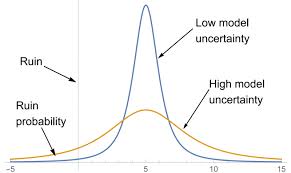
Taleb and co begin by making a clear distinction between risks with consequences that are local and those with consequences that have the potential to cause global ruin. When global harm is possible, an action must be avoided unless there is scientific near-certainty that it is safe. This approach is known as the precautionary principle.

The question, of course, is when the precautionary principle should be applied. Taleb and co begin by saying that their aim is to place the precautionary principle within a formal statistical structure that is grounded in probability theory and the properties of complex systems. “Our aim is to allow decision-makers to discern which circumstances require the use of the precautionary principle and in which cases evoking the precautionary principle is inappropriate.”

Their argument begins by dividing potential harm into two types. The first is localised and non-spreading. The second is propagating harm that results in irreversible and widespread damage. Taleb and co say that traditional decision-making strategies focus on the first type of risk where the harm is localised and the risk is easy to calculate from past data.

In this case, it is always possible to make a mistake when decision-making about risk. The crucial point is that when the harm is localised, the potential danger from a miscalculation is bounded.

By contrast, harm that is able to propagate on a global scale is entirely different. “The possibility of irreversible and widespread damage raises different questions about the nature of decision-making and what risks can be reasonably taken,” say Taleb and co. In this case, the potential danger from a miscalculation can be essentially infinite. It is in this category of total ruin problems that the precautionary principle comes into play, they say.

More here.

Tuesday, October 28, 2014

Schubert: the secret of song

Jonathan Rée in Prospect:

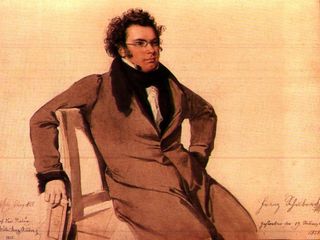
Franz_Schubert_by_Wilhelm_August_RiederEvery October for the past 13 years, the Oxford Lieder Festival has been bringing classy performances of classical art songs to what used to be a rather unmusical town. I love it: great art taken seriously, mostly in the glorious intimacy of the Holywell Music Room, and without any pomp, artifice or unnecessary formality. But I must say I was rather dismayed when I heard what was planned for this year’s festival, which started a week ago: a complete survey of all the songs that Schubert ever wrote.

Schubert was, of course, the inventor of the classical Liederabend or song recital: the extraordinary musical institution that features nothing but a singer and a pianist, achieving, when all goes well, a thrillingly direct communication with their audience. And apart from inventing the institution, Schubert wrote the classics against which all subsequent efforts are measured—notably Winterreiseand Schöne Müllerin, whose depth, variety, drama, animation and melancholy place them amongst the bare necessities of any possible desert island. But given that Schubert died at the age of 31 (in 1828) and that, apart from inventing the Liederabend, he composed in practically every other genre of classical music, you might think that he could not have written terribly many songs.

Actually he wrote more than 600, so the idea of a three-week festival featuring every single one is perhaps even crazier than you might have thought. A suitable event for anoraks, pub-quizzers and musical train-spotters, perhaps, but why should anyone who cares for the art of singing want to scrape the barrel for hundreds of minor works, rather than remaining with the tried and tested pre-loved masterpieces?

More here. [Thanks to Brooks Riley.]

There’s more to Matisse’s dancers than meets the eye

Morgan Meis in The Smart Set:

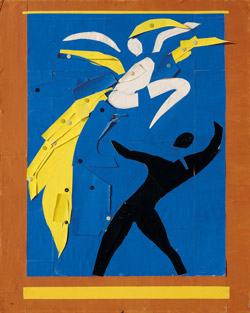
IC_MEIS_MATISSE_AP_003In the year 1905, Henri Matisse painted a portrait of his wife wearing a rather extraordinary hat. The painting was displayed at the Salon d’Automne in Paris that same year. Much shock and controversy followed. To many, the hat looked like a giant lump of randomly chosen colors sitting atop the poor woman’s head. What, also, was the point of all the green on the woman’s face? People and hats don’t look like that. The world doesn’t look like that.

By 1905, this game of looking at contemporary painting and expressing shock and dismay had been going on for some time. A generation had already passed since Impressionism first scandalized right-thinking art aficionados. In the years just after Impressionism, artists like Gauguin and Van Gogh fully dispatched the idea that color in painting had to correspond to color as we see it in the real world. In 1905, the public should have been ready for Matisse. But something about that portrait by Matisse was extra upsetting, even to a public that was now used to being scandalized by art. The color wasn’t just unexpected; it was jarring, verging on ugly. Critics dubbed Matisse and other painters in the show Fauvists. The word means, literally, wild beasts.

You’d expect the wild beast who painted “Woman with a Hat” (1905) to go even further into brutality and ugliness. Shocking the bourgeoisie is hard work. You’re constantly forced to up the ante.

That’s not what happened with Matisse. He continued to experiment radically with color. But his pictures became gentler as time went on. Matisse brought into his paintings a sense of balance, poise, beauty. By the end of his life, Matisse was making art that was downright pretty. There is no more damning adjective to an avant-garde artist than “pretty.”

More here.

The complicated legacy of the anti-Nazi theologian Dietrich Bonhoeffer

SkApIUyJames Nuechterlein at The New Criterion:

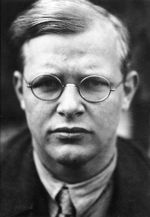
The matter of the legacy of Dietrich Bonhoeffer is at once straightforward and immensely complicated. About the man there is no question. Whatever Bonhoeffer’s flaws—and Charles Marsh’s masterly and comprehensive new biography Strange Glory reveals that there were more than is commonly supposed—the witness of his breathtakingly courageous opposition to Adolf Hitler’s Third Reich leaves criticism disarmed.1 In the one great challenge of his life, he was magnificent. He behaved the way that the rest of us, in our most hopeful moments, like to imagine we would.

But Bonhoeffer is known to history not simply as a victim of Nazi horror but as a theologian of note. His appeal is startlingly ecumenical: He finds adherents across the Christian spectrum from conservative evangelicals to Lutherans (of various stripes) to liberal Protestants to celebrants of the death of God. Bonhoeffer himself was sympathetic to Catholicism—Karl Barth worried about his “nostalgia for Rome”—and he even came to insist, in Marsh’s words, on “equivalence before God of the church and the synagogue, between the body of Christ and the chosen people of Israel.”

But from such extravagant pluralism, can there be any coherence?

more here.

on dangerous images

PerilousAesthetics_FallingManBarrett Swanson at The Point:

The first photo: a fireman, a woman, and a child wait on the top-floor landing of a fire escape. Smoke purls from the windows behind them. As the gallant-eyed fireman reaches for the approaching rescue ladder, the woman and girl hug one another, their faces wounded by fear. In the second photograph, the fire escape has buckled and detached from the building. The fireman dangles from the ladder while the woman clutches onto his legs, in the postural arrangement of trapeze swingers. The little girl is not anywhere in view. We see in the third photo that the fireman is safely on the ladder, but the woman and little girl are floating, halfway into their fall, arms and legs gravity-splayed. The woman’s expression is eerily serene, as if already resigned to her fate. The final photograph (above) shows the woman and girl suspended in mid-air, like Degas ballerinas; the girl faces the camera with her arms outstretched, her pajama bottoms inflated with the wind of her fall. The woman plummets headfirst, a hideous, limb-tangled descent into oblivion. The woman, a nineteen-year-old named Diana Bryant, died on impact, but her two-year-old goddaughter, Tiare Jones, landed on Bryant’s body and lived.

Originally published in 1975 in the Boston Herald and taken by Stanley Forman, who thought he was merely documenting some gawk-worthy scenes from a heroic rescue, the photographs are so expertly composed and nakedly harrowing that they resemble film stills from a Hollywood blockbuster. And despite its disquieting content, Forman’s work, known simply as “Fire Escape Collapse,” was reprinted in over four hundred U.S. newspapers.

more here.

Thackeray Gets Grotesque

14765029121_fa04e2201f_oDan Piepenbring at the Paris Review:

When William Makepeace Thackeray died, near the end of 1863, he left behind a formidable library in a mansion he’d only recently designed, erected, and occupied. A few months later, his home was dismantled and his books were put to auction. On the flyleaves and margins, their new owners discovered a wealth of Thackeray’s sketches, some in pencil and others in pen and ink.

Thackeray’s talents as an artist were no secret—he’d contributed illustrations to many of his own novels, including Vanity Fair—but few were aware of the extent of his doodling habit. More than ten years later, in 1875, the art collector Joseph Grego published Thackerayana, an assemblage of more than six hundred of Thackeray’s drawings with extracts of the books in which he’d drawn them. (Grego, perhaps fearing the consequences of his blatant copyright infringement, presented the collection anonymously.)

What surprises most about the sketches in Thackerayana is their range—Thackeray was an adept caricaturist, but these drawings find him equally at home in more high-flown styles.

more here.

The impossible glamour of Istanbul

Jeremyy Seal in The Telegraph:

IstanbulIt’s no surprise that imperial splendour should so often have been the keynote in published histories of Istanbul, for more than 1,500 years the glittering capital of the Byzantines and latterly that of the Ottomans. But this book tells of the unfamiliar interwar period, perhaps the most humbling era for the world’s one-time greatest metropolis, which necessarily makes it shorter on gilt and glory than it is on pawnshops, penury and the stench of stale wine. It’s a counter-intuitive approach, but one that succeeds brilliantly in portraying the eclipsed city and its often exotic cast of the destitute, the dispossessed and the defiant – prostituted Russian princesses, scheming spies, out-of-work artists, impresarios and arms dealers as well as familiar figures like Leon Trotsky, Kemal Ataturk and Turkey’s national poet Nazim Hikmet – at a time of unparalleled social upheaval. With the Turks’ defeat in the First World War, Allied forces occupied Istanbul, intent on divvying up the lands of the Ottoman Empire; and though Ataturk’s nationalists were to drive the Greeks out of Anatolia and recover the city on the Bosphorus from the Allies in 1923, they wasted no time in instead making Ankara the capital of the newly proclaimed Turkish Republic.

But with the backwaters beckoning, belittled Istanbul had already embarked on perhaps the most compelling and affecting period in all its long history, one that was especially shaped by the flight to Istanbul of some 185,000 White Russian soldiers, aristocrats and assorted camp followers. In this vivid narrative’s many tangled threads – war and occupation, displacement, espionage, radical social reform, the nationalists’ persecution of the city’s minorities, the women’s movement, the remarkable blossoming of the city’s jazz age – it’s the human detail that always impresses.

More here.

Magic May Lurk Inside Us All

C. Nathan DeWall in The New York Times:

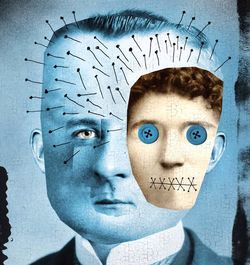
MagicWe do grow up. We get jobs. We have children of our own. Along the way, we lose our tendencies toward magical thinking. Or at least we think we do. Several streams of research in psychology, neuroscience and philosophy are converging on an uncomfortable truth: We’re more susceptible to magical thinking than we’d like to admit. Consider the quandary facing college students in a clever demonstration of magical thinking. An experimenter hands you several darts and instructs you to throw them at different pictures. Some depict likable objects (for example, a baby), others are neutral (for example, a face-shaped circle). Would your performance differ if you lobbed darts at a baby? It would. Performance plummeted when people threw the darts at the baby. Laura A. King, the psychologist at the University of Missouri who led this investigation, notes that research participants have a “baseless concern that a picture of an object shares an essential relationship with the object itself.”

Paul Rozin, a psychology professor at the University of Pennsylvania, argues that these studies demonstrate the magical law of similarity. Our minds subconsciously associate an image with an object. When something happens to the image, we experience a gut-level intuition that the object has changed as well. Put yourself in the place of those poor college students. What would it feel like to take aim at the baby, seeking to impale it through its bright blue eye? We can skewer a picture of a baby face. We can stab a voodoo doll. Even as our conscious minds know we caused no harm, our primitive reaction thinks we tempted fate.

More here.