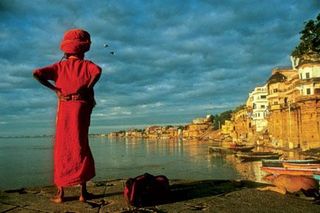
Mohammed Hanif in The Guardian:
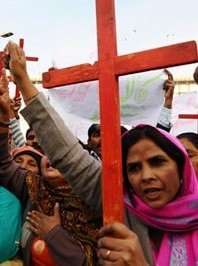
More here.

Mohammed Hanif in The Guardian:
More here.

From the moment Eben first sees Jennie, time begins to slip. Each time they meet, Jennie is a little older; Eben starts to wonder, then, just who Jennie Appleton is. He embarks on a journey of the city’s past, visits the old places and starts asking questions. Eben meets the doorman at the Rialto who played Hammerstein’s back in the day, and a nun at the convent where Jennie was sent after her parents died. These people remember Jennie. They tell Eben that Jennie is dead. The old New Yorkers are alive but speak like ghosts. They live in 1934 New York, and also a New York that is no more. The old New Yorkers pull Eben deeper into the labyrinth of slippage.
The portrait of Jennie progresses but slowly — weeks, sometimes months pass between the moments when Jennie appears. When she does, it’s never for long. And there is always the premonition of death. Eben’s artistic depression turns into obsession. Finishing the portrait of Jennie is all that matters. He’s not fully alive whenever Jennie is gone. Winter turns to summer which turns back eventually to winter. Time doesn’t progress but curves around him. Love and art orient Eben toward the future. And yet Eben knows that Jennie is a ghost, and that their future has already passed. The portrait of Jennie brings Eben to life — but love seems to lead him toward death. Who knoweth if to die be but to live … and that called life by mortals be but death?
more here.
Ezra Palmer in Far From Brooklyn:
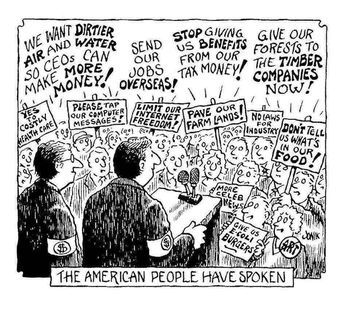
The GOP ran on a single talking point — “We’ll stop Obama” — whereas the Dems couldn’t even work up the guts to admit they voted for the man.
What a bunch of empty suits, lacking vision, courage, values, goals — indeed, lacking any sort of apparent dream other than that of being elected to public office.
It’s become a commonplace to criticize President Obama for failing to lead. I call bullshit on that. What happened is that his party has failed to follow.
How hard is it to campaign alongside a man who ended two wars and staved off a second Great Depression? How hard is it to remind the electorate of what life was like in 2008, when there was a very real possibility of mass failure of our bank system, the collapse of much of our mutual fund infrastructure, and erasure of wealth on a scale never before seen in history?
But the 2014 Democratic candidates, this cluster of zymotic panderers, no, they didn’t even dare to share a podium with the man, let alone attempt to argue for anything that’s happened in the past six years.
So they deserved to lose. They deserved to have the Senate wrested from them. They deserved the shame of listening to the victorious GOP talk magnanimously about the need for bipartisanship.
More here.
Atul Gawande at TED:

The one time I remember discussing mortality was during an hour we spent on The Death of Ivan Ilyich, Tolstoy’s classic novella. It was in a weekly seminar called Patient-Doctor — part of the school’s effort to make us more rounded and humane physicians. Some weeks we would practice our physical examination etiquette; other weeks we’d learn about the effects of socioeconomics and race on health. And one afternoon we contemplated the suffering of Ivan Ilyich as he lay ill and worsening from some unnamed, untreatable disease.
More here.
Ron Taffel in Alternet:

I regularly speak with tens of thousands of child professionals, parents, educators, and kids across the country, and as chair of a large nonprofit psychotherapy training and treatment agency, I compare notes with the directors of other centers as well. These extensive dialogues, though not as formal a means of data collection as the surveys above, allow me to see trends emerging just under the radar—the current one being a wave of intense anxiety and affective disorders sweeping through agencies and schools across the country, reaching deep down into elementary and even preschool. Of course, teens and young adults have always been vulnerable to the onset of serious mental illness, but these days they seem to suffer from a new kind of emotional fragility. It’s as if at a core level, their fundamental security, the very ground of their psychic being, is increasingly shaky and unreliable.
More here.
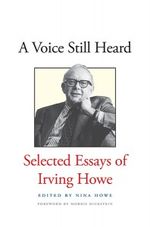
In addition to being dead, Irving Howe might seem irrelevant to 21st century culture because he was dedicated to causes few take seriously anymore – at least in Howe’s country, the United States – causes such as socialism and aesthetic modernism. Consequently the title of the new collection of his shorter works – A Voice Still Heard – has polemical overtones: it stakes a claim for what it contains that is not immediately obviously true. Howe’s daughter, Nina Howe, has chosen for the volume a representative selection of her father’s shorter work, organized by decade, spanning the full course of his career from the 1950s to the 1990s. Why should we listen to a voice that seemingly wasted itself in the fight for lost causes through the medium of essays about books and politics? Foremost, perhaps, because Howe belonged to a group of thinkers and writers who perfected a certain kind of essay.
For the New York intellectuals, among whom Howe belonged by a bare margin, the purpose of the essay was aesthetic and political at the same time. The New York intellectuals published in the mid-20th century journals Commentary and Partisan Review. Dickstein notes of Howe that, “more than a decade younger than Trilling, Rahv, and their generation, he always felt like a latecomer.” Summing up the movement in retrospect, Howe said they combined “anti-Stalinist leftism and the defense of cultural and literary modernism. Two avant-gardes.”
more here.
Ben Lynfield in The Christian Science Monitor:

His touching-off point is that before nationalism – both Jewish and Arab – made the words Arab and Jew mutually exclusive, there were people who thought of themselves as ''Arab Jews,'' just as today there are American Jews. Lifestyle, language, culture, and shared attachment to place created a common identity with Muslims that was expressed in every day life, Klein posits. In other words, there were lives in common.The author shows how Jews and Arabs lived in the same courtyards, participated in each other's religious festivals, watched over each other's children, and worked together in charitable and public welfare organizations.
More here.

At an Irish pub managed by an international hotel chain, German beer is being served by Filipino waitresses. An Eritrean bartender is mixing a cocktail, his theatrical performance indicative of extensive industry training, a training that he has received somewhere other than here. Speakers relay Rihanna concluding her ecstatic confession of having found love in a hopeless place, which gives way to a western-inspired whistle soaring above a beat that is almost militaristic.
An alien's love-thirst / A wonder who betrayed who first. “Oh, I love this!” someone shouts in Swedish from the other side of the pub, as the hoarse voice of singer Jocke Berg makes itself heard through the ambient noise. At another table sit a handful of young women, one of whom is explaining to the others that “this is a Swedish rock band called Kent”. Like so many of us Kurds who have moved here after growing up somewhere else she speaks English with her friends, supposedly the most obvious indicator that we are the pioneers of global gentrification, whereas it is in fact merely the language that we are most comfortable speaking. Iraq, whose population the extreme Right's rhetoric likens to swarming pests, was among the ten countries from where most people emigrated to Sweden in 2013. Meanwhile, Swedish emigration in general is at a level that hasn't been seen “since the peak of the major emigrations to the USA in the 1880s”.
more here.
The One
The enormous head and huge
bulbed knees, elongated
hands and feet, don't fit
with the filed down chest, limbs
of kindling, yet this is one
whole boy, suspended
in a cloth harness hooked
to what looks like a clock
stuck at three fifteen.
Closer, you can see it is
not a clock but a scale,
the kind you find in any North
American grocery,
but of course this is not
North America, this is
the Sahel famine, this
is Mali in 1985, where a boy
waiting for his rations
to be adjusted
must be weighed. At once
his face relays one and many
things: he could be crying out,
he could be grinning,
he could be frightened
or tired, he could believe
he is suspended in unending
dream. What starvation started
gravity refines as the boy
reclines, the hunger having
crumpled his neck, his face
staring up at the ceiling
of sticks which like most ceilings
anywhere in this world is blank.
.
by Shane Book
from New American Poets
.
Over at Rationally Speaking:

Are you a nihilist? Forget about wearing all black and being indifferent to the rest of the world — nihilism is a lot more complicated than most people think. In this episode of Rationally Speaking, Massimo and Julia explain the different types of philosophical nihilism, reveal their own personal views on the subject, and explore why nihilism has such different emotional effects on different people.
Steve Snyder in Scientia Salon:
I am going to connect issues of free will and determinism … to Buddhism! (But only as a psychology, folks.) I’m going to explain why I reject free will in the sense of being associated with a unitary self, and also why I say “mu” to the whole dualistic issue of “free will versus determinism.”
For those of you unfamiliar with the term, it comes from Zen Buddhism. There’s no precise translation in English, but a good approximation to the meaning is to “unask” a question or idea. In other words, saying “mu” to “free will vs. determinism” rejects the dualism, that these are the only two ways of looking at decision-making in human consciousness. Related to that, to the degree that these are ever useful terms, it rejects the polarity behind them, that is the idea that a particular action is either one hundred percent determined or one hundred percent of free will.
And that gets us into the meat of the piece.
The reason I say “mu” relates to the idea of subselves, multiple drafts of consciousness, and even Hume’s “fleeting impressions.”
To use Daniel Dennett’s language, if there is no “Cartesian meaner” in a “Cartesian theater,” there’s no “Cartesian free willer” there either. There is no unitary conscious self with a free will at the center of the controls. And, depending on how one understands the idea of “volition” — how much daylight one puts between it and “free will,” and spells this out — there’s arguably no “Cartesian volitioner” there either.
Now, whether our subselves, or whatever of the “multiple drafts” is in the driver’s seat at any particular moment, might be engaged in something that might be called quasi-free will, is another question. I think something like that does happen.
More here.
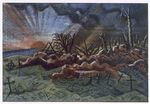
One of the worst experiences for soldiers in the trenches seems to have been the sense that landscape itself had been dissolved and unwritten by the continuous bombardment known as drum-fire, and replaced by what David Jones called “the unformed voids of that mysterious existence”. Place, ground to stand on and comprehend, took on especial importance in a war of attrition. The places from which the war poets came, and to which they looked back, were often as bloodstained as Otterburn – Wilfred Owen’s Romano–Welsh border, Jones’s half-legendary Welsh interior, Siegfried Sassoon’s Sussex where the Normans invaded, and Rupert Brooke’s more generalized England, dulled, as apparently it seemed to him, by the long post-Napoleonic respite from direct military threat.
Wild Northumberland would have appealed to Julian Grenfell (1888–1915), who lived for the hunt and who in peacetime also felt an aristocratic liberty physically to attack those of whom he disapproved. In Some Desperate Glory: The First World War the poets knew, Max Egremont writes that, at Oxford, Grenfell “chased a Jewish millionaire undergraduate round the quad with a stock whip and beat up a cab driver who overcharged him”. He viewed the battlefield as an extension of his estate, as Keith Douglas’s “Sportsmen” would later bring the amateurism of the hunt to tank warfare in North Africa.
more here.
Toby Lichtig in The Telegraph:
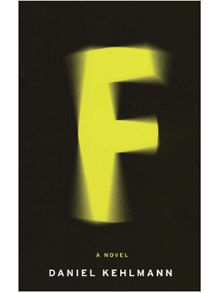
His twin brothers, from a separate mother, are different sorts of swindler. Eric is a mega-wealthy City trader with a film-star wife, a painting by Paul Klee (“I hate [it]… even I could have painted it”) and a dirty secret: his success is a mirage. He’s been embroiled in a Ponzi scheme and the pyramid is about to come crashing down. Ivan is an art dealer, similarly successful, similarly bogus – albeit more ideologically so. Having developed an aesthetics of “mediocrity”, he’s created a sensation out of a run-of-the-mill artist whose canvases he has learnt to forge. For Ivan, art “as a sacred principle… unfortunately doesn’t exist”. On an ordinary day, a sudden, violent incident draws the three brothers together.
More here.
From PhysOrg:

Nicolas Claidière and Joël Fagot, of the Laboratoire de psychologie cognitive, conducted the present study at the CNRS Primatology Center in Rousset, southeastern France. Baboons live in groups there and have free access to an area with touch screens where they can play a “memory game” specifically designed for the study. The screen briefly displays a grid of 16 squares, four of which are red and the others white. This image is then replaced by a similar grid, but composed of only white squares, and the baboons must touch the four squares that were previously red. Phase one of the experiment started with a task-learning period in which the position of the four red squares was randomized. Phase two comprised a kind of visual form of “Chinese whispers” wherein information was transmitted from one individual to another. In this second phase, a baboon's response (the squares touched on the screen) was used to generate the next grid pattern that the following baboon had to memorize and reproduce, and so on for 12 “generations.”
More here.
Saraswati Nandini Majumdar in Open the Magazine (Photo: Majority World/UIG/Getty Images) [h/t: Tunku Varadarajan]:
Any plan for the revitalisation of the Ganga and the ghats would ideally have to demonstrate a holistic understanding of the heritage that they together constitute and all the interwoven layers of living, evolving culture that they have given birth to and continue to nourish—rather than focusing on any one aspect of development over another, such as economic or environmental. In order to be truly meaningful and impactful, such a plan should work closely with the needs and desires, fears and dreams of the hundreds of individuals whose lives are inseparable from the river. That is, revitalisation and conservation should happen for the people of Benares themselves and for Ganga itself, which have always been interdependent.
The two main governmental efforts at revitalising the Ganga and the ghatshave been the Ganga Action Plan and the National Ganga River Basin project. The Ganga Action Plan (GAP) was conceived during Rajiv Gandhi’s term and consisted of three portions of funds allocated to UP, Bihar and West Bengal, aiming to put into place drains, sewers, sewage treatment plants, and electric crematoria, and also to beautify the ghats. For a number of reasons, despite the massive funds allocated and plans drawn up, the GAP was never successfully implemented or seen through to satisfactory results by the state and municipal governments.
The second major effort, the $1.5 billion National Ganga River Basin project, has been undertaken by the Ministry of Environment and Forests, supported by the World Bank since 2011. But, similar to the Ganga Action Plan, the National Ganga River Basin project has also failed to deliver, perhaps in large part because, as Vijay Jagannathan notes, the work has been channelled through the same state engineering agencies that were engaged in the GAP.
Today, the Ganga continues to suffer from the pollution of untreated sewage that flows directly into the river at a number of point sources. Water becomes dangerous for drinking or bathing when the Biochemical Oxygen Demand (BoD) level exceeds 3 mg/L. The BoD level at Benares is 3.4 mg/L, lower than that at Allahabad or Kanpur, but still exceedingly dangerous for humans, as well as for aquatic life such as the Ganges River Dolphin, now endangered.
More here.
Justin E. H. Smith in the New York Times:
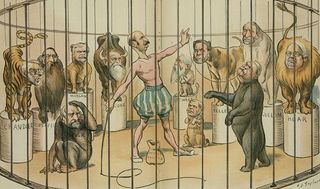
This supposed freedom from political strictures has motivated some, such as the 19th-century anarchist aristocrat Piotr Kropotkin, to take nonhuman animals as a model for human society. But for the most part the ostensibly nonpolitical character of animal life has functioned simply to exclude animals from human consideration as beings with interests of their own.
What might we be missing when we cut animals off in this way from political consideration? For one thing, we are neglecting a great number of solid scientific facts.
More here.
Bill Gates in his blog:

Even though I am confident that the U.S. and other countries with strong public health systems will contain the cases that are popping up within their borders, it’s devastating to see what this virus is doing to entire families in West Africa. At times like this, it’s easy for organizations like ASTMH to make the public case that global health matters to all of us in our increasingly interconnected world. I hope that will help strengthen the public will to do more to help poor countries lift the burden of disease—not just from emerging killers like Ebola but also from pathogens that have held back human potential for thousands of years.
That’s why, in my remarks at the conference, I addressed the Ebola crisis but devoted the bulk of my time to another killer disease: malaria. Based on the progress I’m seeing in the lab and on the ground, I believe we’re now in a position to eradicate malaria—that is, wipe it out completely in every country—within a generation. This is one of the greatest opportunities the global health world has ever had. Melinda and I are so optimistic about it that we recently decided to increase our foundation’s malaria budget by 30 percent.
More here.
Will Self in The Guardian:

The reaction to my resignation was pretty muted. I did receive an email the following morning from a pressure group called Jews for Justice in Palestine, urging me to reconsider on the basis that it was perfectly possible for me to retain my Jewish identity while objecting to the activities of the Zionist state. In fact, I’d been surprised by my own apostasy (if it can be called that), and it’s only now, having read Shlomo Sand’s elegant and passionately felt essay, that I’ve come to understand why it is I resiled from … what? This heritage? Or is Jewry a people, a religion, or possibly – if pejoratively – a tribe?
Sand, a history professor at Tel Aviv University, is the author of The Invention of the Jewish People (2009), a discursive yet polemical work that systematically undermines the claim that Jewishness is necessary – let alone sufficient – to justify the claims of the Israeli state to the territory formerly known as Palestine. Now comes this short, highly personal text, which repurposes some of these arguments to serve existential ends; Sand asks the question: what, in this day and age, exactly is a secular Jew?
More here.