Israel’s conservative President speaks up for civility, and pays a price

David Remnick in The New Yorker:

141117_r25776-320Reuven (Ruvi) Rivlin, the new President of Israel, is ardently opposed to the establishment of a Palestinian state. He is instead a proponent of Greater Israel, one Jewish state from the Jordan River to the Mediterranean Sea. He professes to be mystified that anyone should object to the continued construction of Jewish settlements in the West Bank: “It can’t be ‘occupied territory’ if the land is your own.”

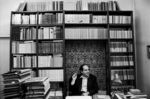
Rivlin does not have the starched personality of an ideologue, however. He resembles a cheerfully overbearing Borscht Belt comedian who knows too many bad jokes to tell in a single set but is determined to try. Sitting in an office decorated with mementos of his right-wing Zionist lineage, he unleashes a cataract of anecdotes, asides, humble bromides, corny one-liners, and historical footnotes. At seventy-five, he has the florid, bulbous mug of a cartoon flatfoot, if that flatfoot were descended from Lithuanian Talmudists and six generations of Jerusalemites. Rivlin’s father, Yosef, was a scholar of Arabic literature. (He translated the Koran and “The Thousand and One Nights.”) Ruvi Rivlin’s temperament is other than scholarly. He is, in fact, given to categorical provocations. After a visit some years ago to a Reform synagogue in Westfield, New Jersey, he declared that the service was “idol worship and not Judaism.”

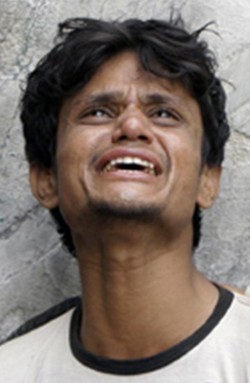
And yet, since Rivlin was elected President, in June, he has become Israel’s most unlikely moralist. Rivlin—not a left-wing writer from Tel Aviv, not an idealistic justice of the Supreme Court—has emerged as the most prominent critic of racist rhetoric, jingoism, fundamentalism, and sectarian violence, the highest-ranking advocate among Jewish Israelis for the civil rights of the Palestinians both in Israel and in the occupied territories. Last month, he told an academic conference in Jerusalem, “It is time to honestly admit that Israel is sick, and it is our duty to treat this illness.”

More here.
two minutes of silence for the dead

Bf42494d-d5d9-454d-b5ea-f1bf834648ce-620x372Joanna Scutts at Lapham's Quarterly:

The silence (or Silence, as it tended to be styled in the interwar years) stood at the center of Britain’s Armistice Day rituals. From the beginning it was timed to correspond with the ceremony at the Cenotaph at Whitehall, and was later broadcast from there by radio and then by television. It was important that it was a broadcast ofsilence, not simply a two-minute interruption in transmission: the tension of the silence carried over to the listeners. If it was observed in public, the Silence was simultaneously a performance of remembrance and an opportunity for private remembering. It is difficult to know whether the inviolable sanctity of the Silence was felt to be coercive or oppressive. At the same time, within that public silence, there was no way of controlling what people were actually thinking. Newspapers frequently carried scare stories of “violators” being forcibly silenced and shamed, but they were always careful to present these as the spontaneous reactions of fellow mourners, never as any kind of official punishment.

The idea of the Silence spread quickly from London to Canada and Australia and throughout the Empire. Two years later, according the Times, the ritual became—like the visually identical war cemeteries then being constructed—a way of connecting British remembrance efforts throughout the Empire: “From the jungles of India to the snows of Alaska, on trains, on ships at sea, in every part of the globe where a few British were gathered together, the Two Minute Pause was observed.” It was felt most powerfully in urban, industrial areas, where silence was a rarity—and also, where fears of political unrest in the wake of the Russian Revolution were most acute.

more here.

Grotesque, Garish, Exuberant American Art

Wirsum-nerve_png_780x600_q85J. Hoberman at the NYRB:

“What Nerve! Alternative Figures in American Art, 1960 to the Present,” the provocatively titled exhibit at the RISD Museum in Providence, presents a bracing counter to one prevailing way of telling the story of postwar American art. Somewhat simplified, this traditional account holds that European Surrealism led to Abstract Expressionism, which led to Pop Art and Minimalism, which were followed by Earth Art, Body Art, and Conceptual Art, the return of expressive painting, and so on up to the present, when no one city nor any single movement reigns supreme: a thousand flowers bloom.

But “What Nerve!,” organized by Dan Nadel with Judith Tannenbaum, argues that it was ever thus, and in Nadel’s words, “proposes an alternate history of figurative painting, sculpture and vernacular image-making that has been largely overlooked and undervalued relative to the canon of Modernist abstraction and Conceptual art.” There’s a healthy truculence to the premise and much of the work as well. Indeed, the show immediately engages the eye with two bumptious works of dissident splendor. The seventeen lithographs of H.C. Westermann’s corrosive, cartoony “See America First” series, stripped down travel posters for a dead land, get an additional zetz of Coney Island sensationalism from their proximity to Peter Saul’s blithely outrageous, biomorphic construction in enamel and plastic coated Styrofoam, Man in Electric Chair (1966).

more here.

What Washington Refuses To Admit

Troopsjoeraedlegetty1Andrew Sullivan at The Dish:

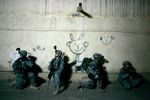
Let me put this as baldly as I can. The US fought two long, brutal wars in its response to the atrocity of September 11, 2001. We lost both of them – revealing the biggest military machine in the history of the planet as essentially useless in advancing American objectives through war and occupation. Attempts to quash Islamist extremism through democracy were complete failures. The Taliban still has enormous sway in Afghanistan and the only way to prevent the entire Potemkin democracy from imploding is a permanent US troop presence. In Iraq, we are now confronting the very same Sunni insurgency the invasion created in 2003 – just even more murderous. The Jihadism there has only become more extreme under a democratic veneer. And in all this, the U.S. didn’t just lose the wars; it lost the moral high-ground as well. The president himself unleashed brutal torture across all theaters of war – effectively ending any moral authority the US has in international human rights.

These are difficult truths to handle. They reveal that so many brave men and women died for nothing. And so we have to construct myths or bury facts to ensure that we maintain face. But these myths and amnesia have a consequence: they only serve to encourage Washington to make exactly the same mistakes again. To protect its own self-regard, Washington’s elite is prepared to send young Americans to fight in a war they cannot win and indeed have already lost. You see the blinding myopia elsewhere: Washington’s refusal to release the Senate Intelligence Committee’s report on torture merely proves that it cannot face the fact that some of the elite are war criminals tout simple, and that these horrific war crimes have changed America’s role in the world.

more here.

Scientists find first evidence of ‘local’ clock in the brain

Sam Wong in MedicalXpress:

SleepResearchers have gained fresh insights into how 'local' body clocks control waking and sleeping. All animals, from ants to humans, have internal 'circadian' clocks that respond to changes in light and tell the body to rest and go to sleep, or wake up and become active. A master clock found in part of the brain called the suprachiasmatic nucleus (SCN) is thought to synchronise lots of 'local' clocks that regulate many aspects of our metabolism, for example in the liver. But until now scientists have not had sufficient evidence to demonstrate the existence of these local clocks in the brain or how they operate. In a new study looking at mice, researchers including Professors Bill Wisden and Nick Franks at Imperial College London and Dr Mick Hastings' group at the MRC Laboratory of Molecular Biology in Cambridge have investigated a local clock found in another part of the brain, outside the SCN, known as the tuberomamillary nucleus (TMN). This is made up of histaminergic neurons, which are inactive during sleep, but release a compound called histamine during waking hours, which awakens the body.

…Senior researcher Professor Bill Wisden from the Department of Life Sciences at Imperial College London said: “Getting enough good quality sleep is crucial – it helps keep us mentally and physically healthy, as well as being a key factor in having a good quality of life. A lot of people would love to have more a concentrated and restful night's sleep, but at the moment we still don't know enough about exactly why we fall and stay asleep. Our work with mice suggests that local body clocks play a key role in ensuring their sleeping and waking processes work properly. When a local clock was disrupted, their whole sleep and wake system malfunctioned. Ultimately, understanding local clocks better might enable us to target them to help people have a better night's sleep.”

More here.

The American Justice Summit

There is a growing consensus that America's criminal justice system is in urgent need of reform. Today, about 2.4 million people are incarcerated in the US — by far the most in any country worldwide. Another 7 million people are under probation and on parole, and 65 million have criminal records, which often make it difficult or impossible to do things like secure college loans, find housing, or vote.

The American Justice Summit.. [brought] together those who are championing innovative, cost-effective solutions to the problems plaguing the criminal justice system. A series of panels and conversations will explore the personal, social, and financial inequities of America's prison system — and the ways to remedy them.”

Video of the panels can be found here.

Thursday, November 13, 2014

Disconnecting Acts

Bauman-Zygmunt-243x300

Efrain Kristal and Arne De Boever interview Zygmunt Bauman in The LA Review of Books (in two parts):

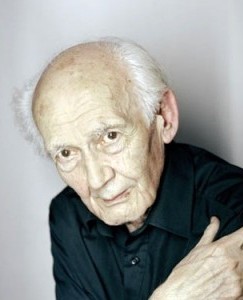
ARNE DE BOEVER / EFRAIN KRISTAL: Did your military experiences as a young man — particularly those involving the liberation of your native Poland in World War II — have a bearing on your earliest ideas when you became a professor of sociology at the University of Warsaw?

ZYGMUNT BAUMAN: They must have, mustn’t they? How could it be otherwise? Be they military or civilian, life experiences cannot but imprint themselves — the more heavily the more acute they are — on life’s trajectory, on the way we perceive the world, respond to it and pick the paths to walk through it. They combine into a matrix of which one’s life’s itinerary is one of the possible permutations. The point, though, is that they do their work silently, stealthily so to speak, and surreptitiously — by prodding rather than spurring, and through sets of options they circumscribe rather than through conscious, deliberate choices. Stanisław Lem, the great Polish storyteller as well as scientist, tried once, not entirely tongue in cheek, to compose an inventory of accidents leading to the birth of the person called “Stanisław Lem,” and then calculate that birth’s probability. He found that scientifically speaking his existence was well nigh impossible (though probability of other people’s births — scoring no better than his — was also infinitely close to zero). And so a word of warning is in order: retrospectively reconstructing causes and motives of choices carries a danger of imputing structure to a flow, and logic — even predetermination — to what was in fact a series of faits accomplis poorly if at all reflected upon at the time of their happening. Contrary to the popular phrase, “hindsight” and “benefit” do not always come in pairs — particularly in autobiographic undertakings.

I recall here these mundane and rather trivial truths to warn you that what I am going to say in reply to your question needs to be taken with a pinch of salt.

From early childhood I was enthused with physics and cosmology and intended to devote my life to their study. Perhaps I would’ve tried to follow that intention if not for the vivid exposition of the human potential of inhumanity: the ugly monstrosity of war, of evil let loose, of the horror of continuously bombarded roads crowded with refugees, of the desperate yet vain attempts to escape the advancing Nazi troops leading ultimately to the calamity of exile which was, as I remember being then aware, also the lifesaving marvel — all coming in quick succession. Then the point-blank exposure to the vagabond’s experience of many and different ways of being human — of a variegated patchwork of many and diverse modes of life, none of which appeared to be blameless and attractive enough to be uncritically, wholeheartedly embraced.

More here. Part two here.

Trouble in Paradise and Absolute Recoil

Zizek-012

Terry Eagleton reviews two new books by Slavoj Žižek, in the Guardian (Photograph: David Levene):

It is said that Jean-Paul Sartre turned white-faced with excitement when a colleague arrived hotfoot from Germany with the news that one could make philosophy out of the ashtray. In these two new books, Slavoj Žižek philosophises in much the same spirit about sex, swearing, decaffeinated coffee, vampires,Henry Kissinger, The Sound of Music, the Muslim Brotherhood, the South Korean suicide rate and a good deal more. If there seems no end to his intellectual promiscuity, it is because he suffers from a rare affliction known as being interested in everything. In Britain, philosophers tend to divide between academics who write for each other and meaning-of-life merchants who beam their reflections at the general public. Part of Žižek’s secret is that he is both at once: a formidably erudite scholar well-versed in Kant and Heidegger who also has a consuming passion for the everyday. He is equally at home with Hegel andHitchcock, the Fall from Eden and the fall of Mubarak. If he knows about Wagnerand Schoenberg, he is also an avid consumer of vampire movies and detective fiction. A lot of his readers have learned to understand Freud or Nietzsche by viewing them through the lens of Jaws or Mary Poppins.

Academic philosophers can be obscure, whereas popularisers aim to be clear. With his urge to dismantle oppositions, Žižek has it both ways here. If some of his ideas can be hard to digest, his style is a model of lucidity. Absolute Recoil is full of intractable stuff, but Trouble in Paradise reports on the political situation in Egypt, China, Korea, Ukraine and the world in general in a crisp, well-crafted prose that any newspaper should be proud to publish. Not that, given Žižek’s provocatively political opinions, many of them would. He sees the world as divided between liberal capitalism and fundamentalism – in other words, between those who believe too little and those who believe too much. Instead of taking sides, however, he stresses the secret complicity between the two camps. Fundamentalism is the ugly creed of those who feel washed up and humiliated by a west that has too often ridden roughshod over their interests. One lesson of the Egyptian revolt, Žižek argues in Trouble in Paradise, is that if moderate liberal forces continue to ignore the radical left, “they will generate an unsurmountable fundamentalist wave”. Toppling tyrants, which all good liberals applaud, is simply a prelude to the hard work of radical social transformation, without which fundamentalism will return. In a world everywhere under the heel of capital, only radical politics can retrieve what is worth saving in the liberal legacy. It is no wonder that Žižek is as unpopular with Channel 4 as he is on Wall Street.

More here.

ANTS AND US

JM Ledgard in More Intelligent Life:

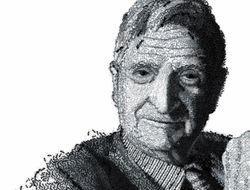
They work together, share food and send their elders into battle to protect the young. And the world authority on them thinks they have a lot to teach us. J.M. Ledgard goes to Harvard to discuss ants, and more, with E.O. Wilson

Ant%20manART2What do you think about when you think about ants? An aerial view perhaps, looking down at a line of ants moving along a trail. Go closer. If you stay with it, your view may twist, your ants grow, become singular, each an alien creature, somehow militarised. As primitives we ate them, they were our crunch, and now they are lodged in our subconscious. We know their noise in the soil, even if we do not acknowledge it. The mandibles dominate, snipping, giving the ant its name in Old English, “aemette”, from the proto-Germanic ai mait, meaning to cut away, or to cut off. Even in that early time in Anglo-Saxon lands there was a grim sense of ants swarming, and now we know that army ants move in waves of a million or more, eating through anything in their path, someone staked and tied to the ground, for instance. The blank eyes, the glands under the jawbone secreting pheromones that signal alarm, laid down by foraging ants and reinforced by following ants to show the shortest possible route to a source of food. The antennae, cantilevered at the elbow, twitching at speeds our eye cannot follow. The slender waist, the shimmer and bristle of the exoskeleton, red or black, metallic, so that the ant corpse rots from within, leaving the armour intact. Whereas we are jellies, prick us and do we not bleed…? One way or another, when we think about ants, we tend not to think they are a part of us, or that they have something fundamental to say about us. But they probably do.

More here.

Marguerite Duras at 100

P22_Gunn_web_1108561mDan Gunn at the Times Literary Supplement:

Duras was born in April 1914, and her centenary year has been marked in France by a proliferation of publications, most important of which by far are the final two instalments in the superb four-volume Pléiade edition of herOeuvres complètes. Few Duras enthusiasts would place L’Amant quite at the centre of the canon. Yet it is hard to imagine the degree of attention Duras is currently commanding in France, or the fascination with every detail of her biography, without it. Three pages intoL’Amant, the narrator announces: “L’histoire de ma vie n’existe pas. Ça n’existe pas”. The remaining pages serve to qualify this assertion, establishing a life recollected not as a continuum but as a series of pulsations, with crucial moments vividly returning, almost like the snapshots which Duras claims were the novel’s instigation. The intervals between the moments disappear, as does continuity, allowing the early experience to spurt back into the present. By 1984, when L’Amant was published, the elements of that life were already well known, not least through the first of Duras’s great autobiographical fictions, Un Barrage contre le Pacifique (1950): the colonial childhood in French Indochina; the early death of the father with the consequent indigence of his wife and children; the hopeless attempt to revive the family fortunes through purchase of a disastrously infertile piece of land; the two brothers, the elder of whom was violent and criminal, the younger of whom needed protecting; above all the stark emotional unavailability of the mother, wrapped up as she was in her financial woes, her loss of social status, her infatuation with her abusive first-born son.

more here.

Lila Azam Zanganeh interviews roberto calasso

Roberto-calassoInterveiw with Roberto Calasso at Paris Review:

INTERVIEWER

Do you consider yourself a man of the Left?

CALASSO

I wonder what that means today. Certainly the success of Adelphi began, among other things, with the extreme Left. For instance, Joseph Roth, who was one of our great authors, was embraced by the people who were in the movements of the seventies. Yet Nietzsche was never considered terribly orthodox by anybody. Evidently we have managed to upset lots of people, from the Red Brigades to the Opus Dei. I’ll give you just one rather surreal example. In 1979, the Red Brigades published in their magazine, Controinformazione, which was available at the time at all kiosks, a long and detailed article in which Adelphi was presented as the spearhead of a powerful multinational organization whose first aim was to annihilate all hopes of a proletarian revolution. The proof was that we had just published a large selection of prose and poems by Pessoa.

INTERVIEWER

It’s strange, this desire to turn Adelphi—and yourself—into a political machine. In fact, you are far more interested in transcendence than in politics.

CALASSO

Not so much transcendence, but the perception of the powers in us and around us. People talk a lot about religion, but they might as well be talking about huge political parties. The most delicate point to grasp is that society itself has become the major superstition of our times. This is the pivot of the last section of L’ardore. What I mean is that the belief in society as the ultimate crucible of progress creates a vast amount of bigotry even in the so-called secular world. So in actual fact it’s difficult to find an intellectually rigorous atheist. Though I have met many secular bigots.

more here.

Whole-genome sequences of 17 of the world’s oldest living people published

From KurzweilAI:

Misao-OkawaUsing 17 genomes, researchers were unable to find rare protein-altering variants significantly associated with extreme longevity, according to a study published November 12, 2014 in the open-access journal PLOS ONE by Hinco Gierman from Stanford University and colleagues.

Supercentenarians are the world’s oldest people, living beyond 110 years of age. Seventy-four are alive worldwide; 22 live in the U.S. The authors of this study performed whole-genome sequencing on 17 supercentenarians to explore the genetic basis underlying extreme human longevity. From this small sample size, the researchers were unable to find rare protein-altering variants significantly associated with extreme longevity compared to control genomes. However, they did find that one supercentenarian carries a variant associated with a heart condition, which had little or no effect on his/her health, as this person lived over 110 years.

More here.

Chris Ofili’s Thumping Art-History Lesson

A_560x375Jerry Saltz at New York Magazine:

It was a shitstorm that ended in a witch hunt. “If this painting is censored, I’m canceling the show,” snapped English megacollector Charles Saatchi. He said this to me privately in the early hours of September 18, 1999, amidst an exhibition installation at the Brooklyn Museum of Art. Days before, the New York Daily News had run the headline “B’KLYN GALLERY OF HORROR. GRUESOME MUSEUM SHOW STIRS CONTROVERSY.” The “gallery” was the Brooklyn Museum. The “horror” was Sensation, a show of about 40 young British artists from Saatchi's collection who'd emerged in the early 1990s, most of whom were already fading, making the show seem, to those in the art world, something of a non-event.

Until the Daily News headline. The “controversy” was one painting: Chris Ofili’s beautifully bioluminescent 1996 depiction of a black woman cloaked in cerulean blue. A wavy visage composed of what look like light-emitting microorganisms, she’s surrounded by radiating dots of enamel paint and constellations of small, cutout photographic body parts. Her right breast is fashioned of elephant dung secured to the canvas and decorated with black map-tacks. The painting rests on two dung balls, one festooned with pins that say “Virgin,” the other, “Mary.”

more here.

The deadliest factory fire in recorded human history

Danyal Adam Khan in Dawn:

ScreenHunter_889 Nov. 13 14.48Two years after the incident, the relatives of the dead are as angry as they are heavy-hearted. Sometimes called Pakistan’s 9/11, the fire at the factory owned and operated by a textile exporter, Ali Enterprises, has left many unanswered questions in its wake. Why has it been left largely ignored? How have the deaths of so many people been brushed under the carpet by the state machinery that has failed to deliver both justice and compensation despite the passing of two years?

The Baldia incident holds the unfortunate distinction of being the deadliest factory fire in recorded human history. (Another fire the same day at a shoe factory in Lahore, which claimed 25 lives, only accentuated the tragic intensity of the deaths in Karachi.) The closest that another fire incident comes is the one that happened at Kader Toy Factory in Thailand in 1993, killing 188 people.

The Karachi incident bears striking resemblance to the 1911 fire at the Triangle Shirtwaist Factory in New York which claimed 146 lives. The contrast between the two incidents is also striking. The New York fire led to a huge mobilisation among the labour force and consequently a drastic overhaul of the laws governing working conditions in industrial units (the building that housed the Triangle Shirtwaist Factory is now declared a national landmark). Ali Enterprises in Karachi, on the other hand, remains abandoned; its blackened windows are a haunting reminder of dire working conditions and undelivered justice.

More here.

Thursday Poem

Chai

—(for Micky Absil)

I've only seen a photograph —
boats anchored on the muddy shoals
of the Ganges. Splintered canopies
on top of blistered bows and sterns,
sari'd women leaving their men
to wash, or launch the dead
among the reeds.

A shadow surfaces
of a passing nimbus
that could be a pod of something.

I ve been taking my tea brewed with
cardamon and milk: olive green
pods half submerged in coppery liquid.
Stirred, it raises the silt
of the river, spreads the aromatics of
ceremony, produces the sensation
that life will be remembered.
.

by Eddy Yanofsky
from Blues & True Concussions : Six New Toronto Poets
publisher: Anansi, 1996.

Najla Said at the NYS Writers Institute

Najla Said is the author of the new memoir Looking for Palestine: Growing Up Confused in an Arab-American Family (2013). The daughter of major Palestinian-American intellectual and political activist Edward Said, Najla spent her formative years in the largely Jewish milieu of Manhattan’s Upper West Side. A witty exploration of post-modern, hyphenated American identity, the book opens with the playful statement, “I am a Palestinian-Lebanese-American Christian woman, but I grew up as a Jew in New York City.”

To end global poverty, we have to end global capitalism

Vijay Prasad in Jacobin:

ScreenHunter_888 Nov. 13 11.28In December, the United Nations sounded the alarm. Releasing its report on the World Social Situation of 2013, entitled “Inequality Matters,” the UN warned that inequality was deepening, and that no country was immune from the contagion. In the Global South, the hemorrhaging of incomes among working people has been about as dramatic as in the Global North. If there is one social process that the planet shares, it is global inequality.

How does the UN explain this rise in inequality? What the data suggests, the UN reports, is that “inequality has increased mainly because the wealthiest individuals have become wealthier, both in developed and developing countries.” The top 1% has siphoned off the social wealth for its private gain, and the bottom 99% — which produced the social wealth – has to live off its crumbs. What’s clear is that capitalism is incapable of ending poverty or substantially reducing inequality.

Word comes from China and India that they have dramatically reduced poverty. Take the case of India. Based on official data on poverty, things appear better now than before. But the data is based on a reassessment of the indicators.

The government created a new measure – one is poor if one consumes less than twenty-four pounds of grain per month. The UN World Food Program asked quite simply if it was reasonable to assume that the person who had twenty-five pounds of grain per month was not poor.

More here.

West End Boy

9781783600076

Adam Shatz reviews two new books on Anders Breivik, in the LRB:

Before he went on his mass killing spree in 2011, Anders Behring Breivik was a regular at the Palace Grill in Oslo West. He looked harmless: another blond man trying to chat up women at the bar. ‘He came across as someone with a business degree,’ one woman recalled, ‘one of those West End boys in very conservative clothes.’ Indeed he had tried his hand at business, though he’d never completed a degree, or much of anything else. And he was a West End boy, a diplomat’s son. Yet there was the book he said he was writing, a ‘masterwork’ in a ‘genre the world has never seen before’. He refused to say what it was about, only that it was inspired by ‘novels about knights from the Middle Ages’. He did little to hide his obsessions. One night in late 2010, he was at the Palace Grill when a local TV celebrity walked in. Breivik launched into a speech about the Muslim plot against Norway, and about the Knights Templar. The bouncers threw him out. On the street, he said to the celebrity: ‘In one year’s time, I’ll be three times as famous as you.’

This story appears in Aage Borchgrevink’s superb book, and it plays like a scene from a horror film because we know the barfly will make good on his promise. Breivik was hard at work on 2083: A European Declaration of Independence, a 1518-page screed exposing the Muslim plot to conquer Christendom. In large part a compendium of extracts from counter-jihadist websites, 2083 was posted online on the day of the attacks under the name ‘Andrew Berwick’, one of Breivik’s several aliases. The signs of Europe’s creeping Islamisation were everywhere, he argued, from Bosnian independence to the spread of mosques in Oslo. Muslim men were having their way with European women, while declaring their own women off-limits to European men. Breivik and his fellow white Norwegians were ‘first-generation dhimmis’ – a term for non-Muslim minorities under Ottoman rule which, like most of his ideas, he’d found online – in what was fast becoming ‘Eurabia’. Worst of all, Europe’s ‘cultural Marxist’ elites had caved in, like a woman who would rather ‘be raped than … risk serious injuries while resisting’. Even the Lutheran Church – ‘priests in jeans who march for Palestine and churches that look like minimalist shopping centres’ – had surrendered. Fortunately, there were ‘knights’ like Breivik who had the courage to defend Europe’s honour.

More here.

Wednesday, November 12, 2014

Is the Growing Market for Male Escorts a Sign of Female Sexual Liberation or Just a Re-run of the Same Old Stereotypes?

GS1125658

Clarissa Sebag-Montefiore in Aeon (Photo by Ozgur Albayrak/Gallery Stock):

In What Do Women Want?: Adventures in the Science of Female Desire(2013) the American writer Daniel Bergner argues that female sexuality is as animalistic – if not more so – than male. ‘We’d rather cast half the population, the female half, as a kind of stabilising force when it comes to sexuality,’ he explains. The idea that monogamy is more suited to women is no more than a ‘fairy tale’. Bergner claims another misnomer is that visual stimulus is not especially important for the average woman. Studies with a vaginal plethysmograph (a tool used to measure blood-flow and lubrication) have shown that female response to visual stimuli is visceral, immediate and, in some cases, more pronounced, to a wider variation of sexual images than with men.

In one experiment in 2007 by Meredith Chivers and colleagues at the Center for Addiction and Mental Health in Toronto, both men and women were made to watch videos of sex, ranging from heterosexual penetration to fornicating bonobo apes. The apes proved a turn-on for women, whose blood-flow soared, while men reacted in much the same way to the primates as they did to mountains and lakes. But here comes the telling part: when asked, the women themselves reported less arousal than their bodies let on. At the root of this gap – between physical urges and psychological restraint – sits societal shame.

In a 2011 paper, Terri Conley and colleagues at the University of Michigan found that women are no less interested in casual sex than men. But they are happier to engage if they expect the experience to be sexually satisfying and if they can remove any risk of stigma.

Male escorts might satiate an impulse for variety and novelty in sexual partners – as important, Bergner argues, for women as for men. Despite cultural norms, female sexuality is not, for the most part, ‘sparked or sustained by emotional intimacy and safety’, he writes. In an email, Bergner told me: ‘Track the level of desire in long-term relationships – not the level of love but the level of desire – and a different reality emerges, a reality that might lead to a male escort now and then.’

Yet, while women finally taking hold of the pay cheque might seem like good news – a sign of their sexual unshackling – the escorting industry remains beset by gender stereotypes that act in the opposite way, reinforcing pre-existing, and often out-moded ideas about gendered sex roles.

More here.