Extreme Wealth Is Bad for Everyone—Especially the Wealthy

Michael Lewis in The New Republic:

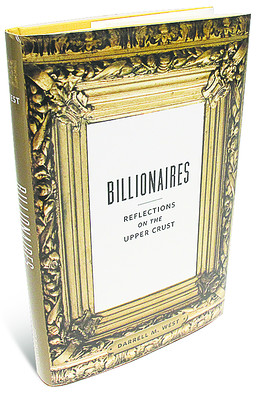
BN-EO922_bkrvbi_DV_20140917160406The grotesque inequality between the haves and the have-nots is seldom framed as a problem that the haves might privately help to resolve. Instead, it is a problem the have-nots must persuade their elected officials to do something about, presumably against the wishes of the haves. The latest contribution to the discussion comes from Darrell West, a scholar at the Brookings Institution. “Wealth—its uses and abuses—is a subject that has intrigued me since my youth in the rural Midwest,” West writes in the introduction to his study of billionaires. From his seat in Washington, D.C., he has grown concerned about the effects on democracy of a handful of citizens controlling more and more wealth.

Drawing on the work of Thomas Piketty and Emmanuel Saez, West notes that the concentration of wealth in the top 1 percent of American citizens has returned to levels not seen in a century. One percent of the population controls a third of its wealth, and the problem is only getting worse: from 1979 to 2009 after-tax income for the top 1 percent rose by 155 percent while not changing all that much for everyone else. By another measure of inequality, which compares the income controlled by the top 10 percent with that of the bottom 40 percent, the United States is judged to come forty-fourth out of the eighty-six nations in the race, and last among developed nations.

More here.

Bad reasons to read Shakespeare

Alka Sehgal Cuthbert in Spiked:

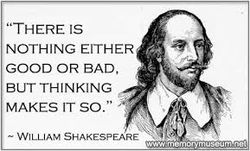
ImagesBad reason number one: Shakespeare’s good for activating neural activity. That’s right, certain academics have been conducting all manner of neuroscientific experiments on Shakespeare readers – they’ve even come up with a piece of research entitled Event-Related Potential Characterisation of the Shakespearean Functional Shift in Narrative Sentence Structure. I kid you not. By observing the amount and location of neural activity in people’s brains while reading Shakespeare compared to lesser playwrights, the study found that, lo and behold, there’s more going on in the brain when people read the bard. Apparently, this is because he uses words in unusual and unexpected combinations. You don’t need to be a neuroscientist or literary expert to see that this insight is banal at best. There are easier and quicker ways, I’m sure, to boost your neural activity if that’s what you really want to do. Bad reason number two: reading great literature can make us better people, more empathetic and more compassionate. For example, psychologists David Comer Kidd and Emanuele Castano applied ‘theory-of-mind techniques’ to people who had been randomly assigned either popular and non-fiction books or literary classics. They ‘found’ that the latter group was better at identifying emotions in others.

…An important and worthwhile aspect of reading literature is that it demands we interpret the work. This involves considering both its objective form and the contents of our subjectivity. It involves making judgements based on our interpretations. This capacity to interpret and understand for ourselves, rather than take something as given, is something we can bring to bear on other areas of life, including attempts by academics to justify art in terms of science or moral virtue. If we permit these bad reasons to dominate the way we understand and justify reading Shakespeare, we go against his own profound humanism.

More here.

How to Study the Brain

Marcus, Marblestone and Freeman in Chronicle of Higher Education:

“As humans, we can identify galaxies light years away, we can study particles smaller than an atom. But we still haven’t unlocked the mystery of the three pounds of matter that sits between our ears.” —President Obama, April 2, 2013

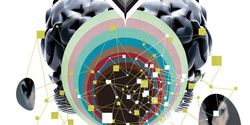
Photo_56389_wide_largeThe human brain contains roughly 86 billion neurons and trillions, perhaps hundreds of trillions, of intricate interconnections among those neurons. There are hundreds, maybe thousands of different kinds of cells within the brain. And—after nearly two centuries of research—exactly zero convincing theories of how it all works. Why is it so hard to figure out how the brain functions, and what can we do to face the challenges? The time to address these questions is now; the quotation above from the president came as he announced a projected 12-year project known as the BRAIN Initiative, and a few months earlier Europe announced big steps of its own, a 1.2-billion-euro effort to simulate the human brain. China, Japan, and a number of nations are also planning major investments. There is real reason to believe that the field is on the verge of a number of methodological breakthroughs: Soon we will be able to study the operation of the brain in unprecedented detail, yielding orders of magnitude more data than the field has ever seen before. And that is a good thing. On virtually any account, neuroscience needs more data—a lot more data—than it has.

…Neuroscience has been around for roughly two centuries, but progress remains painfully slow. We still don’t know how the brain works, and our categories for analyzing things like brain injuries and mental illness range from vague to antediluvian. As the neurosurgeon Geoffrey Manley, at the University of California at San Francisco, recently pointed out at a White House-sponsored meeting, traumatic brain injuries are still sorted into just three categories: “mild,” “moderate,” and “severe”; the field still has no reliable way of being more precise in predicting whether someone is likely to fully recover cognitively from a severe concussion. With over half a billion people around the world suffering from debilitating brain disorders, whether depression, schizophrenia, autism, Alzheimer’s disease, or traumatic brain disorder, it is no exaggeration to say that significant progress in neuroscience could fundamentally alter the world. But getting there will require more than just big data alone. It will require some big ideas, too.

More here.

Sunday Poem

Matins: Annunciation

Force eight from Lundy and the Irish Sea
in the dark moon of the solstice.
Alarmed awake at midnight, sleet slashing
across the window glass, blurring the street-lit world.
Packing the van in drenched Jack Pyke:
Lazerlight lamp-kit, slip-leads, dogs.
The long drive east to the ditch-cut flatlands.
Sleet strafing down. Wind howling in the hawthorns.
Shivering long-dogs, ears erect. The thousand foot
halogen beam. Green-eyes in hedge-bottoms.
Transfixed conies. Dogs running down the beam.
Conies dangling in the Deben double V.
Back to the van. Bag the necked and bladdered conies.
Towel and box the dogs. Peel off the drenched Jack Pyke.
The cold drive home in the dark moon of the solstice,
sleet slurring the view through the wiping-windscreen,
blurring the headlamped world.
.

by Steve Ely
From: Oswalds Book of Hours
Smokestack Books, Middlesborough, 2013

Saturday, November 15, 2014

Why Does Malala Yusufzai’s Nobel Bother So Many On The Left?

Pervez Hoodbhoy in Outlook:

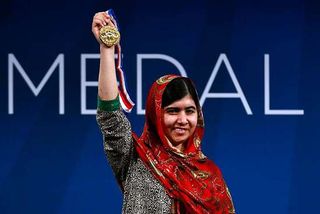
Malala-Yousafzai_20141022.jpgArundhati Roy’s charm and lucidity have iconized her in the world of left-wing politics. But, asked by Laura Flanders what she made of the 2014 Nobel Prize, she appeared to beswallowing a live frog:

“Well, look, it is a difficult thing to talk about because Malala is a brave girl and I think she has even recently started speaking out against the US invasions and bombings…but she’s only a kid you know and she cannot be faulted for what she did….the great game is going on…they pick out people [for the Nobel Prize].”

For one who has championed people's causes everywhere so wonderfully well, these shallow, patronizing remarks were disappointing.

Farzana Versey, Mumbai based left-wing author and activist, was still less generous last year. Describing Malala as “a cocooned marionette” hoisted upon the well-meaning but unwary,Versey lashed out at her for, among other things, raising the problem of child labour at her speech at the United Nations: “it did not strike her that she is now even more a victim of it, albeit in the sanitized environs of an acceptable intellectual striptease.”

But hang on a bit! This “kid” and “cocooned marionette” did not achieve world-wide admiration for opposing US-led wars or child labour or for a thousand and one other such good-and-great things. The bullet that smashed through her skull came because she opposed the Pakistani Taliban’s edict that all education for girls must end forever in the Swat valley after 15 September 2009, and her vigorous campaign for every girl child’s right to education.

It is perfectly clear why Malala has had to be damned to eternity by her left-wing critics: she has been photographed in the company of men judged to be villains: Barack Obama, Gordon Brown, Ban Ki Moon, Richard Holbrooke, and others. It is also obvious that she could not have won the Nobel peace prize—which is always an intensely political affair—but for support from the highest quarters in the western world. Consequently many on the left have easily dismissed her condemnation of drone strikes in Pakistan, as well as the $50,000 from her Nobel Prize money which she gave for rebuilding Gaza schools, as thin ploys aimed at image building.

More here.

‘Tennessee Williams,’ by John Lahr

16Bailey-master495Blake Bailey at the New York Times:

Tennessee Williams’s career began and ended very badly. The boffo finish of his first Broadway-bound play, “Battle of Angels” (1940), was a big onstage fire — a special effect that generated so much smoke a number of theatergoers fainted while others bolted for the exits. “If ever the professional debut of a major playwright was a greater fiasco,” John Lahr writes in his new biography of Williams, piquantly subtitled “Mad Pilgrimage of the Flesh,” “history does not record it.” Five years and a lot of crummy jobs later, Williams clawed his way back with a play that would make him famous, “The Glass Menagerie,” whose premiere almost proved an even bigger disaster. Laurette Taylor, plucked from a long alcoholic oblivion to play Amanda Wingfield, was found an hour and a half before opening curtain in an alley outside the stage door, soaking wet in the rain and all but dead drunk. Occasionally pausing to vomit in a bucket offstage, she gave the performance of her life and thus saved our greatest postwar playwright from almost certain ruin.

“Well, Mrs. Williams,” the raffish actress remarked to the author’s mother, Edwina, after the Chicago premiere, “how did you like yourself?” Whether Edwina had sufficient self-awareness to recognize her own maundering about (say) “seventeen! — gentleman callers!” is doubtful, but she was indeed Amanda in the flesh: a doughty chatterbox from Ohio who adopted the manner of a Southern belle and eschewed both drink and sex to the greatest extent possible.

more here.

stalin, volume one

A83a8b8a-30f9-4574-8f3c-5b8f55daa3a1John Thornhill at the Financial Times:

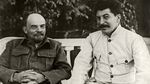
That is not to say that Stalin’s story is anything but fantastical: how a Georgian cobbler’s son born in an outpost of the Tsarist empire could help shatter the shackles of a 300-year dynasty, emerge as the supreme leader of one-sixth of the world’s landmass, and reshape the destiny of millions. Nor is it to deny the irrationality of the entire Leninist project: that violence, murder and mass repression are permissible today to build a more peaceful and just tomorrow. As Kotkin puts it, Stalin “intensified the insanity inherent in Leninism” – but his actions were mostly sanctified by that ideology.

Soviet historians used to present their past as the onward march of vast, impersonal forces (albeit with some erroneous detours). But Kotkin, building on the recent western historiography of Russia, emphasises the role of accident in Stalin’s times and the primacy of human actors.

more here.

Collected French Translations: Poetry by John Ashbery

Martory-and-Ashbery-strol-010Patrick McGuinness at The Guardian:

In a 1956 letter to Kenneth Koch, John Ashbery wrote: “I hate all modern French poetry, except for Raymond Roussel”, specifying: “I do like my own wildly inaccurate translations of some of the 20th-century ones, but not the originals”. The editors of this book rather solemnly gloss this as Ashbery musing on “his own hard work”, and his “difficulties in building a canon for his own new poetic journeys”. They may be right, but the comment is also funny and provocative, taking a dandy-esque line on the tired debates (tired even then and comprehensively exhausted now) about accuracy and fidelity in translation.

This book (along with its sibling, Ashbery’s Collected French Translations: Prose) is mostly non-canonical in focus. Though several poets may be familiar – Reverdy, Breton, Supervielle, Eluard – others, such as Daumal, Ganzo, Lubin, Blanchard,Roche, will not. The highlights include a few poems by the Swiss boxer-poet Arthur Cravan and the sequence of prose poems, from The Dice Cornet, by the the Jewish-Breton Max Jacob, who died on his way to a concentration camp in 1944. The contemporary with whom Ashbery feels most kinship is his friend and former companion, Pierre Martory, whose volume The Landscapist he translated in 2008.

more here.

Popular Science

Adam Alter in The Point:

ScreenHunter_892 Nov. 15 17.16To me, then, the essence of good science writing is not the sharing of particular ideas, but the sharing of general approaches to perceiving the world. A book doesn’t succeed because its readers can cite ten new facts; it succeeds because the next time those readers see a person behaving oddly, or the sun at a particular height in the sky, or two birds engaged in an elaborate courtship ritual, they look at those events differently and perhaps more deeply. This is a skill that cuts across every sphere of life and promises to bring great rewards across time.

More here.

How to tackle the backlash against gay rights?

Ken Roth interviewed in the blog of the World Economic Forum:

ScreenHunter_891 Nov. 15 17.12Almost 2.8 billion people are living in countries where identifying as gay could lead to imprisonment, corporal punishment or even death. In stark contrast, only 780 million people are living in countries where same-sex marriage or civil unions are a legal right.

These figures, reported by the International Lesbian and Gay Association in May 2014, show there is still much to be done in the effort to attain universal rights for LGBT (lesbian, gay, bisexual and transsexual) communities worldwide. Yet there has also been significant progress over the past 10 years, and this too should be acknowledged. In this extract from the Outlook on the Global Agenda 2015, Kenneth Roth, the Executive Director of Human Rights Watch, is questioned on what has been achieved so far and the challenges that still lie ahead.

What progress has there been on LGBT rights since you established Human Rights Watch’s LGBT rights programme 10 years ago?

There’s been enormous progress globally and locally. It’s important to note that the fight for LGBT rights is not a Western phenomenon; many of the governments at the forefront of the defence of LGBT rights are from the developing world. The historic LGBT resolution at the United Nations Human Rights Council, adopted in September 2014, was led by governments from the global south, primarily Latin America, and backed by others from all over the world, including South Africa. Even governments usually opposed to human rights enforcement, such as Cuba, Venezuela and Vietnam, supported it.

Yet, because of this global support, we’re recently witnessing an intensifying backlash. To a large degree, this is due to the greater visibility of the LGBT community in societies that have begun to recognize their rights. But LGBT people are also convenient scapegoats for embattled leaders, who are trying to rally support from more conservative sectors of their society. Whether it’s Uganda, Nigeria or Russia, the decision to scapegoat the LGBT community is an outcome of serious challenges to the regime, for widespread corruption or abusive authoritarianism.

More here.

Able-Bodied Until It Kills Us

June Thunderstorm in The Baffler:

PelletierDoes the gardener complain to her employer that raking leaves blisters her hand? Does the house painter point out that the job ranks in the top five professions for incidence of alcoholism? The job is so goddamned boring, not to mention dehydrating (the drying agent in the paint gets into your system), that drinking or smoking something with a kick all day is the only way to avoid hanging yourself from a scaffold. Who has encountered a special acronym for the tendonitis that afflicts janitors who empty the cardboard coffee cups out of grad students’ trash cans every day? If the janitors do get time off to see a doctor, they are likely to be told they have a bad case of “tennis elbow.”

You see, the assumption behind efforts to eradicate “ableism” seems to be that only some people—people with recognized disabilities, and not, for example, workers routinely in harm’s way—deserve protection from dust, paint, and lifting boxes. Only some people don’t like seeing themselves bleed. Only some people are damaged by inhaling trisodium phosphate. And only some people should get to have their papers graded easy…

It would be a mistake to throw away the concept of “disabled” (or “differently abled”), and with it decades of struggle on the part of disability rights activists—especially now, when differently abled people of all sorts are increasingly marginalized by the dismantling of welfare states. But if the concept of “disability” is to benefit the poor as well as the prosperous, then the word “class” must make a comeback. After all, the license to stop working “when it hurts” and to attribute shortcomings and mistakes to “health issues” (as opposed to “personal failures”) has constituted class privilege for a very long time. Meanwhile, the majority of the world’s people continue to suffer the unhealthful consequences of building, cleaning, scraping, assembling chipboards, painting, and raking leaves, while the university-minted elites sit around pushing paper, organizing anti-oppression workshops, and refreshing their Facebook pages as they complain about the pathological conditions of their own lives. So long as window-cleaners, maids, plumbers, janitors, food-servers, and others on the lower rungs of the occupational hierarchy are expected to perform the tasks required in their jobs, they will be in pain, and so long as they are paid as little as they are, there’s no escaping it.

Read the rest here.

Giving a V sign to poverty porn

Jasper Rees in The Telegraph:

Meera-125_02014110_3104106bIn a National Theatre rehearsal room, a stagehand is dumping a hundred or so empty plastic water bottles from a bin liner onto the floor. Set dressing tends to be a bit more fastidious, even decorous. The main reassurance that this isn’t theatre being done on the cheap is the presence of playwright Sir David Hare, artistic director elect Rufus Norris and the esteemed actress Meera Syal. For 20 minutes, Syal leads the cast of 25 South Asian actors in a run-through of the National’s forthcoming epic, Behind the Beautiful Forevers. It is perhaps the biggest play about waste ever mounted.

The source material is a remarkably powerful book by Katherine Boo, a New Yorker journalist who spent more than three years meticulously documenting lives in Annawadi, a teeming slum in the shadow of Mumbai airport. Behind the Beautiful Forevers was published simultaneously in the US and India in 2012, was widely hailed and won numerous awards: it shone a torch on endemic corruption and abject poverty, refusing to sentimentalise its subjects while giving them their humanity: Boo’s Annawadians quarrel and joke, strive and connive like the rest of us, but with a much shorter life expectancy. The book was bound to journey away from the page and the first person to pounce and option it was the omnivorous New York producer Scott Rudin. He gave the idea of staging it to Hare, who for Rudin had adapted Michael Cunningham’s novel The Hours. But Boo was not initially persuaded.

More here.

Daniel Bolger’s ‘Why We Lost’

Andrew J, Bacevich in The New York Times:

BookThe author of this book has a lot to answer for. “I am a United States Army general,” Daniel Bolger writes, “and I lost the Global War on Terrorism.” The fault is not his alone, of course. Bolger’s peers offered plenty of help. As he sees it, in both Afghanistan and Iraq, abysmal generalship pretty much doomed American efforts. The judgment that those wars qualify as lost — loss defined as failing to achieve stated objectives — is surely correct. On that score, Bolger’s honesty is refreshing, even if his explanation for that failure falls short. In measured doses, self-flagellation cleanses and clarifies. But heaping all the blame on America’s generals lets too many others off the hook.

Before retiring in 2013 as a three-star general, Bolger served 35 years on active duty, a career culminating with two tours in Iraq and another in Afghanistan. As he ascended through the ranks, he earned a Ph.D. in history at the University of Chicago. While teaching that subject at West Point and after returning to the field army, he published several books on military subjects. “Why We Lost” arrives well padded with war stories. Recounting combat actions in Iraq and Afghanistan, those stories testify to the bravery, resourcefulness and resolve of American soldiers — mainly sergeants, captains and lieutenant colonels. Yet “above that tactical excellence,” Bolger writes, “yawned a howling waste.” At the very top, the troops were ill-led. Perhaps so, but Bolger’s critique of that leadership distorts even as it purports to expose.

More here.

Friday, November 14, 2014

How Wikipedia reading habits can successfully predict the spread of disease

Elahe Izadi in the Washington Post:

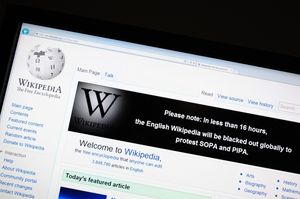
WikipediaPeople's Internet usage has opened a new door for predictive data. There are already some tools out there, such as Google Trends, which tries to “nowcast,” or show what's happening right now with the spread of certain diseases in the world. There have been studies, too, on whether Twitter can accurately predict how a disease is spreading.

But getting access to Google Trends or Twitter data is not always easy — or cheap. So a team of mathematicians, biologists and computer scientists got together to see if they could use something that's completely open and free: Wikipedia.

As it turns out, they could accurately forecast how influenza and dengue spread based purely on people's reading habits of Wikipedia articles. Last week, they showed how their algorithm could predict flu season in the United States. The full results of their research are published in this week's PLOS Computational Biology

Researchers looked at seven diseases and 11 countries over a period of three years, starting in 2010, and compared page views on Wikipedia articles about those diseases to official data from health ministries. By looking at readers' habits, they successfully predicted the spreads of influenza in the United States, Poland, Thailand and Japan and dengue in Brazil and Thailand at least 28 days in advance.

Read the rest here.

Obama: The Internet Is a Utility

Dashiell Bennett in The Atlantic:

ScreenHunter_890 Nov. 14 16.20A new “net neutrality” plan released by the White House on Monday morning includes an endorsement of an old idea that some activists have been pushing for years: the treatment of the Internet as a public utility.

In a letter and a video posted on the White House website, President Obama said he believes “the FCC should reclassify consumer broadband service under Title II of the Telecommunications Act,” allowing Internet Service Providers to be more heavily regulated. According to Obama, the change would acknowledge that “the Internet has become an essential part of everyday communication and everyday life.”

Obama's argument explicitly rejects proposed rules that FCC considered earlier this year to allow paid prioritization, a plan by which content providers can make deals with ISPs to get faster service to their websites. (Those rules are still under consideration and have not been finalized.) The White House proposal calls for no paid prioritization, no blocking of any content that is not illegal, and no throttling of Internet services, where some customers have their Internet speeds artificially slowed down.

The proposal also asks that any new rules include mobile broadband, which is already the primary access point for many users.

As the president himself reminds us, the FCC does not answer to him, and does not have to listen to (or even consider) his suggestions. So there are no guarantees that any of these rules will even come to pass. However, an endorsement by the White House would be the strongest push yet toward an FCC that treats all Internet traffic as equal.

More here.

Contaminomics: Why Some Microbiome Studies May Be Wrong

Ed Yong in Not Exactly Rocket Science:

Eppendorf-990x644You’ve got a group of people with a mysterious disease, and you suspect that some microbe might be responsible. You collect blood and tissue samples, you extract the DNA from them using a commonly used kit of chemicals, and you sequence the lot. Eureka! You find that every patient has the same microbe—let’s say Bradyrhizobium, or Brady for short. Congratulations, you have discovered the cause of Disease X.

Don’t celebrate yet.

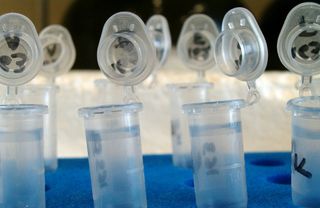
You run the exact same procedure on nothing more than a tube of sterile water and… you find Brady. The microbe wasn’t in your patients. It was in the chemical reagents you used in your experiments. It’s not the cause of Disease X; it’s a contaminant.

Versions of this story could be playing out in dozens of labs around the world. A team of scientists led by Susannah Salter and Alan Walker at the Wellcome Trust Sanger Institute has shown that DNA extraction kits, and other lab reagents commonly used in microbe studies, are almost always contaminated by low levels of microbial DNA.

Bradyrhizobium is a common culprit, but the team have identified a list of around 100 microbes whose DNA regularly turn up when sequencing supposedly “blank” tubes of water.

More here.