Why Telemedicine Needs to Redesign the Doctor’s Appointment

Kyle Vanhemert in Wired:

Dot_doc4-582x608Talking to doctors via video chat is the future. Talking to doctors via text message is the even better future we should hope for after that. A new partnership between insurance provider UnitedHealthcare and three leading telemedicine companies will make virtual doctor’s visits a reality for many Americans. The insurer is putting telemedicine on par with a trip to the doctor’s office, effectively saying a video visit is as good as brick-and-mortar check-up. It’s a significant step into the future of healthcare, and it points to an interesting design challenge. Setting aside for a moment the complex thicket of regulations governing telemedicine: When it comes to staying healthy, what’s the ideal user experience? NowClinic, Doctor on Demand, and American Well, the companies partnering with UnitedHealthcare, focus on a fairly straightforward brand of telemedicine: Letting patients confer with doctors over video. Their apps aim to virtualize the doctor’s appointment as it’s existed for decades. There are reasons you might want that. Video visits can make quality health care more accessible to people in rural areas. For the rest of us, they may simply be more convenient. An on-demand video appointment means no leafing through germy back issues of People in a waiting room. Brian Tran, product lead for Doctors on Demand, says he wants patients to think of the experience as “FaceTime with a doctor.”

Still, this version of telemedicine isn’t as easy as pointing a web cam at a physician. “We want to balance the elegance of a consumer app with a real clinical encounter,” says Katie Ruigh, American Well’s VP of Product. By “real clinical encounter,” Ruigh means all the stuff that make you feel you’re in the hands of an expert: the formal setting, the white coat, the stethoscope in the pocket. Ruigh says American Well encourages doctors who work at home to create a suitable back drop for video appointments, even suggesting in some cases that they hang their framed diplomas on the wall within the frame. She also points out that American Well looks for “webside manner” when evaluating doctors; when you’re not meeting face to face, things like eye contact and attentive listening become more important to the overall experience.

More here.

Taste, Sickness, and Learning

Davidson and Riley in American Scientist:

GirlImagine that you are dining at a familiar restaurant, and you order a new item on the menu—something that you’ve never tried before—and later that night you become violently ill. What caused you to get sick? Your illness could have been caused by a touch of the flu, a familiar food that was poorly preserved or prepared, an exposure to a toxin, or a favorite cocktail interacting badly with some medication taken earlier in the day. But even if you are aware of these and other alternative possibilities, there is a high probability that you will blame the novel dish for your illness. Indeed, the taste, and even the thought, of that new menu item may subsequently make your stomach turn, and you may decide never to eat that food again.

No doubt many of us have had this type of experience. Why are we so quick to place the blame for sickness on a novel-tasting food instead of blaming many other equally plausible possibilities? You may be thinking that blaming the unfamiliar food is the most logical response, but why does it seem that way? We’ve eaten new things many times before without becoming ill, and we’ve become ill before without eating anything new. What makes the connection between a novel taste and illness so strong that it can override these other types of experiences? Answers to these questions, as well as evidence for the reality of the phenomenon itself, were found not in anecdotes but in the results of experiments. Those results shook the foundations of psychology as it existed at the time, and led to a paradigm shift in thinking about how humans and other animals learn in general, and about the conditions under which learning occurs.

More here.

Who Will Pay Reparations on My Soul?

MI0001930751Jesse McCarthy at The Point:

In German, the word schuld means both guilt and debt. In the context of the American debate about race relations, “reparations” likewise reflects both sides of the coin. The principal difficulty with reparations, as with black history in America more generally, is that guilt is an unpleasant feeling, susceptible of clouding judgment. Guilt colors the whole conversation. Today nobody can deny that being charged with racism is one of the most incendiary charges one can levy in public life. People are genuinely mortified by the accusation; many fear to even approach racial topics, or tread though them like a minefield. This legacy of political correctness has proved double-edged. On the one hand, a certain kind of public discourse is far less poisonous and injurious than it was a few decades ago. On the other hand, we have made race a relentlessly personal issue, one that often shields and distracts us from the harder questions of structural inequality, racial hierarchy and social control.

Ta-Nehisi Coates, an editor for The Atlantic, has recently joined a long tradition of black American writers stretching back to David Walker by calling upon America to live up to its moral promise; to reimagine itself, in Coates’s words, through “the full acceptance of our collective biography and its consequences.” His essay “The Case for Reparations” has renewed the enduring debate about the possibility of reparations as payment for racial injustice in the United States.

more here.

Pine Ridge Indian Reservation Struggles With Suicides Among Its Young

Julie Bosman in the NYTimes:

29SUICIDEWEB1-master675Two teenagers hanged themselves in December. In the next three months, seven more young people were found dead, including Alanie Martin, 14, who was known for her love of basketball, cheerleading and traditional Indian hand games. When Santana killed herself in February, she followed another recent suicide of a boy who attended her school, Wounded Knee, so named for the 1890 massacre that occurred where the reservation stands today.

Many more youths on the reservation have tried, but failed, to kill themselves in the past several months: at least 103 attempts by people ages 12 to 24 occurred from December to March, according to the federal Indian Health Service. Grim-faced emergency medical workers on the reservation, which is the size of Delaware and Rhode Island combined, say they have been called to the scenes of suicide attempts sometimes several times a day.

Tribe officials, clergy members and social workers say they cannot remember such a high rate of suicides and attempts in such a short period of time on the reservation, which is already overwhelmed with high rates of unemployment, poverty, domestic abuse and alcohol addiction.

In 2013, five people, including adults and children, killed themselves in a single year, according to the Oglala Sioux tribe. But officials at Pine Ridge said they were mystified by the far more pronounced increase in the past several months and had searched, unsuccessfully, for answers.

As the suicides began to mount in February, the Oglala Sioux tribe president, John Yellow Bird Steele, declared an emergency on the reservation. In response, the Indian Health Service deployed additional counselors, but many people here say it is not nearly enough: There are only six mental health professionals on the entire reservation, which has a population of 16,000 to 40,000 members of the tribe.

Read the rest here.

Mark Twain and the Baltimore Riots

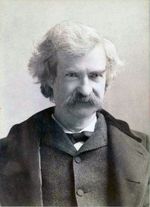
Mark_twain_saronyNicolaus Mills at The New York Observer:

At a time when Rudyard Kipling was thought to be the greatest authority on India and the British empire, Twain, a vehement foe of imperialism, provides a compelling alternative view. Twain is not naïve about India, but he is open to appreciating it. “So far as I am able to judge, nothing has been left undone, either by man or Nature, to make India the most extraordinary country that the sun visits on his round,” he writes in Following the Equator.

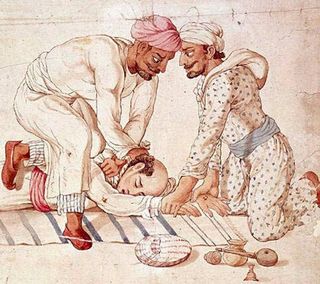
It’s a view that separates Twain from most of his Western peers when it comes to describing “thugs,” a term derived from Hindi that the British popularized in the early 19th century when they thought to get rid of the Indian gangs known as thugs that were responsible for widespread murders and robberies.

The assault on the thugs of India came in a campaign that peaked in the 1830s and 1840s, and in Following the Equator Twain relies heavily on the 1840 government report of W. H. Sleeman of the Indian Service, who is credited with eradicating the thug gangs of India.

more here.

What the stories of Reynard tell us about ourselves

150504_r26458-320Joan Acocella at The New Yorker:

Writers aiming to tell us about human life have often done so under cover of telling us about animals. Animals are fun—they have feathers and fangs, they live in trees and holes—and they seem to us simpler than we are, so that, by using them, we can make our points cleaner and faster. With Madame Bovary, you pretty much have to say who her parents were. With SpongeBob, you don’t, and this keeps the story moving. Most important, the use of animals to stand in for human beings creates a fertile ambiguity. We know that the author is not proposing a one-for-one equivalence between human and nonhuman life, but some kinship is certainly being suggested. Think of Swift’s Houyhnhnms, trotting down the road, their withers shining in the sun, saying sober, passionless things to Gulliver. How beautiful they are, and how creepy. Animal narratives have allowed writers with lessons on their mind to make art rather than just lessons.

Such tales are no doubt as old as animal paintings on cave walls. The earliest evidence we have of them is the beast fable, a form that is said to have come down to us by way of Aesop, a Greek storyteller who was born a slave in the sixth century B.C. Actually, no solid evidence exists that there ever was an Aesop, any more than there was a Homer. As with the Iliad and the Odyssey, we are talking about manuscripts that date from a period much later than the supposed author’s, and were probably assembled from a number of different fragments.

more here.

Breaking the communication barrier between dolphins and humans

Joshua Foer in National Geographic:

ScreenHunter_1169 May. 01 15.13Head trainer Teri Turner Bolton looks out at two young adult male dolphins, Hector and Han, whose beaks, or rostra, are poking above the water as they eagerly await a command. The bottlenose dolphins at the Roatán Institute for Marine Sciences (RIMS), a resort and research institution on an island off the coast of Honduras, are old pros at dolphin performance art. They’ve been trained to corkscrew through the air on command, skate backward across the surface of the water while standing upright on their tails, and wave their pectoral fins at the tourists who arrive several times a week on cruise ships.

But the scientists at RIMS are more interested in how the dolphins think than in what they can do. When given the hand signal to “innovate,” Hector and Han know to dip below the surface and blow a bubble, or vault out of the water, or dive down to the ocean floor, or perform any of the dozen or so other maneuvers in their repertoire—but not to repeat anything they’ve already done during that session. Incredibly, they usually understand that they’re supposed to keep trying some new behavior each session.

Bolton presses her palms together over her head, the signal to innovate, and then puts her fists together, the sign for “tandem.” With those two gestures, she has instructed the dolphins to show her a behavior she hasn’t seen during this session and to do it in unison.

More here.

Friday Poem

Biohack Manifesto

It is terrible to be trapped at DEF CON
with not even Ray Kurzweil’s
daughter to gaze upon
I know some of you wish
I would go wherever
my people go, the factory,
physical therapy, a telethon

No! says my mentor
Not this. This is too angry

This is too much about
Not that. Not that

I like to hack, sometimes,
the Hebrew Bible

I don’t think my mentor hacks
the Bible b/c it has too much
lame deaf blind circumcised in it

Not that. Not that in poetry
Didn’t we already have
Judd Woe? He was so good to us
so good and sad and sorry

The great thing about Judd Woe
is that now we don’t have to
keep looking for a disabled poet
We got him

Read more »

Thursday, April 30, 2015

Why have Indian-Americans lost the art of eating with their hands?

E10fa427-6748-448f-8556-f4336975be6b

Lavina Melwani in Scroll.in (Photo Credit: Lavina Melwani):

It was, however, left to Madhur Jaffrey, who grew up during the British Raj, to explain the deeper implications of the split personality left in Indians by colonialism. To eat with the hands or not to?

She explained that it begins at birth. In her family, the custom was for the grandmother to come with a jar of honey and dip the little finger into the baby’s mouth, writing Om with honey on the tongue. “It’s a first finger going in to the mouth and it’s a very, very sensual taste but also the finger of a loved one,” she said. “There’s something so intense about it, so loving about it that that love and sensuality stays within you forever. This is where you belong, this is your world – and it’s a lovely sensual world. My grandmother did it, my mother did it and I’m doing it.”

Eating with hands was regarded as routine, even when Jaffrey went to England as a teenager. “I was very comfortable in my skin and nothing was going to change me.”

The Raj co-existed with homegrown Indian culture, and Jaffrey recalled that though they always ate Indian food with their hands at their home in Delhi, they often ate “English food” with knife and fork. Indeed, certain concessions were made by even the British – curry and rice was eaten with fork and spoon, and even today Indians use these rather than a knife. Also, many Indian foods are just not meant to be eaten with cutlery. A textbook example is the Bengali fish with its many fine bones – fingers can do the detective work and discover the smallest of bones.

Heems recalled travelling to India on holiday with his family and eating at the five-star Bukhara – with their hands. His mother joked that they charged them thousands yet couldn’t even give them a knife and fork. The combined legacies of the Raj and the Diaspora had complicated things: he remembered his mother looking at all the wealthy people eating with their hands in the posh five-star surroundings and saying, “There are so many of these people here!” And he responded, “Mom, you are one of those people!”

“The Raj had this bunch of western people coming and telling us how to eat with these things – and one thinks, we had a good thing going before you came.” said Heems. “In the Diaspora we grow up with more shame while it’s very normal to eat with your hands in India. Here we wonder, do I eat with my hands? Do I smell like curry?”

Jaffrey recalled a Korean acquaintance who went to India and couldn’t bear to eat with her hands because she found it disgusting and dirty. Jaffrey asked her, “When you make love, would you make love with these tiny chopsticks? You are making love to all the contents of your plate – and eating them with that kind of pleasure.” Turning to Heems, she proclaimed, “Never allow anyone to tell you that you smell like curry. It’s a wonderful smell!”

More here.

Einstein as a Jew and a Philosopher

Dyson_1-050715_jpg_250x1298_q85

Freeman Dyson reviews Steven Gimbel's Einstein: His Space and Times in the NYRB (photo: Ferdinand Schmutzer/Austrian National Library/Anzenberger/Redux):

The later chapters of Steven Gimbel’s book describe Einstein’s deep involvement with the Zionist movement, promoting the settlement of Jews in Palestine. Einstein saw these settlements as a benefit both to Jews and to Arabs, giving Jews a place to live and prosper, and giving Arabs a chance to share the blessings of progress and prosperity. In 1929, when some Palestinian Arabs organized a violent opposition to Jewish settlement and killed some Jews, the British colonial government suppressed the rebellion and enforced a peaceful coexistence of Jews and Arabs. But Einstein understood that this enforced coexistence could not last. He wrote an article with the title “Jew and Arab” from which Gimbel quotes:

The first and most important necessity is the creation of a modus vivendi with the Arab people. Friction is perhaps inevitable, but its evil consequences must be overcome by organized cooperation, so that the inflammable material may not be piled up to the point of danger. The absence of contact in every-day life is bound to produce an atmosphere of mutual fear and distrust, which is favorable to such lamentable outbursts of passion as we have witnessed. We Jews must show above all that our own history of suffering has given us sufficient understanding and psychological insight to know how to cope with this problem of psychology and organization: the more so as no irreconcilable differences stand in the way of peace between Jews and Arabs in Palestine. Let us therefore above all be on our guard against blind chauvinism of any kind, and let us not imagine that reason and common-sense can be replaced with British bayonets.

Einstein worked with Chaim Weizmann, the leader of the Zionist organization, to raise money for the settlements and for the foundation of the Hebrew University of Jerusalem. But while he worked with Weizmann as a fund-raiser, he disagreed fundamentally with Weizmann’s aims for the future. In the early days, before Israel existed, Einstein was opposed to the idea of a Jewish state. Weizmann aimed from the beginning to establish a Jewish state in Palestine, and he lived long enough to see his dreams come true, serving as the first president of the State of Israel. After the State of Israel was established, Einstein gave it his full support. But he said that a peaceful and permanent presence of Jews in Palestine could only be possible if they worked side by side with Arabs under conditions of social and political equality.

Einstein felt a deep personal responsibility for the actions of the Jewish community to which he never wholeheartedly belonged. He tried with all his strength to stop the Jewish people from becoming another nationalistic culture glorifying military strength, like the militaristic German culture that he had hated as a child and repudiated as a teenager when he renounced his German citizenship. He continued to support Israel while severely criticizing it. At the end of his life, when he had become an American citizen, he felt an equally deep responsibility for the actions of the American community to which he never wholeheartedly belonged.

More here.

His English

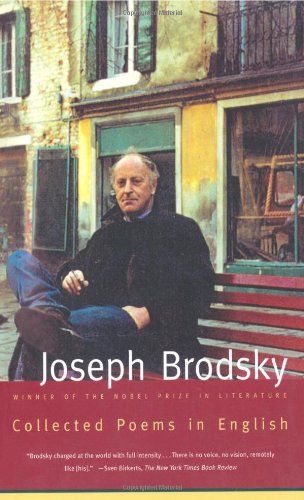
Brodsky-collected

Ann Kjellberg on Brodsky’s self-translations over at Book Haven:

Poetry, having so little purchase in our reading life, deserves not to be approached on the defensive, but a few recent books that consider the work of Joseph Brodsky from a world perspective have once again raised the question of how effectively he has rendered himself for us in English, and it seemed like a good moment to look a little more deeply into the matter. Brodsky was born in 1940, in Leningrad, and came to the United States as an involuntary exile from the Soviet Union in 1972. By his death in 1996 he had translated many of his own poems into English, a language in which he had by then taught and written for nearly half his life. Coming from the hand of their author, these works fall somewhere between wholly subsidiary translation and original creation. Whether their language is poetically autonomous or too distortingly shaped by its Russian consanguinities has been debated since Brodsky first spoke up in the literary culture of his adoptive land.

To understand the terrain, a few words about Russian prosody are in order. The Russian language allows up to three unstressed syllables in a single word, in contrast to English, which normally follows an unstressed syllable with a stress. This fact allows Russian tremendous metrical versatility. Whereas English poetry is overwhelmingly iambic, Russian poetry spreads equally among many metrical forms, using many other combinations of stressed and unstressed syllables besides the iamb. Furthermore, as Russian is a highly inflected language, word order is permeable, and rhymes are very plentiful, allowing for a proliferation of complex musical schemes in its very young poetic tradition. Formal expression is very, very rich in Russian poetry and an integral part of the poetic experience. This flexibility has also allowed for a very full tradition of formal translation from other languages. Part of the reason Boris Pasternak’s translations of Shakespeare were said to rival the original is that Pasternak had such a plenitude of means at his disposal. The fact that many great literary practitioners (including Brodsky) were driven into translation as a safe literary occupation during Soviet times further enriched the translated canon in Russian, influencing Brodsky’s own perception of the possibilities of formal literary translation.

Brodsky, who received very little institutionalized education and came of age entirely outside the Soviet poetic establishment, was recognized early by his peers as a prodigy of poetic forms. It was his ear that singled him out among the swarm of young aspirants that formed around his mentor Anna Akhmatova, not his wit or his philosophical acumen. Many now regard him as the greatest innovator of Russian prosody since its forms were stabilized in the nineteenth century. He is particularly known for his expansion of the dol’nik, a looser form that cross-breeds accentual-syllabic verse with its wilder accentual cousin. For Brodsky, the musical dimension of a poem was inextricably wound into its semantic heart: the forms had coloration and value, as keys do for composers and tints for painters. He often spoke of the greyness or monotony of certain feet (the amphibrach, for instance) as an antidote to poetic grandstanding: such plays of self-effacement against assertion are very important in his work. Rhyming and metrical problem-solving are also essential to the wit of his poems, which again inflects poetic authority with impishness and deeply colors the poems’ tone. He used the pacing of poetic forms contrapuntally against the plotting and logic of his poems. The forms themselves—their shading, their pathos, their modulation of energy, their inherent proportionality—were absolutely inseparable for him from the poems and from his practice as a poet.

More here.

Has the world been captivated or conquered by the culture of the United States?

51399bf0-ee73-11e4_1146312kKathleen Burk at The Times Literary Supplement:

In 1947, Simone de Beauvoir suggested that America was an empire of a new kind, driven less by the love of power than by “the love of imposing on others that which is good”. On the evidence in this book, that was about the nicest thing she said about the US. She was an exemplar of those Europeans who felt contempt for America because it was too cheerful, too self-confident, too non-European. She embarked on a road trip of her own, and her conclusion was that the problem with Americans and America was that they had no comprehension of evil. She tried to find “squalor, weariness, hatred, cruelty and revolt” in a journey through the Southern states, but it was not until she arrived in Chicago that she was pleased, or perhaps relieved, to experience the city’s sombre air (Conrad comments that this had more to do with soot than with philosophical gloom). In the Chicago stockyards, she discovered “dark and murky deeds”, where cowboys on horseback ushered their herds into what she called “the concentration camp”. It was only here, Conrad points out, that she finally saw a moral equivalence between the continents.

European visitors have long been driven to find the worst that they could. Those who came in the 1820s, 30s and 40s, particularly from Britain, found what they looked for. Frances Trollope found bad manners and equality, which she hated; Charles Dickens found that Americans were pushily obtrusive, and their institutions, in particular their prisons, were worse than he had thought; almost all visitors hated slavery. Jean-Paul Sartre looked even more assiduously than Beauvoir for appalling discoveries and found them in Americans themselves, whom he called “phenomenally stupid”, cowed by superstition, and in awe of machines. America was a monster. Worse, Americans were irrepressibly cheerful, which Cyril Connolly ascribed to an overdose of vitamins and calories.

more here.

The History of ‘Thug’

Megan Garber in The Atlantic:

ScreenHunter_1168 Apr. 30 18.25Last night, as Baltimore erupted with riots and violence and anger, the city's mayor, Stephanie Rawlings-Blake, took to Twitter to share her thoughts on the events sweeping the city. The mayor talked about “the evil we see tonight.” She promised that “we will do whatever it takes” to stop the destruction and restore “the will of good.” Because “too many people,” she said, “have invested in building up this city to allow thugs to tear it down.”

“Thugs.” “Thug.” The derision here—dismissive, indignant, willfully unsympathetic—is implied in the sound of the word itself. Spoken aloud, “thug” requires its utterer first to sneer (the lisp of the “th”) and then to gape (the deep-throated “uhhhh”) and then to choke the air (that final, glottal “g”). Even if you hadn't heard the word before, even if you had no idea what it meant, you would probably guess that it is an epithet. “Thug” may have undergone the classic cycle of de- and re- and re-re-appropriation—the lyric-annotation site Genius currently lists 12,590 uses of “thug” in its database, among them 19 different artists (Young Thug, Slim Thug, Millennium Thug) and 10 different albums—but the word remains fraught. In a series of interviews before last year's Super Bowl, the Seattle Seahawks' Richard Sherman—who had been described by the media as a “thug,” and who is African American—referred to “thug” as an effective synonym for the n-word. And in Baltimore over the past few days, the term has been flung about by commenters both professional and non-, mostly as a way of delegitimizing the people who are doing the protesting and rioting. To dismiss someone as a “thug” is also to dismiss his or her claims to outrage.

More here.

David Simon on Baltimore’s Anguish: Freddie Gray, the drug war, and the decline of “real policing.”

Bill Keller's interview with David Simon, creator of HBO's The Wire on The Marshall Project:

SIMON-3The situation you described has been around for a while. Do you have a sense of why the Freddie Gray death has been such a catalyst for the response we’ve seen in the last 48 hours?

DS: Because the documented litany of police violence is now out in the open. There’s an actual theme here that’s being made evident by the digital revolution. It used to be our word against yours. It used to be said — correctly — that the patrolman on the beat on any American police force was the last perfect tyranny. Absent a herd of reliable witnesses, there were things he could do to deny you your freedom or kick your ass that were between him, you, and the street. The smartphone with its small, digital camera, is a revolution in civil liberties.

And if there’s still some residual code, if there’s still some attempt at precision in the street-level enforcement, then maybe you duck most of the outrage. Maybe you’re just cutting the procedural corners with the known players on your post – assuming you actually know the corner players, that you know your business as a street cop. But at some point, when there was no code, no precision, then they didn’t know. Why would they? In these drug-saturated neighborhoods, they weren’t policing their post anymore, they weren’t policing real estate that they were protecting from crime. They weren’t nurturing informants, or learning how to properly investigate anything. There’s a real skill set to good police work. But no, they were just dragging the sidewalks, hunting stats, and these inner-city neighborhoods — which were indeed drug-saturated because that's the only industry left — become just hunting grounds. They weren’t protecting anything. They weren’t serving anyone. They were collecting bodies, treating corner folk and citizens alike as an Israeli patrol would treat the West Bank, or as the Afrikaners would have treated Soweto back in the day. They’re an army of occupation. And once it’s that, then everybody’s the enemy. The police aren’t looking to make friends, or informants, or learning how to write clean warrants or how to testify in court without perjuring themselves unnecessarily. There's no incentive to get better as investigators, as cops. There’s no reason to solve crime. In the years they were behaving this way, locking up the entire world, the clearance rate for murder dove by 30 percent. The clearance rate for aggravated assault — every felony arrest rate – took a significant hit. Think about that. If crime is going down, and crime is going down, and if we have less murders than ever before and we have more homicide detectives assigned, and better evidentiary technologies to employ how is the clearance rate for homicide now 48 percent when it used to be 70 percent, or 75 percent?

More here.

Early Puberty: Causes and Effects

Dina Fine Maron in Scientific American:

GirlsFor the past two decades scientists have been trying to unravel a mystery in young girls. Breast development, typical of 11-year-olds a generation ago, is now occurring in more seven-year-olds and, rarely, even in three-year-olds. That precocious development, scientists fear, may increase their risk for cancer or other illnesses later in life. Time has not resolved the puzzle. Nor is there any indication that this trend is slowing. More and more families are finding themselves in the strange position of juggling stuffed animals and puberty talks with their first and second graders.

Obesity appears to be the major factor sending girls into these unchartered waters. The rate of obesity has more than doubled in children over the past 30 years. And whereas only 7 percent of children aged six to 11 were obese in 1980, nearly 18 percent were obese in 2012. The latest studies, however, suggest that weight gain does not explain everything. Family stress and chemical exposures in the environment may also play a role, but the data do not yet paint a very clear picture of their contribution. As for boys, the data are murkier, but one 2012 study did suggest that they, too, may be starting puberty earlier than before—perhaps by as much as six months to two years.

More here.

“When the occupation is over, then I’ll allow myself to dream”

Sandy Tolan in Salon:

Excerpted from “Children of the Stone: The Power of Music in a Hard Land,” Sandy Tolan’s book about the dream of one young musician to build a music school in the occupied West Bank. The founder, French-trained violist Ramzi Aburedwan, once a stone-throwing child of the first Palestinian intifada, opened Al Kamandjati (Arabic for “The Violinist”) in large part to “protect Palestinian children from the soldiers.” Every year Al Kamandjati serves hundreds of Palestinian children, who use music to help them navigate checkpoints and military incursions while maintaining hope for an independent state of their own.

Summer 2013

Near Hebron, West Bank

Children_of_the_stoneRasha Shalalda, the young Palestinian flutist, smiled at her visitors from an open doorway, quickly beckoning them forward and up the stairs of her house in the family’s ancestral village of Sa’ir. Upstairs she directed the visitors to an overstuffed gold couch tossed with embroidered Palestinian pillows, beneath framed quotations from the Qur’an and a framed inscription in Arabic: “The heart of a mom is a flower that never dies.” She brought juice and cookies, then pulled out a photo album. Rasha flipped through pictures of her parents, of Shehada, Alá, and their sisters in younger days, and of her grand wedding in Sa’ir three years earlier. In one picture Rasha and her groom stood under a flowered arch covered with shining leaves. love story, read the caption, in English. As she turned the pages, Rasha’s son, Amir, two years old, picked up a blue toy car, dropped it, and began to stomp on it, sending bits of plastic flying across the tile floor. Rasha paused at photos from Italy. “I want to go back there,” she said wistfully. “The two important things in Italy were respect and freedom. Then coming back here, and looking at how things are, I wish I hadn’t gone.”

More here.

Thursday Poem

Breaking Pitch

My father raises his hand to signal “enough,”
but I’m still pitching, and the ball spins
off my fingertips—a breaking pitch
with so much stuff on it my imaginary batter
is too baffled to swing, so much stuff
the angels whistle, the crows near
the garbage cans take off in a flurry
of caws, and the mosquitoes burst in midair,
so much stuff my father, fear
in his eyes, hits the pavement,
behind him glass shattering.

Above the garage, Mrs. Golub, who runs
a vacuum cleaner over her wood floors every two hours,
yells out the window,“I told you something
bad would happen if you let that kid play here.”
And Miss Lamar pushes her long
nose into the screen, “See if my car
has any glass on it,” and Mr. Gorelick,
who sells silk ties to posh men’s shops,
shouts, “Clean up the mess, boy.”

I hear the cars on Clayton Road,
their tinny horns, the wind shaking
down leaves, the sound of the breaking
pitch trembling the wires that cross
from neighborhood to neighborhood, echoing
in shells strung from my best friend’s
doorway, the white horsehide glinting
in the sun, a flash of light,
a prophecy of greatness.

Shaking his head, my father comes toward me,
his tightened fists warning me that I’ll be sorry.
“Helluva curve,” he mutters, “helluva curve.”
.

by Jeff Friedman
from 10×3 Plus, #7

My Baltimore Riots

11174306_10153048647434425_3052889265985397003_oNote: On Monday afternoon, several days of protest in Baltimore over the police killing of Freddie Gray transformed into a riot that lasted through the night. As of Tuesday, there was no longer a riot to speak of. Rather, it had become a military occupation of West Baltimore, which saw the return of protests, and de facto martial law in the rest of the city during the nighttime, which is scheduled to last until next week. This essay concerns the riot, not the ongoing military occupation or protests against it.

Akim Reinhardt in The Public Professor:

Once things got bad, and then worse, the usual dialog surrounding riots emerged. I’m not talking about the grotesque racists who come out of the woodwork to infest social media. I mean serious conversations.

On one side you had people like Baltimore native, former Baltimore Sunjournalist, and The Wire co-creator David Simon. He bemoaned the tragedy of violence and made ardent calls for peace. In Simon’s words:

The anger and the selfishness and the brutality of those claiming the right to violence in Freddie Gray’s name needs to cease. There was real power and potential in the peaceful protests that spoke in Mr. Gray’s name initially, and there was real unity at his homegoing today. But this, now, in the streets, is an affront to that man’s memory and a dimunition of the absolute moral lesson that underlies his unnecessary death. If you can’t seek redress and demand reform without a brick in your hand, you risk losing this moment for all of us in Baltimore.

Then there were voices like Baltimore native and senior editor for The Atlantic,Ta-Nehisi Coates, who reminded us of the endemic violence perpetrated by the Baltimore Police Department for decades. Political officials may be well meaning, he said, but are nonetheless responsible for overseeing the kinds of policies that led to Freddie Gray’s death. Therefore, when they call for peace without offering a rationale for his death or any concrete plans to prevent future police violence, they are complicit in his death. In Coates’ words:

When nonviolence is preached as an attempt to evade the repercussions of political brutality, it betrays itself. When nonviolence begins halfway through the war with the aggressor calling time out, it exposes itself as a ruse. When nonviolence is preached by the representatives of the state, while the state doles out heaps of violence to its citizens, it reveals itself to be a con. And none of this can mean that rioting or violence is “correct” or “wise,” any more than a forest fire can be “correct” or “wise.”

Both Simon and Coates are very smart social critics and darlings of the political Left. And though they seem to stand at odds on the issue, both of them are actually correct despite their opposing views.

More here.