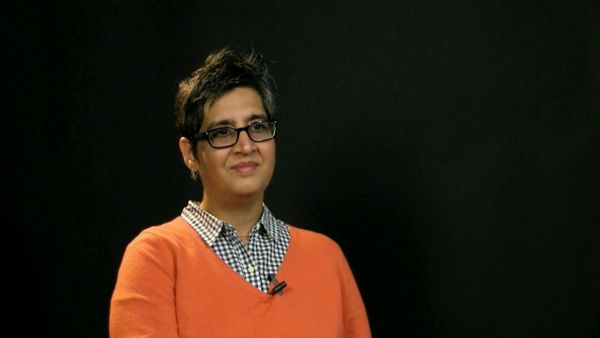
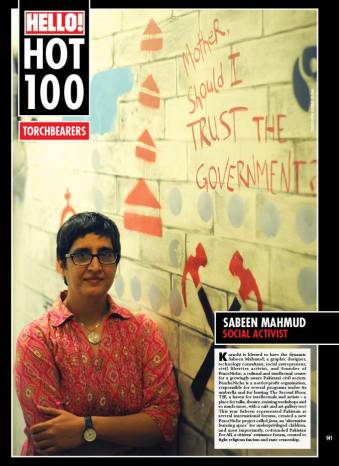
Sabeen Mahmud. Artist, activist, intellectual; a woman with a true heart. A hero for many.
Murdered in Karachi on Friday, April 24, leaving an immense void.

by Brooks Riley
Tim Maudlin at the PBS Nova website:
This passage from the 2012 book “The Grand Design” set off a firestorm (or at least a brushfire) of controversy. Has philosophy been eclipsed by science in the quest for understanding reality? Is philosophy just dressed-up mysticism, disconnected from scientific understanding?
Many questions about the nature of reality cannot be properly pursued without contemporary physics. Inquiry into the fundamental structure of space, time and matter must take account of the theory of relativity and quantum theory. Philosophers accept this. In fact, several leading philosophers of physics hold doctorates in physics. Yet they chose to affiliate with philosophy departments rather than physics departments because so many physicists strongly discourage questions about the nature of reality. The reigning attitude in physics has been “shut up and calculate”: solve the equations, and do not ask questions about what they mean.
More here.
Kenan Malik in Pandaemonium:
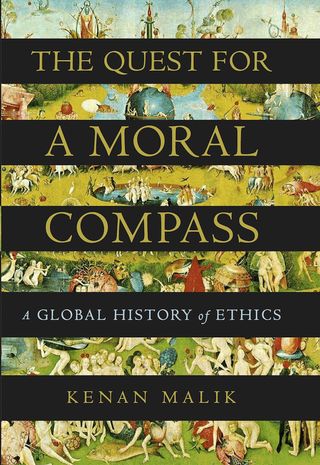
But what about our understanding of morality? To what extent will the rise of China and the decline of Europe and America transform the way we understand moral values? Will universalism be seen merely as a form of Western particularism? To what extent will ‘everything be relativised’?
The story of this book is the story of how the centre of gravity of moral thinking has historically shifted. In the ancient world, Greece, Israel, Persia, India and China were all sources of civilization and of distinctive moral philosophies. The concepts that developed at each source were shaped by the particularities of the local culture and social needs; there were, nevertheless, also common themes that spanned continents, from the idea of virtue to the Golden Rule. The rise of monotheism, and in particular of Christianity, transformed the discussion of ethics in Europe, establishing the idea of rule-based morality, guided and anchored by a divine intelligence, and developing ideas of universalism. The emergence of Islam at the end of the first millennium CE, and its expansion through the beginning of the second, created a new centre of intellectual gravity. Drawing upon the heritage of Greece, Persia and India, as well as the Judaic and Christian traditions, the Islamic Empire came to be a bridge both between the Ancient world and early modernity and between East and West. The only empire that in its day could challenge the philosophical and technological supremacy of the Islamic Empire was China, where the arrival of Buddhism from India triggered a renaissance in Confucian thinking. What we can see in this history is not moral progress, in the sense we can witness scientific or technological progress, but the maturing, development and deepening of moral philosophy.
More here.
Carl Zimmer in his excellent blog, The Loom:

There are thousands of genetic disorders that can occur if a mutation happens to strike an important piece of DNA. Hemophilia, sickle cell anemia, cystic fibrosis– the list goes on and on. As I wrote in the Atlantic in 2013, a particularly cruel genetic disorder, fibrodysplasia ossificans progressiva causes people to grow a second skeleton. It’s caused by a mutation that changes a single “letter” of a single gene, called ACVR1. The protein encoded by the gene doesn’t work properly, triggering a wave of changes in people’s bodies, with the result that when they heal from a bruise, they replace entire chunks of muscle with new bone.
In some cases, people can offset many of the symptoms of genetic disorders with simple changes, like watching what they eat. In other cases, like hemophilia, they have to take regular doses of drugs to remain healthy. In other cases, like fibrodysplasia ossificans progressiva, there’s no effective treatment yet.
For decades, scientists have tried to develop a new way to treat genetic disorders like these: to heal the patient, heal the gene.
More here.
Robert Collins in The Telegraph:
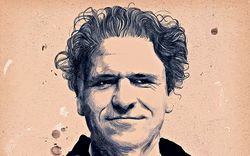
In between all this, he has written screenplays – including the film adaptation of Where the Wild Things Are, directed by Spike Jonze in 2009 – and founded an organisation that helps American university students find funding. He runs his own publishing house and literary magazine, McSweeney’s. And he has set up another literary magazine, The Believer, as well as founding a series of oral histories about human rights crises, a theme he covered in his 2009 book Zeitoun, which recounted the ordeal of a Syrian-American arrested in New Orleans in the chaos following Hurricane Katrina. Eggers is not so much a literary darling as a one-man social enterprise.
More here.
Salley Vickers in The Guardian:
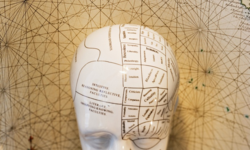
…The neural information that has made waves, however, is the fact that scans indicates the brain’s chemistry consistently determines a decision prior to our consciously making that decision. So when I deliberate over a menu and finally choose a mushroom risotto over a rare steak, my brain has anticipated this before I am aware of my choice. At first, this looks alarming. I am not the mistress of my gastric fate, my brain chemistry is. But that is to fail to recognise that my brain’s chemistry may be responding to a vast array of accumulated information about my reading of restaurant reviews, my health, the kind of day I’ve had, my relationship to my weight, my dining companion, my views on animal rights. This is a process not dissimilar to intuition, which is no more than the mind’s ability to process a number of clues too complex to be consciously registered.
More here.
Bolchevescent
.
You stand far from the crowd, adjacent to power.
You consider the edge as well as the frame.
You consider beauty, depth of field, lighting
to understand the field, the crowd.
Late into the day, the atmosphere explodes
and revolution, well, revolution is everything.
You begin to see for the first time
everything is just like the last thing
only its opposite and only for a moment.
When a revolution completes its orbit
the objects return only different
for having stayed the same throughout.
To continue is not what you imagined.
But what you imagined was to change
and so you have and so has the crowd.
.
by Peter Gizzi
from The Outernationale
publisher: Wesleyan, Middletown CT, 2007
Richard Lourie in the New York Times:
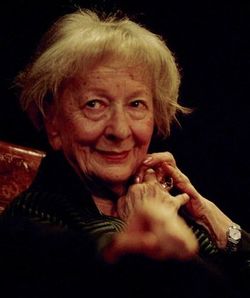
Born in the countryside, Szymborska moved in 1931 to Krakow, city of kings and culture, and lived there until her death. Though her life was most eventful inwardly, there was no escaping history in Poland. Indeed, Szymborska lived in four quite different Polands: the anxious interwar Poland that had regained its independence in 1918 after more than a century’s absence from the map of Europe; the Poland of the Nazi occupation, the death camps and uprisings, which began shortly after she turned 16; postwar Poland under Soviet domination, where she herself was a Communist until breaking with the party in 1966, about the time she was finding her voice as a poet; and, last, post-Soviet Poland, free, successful, blessedly ordinary.
Szymborska neither evades nor fetishizes her country’s travails. She can be tough and blunt toward them, as in the poem “Starvation Camp Near Jaslo,” where “the meadow’s silent, like a witness who’s been bought.” But Szymborska is always more interested in the individual. After saying, “History rounds off skeletons to zero. / A thousand and one is still only a thousand,” the poem goes off to wonder about that uncounted individual. In “Innocence,” she muses on young German girls blissfully unaware they were “conceived on a mattress made of human hair,” and in “Hitler’s First Photograph” she has a little macabre fun at the Führer’s expense: “And who’s this little fellow in his itty-bitty robe? / That’s tiny baby Adolf, the Hitlers’ little boy!” Of course, as with any newborn, you can’t help wondering what his future will turn out to be: “Whose tummy full of milk, we just don’t know: / printer’s, doctor’s, merchant’s, priest’s?”
More here.
James Crabtree in Prospect:
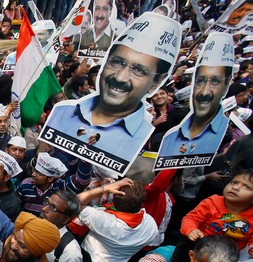
Not a man known for modesty, he began humbly enough, painting himself “not as the Prime Minister, but as the Prime Servant.” Dressed in a white kurta and flamboyant, flowing red polka-dot turban, he stressed his separation from India’s establishment, too: “Brothers and sisters, I am an outsider for Delhi… I have no idea about the administration and working of this place.” His hands jabbing the air for emphasis, he even made brief nods toward harmony between India’s many religions, and the importance of the rights of women—mentions that drew modest praise from anxious liberals worried that Modi might prove to be a right-wing firebrand, in hoc to the Hindu nationalist base of his Bharatiya Janata Party (BJP).
Beyond the showmanship, there were hints of substance. As wind whipped around the ramparts, Modi laid out themes that would define his early period in power: an economic revival after years of stagnation; transforming India into a Chinese-style manufacturing powerhouse; and a focus on the concerns of the poor, from building toilets to sprucing up squalid streets. Yet on one issue—indeed, perhaps the most important that lay behind his electoral landslide—Modi had surprisingly little to say: corruption.
More here.
Thanks to Farrukh Azfar for having introduced me to Telemann when we were both nineteen and also for sending me this earlier today.
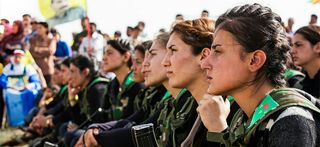
Meredith Tax in Dissent magazine image (Biji Kurdistan/Flickr):
While the Syrian opposition is understandably bitter that the YPG and YPJ withdrewmost of their energy from the war with Assad, leftists worldwide should be watching the remarkable efforts being made by Syrian Kurds and their allies to build a liberated area where they can develop their ideas about socialism, democracy, women, and ecology in practice.
They have been working on these ideas since 2003, when the PYD (Democratic Union Party) was founded by Syrian members of Turkey’s banned Kurdish party, the PKK. By January 2014, they had established a bottom-up system of government in each canton, with political decisions made by local councils and social service and legal questions administered by local civil society structures under the umbrella of TEV-DEM (Democratic Society Movement). TEV-DEM includes people from all the ethnic groups in the cantons, who are represented by more than one political party, but most of its ideological leadership comes from the PYD.
According to Janet Biehl, who was part of an academic delegation to the Cizîre canton in December 2014, the district commune is the building block of the whole structure. Each commune has 300 members and two elected co-presidents, one male, one female. Eighteen communes make up a district, and the co-presidents of all of them are on the district people’s council, which also has directly elected members. The district people’s councils decide on matters of administration and economics like garbage collection, heating-oil distribution, land ownership, and cooperative enterprises. While all the communes and councils are at least 40 percent women, the PYD—in its determination to revolutionize traditional gender relations—has also set up parallel autonomous women’s bodies at each level. These determine policy on matters of particular concern to women, like forced marriages, honor killings, polygamy, sexual violence, and discrimination. Since domestic violence is a continuing problem, they have also set up a system of shelters. If there is conflict on an issue concerning women, the women’s councils are able to overrule the mixed councils.
In short, the Rojava revolution is fulfilling the dreams of Arab Spring—and then some. If its ideas can be sustained and can prevail against ISIS, Kurdish nationalism, and the hostile states surrounding the cantons, Rojava will affect the possibilities available to the whole region. So why isn’t it getting more international support?
More here.

“The last time I was in New York,” Karl Ove Knausgaard wrote recently in The New York Times Magazine, in his account of traveling through the United States, “a well-known American writer invited me for lunch. . . . I tried desperately to think of something to say. We had to have something in common, we were about the same age, did the same thing for a living, wrote novels, though his were of considerably higher quality than mine. But no, I couldn’t come up with a single topic of conversation. . . . When we got back to Sweden, I received an email from him. He apologized for having invited me to lunch, he had realized he never should have done it and asked me not to reply to his email. At first I didn’t understand what he meant. . . . Then I realized he must have taken my silence personally. He must have thought I didn’t find it worth my time talking to him.”
Knausgaard doesn’t reveal the identity of the American writer he had lunch with. But I will: It was me. I may be the first reviewer of Knausgaard’s autobiographical works who has appeared in one of them. Therefore, I’m in a perfect position to judge how he uses the stuff of his life to fashion his stories. Ever since Knausgaard turned me into a minor character, I have an inside track on what he’s doing.
more here.

When we think of Terminal Island, after all, what do we imagine? Do we know that it was once (in a manner of speaking) two islands, Rattlesnake Island and Deadman’s Island, before they were joined, first by a jetty and then by more direct intervention? Do we know that it was, initially, “a tourist destination with no hotels … a recreational spot for those who loved the outdoors and nature”? As early as 1888, it was declared, by The Times, to be an interesting destination, if “rough looking.”
Hirahara and Knatz are smart and detailed on this early history, framing the development of Terminal Island through the filter of the growth of Los Angeles itself. By 1891, there was a rail line, and the island was renamed, as bathhouses and hotels were built.
A decade later, the authors tell us, “People flocked to Terminal Island for the summer. … The Times extolled the ‘virtues’ of the island: the best French chef, everything was clean and fresh, and … [o]n holidays like July the Fourth, there was such a demand for bathing suits that it was hard to rent a dry one.”
more here.
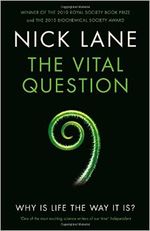
There is a black hole at the heart of biology,” says Nick Lane, who is emerging as one of the most imaginative thinkers about the evolution of life on Earth. The hole surrounds the transition around 1.8bn years ago from simple microbes, which had monopolised the planet for the previous 2bn years, to the complex “eukaryotic” cells that went on to become animals, plants, fungi and protozoa. For Lane, a biochemist at University College London, the little discussed origins of cellular complexity are The Vital Question for biologists seeking to understand why life is the way it is.
Yet scientists have paid much more attention to how the first primitive cells originated on the young Earth, when it was some 500m years old. Lane’s latest book, following on from his prizewinning Life Ascending(2009), does, in fact, start with the origins of life. Indeed, he puts forward a convincing argument for the first living cells having formed around alkaline hydrothermal vents. Only in this fiercely hot deep-sea environment could the chemical conditions and energy flow promote hydrogen to react with carbon dioxide and form self-replicating organic compounds.
more here.
I have lost a personal friend and hero. I have not stopped crying since hearing the news of this brutal murder. In my last note, I had said to her: “May you live to thrive and flourish and blossom and continue to serve your country and your fellow humans with the same sensitivity and humility.” Alas, my darling Sabeen, you have given your life for your cause. It seems Mustafa Zaidi wrote this sher for you my love:
Mein kis kay hathoun pe apna lahoo talaash karoun
Tamaam shehr ney pehnay huay hain dastanay
(Translation: On whose hands should I look for my blood? The entire city is wearing gloves)
Lie on her breast,
I vex my heart alone,
She is at rest.
Beena Sarwar in her blog Journeys to Democracy:
In shock and grieved beyond words at this horrible news that our dear friend and comrade Sabeen Mahmud has been shot dead, her mother in critical condition in hospital. They were returning from the event Unsilencing Balochistan (Take 2) held at The Second Floor (T2F) [NOTE: the facebook event link posted above mysteriously disappeared then reappeared]. It was tremendously brave of Sabeen to allow the event to be hosted there given that Balochistan is essentially a ‘no go’ area. Even as we grieve our friend we refuse to be silenced. “She always spoke out. We must honour her legacy of speaking out,” said Mohammad Jibran Nasir when I spoke to him just now. “We will not let Balochistan be a no-go area”. “They want to make us into a nation of intellectual cripples, no discussion, no dissent, no dialogue,” said Mona Kazim Shah. “How many will they kill?”
This intellecticide cannot continue. Sabeen… all-inclusive humanist, only child of her single mother, cat-lover, a gentle and compassionate soul who did all in her power to create spaces and platforms to give a voice to the less fortunate, the vulnerable, the under-privileged, those whose for whom her heart beat. Rest in peace my friend. I can’t believe you are no more. We will keep speaking out. We will honour your legacy.
More here.