Pansexual Free-for-All: My Time As A Writer of Kindle Erotica

Porn

Matthew Morgan in The Millions:

I began this life-changing journey with an attempt to define the word erotica, because I’d never read or written anything with that explicit label before. How in depth are we talking? How specific does this genre get? Erotica had always reminded me of the word “pornography” dressed up for a night at the opera. (Though I don’t really mind the word pornography either: the next time you see a porn video, picture James Joyce’s ghost hovering in the background moaning sensually.) I thought I knew what I was dealing with, having heard a lot about 50 Shades of Gray and dinosaur erotica and all that from the zeitgeist and other grotesque corners of the Internet. I thought that erotica could be as explicit as regular pornography, but it also required a more delicate, emotional touch. This turned out not to be true. After doing some important, serious research, I found out that actually erotica could be just regular old smut, and so I was free to ignore romance and focus instead on the repeated use of the phrase “hard as iron” and descriptions of how hot peoples’ breath was.

I first had to choose my hook, my concept. Perusing the available archives on Amazon’s Kindle section, I quickly learned that there were thousands of erotic short stories available written by willing, easily excited amateurs like myself, and I would have to distinguish my work if I wanted any of that sweet, sexy cash. A lot of the stories had a hook, usually involving paranormal creatures, or just regular creatures, creatures that shape-shift into human form and then have amazing sex with other people (that transformation is very important: apparently overt bestiality, or rape, are banned from Kindle short stories, so, you know, there’s a line drawn somewhere). These shape-shifter sex creatures could be anything from dolphins to bears to whales. Moby-Dick joke. Because I had to put in my due diligence, I decided I’d have to read and research some of these stories, to help settle on a concept and structure for my own sex-melee. I ended up investing $2.99 in a shorty story by Olivia J. Rose titled “Dominated by the Dolphins” (I almost couldn’t decide between this one and “Humped by the Humpback“). I read the whole thing and I can honestly tell you that I don’t even know what I’m talking about anymore. I’ve definitely never read anything like it. But the main takeaway was: who the hell am I to judge if someone wants to get their rocks off, and nobody’s getting hurt? That’s not such a bad thing. You go for it, Olivia Rose. Not every book needs to be Heart of Darkness, and if you’re story is a BBW shape-shifter erotica called “Dominated by the Dolphins,” I’ll have to insist that it has nothing to do whatsoever with King Leopold’s Congo.

Deciding my hook was by far the worst part. I couldn’t decide. Every nook and cranny of paranormal genre junk was already occupied with hundreds of stories filled with passionate creature-based sex: goblins, werewolves, phantoms, steampunk vampires — I wanted to choose a relatively untapped market, but that wound up being impossible.

More here.
Friday, February 13, 2015

Rhythms and Rituals

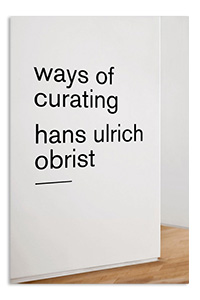
Waysofcurating

Hans Ulrich Obrist in conversation with Marina Abramović in Work In Progress:

MARINA ABRAMOVIĆ: All right, so twenty-one years ago Hans was twenty-one. We met in Hamburg; he was the protégé of Kasper König, and he was curating a large show, and he was completely mad. This was my first impression. I said to myself, Oh my God, this guy is going to do something special, extraordinary; something different than anybody else. Do you remember our meeting?

HANS ULRICH OBRIST: Yes, it was actually when we did the show called the “Broken Mirror,” which was a painting show. It was a big show for me. Until then I had only ever curated an exhibition in my kitchen which only had twenty-nine visitors in three months. “Broken Mirror” was in the Deichtorhallen, and I was kind of spaced out. I had just installed hundreds of paintings, and then Marina and I met that evening in a hotel bar near the railway station.

MA: I remember your life had been totally upset by your sleep schedule because you were reading the biography of Leonardo da Vinci, and da Vinci wrote that if you manage to sleep only fifteen minutes and then wake up, do things, and then sleep another fifteen minutes, but never longer than fifteen minutes, you can create a completely new kind of a life for yourself. When we met, you had been doing this for an entire year, during which you were really on the edge of madness. It was amazing because it’s crazy—fifteen minutes!

More here.

Lee Smolin and the Status of Modern Physics

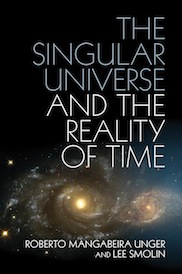
Cover-SURT

Joe Boswell in Scientia Salon:

Adam’s Opticks: Hi Lee, central to your thesis as outlined in Time Reborn, and in its recent follow-up The Singular Universe (co-authored with Roberto Mangabeira Unger) [5], is a rejection of the “block universe” interpretation of physics in which timeless laws of nature dictate the history of the universe from beginning to end. Instead, you argue, all that exists is “the present moment” (which is one of a flow of moments). As such, the regularities we observe in nature must emerge from the present state of the universe as opposed to following a mysterious set of laws that exist “out there.” If this is true, you also foresee the possibility that regularities in nature may be open to forms of change and evolution.

My first question is this: Does it make sense to claim that “the present moment is all that exists” if one has to qualify that statement by saying that there is also a “flow of moments?” Does the idea of a flow of time not return us to the block universe? Or at the very least to the idea that the present moment represents the frontier of an ever “growing” or “evolving” block as the cosmologist George Ellis might say?

Lee Smolin: Part of our view is that an aspect of moments, or events, is that they are generative of other moments. A moment is not a static thing, it is an aspect of a process (or visa versa) which generates new moments. The activity of time is a process by which present events bring forth or give rise to the next events.

I studied this idea together with Marina Cortes. We developed a mathematical model of causation from a thick present which we called energetic causal sets [6]. Our thought is that each moment or event may be a parent of future events. A present moment is one that has not yet exhausted or spent its capability to parent new events. There is a thick present of such events. Past events were those that exhausted their potential and so are no longer involved in the process of producing new events, they play no further role and therefore there is no reason to regard them as still existing. (So no to Ellis’s growing block universe.)

More here.

The Disfigured Self: What Hannah Arendt Got Right

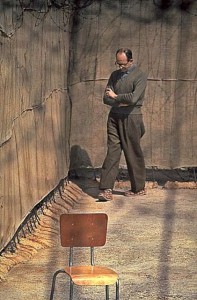
Eichmann-in-Prison-Wikimedia-197x300

Paula Marantz Cohen in Tikkun:

In her epilogue, written for the book’s publication after its serialization in The New Yorker, Arendt took note of the way the work had been pilloried in many quarters. She protested, with a certain disingenuousness: “the clamor centered on the ‘image’ of a book which was never written, and touched upon subjects that often had not only not been mentioned by me but had never occurred to me before.” It seems true that the image rather than the content of the book was under attack, often, as Arendt noted, by people who had never read it, but, contrary to her protestation, I don’t think there were any subjects that didn’t occur to her. Everything occurred to her. That was her crime in the eyes of her detractors: she did not keep certain subjects off limits out of respect for the recent dead or for those whose trauma was still fresh. Her thought process required that these subjects be brought into play. As Philip Green, a critic who knew her, recently observed, she represented, whether she was right or wrong, “a model of how to think with difficulty but also with absolute integrity and fearlessness about issues that are difficult to think about clearly at all.”

Arendt’s thought process in Eichmann in Jerusalem seems an extension of that in her previous work, The Origins of Totalitarianism. There, she drew a distinction between autocratic systems that consolidate political power, and totalitarian ones that consolidate social and psychological as well as political power. A totalitarian regime permeates all aspects of its citizens’ existence, and, through violence and fear, creates a society of accomplices. If Arendt was/is condemned for noting that Jewish leaders had a role in first helping with the emigration of Jews to Israel, then in saving some (and sacrificing others), and finally, in organizing deportation to the camps, she does so in order to explain the gradual, systemic degeneration that the Nazi state brought into being. The S.S. understood, she explains, “that the system which succeeds in destroying its victim before he mounts the scaffold … is incomparably the best for keeping a whole people in slavery.” The term “banality” as she used it in the subtitle of her book, refers to such behavior, that becomes part of everyday life in a totalitarian regime.

More here.

A new impulse – But for which Europe?

Balibar_ni_468wÉtienne Balibar at Eurozine:

The current European crisis, easily described as existential because it confronts its citizens with radical choices and the question, ultimately, “to be or not to be”, has no doubt been prepared by the fact that its institutions and its powers have been systematically unbalanced, working against the possibilities of the peoples' participation in their own history. But it was precipitated by the fact that it has deliberately stopped functioning as a space of solidarity between its members, of initiative vis-à-vis the risks of globalization. It has rather become an instrument of penetration of world competition at the heart of European space, forbidding transfers between territories and discouraging common enterprises, rejecting any harmonization “from above” of rights and living standards, making each state into a potential predator of its neighbours.

One can only escape this self-destructive spiral by replacing one competition with another – by substituting for the competition of wages, for instance, for the tax regimes and the borrowing rates, a competition for devaluation, as some advocates of a return to national currencies have proposed. One can only escape by way of invention and the stubborn proposition of another Europe than the Europe of bankers, of technocrats and of political profiteers. A Europe of conflicts between antithetical models of society, not between nations in search of their lost identities. A Europe of global justice, capable of inventing for itself and of proposing to the world revolutionary development strategies and broader forms of collective participation – but capable also of receiving them and adapting them to its own usage if it so happened that they were formulated elsewhere. A Europe of peoples, that is, of the people and the citizens that make it.

more here.

For a Non-Ideal Metaphysics

6a00d83453bcda69e201bb07e3203c970d-350wiJustin E.H. Smith at his blog:

A very telling example of the dismissive approach to the sort of ineliminable dimensions of human existence I am stressing is Dan Dennett's account of why we continue to fear ghosts and ghouls when we, say, enter a dark attic. It is, Dennett explains, because our brains have evolved into 'hyperactive intentionality detection devices'. Dennett is certainly correct on this point, but the interpretation of what we should do in light of it is just the opposite of what I am suggesting. Dennett believes that empirical science and critical thinking can correct the brain's hyperactivity, and that once we have established what is really there, in the attic, we can move on. The final account of what is there will include only the entities of natural science, and all the products of that earlier hyperactivity will be confined to the history books.

But is the list of these entities really the most useful account we can give of the phenomenology of being-in-dark-attics? Even if we are all committed to a 'just the facts' approach, might not the facts about the particular character of the hyperactive brain's phantasms –that they, say, produce pale dead girls in one time and place, dark old men in another–, be just as relevant to the final description the human sciences would want to give as the list of physical entities present will be to the final description offered by natural science? At issue here, ultimately, is the philosophical question of what counts as a fact, and what I am trying to do is to press for an answer as to why it should be natural science that gets to determine, for philosophy, the answer. To pursue such questions is not to abandon science as a final arbiter, but simply to acknowledge what even the most heavy-handed 20th-century philosophers of science were prepared to recognize: that different levels of description are relevant for different tasks.

more here.

Brash, Bold, Insolent Ungerer

Ungerer-poster2_jpg_780x530_q85J. Hoberman at the New York Review of Books:

It may be that everyone has their own Tomi Ungerer. The eighty-three-year-old graphic artist and illustrator’s work has been part of many people’s childhoods, others’ countercultures, still others’ outrage, and, at one point in his career, every straphanger’s New York. Mine is the artist whose late 1960s promotional posters forThe Village Voice (“expect the unexpected”) still had pride of place in the newspaper’s offices when I began working there in the late 1970s.

Born in Strasbourg, Ungerer, who lived through the Nazi occupation, is a native of no-man’s land, as the term was used to describe a war zone, and a public artist, in the sense that, for a time, his primary gallery was the street. His work has since been enshrined in the Musée Tomi Ungerer, France’s first government-funded museum devoted to a living artist. “All In One,” Ungerer’s current US retrospective at the Drawing Center in Soho, is another first, surveying an oeuvre that encompasses illustrated children’s books, advertising campaigns, political posters, uncaptioned gag cartoons, gemütlich ink-wash landscapes, and sadomasochistic erotica. To these, curator Claire Gilman has added a sample of the juvenilia that Ungerer produced as a child in German-annexed Alsace.

more here.

Harlem Renaissance

From History.com:

RenSpanning the 1920s to the mid-1930s, the Harlem Renaissance was a literary, artistic, and intellectual movement that kindled a new black cultural identity. Its essence was summed up by critic and teacher Alain Locke in 1926 when he declared that through art, “Negro life is seizing its first chances for group expression and self determination.” Harlem became the center of a “spiritual coming of age” in which Locke’s “New Negro” transformed “social disillusionment to race pride.” Chiefly literary, the Renaissance included the visual arts but excluded jazz, despite its parallel emergence as a black art form. The nucleus of the movement included Jean Toomer, Langston Hughes, Rudolf Fisher, Wallace Thurman, Jessie Redmon Fauset, Nella Larsen, Arna Bontemps, Countee Cullen, and Zora Neale Hurston. An older generation of writers and intellectuals–James Weldon Johnson, Claude McKay, Alain Locke, and Charles S. Johnson–served as mentors.

More here. (Note: One post throughout February will be dedicated to Black History Month.)

Rise in Weight Linked to Cognitive Decline in Older Adults

Traci Watts in The National Geographic:

Obesity-memory-loss-01_86081_990x742An expanding waistline may lead to a shriveled brain, new research suggests. In a long-term study of people in their early 60s, a brain region called the hippocampus shrank close to 2 percent a year in those who were obese—a rate approaching levels seen in Alzheimer's disease. In people of normal weight, the hippocampus, which is crucial for processing memories for later retrieval, shrank roughly half as much, according to an eight-year study discussed at a press conference Tuesday at the Society for Neuroscience meeting in Washington, D.C. Earlier research on weight and the brain focused mostly on the impacts of obesity in middle-aged people, said neuroscientist and study co-author Nicolas Cherbuin of the Australian National University, in Canberra. But participants in the new study were 60 to 64 years old when the study began, providing evidence of a link between elderly corpulence and declining cognitive powers—sobering news in nations such as the United States where the population is getting both older and fatter. “People may think, 'Oh, well, I'm in old age, I'm retired, it won't matter.' It does matter,” Cherbuin said. “The more obese one is, the more shrinkage there will be.”

Cherbuin and his colleagues used magnetic resonance imaging (MRI) to examine the brains of more than 400 people in their 60s who'd volunteered for a study of aging. At the beginning of the study, obese subjects already had smaller hippocampuses than did subjects who were merely overweight. (A person who stands five feet, nine inches tall is overweight at 169 to 202 pounds and obese at 203 pounds or more, according to the formula used by the U.S. Centers for Disease Control and Prevention.) That linkage between weight and hippocampus size held even when researchers took into account education, physical activity, and other factors that might have led to differences in hippocampal size. As if it weren't bad enough that they started out with smaller hippocampuses, the obese subjects lost hippocampal volume more quickly than their slimmer fellows did. The rate of hippocampal shrinkage seen in the fatter participants is likely to lead eventually to memory loss, mood changes, and problems with concentration and decision-making, Cherbuin said.

More here.

Morgan Meis in The New Yorker: Tadeusz Konwicki, 1926–2015

Ladies and Gentleman, I am proud to tell you that our own Morgan Meis has been asked to be a contributor to The New Yorker, which, as I am sure you know, has been for almost a century the acme of literary publishing in America. Congratulations, dear Morgan!

Here is Morgan's debut essay there:

ScreenHunter_1006 Feb. 13 08.11

Morgan Meis

I will never forget a late-night conversation I had seven years ago, around the table of a modest kitchen in a small town in southern Poland, when an impressively inebriated man—a distant relative—implored me with tear-filled eyes to get the message to Obama, as quickly as possible, that a missile shield pointed east, at Moscow, was a dire necessity. Every morning, this man told me, he looked to the east and expected to see Russian hordes cresting the hill just beyond the outskirts of his defenseless town. Then he pointed his finger at the window. We both looked out warily into the night.

There is a special mix of vindictiveness, paranoia, and persecution complex that can bubble to the surface in countries that have been betrayed too often. The opening line to the Polish National Anthem—“Poland has not yet perished”—gives you a good impression of the national disposition. Many Poles, even twenty years after the fall of Communism, live in a state of fatalistic, half-amused anticipation, waiting for the other shoe to drop. Historically, it’s been the Russians who come to administer the boot. This happened, for instance and notoriously, in the January uprising of 1863, when Poles started a rebellion against forced conscription into the Imperial Russian Army. The rebellion ended, as many did, in misery and mass executions. And don’t even get a Pole started about the partitions of the late eighteenth century, in which Russia, Prussia, and Austria carved Poland up into so many pieces that there was no independent state left.

Tadeusz Konwicki, who died last month, wrote fiction that is steeped in this history, in these agonies and conundrums.

More here.

Thursday, February 12, 2015

Scientism and Skepticism: A Reply to Steven Pinker

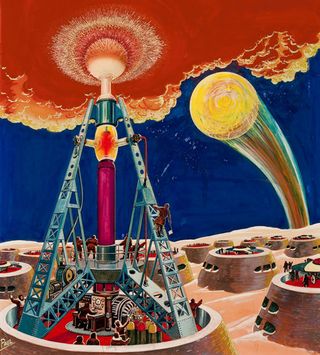
10-frank-r-paul-wonder-stories

Sebastian Normandin responds to Steven Pinker's New Republic article in Berfrois ( Illustration by Frank R. Paul. Via):

[W]hat Pinker is advocating is not even just scientism, it is actually a kind of ossified rationalism that sees an underlying unity in all scientific inquiry where in fact none exists. And this rationalism isn’t even the same as reason itself. Rationalism is to reason as scientism is to science. And both are a kind of fetishistic phenomena – an idealization akin to superstition:

In contrast to reason, a defining characteristic of superstition is the stubborn insistence that something – a fetish, an amulet, a pack of Tarot cards – has powers which no evidence supports. From this perspective, scientism appears to have as much in common with superstition as it does with properly conducted scientific research. Scientism claims that science has already resolved questions that are inherently beyond its ability to answer.[8]

This emerges as a kind of ideology, one that most historians and philosophers of science would find naïve and even troubling. It is, after all, difficult to say that there is any all- encompassing method or mode of inquiry in any field, the sciences included. Karl Popper, a fairly conservative philosopher of science (e.g. not a practitioner of the “disaster of postmodernism, with its defiant obscurantism, dogmatic relativism, and suffocating political correctness” Pinker rails against[9]), argued that the only thing that unified scientific ideas was that they were contingent and could be disproved (i.e. falsifiability).[10]

In discussing the “practices of science,” Pinker points out that they include “open debate, peer review, and double-blind methods”. Excepting double-blind methodology, which is primarily used in medicine, and specifically psychology and clinical trials, the other two practices are not even exclusive to science – they are in fact hallmarks of scholarly inquiry more generally. This further highlights the idea that while espousing the virtues of scientific methodology, it is hard for Pinker to pinpoint exactly what that methodology is. This is because there is no such thing as a universal, monolithic “scientific methodology”; this in spite of the continued folk homage paid to the idea of the “scientific method.”

More here.

Moore’s Law Is About to Get Weird

5329_00003e3b9e5336685200ae85d21b4f5e

Gabriel Popkin in Nautilus (Left photo by Gregory MD; right photo by De Agostini Picture Library):

I’ve never seen the computer you’re reading this story on, but I can tell you a lot about it. It runs on electricity. It uses binary logic to carry out programmed instructions. It shuttles information using materials known as semiconductors. Its brains are built on integrated circuit chips packed with tiny switches known as transistors.

In the nearly 70 years since the first modern digital computer was built, the above specs have become all but synonymous with computing. But they need not be. A computer is defined not by a particular set of hardware, but by being able to take information as input; to change, or “process,” the information in some controllable way; and to deliver new information as output. This information and the hardware that processes it can take an almost endless variety of physical forms. Over nearly two centuries, scientists and engineers have experimented with designs that use mechanical gears, chemical reactions, fluid flows, light, DNA, living cells, and synthetic cells.

Such now-unconventional means of computation collectively form the intuitively named realm of, well, unconventional computing. One expert has defined it as the study of “things which are already well forgotten or not discovered yet.” It is thus a field both anachronistic and ahead of its time.

But given the astounding success of conventional computing, which is now supported by a massive manufacturing industry, why study unconventional computing techniques at all? The answer, researchers say, is that one or more of these techniques could become conventional, in the not-so-distant future. Moore’s Law, which states that the number of transistors that can be squeezed onto a semiconductor chip of a given size doubles roughly every two years, has held true since the mid 1960s, but past progress is no guarantee of future success: Further attempts at miniaturization will soon run into the hard barrier of quantum physics, as transistors get so small they can no longer be made out of conventional materials. At that point, which could be no more than a decade away, new ideas will be needed.

So which unconventional technique will run our computers, phones, cars, and washing machines in the future? Here are a few possibilities.

Chemical Computing

A chemical reaction seems a natural paradigm for computation: It has inputs (reactants) and outputs (products), and some sort of processing happens during the reaction itself. While many reactions proceed in one direction only, limiting their potential as computers (which generally need to run programs again and again), Russian scientists Boris Belousov and Anatoly Zhabotinsky discovered in the 1950s and ’60s a class of chemical reactions, dubbed “BZ reactions,” that oscillate in time.

More here.

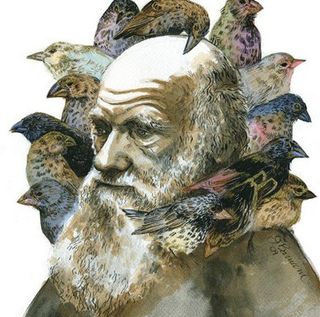
What Would Darwin Think About Modern Darwinism?

David Sloan Wilson in This View of Life:

ScreenHunter_1005 Feb. 12 20.01Imagine if Darwin could be transported to the present and learn what has become of his theory. What would excite him the most? Would anything disturb or disappoint him? TVOL has polled some of the most distinguished evolutionists of our day and we are pleased to provide their answers as our gift to Darwin and his admirers on his 206th Birthday!

Pleased by the Dover Decision

Darwin would surely be pleased by the following statement from Judge John E. Jones III in the Dover decision of December 20, 2005, against the teaching of Intelligent Design in the U.S. public schools: “The leading proponents of ID make a bedrock assumption which is utterly false. Their presupposition is that evolutionary theory is antithetical to a belief in the existence of a supreme being and to religion in general. Repeatedly in this trial, Plaintiffs’ scientific experts testified that the theory of evolution represents good science, is overwhelmingly accepted by the scientific community, and that it in no way conflicts with, nor does it deny, the existence of a divine creator.”

–Francisco J. Ayala, University Professor and Donald Bren Professor of Biological Sciences,University of California, Irvine.

More here.

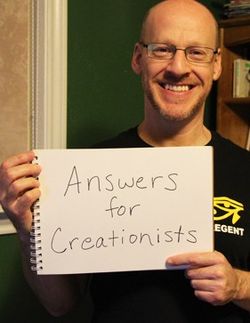
Answers for Creationists

Phil Plait in Slate:

ScreenHunter_1004 Feb. 12 19.48After writing yesterday about the now-famous/infamous debate between Bill Nye and Ken Ham, I don’t want to make this blog all creationism all the time, but indulge me this one more time, if you will. On BuzzFeed, there is a clever listicle that is a collection of 22 photos showing creationists holding up questions they have for people who “believe” in evolution…

…I won’t go too deep, but if you have these questions yourself, or have been asked them, I hope this helps.

I’ll repeat the question below, and give my answers.

1) “Bill Nye, are you influencing the minds of children in a positive way?”

I’m not Bill, but I’d say yes, he is. More than just giving them facts to memorize, he is showing them how science works. Not only that, his clear love and enthusiasm for science is infectious, and that to me is his greatest gift.

2) “Are you scared of a Divine Creator?”

No. In fact, if there is a Judeo-Christian god, that would have fascinating implications for much of what we scientists study, and would be a rich vein to mine. Perhaps a more pertinent question is, “Are you scared there might not be a Divine Creator?” There is more room for a god in science than there is for no god in religious faith.

3) “Is it completely illogical that the Earth was created mature? i.e. trees created with rings … Adam created as an adult ….”

It might be internally consistent, even logical, but a bit of a stretch. After all, we can posit that God created the Universe last Thursday, looking exactly as it is, with all evidence pointing to it being old and your memories implanted such that you think you’re older than a mere few days. Consistent, sure, but plausible? Not really.

More here.

The Double Life of Hasidic Atheists

Batya Ungar-Sargon in Aeon:

ScreenHunter_1001 Feb. 12 17.19Solomon is one of hundreds, perhaps thousands, of men and women whose encounters with evolution, science, new atheism and biblical criticism have led them to the conclusion that there is no God, and yet whose social, economic and familial connections to the ultra-Orthodox and Hasidic communities prevent them from giving up the rituals of faith. Those I spoke to could not bring themselves to upend their families and their children’s lives. With too much integrity to believe, they also have too much to leave behind, and so they remain closeted atheists within ultra-Orthodox communities. Names and some places have been changed – every person spoke to me for this story on condition of anonymity. Part of a secret, underground intellectual elite, these people live in fear of being discovered and penalised by an increasingly insular society.

But they are also proof of the increasing challenges fundamentalist religious groups face in the age of the internet and a globalised world. With so much information so readily available, such groups can no longer rely on physical and intellectual isolation to maintain their boundaries. In addition to exposing religious adherents to information that challenges the hegemony of their belief systems, the internet gives individuals living in restrictive environments an alternative community.

More here.

Why Max Weber matters

P4_Kelly2_Web_1128672hDuncan Kelly at the Times Literary Supplement:

As Ghosh notes, Weber had always been a superb political analyst. His “probability” theory about when peace would come and the possibilities of German victory was as ruthlessly realistic as anything else he wrote. Yet if objectivity in the midst of war set him apart, one of Ghosh’s major points is that politics for Weber, although a grand human ideal, had been on the decline for centuries as the crucial arbiter of human conduct. Now, it meant nothing more or less than earthly Herrschaft, so that there were only so many ways one could talk about its development, or think about its valences. For those who hold fixed ideas about Weber the political animal, Ghosh’s claims will be hard reading. But part of the problem with seeing him as a straightforward nationalist was that even incandescent rage about national shame was allied to a profound understanding of geopolitics and political responsibility. This made it clear to him that “reaction” and public retribution, or power politics without content, were futile modes of engagement. Subtler and more “responsible” policy was required if long-term success was to be achieved, and that would have to take place in diplomatic back channels by “responsible” statesmen. Germany was actually quite successful at this when seen in comparative perspective, a point amplified recently by Adam Tooze in The Deluge: The Great War and the remaking of global order(2014).

Weber’s well-known refrains about the dangers of a politics of national vanity (Eitelkeit), made most famously in his lecture on the vocation of politics, were in fact extant in his writings from the start. For example, in a perspicacious essay realistically assaying the prospects of Germany against the European world powers during the war, he once more stated his belief that “objective politics” was not a “politics of vanity”, but one whose actions necessarily took place in the shadows.

more here.

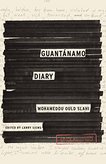
Guantánamo Diary by Mohamedou Ould Slahi

Cover00Dan Duray at Bookforum.

A few reviews have likened Guantánamo Diary to Memoirs from the House of the Dead, written after Dostoyevsky’s four years in Siberian exile. Diary does share that book’s vignette structure. But while Dead’s narrator draws on his observation of the lives of his fellow prisoners to create a mounting sense of existential despair, the frequently isolated Slahi—who spent a decade in Germany and easily communicates without culture clash—turns his attention to Gitmo’s guards and interrogators. These figures are generalized through redaction and turn out to be, rather than ominous symbols of spiritual dislocation, merely thoughtless and careless—stupidly cruel in ways that only a late-stage empire (or maybe a fraternity) can accommodate.

The guards beat him and tried to convert him to Christianity. They taught him chess and then got angry when he won. “That is not the way I taught you,” one guard scoffed. (Slahi learned his lesson: It really is better to let the Wookiee win.) They threatened to “bring in black people” if he continued refusing to cooperate. “I don’t have any problem with black people, half of my country is black people!” he writes. They asked him to do an interview with “a moderate journalist from The Wall Street Journal and refute the wrong things we’re suspected of.” “Well,” Slahi replied, “I got tortured and I am going to tell the journalist the truth.” The interview was canceled.

more here.

How an irritable Danish author left an enduring mark on the national character

58371_aksel_sandemoseMichael Booth at The Paris Review:

“Jante Law is just as normal as the law of gravity,” newspaper editor and anthropologist Anne Knudsen assured me. “You find it everywhere, especially in peasant societies, and back [in Sandemose’s day] there were peasants peasants peasants all over the place in Denmark. This kind of ideology became the State ideology when democracy was established in the country [in 1849] and it got a second life with Social Democracy, and all of this was transmitted from generation to generation by propaganda and by a unified school system.” She added, “But, you know, the envy part is not the important part. The important part is the inclusiveness: we want to include you, but that is only possible if you are equal. It’s what peasants do.”

I opened a newspaper to see if I could spot signs of Jante Law in action today, and, what do you know, there was a story about the Swedish Tetra Pak packaging heir Hans Rausing’s drug-fueled downfall: the gloating headline reads HIS BILLIONS COULD NOT SAVE HIM. Another concerns the bankruptcy of a flamboyant Danish businessman from a humble background who amassed a collection of snazzy cars and foreign homes and made the mistake of parading them in the media over the years. Again, the article is dripping with Jante revenge, detailing the luxuries he has had to give up: “Three years ago he told this newspaper proudly of his Bugatti, his Lamborghini, and the Porsche he was about to buy,” the article read. “Now he has run dry of cash.”

more here.