14 Books to Read This Black History Month

BookAndrea Collier in NBC News:

February is not only Black History Month, but it is also the month when many titles by Black authors are released. 2015 kicked off with a wide selections of books and stories to settle into. From history, to biography to great fiction storytelling here are a few gems to propose to your book club.

God Help the Child by Toni Morrison

Nobel Laureate, Toni Morrison, does her literary magic with God Help the Child, an emotional story of a woman called Bride, and the way childhood trauma shaped her life and her loves.

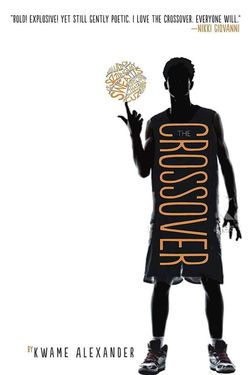
The Crossover​ by Kwame Alexander

The Crossover is the story of twin brothers who have skills on the basketball court. One of the twins sees a life beyond the hoops, with his love of beats and music. The story in verse book, that took home the 2015 Newbery Award is a great book for the middle school reader.

More here. (Note: One post throughout February will be dedicated to Black History Month.)

New software analyzes human genomes for disease-causing variations in 90 minutes

From KurzweilAI:

Genome-with-mutationInvestigators at Nationwide Children’s Hospital say they have developed an optimized analysis “pipeline” that slashes the time it takes to search a person’s genome for disease-causing variations from weeks to hours. An open-access preview article describing the ultra-fast, highly scalable software was published in the latest issue of Genome Biology.

“It took around 13 years and $3 billion to sequence the first human genome,” says Peter White, PhD, principal investigator and director of the Biomedical Genomics Core at Nationwide Children’s and the study’s senior author. “Now, even the smallest research groups can complete genomic sequencing in a matter of days. However, once you’ve generated all that data, that’s the point where many groups hit a wall. … Scientists are left with billions of data points to analyze before any truly useful information can be gleaned for use in research and clinical settings.” To overcome the challenges of analyzing that large amount of data, White and his team developed a computational pipeline called “Churchill.” By using novel computational techniques, Churchill allows efficient analysis of a whole genome sample in as little as 90 minutes, the researchers claim. “Churchill fully automates the analytical process required to take raw sequence data through a series of complex and computationally intensive processes, ultimately producing a list of genetic variants ready for clinical interpretation and tertiary analysis,” White explains. “Each step in the process was optimized to significantly reduce analysis time, without sacrificing data integrity, resulting in an analysis method that is 100 percent reproducible.” The output of Churchill was validated using National Institute of Standards and Technology (NIST) benchmarks. In comparison with other computational pipelines, Churchill was shown to have the highest sensitivity at 99.7 percent, highest accuracy at 99.99 percent, and the highest overall diagnostic effectiveness at 99.66 percent, according to the researchers.

More here.

Wednesday, February 11, 2015

A triumphalist history of psychiatry seeks to vindicate the profession

Gary Greenberg in Bookforum:

DownloadIn 1917, psychiatrist Thomas Salmon lamented that the classification of diseases was still “chaotic”—a “condition of affairs [that] discredits the science of psychiatry and reflects unfavorably upon our association,” and that left the profession unable to meet “the scientific demands of the present day.” In 1973, the American Psychiatric Association voted to declare that homosexuality was no longer a mental illness, a determination that, however just, couldn’t possibly be construed as scientific. And for the six years leading up to the 2013 release of the fifth edition of its diagnostic manual, the DSM-5, the APA debated loudly and in public such questions as whether Asperger’s disorder were a distinct mental illness and if people still upset two weeks after the death of a loved one could be diagnosed with major depression. (The official conclusions, respectively: no and yes.)

To the diagnostic chaos was added the spectacle of treatments. Psychiatrists superintended horrifyingly squalid asylums; used insulin and electricity to send patients into comas and convulsions; inoculated them with tuberculin and malaria in the hope that fever would cook the mental illness out of them; jammed ice picks into their brains to sever their frontal lobes; placed them in orgone boxes to bathe in the orgasmic energy of the universe; psychoanalyzed them interminably; primal-screamed them and rebirthed them and nursed their inner children; and subjected them to medications of unknown mechanism and unanticipated side effects, most recently the antidepressant drugs that we love to hate and hate to love and that, either way, are a daily staple for 11 percent of adults in America.

It’s not just diagnostic uncertainty or therapeutic disasters that cast suspicion on the profession.

More here.

Elise Crull on Philosophy of Physics

Over at the Rationally Speaking podcast:

Elise CrullFeynman famously said that a philosopher of science is as much use to scientists as an ornithologist is to birds. This episode of Rationally Speaking features philosopher of physics Elise Crull, who explains why Feynman is misguided, and what philosophers have to say about important issues in physics — like quantum mechanics, physical laws, and whether anything “really” exists at all.

Does the Punishment Fit the Crime?

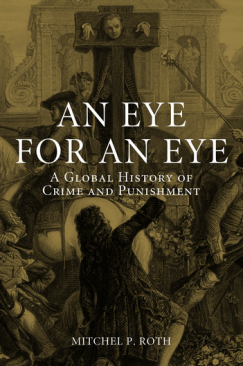
Eyeforeye-243x366

Gil Garcetti in The LA Review of Books:

ON MY FIRST READING of An Eye for an Eye, Mitchel P. Roth’s new book, I recall closing it and asking myself a series of questions: “What have I learned?,” “How do I feel about what I had read?,” “Was it worth my time and effort?” This book is not a quick read, not a book where you can quickly turn to the next page. Often you have to, and want to, ponder what you’ve just read. But if you are interested in the subject matter, or if you are a judge, lawyer, elected official, or a “student” of jurisprudence, reading this book will be worth your time and effort.

My dominant feeling was when I finished my first read of the book was disappointment — but it was not the content of the book that disappointed me. The book is the first I have read that attempts to chronicle and dispassionately explore the world history of crime and punishment. Professor Roth’s effort is forceful, scholarly yet easily readable, informative, sometimes even entertainingly informative, and, lastly, provocative. Roth has said it was not written with the purpose of being a university textbook, but it easily could be the bones of a very interesting class for students of history or those interested in the law, government, philosophy, or criminology. The book is crammed with interesting facts and statistics and dozens of fascinating and sometimes gory anecdotes that have been brought together through disciplined and thorough research by the author (and probably others working with him). Roth, who teaches criminal justice and criminology at Sam Houston State University in Huntsville, Texas, has done an admirable job of scholarship.

My disappointment stemmed from the conclusion I drew, based on the facts Roth presents: that there is not one nation in the history of the world whose people, government, or rulers haven’t been responsible for perpetrating horrific acts of cruelty, sadism, and savagery on other human beings. Is this the nature of man? Are we any safer today than 100, 500, 1,000, or 5,000 years ago? Roth could persuasively argue that we are indeed much safer — at least from the common street criminal. When you put aside acts of terrorism and accept that crime statistics in some countries are at best woefully inadequate, I think he is probably correct.

More here.

rubens at the royal academy

CelluliteMartin Gayford at The Spectator:

Rubens was a truly European figure. Not for nothing is the preface to the RA catalogue penned by Herman Van Rompuy. A passion for Rubens spanned the political and religious borders of 17th-century Europe. He worked for the King of Spain, the court of France, the Grand Duke of Tuscany and Charles I. His energy and industriousness were astonishing. In addition to his work as an artist, he spent time and effort on diplomacy — he was in London to negotiate a treaty on behalf of Philip IV of Spain and his regent, Rubens’s patron, the Archduchess Isabella in Brussels.

Then, as Ben van Beneden says, he was ‘one of the great collectors of his time, with a collection that could rival those of princes’ — of his own pictures and other people’s, and most of all of classical antiquities about which he corresponded with scholars in France and Italy. Rubens mixed with the most powerful individuals of his day — despite some aristocratic resentment — on something like an equal footing. He ended up with not only a mansion in Antwerp, stuffed with artistic riches, but also a country house.

Yet despite his immense achievements and success, Rubens’s personality remains a little elusive. A large number of his letters survive, mainly written in Italian, the lingua franca of the day, but there is little intimate or revealing in them. Most are concerned with politics and diplomacy: the public persona, not the private man. Another oddity of his career was the extent to which — quite apart from the output of his workshop — Rubens collaborated with other artists.

more here.

A dark time in the city of light

Maximilien_LuceCharles Trueheart at The American Scholar:

Transitory, confusing, hopeless, the Paris Commune of 1871 is easily ignored or misunderstood. The title of John Merriman’s new book gets right to the point he wants us to remember: that it ended in an orchestrated genocide. Soldiers slaughtered tens of thousands of Parisians, both combatants and civilians, while the rest of France looked away or cheered the killers on.

The Commune’s misbegotten spasm of early people power lasted just 64 days and occurred in the political and social vacuum left by three successive French humiliations—the catastrophic Franco-Prussian War, the crushing Siege of Paris, and the ignominious dissolution of Napoleon III’s Second Empire.

When the siege ended, in January 1871, with the French government’s capitulation, better-off Parisians in the central and western parts of the city sought to shake the blues by reverting to habits of prewar gaiety, jamming the brasseries, departments stores, and boulevards.

In the northern and northeastern arrondissements, meanwhile, a miserable population seethed in crowded slums. The building of Haussmann’s Paris that so dazzled the world had drawn cheap labor in quantity from the provinces and beyond. Many of these people were now out of work. The war had brought refugees to join them. Their suffering was acute, their anger directed at the business classes, the political leadership, and the Catholic clergy. It boiled over almost overnight.

more here.

alice munro’s domestic gothic

MunroMary Rose Doorly at The Dublin Review of Books:

In a foreword to the collection, Jane Smiley describes the paradox in Munro’s writing as, “simultaneously strange and down to earth, daring and straightforward”. Laid out in the chronological order in which the stories were published, Family Furnishings reveals Munro’s lifelong fascination for the mundane and the freakish. Her characters, often taken from life, often drawn with autobiographical authority, seem to live in a kind of reality where the extreme facts co-exist in the same non-hysterical breath with the most banal.

Talk of scrubbing a floor, for example, is given a strange parity with the disposal of a murdered man’s body in “The Love of a Good Woman”, the opening story in this collection. The discovery of the body in the lake is described through the innocent gaze of a group of young boys who hardly understand the true import of the events, only the unforgettable underwater image of the dead man’s arm, as though he is waving. Munro’s great skill here, as in so much of her work, is the conscious undervaluation and negative exaggeration in which she draws the reader’s innocence into this closeness of extremes.

In “Dimensions”, where a young woman tries to come to terms with a shocking family tragedy in which a father kills his three children, we again see the trademark Munro approach of mixing up the ordinary with the appalling:

A trickle of pink foam came out from under the boy’s head, near the ear. It did not look like blood at all, but like the stuff you skim off the strawberries when you’re making jam.

more here.

Lost Malcolm X Speech Heard Again 50 Years Later

Guy Raz in npr.org:

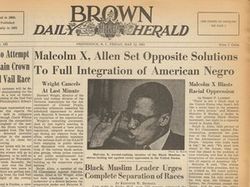
XLast semester, Brown senior Malcolm Burnley took a narrative writing course. One of the assignments was to write a fictional story based on something true — and that true event had to be found inside the university archives. “So I went to the archives and started flipping through dusty compilations of student newspapers, and there was this old black-and-white photo of when Malcolm X came to speak,” Burnley says. “There was one short article that corresponded to it, and very little else.” Malcolm X came to speak at Brown University in Providence, R.I., on May 11, 1961. Burnley noticed that at the end of the article, there was a brief mention of another article — also from the Brown student newspaper — written by a senior named Katharine Pierce. Her article was the reason Malcolm X wanted to visit Brown. 0He tracked down Pierce's phone number and gave her a call. “I immediately started asking her what she remembered about provoking Malcolm X to come.” It had been 50 years since Malcolm X's speech at Brown, but Pierce slowly started to remember how it all happened. “I just felt that integration was a greater path,” Pierce says, “more reasonable and a greater path for success.” Today, Pierce lives about an hour north of New York City. In 1961, she believed the Nation of Islam's message of separation of the races was destructive, so she wrote a detailed critique. Somehow, it caught the attention of the Nation of Islam. Two weeks after the piece was published in the Brown Daily Herald, representatives called. “They said that Malcolm X wanted to come to Brown and defend his views, because Katharine's essay was so critical of the organization,” Burnley says.

…”There are 20 million so-called 'negroes' here in America. Twenty million ex-slaves. Twenty million second-class citizens. No matter what other classification you try to put on them, you can't deny that we are ex-slaves. You can not deny that we are second-class citizens. And the fact that we are second-class citizens means someone has done us an injustice and deprived us of that which is ours by right.”

More here. (Note: One post throughout February will be dedicated to Black History Month.)
Is There Something Uncanny About Machines That Can Think?

Tania Lombrozo in npr.org:

Brain-istock_custom-ecf8011bc25136a47d9f00b8477068d0768919c9-s600-c85Thinking machines are consistently in the news these days, and often a topic of discussion here at 13.7. Last week, Alva Noë came out as a singularity skeptic, and three of us contributed to Edge.org's annual question for 2015: What do you think about machines that think? In response to the Edge.org question, I argued that we shouldn't be chauvinists when it comes to defining thinking — that is, we should resist the temptation to restrict what counts as thinking to “thinking like adult humans” or “thinking like contemporary computers.” Marcelo Gleiser suggested that we're already living as transhumans, enhanced by our technogadgets and medical improvements. And Stuart Kauffman considered Turing machines, the quantum and human choice. In addressing the relationship between humans and thinking machines, all three of our responses — and those by many others — raised questions about what (if anything) makes us uniquely human. Part of what's fascinating about the idea of thinking machines, after all, is that they seem to approach and encroach on a uniquely human niche, homo sapiens — the wise.

Consider, for contrast, encountering “thinking” aliens, some alternative life form that rivals or exceeds our own intelligence. The experience would be strange, to be sure, but there may be something uniquely uncanny about thinking machines. While they can (or will some day) mirror us in capabilities, they are unlikely to do so in composition. My hypothetical aliens, at least, would have biological origins of some kind, whereas today's computers do so only in the sense that they are human artifacts and, therefore, have an origin that follows from our own. When it comes to human-like robots and other artifacts, some have described an “uncanny valley“: a level of similarity to natural beings that may be too close for comfort, compelling yet off. We might be slightly revolted by a mechanical appendage, for instance, or made uneasy by a realistically human robot face.

More here.

Wednesday Poem

Congregation
—Weir, Mississippi, 1984
Sara Ross, Great and Grand-mother of all
rooted things waits on the family porch.

We make our way back to her beginnings.
Six daughters
gather space and time

in a small kitchen.

Recipes as old as the cauldron
 and
aprons wrap around these daughters;
keepers of cast iron and collective.
Lard sizzles a sermon from the stove,

frying uncle’s morning catch

into gold-plated, cornmeal catfish.

Biscuits bigger than a grown man’s fist

center the Chantilly laced table of yams,

black eyed peas over rice and pineapple,

pointing upside down cake.
The fields, soaked with breeze and sun,

move across my legs like Sara’s hands.

Chartreuse colored waters, hide and seek

in watermelon patches, dim my ache for Chicago.
Peach and pear ornaments

hang from Sara’s trees.
Jelly jars tinted

with homemade whiskey,

guitar stringing uncles who never left

the porch, still dream of being famous

country singers.
Toothpicks, tipped hats and sunset
linger as
four generations come from

four corners to eat, pray, fuss and laugh

themselves into stories of a kinfolk,

at a country soiree, down in the delta.

by Parneshia Jones

(with thanks to Elatia Harris)

Tuesday, February 10, 2015

History of Lynchings in the South Documents Nearly 4,000 Names

Campbell Robertson in The New York Times:

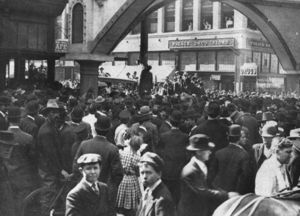
LYNCHING2-articleLargeDALLAS — A block from the tourist-swarmed headquarters of the former Texas School Book Depository sits the old county courthouse, now a museum. In 1910, a group of men rushed into the courthouse, threw a rope around the neck of a black man accused of sexually assaulting a 3-year-old white girl, and threw the other end of the rope out a window. A mob outside yanked the man, Allen Brooks, to the ground and strung him up at a ceremonial arch a few blocks down Main Street. South of the city, past the Trinity River bottoms, a black man named W. R. Taylor was hanged by a mob in 1889. Farther south still is the community of Streetman, where 25-year-old George Gay was hanged from a tree and shot hundreds of times in 1922. And just beyond that is Kirvin, where three black men, two of them almost certainly innocent, were accused of killing a white woman and, under the gaze of hundreds of soda-drinking spectators, were castrated, stabbed, beaten, tied to a plow and set afire in the spring of 1922.

…The bloody history of Paris, Tex., about 100 miles northeast of Dallas, is well known if rarely brought up, said Thelma Dangerfield, the treasurer of the local N.A.A.C.P. chapter. Thousands of people came in 1893 to see Henry Smith, a black teenager accused of murder, carried around town on a float, then tortured and burned to death on a scaffold. Until recently, some longtime residents still remembered when the two Arthur brothers were tied to a flagpole and set on fire at the city fairgrounds in 1920. “There were two or three blacks who were actually around during that time, but you couldn’t get them to talk about it,” Ms. Dangerfield said.

Picture: Downtown Dallas in 1910, when Allen Brooks, a black man, was hanged from a telephone pole.

More here. (Note: One post throughout February will be dedicated to Black History Month.)

Are Economists Overrated? A debate

From the New York Times:

Rfdecon-sfSpanOne in 100 articles in The New York Times over the past few years have used the term “economist,” a much greater rate than other academic professions, according to a recent article in The Upshot. Economic analysis and pronouncements are crucial to most policy decisions and debates.

But given the profession’s poor track record in forecasting and planning, and the continued struggles of many Americans, have we given economists too much authority?

More here.

The two big holes in the strategy against IS (ISIS/ISIL)

The US-led campaign against Islamic State isn’t working. It won’t unless it addresses Shia sectarianism in Iraq and Assad’s atrocities in Syria.

Ken Roth in Open Security:

ScreenHunter_995 Feb. 10 16.00The extraordinary brutality of the organisation which calls itself Islamic State (IS) has sparked utter revulsion around the world. Its mass executions, sexual enslavement, videotaped beheadings and now the burning to death of the Jordanian pilot have created an uncommon determination among governments of all political and religious stripes to end this scourge on the people of Iraq and Syria and the threat it poses elsewhere. But after sitting through a weekend of discussions at the Munich Security Conference, I am left with the sad conclusion that the anti-IS endeavour betrays more activity than strategy.

To understand what must be done about IS, it is helpful to remember the background to its rise. In Iraq, in addition to the chaos after the US invasion, the emergence of IS owes much to the abusive sectarian rule of the former prime minister, Nouri al-Maliki, and the resulting radicalisation of Sunnis. With Iranian backing, Maliki took personal control of Iraqi security forces and supported the formation of Shia militias. Many of those militias brutally persecuted the minority Sunni population. They rounded up and arbitrarily detained Sunnis under vague laws and, along with government counter-terrorism units, summarily executed many. Meanwhile, the Iraqi air force indiscriminately bombed predominately Sunni cities, beginning in Anbar in January 2014.

The severity of these abuses played perfectly into IS plans: one rationale for IS atrocities appears to be to spark precisely such reactions, which in turn bolster its standing among the Sunni population. The group’s predecessor, al-Qaeda in Iraq, was largely defeated by a combination of US military pressure and a military coalition of Sunni tribes in western Iraq, known as the Awakening Councils. But under Maliki many of the tribes which defeated the organisation became so fearful of slaughter and persecution by pro-government forces that, when conflict resumed in 2014, they felt safer fighting those forces than IS. Western governments, eager to put their own military involvement in Iraq behind them, largely shut their eyes to the worsening sectarian abuses overseen by Baghdad—and continued to ply it with arms.

More here.

Fantasies of Federalism

1420638633moynAOFAEFG666Samuel Moyn at Dissent:

In several essays written in the midst of the Second World War, Hannah Arendt advocated federalism as a replacement for nationalism, which she believed had been rendered obsolete. Adolf Hitler had demonstrated the limits of ethnic homogeneity as a basis for political organization. The idea of “the nation” that had set the world on fire had definitively revealed its shortcomings: it failed to hold up when mapped onto territory shared by different peoples and so often ruled by a permanent majority. “Nowhere in Europe today,” Arendt remarked in 1945, “do we find a nationally homogeneous population.” Furthermore, political federalism of some sort had worked for Americans for a century and a half. Why not Europe? Why let nation-states remain the rule? A federation could grant rights to nationalities dispersed amidst and athwart one other.

Arendt’s federalism—recently recovered by historians Gil Rubin and William Selinger—also applied to the Middle East. It would make Jews and Palestinians equal members of some larger political entity, in which each group would have a measure of self-government in their own affairs and a role in collective decision-making. A land of two peoples within the same state, Arendt wrote in wartime, would in the long run merely reverse the Zionist result of Jewish dominance over Palestinians in the area, substituting one hierarchy for another.

more here.

on literature and authenticity

Levine-eggers1_jpg_600x1075_q85Tim Parks at the New York Review of Books:

Authors who switch between genre writing and “serious” fiction introduce a further dimension to this question. Is the literary work “authentic” and the genre work not? Georges Simenon wrote seventy-five detective novels featuring Inspector Maigret and, starting somewhat later, forty-four serious novels that many believed should have won him the Nobel Prize. Frequently autobiographical (and we remember here Simenon’s boast to have made love to ten thousand women), the serious fiction endlessly reworks the same territory—like it or not, this does seem to be a hallmark of literary authenticity. Life, in Simenon’s literary novels, is ruthless self-affirmation, “Some [people] seem powerful,” remarks one character typically, “and maybe for the moment they are. But they’re never—and don’t forget it—as powerful as they pretend, because no matter how powerful they are, there are always others who are more powerful still.”

The resulting struggle may occasionally be quieted and contained in mutual understanding, but more often leads to open conflict and catastrophe. In one of the strongest of these novels, Dirty Snow, a young man seeks to assert himself by theft, murder, and deceit. But paradoxically he contrives to do so in such a way that he will be observed by a “good” neighbor whose adolescent daughter he seduces and betrays in the most ugly fashion.

more here.

albert camus today

Kaplan_camusredux_ba_img_0Alice Kaplan at The Nation:

Albert Camus, once decried as the symbol of reactionary French Algeria by Jean-Paul Sartre and other grands hommes of the mid-century French left, has been the subject of increasingly positive revaluations since the posthumous publication of his unfinished autobiographical novel, The First Man, in 1994. Camus’s account of his threadbare beginnings, his love for his deaf mother and his ambivalence about success and exile gave readers reasons to think that, thirty-four years after his death, they finally knew something about him. Meanwhile, Sartre’s devotion to violent revolution had lost much of its allure during the 1990s, when a civil war in Algeria between radical Islamists and the Algerian army threatened the survival of secular intellectual life itself. The centenary of Camus’s birth in 2013 was welcomed in France with an array of new work, including a fascinating documentary by Joël Calmettes about Camus’s readers in the far corners of the globe. In the United States, Robert Zaretsky’s fine intellectual biography and the Harvard translation of Camus’s Algerian Chronicles were widely reviewed. Now, in the wake of the centenary, two bold and original new works swap criticism for art: a film, Loin des hommes, or Far From Men, and a novel, Meursault, contre-enquête, remain faithful to the moral and aesthetic spirit of Camus’s fictions while setting his themes and preoccupations in the geopolitical present.

David Oelhoffen’s captivating Algerian western takes as its starting point Camus’s 1957 short story “The Guest,” though calling the film an adaptation would be a misnomer. Far From Menis closer to a new draft of a story that Camus had considered to be malleable and for which he imagined two opposing endings—as though the indecision crafted into the original story was an irresistible invitation to transform its essence in another medium.

more here.

Odysseus Abroad – audaciously redraws the modernist map

Neel Mukherjee in The Guardian:

AmitIn what sense are Amit Chaudhuri’s plotless meditations novels? Nothing, after all, happens in them; pages are expended describing, in exquisite prose, the cursive curl of a letter, or someone dozing off. Written seemingly out of life, these books are beautiful, intensely observed, yet static and inconsequential – more mood pieces than novels. That Chaudhuri has been pushing away at form, trying to make something new of the novel, may not have been obvious from his early work, but nowhere is his project more apparent than in his latest, Odysseus Abroad. Unfolding over the course of a single warm July day in London in 1985, the book follows a young Indian man, Ananda, in his early 20s, as he wakes up in his rented room in Warren Street, potters around, attends a tutorial – he is desultorily reading for a BA in English Literature – in UCL at midday, then goes to see his uncle, Rangamama, in the older man’s basement bedsit in Belsize Park. Uncle and nephew walk south for a bit, take the tube to Ananda’s, buying some Indian sweets en route, then go out to dinner at a curry house, after which they saunter back to Ananda’s room. That’s it. Yet everything happens in these 200 pages on different levels.

The level of the story first. Adhering closely for almost its entirety to Ananda’s point of view, the book necessarily gives him a rich, eloquent interiority. From his impatience with any pre-modernist literature, to his intense poetic ambitions (he wants to be another Larkin; there is a priceless account of a tutorial in which his poetic pretensions are gently sent up by his tutor); from his attachment to his mother, who has just returned home to India after a short visit, to the annoyance caused by his noisy neighbours: it is all rendered beautifully in Chaudhuri’s signature sentences. They are elegant and classical, rich in parentheses, subclauses and digressions; unexpected, surprising spaces open up within them to accommodate the ever‑present past and the infinite branching of thought.

More here.

Eddie Huang Against the World

08huang_ss-slide-QZQ9-articleLarge-v3

Wesley Yang in the NYT Magazine (photo by Nathanael Turner):

Huang feels that by adulterating the specificity of his childhood in the pursuit of universal appeal, the show was performing a kind of “reverse yellow­face” — telling white American stories with Chinese faces. He doesn’t want to purchase mainstream accessibility at the expense of the distinctiveness of his lived experiences, though he is aware of how acutely Asian-­Americans hunger for any kind of cultural recognition. “Culturally, we are in an ice age,” he said. “We don’t even have fire. We don’t even have the wheel. If this can be the first wheel, maybe others can make three more.”

Then, he added, “we can get an axle and build a rice rocket.”

The story Huang tells in his memoir is one of survival and struggle in a hostile environment — a prosperous neighborhood in Orlando. Though the picaresque book is written in Huang’s jaunty mash-up of hip-hop lingo and conspicuously learned references to American history and literature, it is also an extraordinarily raw account of an abused and bullied child who grows to inflict violence on others. The racism Huang encounters in Florida is not underhanded, implicit or subtle, as it often is for the many Asians from the professional classes living in and around the coastal cities where the American educated elite reside. It is open, overt and violent.

“Up North and out West, you have a bit more focus on academics, and there are accelerated programs for high-achieving kids,” said Emery Huang, reflecting on the tumultuous upbringing he shared with his brother. “Down South, you’ve got football and drinking, and that’s it. If you weren’t fighting, you were a nerd and a victim.” In response to this bullying, the Huang brothers did not conform to the docile stereotypes of Asian-American youths, in large part because of the influence of their father, Louis. A hardened, street-smart man, Louis had been sent by his own father to the United States to get him away from the hoodlums he had been running with in Taipei. “We wouldn’t get in trouble with our dad if we got into a fight,” Emery said. “We would get in trouble if we didn’t win.”

Huang’s memoir records an unusual life trajectory: from tormented outsider, to angry adolescent who would twice be arrested on assault charges, to marijuana dealer, to high-end street-wear designer (under the “Hoodman” label, which eventually led to a lawsuit from Bergdorf Goodman), to corporate lawyer, to successful restaurateur.

More here.