
Category: Recommended Reading
The first full-length biography of Agnes Martin
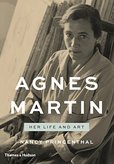
In Charles R. Rushton's 1991 black-and-white portrait, Agnes Martin (1912–2004) sits in a wooden rocking chair in the left third of the frame, beside the white cement wall of her New Mexico studio. One of her canonical six-by-six-feet canvases hangs low to the ground next to her, its horizontal pencil-edge bands running out of the picture to the right. She's dressed like a plainclothes nun, in comfortable white sneakers, flannel pants, and a collared shirt under a dark cardigan buttoned to the neck. Her hands are set on each armrest with a square assurance that recalls Gertrude Stein, and the photo's spare formality is reminiscent of James Abbott McNeill Whistler's 1871 portrait of his mother, Arrangement in Grey and Black, No. 1. These elements suggest the perfect stillness associated with Martin's profoundly absorbing minimalist abstractions and her devotion to painting the uniform square through an exacting process over half a century. Yet there are two subtle disruptions to the calm, details sometimes cropped out of the picture's bottom edge. That rocker! Those sneakers!
Is it our assumptions about Martin that create her apparent contradictions, or is it the other way around? She has endured the critical paring knife inflicted on all “pure” painters who insist the real world is far removed from their work: We love the smooth, monochrome skin but we also want to get to the juicy pulp, the bitter seeds.
more here.
erik satie: the velvet gentleman
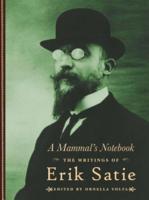
One thing everyone knows about Erik Satie is that he was an eccentric. There are many kinds of eccentric and Satie was most of them. He presented himself as a nutty professor figure, not a composer but a ‘gymnopedist’ and ‘phonometrician’. He dined – or so he claimed in his autobiography – only on ‘food that is white: eggs, sugar, shredded bones, the fat of dead animals’. He walked around Paris in priestly robes, then swapped them for a wardrobe full of identical brown corduroy suits; his interests included rare sea creatures, impossible machines, forgotten local history and the occult. He was a romantic and a mystic, of sorts – his brother, Conrad, called him a ‘transcendent idealist’ – and his music, particularly his earlier works for piano, can make listeners feel so serene that the record industry has claimed him as a kind of guru. In the Satie section of the record shop you’ll find Satie: Piano Dreams, 25 Hypnotic Tracks and Chill with Satie, and his work appears on compilations of ‘classical music for babies’. But during his lifetime his mysticism was rarely presented unironically. He wrote a set of haunting, fragile, otherworldly pieces for piano and called them ‘pieces in the shape of a pear’; his attempt to start his own religion in 1893 looks like both a response to a genuine spiritual need and an elaborate prank. He seems to have felt uncomfortable being serious in public, the more so as the public warmed to him. His eccentricity became a disguise, an armour of winking and raillerie concealing a man nobody knew.
more here.
David Kishik’s ‘The Manhattan Project: A Theory of a City’
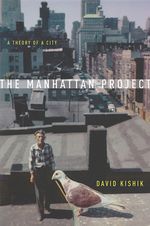
But what if Benjamin had not made his fateful decision on the French border? What if, instead, he faked his own death, assumed the name Carl Roseman, and moved to a cramped apartment in Manhattan to live out his remaining 40 years creating the Gotham twin to his exhaustive Parisian blueprint? This is the premise of David Kishik’s new book, The Manhattan Project: A Theory of a City, a curiously effervescent text that is simultaneously a work of imagined philology, an index of urban delirium, and a fascinating evocation of a city that became the de facto capital of the 20th century. The book’s format can be a little abstruse at first. Kishik marshals actual quotes from Benjamin and fabricated quotes from the fictional Roseman to examine the cultural and philosophical ramifications of urbanity. However, once oriented, there is no small amount of pleasure to be had in the whirling transitions between the factual and the fictive, the settled and the spectral. Kishik, an assistant professor of philosophy at Emerson College, avoids what could be an overly precious conceit by virtue of a charming transparency (“This is a study of a manuscript that was never written,” he begins the very first chapter) and a richly perceptive, almost visceral sensitivity to the “undeserted island” of the city. Far from a nostalgic chimera or gilded illusion, Kishik’s New York emerges here as an existential foil, labyrinthian, a lover both desired and spurned. His seductive interpretations of New York art, culture, tragedy, architecture, celebrity, and history, refracted through the imagined elucidations of a persuasively reanimated Benjamin, emulate the teeming life of the city in all of its breathless variety and unexpectedness. The point of view is unmistakably Kishik’s, a voice erudite though unafraid of irony or humorous observation; however, in employing the real and imagined quotes of Benjamin/Roseman, the book moves beyond mere criticism into a kind of urban bildungsroman, New York’s coming-of-age as told by three worthy author-theorists.
more here.
Violence: A Modern Obsession
Ian Thomson in The Guardian:
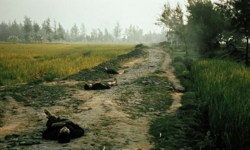
In Violence: A Modern Obsession, historian Richard Bessel turns an appalled eye on our recent moral past. The 20th century is seen by many as the most violent in human history. Not only Auschwitz, but the atomic holocausts in Japan and Stalin’s technocratic Soviet Union showed what a wilful and destructive misuse could be made of technology.Yet, in the west, we have become less violent, argues Bessel. Contemporary entertainment in the form of computer games and films is saturated in violence, but there has been no parallel enthusiasm for participating in ritualised mass murder. A turning point in our sensibilities came with the Vietnam war, Bessel says, when the psychological trauma of violence entered public discussion for the first time and man’s enjoyment in killing came into question. The US massacre of defenceless women and children at the Viet Cong-held village of My Lai in March 1968 prompted calls for an end to the “festival of cruelty” (as Nietzsche termed it).
More here.
The Unrealized Horrors of Population Explosion
Clyde Haberman in The New York Times:
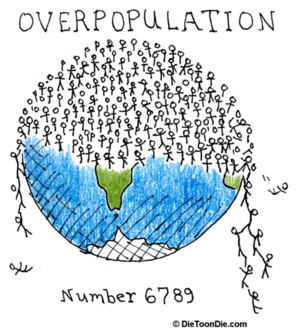
…Some preternaturally optimistic analysts concluded that humans would always find their way out of tough spots. Among them was Julian L. Simon, an economist who established himself as the anti-Ehrlich, arguing that “humanity’s condition will improve in just about every material way.” In 1997, a year before he died, Mr. Simon told Wired magazine that “whatever the rate of population growth is, historically it has been that the food supply increases at least as fast, if not faster.” Somewhere on the spectrum between Dr. Ehrlich the doomsayer and Mr. Simon the doomslayer (as Wired called him) lies Fred Pearce, a British writer who specializes in global population. His concern is not that the world has too many people. In fact, birthrates are now below long-term replacement levels, or nearly so, across much of Earth, not just in the industrialized West and Japan but also in India, China, much of Southeast Asia, Latin America — just about everywhere except Africa, although even there the continentwide rates are declining. “Girls that are never born cannot have babies,” Mr. Pearce wrote in a 2010 book, “The Coming Population Crash and Our Planet’s Surprising Future”.
More here.
Tuesday Poem
Some Love Poems
1
There you go
this morning
with frost
in your parka
down London Road
I’d know your walk
anywhere
But I’m not there
I’m in this dumb room
with your blond hair
& all the beautiful lines
on your very special face
2
In your doorway
I’ll stay
the light kisses
I’ll place
& there are diamonds
on your eyelids
I’ll stay here
in your doorway
& when we kiss
we both look so young
3
Your bathroom is alone
the spotless white bath
your brushes & stuff
I’d stand here often
in my own silence
but your bathroom is alone now
& I don’t wait
I don’t walk
down to the table and ashtray
just to remind you again
how much you will always move me
4
It’s only your voice
& frost on the wires
It’s only the touch
of your hair
only the sunlight
through your white blinds
It’s only your presence
on all the platforms & rain
in all the aisles
in the glasses & bottles
in the air
in the wayward stars
in all the leaves
in our unhappy faces
by Brendan Cleary
from Face
publisher: Pighog, B, 2013
Monday, June 1, 2015
Jonathan Kramnick to Judge 5th Annual 3QD Arts & Literature Prize
Update 29 June: Winners announced here.
Update 19 June: Finalists announced here.
Update 18 June: Voting round now closed, semifinalists announced here.
Update 12 June: Voting round now open, will close on 17 June 11:59 pm EST. Go here to browse the nominated posts and vote.

Jonathan Kramnick is Maynard Mack Professor of English at Yale University. His research and teaching is in eighteenth-century literature, literature and philosophy, and cognitive science and the arts. He's the author of two books, Making the English Canon (1999) and Actions and Objects from Hobbes to Richardson (2010), and many essays. His current work is on the relations among literary form, perceptual consciousness, and built and natural environments.
As usual, this is the way it will work: the nominating period is now open. There will then be a round of voting by our readers which will narrow down the entries to the top twenty semi-finalists. After this, we will take these top twenty voted-for nominees, and the editors of 3 Quarks Daily will select six finalists from these, plus they may also add up to three wildcard entries of their own choosing. The three winners will be chosen from these by Professor Kramnick.
The first place award, called the “Top Quark,” will include a cash prize of 500 dollars; the second place prize, the “Strange Quark,” will include a cash prize of 200 dollars; and the third place winner will get the honor of winning the “Charm Quark,” along with a 100 dollar prize.
(Welcome to those coming here for the first time. Learn more about who we are and what we do here, and do check out the full site here. Bookmark us and come back regularly, or sign up for the RSS Feed.)
The schedule and rules:
June 1, 2015:
- The nominations are opened. Please nominate your favorite blog entry by placing the URL for the blog post (the permalink) in the comments section of this post. You may also add a brief comment describing the entry and saying why you think it should win. Do NOT nominate a whole blog, just one individual blog post.
- Blog posts longer than 4,000 words are strongly discouraged, but we might make an exception if there is something truly extraordinary.
- Each person can only nominate one blog post.
- Entries must be in English.
- The editors of 3QD reserve the right to reject entries that we feel are not appropriate.
- The blog entry may not be more than a year old. In other words, it must have been first published on or after June 1, 2014.
- You may also nominate your own entry from your own or a group blog (and we encourage you to).
- Guest columnists at 3 Quarks Daily are also eligible to be nominated, and may also nominate themselves if they wish.
- Nominations are limited to the first 100 entries.
- Prize money must be claimed within a month of the announcement of winners.
June 10, 2015
- The public voting will be opened.
June 17, 2015
- Public voting ends at 11:59 PM (NYC time).
June 19, 2015
- The finalists are announced.
June 29, 2015
- The winners are announced.
One Final and Important Request
If you have a blog or website, please help us spread the word about our prizes by linking to this post. Otherwise, post a link on your Facebook profile, Tweet it, or just email your friends and tell them about it! I really look forward to reading some very good material and think this should be a lot of fun for all of us.
Best of luck and thanks for your attention!
Perceptions

Lieko Shiga. Rasen kaigan (Spiral Shore), 46, 2011, from the series Rasen kaigan (Spiral Shore), 2011.
Photograph, digital print.
“The Great East Japan Earthquake struck on March 11, 2011, and an enormous wave of water swept through towns in the Tōhoku (Northeast) region, destroying virtually everything in its path and irrevocably damaging the Fukushima nuclear power plant. This triple disaster was of such epic proportions that it became a defining moment for Japan. A number of photographers felt compelled to record not only the events’ physical effects on the land, but also to interpret the overarching significance of the tragedy through art. …”
Part of current exhibition titled In The Wake at MFA, Boston.
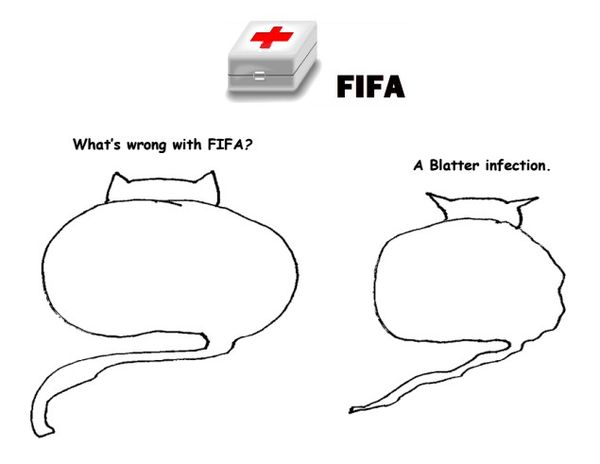
CATSPEAK
by Brooks Riley
Sunday, May 31, 2015
‘Nabokov in America’ looks at how U.S. shaped novelist
Michael Dirda in the Washington Post:
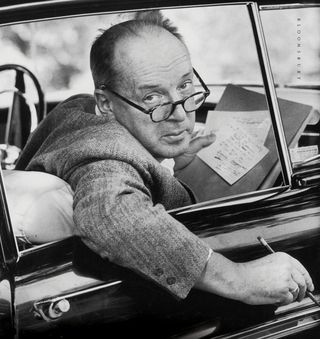
Today Nabokov’s early works, composed in his native Russian though later translated into English, tend to be respected rather than loved. “The Gift” (1938) has been called the greatest Russian novel of the 20th century, but most readers — this one included — find it hard slogging. The late books, starting with “Ada” (1968), tend to be overly fancy and precious, self-reflexive exercises appealing only to the most ardent devotees. In effect, these lesser works are European, whether composed by a young exile fleeing the Russian Revolution or a world-famous candidate for the Nobel Prize (which he never won).
But the work of the roughly 20 years from 1940 to 1962 reveals, in Roper’s words, “the sheer flabbergasting Americanness of Nabokov’s transformation, the way he opened himself to ‘local influences’ ” once he arrived in this country at age 41 with his wife, Véra, and son, Dmitri. Before then, he’d been too much the aesthete, while “the American context . . . fed meaning and amplitude into fancy’s brew.” Nabokov’s finest work celebrates what his character Humbert Humbert calls “the lovely, trustful, dreamy, enormous country” that he and Lolita see by car.
More here.
Was Picasso a misogynist?
Jonathan Jones in The Guardian:
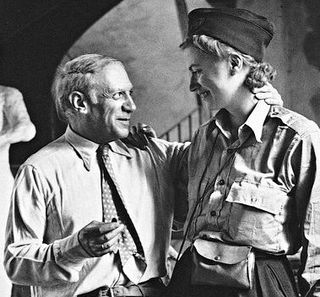
Picasso has been characterised by many as a misogynist, a bully who put “his” women on a pedestal only to knock them off it, a man who feared, as well as desired, the female body and who was a selfish, demanding, narcissistic husband, lover and even grandparent. You get the picture, recognise the cliche. But is any of it really true?
There is another side to Picasso, and an exhibition opening at the Scottish National Portrait Gallery offers a glimpse of it. The photographer Lee Miller had a relationsip with Picasso that was neither abusive nor carnal. In a word, they were friends. Lee Miller and Picasso documents that friendship through their mutual portraits – she took more than 1,000 photographs of him; he painted her portrait six times – and adds up to a much more gentle, sociable image of Picasso than biographers tend to create. But was Lee Miller the only woman to tame this minotaur?
More here. [Thanks to Tunku Varadarajan.]
Israel Has Been Bitten by a Bat
Lawrence Weschler in TruthDig:

For the single overriding fact defining the Israeli-Palestinian impasse at this point is that if the Palestinians are quiescent and not engaged in any overt rebellion, the Israelis (and here I am speaking of the vast majority of the population who somehow go along with the antics of their leaders, year after year) manage to tell themselves that things are fine and there’s no urgent need to address the situation; and if, as a result, the endlessly put-upon Palestinians do finally rise up in any sort of armed resistance (rocks to rockets), the same Israelis exasperate, “How are we supposed to negotiate with monsters like this?” A wonderfully convenient formula, since it allows the Israelis to go blithely on, systematically stealing Palestinian land in the West Bank, and continuing to confine 1.8 million Gazans within what might well be described as a concentration camp.
More here.
The Untold Story of Silk Road: How a 29-year-old idealist built a global drug bazaar and became a murderous kingpin
Joshua Bearman in Wired:
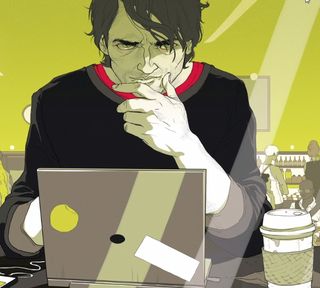
Green opened the door. It was winter, a day of high clouds and low sun. A pale haze washed out the white-tipped Spanish Fork Peak rising above the valley. Green looked down. On the porch sat a Priority box—about Bible-sized. His little dogs watched him pick up the mystery package. It was heavy, had no return address, and bore a postmark from Maryland.
Green considered the package and then took it into his kitchen, where he tore it open with scissors, sending up a plume of white powder that covered his face and numbed his tongue. Just then the front door burst open, knocked off its hinges by a SWAT team wielding a battering ram. Quickly the house was flooded by cops in riot gear and black masks, weapons at the ready. There was Green, covered in cocaine and flanked by two Chihuahuas. “On the floor!” someone yelled. Green dropped the package where he stood. When he tried to comfort his pups, a dozen guns took aim: “Keep your hands where we can see them!”
More here.
Jimi Hendrix Documentary
PUNK BRITTANIA
Motörhead: Live Fast Die Old
Don’t be intimidated by museums. They belong to everyone.
Darby English in The Guardian's Comment is free:
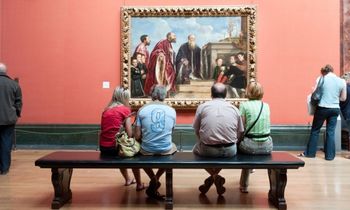
But museums are typically sited in the public realm, in the commons – a place of encounters and collisions wherein diverse peoples become a public. Judged by their use, museums can only be as white as visitors allow them to be. And they’ll remain white, in this political sense, only for as long as people of color regard them as discontinuous with the sort of spaces we would never dream of avoiding, such as public schools or the cinema.
People’s feelings of unwelcomeness must be honored absolutely. But it is unwise to essentialize museums – to presume to know in advance which ones corroborate those feelings and which do not. Activist lobbying against prohibitive entrance fees or for more inclusive displays are both more practicable and more likely to change the social complexion of museums than simply capitulating to the idea of these institutions’ “whiteness” or to soft science about the “threshold fear” that effectively bars nonwhite visitors.
“Threshold fear” revives the historical perception that art is the exclusive property, right and concern of the affluent upper classes and the upwardly mobile. It reinforces that invisible but quite effective wall separating inhabitants of the commons from the most privileged artifacts of the historical process in which we together participate, albeit in uneven ways. “Threshold fear” throws up images that are hugely disempowering: it stops the striding citizen in her tracks, abstracts from her the curiosity that brought her to the threshold in question, reduces her to a category, denies her imminent claim on the space of the museum, impedes her assumption of a place in the narratives it offers up and severely constrains her relationship to art.
Read the rest here.
Why we must never forget the war in Afghanistan
Patrick Hennessey in The Telegraph:
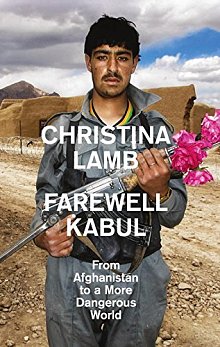
I was lucky enough to be sitting near Lamb at that same charity dinner – fresh from my own tour of Helmandand no doubt insufferable with bravado – and it was obvious then that not only did she have the best war stories of anyone at the table, more importantly she had an understanding of the country we could only have dreamed of. Plenty of high-adrenalin moments pepper this book, but it is the background colour and impressive access that really bring it to life. Big names drop nearly as frequently as the bombs, as Lamb recounts not just fleeting conversations but lengthy interviews with a Who’s Who of Afghanistan and Pakistan in the past three decades. She reveals a touching intimacy with Hamid Karzai, who she presents as a more complex and perhaps more sympathetic figure than the two-dimensional hero-turned-corrupt-villain of the stereotype here and in the United States.
More here.
The House of Hidden Mothers: A tale of life, love and surrogacy
Yasmin Alibhai Brown in The Independent:
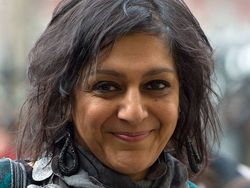
But this new novel had me gripped. It has the verve of Anita and Me but is more intense and knowing. Syal's writing is finer, contemplative and layered. Beneath the pacy narrative and emotional journeys thrum observations about youth and age, East and West, wealth and poverty, love and sex, pain, joy and resilience. The central character, Shyama, 48, is a lone Asian mother of a teenage daughter, and has a young lover, Toby. They want a child, go for IVF tests. The doctor gives her the bad news: she has no eggs, so can't have a baby. As her hopes are dashed, Shyama's internal monologue takes over: silly old woman of modest means falls for a predictably handsome younger man without a steady career. She gets an ego boost and boundless energy in bed; he gets use of the house, the car, the soft-mattress landing of her unspoken gratitude. He kisses the scars left from a disastrous marriage. Cruel fate and biology cannot stop her; the dream lives on. Shyama decides to try surrogacy in India.
More here.