Attempt to shame journalists with chocolate study is shameful

Rachel Ehrenberg in Science News:

Culture_chocolate_flickr_free“I Fooled Millions Into Thinking Chocolate Helps Weight Loss. Here's How.”

That’s the headline on a May 27 article by science journalist John Bohannon that revealed the backstory of a sting operation he conducted earlier this year. Bohannon and a German television reporter teamed up to “demonstrate just how easy it is to turn bad science into the big headlines behind diet fads.” So they recruited subjects and ran a small clinical trial purporting to test whether eating dark chocolate helped people lose weight. The team used real data from their real trial and published their results in a real (non peer-reviewed) journal, the International Archives of Medicine. The study did find an effect, but that was likely due to a statistical sleight-of-hand; it was impossible to say whether chocolate really helped people lose weight.

To lure reporters into covering the flimsy research, Bohannon and his colleagues ginned up a press release describing their chocolate results. The team sent the release out via Newswise, a site that aggregates press releases and distributes them to some 5,000 journalists. And some of those journalists took the bait.

From the big headline on Bohannon’s piece describing the con, you might think that it was a roaring success. But the “millions” that Bohannon and his partners-in-crime fooled weren’t millions of reporters, but millions of regular people, the consumers of journalism, who believed the reporters covering his study. Not only was Bohannon’s con ethically reprehensible — he lied to the public, undermining their trust in both journalism and science — but also Bohannon is guilty of the very practices he claims he exposed.

More here. [Thanks to Jennifer Oullette.]
Why Pulitzer Prize-winner Jhumpa Lahiri quit the US for Italy

Sheila Pierce in the Financial Times:

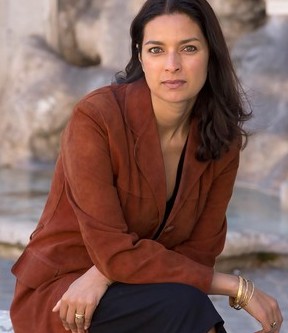
At ScreenHunter_1202 May. 30 18.47Bar Glorioso, Jhumpa Lahiri stirs her daily espresso next to Roman workmen sipping beer, and converses in shy, fluent Italian with the barista. She speaks with the vocabulary of a bibliophile, the faint accent of an unidentifiable foreigner, and the serenity of a neighbourhood regular.

If the barista knows that Lahiri received the Pulitzer Prize for Fiction when she was 32, he does not treat her any differently because of it. And that’s one of the many reasons why she loves living in Italy: she has recovered the anonymity she cherished before becoming a literary celebrity.

After a lifetime of feeling that she never quite fitted into either India or the US, Lahiri feels a casa (“at home”) in Rome. She recently wrote about her Italian metamorphosis in a “linguistic autobiography”, titledIn Altre Parole (“In Other Words”), which hit Italian bookstores in January. “I waited a very long time to really go away from the world I knew,” she says. “Rome has given me a sense of belonging.”

Three years ago, Lahiri, 47, fulfilled her life-long wish of living in Italy, and moved to Rome from Brooklyn with her husband and their two children, Octavio, 13, and Noor, 10. A fan of Roman mythology as a child, a student of Latin at Barnard College, New York City (where she majored in English), and a PhD scholar in Renaissance studies at Boston University, she had always felt attracted to Rome.

More here.

THE EGOS OF IAGO

From More Intelligent Life:

He’s one of the great villains. But why exactly does he destroy Othello? As the RSC casts a black Iago, Irving Wardle 
(first half) and Robert Butler (second half) pick nine of the best readings of the role.

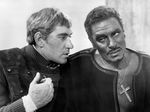
Iago1964 FRANK FINLAY, National Theatre
Olivier took care that his Othello should not be overshadowed by giving the part of Iago to Frank Finlay (below left)—who duly sank to the occasion as a plodding squaddie, in lowly contrast to his glamorous general. Olivier, however, always at his best in physical contact, granted that privilege to his unsavoury underling, who seized the opportunity to cling round his neck like an incubus pouring poison in his ear. As a character, his motive was erotic; as an actor, it was self-preservation. In these scenes, Olivier was not the boss.

1976 TIMOTHY WEST, Nottingham Playhouse
Taking advantage of Daniel Massey’s flyweight Othello, Timothy West used every trick in Iago’s repertoire to push the play towards farce. The most plain-dealing character on stage, he enlisted the audience as conniving accomplices in the farcical pleasure of knocking a big shot off his plinth. Forget plot motive; the show’s mainspring was that we are all Iagos.

More here.

Floridapocalypse: The End of the Sunshine State

FPS15861Nick Moran at The Millions:

There are many ways to die in Florida, and a hurricane is only one. For example, you could be undone by the effects of sea-level rise — more than 3.7 inches since 1996 — which will soon turn Miami into America’s Atlantis. Then there are sink holes swallowing subdivisions into the state’s limestone maw. Florida is where Americans are most likely to be bitten by sharks and struck by lightning.

There are also trends that, while they may not immediately kill you, will completely alter the state’s identity, and could end life as we all know it. The reefs are being destroyed, the citrus is greening, and the swamp has been invaded by massive pythons, cat-eating lizards, and titanic rodents.

And that’s just nature. Pay attention to the “Florida Man” news stories long enough and you’ll wonder how anyone survives for more than a day in the state. It’s distressing enough to worry about natural furies beyond your control, but now you’ve also got to watch out for face-eating madmen and self-proclaimed demigods with dendrophilic tendencies. Even the act of dying seems particularly terrible in Florida, a state where corpses buried in the fertile soil can rise again on their own. (In that context, one suddenly understands the meaning behind that Patty Griffin song.)

All this considered, it shouldn’t be a surprise that Florida has been the setting for several works of pre-, post-, and regular apocalyptic fiction for more than 60 years.

more here.

An interview with Masha Gessen

When-they-made-it-clear-t-007MH Miller at The Guardian:

The book begins by tracing the Tsarnaev family’s movements between 1985 and 2012, from locations in Kyrgyzstan, Russia, Kalmykia and Istanbul to Boston and elsewhere, though they have become predominantly associated with Makhachkala in Dagestan – “a backwater”, as Gessen describes it, in the North Caucasus. They were rovers, endlessly looking for a place to belong and never finding one. Their problems were constant, but the real tragedy, Gessen argues, began with the Russian apartment bombings of 1999, which killed nearly 300 people. Putin, the former KGB lieutenant colonel and recently named successor to then president, Boris Yeltsin, blamed these events on Islamist Chechen rebels. The first Chechen war ran from 1994 to 1996, and the Tsarnaevs, recently relocated to Chechyna, were present for its beginnings. The war left hundreds of thousands of people dead or displaced.

When the conflict ended, the North Caucasus remained unstable, and the accusations of Putin were enough to catapult the region once again into turmoil – and Putin to national popularity. As the second war raged on, centred inChechnya and Dagestan (the Tsarnaevs were now back in Makhachkala), evidence began to accumulate, according to Gessen, suggesting the Russian secret police had arranged the bombings for the purpose of bolstering nationalist fervour and securing Putin’s public reputation.

more here.

‘The Meursault Investigation’ re-imagines Camus’ ‘Stranger’

La-afp-getty-france-algeria-literature-files-jpg-20150527David L. Ulin at The LA Times:

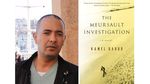
Give Kamel Daoud credit for audacity. In his debut novel, “The Meursault Investigation,” the Algerian journalist goes head-to-head with a pillar of 20th century literature: Albert Camus' existential masterpiece “The Stranger.”

First published in France in 1942, Camus' novel tells the story of Meursault — like the author, a French Algerian, or pied-noir — who under the influence of heat or fate kills an Arab on the beach at the peak of a summer afternoon. “I shook off the sweat and sun,” Meursault informs us. “… Then I fired four more times at the motionless body where the bullets lodged without leaving a trace. And it was like knocking four quick times on the door of unhappiness.”

“The Meursault Investigation” takes place on the other side of that door, offering a glimpse of the fallout from Meursault's futile violence. Its narrator is the victim's brother, an old man named Harun who looks back, from the perspective of the present, on the killing and what it signifies. “And there,” he observes, “I've always thought, is where the misunderstanding came from; what in fact was never anything other than a banal score-settling that got out of hand was elevated to a philosophical crime.
more here.

Psychosomatic disorders: When illness really is all in the mind

Suzanne O'Sullivan in The Telegraph:

Illness_in_mind_3320789bI qualified as a doctor in 1991. I knew from an early stage in my training that I wanted to be a neurologist. When I made that choice I thought I knew what it meant: I enjoyed the detective drama, unravelling the mysteries of how the nervous system communicates its messages, and learning all the things that can go wrong. I started my first training post in neurology in 1995, expecting to look after people who had diseases of the brain and nerves and muscles; conditions such as multiple sclerosis, stroke, migraine and epilepsy. I could not have predicted how far I would find myself drawn into the care of those whose illness originated not in the body, but in the mind. Examples of how the mind affects the body are everywhere. Some are commonplace: tears are a physiological response to a feeling. Blushing occurs when the blood vessels of the head and neck dilate and become infused with blood. It is an instantaneous and uncontrollable physical change seen on the surface but reflecting a feeling of embarrassment or happiness that is held inside.

The word psychosomatic refers to physical symptoms that occur for psychological reasons. Tears and blushing are examples of this, but they are normal responses that do not represent illness. It is only when psychosomatic symptoms go beyond the ordinary and impair our ability to function that illness results. Modern society likes the idea that we can think ourselves better. When we are unwell, we tell ourselves that if we adopt a positive mental attitude, we will have a better chance of recovery. I am sure that is correct. But society has not fully woken up to the frequency with which people do the opposite – unconsciously think themselves ill.

More here.

Saturday Poem

Shackleton's Biscuit

Of ox and luncheon tongue, six hundred pounds;
of Wiltshire bacon, seven-tenths of a ton.
Seventeen hundred miles they walked, and it was
pony meat that saved them. But one biscuit, this one
Of thousands, baked by Huntley & Palmers, a special formulation
fortified with milk protein, survives—the men
Long dead, and the ponies, whose lives flew through
Bullet holes easily over the frozen labyrinth of the Fortuna Glacier,
all gone to powder. Found a century later in the wrecked
Larder of one of Shackleton's way stations, it remains
perfectly nutritious, and sold at a Christie's auction
Is worth a thousand-some sterling. We had seen God in
His splendors; we had reached the naked soul of man,
He wrote. And: This biscuit, said a Christie's director,
is an object that really catches the imagination.
.
.

by T. R. Hummer
from Skandalon
Louisiana State University Press.

Ernest Shackleton

Science: Humblebragging doesn’t work. If you want to brag, just brag

Derek Thompson in The Atlantic:

Lead_960Praise and sympathy: They are two of life’s essentials, the oxygen and carbon dioxide of social interaction. The first is most directly elicited by bragging, and the second, by complaining. The humblebrag—e.g. I’m exhausted from Memorial Day weekend; it’s soooo hard to get out of Nantucket—sits at the center of these competing needs. It is a boast in sheepish clothing, kvelling dressed in kvetch. And, like nearly all forms of multi-tasking, the drive to satisfy two goals at once typically results in double-failure.

“Two fundamental goals in life are to get people to be impressed by us and feel sympathy for us,” said Michael Norton, a professor at Harvard Business School and co-author of the paper Humblebragging: A Distinct–and Ineffective–Self-Presentation Strategy. “People think they can get the best of both worlds by being indirect. Instead they are perceived as insincere.”

False modesty is not a recent invention, as Jane Austen proves. But the humblebrag portmanteau, Norton said, might be a product of the social media age, due to the space limitations of platforms like Twitter. Stories that once cautiously mixed humility and boastfulness now appear, suddenly concentrated in the crucible of a Twitter box, to be inelegant attempts to disguise pride.

More here.

Friday, May 29, 2015

Academic debate has huge implications for the future of world peace

Screen_Shot_2014-10-03_at_6.19.42_PM.0

Zack Beauchamp in Vox:

A key part of Pinker's work is the notion of the “long peace” — an idea that Pinker actually borrows from a historian, John Lewis Gaddis. It refers to the fact that in the past 70 years, wars between great powers have basically gone away. Because situations like the Cold War never escalated to direct conflict, we've managed to avoid the type of warfare that devastated societies in the early 20th century and, indeed, much of human history.

If the causes of that are, as Pinker suggested in a lecture, “the pacifying forces” of “democracy, trade, and international society,” then we should expect this trend to continue. So long as we continue to maintain the trends of the world we live in, including growing international trade, strengthening of international institutions like the UN, and strong diplomatic ties between democratic states, then we might actually be able to keep making the world a better place.

Enter NYU professor Nassim Nicholas Taleb, who is best known as the author of The Black Swan, a book on rare events. He thinks all of this is starry-eyed nonsense. In his opinion, proponents of the “war is declining” argument are over-interpreting evidence of a good trend in the same way people used to argue that the stock market could go up forever without crashes. He wrote a stinging critique of Pinker's work, which Pinker replied to, and then Taleb replied to again.

Taleb's new paper, co-authored with Delft University's Pasquale Cirillo, is the latest volley in that ongoing intellectual war. It's probably the most statistically sophisticated argument to date that war isn't declining — and that we're still every bit at risk of a major conflict as we always were.

More here.

I’m a black ex-cop, and this is the real truth about race and policing

474571396.0.0

Redditt Hudson in Vox:

On any given day, in any police department in the nation, 15 percent of officers will do the right thing no matter what is happening. Fifteen percent of officers will abuse their authority at every opportunity. The remaining 70 percent could go either way depending on whom they are working with.

That's a theory from my friend K.L. Williams, who has trained thousands of officers around the country in use of force. Based on what I experienced as a black man serving in the St. Louis Police Department for five years, I agree with him. I worked with men and women who became cops for all the right reasons — they really wanted to help make their communities better. And I worked with people like the president of my police academy class, who sent out an email after President Obama won the 2008 election that included the statement, “I can't believe I live in a country full of ni**er lovers!!!!!!!!” He patrolled the streets in St. Louis in a number of black communities with the authority to act under the color of law.

That remaining 70 percent of officers are highly susceptible to the culture in a given department. In the absence of any real effort to challenge department cultures, they become part of the problem. If their command ranks are racist or allow institutional racism to persist, or if a number of officers in their department are racist, they may end up doing terrible things.

It is not only white officers who abuse their authority. The effect of institutional racism is such that no matter what color the officer abusing the citizen is, in the vast majority of those cases of abuse that citizen will be black or brown. That is what is allowed.

And no matter what an officer has done to a black person, that officer can always cover himself in the running narrative of heroism, risk, and sacrifice that is available to a uniformed police officer by virtue of simply reporting for duty. Cleveland police officer Michael Brelo was recently acquitted of all charges against him in the shooting deaths of Timothy Russell and Malissa Williams, both black and unarmed. Thirteen Cleveland police officers fired 137 shots at them. Brelo, having reloaded at some point during the shooting, fired 49 of the 137 shots. He took his final 15 shots at them after all the other officers stopped firing (122 shots at that point) and, “fearing for his life,” he jumped onto the hood of the car and shot 15 times through the windshield.

More here.

My Title IX Inquisition

Photo_69821_wide_large

Laura Kipnis on the backlash to her earlier piece, in The Chronicle of Higher Education Chronicle Review illustration by Scott Seymour):

When I first heard that students at my university had staged a protest over an essay I’d written in The Chronicle Review about sexual politics on campus — and that they were carrying mattresses and pillows — I was a bit nonplussed. For one thing, mattresses had become a symbol of student-on-student sexual-assault allegations, and I’d been writing about the new consensual-relations codes governing professor-student dating. Also, I’d been writing as a feminist. And I hadn’t sexually assaulted anyone. The whole thing seemed symbolically incoherent.

According to our campus newspaper, the mattress-carriers were marching to the university president’s office with a petition demanding “a swift, official condemnation” of my article. One student said she’d had a “very visceral reaction” to the essay; another called it “terrifying.” I’d argued that the new codes infantilized students while vastly increasing the power of university administrators over all our lives, and here were students demanding to be protected by university higher-ups from the affront of someone’s ideas, which seemed to prove my point.

The president announced that he’d consider the petition.

Still, I assumed that academic freedom would prevail. I also sensed the students weren’t going to come off well in the court of public opinion, which proved to be the case; mocking tweets were soon pouring in. Marching against a published article wasn’t a good optic — it smacked of book burning, something Americans generally oppose. Indeed, I was getting a lot of love on social media from all ends of the political spectrum, though one of the anti-PC brigade did suggest that, as a leftist, I should realize these students were my own evil spawn. (Yes, I was spending a lot more time online than I should have.)

Being protested had its gratifying side — I soon realized that my writer friends were jealous that I’d gotten marched on and they hadn’t. I found myself shamelessly dropping it into conversation whenever possible. “Oh, students are marching against this thing I wrote,” I’d grimace, in response to anyone’s “How are you?” I briefly fantasized about running for the board of PEN, the international writers’ organization devoted to protecting free expression.

Things seemed less amusing when I received an email from my university’s Title IX coordinator informing me that two students had filed Title IX complaints against me on the basis of the essay and “subsequent public statements” (which turned out to be a tweet), and that the university would retain an outside investigator to handle the complaints.

I stared at the email, which was under-explanatory in the extreme. I was being charged with retaliation, it said, though it failed to explain how an essay that mentioned no one by name could be construed as retaliatory, or how a publication fell under the province of Title IX, which, as I understood it, dealt with sexual misconduct and gender discrimination.

More here.

The Mystery of Kangaroo Adoptions

Carl Zimmer in his excellent blog, The Loom:

Kangaroo-12003-990x667Scientists have observed adoption in occurring 120 species of mammals. Other species that are harder to study may be adopting, too. As for kangaroos, scientists have long known that if they put a joey in an unrelated female’s pouch, she will sometimes keep it. But King and her colleagues have now discovered that kangaroos will voluntarily adopt joeys in the wild. All told, they found that 11 of the 326 juveniles were adopted over their five-year study–a rate of about three percent. Given the commitment adoption demands from a mammal mother–a kangaroo mother needs a full year to raise a single joey to weaning–this discovery cries out for an explanation.

Over the years, researchers have proposed a number of different explanations for adoption. Some have suggested that mammals adopt young offspring of their relatives because they are genetically similar. By rearing the offspring of their kin, this argument goes, adoptive parents can ensure that some of their own genes get passed down to future generations.

According to another explanation, unrelated adults may adopt each other’s young because this kind of quid-pro-quo benefits everyone involved. And according to a third explanation, young adults adopt orphaned juveniles as a kind of apprenticeship. They learn some important lessons about how to raise young animals, which they can apply later to raising their own offspring.

These explanations share something in common. They all take adoption to have an evolutionary benefit. In the long run, the genes that make animals willing to adopt become more common thanks to natural selection.

But in the case of kangaroos–and perhaps other species, too–evolution may have instead have made a mess of things. Adoption may not be an adaptation. It may be a maladaptation.

More here.

‘Primates of Park Avenue: A Memoir,’ by Wednesday Martin

Vanessa Grigoriadis in the New York Times:

31grigoriadis-blog427A few pages into “Primates of Park Avenue,” I raised an eyebrow as high as a McDonald’s arch. Was Wednesday Martin, a ­Midwestern-born Ph.D., trying to explain the rites of the Upper East Side to me, an autochthonous Manhattanite schooled at one of the neighborhood’s top “learning huts”? She was a late transfer to the New York troop — a particularly vicious troop, at that — and it’s a weak position to be in throughout the primate kingdom, whether human or monkey.

I underestimated Martin with few repercussions, but the SoulCycled, estrogen-dimmed and ravenously hungry young mothers who similarly exhibited New York’s inbred superciliousness have done so at their peril, because now she’s gone and told the world their tricks. “I was afraid to write this book,” Martin confesses, but I guess she got over it. Instead, she obsessively deconstructs the ways of her new tribe, from the obvious — “No one was fat. No one was ugly. No one was poor. Everyone was drinking” — to the equally obvious but narratively rich: “It is a game among a certain set to incite the envy of other women.”

The result is an amusing, perceptive and, at times, thrillingly evil takedown of upper-class culture by an outsider with a front-row seat. The price of the ticket, a newly purchased Park Avenue condop in the 70s with a closet designated exclusively for her handbags, wisely goes unmentioned, the better to establish rapport with readers in Des Moines.

More here.

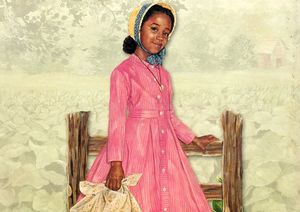
Addy Walker, American Girl

Brit Bennett in Paris Review:

Addymeet2In 1864, a nine-year-old slave girl was punished for daydreaming. Distracted by rumors that her brother and father would be sold, she failed to remove worms from the tobacco leaves she was picking. The overseer didn’t whip her. Instead, he pried her mouth open, stuffed a worm inside, and forced her to eat it. This girl is not real. Her name is Addy Walker; she is an American Girl doll, one of eight historical dolls produced by the Pleasant Company who arrive with dresses, accessories, and a series of books about their lives. Of all the harrowing scenes I’ve encountered in slave narratives, I remember this scene from Meet Addy, her origin story, most vividly. How the worm—green, fat, and juicy—burst inside Addy’s mouth. At eight years old, I understood that slavery was cruel—I knew about hard labor and whippings—but the idea of a little girl being forced to eat a worm stunned me. I did not yet understand that violence is an art. There’s creativity to cruelty. What did I know of its boundaries and edges?

An American Girl store is designed like a little girl’s fantasyland, or what the Pleasant Company, owned by Mattel, imagines that to be. Pink glows from the walls; yellow shelves hold delicate dolls in display cases. Nurses tend to a hospital for defunct toys and a café hosts tea parties for girls and their dolls. The company has retired many of the historical American Girls from my childhood—the colonist Felicity, the frontierswoman Kirsten, and the World War II–era Molly, all among the original set of dolls, released in 1986—but Addy remains. Against the store’s backdrop of pink tea parties, her story seems even more harrowing. Addy escapes to the north with her mother, forced to leave her baby sister behind because her cries might alert slave-catchers. In Philadelphia, Addy struggles to adjust and dreams of her family reuniting. They do, it turns out, find each other eventually—a near impossibility for an actual enslaved family—but at no small cost. Her brother loses an arm fighting in the Civil War. Her surrogate grandparents die on the plantation before she can say goodbye. Other American Girls struggle, but Addy’s story is distinctly more traumatic. For seventeen years, Addy was the only black historical doll; she was the only nonwhite doll until 1998. If you were a white girl who wanted a historical doll who looked like you, you could imagine yourself in Samantha’s Victorian home or with Kirsten, weathering life on the prairie. If you were a black girl, you could only picture yourself as a runaway slave.

More here.

Lust and the Turing test

Christof Koch in Nature:

Ex-machina-poster-1024x768By and large, we watch movies to be entertained, not to be provoked into deep thought. Occasionally, a film does both. This year’s Ex Machina is one such gem. It prompted me to reflect upon the evolution of the idea of machine sentience over the past three decades of science fiction on film. I am a long-time student of the mind-body problem — how consciousness arises from the brain. There is a conundrum at the heart of this ancient dilemma, challenging both brain science and AI; and it is well captured by Ex Machina and two other SF movies. In essence, it lies in how we can ever be certain that a machine feels anything, is conscious.

…Enter Ex Machina, directed by Alex Garland. This intelligent and thoughtful mix of psycho-drama and SF thriller centers on a strange ménage à trois. Ava is a beauty with a difference (a phenomenal performance by Alicia Vikander); Caleb is a nerdy young programmer (Domhnall Gleeson); Nathan is a beastly, brilliant inventor and immensely rich tech-entrepreneur (Oscar Isaac). Caleb is selected by Nathan, a recluse, to spend a week at his live-in Arctic laboratory. He introduces Caleb to Ava, an advanced cyborg whose semi-transparent skull and body reveal inner workings, including a brain that is quasi-organic in some unspecified way. It’s a twist on Blade Runner: if Caleb interacts with Ava as he would with an alluring woman – while seeing clearly that she is not flesh and blood – that would testify to Ava’s ability to convince him she has real feelings. Ava and Caleb hit it off at first sight. Unlike Her, Ex Machina soon becomes a game of smoke and mirrors. Ava hints to Caleb that she doubts Nathan’s purely scientific motives; there are bizarre scenes such as Nathan doing a synchronized dance routine with a mute servant. Nathan’s lab becomes Bluebeard’s Castle, complete with locked rooms and heavy psychosexual undertones. Ex Machina’s ending, invoking the trope of the femme fatale, is logical, surprising and darker than Blade Runner’s. All three films showcase how the psychology of desire can be exploited to forge a powerful empathic response in their protagonists, sweeping away doubts about the object of their longing having sentience. It’s a Turing test based on lust, each movie an excursion into human social psychology and the attendant gender power politics.

More here.

Manhood: Badly educated men in rich countries have not adapted well to trade, technology or feminism

In The Economist:

20150532_esd666For those at the top, James Brown’s observation that it is a man’s, man’s, man’s world still holds true. Some 95% of Fortune 500 CEOs are male, as are 98% of the self-made billionaires on the Forbes rich list and 93% of the world’s heads of government. In popular films fewer than a third of the characters who speak are women, and more than three-quarters of the protagonists are men. Yet the fact that the highest rungs have male feet all over them is scant comfort for the men at the bottom.

Technology and trade mean that rich countries have less use than they once did for workers who mainly offer muscle. A mechanical digger can replace dozens of men with spades; a Chinese steelworker is cheaper than an American. Men still dominate risky occupations such as roofer and taxi-driver, and jobs that require long stints away from home, such as trucker and oil-rig worker. And, other things being equal, dirty, dangerous and inconvenient jobs pay better than safe, clean ones. But the real money is in brain work, and here many men are lagging behind. Women outnumber them on university campuses in every region bar South Asia and sub-Saharan Africa. In the OECD men earn only 42% of degrees. Teenage boys in rich countries are 50% more likely than girls to flunk all three basic subjects in school: maths, reading and science.

The economic marginalisation this brings erodes family life. Women who enjoy much greater economic autonomy than their grandmothers did can afford to be correspondingly pickier about spouses, and they are not thrilled by husbands who are just another mouth to feed.

If the sort of labour that a man like Mr Redden might willingly perform with diligence and pride is no longer in great demand, that does not mean there are no jobs at all. Everywhere you look in Tallulah there are women working: in the motels that cater to passing truckers, in the restaurants that serve all-you-can-eat catfish buffets, in shops, clinics and local government offices. But though unskilled men might do some of those jobs, they are unlikely to want them or to be picked for them.

Read the rest here.

Friday Poem

Different Rose
.
I gave birth to an incredibly beautiful daughter, her teeth,
her hair as though from the Song of Songs. And I
felt beautiful myself, thank you. Whereas she –
that's a completely different beauty,
that's beauty I want to protect.
If I had some sort of beauty I'd blush,
anyhow I probably do have some, guys
wouldn't chase after me as much if I didn't,
but I don't like my beauty, because guys
chase after it. My daughter’s beauty
is something else. My daughter’s beauty, I believe,
is the only hope
for this world.
.

by Justyna Bargielska
from Bach for my baby
publisher: Biuro Literackie, Wrocław, 2013
translation: Maria Jastrzębska
from: Versopolis.com, 2015

Read more »