‘Words Without Music,’ by Philip Glass

07subGANN-master675Kyle Gann at The New York Times:

The “making” of a composer is the real subject of “Words Without Music.” Glass outlines his years before the successes of his operas “Satyagraha” (1980) and “Akhnaten” (1983) in loving detail; his life and work since then — including his film scores for Martin Scorsese, Woody Allen, Errol Morris and others — is skimmed through, with all-too-quick descriptions of the remarkable (and mostly nonfamous) people he has known.

One struggles to imagine how any human could have kept his schedule in the late ’50s and early ’60s: composing from 10 a.m. to 1 p.m., loading trucks in the evenings, practicing piano several hours a day, attending classes, taking music and yoga lessons, going to movies and art exhibitions with friends, driving a motorcycle cross-country. Side stories feature cameos by figures one might not associate with Glass. He shared an apartment with the blind composer Moondog, who dressed as a Viking and played his ­compositions on the streets of Midtown Manhattan. And he recounts inventing the “Hardart,” a keyboard of toy instruments, for the fictional P. D. Q. Bach’s ­Concerto for Horn and Hardart, written by his Juilliard chum Peter Schickele — and making it a transposing instrument in the key of E so Schickele would have an added challenge.

more here.
‘Boswell’s Enlightenment’ by Robert Zaretsky

A-detail-from-Joshua-Reyn-010James Campbell at The Observer:

While studying in Utrecht in 1764, the trainee lawyer and diarist James Boswell met a young woman called Belle de Zuylen – known as Zélide in Boswell’s journal – a novelist, religious doubter and amorous adventurer, with a lightning mind which “flashes with so much brilliance [it] may scorch”. Boswell was in search of a wife, and Belle, he assumed, would be in need of a husband.

Despite being rebuffed, he persisted in his attentions, finally applying, not to Belle herself, but to her father. The “terms of the treaty”, as Robert Zaretsky puts it in Boswell’s Enlightenment, were “as onerous as they were outlandish”. As Mrs Boswell, Belle would swear never to see, or write to, another man, not to publish any literary works without her husband’s approval and, in the words of the proposal, “never to speak against the established religion or customs of the country she might find herself in”, which was most likely to be Scotland. It appears that Belle’s father passed on the invitation because when Boswell tried again a year later, Belle herself replied that all she knew of Scotland was that it produced “decidedly despotic husbands and humble, simple wives who blushed and looked at their lords before opening their mouths”.

more here.

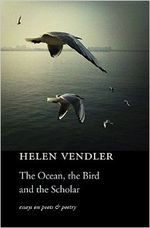
‘The Ocean, the Bird and the Scholar’ by Helen Vendler

VendlerWilliam H. Pritchard at The Boston Globe:

A new book by Helen Vendler is always occasion for gratitude, since for more than 50 years she has provided us with the most exacting writing about poetry of any American critic. Even more welcome than the 27 essays on poets — all of them, except for Herman Melville, from the past century — is a 14-page introduction in which she accounts for her life as a critic. The principles under which she has operated are unqualifiedly stated, the major one being the “compulsion to explain the direct power of idiosyncratic style in conveying the import of poetry.” This means a distaste for considering poems “under gross thematic rubrics,” and a belief that, one poet, one poem, is superior to another, the critic’s job being among other things to demonstrate these distinctions in value.

Vendler’s learning has shown itself in books on Yeats, Wallace Stevens, George Herbert, Keats, Shakespeare, and Emily Dickinson. As with the poets she writes about, that learning is less traditional and scholarly than, in her words, “deeply etymological and architectonic.” She notes that historically, the academic profession of English as she knew it, while “not unfriendly” to literary criticism (the old battles between literary history and close reading having ended), was unfriendly to reviewing, considering it to be mere journalism. For Vendler, reviewing poetry — and with a single exception all her writing has been about poetry — was rather a chance to speak forcefully and originally about a contemporary poet, or to see an older one, like Melville, in a new perspective.

more here.

let’s have a year of publishing only women

Kamila Shamsie in The Guardian:

KamilaSeveral years ago, Martin Amis chaired a literary festival panel on “The Crisis of American Fiction” with Richard Ford, Jay McInerney and Junot Díaz. I was in the audience, and halfway through the discussion leaned over to the person sitting next to me and said: “Clearly the crisis of American fiction is that there are no women in it.” It’s not just that there weren’t any women on the stage. In the entire discussion, which lasted nearly an hour, there was no mention of Toni Morrison, Marilynne Robinson, Annie Proulx, Anne Tyler, Donna Tartt, Jhumpa Lahiri or any other contemporary female writer. A single reference to Eudora Welty was the only acknowledgment that women in the US have ever had anything to do with the world of letters. Díaz, near the end of the hour, made the point that the conversation had centred on white American males, but it was too little, too late,

…I would argue that is time for everyone, male and female, to sign up to a concerted campaign to redress the inequality. Last year a number of readers, critics and at least one literary journal, the Critical Flame, signed up to a “Year of Reading Women” (for the Critical Flame it was female writers and writers of colour). Why not take it a step further? Why not have a Year of Publishing Women: 2018, the centenary of women over the age of 30 getting the vote in the UK, seems appropriate. Of course, there will be many details to work out, but the basic premise of my “provocation” is that none of the new titles published in that year should be written by men. I’ve been considering literary fiction so far but other groups within fiction – and non-fiction – publishing could gain from signing up too. The knock-on effect of a Year of Publishing Women would be evident in review pages and blogs, in bookshop windows and front-of-store displays, in literature festival lineups, in prize submissions. We must learn from the suffragettes that it’s not always necessary or helpful to be polite about our campaigns.

More here.

Blackish in america

Bas Dreisinger in The New York Times:

Book“A house divided against itself cannot stand,” Abraham Lincoln declared in his 1858 speech presaging the Civil War. Such a house sits at the heart of Mat Johnson’s ribald, incisive novel “Loving Day.” Bequeathed to the narrator, Warren Duffy, by his deceased father, it’s a roofless, ramshackle mansion in a black neighborhood in Philadelphia: “I look at the buckling floors. I look at the cracks in all the walls, the evidence of a foundation crumbling beneath us. I smell the char of the fire, the sweet reek of mold, the insult of mouse urine. I see a million things that have to be fixed, restored, corrected, each one impossible and each task mandatory for me to escape again.” The house is haunted. There are ghosts, mostly of neighborhood crackheads — that is, if we take Warren’s word for it; our narrator’s psyche is as wrecked as his inheritance. An “inept” comic book artist — “My work is too realistic, too sober” — he has moved back to America from Wales after a failed business and broken marriage. He’s wrecked, too, by his liminal ­racial status: His father was an Irishman, his mother was black and he comfortably claims neither — call him a man divided against himself. “I am a racial optical illusion,” he says.

Warren lives and breathes what W. E. B. Du Bois called double consciousness, by which the American black person is “always looking at one’s self through the eyes of others. . . . One ever feels his two-ness, — an American, a Negro; two souls, two thoughts, two unreconciled strivings; two warring ideals in one dark body.” Except Warren’s body is white, making things even thornier; he’s perpetually performing a black identity that isn’t written all over his face — as when he describes “letting my black voice come out, to compensate for my ambiguous appearance. Let the bass take over my tongue. Let the South of Mom’s ancestry inform the rhythm of my words in a way few white men could pull off.” In “Loving Day,” Johnson, author of the graphic novel “Incognegro” and the novel “Pym,” delivers an extended literary metaphor about race and mixed-race in America. It’s a semi-autobiographical one — he has called the book “my coming out as a mulatto” — that can at times feel belabored, but the novel ultimately triumphs because it is razor-sharp, sci-fi-flavored satire in the vein of George Schuyler, playfully evocative of black folklore à la Joel Chandler Harris — yet it never feels like a cold theoretical exercise. “Loving Day” is that rare mélange: cerebral comedy with pathos.

More here.

A Practical Vision of a More Equal Society

Piketty_2-062515_jpg_600x686_q85

Thomas Piketty reviews Anthony B. Atkinson's Inequality: What Can Be Done?, in the NYRB (Keystone/Getty Images):

Atkinson here makes two especially innovative suggestions. On the one hand, he calls for the establishment of a national savings program allowing each depositor to receive a guaranteed return on her capital (below a certain threshold of individual capital). Given the drastic inequality of access to fair financial returns, particularly as a consequence of the scale of the investment with which one begins (a situation that has in all likelihood been aggravated by the financial deregulation of the last few decades), this proposal strikes me as particularly sound. In Atkinson’s view, it is intimately bound up with the larger issue of a new approach to public property and the possible development of a new form of sovereign wealth fund. The public authority cannot resign itself merely to go on piling up debt and endlessly privatizing everything it possesses.

On the other hand, alongside this national guaranteed and insured savings program, Atkinson proposes establishing an “inheritance for all” program. This would take the form of a capital endowment assigned to each young citizen as he or she reached adulthood, at the age of eighteen. All such endowments would be financed by estate taxes and a more progressive tax structure. In concrete terms, Atkinson estimates that, with current revenue from the British estate tax, it would be possible to finance a capital endowment of slightly more than £5,000 for each young adult. He calls for a far-reaching reform of the system of inheritance taxation, and especially for greater progressivity with regard to the larger estates. (He proposes an upper rate of 65 percent, as with the income tax.) These reforms would make it possible to finance a capital endowment on the order of £10,000 per young adult.

More here.

Friday, June 5, 2015

Friday Poem

Hold the bird in the left hand, and commence
to pull off the feathers from under the wing.
Having plucked one side, take the other wing
and proceed in the same manner, until all the
feathers are removed.

– Mrs Beeton’s Household Management

Unfledging

I raise Paisley wounds,
spill yellow pollen of fat.
This is reversing time, like a vandal

who scores shellac blooms
from a soundbox, tightening to snapping
the strings of a lute.

As if I scraped a poem’s lard
from vellum. As brattish
as kicking a cat.

In pale skin are magnolia buds:
the muscles that worked wings,
but I’ve undone the wings,

gripping each pinion
as if to slide home the marriage ring
and never dream of flying again;

I’ve plucked the eyed, seed feathers,
the chicky down, the fine human hair
like first casing of mushroom spawn,

the long quills that striped across
the evening sun this week,
trembling in the rainstorm’s target.
.

by Jen Hadfield
from Almanacs
publisher: Bloodaxe, 2005
ISBN: 1852246871

Is there any subject that is never acceptable to joke about?

Curtis Brown in Aeon:

431117_10150650195939425_374096076_nNo. There isn’t. It might be a bit more complicated than that but not much. I was about to write “child molestation” when I remembered the comic novel generally regarded as America’s greatest after Huck Finn(which, for its part, joked about slavery). “I am now faced with the distasteful task of recording a definite drop in Lolita’s morals,” says its narrator at one point, when his 12-year-old stepdaughter-cum­-mistress demands a raise in her weekly allowance. “Laugh not, as you imagine me, on the very rack of joy noisily emitting dimes and quarters.”

Laugh not, indeed, for there is something dark at the heart of laughter. Like sex, it is impossible to morally zone and regulate, but we can’t stop trying. The most familiar law is that of the decent interval: “comedy equals tragedy plus time.” It’s sometimes attributed to Woody Allen, and it does actually feature in his tragicomic Crimes and Misdemeanors. What people forget is that he put it in the mouth of Lester, the TV producer and brother-in-law — superbly brought to life by Alan Alda — who is probably the single most fatuous ass in the entire Allen canon. Like everything else Lester says, “tragedy plus time” is smug, pernicious nonsense. Timing is everything in comedy. But whatever else it means, it doesn’t mean waiting around until the coast is clear.

More here.

The Adventures of Sir Thomas Browne

Sir-Thomas-Browne-008Claire Preston at Literary Review:

When Thomas Browne, physician and natural philosopher, went hunting in the 1650s in books, on beaches, and in hedgerows for quincunxes in nature and culture, he discovered them in the structure of pine cones, the battle formations of the Greeks, the angles of incidence of light upon the retina, and the planting patterns of orchards. It turns out the quincunx (imagine the corners of a diamond with a dot in the middle) is everywhere. Three and a half centuries later, on a psychogeographic Brownean pilgrimage between Bury and Norwich, Hugh Aldersey-Williams found in those same hedgerows quincuncial hubcaps, which in turn prompted a meditation on that most modern of molecules, the pentagonal buckminsterfullerene. Browne's apparently eccentric observational exercise amounts to a rule in nature, one he was able to identify with an indifferent set of magnifying lenses, the naked eye, and shanks's pony. The instruments were primitive, but his slender quincuncial essay The Garden of Cyrus (1658) (its first known reader called it 'no ordinary book') epitomises the imagination of this most intellectually open and adventurous of Renaissance polymaths.

Browne's much more influential book was a massive encyclopaedia of human misunderstanding, a register of vulgar errors that catalogues epidemical false thinking, as well as the extent of his remarkable curiosity. The chiefest of pseudodoxies is a belief in whatever is generally believed: for us, that's quack diets, alien abduction, demonic possession, conspiracy theories of all kinds; for him, it's nonsense from folk wisdom, Aristotle, and the Fathers of the Church. Is it true that 'Crystal is nothing else but Ice strongly congealed'? Obviously not, he answers – the meanest understanding shows that it doesn't melt in hot weather and doesn't float in water, despite the assertions of Pliny, Ezekiel, Augustine, and Gregory the Great. Do chameleons really live on air alone?

more here.

Notes from Hiroshima

05ca7448-09fb-11e5_1153989hJeremy Treglown at the Times Literary Supplement:

The first person to communicate to a global audience the experience of being in a nuclear holocaust did not come from Japan, where the misnamed Civil Information and Education Section of General MacArthur’s occupying army exerted a muddled but intimidating censorship. Nor was he a scientist, though researchers had poured into the area. Instead, the news was brought to the world by an American Wasp in his late twenties: tall, handsome, sporty, popular, a member of the most exclusive of Yale’s secret societies, married to a rich ex-girlfriend of John F. Kennedy. John Hersey told the story in the New Yorker, most of whose readers were either a bit like him, or aspired to be. Published in August 1946, soon after the first anniversary of the bombing, that issue of the magazine famously broke precedent by containing – ads and listings apart – only his 30,000-word article. It quickly sold out. Albert Einstein, who had already begun his anti-nuclear-proliferation pressure group the Emergency Committee of Atomic Scientists, ordered 1,000 copies to distribute but had to make do with facsimiles. The article was reprinted in scores of newspapers and magazines, published as a book and translated all over the world. (Japan, though, because of the censorship, had to wait a couple of years.) How did Hersey come to write it?

Some of the answers are to be found in a fat cardboard box normally kept in a secure, temperature-controlled warehouse in Hamden, Connecticut. This is the depository of much of the vast collection of rare books and manuscripts held by Yale’s Beinecke Library, a beautiful building, though one which Czesław Miłosz, whose own papers are there, compared to a monumental tomb. In a sunken quadrangle outside the reading room stands a three-piece white marble sculpture by Isamu Noguchi, who like almost all other Japanese Americans spent the Second World War in an internment camp. His Zen-influenced “The Garden (Pyramid, Sun and Cube)” symbolizes what the catalogue of Yale’s public art calls a balance of cosmic forces and a synthesis of East and West. A similar synthesis is found in box 37 of the Hersey Papers.

more here.

The Mysterious Edges: On Jami Attenberg and ‘Saint Mazie’

1455599891.01.LZZZZZZZHannah Gersen at The Millions:

In 1940, Joseph Mitchell published a New Yorker profile of “Bowery celebrity” Mazie P. Gordon, a career ticket-taker at the Venice movie theater whose charity toward drunken bums was as legendary as it was mysterious. Seventy years later, the profile came to the attention of novelistJami Attenberg when her friend John McCormick named his bar Saint Mazie.

“He said she was the closest thing to a saint that he’d ever heard of,” Attenberg said. “So then I became interested in her, too, and did a bunch of research on her — although there’s not actually a lot to do.”

I met Attenberg in her Williamsburg apartment, a loft with an excellent view, a minimal kitchen, and a whole lot of books. Her dog, Sid, sat at our feet for the majority of the interview, and if you follow Attenberg on any of her online platforms (Twitter, TinyLetter, Tumblr, etc.), both Attenberg and Sid are pretty much as advertised: friendly, warm, curious, and easygoing. The only time Attenberg seemed even the slightest bit taken aback was when I asked her what made her think there was a novel in Mitchell’s profile “Mazie.”

“I thought there were like 10 novels in there! I mean, she was like, friends with Chinese gangsters. That is a novel. Like, right there. All of Joseph Mitchell’s work is one massive writing prompt. He’s so good at the most precise details and leaving a little mysterious edge to everything. So I read that and it was like, complete lift-off.”

more here.

A Private View of Quantum Reality

Fuchs-640x416

Amanda Gefter profiles Christopher Fuchs in Quanta Magazine (Katherine Taylor for Quanta Magazine):

Christopher Fuchs describes physics as “a dynamic interplay between storytelling and equation writing. Neither one stands alone, not even at the end of the day.” And indeed Fuchs, a physicist at the University of Massachusetts, Boston, has a radical story to tell. The story is called QBism, and it goes something like this.

Once upon a time there was a wave function, which was said to completely describe the state of a physical system out in the world. The shape of the wave function encodes the probabilities for the outcomes of any measurements an observer might perform on it, but the wave function belonged to nature itself, an objective description of an objective reality.

Then Fuchs came along. Along with the researchers Carlton Caves and Rüdiger Schack, he interpreted the wave function’s probabilities as Bayesian probabilities — that is, as subjective degrees of belief about the system. Bayesian probabilities could be thought of as gambling attitudes for placing bets on measurement outcomes, attitudes that are updated as new data come to light. In other words, Fuchs argued, the wave function does not describe the world — it describes the observer. “Quantum mechanics,” he says, “is a law of thought.”

Quantum Bayesianism, or QBism as Fuchs now calls it, solves many of quantum theory’s deepest mysteries. Take, for instance, the infamous “collapse of the wave function,” wherein the quantum system inexplicably transitions from multiple simultaneous states to a single actuality. According to QBism, the wave function’s “collapse” is simply the observer updating his or her beliefs after making a measurement. Spooky action at a distance, wherein one observer’s measurement of a particle right here collapses the wave function of a particle way over there, turns out not to be so spooky — the measurement here simply provides information that the observer can use to bet on the state of the distant particle, should she come into contact with it. But how, we might ask, does her measurement here affect the outcome of a measurement a second observer will make over there? In fact, it doesn’t. Since the wavefunction doesn’t belong to the system itself, each observer has her own. My wavefunction doesn’t have to align with yours.

More here.

Sins of the Three Pashas

9780691147307

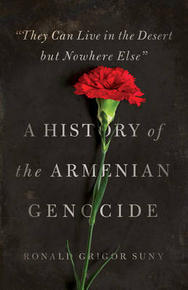
Edward Luttwak's reviews Ronald Grigor Suny's 'They Can Live in the Desert but Nowhere Else’: A History of the Armenian Genocide, in the LRB:

Turkey is a country small in neither size nor population, yet its rulers have the privilege of being ignored most of the time, no doubt because its language is remarkably little known, considering that for all its Arabic and Persian accretions it’s a most useful entry to the Oghuz Turkic tongues spoken from Moldova to China. This privilege was in evidence when Pope Francis chose in April to define the Armenian deportations, kidnappings, rapes and massacres that started in 1915 as a genocide. The Turkish government prefers fine terminological distinctions: what the pope, every Armenian and a great many others call a genocide should more properly be described as a First World War event involving mass killings (one of many such, down to the present day) and deportations (a wartime necessity given Armenian complicity in Russia’s invasion of North-east Anatolia); but in any case it was an unfortunate event that happened a long time ago, and an exception in Turkey’s fine tradition of tolerance. Prime Minister Ahmet Davutoğlu went on the offensive in the Washington Post: ‘I am addressing the pope: those who escaped from the Catholic inquisition in Spain [Sephardic Jews] found peace in our just order in Istanbul and İzmir. We are ready to discuss historical issues, but we will not let people insult our nation through history.’

To pause on the effrontery of citing benevolence to 15th-century Jews at a time when his party and its leader, President Recep Tayyip Erdoğan, continually denigrate today’s Jews (he blames ‘the Saturday People’ for Turkey’s high interest rates, and explains modern history as the product of the Üst Akil, the global conspiracy of you-know-who) would be to miss the point entirely: the persecution of the Armenians didn’t start in 1915, and wasn’t a First World War event as per the official Turkish line – there had been massacres of Armenians before then, notably in 1894-96, leaving some fifty thousand orphans. And, more important, the persecution didn’t end with the First World War, but continues to this day. Its current form, aside from occasional non-state violence such as the 2007 murder of Hrant Dink, founding editor of the bilingual magazine Agos (dedicated to reconciliation), is Turkey’s artfully drafted legislation on non-profit trusts and foundations. The lack of a good law on foundations wasn’t one of the Ottoman Empire’s shortcomings; its simple and efficacious Vakf law long persisted unchanged in the successor states including decidedly non-Muslim Greece and Israel (Agudat Ottomani). But the new Turkish state needed something more modern – the text after all was in an Ottoman Turkish that was both Persianised and written in Arabic script – and laws were duly enacted. One such law of 1967 (number 743, or 4721 in the current code), which amended Article 101 of the Turkish civil code, defines foundations in the usual way: charity groups that have the status of a legal entity formed by real persons or legal entities dedicating their private property and rights for public use etc. But then it adds: ‘Formation of a foundation contrary to the characteristics of the republic defined by the constitution, constitutional rules, laws, ethics, national integrity and national interest, or with the aim of supporting a distinctive race or community, is restricted’ [emphasis added] – which actually means that it is forbidden, because there are no provisions for exceptions.

More here.

In Consideration of the Head

Severed

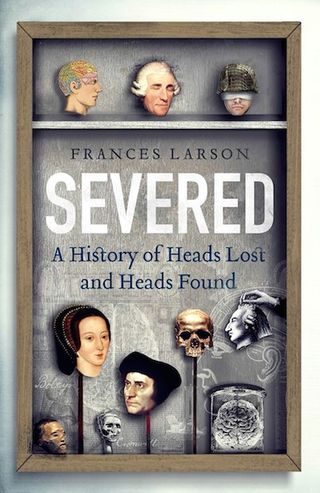
Thom Cuell reviews Frances Larson's Severed: A History of Heads Lost and Heads Found, in 3:AM Magazine:

In the early 1950s, my grandfather Alan Cuell was called up for national service and sent to the rainforests of Borneo. On his first patrol, he was ordered to bring up the rear of the regiment; the only person behind him was the local Dayak guide. Alan had barely been outside Essex before, so he was intrigued by the guide’s traditional costume, particularly the items dangling from the man’s waist. Asking what they were, he was disconcerted when the translator replied, “Shrunken heads.” He spent the remainder of the patrol in constant fear that his next step would be his last, later describing it as the most terrifying experience of his life.

What Frances Larson sets out to demonstrate in Severed is that the significance of decapitated heads to the Dayak people is not as exotic as it must have seemed to my grandfather – from medieval times to the present day, severed heads have featured with at least equal prominence in European culture. It’s not all about the spectacle of heads on pikes, either: “Over the centuries,” she argues, “human heads have embellished almost every facet of our society, from the scaffold to the cathedral, and from the dissecting room to the art gallery.” This fascination with the head is reflected in our everyday speech — how often do we refer to someone putting their head on the block, or keeping their head while all those around are losing theirs?

If Alan had ever been to the Pitt Rivers Museum in Oxford, he might have seen their famous display of shrunken heads collected by the Shuar people of Ecuador and Peru. Displayed in amongst a collection of ceremonial knives and trephination tools, the heads are regarded as one of the main attractions of the museum, with school-children and tourists crowding in to get a glimpse of them.

Larson’s examination of the shrunken heads reveals a surprising underlying dynamic: many were created specifically to meet demand from Western traders in the nineteenth century. The Shuar in fact saw the head as rather insignificant compared to the power of the soul within. The head, once shrunken, is like an envelope after the letter has been taken out. As trade increased, the heads “lost their spiritual power and became commercial products; now some Shuar simply murdered people in order to sell their heads. In this way, Europeans and Americans helped to create the indiscriminate, bloodthirsty headhunters they expected to find.”

More here.

Cokie Roberts highlights the Civil War-era women who held the nation together

Eric Spanberg in Christian Science Monitor:

CokiePeople even casually interested in the Civil War can list the major players: President Lincoln, Jefferson Davis, Ulysses S. Grant, Robert E. Lee, Stonewall Jackson, and William T. Sherman. Maybe throw in Frederick Douglass and Jeb Stuart, too. Notice anything strange about those names? All men and all white, with the exception of Douglass. While the women’s liberation movement in the 1960s raised the issue of gender equity in academics and the telling of history, broader mainstream awareness remains paltry when it comes to what half of the population was up to during important moments of the past.

Cokie Roberts, the NPR and ABC News political analyst, is helping to reverse such cultural ignorance in American history. In 2004, she wrote “Founding Mothers: The Women Who Raised Our Nation,” using letters, journals and other documents to tell the story of early-US history with perspective from and about important figures including Martha Washington, Eliza Pinckney, and Deborah Read Franklin, women who all had a unique vantage point during the Revolutionary era. Then, in 2008, came “Ladies of Liberty: The Women Who Shaped Our Nation,” examining the achievements and sorrows of notables such as Sacagawea, Theodosia Burr, Martha Jefferson and Dolley Madison, among others. Roberts again combines her historical interest and long personal knowledge of Washington politics in her new book, Capital Dames (494 pp., HarperCollins). Her latest history, published to coincide with the 150th anniversary of the end of the Civil War, follows the lives of wives, sisters and daughters of influential politicians as well as remarkable activists.

More here.

the world’s longest (and scariest) glass pedestrian bridge

Liz Stinson in WIRED:

BridgeHaim Dotan didn’t want to build a bridge. When two engineers approached the Israeli architect about designing a span across a 1,200-foot canyon in Zhangjiajie National Forest in China, his answer was a quick and resounding no. The land is known for its dramatic jagged rock formations and rich vegetation. If it looks like a scene out of Avatar, that’s because it is. The area, in the northwest part of Hunan province, was director James Cameron’s inspiration for the movie’s Halleluja Mountain. “[The developer] asked me, ‘What do you think about a bridge from here to there?’ And I said, ‘No,’” Dotan says. “He looked at me and said ‘Why, what are you talking about?’ And I said, ‘Why do you want a bridge? It’s too beautiful.’” The developer pressed him, and Dotan finally relented. “I told him, ‘We can build a bridge but under one condition: I want the bridge to disappear.’”

When the Zhangjiajie Grand Canyon Glass Bridge opens in the fall, it will be the longest glass pedestrian bridge in the world. The structure stretches from one rocky summit to the next with little apparent effort. The bridge seems to float 1,300 feet above the ground, almost as though it were part of the clouds. The engineering plans call for it to be 20 feet wide—large enough to host the fashion shows its developers plan to hold there—with a center platform that provides an unobstructed view and, for the adventurous types, a place for bungee jumping. The white supporting beams beneath the 5-centimeter-thick safety glass were originally 10 feet wide. Dotan wasn’t please. “I told them, ‘No, there’s no way,’” he says. “The bridge has to disappear.” After more than three years of work, the structural engineers got the beams down to not quite 2 feet, thanks to suspension cables that stretch from the cliffs to the center of the span. Although the bridge has an ethereal look, Dotan says it can withstand wind gusts of more than 100 mph.

More here.

Thursday, June 4, 2015

The Evolutionary Roots of Altruism

Melvin Konner in The American Prospect:

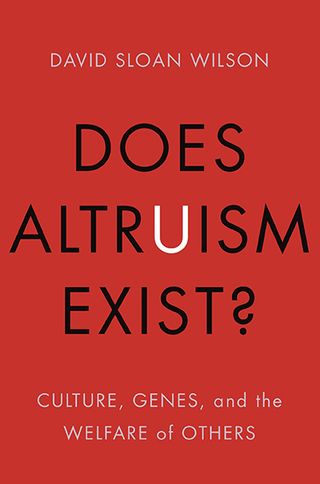
9780300189490David Sloan Wilson opens his new book, Does Altruism Exist?, with an old conundrum that has animated many late-night dormitory debates: If helping someone gives you pleasure, gains you points for an afterlife, and enhances your reputation, is it really altruism? Wilson wisely decides to put acts before motives: “When Ted benefits Martha at a cost to himself, that’s altruistic, regardless of how he thinks or feels about it.” Great. But what does “cost” mean in that sentence? Does it mean “cost” after considering all those benefits, or not?

Wilson believes that to answer this question, we must turn to evolutionary theory, and especially to a theory known as group selection, which holds that better adapted groups produce more offspring, with the result that their traits are passed on. The implications are far-reaching. If group selection is correct, it follows that humans and other group-living creatures are fundamentally not selfish but cooperative and even altruistic—that we human beings owe our existence to distant ancestors who were members of groups that succeeded because they were better able to cooperate than other groups.

Group selection departs from the more familiar model of individual selection that sees the evolutionary prize going to the individual, male or female, who has more surviving offspring, regardless of health and life-span, much less altruism. Yet another variant of Darwinian theory reduces evolution to what the biologist Richard Dawkins famously called “the selfish gene.” In this view, the true competition to reproduce is at the level of the gene, and an organism is only a gene’s way of making a copy of itself.

Selfish-gene theory allowed, however, for an explanation of altruism that arose in the 1960s and became known as “kin selection.”

More here.

How the ‘John Oliver Effect’ Is Having a Real-Life Impact

Victor Luckerson in Time:

ScreenHunter_1210 Jun. 04 20.19Comedians mock our cultural and political institutions on TV all the time. But it’s not every day that a comic’s jokes crash a government website or directly inspire legislators to push for new laws.

John Oliver, host of HBO comedy news program Last Week Tonight, is quickly building up that level of cultural cachet. While his forebears and former colleagues Stephen Colbert and Jon Stewart spend as much time lampooning the news media covering world events as they do analyzing events themselves, Oliver’s show stands out for its investigations into topics as varied as the militarization of the police state, Net neutrality and Argentina’s debt crisis.

Oliver’s approach has even been cited as an inspiration for local government transparency. In January, a Washington State legislator proposed a new bill that would let citizens comment on new legislation using videos submitted online. The state senator backing the new bill credited Oliver’s ability to turn boring topics into viral phenomena through online video as motivation for the new initiative.

More here.

The Tampon: A History

Ashley Fetters in The Atlantic:

ScreenHunter_1209 Jun. 04 20.12On Aug. 18, 2011, a thread titled “I design tampons. AMA!” appeared on the news-conversation website Reddit. Hosted by a user named “karnim” who identified himself only as a college-aged male research-and-development intern at one of the “big three” tampon brands (Tampax, Kotex, and Playtex), the thread began with a polite invitation to “ask me anything” (AMA) and a disclaimer. “Much of my work is confidential, so I can't give details about my projects,” karnim wrote, but he could answer “overall” questions about tampons.

In the grander canon of AMA threads—online Q&A sessions hosted by Reddit users with compelling life stories or careers—karnim’s wasn’t the most glamorous or flashy. President Obama, for example, participated in an AMA in 2012. But karnim soon found himself avalanched with reader questions about tampon technology, ranging from the curious (“Why don't they just stop making the cardboard ones?”) to the wisecracking (“Can you make medicated tampons to make women stop actin’ fool when they get their menses?”) to the imploring (“Can you please make tampons with a black or flesh-coloured string? Please?” “How about one that you can leave in for 10 hours and not worry about it?”).

More here.