In Search of Sir Thomas Browne

Jim Holt in The New York Times:

TomThis 17th-century English physician and philosopher, living in provincial isolation from literary London, managed to cultivate the most sonorous organ-voice in the history of English prose. At a time when the prevailing plain style was growing dull and insipid (John Locke is an example), it was Browne who showed the way to new possibilities of Ciceronian splendor. In doing so, he became a prolific contributor of novel words to the English language. Among his 784 credited neologisms are “electricity,”  “hallucination,”  “medical,”  “ferocious,”  “deductive” and “swaggy.” (Other coinages failed to take: like “retromingent,” for urinating backward.) Browne’s influence led to a revival of the mandarin tendency in 18th-­century prose, culminating in the (sometimes turgid) pomposities of Johnson and Gibbon. Among Browne’s subsequent admirers can be numbered Thoreau, Melville, ­Emily Dickinson, Borges, Sebald and Virginia Woolf, who saluted his “sublime genius” and called him “the first of the ­autobiographers.”

Are you feeling guilty yet for not having heard of Sir Thomas Browne? Or, if you have heard of him, for not spending more time savoring his greatest work, an essay on funerary rites alluringly titled “Urne-Buriall” — where, amid much verbiage that is (to my plain taste) cloyingly grandiloquent, lurk gorgeous phrases like “man is a Noble Animal, splendid in ashes, and pompous in the grave”? You shouldn’t, really. You are hardly alone. Browne is a “forgotten” man — so concedes what must be his most obsessive contemporary champion, the English science writer Hugh Aldersey-Williams. “In Search of Sir Thomas Browne” is Aldersey-Williams’s attempt to do something about this sad state of affairs. The book does not merely seek to revive Browne as a pivotal figure in the history of English prose: a minor writer with a major style. Its author also wants to convince us that Browne, with his intellectual curiosity, his good-humored skepticism, his civility and spirit of tolerance, stands as a model for us today. From Browne’s example we can learn “how to achieve a reconciliation between science and religion” and “how to disabuse the credulous of their foolish beliefs.”

More here.

Saturday Poem

Dangerous Astronomy

I wanted to walk outside and praise the stars, But David, my baby son, coughed and coughed. His comfort was more important than the stars  So I comforted and kissed him in his dark Bedroom, but my comfort was not enough. His mother was more important than the stars  So he cried for her breast and milk. It’s hard For fathers to compete with mothers’ love. In the dark, mothers illuminate like the stars!  Dull and jealous, I was the smallest part Of the whole. I know this is stupid stuff But I felt less important than the farthest star  As my wife fed my son in the hungry dark. How can a father resent his son and his son’s love? Was my comfort more important than the stars?  A selfish father, I wanted to pull apart My comfortable wife and son. Forgive me, Rough God, because I walked outside and praised the stars, And thought I was more important than the stars.

.
by Sherman Alexie
from Face
Hanging Loose Press

Greece and the Eurozone: The Real Stakes

Mg_6338b-by-matthias-grauwinkel

Sanjay Reddy over at his website (via Alex Gourevitch):

The explanation of creditor extremism which seems to me most appealing from a structural and not merely conjunctural point of view is this:

An important consequence of the Eurozone has been to help to institute pressures to increase ‘competitiveness’ through real as opposed to nominal means. These include lowering wages and taxes (which in turn has meant lowering the size of the state, especially through diminishing welfare expenditures, which are much larger in Europe than in the US) and increasing productivity, not least through increasing ‘flexibility’ in the labour market and creating consequent labour disciplines. Germany is the country to most deliberately introduce such reforms, under the pressure of reunification, but many countries have in varying degrees done so. It is also almost the only country to successfully face Chinese and to a much lesser extent other emerging country competition, because of its particular manufacturing niches and engineering expertise. This competition has in recent years challenged the viability of traditional sectors of industrial production almost everywhere else in Europe.

In the absence of nominal devaluation, labor cost reducing and tax slashing real devaluation as well as productivity enhancement are the only available tools to address such competition, but the institutional, social and political barriers to implementing them in light of European public attitudes and historical legacies are profound. Theexternal deficits of the peripheral European countries are ultimately driven not merely by the euro-raising effect of German external surpluses but also by the import increasing and export-competing effect of exports from China (and to a lesser extent other countries). The open and hidden internal imbalances in the Eurozone are indirect manifestations of the larger problem, which has not been dealt with and would have had to be addressed in any realistic economic strategy.

More here.

Greece, Europe, and the United States

Syriza1

James K. Galbraith in Harper's:

Six months ago one could hope that SYRIZA’s electoral victory would spark a larger discussion of austerity’s failure and inspire a continent-wide search for better solutions. But once it became clear that there was no support for this approach from Spain, Portugal, or Ireland; only polite sympathy from Italy and France; and implacable hostility from Germany and points north and east, the party’s goal narrowed. SYRIZA’s objective became carving out space for a policy change in Greece alone. Exit from the Euro was not an option, and the government would not bluff. SYRIZA’s only tool was an appeal to reason, to world opinion, and for help from outside. With these appeals, the Greeks argued forcefully and passionately for five months.

In this way, the leaders of the Greek government placed a moral burden on Europe. Theirs was a challenge based on the vision of “sustainable growth” and “social inclusion” that has been written into every European treaty from Rome to Maastricht—a challenge aimed at the soul of the European project, if it still had a soul. No one in the Greek government entertained illusions on that point; all realized that Greece might arrive at the end of June weakened, broke, and defenseless. But given the narrow margins for maneuver, which were restricted both by SYRIZA’s platform and the Greek people’s attachment to Europe, it was the only play they had.

European creditors responded with surprise, irritation, exasperation, obstinacy, and finally fury. At no time did the logic of the Greek argument—about the obvious failure, over the past five years, of austerity policies to produce the predicted levels of growth—make any dent. Europe did not care about Greece. After resigning as Greek finance minister, Yanis Varoufakis described the negotiation process:

The complete lack of any democratic scruples on behalf of the supposed defenders of Europe’s democracy. The quite clear understanding on the other side that we are on the same page analytically … [And yet] to have very powerful figures look at you in the eye and say “You’re right in what you’re saying, but we’re going to crunch you anyway.”

What Europe’s “leaders” do care about is power. They posture for their own parliaments and domestic polities. There is an eastern bloc, led by Finland, which is right-wing and ultra hard line. There is a model-prisoner group—Spain, Ireland, and Portugal—which is faced with Podemos and Sinn Fein at home and cannot admit that austerity hasn’t worked. There is a soft pair, France and Italy, which would like to dampen the threats from Marine Le Pen and Beppe Grillo. And there is Germany, which, it is now clear, cannot accept debt relief inside the euro zone, because such relief would allow other countries in trouble to make similar demands.

More here.

Friday, July 17, 2015

Friday Poem

Lament for the Makers
.

Not bird not badger not beaver not bee

Many creatures must
make, but only one must seek

within itself what to make

My father’s ring was a B with a dart
through it, in diamonds against polished black stone.

I have it. What parents leave you
is their lives.

Until my mother died she struggled to make
a house that she did not loathe; paintings; poems; me.

Many creatures must

make, but only one must seek
within itself what to make

Not bird not badger not beaver not bee

Teach me, masters who by making were
remade, your art.
.

by Frank Bidart
from Star Dust
Farrar, Straus and Giroux, 2005

Forward with Fukuyama

Daniel Luban in The Point:

ScreenHunter_1259 Jul. 17 17.41Francis Fukuyama was 36 years old in 1989 when “The End of History?” made him a star. At the time, there was little in his biography to mark him as anything more than another ambitious young Cold War technocrat. He had been hired by the RAND Corporation directly out of graduate school at Harvard (where he wrote a dissertation on Soviet foreign policy under the famous political scientist Samuel Huntington) and, aside from two stints at the State Department, had remained at RAND ever since, producing geopolitical analyses whose readership did not extend beyond the national security bureaucracy.

But Fukuyama had always been philosophically curious—a bent nurtured by his undergraduate teacher, the Straussian guru Allan Bloom, and maintained throughout his time in the policy world—and the argument he made reflected that. Delivering the original lecture before a University of Chicago audience that included Bloom, he argued that the scientific revolution had unleashed unprecedented productive energies for satisfying human desire, energies that only capitalism could properly harness. On its own, this scientific-economic logic could lead “equally well to a bureaucratic-authoritarian future as to a liberal one,” as he put it in his book-length elaboration, The End of History and the Last Man (1992). But humans are more than just desiring creatures seeking material satisfaction; they are also valuing creatures seeking recognition as equals, and only liberal democracy could satisfy this drive for recognition. The demise of fascism and communism left no coherent ideological challenges to liberal capitalist democracy, which stood revealed as history’s endpoint.

More here.

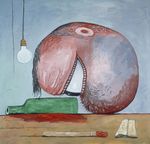
the late work of philip guston

Head and Bottle_300dpiFisun Güner at The Arts Desk:

Light. Light banishes the shadows where monsters lurk and where ghosts rattle their chains. “Give me some light, away!” cries the usurping king inHamlet as his murderous deed is exposed by the trickery of art. What guilt plagues and seizes his conscience, and yet Claudius, conflicted, cannot pray. He must, therefore, remain a captive among the ghosts and the monsters where no light may fall.

What did light mean for Philip Guston? Not what it means for most painters, nor for those seeking the redemptive light. The naked light bulb that pops up in so many of his paintings is both the interrogator’s tool and the hangman’s noose. These are what that repeated motif reminds us of. And what a world it illuminates for the burdened artist confined to his studio/cell where he too is held captive by ghosts. Those dumb one-eyed potato-heads and hooded Ku Klux Klan figures are both self-portraits of sorts; tragicomic figures in a schematic universe filled with symbolic objects like any Renaissance painting.

more here.

the problem of the ‘wounded woman’

Crispin---Sala-webJessa Crispin at Boston Review:

The world is not a safe place. It harms us, jostles us, exposes us to burns and pricks. So we tell ourselves and each other stories to help us understand the what and the why. If we didn’t we would all be like Melzack’s dogs, unsure who is hurting us or what is to be done about it.

But it is easy to misdiagnose the source of the problem, and once you do, the proper treatment will also elude you. Universalizing our pain challenges the culture to protect us, but it diminishes our individual responsibility. These stories gain traction because they validate what we feel—vulnerable and tossed around—and give us simplistic reasons for why we feel this way. If we claim vulnerability is our natural state, there is nothing we need to change. The world needs to change for us.

Insisting we are distinct from men in our woundedness is an easy and soothing story. Men are the enemy who can redeem themselves by turning their nature to our benefit, by protecting us. But in the end we are estranged from our humanity. Here we are not participants in society; we are merely at the mercy of it.

more here.

Neoliberal moralism and the fiction of Europe: a postcolonial perspective

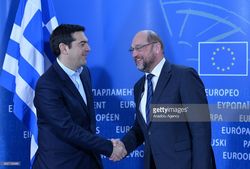
Sadia Abbas in Open Democracy:

VisitBoth in and out of Greece, much has been made in recent weeks of the amateurishness of the current Greek government, of its brinksmanship, of its confrontational style, of its inability to understand rules, of it's squandering of trust. Let's grant all this for a moment. However, if we take this critique seriously, then EU officials look worse not better than before. They come across as petulant incompetents unable to deal with an unruly colleague (Yannis Varoufakis), annoyed at people who don't wear ties, intrusive in their insistence that Alexis Tsipras wear one, so unprofessional that they let the fate of nations hang in the balance, destroying societies and lives because they are caught up in a squabble with a few colleagues they don't like.

Moreover, the invocations of etiquette, codes, rules, and the repetition of cliches of fiscal rectitude and household thrift are part of the moral economy of a neoliberalism that manipulates people into thinking that nations can be run like households and life is a tea party, where all will be fine if one sticks out ones little finger while holding a teacup with delicate poise. One of neoliberalism's biggest successes has been to persuade people that if everyone just behaved with propriety and thrift, life would be better. If people have fallen for this story, it's because this gives them the illusion of agency in an environment where there is a premium on precisely that agency. Capitalism tells us that we are in control of our destinies and can invent and reinvent ourselves at will, making money into the bargain.

That this is not really borne out by current events is beside the point.

More here.

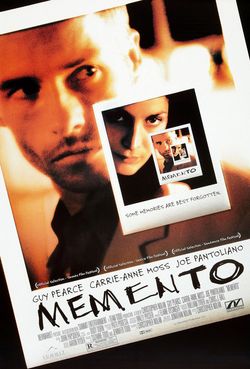
Man has anesthetic at dentist, leaves with 90-minute memory

From KurzweilAI:

MementoGerald Burgess, a University of Leicester lecturer in clinical psychology, has described treating an individual who suffered a “Memento/Before I Go to Sleep“-style anterograde amnesia memory loss after a treatment at a dentist — “like nothing we have ever seen before.” Since the one-hour root-canal treatment, during which the a 38-year-old man from the UK was given a local anesthetic, the individual cannot remember anything beyond 90 minutes. He is fully aware of his identity and his personality did not change, says Burgess, but every day the man thinks it is the day of his dental appointment. He has to manage his life through an electronic diary and access to prompts. Burgess has now described the study, done a decade ago, in an open-access paper published in May in the journal Neurocase. He is also appealing for people who know of someone who might have suffered similar symptoms of memory loss, or medical or allied health professionals working with someone like this, to contact him to build up knowledge and evidence in this field of study.

Possible explanations

Burgess notes that “what we did know about from decades of research and hundreds of case studies, is that bilateral damage to the hippocampal and/or diencephalon structures causes profound amnesia … [but] we should perhaps not be so stuck in thinking that profound amnesia only occurs in the context of visible damage to the brain’s hippocampal and/or diencephalon structures. “Those structures appear just to be needed for the initial holding or retention of information before engrams then proceed slowly through several other neuro-electrical and neuro-chemical events, before finally permanent memories are stored, and that something can occur at some later point in this process to vanquish the memory trace permanently.

More here.

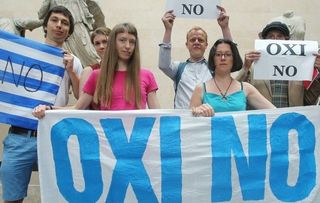
Mark Blyth: Why there is no deal to be done over Greece

Mark Blyth in Europe's World:

ScreenHunter_1257 Jul. 17 11.33Marx has that famous line about the unfolding of events being “first tragedy, then farce”. Europe’s handling of the Greek crisis surpasses farce and shades into absurdity.

Let’s recap where we are. A country that can’t pay back what it owes, and that has shrunk by nearly a third, is to be given more money on the condition that it shrinks its economy still further. On the other side, the creditors, those who are so concerned about getting their money back, are committed to giving that country another €86 billion to pay the debts they have already accrued, thereby adding massively to a debt pile that will never be repaid.

The IMF eventually declares what its own research arm has been saying for three years, that the whole thing unsustainable, but refuses to do anything positive about it. Meanwhile, deprived of the ability to pass any legislation without the approval of ‘the institutions’, the Greek government sits in a five-month limbo while the economy shrinks. It is then roundly blamed for a decline that has been ongoing for five years.

The European Central Bank, whose main mandate is to promote financial stability in the eurozone and ensure the proper running of the European payments system, has been creating financial instability in the area by systematically choking off liquidity to the Greek banking system and bunging up its payments system. The end result of which is, according to the IMF, “a further significant deterioration in debt sustainability relative to what was projected in our recently published DSA (debt sustainability analysis)”. Meanwhile, the man who rode a 61% referendum vote to reject austerity is now trying to implement an agreement that is worse than anything he could have signed in the prior five months.

Now, forget for a moment how utterly absurd all this is. Discount for now quite how provisions such as the deregulation of the Greek bakery sector (really, it’s in there) and a rise in regressive taxes will produce a turnaround in growth and just say ‘it’s a deal’. Prime Minister Tsipras has gotten these things the creditors want through the Greek Parliament, so now what?

More here.

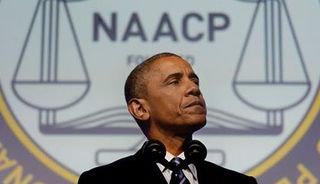
Barack Obama: “I know what I am doing, and I’m fearless”

Janelle Ross in the Washington Post:

ScreenHunter_1256 Jul. 17 10.29He's spoken off the cuff about race relations on a widely circulated podcast (even using the n-word) and then eloquently followed that with what can only be described as a sermon on race relations in America before breaking into song. He's challenged America to go deeper in its support of equality than retiring symbols of slavery (such as the Confederate flag) and impolitic words (such as the n-word).

While eulogizing a slain minister and state lawmaker allegedly killed by a white supremacist in Charleston, S.C., he outlined a whole raft of ways in which discrimination remains and inequality continues to grow. And now, in the span of two weeks, he has announced two major reform packages — housing last week and criminal justice on Tuesday — that could, if ultimately implemented, be of particular benefit to people of color in the United States.

Here's the thing: This Obama might look or sound “brand new” to some Americans. He might even sound a little something like the black president some white Americans across the political spectrum feared (or hoped for). But to people who watch the White House closely, this is the President Obama who has been developing for some time.

More here.

Pentaquarks Have Physicists Psyched—And Baffled

Sophia Chen at Wired:

GettyImages-466770936-582x466Physicists at the Large Hadron Collider have been smashing protons together, on and off, since 2009. On Tuesday they announced that they’d encountered a new particle as a result of all those subatomic crack-ups called the pentaquark—and it could help explain what holds together other subatomic particles like protons and neutrons.

Close followers of the saga responded to the news like hungry Star Wars fans to a new trailer, immediately formulating potential plotlines for the particle. Within 30 hours of the announcement, physicists began to submittheir theories about the pentaquark to the online, pre-peer review science article repository arXiv. But assembling those papers is hard—and these scientists didn’t come up with their new theories overnight. How did they get it done so fast? As is wont to happen with any big reveal, somebody in the research team leaked the inside scoop.

“Despite everyone’s good intentions, rumors do spread,” says Guy Wilkinson, the spokesperson for the LHCb (that stands for Large Hadron Collider Beauty experiment), the research team that found the particle in several years worth of data. The leak isn’t surprising, considering the team consists of over 1,100 members from 16 different countries.

So why does the pentaquark have so many fans? After all, its origin story isn’t fresh: Physicists predicted the particle existed over 30 years ago, after they first put forth the theory that protons, neutrons, and other so-called hadrons were made of even smaller particles called quarks.

More here.

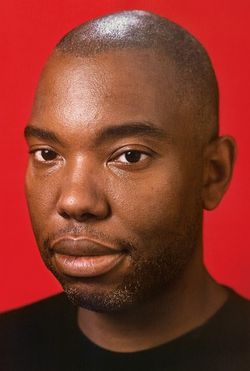
The Hard Truths of Ta-Nehisi Coates

Bejamin Wallace-Wells in New York Magazine:

ScreenHunter_1255 Jul. 17 10.13The first time Coates met the president, at an off-the-record White House conversation with liberal opinion writers in 2013, he left disappointed in himself. “Everyone was too deferential, and I was too deferential, too,” he said. The second time, a few months later, he was determined to do better. Coates had been reading Baldwin’s 1963 book,The Fire Next Time, and as he left his home in Harlem for the train station, his wife, Kenyatta Matthews, said to him, “What would Baldwin do?” On the train to D.C., Coates thought about the off-the-record 1963 meeting that Baldwin had brokered between Robert Kennedy and leading black activists, at which Kennedy felt the full force of black anger. (“They seemed possessed,” Kennedy would later say.) Coates arrived at the White House late and, because he had not prepared for rain, wet. He was not wearing a suit but a blazer and jeans. The president was going around the room answering questions on a wide range of topics, handling each expertly, in Coates’s view.

“And the race aspect is not gone from this,” Coates said. “To see a black dude in a room of the smartest white people and just be the smartest dude in the room — it just puts into context all the stuff about ‘Let me see his grades.’ ”

Occupying Coates’s mind were the racial dimensions of universal health care. It had become apparent, as reporters dug through Census data, that as Republican governors opted out of the federal government’s expansion of Medicaid, blacks and Hispanics would be disproportionately left out because of where they lived.

More here.

Thursday, July 16, 2015

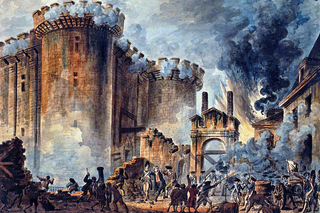
Hegel on Bastille Day

Screen-Shot-2015-07-09-at-2.54.39-PM

Harrison Fluss in Jacobin:

Hegel once told his friend Immanuel Niethammer that to be a philosopher was to be an “expositus,” an exposed person. Once the French Revolution rediscovered that Nous, reason, governs the world, Hegel, the philosopher of reason, would inevitably find himself — whether he liked it or not as a Prussian state philosophy professor — allied to those progressive and potentially rebellious forces. The philosophy of absolute reason thus had real political consequences.

The French Revolution decisively shaped Hegel’s life and thought. One of the first anecdotes we have from Hegel’s student days at the Tubingen seminary is how he and his student-friends, Holderlin and Schelling, planted a “Liberty Tree” together on July 14, 1793, when the Jacobin terror was at its peak. They danced and sang revolutionary songs around it, anticipating that the new revolutionary dawn would soon come to Germany.

Even more than planting a revolutionary maypole, Hegel was a member of the Jacobin Club in Tubingen. That experience inspired him to write subversive passages in his “Historical Fragments” collected by Karl Rosenkranz from Hegel’s Bern Period (1793–1797). Here are some excerpts:

How dangerous the disproportionate wealth of certain citizens is to even the freest form of constitution and how it is capable of destroying liberty itself is shown by history in the example of Pericles of Athens; of the patricians in Rome, the downfall of whom the menacing influence of the Gracchi and others in vain sought to retard through proposals of agrarian laws…

It would be an important topic of investigation to see how much of the strict right of property would have to be sacrificed for the sake of a durable form of republic. We have perhaps not done justice to the system of sansculottism in France in seeking the source of its demand for greater equality of property solely in rapacity.

More here.

Company of One: The Fate of Democracy in an Age of Neoliberalism

Governing-by-Debt-243x366

Peter Gratton on Maurizio Lazzarato's Governing by Debt and Wendy Brown's Undoing the Demos: Neoliberalism’s Stealth Revolution, in The LA Review of Books:

Brown’s Undoing the Demos and Maurizio Lazzarato’s Governing by Debt (first published in Italian in 2013) aim both to diagnose the contemporary neoliberal condition and to demonstrate the tragedy of its growing ubiquity. Brown’s is a markedly nostalgic work, at least rhetorically, since it hearkens to the imperiled values of a previous era of political liberalism before the current reign of homo oeconomicus (economic man) (her past writings are best known for demonstrating the failures of liberalism to confront the problems of patriarchy and economic inequality). Where Brown sees the promise in rejuvenating a political thought that replaces rampant economism, Lazzarato argues all forms of politics act as apparatuses for the capture of wealth by a given elite. For this reason he calls for strikes against the contemporary system, and the wholesale destruction of any economic structures that support it. This, too, is strikingly nostalgic — large-scale workers’ actions of the kind Lazzarato prescribes are modeled on an era more and more outmoded as neoliberalism spreads.

The background for these books is the vast economic upheavals of the past 30 years, during which “neoliberalism” has been anything but “stealth,” as the overstated subtitle of Brown’s book suggests.

The neoliberal pathology has been the same in both European and American countries: governments cannibalize their political spaces, advance privatized markets in all aspects of society (see the Affordable Care Act), and export their manufacturing base to the developing world. The consumer is not, as in a previous era of liberalism, a purported equal trader on a market — leaving aside the problematic basis for thinking this ever came about — but a “capital” among others, an entrepreneur most often providing free labor that creates value for others. If the laborer in the factory was the paradigm of alienation in a previous era, today in the West s/he is the freelancer: signing up for one project at a time, often free of charge in order to gain experience or “clips” and without the social safety net of a pension or guaranteed healthcare coverage. We are each a company of one, committed to doing what used to take whole enterprises: we provide our own customer service, do our own investments and taxes, act as our own travel agencies, and, for those lucky enough to have 401(k)s and healthcare, pick and choose among competing options that we once left to the experts. “There’s an app for that!” also means “you’re on your own.”

More here.

Blame the Banks

Lead_960

Chris Arnade in The Atlantic:

In 2008, when the U.S. housing market collapsed, the European banks lost big. They mostly absorbed those losses and focused their attention on Europe, where they kept lending to governments—meaning buying those countries’ debt—even though that was looking like an increasingly foolish thing to do: Many of the southern countries were starting to show worrying signs.

By 2010 one of those countries—Greece—could no longer pay its bills. Over the prior decade Greece had built up massive debt, a result of too many people buying too many things, too few Greeks paying too few taxes, and too many promises made by too many corrupt politicians, all wrapped in questionable accounting. Yet despite clear problems, bankers had been eagerly lending to Greece all along.

That 2010 Greek crisis was temporarily muzzled by an international bailout, which imposed on Greece severe spending constraints. This bailout gave Greece no debt relief, instead lending them more money to help pay off their old loans, allowing the banks to walk away with few losses. It was a bailout of the banks in everything but name.

Greece has struggled immensely since then, with an economic collapse of historic proportion, the human costs of which can only be roughly understood. Greece needed another bailout in 2012, and yet again this week.

While the Greeks have suffered, the northern banks have yet to account financially, legally, or ethically, for their reckless decisions. Further, by bailing out the banks in 2010, rather than Greece, the politicians transferred any future losses from Greece to the European public. It was a bait-and-switch rife with a nationalist sentiment that has corrupted the dialogue since: Don’t look at our reckless banks; look at their reckless borrowing.

More here.

70 Years Since the First A-Bomb, Humanity Still Lives in Its Afterglow

26529D0F-28BA-4C89-962647F547F5B96F_article

David Biello in Scientific American:

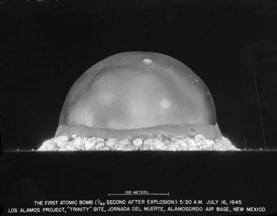
The nuclear problem with Iran started 70 years ago in the desert of New Mexico. July 16, 1945, was a day with two dawns: the latter powered by hydrogen atoms fusing at a comfortable remove of 150 million kilometers. The earlier one entailed a blinding flash of white light fading away as the Trinity test of an atomic bomb exploded at 5:29 A.M. local time—“Up n' atom,” as the slogan for kids went from a little later in the new Atomic Age.

One dawn means a sky smeared with pink clouds drifting in a baby blue sky, accompanied by a chorus of birds singing in a wide flat valley carved by the Rio Grande and its tributaries. The other means a deafening roar that follows in the wake of a blinding flash and the world's first nuclear mushroom cloud.

The Trinity site within the White Sands Missile Range looks the same today as it does in color footage posted by the U.S. Department of Energy of preparations for the first plutonium bomb test. Tumbleweeds skip and hop across this dry and dusty land, theRussian imports piling up against barbed wire fences. A black-and-white film records the Trinity test, the explosion of a little gray sphere covered in wires, bolts and plugs atop a giant erector set reminiscent of an oil derrick. Scrawny geeks in white T-shirts with pencils behind their ears work in the innards of the Trinity bomb before it is raised carefully, ever so gingerly into position and left overnight.

Like the sacred site of some kind of new religion, the secretive missile range opens up to show Trinity twice a year, on a Saturday in spring and fall. So on another beautiful day in the high desert, I joined a procession of cars heading out into the scrubland and queuing up in a line that stretches for kilometers to pass through the Stallion Gate at the north end of the range that stretches for some 160 kilometers to the south through the region known as Jornada del Muerte, or Route of the Dead, a name given long before the nuclear test or the establishment of the missile range. Cattle graze placidly near the road while minivans wait at the turnoff, hawking “trinitite“—the new, greenish, flecked mineral produced by sand and dirt melted by the Trinity blast—for just $20 a pebble. Protesters hold up signs like “Speaking up for those silenced by the bombs” and “We are the Trinity downwinders.”

More here.

‘James Merrill: Life and Art’

JamesmerrillWilliam H. Pritchard at Commonweal:

The opening sentence of Langdon Hammer’s fine,wholly definitive biography of the writer James Merrill, quotes his riposte to the complaint of a professor friend who reminded him, “Some of us have to work for a living.” Merrill’s comeback was simple and conclusive: “I live to work.” Since his death in 1995, that work has been amply displayed in three large volumes of poems, a volume of collected prose, and a volume of novels and plays. By far the most important of these are the poems, all nine hundred pages of them, edited by his close friends and fellow writers, J. D. McClatchy and Stephen Yenser. As these volumes appeared, Hammer was at work for at least fifteen years in putting together an exhaustive account, alive on every page, of the life and work of his subject. The account succeeds in giving devoted, intelligent attention to Merrill’s writings—mainly his poems—as it does to the life that went into this work. Hammer’s nine-hundred-plus-page book is a load, hard to hold on one’s lap, but it is executed with such loving, assiduous care that one can’t imagine it ever needing to be done again,

Hammer met Merrill when, as a professor at Yale, Hammer was invited to drive the poet from his house in Stonington, Connecticut, to a memorial reading for Wallace Stevens at the University of Connecticut. On the road he found Merrill’s voice compelling, “suave, modulated, surprisingly low and deep, vaguely Southern or ‘mid-Atlantic’ like a movie actor’s from the 1940s.” In its gravity and modulation, Hammer’s own voice on the page is ideal to convey the “shrewd, ironic wit” he finds everywhere in Merrill’s work.

more here.