The Big Hole in the Iran Debate

Lead_960 (1)

Peter Beinart in The Atlantic:

I have a fantasy. It’s that every politician and pundit who goes on TV to discuss the Iran deal is asked this question first: “Did you support the Iraq War, and how has that experience informed your position?”

For me, it would be a painful question. I supported the Iraq War enthusiastically. I supported it because my formative foreign-policy experiences had been the Gulf War and the wars in Bosnia and Kosovo, all of which led me to exaggerate the efficacy of military force and downplay its risks. As Iraq spiraled into disaster, I felt intellectually unmoored. When my sister-in-law was deployed there for a year, leaving her young daughter behind, I was consumed with guilt that I had contributed to their hardship. To this day, when I walk down the street and see a homeless veteran, I feel nauseous. I give some money and a word of thanks, and think about offering an apology. But I don’t, because there’s no apology big enough. The best I can do is learn from my mistake. These days, that means supporting the diplomatic deal with Iran.

I’m not saying that everyone who supported the Iraq War must feel as I do. I’m simply saying this: In most televised discussions of Iran, the word “Iraq” never comes up, and that’s insane. The Iraq War was one of the most important, and damaging, episodes in the history of U.S. foreign policy. The debate preceding it pitted people who believed Saddam Hussein was malevolent but rational against people who believed he might well nuke the United States. It pitted people who trusted that International Atomic Energy Agency inspections could contain Saddam’s nuclear program against people who thought he would build a nuke under the IAEA’s nose. Most fundamentally, it pitted people who believed that the only way to keep America safe was to force Iraq’s utter capitulation, via regime change, against people who preferred an imperfect accommodation that did not risk war. Sound familiar?

More here.

In America, mass incarceration has caused more crime than it’s prevented

Ap_856229347196

Allison Schrager in Quartz (AP Photo/Eric Risberg, File):

A new paper from University of Michigan economics professor Michael Mueller-Smith measures how much incapacitation reduced crime. He looked at court records from Harris County, Texas from 1980 to 2009.Mueller-Smith observed that in Harris County people charged with similar crimes received totally different sentences depending on the judge to whom they were randomly assigned. Mueller-Smith then tracked what happened to these prisoners. He estimated that each year in prison increases the odds that a prisoner would reoffend by 5.6% a quarter. Even people who went to prison for lesser crimes wound up committing more serious offenses subsequently, the more time they spent in prison. His conclusion: Any benefit from taking criminals out of the general population is more than off-set by the increase in crime from turning small offenders into career criminals.

High recidivism rates are not unique to Texas: Within 5 years of release more than 75% of prisoners are arrested again.

Why does prison turn people into career criminals?
Prison obliterates your earnings potential. Being a convicted felon disqualifies you from certain jobs, housing, or voting. Mueller-Smith estimates that each year in prison reduces the odds of post-release employment by 24% and increases the odds you’ll live on public assistance. Time in prison also lowers the odds you’ll get or stay married. Being in prison and out of the labor force degrades legitimate skills and exposes you to criminal skills and a criminal network. This makes crime a more attractive alternative upon release, even if you run a high risk of returning to prison.
You could argue prison is still worth it if long sentences discouraged people from committing crime in the first place. Mueller-Smith estimates a one-year prison sentence would only be worth it (in terms of prison cost and forgone economic potential) if it deterred at least 0.4 fewer rapes, 2.2 assaults, 2.5 robberies, 62 larcenies or prevented 4.8 people from becoming a habitual drug user. And the deterrent effect is not this powerful—not even close. There exists little evidence that the possibility of a long prison sentence is much of a crime deterrent at all.
More here.

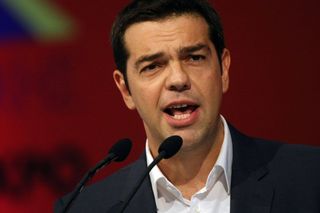
How Alexis Tsipras and Syriza Outmaneuvered Angela Merkel and the Eurocrats

Alexis_Tsipras_Syriza_850_565

Slavoj Zizek in In These Times:

Varoufakis repeatedly made this point clear: what was needed to give the Greek economy a chance to rebound was not more borrowing but an overall re-haul. The first step in this direction would be an increase in the democratic transparency in regards to the exercise of power. Our democratically elected state apparatuses are increasingly impaired by both a network of “agreements” (TISA, etc.) and by non-elected “expert” bodies that wield the real economic (and military) power. Here is Varoufakis’s reporton an extraordinary moment in his dealings with Jeroen Dijsselbloem:

There was a moment when the President of the Eurogroup decided to move against us and effectively shut us out, and made it known that Greece was essentially on its way out of the Eurozone. … There is a convention that communiqués must be unanimous, and the President can’t just convene a meeting of the Eurozone and exclude a member state. And he said, “Oh I’m sure I can do that.” So I asked for a legal opinion. It created a bit of a kerfuffle. For about 5 to 10 minutes the meeting stopped, clerks, officials were talking to one another, on their phone, and eventually some official, some legal expert addressed me, and said the following words: “Well, the Eurogroup does not exist in law, there is no treaty which has convened this group.” So what we have is a non-existent group that has the greatest power to determine the lives of Europeans. It’s not answerable to anyone, given it doesn’t exist in law; no minutes are kept; and it’s confidential. So no citizen ever knows what is said within. … These are decisions of almost life and death, and no member has to answer to anybody.

Sounds familiar? Yes, to anyone who knows how Chinese power functions today. After Mao’s death, Deng Tsiao-Ping established a dual political system: the state apparatus and legal system are redoubled by the Party institutions which are literally extralegal—or, as He Weifang, a law professor from Beijing, put it:

As an organization, the Party sits outside, and above, the law. It should have a legal identity, in other words, a person to sue, but it is not even registered as an organization. The Party exists outside the legal system altogether.

It is as if, as Walter Benjamin put it , violence which sustains state power remains present, embodied in an organization with an unclear legal status.

More here.

Daniel Kahneman: ‘What would I eliminate if I had a magic wand? Overconfidence’

Daniel-Kahneman-009

David Shariatmadari in The Guardian (Photograph: Richard Saker):

His 2011 book, Thinking, Fast and Slow, a primer on a career’s worth of psychological inquiry, won the US National Academy of Sciences book award, and the enthusiastic approval of his peers. It tells the story of “two systems” of thought, one automatic and intuitive, the realm of systematic biases, the other conscious and deliberative. It is a challenging work, clearly written but stuffed even so with difficult problems and counter-intuitive explanations. Despite that, it has sold millions of copies around the world. Nassim Nicholas Taleb, professor of risk engineering and author of The Black Swan, places it “in the same league asThe Wealth of Nations by Adam Smith and The Interpretation of Dreams by Sigmund Freud”.

What’s fascinating is that Kahneman’s work explicitly swims against the current of human thought. Not even he believes that the various flaws that bedevil decision-making can be successfully corrected. The most damaging of these is overconfidence: the kind of optimism that leads governments to believe that wars are quickly winnable and capital projects will come in on budget despite statistics predicting exactly the opposite. It is the bias he says he would most like to eliminate if he had a magic wand. But it “is built so deeply into the structure of the mind that you couldn’t change it without changing many other things”.

The same applies to our habit of predicting stereotypical outcomes at the expense of what’s known about the world. When told of a student, Tom, who has a preference for neat and tidy systems and a penchant for sci-fi, most of us guess that he’s studying computer sciences and not a humanities subject. This is despite the fact that the group studying the latter is far larger. “Think of it this way. A form of stereotyping is involved in understanding the world. So I have a stereotype of a table, I have a stereotype of chairs. Now when you start having stereotypes of social groups, it’s the human mind at work. It’s not a different mind. It’s what you need to get around in the world.” You can slow down and become aware of this, Kahneman believes, but the underlying mechanism isn’t going to change.

More here.

The Art and Science of Forgetting Everything

Rosecrans Baldwin in The Morning News:

Hepola-feature_1260_1260_80Sarah Hepola is the personal essays editor at Salon and a contributor to The Morning News since 2002, one of our very first writers. She’s also a close friend, in part because her pieces have always been exactly what we want to publish at TMN: investigative essays that are personal, funny, and very smart. Her new book, Blackout: Remembering the Things I Drank to Forget is an addiction memoir, and it’s also all of those things, but much more. As the Times critic Dwight Garner wrote recently, with a little more flamboyance than we expect in his reviews, “Simply extraordinary…. Ms. Hepola’s electric prose marks her as a flamingo among this genre’s geese.” Blackout tells the story of the author’s problems with “the gasoline of all adventure,” as she puts it, from a very specific and misunderstood angle: the phenomenon of blackouts, or those moments when a drinker’s long-term memory shuts down while drinking. In Hepola’s experience, blacking out was part of some of her worst moments as an alcoholic, and the book finds her investigating what the phenomenon is exactly, and what really happened when her memory turned off. After we read the book, we were surprised to realize how little we knew about blacking out, too, so we reached out to Sarah to find out more.

Blacking out isn’t the same as passing out, not the same as “browning out,” as they say in It’s Always Sunny. What is it?

A blackout is when you drink so much that your long-term memory shuts down. You can still talk and make jokes and flirt with random guys, but the recorder in the brain isn’t working, so, afterward, you won’t remember a thing. It’s an alcohol-imposed amnesia. Not everyone will have blackouts, which makes it confusing for those who don’t, and for those of us who do, it’s unforgettable. You wake up, and pieces of your night are missing.

More here.

Treasure In Heaven: early Christians challenged the Roman idea of charity

Peter Brown in Lapham's Quarterly:

BlackWhen Christians of late antiquity thought of religious giving, they went back to what for them was the beginning—to the words of Jesus. The words of Jesus to the Rich Young Man described a transfer of “treasure” from earth to heaven: “Jesus said to him, ‘If you would be perfect, go, sell what you possess and give to the poor, and you will have treasure in heaven.’ ” Jesus repeated this challenge to his disciples: “Sell your possessions and give alms; provide yourselves with purses that do not grow old, with a treasure in the heavens that does not fail, where no thief approaches and no moth destroys.” The transfer of treasure from earth to heaven was also current in Jewish circles. In the Jerusalem Talmud of the late fourth century, there is a story about King Monobazos, the Jewish king of Adiabene on the Euphrates. He was said to have spent his fortune providing food for the poor in Jerusalem. His infuriated relatives accused him of living up to his name, which was derived from the word bazaz—“to plunder.” Monobazos was plundering his earthly inheritance. He answered them: “My fathers laid up treasure for below, but I have laid up treasures for above. They laid up treasures in a place over which the hand of man may prevail: I in a place over which no hand can prevail.”

The words of Jesus and the story of King Monobazos urged or described heroic acts of renunciation and generosity. By the third century, however, in both Judaism and Christianity, the gesture of giving had become miniaturized, as it were. One did not have to perform feats of heroic self-sacrifice or charity to place treasure in heaven. Small gifts would do. For instance, Cyprian, who became the bishop of Carthage around 249, treated the steady, low-profile flow of alms to the poor on the same footing as the renunciation of all wealth that Jesus had urged on the Rich Young Man. Heaven was thus not only a place of great treasure houses, it included prime real estate in a state of continuous construction due to almsgiving performed on earth by means of common, coarse money.

When one turns to present-day scholarship on this theme, we find that the idea of a transfer of treasure to heaven is surrounded by a loud silence.

More here.

Friday, July 24, 2015

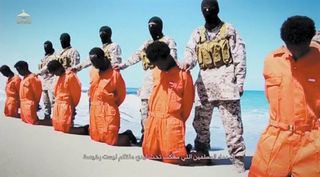
The Mystery of ISIS

Anonymous_1-081315_jpg_600x519_q85

Anonymous in the NY Review of Books:

Ahmad Fadhil was eighteen when his father died in 1984. Photographs suggest that he was relatively short, chubby, and wore large glasses. He wasn’t a particularly poor student—he received a B grade in junior high—but he decided to leave school. There was work in the garment and leather factories in his home city of Zarqa, Jordan, but he chose instead to work in a video store, and earned enough money to pay for some tattoos. He also drank alcohol, took drugs, and got into trouble with the police. So his mother sent him to an Islamic self-help class. This sobered him up and put him on a different path. By the time Ahmad Fadhil died in 2006 he had laid the foundations of an independent Islamic state of eight million people that controlled a territory larger than Jordan itself.

The rise of Ahmad Fadhil—or as he was later known in the jihad, Abu Musab al-Zarqawi—and ISIS, the movement of which he was the founder, remains almost inexplicable. The year 2003, in which he began his operations in Iraq, seemed to many part of a mundane and unheroic age of Internet start-ups and a slowly expanding system of global trade. Despite the US-led invasion of Iraq that year, the borders of Syria and Iraq were stable. Secular Arab nationalism appeared to have triumphed over the older forces of tribe and religion. Different religious communities—Yezidis, Shabaks, Christians, Kaka’is, Shias, and Sunnis—continued to live alongside one another, as they had for a millennium or more. Iraqis and Syrians had better incomes, education, health systems, and infrastructure, and an apparently more positive future, than most citizens of the developing world. Who then could have imagined that a movement founded by a man from a video store in provincial Jordan would tear off a third of the territory of Syria and Iraq, shatter all these historical institutions, and—defeating the combined militaries of a dozen of the wealthiest countries on earth—create a mini empire?

The story is relatively easy to narrate, but much more difficult to understand. It begins in 1989, when Zarqawi, inspired by his Islamic self-help class, traveled from Jordan to “do jihad” in Afghanistan. Over the next decade he fought in the Afghan civil war, organized terrorist attacks in Jordan, spent years in a Jordanian jail, and returned—with al-Qaeda help—to set up a training camp in Herat in western Afghanistan. He was driven out of Afghanistan by the US-led invasion of 2001, but helped back onto his feet by the Iranian government. Then, in 2003—with the assistance of Saddam loyalists—he set up an insurgency network in Iraq. By targeting Shias and their most holy sites, he was able to turn an insurgency against US troops into a Shia–Sunni civil war.

More here.

Drums and Loyalty: Narendra Modi and Xi Jinping’s Parallel Power Parade

Chinese-Drum-243x366

Mishi Saran in The LA Review of Books:

THE WORD “FASCISM” has been doing the rounds in India and China.

The first time I heard it, I was at a small, polite dinner in Shanghai a few years ago. At least I thought it was polite; I should have known that behind closed doors, Chinese intellectuals let opinions buzz, as fast as flies over summer watermelon. China’s President Xi Jinping was newly in power.

“I’m reading Mein Kampf,” said a frail woman with tidy, grey hair sitting opposite me.

I sat a little straighter; I’d never actually heard anyone say that.

“I’m recognizing that the Chinese Communist party uses the same tactics. They unite people with hate; love is not a uniting factor. They give the people slogans.”

Her declaration seemed to loosen lips in the room, and others chimed in, with reports of how anyone writing a thesis now had to submit an abstract to the Party chief stationed at whatever institution.

“I never really like Wen Jiabao, but at least we could speak then,” a man said. “Now, under Xi, this kind of tightening, I don’t know …”

The next time I encountered the word — or more accurately the allusion — was in relation to my homeland, when Indian Prime Minister Modi stormed to a landslide victory in the country’s elections in May 2014, and a magazine called Open put Modi on the cover with the title, “Triumph of the Will,” a nod to a 1935 Nazi propaganda film. I wasn’t paying attention at the time, busy packing up house, saying goodbye to Shanghai after eight years of living there. I had to find a place to live in our new home, Hong Kong, and settle our little girl into a new school routine.

A year later, when Modi was due to visit China in May 2015, I accepted an invitation to come to Shanghai to hear him speak. The Indian Association based in Shanghai, loosely affiliated with the Indian Consulate, had contacted Indians living in cities across China and in Hong Kong too.

More here.

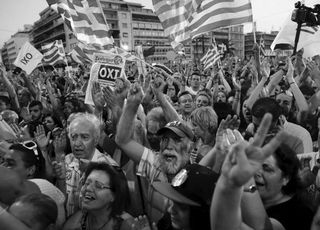
The Greek Debacle

Novote

Perry Anderson in Jacobin:

Five years of mass unemployment and welfare cuts later, Greek debt had merely soared still higher. Syriza won office because it promised, with much fiery rhetoric, to put an end to the submission of Greece to the rule of the troika. It would “renegotiate” the terms of the country’s wardship in Europe. How did it hope to do so? Simply by pleading for kinder treatment, and cursing when it was not forthcoming — pleas and curses alike appealing to the loftier values of Europe, to which the European Council could surely not remain deaf.

Incompatible with these outpourings, mingling supplication and imprecation, was, all too plainly from the start, any thought of desisting from the euro. There were two reasons for that. Provincial in outlook, the Syriza leadership found it difficult to make any mental distinction between membership of the EU and of the eurozone, treating exit from the one as if it were virtual expulsion from the other: the ultimate nightmare for any good European, as they held themselves to be.

They were also conscious of the fact that Greek standards of living — lubricated by low interest rates brought on by the convergence of spreads across Europe; topped up with Structural Funds — had indeed increased in the Potemkin years of Simitis, leaving warm popular memories of the euro, which did not connect subsequent miseries with it. Syriza made no attempt to explain the connection. Tspiras and his colleagues assured all who could listen that, on the contrary, there could be no question of abandoning the euro.

With this, they gave up any serious hope of bargaining with the real — not their dreamland — Europe. By 2015, the threat of a Grexit was economically much weaker than it would have been in 2010, because by now the German and French banks had been paid off with the bailout nominally going to Greece. Despite residual alarmist talk elsewhere, the German finance ministry has for some time, and with good reason, dismissed any dramatic material consequences from a Greek default.

But for the European ideology, to which all eurozone governments subscribe, the symbolic blow to the single currency — indeed, in the typical language of the day, the “European project” itself — would be grievous, a setback it was felt critical to avoid.

More here.

How to think about Islamic State

Pankaj Mishra in The Guardian:

IsisViolence has erupted across a broad swath of territory in recent months: wars in Ukraine and the Middle East, suicide bombings in Xinjiang, Nigeria and Turkey, insurgencies from Yemen to Thailand, massacres in Paris, Tunisia and the American south. Future historians may well see such uncoordinated mayhem as commencing the third – and the longest and the strangest – of world wars. Certainly, forces larger and more complex than in the previous two wars are at work; they outrun our capacity to apprehend them, let alone adjust their direction to our benefit. The early post cold war consensus – that bourgeois democracy has solved the riddle of history, and a global capitalist economy will usher in worldwide prosperity and peace – lies in tatters. But no plausible alternatives of political and economic organisation are in sight. A world organised for the play of individual self-interest looks more and more prone to manic tribalism.

In the lengthening spiral of mutinies from Charleston to central India, the insurgents of Iraq and Syria have monopolised our attention by their swift military victories; their exhibitionistic brutality, especially towards women and minorities; and, most significantly, their brisk seduction of young people from the cities of Europe and the US. Globalisation has everywhere rapidly weakened older forms of authority, in Europe’s social democracies as well as Arab despotisms, and thrown up an array of unpredictable new international actors, from Chinese irredentists and cyberhackers to Syriza and Boko Haram. But the sudden appearance of Islamic State (Isis) in Mosul last year, and the continuing failure to stem its expansion or check its appeal, is the clearest sign of a general perplexity, especially among political elites, who do not seem to know what they are doing and what they are bringing about.

More here.

Brain area found that may make humans unique

Alison Abbott in Nature:

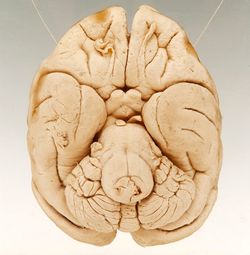
BrainNeuroscientists have identified an area of the brain that might give the human mind its unique abilities, including language. The area lit up in human, but not monkey, brains when they were presented with different types of abstract information. The idea that integrating abstract information drives many of the human brain's unique abilities has been around for decades. But a paper published1 in Current Biology, which directly compares activity in human and macaque monkey brains as they listen to simple auditory patterns, provides the first physical evidence that a specific area for such integration may exist in humans. Other studies that compare monkeys and humans have revealed differences in the brain’s anatomy, for example, but not differences that could explain where humans’ abstract abilities come from, say neuroscientists. “This gives us a powerful clue about what is special about our minds,” says psychologist Gary Marcus at New York University. “Nothing is more important than understanding how we got to be how we are.”

Simple sequence

A team of researchers headed by Stanislas Dehaene at the INSERM Cognitive Neuroimaging Unit at Gif-sur-Yvette near Paris, looked at changing patterns of activation in the brain as untrained monkeys and human adults listened to a simple sequence of tones, for example three identical tones followed by a different tone (like the famous four-note opening of Beethoven’s fifth symphony: da-da-da-DAH). The researchers played several different sequences with this structure — known as AAAB — and other sequences to the subjects while they lay in a functional magnetic resonance imaging (fMRI) scanner. The fMRI technique picks up changes in blood flow in the brain that correlate with regional brain activity. The team wanted to know whether the subjects of both species could recognize two different features of the sequences: the total number of tones, indicating an ability to count, and the way the tones repeat, indicating an ability to recognize this type of algebraic pattern.

More here.

Friday Poem

From a Balcony
.

The sun is an orange from the Peloponnese
staining clouds and stuccoed walls,

sailboats tacking out to sea.
Damson shapes chase light from under vines;

shadows grope their way,
thick arabesques of lace furrowed at the frame.

Hills are a smoke-stained fresco flaking,
rooftops shrill as pomegranate seeds.

Poplars are the spears of long-dead warriors
sprouted from a rill of dragon’s teeth.

Rising from that faded terracotta dome
come the curling throaty notes

of evening mass below, swelling in
and out of polyphony like a weaver’s skilful woof

their path the disappearing smoke
dragged from a censer’s golden arc.

Far across this dim intaglio
a white cat pads along a cooling lintel stone.

Only the distant thrum of a scooter
navigating narrow roads.
.
.
by Sarah Howe
from A Certain Chinese Encyclopedia
publisher: tall-lighthouse, Luton, 2009

Thursday, July 23, 2015

Selfie with ‘Sunflowers’

Julian Barnes in the London Review of Books:

Barn02_3715_01Just as there are writers’ writers, so there are painters’ painters: necessary exemplars, moral guides, embodiers of the art. Often they are quiet artists, who lack a shouty biography, who go about their work with modest pertinacity, believing the art greater than the artist. Noisier painters sometimes unwisely patronise them. In France, the 18th century gave us Chardin, the 19th Corot, and the 20th Braque: all true north on the artistic compass. Their relationship with their descendants is sometimes one of influence, more usually one of semi-private conversation across the centuries (Lucian Freud doing versions of Chardin, Hodgkin painting ‘After Corot’). But it also goes beyond that – beyond admiration, beyond style, homage, imitation. Van Gogh, even as he was violently wrenching himself towards a form of painting which still startles us today, was filling his letters and his mind with thoughts of Corot (he also greatly valued Chardin). It was a tribute by the living artist to his predecessor’s clarity of seeing, an acknowledgment that this is what painting is. Just as the young John Richardson, visiting Braque’s studio for the first time, felt that he had arrived ‘at the very heart of painting’.

But these apparently quiet artists often turn out to have been more far-sighted and more radical than we assume. Corot, for example, once dreamed the whole of Impressionism. As Van Gogh wrote to his brother Theo in May 1888,

When good père Corot said a few days before he died: last night I saw in my dreams landscapes with entirely pink skies, well, didn’t they come, those pink skies, and yellow and green into the bargain, in Impressionist landscapes? All this is to say that there are things one senses in the future and that really come about.

By the time of Van Gogh’s letter, the century-long struggle in French art between colour and line had been settled in favour of colour. (Settled for the time being, that is – until a few years later Cubism restored the primacy of line.) Corot pink developed into a leading, raging, shocking colour: the pink loitering surreptitiously in shadows, the overt pink of Monet’s haystacks and Van Gogh’s Pink Peach Tree, and still active in the pink of Bonnard’s last painting, Almond Tree in Blossom. But yellow and green were there too, as Van Gogh noted, and orange and red; oh, and blue and black. The tops were taken off all the tubes, and colour seemed to get its freedom and intensity back: richnesses that had been suppressed – either by self-censorship or academic dictate – since the days of Delacroix.

More here.

Zombies and cannibals: The horrors of China’s financial system, charted

Gwynn Guilford in Quartz:

Sneakily but steadily, the Chinese government is pumping torrents of money into its banks. And many trillions of yuan have been flowing into stocks via the interbank lending markets.

Just as interesting, though, is where the cash isn’t flowing. Despite the flood from the central bank, the money geysering forth isn’t making its way into ordinary people’s pockets, their checking accounts, or growth-boosting infrastructure projects. That’s a disquieting hint that China’s $30 trillion in debt is terrorizing its economy far more than the country’s robust 7% GDP growth rate implies.

The first thing to note is the scale of the sums gushing out of the People’s Bank of China. Sources of this largesse include interbank lending, lowering of bank capital requirements—which freed up an estimated 1.5 trillion yuan ($240 billion)—and “innovative liquidity tools” (meaning, backdoor lending to banks).

This money should spur growth. However, Wei Yao, economist at Société Générale, has spotted a curious divergence that suggests it’s not.

The gray line in the chart below shows annual growth in spending on urban fixed-asset investment (FAI) projects—big economy-juicing ventures like building airports, trains, or condos. China-watchers see FAI as the primary indicator of capital spending. While it’s been gradually easing, that outlay is still rising at a brisk 11% annual pace. The pink line, which tracks the annual growth in received funds for these same projects, is what’s worrisome. Since 2014, growth in received funds has been decelerating faster than urban fixed-asset investment. The three-month moving average expanded at a meager 5.7% in June.

More here.

Is there such thing as the beginning and end of time?

4469318003_fa7d3f51b0_o

Tosin Thompson in The New Statesman:

Every year, we travel through time.

In autumn, we travel forward in time by one hour, and in the spring, we travel back in time by one hour. Every four years we gain 24 hours in February, and every three years an extra second is added to a minute.

Time appears, and then – *poof* – disappears again. But, wait a minute (whatever a minute is). Time cannot spring in and out of existence, can it? Time loans the universe a second, an hour, or possibly a day until the deadline whereby the universe must pay time back, right? But where has time been all this time?

Time is hard to define. We measure time in years (the time it takes Earth to orbit the sun), days (one rotation of the Earth) and lunar months (the time it takes the moon to wax and wane). Time – hours, minutes, seconds, milliseconds, nanoseconds – are all man-made constructs. We made them up.

And time is a concept that doesn’t necessarily apply to the universe.

Time has always been inextricably linked with the sun. The ancient Egyptians and Babylonians used sundials that roughly divided daylight into 12 equal segments. 60-minute hours and 60-second minutes are the product of the ancient Mesopotamian sexigesimal (base 60) numbering system. The French attempted to use the decimal system (base 10 rather than 12) for time-keeping, but that never caught on. The Greeks improved the sundial by marking gradations on sundials to indicate the divisions of time during the day.

And then the Scientific Revolution (1550-1700) came along. According to Vincenzo Viviani, Galileo's first biographer, 20-year-old Galileo got bored during prayers at the Cathedral of Pisa in 1583. As he daydreamed, something caught his eye: a swinging altar lamp. Curiosity got the better of him and he swung the lamp to find out how long it took to swing back and forth. He used his pulse to time large and small swings.

Galileo discovered something remarkable that nobody else had: the period of each swing was exactly the same. Then, the pendulum clock was born – the most accurate way of timekeeping at the time.

More here.

How To Make Better Health Predictions From Our Gut Microbes

Ed Yong in Not Exactly Rocket Science:

ScreenHunter_1271 Jul. 23 17.23We all know people who act very differently depending on the company they find themselves in. They can be delightful in some circles, and obnoxious in others. The same principles apply to the microbes in our bodies—our microbiome. They have important roles in digestion, immunity, and health, but none of them is inherently good. They can be helpful in one part of the body and harmful in another, beneficial when paired with certain partners and detrimental when teamed up with others.

This means that, as I’ve written before, there’s no such thing as a “healthy microbiome”. Context matters. And contrary to what some companies might tell you, we’re still not very good at looking predicting what any particular community of microbes means for our health. One common approach is to compare microbiomes in people with or without a disease, single out species that distinguish the two groups, and use their presence or absence to make predictions. But those same bugs might have the opposite effect, or none at all, in another setting.

Alyxandria Schubert from the University of Michigan used a less reductionist approach—one that embraces the complexity of the microbiome rather than shoving it aside.

More here.

EL Doctorow obituary

Eric Homberger in The Guardian:

El-Doctorow-in-2005.-009Anointed “our pre-eminent lefty” among contemporary American novelists, EL Doctorow, who has died aged 84, was praised as the “epic poet” of the forgotten American left. It was praise that he did not welcome. He proved elusive when dealing with the pigeonholes crafted by reviewers, and not a few readers. In a career spanning five decades, Doctorow feared that tidy labels were a distraction. He lived contentedly within the paradoxes of his career.

He did not want to be called a political novelist. “My premise is that the language of politics can’t accommodate the complexity of fiction, which as a mode of thought is intuitive, metaphysical, mythic.” Although he wrote lovingly of the lost world of the Jewish Bronx in the 1930s, where he grew up, he rejected the idea that he was an autobiographical writer. “Every book is an act of composition,” he remarked in 1989, “and if you happen to use memories or materials from your own mind, they are like any other resource; they have to be composed. And the act of composition has no regard where the material comes from. So when it’s all done it’s all autobiographical and none of it is.”

Doctorow wrote a handful of the most influential historical novels of the past half-century, but was determined not to be known simply as a historical novelist. Praised for having “done his homework” on the American Civil war for The March(2005), he claimed that he did little research, freely inventing when the historical record seemed somehow incomplete. There is a moving letter in The March sent by the Union generalissimo William Tecumseh Sherman to a Confederate general whose son was killed in battle. But no such letter was ever written.

More here.

The reckless plot to overthrow Africa’s most absurd dictator

Andrew Rice in The Guardian:

ScreenHunter_1270 Jul. 23 16.59After the coup failed, the raids began. On New Year’s Day this year, FBI agents descended on a blue split-level house in a suburb of Minneapolis, Minnesota. In the dead of night, near Austin, Texas, they searched a million-dollar lakeside villa. Agents interrogated an activist at his house in the working-class town of Jonesboro, Georgia. At a rundown townhouse development in Lexington, Kentucky, they found the wife of a US soldier, with a refrigerator full of her husband’s favourite Gambian delicacies – dishes prepared for a triumphant homecoming and repurposed for mourning.

When the employees of Songhai Development, an Austin building firm, arrived at work on Monday 5 January, they discovered the FBI had visited their offices over the weekend and seized all the company’s computers. The company’s owner, Cherno Njie, was spending the holidays in west Africa. But Doug Hayes, who managed construction for Njie, expected his boss back at any moment – they had an apartment project that was about to face an important zoning commission hearing.

“I guess he really had a two-track mind,” Hayes said in May, with a rueful laugh, over lunch at his favourite Texas barbecue joint. “He had that going, and he also wanted to be president of the Gambia.”

By the end of that Monday, Njie’s name was all over the international news. He had been arrested as he got off a plane at Dulles international airport near Washington DC, and charged with organising a failed attempt to overthrow Yahya Jammeh, the military ruler of the Gambia, a slender riverine nation of fewer than 2 million people. One alleged co-conspirator, a Gambian who had served with the US army, had already confessed to US investigators, telling them he was one of a small group of men from the diaspora who had taken part in a botched nighttime attack in December on Jammeh’s residence.

More here. [Thanks to Margit Oberrauch.]

THE LIGHTNING INSIDE US

From More Intelligent Life:

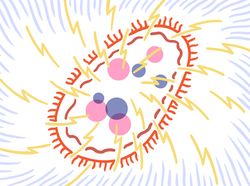
EnergyIN JAMES WHALE'S 1931 film of “Frankenstein”, the monster is brought to life as his creator imagined God’s first creatures to have been: by lightning. “Behold!” Victor cries, as the storm lashes his laboratory and its metal armatures begin to glow. “The great ray that first brought life into the world.” A couple of decades later, in a ground-breaking foray into the science of life’s origins, the biochemist Stanley Miller used high-voltage sparks to produce some amino acids, the building blocks of proteins. His Chicago laboratory was less dramatic than Victor’s, but the idea was the same: a flask of gases represented the atmosphere of the early Earth; the sparks, its lightning.

There is lightning, too, in a wonderful new book by Nick Lane, a biochemist at University College London, and, I should add, a friend of mine. “The Vital Question”, rated “masterful”, “epic” and “scintillating” by the critics, contains as convincing an account of the origins of life as any now on offer. And it also contains lightning—but as a comparator, not an instigator. The strength of the electric field across the membranes that allow living things to capture the energy they need is a startling 30m volts per metre: the same sort of strength seen in the fields that tear open thunderclouds. Lane belongs to a small and persuasive cabal that is using studies of the way cells access energy to gain insight into all sorts of questions, from why there are different sexes to why creatures grow old (and—a personal favourite—why birds age much more slowly than other creatures of their size). The cabal takes Theodosius Dobzhansky’s well-worn dictum, “Nothing in biology makes sense except in the light of evolution”, and adds that nothing in evolution makes sense except in the light of energetics.

More here.