Over at Philosophy Bites:
Michel Foucault was a prolific and original thinker. In this episode of the Philosophy Bites podcast Susan James discusses some of the ways in which he explored questions about knowledge in his writing.

Over at Philosophy Bites:
Michel Foucault was a prolific and original thinker. In this episode of the Philosophy Bites podcast Susan James discusses some of the ways in which he explored questions about knowledge in his writing.
Shamus Khan in Aeon:
Last month, the US Supreme Court affirmed the rights of same-sex couples to marry. The decision was a major achievement for a liberation movement that began nearly half a century ago. Throughout the struggle for marriage equality, supporters drew parallels with the oppression of African Americans, be that anti-miscegenation laws or legalised segregation. Yet one stark difference between these civil rights movements has escaped notice.
African-American activists aggressively called out arguments about genetic and biological differences as legacies of racist, Nazi science. By contrast, the marriage-equality movement has embraced biological determinism. Gay and lesbian activists have led the way popularising the idea that identity is biologically determined.
The proffered perspective is that sexuality is not a choice, but a way we are born. Getting Americans to believe this was a struggle. In 1977, according to the first Gallup poll on the question, only 13 per cent of Americans believed people were born gay. Even in 1990, only 20 per cent thought of sexuality as biologically innate. Yet since 2011 support has spiked, and today just under half of Americans think that the sexuality of gays and lesbians is determined at birth. Support for gay marriage and support for the idea of being ‘born that way’ closely track one another.
While this biological determinism of sexuality has been associated with a great triumph for the gay-rights movement, it’s been a great loss for our public discourse. The battle for gay marriage has been won, and other, even more challenging battles lie before the lesbian, gay, bisexual and transgender (LGBT) movement. To succeed in them, activists and scholars must abandon the fundamental fiction they have propagated. The false belief in biological determinism does considerable damage. It marginalises some of the most precarious members of the gay community, such as the transgendered; it limits our capacity to discuss what makes a good and just community; and it leads many of us to misunderstand ourselves and society.
More here.
Perry Anderson in The New Left Review:
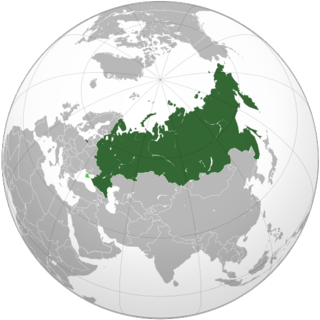
It will soon be a quarter of a century since Russia left communism behind. Its present ruler has been in power for fifteen years, and by the end of his current term in office will have all but equalled the tenure of Brezhnev. From early on, Western opinion of his regime divided sharply. That under Putin—after a period of widespread misery and dislocation, culminating in near state bankruptcy—the country had returned to economic growth and political stability, was evident by the end of his first term; so too the popularity he enjoyed because of these. But beyond such bare data, there was no consensus. For one camp, increasingly vocal as time went on, the pivots of Putin’s system of power were corruption and repression: a neo-authoritarian state fundamentally inimical to the West, with a wrapping of legal proprieties around a ramshackle pyramid of kleptocracy and thuggery.
This view prevailed principally among reporters, though it was not confined to them: a representative sample could be found in Economist editor Edward Lucas’s The New Cold War (2009), Guardian journalist Luke Harding’s Mafia State (2012), Standpoint contributor Ben Judah’s Fragile Empire (2013), but expressed no less pungently by a jurist like Stephen Holmes. For Lucas, Putin, having seized power with a ‘cynical putsch’, and maintained it with the ‘methods of terrorists and gangsters’, had ‘cast a dark shadow over the eastern half of the continent’. For Harding, under Putin’s tutelage, ‘Russia has become bullying, violent, cruel and—above all—inhuman’. For Judah, Russia was ‘an anguished, broken society’ that is one of ‘history’s great failures’, in the grip of an apocalyptic system in which, since ‘Putin cannot leave power without fear of arrest’, the West ‘should ask itself whether it will offer him exile to avert blood’. For Holmes, ‘behind the mask of an authoritarian restoration’ there was no more than the ‘lawless feeding frenzy’ of ‘an internally warring, socially detached and rapacious oligarchy’, whose ‘various groups fight to grab their portion of massive cash flows’.
The opposite camp had greater weight in the academy, where works by the two leading authorities on the politics of post-communist Russia delivered—without failing to note its darker sides—substantially favourable verdicts on Putin’s record in office. David Treisman’s study of the country in the first two decades since the fall of the Soviet Union, The Return (2011), expanded on his earlier claim that Russia had become a normal middle-income country, with all the typical shortcomings of these—crony capitalism, corruption, income inequality, media bias, electoral manipulation—but one that was incomparably freer than the petro-states of the Gulf with which it was often compared; less violent than such a respectable member of the OECD as Mexico; less statist in its control of energy than Brazil. Most Russians felt their freedom had increased since 1997, and their happiness too. ‘Does it really serve the West’s long-run interests’, he asked, ‘to assume some unproven imperial agenda, to exaggerate the authoritarian features of the current regime, to demonize those in the Kremlin and romanticize its liberal opponents?’
More here.
Cynthia Barnett in the New York Times:
The day’s weather had been murky, the barometer falling. As the Royal Charter neared Anglesey’s rocky cliffs, an ominous haze overtook the skies of early evening. No one knows whether the ship’s experienced captain, Thomas Taylor, saw these and other telltale signs, according to Peter Moore’s riveting account of the battle between ship and storm that raged over the next 12 hours. “Confronted with a decision — 59 days out from Melbourne on a 60-day voyage, passengers toasting him at the dining table,” Moore writes in “The Weather Experiment: The Pioneers Who Sought to See the Future,” “Taylor chose to sail on.”
The decision is one of the most second-guessed in the history of meteorology. It is also one of the most fateful, and not only for the terrifying finale that saw the Royal Charter bashed onto the rocks, all but 41 of its passengers crushed or drowned, many weighted down by the gold in their pockets.
Then as now, it often takes disaster to bring about wise policy changes that emerge from science, the best ideas so often ahead of their time.
More here.
Alex Landau, an African American man, was raised by his adoptive white parents to believe that skin color didn’t matter. But when Alex was pulled over by Denver police officers one night in 2009, he lost his belief in a color-blind world—and nearly lost his life. Alex tells his mother, Patsy Hathaway, what happened that night and how it affects him to this day.
David Robson at the BBC:
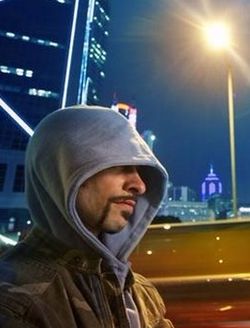
These are just some of the tests that Delroy Paulhus uses to understand the “dark personalities” around us. Essentially, he wants to answer a question we all may have asked: why do some people take pleasure in cruelty? Not just psychopaths and murderers – but school bullies, internet trolls and even apparently upstanding members of society such as politicians and policemen.
It is easy, he says, to make quick and simplistic assumptions about these people. “We have a tendency to use the halo or devil framing of individuals we meet – we want to simplify our world into good or bad people,” says Paulhus, who is based at the University of British Columbia in Canada. But while Paulhus doesn’t excuse cruelty, his approach has been more detached, like a zoologist studying poisonous insects – allowing him to build a “taxonomy”, as he calls it, of the different flavours of everyday evil.
More here.
Hedgehog
by Paul Muldoon
from Poems 1968-1998 by Paul Muldoon
Farrar, Straus & Giroux, LLC.
Elizabeth Quill in Smithsonian:
What is the most fascinating flower discovery in the past decade?
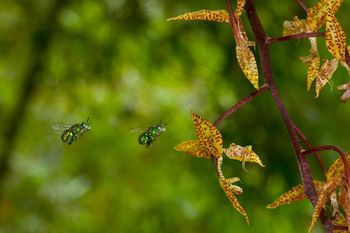
It has been found that flowers have a negative charge that may influence pollinator visits. Every object that flies through the air, whether it is a baseball, a jumbo jet or a humble bumblebee, acquires a strong positive electric charge. A honeybee might be carrying a charge of several hundred volts. When a positively charged bee lands on a negative flower, pollen grains can actually jump an air gap and attach to the stigma [the part of a flower where pollen germinates]. These passive electrostatic charges aid the natural pollen-holding branched hairs on the bodies of most bees. Bees may even be able to “label” flowers they just visited with these charges and not revisit empty flowers in the future.
More here.
Alice O'Keefe in The Guardian:
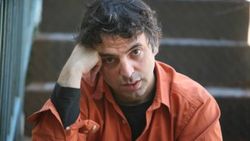
…Keret’s own determination to make the case for compromise and negotiation has come at considerable personal cost. He describes Lev coming home from school one day, aged eight, and asking him to stop speaking publicly about his views. “I said to him, why? And he said because we learned at school that everyone who wanted peace in this region got killed, Rabin, Sadat, even John Lennon got shot. He said, I want peace too but more than that I want to have parents.” Explaining the situation to a child growing up in Israel is a constant challenge. In order to show Lev why the Palestinians object to checkpoints, Keret and his wife set one up in their living room. “Every time he passed he would have to answer a question. Why do you need to pass? He’d say I need to pee, so I’d say do you really need to pee? When was the last time you peed? And after two hours he said I know why Palestinians are fighting, I’d fight too.”
More here.
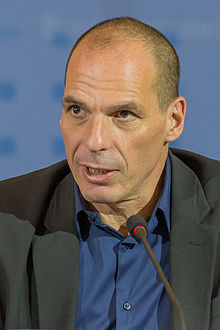
Yanis Varoufakis in Le Monde Diplomatique:
On 30 January, a few days after I became finance minister, the president of the Eurogroup, Jeroen Dijsselbloem, paid me a visit. Within minutes he asked me what I was planning to do vis-à-vis the Memorandum of Understanding (MoU) that the previous government had signed up to. I explained to him that our government was elected to re-negotiate that MoU; that is, we would be asking for an opportunity to re-visit the blueprint of fiscal and reform policies that had failed so spectacularly over the past five years, having diminished national income by one third and turned the whole of Greek society against the very notion of reform.
Dijsselbloem’s response was immediate and crystal clear: “That won’t work. It is either the MoU or the programme crashes.” In other words, either we would have to accept the failed policies that were imposed on previous Greek governments, and which we were elected to challenge, or our banks would be shut down — for this is what a “crashed programme” entails in the case of a member state that has no market access: the European Central Bank removes financing of the banks, whose doors and ATMs then shut down.
This blatant attempt at blackmailing an incoming, democratically elected government was no one-off. At the Eurogroup meeting that followed 11 days later, Dijsselbloem’s disregard for democracy’s most basic principle was confirmed, and enhanced, by Schäuble, who spoke immediately after Michel Sapin, the French finance minister. Sapin had just argued in favour of discovering common ground between the validity of the existing MoU and the right of the Greek people to mandate us to re-negotiate crucial parts of the MoU. Schäuble lost no time in giving short shrift to Sapin’s reasonable point: “Elections cannot be allowed to change anything,” he said, with a large majority of finance ministers nodding along.
At the end of that same meeting, while negotiating the joint statement to be released, I asked that the word “amended” be added in front of “MoU” in a sentence that was meant to commit our government to the latter. Schäuble vetoed my proposed phrase, saying that the existing MoU was not to be negotiated just because the Greeks had elected a new government. After a few hours of the resulting standoff, Dijsselbloem threatened me with an imminent “programme collapse” (which translated into bank closures by 28 February) if I insisted on adding “amended” in front of “MoU”.
More here.
Amitava Kumar in The Chronicle of Higher Education's Lingua Franca:
In a video that is available online, you can watch Judith Butler, philosopher and winner of a bad writing award,speaking to a crowd at Occupy Wall Street. It is a short speech, pointed and incantatory, and Butler is brilliant.
A wonderful innovation of the Occupy Wall Street movement was the use of the human microphone — the name given to the body of the audience repeating, amplifying, each statement made by the speaker. This practice was probably introduced because there was a ban on the use of megaphones. During Butler’s speech, the repetition by the human microphone helps. It produces for us the image of her words being taken up by the public (so that we see philosophy as a public act) and we, her listeners, also get a chance to think through her words in the process. Critics of the Occupy Movement, Butler says, either claim that the protesters have no demands or that their impossible demands are just not practical. And she then adds, “If hope is an impossible demand, then we demand the impossible.”
Butler’s performance as a public intellectual is impressive because she is both lucid and difficult. (Is difficult really the word I want?) Put differently, I’m struck by her quick arrival at a knotty question and then the magnificent unfurling of, as if it were a flag being waved at the barricades, the repeated phrase about demanding the impossible.
Less than two years after that speech she read from her phone at Occupy Wall Street, I found myself seated next to Butler at a dinner at Vassar College. I asked her about that speech, and Butler said that she had written it “on the subway between West 4th and Wall St.”
I could not reveal at dinner that the reason I had asked Butler about her speech was my interest in having her talk to me more about the truth and pitfalls of the charge that academics are bad writers. In her performance on Wall Street, I had seen a retort to those accusations. Later, I sent an email asking Butler if she could help unpack the meaning of the phrase “of academic interest.” I chose that phrase because it seems to gather together rather succinctly the general dismissal of the work we do, or the questions we ask, and even the language we use.
More here.
Cynthia Haven in her blog:
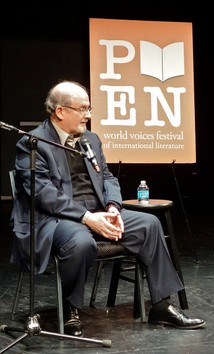
It’s hard to be nostalgic about a fatwa, but Sir Salman Rushdie‘s recent comments in The Telegraph remind us that his Valentine’s Day card from the Ayatollah Khomeini in 1989 were the good old days. Leading figures from around the world linked arms to express solidarity with him, and to protest any encroachment on freedom of speech. Susan Sontag, Norman Mailer, Joseph Brodsky, Christopher Hitchens, Seamus Heaney, and others stood for Rushdie. There was no backing down. And today?
Said Rushdie, “We are living in the darkest time I have ever known.” The author of the condemned Satanic Verses, told France’s L’Express. “I’ve since had the feeling that, if the attacks against Satanic Verses had taken place today, these people would not have defended me, and would have used the same arguments against me, accusing me of insulting an ethnic and cultural minority.”
More here.
Steven Hill in Boston Review (Photo: Julian GONG Min):
The employment status of its drivers has become the most prominent of the many controversies dogging Uber. (The most recent controversy pits Uber vs. New York City Mayor Bill DeBlasio, who has proposed capping the number of ridesharing cars while New York figures out how to deal with worsening traffic congestion.) CEO Travis Kalanick insists that his company is merely a technology platform facilitating rides between passengers and drivers, not an employer of drivers. “Are we American Airlines or are we Expedia?” asked Kalanick, in an interview with the Wall Street Journal. He maintains they are more like Expedia, merely a go-between connecting buyers and sellers.
Complicating matters, the legal standard for what makes an individual an employee rather than a contractor is vague. It has to do with how much the worker is actually “independent,” and how much the employer dictates. The lack of clarity has led to complex situations, some of them tragic, in which the employer shirks responsibility. When an Uber driver hit and killed six-year-old Sofia Liu, and badly injured her mother and brother as they were traversing a crosswalk on New Year’s Eve 2013 in San Francisco, Uber washed its hands of any responsibility. Why? The driver was an independent contractor, according to Uber. Never mind the fact that the driver was once arrested and charged with reckless driving for speeding 100 mph into oncoming traffic while trying to pass another car––something Uber’s faulty method used for background checks failed to uncover.
But Goliath may have met his David in June 2015, with a claim by driver Barbara Berwick. The California Labor Commissioner’s Office ruled that Berwick should be classified as a direct employee, because “[Uber is] involved in every aspect of the operation” and that Uber owes her $4,000 in employee expenses. The ruling only applies to this single driver, and Uber is appealing the decision. But it is not the only case.
More here.
Karl Sharro in The Atlantic:
In The Independent, Robert Fisk went a step further and tried to imagine what Arabs think based on his long experience in the region, arguing with typical nuance and subtlety that “the Arabs at least will suspect the truth: that the Americans have taken the Shia Muslim side in the Middle East’s sectarian war.”
To investigate these portrayals of the Arab view of the deal, journalists affiliated with the Institute of Internet Diagrams spent hours in the legendary Arab Street itself. As every foreign reporter in the region knows, the best way to get to the Arab Street is to get in a taxi anywhere in the Arab world and ask to be driven to “the street.” (Don’t say the “Arab Street,” because it’s assumed.)
The Arab Street is not as grand as you might imagine. It’s quite narrow and crowded, but it’s full of life, and the scent of spices wafts across it at regular intervals to ensure foreign correspondents are in the right frame of mind. Head straight to the busiest café; booking a table in advance will give customers time to put on traditional clothes for a more authentic feel.
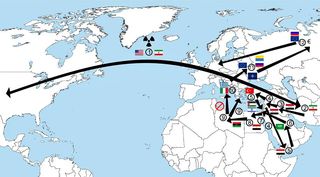
Word on the Arab Street is that Barack Obama signed a nuclear deal with Iran so that he can extract concessions over Syria in return for Iran being allowed to control Iraq and for which it has to rein in the Houthis in Yemen to pacify the Saudis and simultaneously restrain Kurdish ambitions thus easing Turkey’s anxiety about Kurdish independence as an incentive for it to cooperate regionally allowing both Saudi Arabia and Turkey to come on board with Obama’s plan for Israel/Palestine which will also appease Egypt allowing it to play a bigger role in Libya to control the southern shores of the Mediterranean reducing migrant flows into Europe to ease the pressure on Greece and Italy for which Europe agrees to soften its stance against Russia allowing for a solution in Ukraine that allows NATO to maintain a presence in the East without threatening Russia which will be rewarded by removing the international sanctions against it allowing it to increase its trade with Europe.
More here.
The First Circle
the flat end of sorrow here
two crows fighting over New Year’s Party
leftovers. From my cell, I see a cold
hard world.
2.
So this is the abscess that
hurts the nation –
jails, torture, blood
and hunger.
One day it will burst;
it must burst.
3.
When I heard you were taken we
speculated, those of us at large
where you would be
in what nightmare will you star?
That night I heard the moans
wondering whose child could now
be lost in the cellars of oppression.
Then you emerged, tall, and bloody-eyed.
It was the first time
I wept.
4.
The long nights I dread most
the voices from behind the bars
the early glow of dawn before
the guard’s steps wake me up,
the desire to leap and stretch
and yawn in anticipation
of another dark home-coming day
only to find that
I cannot.
riding the car into town,
hemmed in between them
their guns poking me in the ribs,
I never had known that my people
wore such sad faces, so sad
they were on New Year’s Eve,
so very sad.
.
Noreen Malone and Amanda Demme in New York Magazine:
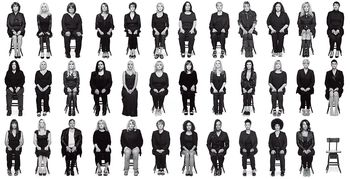
Perhaps the most shocking thing wasn’t that Buress had called Cosby a rapist; it was that the world had actually heard him. A decade earlier, 14 women had accused Cosby of rape. In 2005, a former basketball star named Andrea Constand, who met Cosby when she was working in the athletic department at Temple University, where he served on the board of trustees, alleged to authorities that he had drugged her to a state of semi-consciousness and then groped and digitally penetrated her. After her allegations were made public, a California lawyer named Tamara Green appeared on the Today show and said that, 30 years earlier, Cosby had drugged and assaulted her as well. Eventually, 12 Jane Does signed up to tell their own stories of being assaulted by Cosby in support of Constand’s case. Several of them eventually made their names public. But they were met, mostly, with skepticism, threats, and attacks on their character.
More here.
Martin Vander Weyer in The Telegraph:
So why did those early leaders of civilisation stay at home and regress, while our ancestors sailed the seas and built empires?It was not a matter of economic supremacy through industrialisation, which arrived only in the last of the five centuries or so that Hoffman’s study covers. Rather, he argues, it was down to both military and economic advantage gained through “gunpowder technology” – the continuing development of firearms, artillery, ships armed with guns and fortifications that could resist bombardment – which itself derived from the fact that warfare was “the sole purpose of early modern states in western Europe”.
More here.
Arjun Bhagoji, Nithyanand Rao and Raghavi Rao Kodati in The Fifth Estate:
What are you working on at the moment?
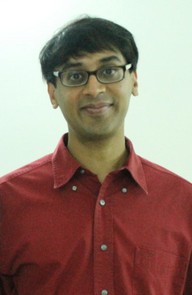
I can tell you what I’ve been working on. If you pick a random whole number…Do you know what a square-free number is? Square-free number means that when you factor it, no prime occurs more than once. So 6 is square-free: it’s 2 × 3. But 12 is not square-free: it’s 2 × 2 × 3. So 2 is repeated.
So suppose you pick a random whole number, what’s the probability that it’s square-free? The answer has been known for a long time. The answer is 6/π2. It’s unexpected, right? The π — there’s no circles here or anything, right? You’re asking for the probability of a whole number being square-free. And the answer is 6/π2. Here, π appears in this magical way in this number theory problem, not a geometry problem. So this is something that fascinated me.
So one thing that I’ve been thinking about lately is: Often in number theory, you need to know about square-free numbers. If you have a polynomial with whole number coefficients and you look at its values when you plug in whole numbers, what’s the probability that the value of the polynomial is square-free? It depends on the polynomial, of course. For even a simple polynomial, x4 + 1, the answer is not known. What’s the probability that a random value of x4 + 1 is square-free? That’s one question that I work on.
More here. [Thanks to Ali Minai.]