Welles Lettres: new books about orson welles

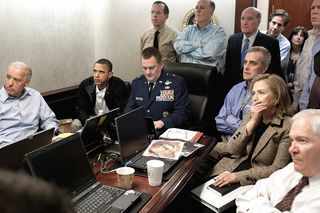
Orson-Welles-Signo-del-Zodiaco-Tauro A.S. Hamrah at Bookforum:

It’s been difficult to get beyond the mocking portrayals of Welles in part because so many critics and pop film historians have adopted Hollywood’s conformist notions of success. Welles’s story of uncompromising ambition and lack of concern for studio approval has functioned as a cautionary tale: a lesson in how not to succeed in show business. Writers of the early ’70s, such as Charles Higham and Pauline Kael, worked hard to knock Welles off a pedestal Hollywood had already smashed. Other writers have scraped away at the great man’s self-image, marring it the way scratches on film tear into the emulsion and make it harder to see. Some continue to punish Welles. For a recent example, check Peter Biskind’s introduction to the book My Lunches with Orson, a series of transcripts from tape-recorded conversations the filmmaker Henry Jaglom had with Welles in the LA restaurant Ma Maison between 1983 and 1985, the year Welles died. Biskind can’t resist reveling in Welles’s last days, when Welles “had ballooned to the size of a baby elephant” and survived by appearing in “B movies produced by fly-by-night producers in no-name countries” and “odds and ends like soaps, game shows, and TV commercials.”

But this year, the Welles centennial, an appreciation for Welles—even the late, bloated, talk-show-guest Welles—is gathering force. Karp’s book, along with Patrick McGilligan’s remarkable, eye-opening biography Young Orson and A. Brad Schwartz’s Broadcast Hysteria, provide a deep, nuanced portrait of the director at the start and finish of his career.

more here.
Why John le Carré is more than a spy novelist

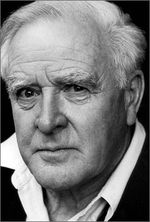
John-le-carréWilliam Boyd at The New Statesman:

It must be difficult to write the life of a man who is still very much with us, and in the public eye, no matter how much liberty the biographer has been given to tell the story, warts and all. Sisman – a very fine and astute biographer – has done an excellent, not to say exemplary, job under the circumstances. Only rarely is one aware of a veil of discretion being drawn, of names not being named, yet it is impossible to imagine this Life being bettered – though le Carré’s own memoir, to be published in 2016, may add some gloss.

In considering this biography, a comparison comes to mind: there is something almost absurdly Dickensian about le Carré’s early life. He was abandoned by his mother as an infant; trusted to a corrupt, rackety and wilful father who was frequently bankrupted and imprisoned (as Dickens’s father was); tormented by feelings of class insecurity but eventually found fame and glory as a published writer under a pseudonym; and, in not-so-serene but well-heeled old age, recognised as a great English man of letters. Even his later so-called polemical novels have a whiff of the outraged Dickensian apostrophe about them, addressing the reader and pointedly making them aware of the injustice at large in the world.

more here.

Black Man in a White Coat

Damon Tweedy in Salon:

“Of all the forms of inequality,” Martin Luther King Jr. told a gathering of the Medical Committee for Human Rights in 1966, “injustice in health is the most shocking and the most inhumane.”

Black_man_in_a_white_coat-620x412At the time of his remarks, the United States had begun to take several formal steps to end its century-long practice of state-sponsored segregation that had followed the end of slavery. In medicine, this meant that black people could begin to receive treatment side by side with whites rather than being relegated to separate and unequal facilities or sectioned off in run-down areas of white hospitals. Such practices had undoubtedly contributed to their poorer health, especially in the Deep South of Dr. King’s time, where black people on average had a life expectancy nearly nine years less than whites. While the civil rights movement ultimately stirred remarkable racial progress in various areas of American life, many of King’s concerns about health and health care remain valid to this day.

From cradle to grave, these health differences, often called health disparities, are found virtually anywhere one might choose to look. Whether it is premature birth, infant mortality, homicide, childhood obesity, or HIV infection, black children and young adults disproportionately bear the brunt of these medical and social ills. By middle age, heart disease, diabetes, stroke, kidney failure, and cancer have a suffocating grip on the health of black people and maintain this stranglehold on them well into their senior years. Thus, it is no surprise that the life expectancy among black people, despite real progress over the last twenty-five years, still significantly lags behind whites. In suffering a crippling stroke at age thirty-nine, Jim had become another casualty of inequality, a fresh case that Dr. Wilson could use to illustrate the health burden of being black.

More here.

Critique and communication: Philosophy’s missions

From Eurozine:

Decades after first encountering Anglo-Saxon perspectives on democracy in occupied postwar Germany, Jürgen Habermas still stands by his commitment to a critical social theory that advances the cause of human emancipation. This follows a lifetime of philosophical dialogue.

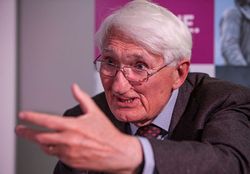
Habermas_life_468wMichaël Foessel: It has become commonplace to link your work to the enterprise that the Frankfurt School initiated in the 1930s: the elaboration of a critical theory of society capable of breathing new life into the project of emancipation in a world shaped by technocapitalism. When you began your university studies after World War II, a different image of philosophy was prevalent in Germany: the less heroic image of an impotent philosophy compromised by National Socialism. What motivated you to choose this discipline? Did the pessimistic judgement on reason expressed in Horkheimer and Adorno's Dialectic of Enlightenment play a role in your initial choices in philosophy (the study of Schelling)?

Jürgen Habermas: No, that's not how it happened. I didn't go to Frankfurt until 1956, two years after the completion in Bonn of my doctoral thesis on Schelling. In order to explain how I came across critical theory, I'll have to go into a bit more detail. At German universities between 1949 and 1954 it was in general only possible to study with professors who had either been Nazis themselves or had conformed. From a political and moral standpoint, German universities were corrupted. There was, therefore, an odd divide between my philosophy studies and the left-wing convictions that had developed in discussions night after night about contemporary literature, the important theatrical productions, and film, which was dominated at that time above all by France and Italy. As early as my last years at the gymnasium, however, I'd obtained the works of Marx and Engels and addressed the subject of historical materialism. In view of these interests, the obvious choice of study would have been sociology, but this subject was not yet taught at my universities in Göttingen and Bonn. After my studies, I was granted a scholarship for an examination of the “concept of ideology”.

More here.

Wednesday, October 21, 2015

The Weakness of Moscow’s Syrian Adventure

Alexander Cooley and Daniel H. Nexon in Foreign Affairs:

ScreenHunter_1450 Oct. 22 11.02When it comes to foreign policy, U.S. President Obama’s critics have long accused him of being weak, indecisive, and naive. “Restoring resolve” to the Oval Office was a Republican theme in 2012, and it remains one among the 2016 GOP contenders. This narrative has now spread beyond Obama’s partisan opponents: many accuse Washington of responding with insufficient strength to Moscow’s annexation of Crimea in 2014 and its support of the insurgency in eastern Ukraine. Russian President Vladimir Putin’s military intervention in Syria, which seeks to support Russia’s longtime ally Syrian President Bashar al-Assad, leaves the United States looking flatfooted. To some, it also highlights Washington’s waning power.

In short, Obama’s apparent restraint appears irresolute, whereas Putin comes across as a strong, decisive master strategist who exploits Obama’s weakness and keeps Washington off balance. The Economist declares that “Putin dares, Obama dithers,” and wishes that “Mr. Obama had a bit more of Mr. Putin’s taste for daring.” The former U.S. State Department official Jeffrey A. Stacey writes in Foreign Affairs that “when Putin stared down the West and the West blinked, the West lost its credibility and, with it, its ability to deter further Russian bad behavior.” TheTelegraph columnist Matt K. Lewis notes, “Today, it looks like [Obama’s] allowing Russia to push America around, and dictate the terms of our being pushed around.”

These interpretations dangerously misread contemporary geopolitics, however.

More here.

Discovery about protein structure opens window on basic life process

From Phys.org:

ScreenHunter_1449 Oct. 22 10.56Biochemists at Oregon State University have made a fundamental discovery about protein structure that sheds new light on how proteins fold, which is one of the most basic processes of life.

The findings, announced today in Science Advances, will help scientists better understand some important changes that proteins undergo. It had previously been thought to be impossible to characterize these changes, in part because the transitions are so incredibly small and fleeting.

The changes relate to how proteins convert from one observable shape to another—and they happen in less than one trillionth of a second, in molecules that are less than one millionth of an inch in size. It had been known that these changes must happen and they have been simulated by computers, but prior to this no one had ever observed how they happen.

Now they have, in part by recognizing the value of certain data collected by many researchers over the last two decades.

“Actual evidence of these transitions was hiding in plain sight all this time,” said Andrew Brereton, an OSU doctoral student and lead author on this study. “We just didn't know what to look for, and didn't understand how significant it was.”

All proteins start as linear chains of building blocks and then quickly fold to their proper shape, going through many high-energy transitions along the way. Proper folding is essential to the biological function of proteins, and when it doesn't happen correctly, protein folding diseases can be one result—such as Alzheimer's disease, Lou Gehrig's disease, amyloidosis and others.

More here.

Who’s to Blame for Mass Incarceration?

Donna Murch in the Boston Review:

Harlem-webThe images inspired by Michael Javen Fortner’s new book, Black Silent Majority, are revealing. A New Yorker review featured a graphic rendering of somber black men clad in orange jumpsuits imprisoned behind a fence made from the bodies of neatly dressed black men and women. Strikingly, the impediments are faceless, with only an occasional wisp of pink lip or sculpted facial hair, but the period-piece A-line skirts, peg leg suits, and skinny ties speak for themselves. The respectable classes of Fortner’s “black silent majority” form a literal wall of black human bondage. Through the magic of design, the book’s thesis is rendered in a deeply visceral way: African Americans themselves, not white backlash against black advancement, mobilized the phalanx behind mass incarceration.

Black Silent Majority is an ambitious and provocative book by a young African American political scientist, who argues that “working- and middle-class African Americans are partially responsible for the mass incarceration of black sons, brothers, husbands, and fathers and the misery that they endured while committed to penal institutions in New York.” Fortner takes aim at a whole body of scholarship, journalistic writings, and activist wisdom stressing the centrality of anti-black racism to the war on drugs and, by implication, mass incarceration. He directs particular ire at Michelle Alexander’s bestseller, The New Jim Crow (2010), which forcefully demonstrates how the drug war and the criminal justice system more broadly have become the biggest obstacle to black equality since legalized segregation.

More here.

Jonathan Franzen Withdraws

Jon Baskin in The Nation:

ScreenHunter_1448 Oct. 22 10.09It’s been almost two decades since Jonathan Franzen confessed in print to his “despair about the American novel.” In “Perchance to Dream,” the long, almost perversely ambitious essay that appeared in the April 1996 issue ofHarper’s Magazine, Franzen explored a variety of issues: the fate of fiction in an age of distraction; the anthropology of readers and writers; the depressive tendencies of Jonathan Franzen. But the question of how Franzen might overcome his despair rested on something else, which was whether he could resolve the conflict he felt between his inclination to write aesthetically and politically challenging fiction in the mold of Thomas Pynchon or Don DeLillo, and his desire to “lose” himself in the intimate lives of his characters, in the manner of Jane Smiley or John Irving.

At the time, Franzen was the author of two “culturally engaged” novels that the culture had, in his opinion, politely declined to engage. The enormous popular and critical success of Franzen’s two mid-career novels The Corrections (2001) andFreedom (2010), which lifted their author out of relative obscurity and onto the cover of Time, has often been attributed to his having managed to write the kind of “big social novel” that had seemed on the brink of extinction. By his own admission, Franzen has fussed less over his prose style since publishing The Corrections, a decision whose consequences are evident in the long stretches of graceless writing in Freedom and his new novel, Purity. But a shortage of aesthetic gratification is a small price to pay if you believe, as do the writer’s fans, that Franzen has succeeded in combining the entertaining domestic realism of the great Victorian novelists with an accessible political commentary that captures some portion of the “agony,” as the critic Mark Greif said in regard to Freedom, of being a liberal in our time.

More here.

on Jafar Panahi’s ‘Taxi’

ArticleJames Quandt at Artforum:

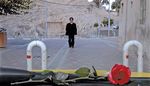
IN HIS TRILOGY of immurement—This Is Not a Film (2011), Closed Curtain (2013), and now Taxi—Iranian director Jafar Panahi, banned from making films and placed under house arrest (until very recently, we surmise), has evaded government embargo by surreptitiously shooting movies in, respectively, his apartment, his beachfront home on the Caspian Sea, and a cab traversing the streets of Tehran, transforming his own physical and artistic detention into a metaphor for his country’s psychic imprisonment. (The persecuted Turkish auteur Yilmaz Güney similarly turned his ordeal of incarceration into national allegory, but in a far more drastic manner.) That the director of such teeming, expansive works as The Circle (2000) and Offside (2006) should find himself limited to the confines of a car may seem lamentable, but Taxi has illustrious cab-bound ancestors, most obviously Ten (2002) by Panahi’s mentor, Abbas Kiarostami, as well as Jim Jarmusch’s Night on Earth (1991). And with the intrepid Panahi in the driver’s seat as both novice cabbie and veteran filmmaker, spatial restrictions predictably provide ample opportunity for formal innovation.

Framed by two long takes shot out of the cab’s windshield by a camera affixed to the dashboard, an apparatus one passenger mistakes for an “antitheft device” early on so that the film can symmetrically end with the camera’s being stolen, Taxi has struck some critics as serene and freewheeling, but it turns out to be much the opposite. As the engineered irony of that finale suggests, Taxi is highly designed, and though Panahi smiles benevolently throughout, even as his passengers pelt him with insults—his little niece calls him “a hopeless case”—the film’s cumulative portrait of Iran is as dire as anything in his previous cinema.

more here.

Tell It Again: On Rewriting Shakespeare

ShakespeareStefanie Peters at The Millions:

This month, Hogarth Press published the first entry — The Gap of Time by Jeanette Winterson — in a new collection of novels by today’s major practitioners that each rewrite one of Shakespeare’s plays. Tracy Chevalierwill be retelling Othello; Margaret AtwoodThe Tempest; Gillian Flynn Hamlet;Edward St. Aubyn King Lear; Anne TylerThe Taming of the Shrew; Jo NesbøMacbeth; and Howard Jacobson The Merchant of Venice. This is not a new endeavor, although it does seem to be a uniquely 20th- and 21st-century phenomenon. (The Romantics preferred to think of Shakespeare as an artless genius working under pure inspiration.) But as scholars have begun to recognize the extent of Shakespeare’s own retellings — and collaborations — modern writers have taken a page out of his book by rewriting his plays. (I’ll mention here the newly announced project by the Oregon Shakespeare Festival to “translate” Shakespeare’s plays into contemporary English, but that seems to stem from a different impulse.)

Perhaps this narrative is too simple. It is not as if, after all, writers in the last century suddenly discovered Shakespeare as a source and influence. For the past 400 years, Shakespeare’s poetry and plays have become as much a part of the common language and mythology as the King James Bible.

more here.

FORTY-FIVE YEARS LATER WE’RE STILL SUFFERING FROM FUTURE SHOCK

Future-shockHal Niedzviecki at Literary Hub:

Most people who have heard the term “future shock” assume the Toffler argument is fundamentally anti-technology. In fact, the book is anything but. Instead, the Toffler oeuvre is full of pithy pro-tech aphorisms, Yoda-like epigrams to our feebler, pre-postmodern, selves: “Change is not merely necessary to life—it is life.” “Technology feeds on itself. Technology makes more technology possible.” “The illiterate of the future will not be the person who cannot read. It will be the person who does not know how to learn.” First, the Tofflers fetishize technology—after all, what else offers “the supreme exhilaration of riding change, cresting it, changing and growing with it”? Then they warn of its awesome danger—“future shock!” “info overload!”—then they insist that the answer, the cure to future shock, is to dive in head first. Don’t fight it; embrace it.

For, as the Tofflers make clear in Future Shock, there is a plan. The solution to the problem of widespread psychological (and social) destabilization due to an ideology of constant technological change is more change. What we need is to find a way to fully embrace the liberating awesome of technology freed of anxiety and fear. Or, as they put it, if you “make the necessary effort to understand the fast-emerging super-industrial social structures” and “find the ‘right’ life pace, the ‘right’ sequence of subcults to join and lifestyle models to emulate,” then “the triumph” will be “exquisite.”

more here.

Poo turns naked mole rats into better babysitters

Sara Reardon in Nature:

RatNaked mole rats are among the ugliest creatures in the animal kingdom, and they engage in acts that seem repulsive — such as eating one another’s, and their own, faeces. Now researchers have found one biological motivation for this behaviour. When a queen mole rat’s subordinates feed on her hormone-filled faeces, the resulting oestrogen boost causes the beta rats to take care of the queen’s pups, according to results presented on 18 October at the Society for Neuroscience meeting in Chicago, Illinois. Like bees, naked mole rats live in eusocial colonies, with only one queen rat and a few males that can reproduce. The rest of the colony consists of dozens of infertile subordinates that help with tasks such as foraging and defending the nest. The subordinate rats also take care of the queen’s pups as though the babies were their own: they build the nests, lick the pups and keep them warm with their body heat.

Because they have no mature sex organs, subordinate rats cannot produce the hormones that would usually drive parenting behaviour. To look at what generates the rats’ caring ways, animal biologist Akiyuki Watarai and behavioural scientist Takefumi Kikusui at Azabu University in Japan played recordings of crying mole-rat pups to subordinate rats. Animals whose queens had just given birth paid more attention to the crying than those from other groups, suggesting that the pregnancy itself triggered subordinates’ maternal instincts. The researchers then examined the subordinates’ faeces and urine. They found that the samples contained the oestrogen compound oestradiol, but only when the queen was pregnant. This suggested that the hormones came from her. When the researchers fed hormones from the pregnant queen’s faeces to her subordinates, the animals’ oestradiol levels increased and they began to pay more attention to the sound of crying pups.

More here.

Wednesday Poem

2004

When your country has been a bad citizen again
and you’re a little ashamed of her,
as you were of your four-year-old
when she threw another tantrum at the mall,
and you wanted to pretend you didn’t know her,
that you weren’t responsible for her bad behavior,
a citizen of the world, as you wish she would be.

Still her mountains glow in the late evening sun,
and your neighbors, who voted to support her arrogance,
smile kindly when you greet them, and you’re moved,
observing their obvious affection for each other,
how he pulls up her collar against the chill breeze
and she smooths back his comb-over again and over.

You saw this in Cincinnati and again in Darfur,
people being conscious and considerate of others,
and you wonder how we ever draw the line
about whom we choose to comfort and whom
it might be quite permissible to kill
.

by Dan Gerber
from A Primer on Parallel Lives

Tuesday, October 20, 2015

There’s Just One Problem with Those Bin Laden Conspiracy Theories

They have no factual basis, despite what you may have read in ​​The New York Times Magazine,​ argues the reporter who pieced together the story from dozens of on-the-record interviews.

Mark Bowden in Vanity Fair:

Bowden-barack-obama-osama-bin-laden-new-york-times-magazine-jonathan-mahlerWithout a shred of evidence, without contradicting a word that I wrote, Jonathan Mahler in The New York Times Magazine this week suggests that the “irresistible story” that I told about the killing of Osama bin Laden in my 2012 book, The Finish (excerpted inVanity Fair), might well have been a fabrication—“another example of American mythmaking.” He presents an alternative version of the story written by Seymour Hersh as, effectively, a rival account, one that raises serious doubts about mine, which is all but dubbed “the official version.” It’s not meant kindly.

Mahler’s think piece about the iffiness of reporting and the hazards of trying to shape history into a narrative is a great gift to conspiratorial thinkers everywhere. It’s not often that the most distinguished journalistic institution in America wades so fully into the crackpot world of Internet theorizing, where all information, no matter its source, is weightless and equal. Mahler is careful not to side with either Hersh or me, but allows that “Hersh’s version doesn’t require us to believe in the possibility of a government-wide conspiracy.”

In fact, that’s exactly what it does.

More here.

What You Can Learn From Hunter-Gatherers’ Sleeping Patterns

Ed Yong in The Atlantic:

ScreenHunter_1445 Oct. 20 23.25Here’s the story that people like to tell about the way we sleep: Back in the day, we got more of it. Our eyes would shut when it got dark. We’d wake up for a few hours during the night instead of snoozing for a single long block. And we’d nap during the day.

Then—minor key!—modernity ruined everything. Our busy working lives put an end to afternoon naps, while lightbulbs, TV screens, and smartphones shortened our natural slumber and made it more continuous.

All of this is wrong, according to Jerome Siegel at the University of California, Los Angeles. Much like the Paleo diet, it’s based on unsubstantiated assumptions about how humans used to live.

Siegel’s team has shown that people who live traditional lifestyles in Namibia, Tanzania, and Bolivia don’t fit with any of these common notions about pre-industrial dozing. “People like to complain that modern life is ruining sleep, but they’re just saying: Kids today!” says Siegel. “It’s a perennial complaint but you need data to know if it’s true.”

Such data have been hard to come by because the devices that we use to measure and record sleep have only been invented in the last 50 years, and those that do so without disturbing the sleepers are just a decade old. So, there’s no baseline for how long people used to sleep before electric lights. Absent that baseline, Siegel’s team did the next best thing: They studied people who live traditional lifestyles, including Hadza and San hunter-gatherers from Tanzania and Nambia respectively, and Tsimane hunter-farmers from Bolivia.

More here.

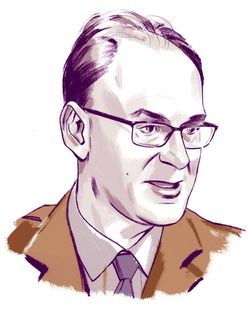
Matt Ridley: By the Book

The author, most recently, of “The Evolution of Everything: How New Ideas Emerge” mostly reads nonfiction. “Fiction, unless it is truly great, feels too much like playing tennis without the net.”

From the New York Times:

What books are currently on your night stand?

1018-BKS-BTB-SUB2-blog427-v2“The Weather Experiment,” by Peter Moore, about the people who first invented weather forecasting in the 19th century, which I am listening to on my iPad as I fall asleep. (I’ve discovered that talking books are a far better cure for anxiety-induced insomnia than any number of pills, therapies, diets or new-age claptrap. You have to keep going back to where you dropped off, of course.) As for the book I read before I turn the light out, currently it’s “Dynasty,” by Tom Holland, about the Caesars. It has Holland’s usual novelistic ability to bring a narrative alive, together with his extraordinary command of ancient sources. It’s the sequel to his outstanding “Rubicon.” It’s fascinating on how, inch by inch, Augustus and his successors surreptitiously turned a republic into an autocracy.

And what’s the best book you’ve read so far this year?

Among serious books, it’s “The Vital Question,” by Nick Lane, which is a brilliant new analysis of the origin of life, by the man who has himself done more than anybody to crack the problem. The book is full of startling, fresh insights about energy and genetics, but it’s really hard going in places, so you have to take it slowly. For something easier, it was probably “The Martian,” by Andy Weir. I loved the fact that the hero never once implies that it’s courage, spirit and faith that saves him — as so many modern books and films would do — just lots of practical tinkering and problem-solving: Science the crap out of it. Ditto for humanity as a whole, I think.

More here.

Ostrava Days: a czech music festival

0821_Jennifer+Walshe_12George Grella at Music and Literature:

Taken with opening night, the Marathon offered evidence of the sophistication of the audiences in Ostrava. With the Institute and all the musicians and composers around, the crowd of spectators that gathered for each performance always featured a substantial cadre of people involved in Ostrava Days. But the festival also draws a dedicated local crowd, and faces quickly grow familiar and become a welcome part of the social landscape.

The musicians listen with focus and interest, of course, but so do the local audiences. Their attention is absolute, and their reactions are adoring—everything and everyone gets multiple ovations. At times it feels like being inside Aki Kaurismäki's film La Vie de Bohème, especially when Rodolfo and Marcel sit down with utmost seriousness to hear composer Schaunard's latest avant-garde work, which is a “classic” combination of random bashing at the keyboard, yelling through a bullhorn, and throwing things around.

When the music is bad—inevitable, but a far less frequent occurrence in Ostrava than anywhere else—this can seem comical; but no less so than at the typical classical concert, where even dull and insincere thinking and playing are rewarded with self-regarding standing ovations. And the locals are no rubes: they have the sophistication and the patience to listen to and through things that are new to them, and the more unfamiliar or unusual the concept, the more they reach out to it. They’ve been enjoying this through eight iterations now (the first installment took place in 2001), and they’ve been able to hear more meaningful, important, and constructively challenging modern music than audiences virtually anywhere else. Ostrava is building a musical history, and telling a musical tale.

more here.

habermas on the mission of philosophy

Habermas_life_468x170Michaël Fœssel interviews Jürgen Habermas at Eurozine:

The hard, scientistic core of the analytical philosophy was always alien to me. Today, it comprises colleagues who take up the reductionist Programme of the Unified Sciences from the first half of the twentieth century under somewhat different assumptions and more or less regard philosophy as a supplier for the cognitive sciences. The advocates of what we might call “scientism” ultimately view only statements of physics as capable of being either true or false and insist on the paradoxical demand of perceiving ourselves exclusively in descriptions of the natural sciences. But describing and recognizing oneself are not the same thing: decentring an illusionary self-understanding requires recognition on the basis of a different, improved description. Scientism renounces the self-reference required to be present in every case of re-cognition. At the same time, scientism itself utilizes this self-reference performatively – I mean the reference to us as socialized subjects capable of speech and action, and who always find themselves in the context of their lifeworlds. Scientism buys the supposed scientification of philosophy by renouncing the task of self-understanding, which philosophy has inherited from the great world religions, though with the intention of the enlightenment. By contrast, the intention of understanding ourselves exclusively from what we have learnt about the objective world leads to a reifying description of something in the world that denies the self-referential application for the purpose of improving our “self”-understanding.

more here.