war plans: US v. Canada

Redplan-coverAngela Chen at The Morning News:

I was having a conversation with one of [Princeton Architectural Press’s] Canadian distributors, a woman whose job is to sell our books in Canada, and she goes, “Are you working on anything that will be of interest to Canadians?’ I say, “I don’t know, what interests Canadians?” She says something like, “Canadians are very worried about what Americans are thinking of them.”

Then, two days later, I saw an article online where somebody had asked Obama if America had any plans to invade Canada and he laughed it off. But the article added that in the 1930s the United States did have a very detailed plan to invade Canada called “War Plan Red.” That information was shocking and there was something funny about the fact that that was shocking—like, when we think Canada, we don’t care enough to have a plan to invade them. We liked Iraq enough to invade them, but we don’t like Canada enough, it’s not as interesting.

So I dug into that history and it turns out that, like in many things, Canada was 10 years ahead of us and had developed their own plan to invade the United States in 1920. Now we’re such good neighbors and good friends, the idea seems kind of laughable. In fact, several people thought the book was a parody, that I had cooked the whole thing up and sort of forged these so-called authentic historic documents.

more here.

Wednesday, November 11, 2015

Valuing the Liberal Arts

01-300x170

Jonathan Giuffrida in The Brooklyn Quarterly:

To understand the contemporary why and how of liberal arts requires an understanding of the history of American higher education—namely the knowledge that traditionally “liberal arts” has always included training in quantitative and scientific “STEM” fields as well as the humanities. Both terms tend to be ill-understood in the ongoing debate, but a crucial distinction appears to be not what is studied, but the relationship between the breadth and depth of study. A STEM education is typified by a student who studies civil engineering from the minute she steps on campus to the minute she graduates. That is, a STEM education is characterized by singular focus on technical, “job-ready” fields, which could be true of students at technical institutes, state schools, and research universities. The liberal arts, in contrast, could be represented in that student’s roommate, who explores courses in English, biology, and economics before majoring in any one of them (or even civil engineering). Thus a liberal arts education may include the humanities, the social sciences, and the quantitative and natural sciences in any proportion—as long as it includes most or all of them over the course of a college education.

It’s important to note that while some schools clearly favor one model of education over the other, it seems that both types of education could really exist at any institution, and the choice between them is up to the student. The prototypical student at a large public university, who could go either route, is perhaps the one to whom we should really be speaking.

Both types of education have their paradigms: the liberal arts in the classical education favored by America’s founders, and STEM in pure vocational and technical schools such as in Europe. The liberal arts may be characterized by a breadth of subjects, but in fact they are not so much a particular collection of courses as a mindset about how to put them all together: “not so much learning itself as the spirit of learning,” as Woodrow Wilson, the 28th president of the United States and president of Princeton University, put it.

More here.

The Meaningful Disappearance of Germaine Greer

Cabinet_winant3Carmen Winant at Cabinet Magazine:

Greer was, in some important ways, always out of step with herself and her party. She chastised women who allowed men to define their image, but posed nude herself in the pages of sex-positive magazines. She plucked her eyebrows to oblivion despite calling upon women not to spend worthwhile energy “keeping themselves pretty [as it] reflects a dissatisfaction with the body as it is,” and generally self-presented as a sex icon. (Her sexiness was, undoubtedly, part of her charismatic appeal.) Greer supposedly had an affair with Norman Mailer, who was notoriously anti-contraception, anti-abortion, homophobic, and, according to many, anti-feminist; nicknamed “a male chauvinist pig” by the writer Kate Millett, was he not in some sense the very man that Greer was talking about when she wrote that “men hate women”? And, despite her loathing of publicity outside of her control—Greer does not grant interviews under any circumstances and described her unauthorized biographer as “flesh eating bacteria” (what she would think of this piece I can only imagine)—in 2005, after having published twelve other books and taught in various universities, Greer appeared as a cast member on Australia’s edition of Big Brother, a lowbrow reality television show that constrains contestants to a house and films round the clock. If the personal is indeed political, as the second-wave feminists of her era championed, it’s hard to reconcile Greer‘s decisions with her credo.


Most importantly, there are real philosophical contradictions within Greer’s own inveterate dogma. In her 1984 book Sex and Destiny, Greer—a woman who made the persuasive case that women had been alienated from their potential sexuality as a source of independence—suggested chastity as a desirable method of preventing unwanted births and “conserving energy.”

more here.

the art of Sophie Calle

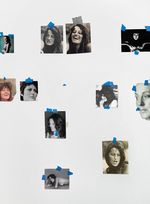
Calle5_jpg_780x694_q85Madeleine Schwartz at the NYRB:

In the early 1980s, the artist Sophie Calle found an address book on a Paris street, photocopied its pages, returned it to its owner, and then interviewed the people listed within to find out more about him. Calle’s inquiries were published in the French daily Liberation. Over the course of a month, readers learned about the owner, “Pierre D”: his work at a film magazine, his failures to put himself forward professionally, when and why his hair turned white.

Calle, who at 62 is one of France’s most celebrated and well-known artists, has spent her career following others. She is said to be intrusive or invasive in her work, which usually consists of fabricated encounters between the artist and others. She has photographed people sleeping in her bed, snooped around hotel rooms to document their occupants, hired strangers to interpret the letters of past lovers. (Calle’s current boyfriend, according to the Guardian, has asked that she keep him out of her work. “I agreed,” she told the newspaper, “but I may change my mind.”) In her most recent exhibition, Rachel, Monique, she projected a film recording her mother’s last moments, while, on speakers, voices read out selections from the dead woman’s diary.

The intimacy she creates, however, is not always revealing. Calle is not a documentarian; her work is often deliberately opaque. Faces are obscured. Names are changed. Information is distorted.

more here.

Putting Social Progress on Par with Prosperity

Laura Levis in Harvard Magazine:

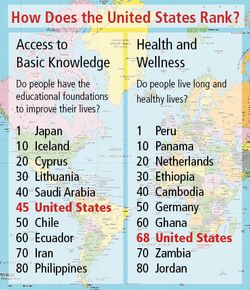
RN_socialIndexWhat are the ingredients of a healthy, inclusive society—one that offers its citizens opportunity, happiness, and a positive quality of life? According to Lawrence University Professor Michael E. Porter, models of human development based on economic growth alone are incomplete; nations that thrive provide personal rights, nutrition and basic medical care, ecosystem sustainability, and access to advanced education, among other goods—and it is possible to measure progress toward providing these social benefits. Porter’s 2015 Social Progress Index (SPI)—released in April and developed in collaboration with Sarnoff professor Scott Stern of MIT’s Sloan School and the nonprofit Social Progress Imperative—ranks 133 countries on multiple dimensions of social and environmental performance in three main categories: Basic Human Needs (food, water, shelter, safety); Foundations of Wellbeing (basic education, information, health, and a sustainable environment); and Opportunity (freedom of choice, freedom from discrimination, and access to higher education). Porter considers the index “the most comprehensive framework developed for measuring social progress, and the first to measure social progress independently of gross domestic product (GDP).”

The index, he explains, is in some sense “a measure of inclusiveness,” developed based on discussions with stakeholders around the world about what is missed when policymakers concentrate on GDP (which tallies the value of all the goods and services produced by a country each year) to the exclusion of social performance. The framework focuses on several distinct questions: Does a country provide for its people’s most essential needs? Are the building blocks in place for individuals and communities to enhance and sustain well-being? Is there opportunity for all individuals to reach their full potential?

The United States may rank sixth among countries in terms of GDP per capita, but its results on the Social Progress Index are lackluster.

More here.

What do Nabokov’s letters conceal?

151116_r27288-690Judith Thurman at The New Yorker:

Vera and Vladimir Nabokov were married for fifty-two years—a record, apparently, among literary couples—and their intimacy was nearly hermetic. When they were apart, he pined for her grievously. She was his first reader, his agent, his typist, his archivist, his translator, his dresser, his money manager, his mouthpiece, his muse, his teaching assistant, his driver, his bodyguard (she carried a pistol in her handbag), the mother of his child, and, after he died, the implacable guardian of his legacy. Vladimir dedicated nearly all his books to her, and Véra famously saved “Lolita” from incineration in a trash can when he wanted to destroy it. Before they moved from a professor’s lodgings in Ithaca, New York, to a luxury hotel in Switzerland, she kept his house—“terribly,” by her own description—and cooked his food. She stopped short of tasting his meals when they dined out, but she opened his mail, and answered it.

According to Véra’s biographer, Stacy Schiff, her subject had such a fetish for secrecy that she “panicked every time she saw her name in [Vladimir’s] footnotes.” It seems inapt to call Véra’s love selfless, however: the two selves of the Nabokovs were valves of the same heart. And extravagant devotion may sometimes be the expression of vicarious grandiosity. Schiff’s biography won a Pulitzer Prize in 2000, and Véra’s name has since entered English as an eponym. Last year, an article on The Atlantic s Web site concluded that the luckiest scribes are those married to “a Véra,” a spouse of either sex who liberates them from life’s mundane chores; the less fortunate long for a Véra between loads at the laundromat. There is also the option of a paid Véra, for writers of means—or of scruples.

more here.

Gut microbes give anticancer treatments a boost

Mitch Leslie in Science:

Microbiome_0Checkpoint inhibitors, which aim to unleash the power of the immune system on tumors, are some of the most impressive new cancer treatments. But most patients who receive them don’t benefit. Two new studies of mice suggest a surprising reason why—these people may not have the right mixture of bacteria in their guts. Both studies demonstrate that the composition of the gut microbiome—the swarms of microorganisms naturally dwelling in the intestines—determines how effective these cancer immunotherapies are. The studies are the first to link our intestinal denizens to the potency of checkpoint inhibitors, drugs that thwart one of cancer’s survival tricks. To curb attacks on our own tissues, immune cells carry receptors that dial down their activity. But tumor cells can also stimulate these receptors, preventing the immune system from attacking them. Checkpoint inhibitors like ipilimumab—which has been on the market since 2011—nivolumab, and pembrolizumab stop tumor cells from stimulating the receptors.

…Further analysis by Zitvogel and colleagues suggested that certain bacteria in the Bacteroides and Burkholderia genera were responsible for the antitumor effect of the microbiome. To confirm that possibility, the researchers transferred the microbes into mice that had no intestinal bacteria, either by feeding the microorganisms to the animals or giving them the Bacteroides-rich feces of some ipilimumab-treated patients. In both cases, an influx of microbes strengthened the animals’ response to one checkpoint inhibitor. “Our immune system can be mobilized by the trillions of bacteria we have in our gut,” Zitvogel says. Immunologist Thomas Gajewski of the University of Chicago (UC) in Illinois and colleagues came to a similar conclusion after noticing a disparity between mice they had obtained from two suppliers. Melanoma tumors grew slower in mice from Jackson Laboratory than in mice from Taconic Farms. The microbiomes of rodent cagemates tend to homogenize—the animals eat each other’s feces—so the researchers housed mice from both suppliers together. Cohabitation erased the difference in tumor growth, indicating it depends on the types of microbes in the rodents’ guts. When they analyzed the microbiomes of the mice, the researchers pinpointed a bacterial genus known as the Bifidobacterium. The team found that feeding mice from Taconic Farms a probiotic that contains several Bifidobacterium species increased the efficiency of a checkpoint inhibitor against tumors. “The endogenous antitumor response is significantly influenced by your commensal bacteria,” says co-author Ayelet Sivan, who was a Ph.D. student at UC when the research was conducted. Both groups reported their results online today in Science.

More here.

Blood-brain barrier opened non-invasively for the first time in humans

From KurzwelAI:

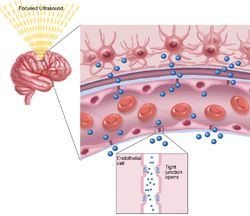
Opening-BBBThe blood-brain barrier has been non-invasively opened in a human patient for the first time. A team at Sunnybrook Health Sciences Centre in Toronto used focused ultrasound to temporarily open the blood-brain barrier (BBB), allowing for effective delivery of chemotherapy into a patient’s malignant brain tumor. The team infused the chemotherapy agent doxorubicin, along with tiny gas-filled bubbles, into the bloodstream of a patient with a brain tumor. They then applied focused ultrasound to areas in the tumor and surrounding brain, causing the bubbles to vibrate, loosening the tight junctions of the cells comprising the BBB, and allowing high concentrations of the chemotherapy to enter targeted tissues.

This patient treatment is part of a pilot study of up to 10 patients to establish the feasibility, safety, and preliminary efficacy of focused ultrasound to temporarily open the blood-brain barrier to deliver chemotherapy to brain tumors. The Focused Ultrasound Foundation is currently funding this trial through their Cornelia Flagg Keller Memorial Fund for Brain Research. Based on these two pre-clinical studies, a pilot clinical trial using focused ultrasound to treat Alzheimer’s is being organized. Dr. Kullervo Hynynen, senior scientist at the Sunnybrook Research Institute, has been performing similar pre-clinical studies for about a decade. In 2012, his team was able to bypass the BBB of a rat model non-invasively (see Bypassing the blood-brain barrier with MRI and ultrasound). Previous methods where invasive, requiring an operation, such as an implanted mucosal graft in the nose (see A drug-delivery technique to bypass the blood-brain barrier and Researchers bypass the blood-brain barrier, widening treatment options for neurodegenerative and central nervous system disease) or inserting needle electrodes into the diseased tissue and applying multiple bursts of pulsed electric energy (see Blood-brain-barrier disruption with high-frequency pulsed electric fields).

More here.

Wednesday Poem

But what are you praying too?
“To my imagination, and it's hope,” he answered.
…………Anonymous

The Divine Image

To Mercy, Pity, Peace, and Love
All pray in their distress;
And to these virtues of delight
Return their thankfulness.

For Mercy, Pity, Peace, and Love
Is God, our father dear,
And Mercy, Pity, Peace, and Love
Is Man, his child and care.

For Mercy has a human heart,
Pity a human face,
And Love, the human form divine,
And Peace, the human dress.

Then every man, of every clime,
That prays in his distress,
Prays to the human form divine,
Love, Mercy, Pity, Peace.

And all must love the human form,
In heathen, Turk, or Jew;
Where Mercy, Love, and Pity dwell
There God is dwelling too.
,

by William Blake
.
.

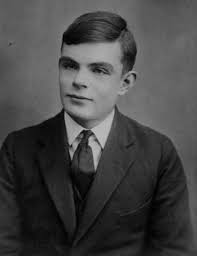
Alan Turing, moralist

Turing

Scott Aaronson over at Shtetl-Optimized:

Strong AI. The Turing Test. The Chinese room. As I’m sure you’ll agree, not nearly enough has been written about these topics. So when an anonymous commenter told me there’s a new polemic arguing that computers will never think — and that this polemic, by one Mark Halpern, is “being blogged about in a positive way (getting reviews like ‘thoughtful’ and ‘fascinating’)” — of course I had to read it immediately.

Halpern’s thesis, to oversimplify a bit, is that artificial intelligence research is a pile of shit. Like the fabled restaurant patron who complains that the food is terrible and the portions are too small, Halpern both denigrates a half-century of academic computer science for not producing a machine that can pass the Turing Test, and argues that, even if a machine did pass the Test, it wouldn’t really be “thinking.” After all, it’s just a machine!

(For readers with social lives: the Turing Test, introduced by Alan Turing in one of the most famous philosophy papers ever written, is a game where you type back and forth with an unknown entity in another room, and then have to decide whether you’re talking to a human or a machine. The details are less important than most people make them out to be. Turing says that the question “Can machines think?” is too meaningless to deserve discussion, and proposes that we instead ask whether a machine can be built that can’t be distinguished from human via a test such as his.)

More here.

Tuesday, November 10, 2015

Oblique Motion: My Two-Year Quest to Identify the Song That Made Me Love Jazz

488793279-man-plays-a-saxophone-on-the-street-in-washington-dc-on.jpg.CROP.promo-xlarge2

Isaac Butler is a writer currently collaborating with Darcy James Argue's Secret Society on Real Enemies, a multimedia exploration of America’s conspiracy theories, this month at The Brooklyn Academy of Music. Secret Society played an amazing one of 3QD's early balls. Isaac Butler in Slate:

More than two years ago, as summer changed to fall, I was walking to the gym when I heard, wafting out of the window of a restaurant, a snatch of a jazz song. It was a minor third, descending to the root, first on a trumpet, then on a saxophone, repeated several times over shifting chords. That’s it. Just a wisp of a song, really, barely a few bars, not much more than a fragment.

Yet this fragment lodged in me, the minor third recalling itself. At some earlier time in my life, perhaps during the brief period in high school when I studied jazz, I had heard that interval over those shifting chords. After a few days of having these four bars of music teasing me maddeningly in my head, I called my childhood best friend. I had only seriously listened to jazz in high school because of him, because I wanted to emulate him, his energy and boundless talent.

I sang the fragment to him over the phone.

No dice. He didn’t recognize it.

Thus the quest began. I started buying canonical jazz albums. I had begun working with the composer Darcy James Argue on a live jazz and multimedia piece about conspiracy theories called Real Enemies, which will premiere in November at the Brooklyn Academy of Music. So, that minor third echoing every day, any time Darcy mentioned a jazz artist, I’d buy an album. I began in the most clichéd place (Kind of Blue, of course) and moved on from there, taking in Horace Silver, Charles Mingus, Ornette Coleman. Trane and Bird and Monk. Brubeck. The Modern Jazz Quartet. Mulatu Astatke. Ahmad Jamal. Ellington. Basie. Jelly Roll Morton. Louis Armstrong.

I failed to find the song. But as I came to grips with the notion that I might never find it, my quest became an education, and my education became a passion.

More here.

RAYMOND CHANDLER DIDN’T CARE ABOUT PLOT

The-long-goodbye-originalBarry Day at Literary Hub:

Looking at Chandler’s work in retrospect, it seems fair to say that he wasn’t really a “mystery writer”—or not first and foremost. Plots didn’t interest him much. They were just pegs on which to hang characters and language. His plots were not particularly original but that never bothered him. “Very likely Agatha Christie and Rex Stout write better mysteries. But their words don’t get up and walk. Mine do.” And: “I don’t care whether the mystery is fairly obvious but I do care about the people, about this strange, corrupt world we live in and how any man who tries to be honest looks in the end either sentimental or just plain foolish.”

Story construction and the tying up of loose ends never bothered him. When director Howard Hawks was filming The Big Sleep, he cabled Chandler: “Who killed the chauffeur?” Chandler cabled back: “No idea.”

When he himself collaborated with the young Billy Wilder on what was Chandler’s first Hollywood film, Double Indemnity, Wilder observed that “Chandler was a dilettante. He did not like the structure of a screenplay… He was a mess but he could write a beautiful sentence. ‘There is nothing as empty as an empty swimming pool.’ That is a great line.” He would later give his moody one-time partner credit for being “one of the greatest creative minds I’ve ever encountered.”

more here.

It’s time to re-think St Paul and St Augustine

2015_45_st_augustineRowan Williams at The New Statesman:

Paul of Tarsus and Augustine of Hippo are usually regarded as pantomime villains by right-thinking moderns. Any number of historical outrages and injustices have been laid at their door, jointly and severally; patriarchal oppression, collusion in slavery, the Inquisition, the collective Christian neurosis about sexuality – almost everything except the common cold. What is most interesting about these two books is that two seasoned and scholarly authors without any religious axes to grind are arguing that this profound suspicion warrants significant qualification. Neither Karen Armstrong nor Robin Lane Fox would want to absolve the two great theologians from every reproach: Paul and Augustine are men of their age, using the familiar rhetorical forms of their cultures, marked by the patterns of power they live in, uncritical of much that we would indignantly repudiate. But what both these books do is to show how, although neither Paul nor Augustine existed in a timeless world of liberal virtue, they still offer an intellectually and imaginatively serious perspective on our humanity as well as theirs and that of their contemporaries.

Both are of course frequently cited as examples of lives that have changed course dramatically in midstream. Paul describes himself as originally a passionate enemy of the incipient Christian movement; but just a few years after the crucifixion of Jesus, a traumatic visionary encounter with Jesus sets his life on a profoundly risky course as a traveling advocate for the new faith, for which, according to tradition, he eventually died a martyr under Nero.

more here.

Confronting the Massacre of Jews in Wartime Jedwabne

Barnes_1-111915_jpg_600x641_q85Julian Barnes at the NYRB:

There is much slowness in The Crime and the Silence, Anna Bikont’s magisterial investigation into a small massacre of Jews in the town of Jedwabne in northeastern Poland in July 1941. Part of this is authorial: the necessarily slow steps toward as much irrefutable truth as can be possibly found this far after the event. Part of it is lectoral: her text is dense with names—some of them confusingly similar, yet whose owners had diametrically opposed destinies—with places and details to remember, and several overlapping timescales. But there is also a slowness imposed on the reader by the dreadfulness of the subject matter. In January 2004, Bikont showed her typescript to Jacek Kuroń, the “theorist of Solidarity,” then in the last months of his life. His response was apparently discouraging:

“I don’t know how many people will read this,” he worries. “Theoretically I was prepared for the whole thing, you’d already told me so much about it, but even so I had to stop reading every several dozen pages, so hard did I find it.”

Even those who come at the book from a historical and geographical distance will be obliged to pace themselves. It is not just a question of taking in individual spasms of bestial cruelty. It is also a broader question: the rate at which we can stomach the truths of man’s inhumanity to man, and ruminate on their causes.

more here.

Why Are Middle-Aged White People’s Death Rates Rising?

Christina Cauterucci in Slate:

DrugTwo Princeton economists released a study on Monday that puts the United States’ recent spike in heroin and prescription drug overdoses in alarming perspective. Overall death rates among middle-aged white Americans are rising due to a huge jump in suicides and certain drug- and alcohol-related deaths, while at the same time falling in every other age group, racial or ethnic group, and wealthy nation in the world. The study’s authors, Anne Case and Angus Deaton, a married couple, were each working on unrelated research projects when they hit upon this trend. Though deaths from suicides, accidental drug and alcohol poisonings, and liver diseases related to alcohol abuse are on the rise among all education groups in middle age, they’ve had a particularly detrimental effect on whites with a high school level education or less. In this education group, the mortality rate for whites aged 45 to 54 rose by 134 deaths per 100,000 people—from 602 to 736—between 1999 and 2013, enough to turn around the previous downward overall trend of mortality rates for the entire age and race group.

In the study, you present a few possible reasons for the climb in morbidity, including the fact that middle-aged people are experiencing more chronic pain than in previous years, which could lead to suicide or drug abuse. What implications could this study have on discussions of U.S. health care?

I am not sure this has much to do with health care. Addiction is very hard to treat, and it is not clear that insurance, even with the extension to mental health, is helping as much as it can.

More here.

New “tricorder” technology might be able to “hear” tumors growing

From PhysOrg:

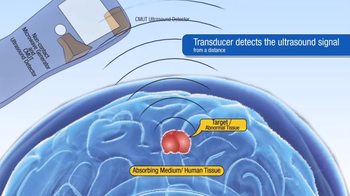
CancerWhen Dr. Leonard “Bones” McCoy needs to diagnose an ill member of the Starship Enterprise, he simply points his tricorder device at their body and it identifies their malady without probing or prodding. Similarly, when Capt. Kirk beams down to an alien world, his tricorder quickly analyzes if the atmosphere is safe to breathe. Now Stanford electrical engineers have taken the latest step toward developing such a device through experiments detailed in Applied Physics Letters and presented at the International Ultrasonics Symposium in Taipei, Taiwan. The work, led by Assistant Professor Amin Arbabian and Research Professor Pierre Khuri-Yakub, grows out of research designed to detect buried plastic explosives, but the researchers said the technology could also provide a new way to detect early stage cancers. The careful manipulation of two scientific principles drives both the military and medical applications of the Stanford work.

First, all materials expand and contract when stimulated with electromagnetic energy, such as light or microwaves. Second, this expansion and contraction produces ultrasound waves that travel to the surface and can be detected remotely. The basic principle of this interaction was first revealed in 1880 when Alexander Graham Bell was experimenting with wireless transmission of sound via light beams. Bell used light to make sound emanate from a receiver made of carbon black, which replicated a musical tone. The Stanford engineers built on the principles demonstrated in Bell's experiment to develop a device to “hear” hidden objects.

More here.

Italy’s Publishing Maestro

05iht-spotlight05-master180

Stephen Heyman interviews Roberto Calasso, in the NYT:

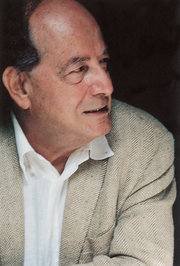
The Paris Review once described Roberto Calasso, 74, as a “literary institution of one.” The author of more than 12 books on everything from Kafka to Indian mythology, he’s also a translator, a rare book collector, and the majority owner and longtime publisher of Adelphi Edizioni, among Italy’s most esteemed, and unpredictable, publishing houses. Adelphi specializes in what others overlook, bringing together underappreciated literary titans like Robert Walser alongside fantasy novels, Tibetan religious texts and popular books on animal behavior. How a publishing house can unite such disparate things, and not go bankrupt, is the subject of Mr. Calasso’s new memoir, “The Art of the Publisher,” which comes out this week in Britain and the United States. By phone from Milan, Mr. Calasso said that Adelphi’s interests have long stumped its critics. “At the beginning,” he said, “we were considered rather eccentric and aristocratic. Then, when we started to have remarkable commercial successes, we were accused of being too populist. That was curious because we were publishing exactly the same books.”

Q. Where does the idea of publishing as an art form come from?

A. It starts with the greatest of publishers and printers, Aldus Manutius, who lived in the Renaissance. He was the first one who considered how books should be presented. He invented the form of the paperback. He called it libelli portatiles, a portable book. In the 20th century, the best example may be Kurt Wolff. He’s famous now because he was the first publisher of Kafka. But he published totally unknown writers who were very different from each other but who belonged, in some way, to the same literary landscape.

Q. Starting in the 1970s, Adelphi championed a lot of Mitteleuropean authors like Joseph Roth and Arthur Schnitzler. Is it surprising to see how they have infiltrated popular culture?

A. We had no idea these people would become so popular. At the time some were not even in print in Germany. The reason why we published them was not about a kind of geographical inclination. You cannot do without Vienna in a way. From Joseph Roth to Wittgenstein from Adolf Loos to Schiele, they are all essential figures of the 20th century. I remember, when I myself was translating Karl Kraus’s aphorisms, I met Erich Linder, who was maybe the greatest literary agent of those years. He told me, “Ya, that’s good that you’re doing Kraus. You’ll sell 20 copies.” By now Kraus is near his 20th printing. So a lot has changed.

More here.

The Crispr Quandary

Jennifer Kahn in The New York Times:

Crispr2-articleLarge-v4One day in March 2011, Emmanuelle Charpentier, a geneticist who was studying flesh-eating bacteria, approached Jennifer Doudna, an award-winning scientist, at a microbiology conference in Puerto Rico. Charpentier, a more junior researcher, hoped to persuade Doudna, the head of a formidably large lab at the University of California, Berkeley, to collaborate. While walking the cobblestone streets of Old San Juan, the two women fell to talking. Charpentier had recently grown interested in a particular gene, known as Crispr, that seemed to help flesh-eating bacteria fight off invasive viruses. By understanding that gene, as well as the protein that enabled it, called Cas9, Charpentier hoped to find a way to cure patients infected with the bacteria by stripping it of its protective immune system.Among scientists, Doudna is known for her painstaking attention to detail, which she often harnesses to solve problems that other researchers have dismissed as intractable.

…At the time, bacteria were thought to have only a rudimentary immune system, which simply attacked anything unfamiliar on sight. But researchers speculated that Crispr, which stored fragments of virus DNA in serial compartments, might actually be part of a human-style immune system: one that keeps records of past diseases in order to repel them when they reappear. ‘‘That was what was so intriguing,’’ Doudna says. ‘‘What if bacteria have a way to keep track of previous infections, like people do? It was this radical idea.’’ The other thing that made Crispr-Cas9 tantalizing was its ability to direct its protein, Cas9, to precisely snip out a piece of DNA at any point within the genome and then neatly stitch the ends back together.

…The tool Doudna ultimately created with her collaborators paired Crispr’s programmable guide RNA with a shortened tracer RNA. Used in combination, the system allowed researchers to target and excise any gene they wanted — or even edit out a single base pair within a gene. (When researchers want to add a gene, they can use Crispr to stitch it between the two cut ends.) Some researchers have compared Crispr to a word processor, capable of effortlessly editing a gene down to the level of a single letter. Even more surprising was how easy the system was to use. To edit a gene, a scientist simply had to take a strand of guide RNA and include an ‘‘address’’: a short string of letters corresponding to a particular location on the gene. The process was so straightforward, one scientist told me, that a grad student could master it in an hour, and produce an edited gene within a couple of days.

More here.

Radio Hour: Sam Harris on ”Islam and the Future of Tolerance”

Harris-sam-243x366

Over at the LA Review of Books:

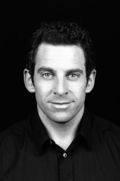
In his new book, popular secular critic and bestselling author Sam Harris puts his views in dialogue with Maajid Nawaz, a once radical Islamist who reformed and co-founded Quilliam, a counter-extremism think tank based in London. In a bit of a departure from his earlier work, which some on the left have viewed as aggressive and intolerant criticism of Islam, Harris hopes this partnership with Nawaz will feel more accessible to the Muslim world, which he says doesn’t need more criticism from “infidels like me, but from self-identifying Muslims who want to find some basis for reform.” The interview features Harris’s take on the effect of Islamic doctrine compared with other religious doctrines both past and present, the challenges of reforming Islam, and his response to his liberal critics.

More here.