
by Brooks Riley
Category: Recommended Reading
Sunday, November 15, 2015
Unreal Islam
My friend and 3QD colleague Ali Minai wrote this excellent piece almost a year ago in Brown Pundits but it is still very relevant and worth reading today in the wake of the Paris horror:
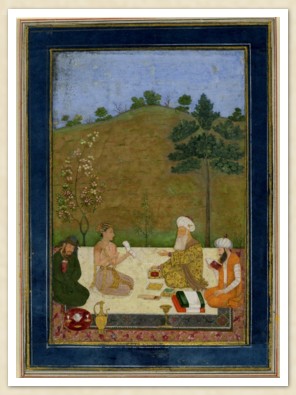
However, another version of takfir is now afoot in the world. Call it “reverse takfir”. Unlike the militant version, it is well-intentioned and self-consciously humane, but it is also dangerous. This “benign” version of takfir is epitomized by the idea that the acts of violence being committed by self-proclaimed holier-than-thou Muslims are not the acts of “real Muslims” and do not represent “real Islam”. In effect, it declares the terrorists to be infidels! The idea is widespread, and is espoused in three different contexts: By well-meaning non-Muslims (such as Presidents Bush and Obama) seeking to avoid stereotyping and the implication of collective guilt; by ordinary Muslims wishing to dissociate themselves from the beheaders; by Muslim sectarians wishing to separate their brand of orthodoxy from that espoused by terrorists; and – most ironically – by Muslim governments and security forces seeking an “Islamic” justification for attacking extremist fellow Muslims, thus implicitly buying into the central jihadi argument of apostasy as a capital offense. The urge to do this reverse takfir is understandable and not without factual basis: Most Muslims are indeed not violent extremists who wish to kill infidels. And it does help protect innocent Muslims from backlash, which is rather important. The problem, however, is that it also feeds the narrative of denial and deniability that allows the militancy to thrive.
More here.
clement greenberg in 1976
allen toussaint (1938 – 2015)
A MESSAGE FROM PARIS
Ian McEwan in Edge:
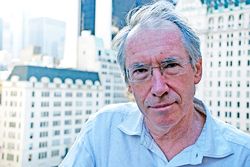
Now we do. What are those changed circumstances? Security will tighten and Paris must become a little less charming. The necessary tension between security and freedom will remain a challenge. The death-cult’s bullets and bombs will come again, here or somewhere else, we can be sure. The citizens of London, New York, Berlin are paying close and nervous attention. In January we were all CharlieHebdo. Now, we are all Parisians and that at least, in a dark time, is a matter of pride.
More here.
marcel duchamp
Making the cut: Will this mean Ctrl+X for disease and Ctrl+V for talent?
John Parrington in Aeon:

…What has changed? In a word, we now have a specific new form of genetic engineering, called gene editing. It’s highly precise, very efficient, and far easier to use than previous methods. Most importantly, it can be applied to practically any cell type, including a fertilised egg. This means it’s possible to create genetically modified plants or animals of practically any species, as well as to modify the cells of adult organisms, including humans.
Let’s compare this situation with the earlier state of the art. Gene editing uses a type of ‘molecular scissors’ – basically a protein that cuts DNA in two. Previous versions of such scissors cut the genome in multiple places, which had a tendency to cause havoc in a living cell. However, they could be used to cut DNA in a test tube, allowing genetic engineers to create gene constructs that could be introduced into a cell on a petri dish, or even a living animal such as a mouse. But the method of introduction was pretty haphazard. The edited scrap of DNA would be injected into the cell, and then one would just have to keep one’s fingers crossed for it to integrate itself with the genome at some useful location. It was a bit like using a cannon to perform organ transplants.
The scissors make a single snip, and then one’s chosen chunk of DNA is slotted neatly into place
There’s a reason I mentioned mice in the previous paragraph, and a reason why mice have been used so pervasively in genetic engineering projects for the past couple of decades. The reason is this: stem cells isolated from a mouse embryo can be genetically modified in culture and used to make a new animal.
More here.
To Save Paris, Defeat ISIS
Roger Cohen in The New York Times:
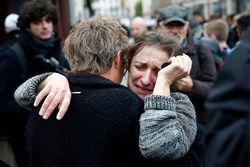
…To defeat ISIS in Syria and Iraq will require NATO forces on the ground. After the protracted and inconclusive Western interventions in Iraq and Afghanistan, it is reasonable to ask if this would not be folly. It is also reasonable to demand – and many will – whether military action will only have the effect of winning more recruits for ISIS as more lives and treasure are squandered. Terrorism, the old nostrum has it, can never be completely defeated. Such arguments are seductive but must be resisted. An air war against ISIS will not get the job done; the Paris attacks occurred well into an unpersuasive bombing campaign. Major powers, including Russia and China, have vigorously condemned the Paris attacks. They should not stand in the way of a United Nations resolution authorizing military action to defeat and eliminate ISIS in Syria and Iraq. Regional powers, especially Saudi Arabia, have an interest in defeating the monster they helped create whose imagined Caliphate would destroy them.
More here.
Sunday Poem
Chorus of Cells
Every morning,
even being very old
(or perhaps because of it),
I like to make my bead.
In fact, the starting of each day
unhelplessly
is the biggest thing I ever do.
I smooth away the dreams disclosed by tangled sheets,
I smack the dented pillow’s revelation to oblivion,
I finish with the pattern of the spread exactly centered.
The night is won.
And now the day can open.
All this I like to do,
mastering the making of my bed
with hands that trust beginnings.
All this I need to do,
directed by the silent message
of the luxury of my breathing.
And every night,
I like to fold the covers back,
and get in bed,
and live the dark, wise poetry of the night’s dreaming,
dreading the extent of its improbabilities,
but surrendering to the truth it knows and I do not;
even though its technicolor cruelties,
or the music of its myths,
feels like someone else’s experience,
not mine.
I know that I could no more cease
to want to make my bead each morning
and fold the covers back at night,
than I could cease
to want to put one foot before the other.
Being very old and so because of it,
all this I am compelled to do
day after day,
night after night,
directed by the silent message
of the constancy of my breathing,
that bears the new I am alive.
by Peggy Freydberg
from Poems from the Pond
published by Hybrid Nation 2015
Why ISIS Attacked Paris
Mark Juergensmeyer over at his website:
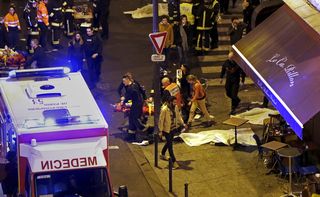
When I heard that the French government had identified ISIS as the group behind the horrible multiple attacks on Paris that have left over 120 dead and hundreds wounded, I wondered why. Why would this attack be useful to ISIS? After all, it is an organization that is primarily focused on Syria and Iraq. And they have been having enough trouble just maintaining the area that they control.
In fact, ISIS has not been doing well these days. On the day before the attacks the strategic town of Sinjar has been retaken by Kurdish and Yazidi forces, cutting off the ISIS supply line between their main town in Syria, Rakka, and Mosul, their largest conquest in Iraq. The amount of territory controlled by ISIS has shrunk considerably in recent months.
They are also not as attractive to young Muslims activists as they used to be. Two of their most famous recruits, notorious around the world for beheading ISIS captives, have themselves been killed by target strikes. The number of young people volunteering to join the ISIS forces have dwindled and scores, perhaps hundreds, have been trying to return home, weary of being used as cannon fodder. ISIS, it appears, is on a downward slide.
But perhaps this is precisely what explains the Paris attacks. ISIS is desperate. It needs a victory, a vivid show of force to bolster the morale of its supporters, attract new volunteers, and with luck, intimidate its foes.
The attacks in Paris may have been calculated to achieve all of these goals. Moreover, if its actions could goad the French and other Western powers into further military action against them, this would fit perfectly into the image of the Western Crusaders waging war against the forces of Islam. No matter that the Islamic forces of ISIS are terrorists and despised by most Muslims around the world, to their supporters and potential volunteers, they are able to project an image of Muslim resiliency if Western forces do in fact become more militarily engaged in Syria and Iraq.
More here.
The Real Power of ISIS
Scott Atran in The Daily Beast:
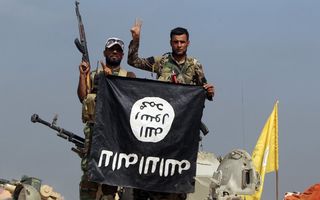
As U.S. troops and their allies stage commando raids to rescue prisoners slated for slaughter by the so-called Islamic State, and the Russians mount bombing raids to bolster the dictatorship of Syrian President Bashar al-Assad, it’s easy amid the kinetics to lose sight of a central and potentially determining fact about the fight against ISIS (or ISIL, or Daesh): This is, fundamentally, a war of ideas that the West has virtually no idea how to wage, and that is a major reason anti-ISIS policies have been such abysmal failures.
It’s not as if the core approach of ISIS is a mystery. Required reading for the emirs of the Islamic State is Abu Bakr Baji’s The Management of Savagery, a detailed manifesto, published a decade ago, looking at the West’s debilities and the potential strengths of a rising, ruthless caliphate. One typical maxim: “Work to expose the weakness of America’s centralized power by pushing it to abandon the media psychological war and the war by proxy until it fights directly.” That is, suck U.S. troops into the fight.
In the meantime ISIS is reaching out, especially in Africa but also in Central Asia and wherever a state of “chaos” or “savagery” (at-tawahoush) exists, to fill the void. It is establishing its caliphate as a global archipelago where “volcanoes of jihad” erupt, so that it may survive even if its current core base between the Euphrates River in Syria (Raqqa) and the Tigris in Iraq (Mosul) is seriously degraded. Libya is a prime target as the gateway to a continent in chaos, where ISIS is investing heavily. Over 700 Saudi fighters have gone there in recent months, according to evidence Saudi leaders presented to me in August.
Current “counter narratives” aren’t in the least appealing or successful, whether in attracting or deterring ISIS supporters and recruits. They are mostly negative and they lecture at young people rather than dialoguing with them. As one former ISIS imam told me and my colleagues: The young who came to us were not to be lectured at like witless children; they are for the most part understanding and compassionate, but misguided.
In contrast with, say, the off-target tweets of the U.S. State Department’s “Think Again Turn Away” campaign, the Islamic State may spend hundreds of hours trying to enlist single individuals, to learn how their personal frustrations and grievances can fit into a universal theme of persecution against all Muslims, and thus translate anger and frustration into moral outrage.
Current counter-radicalization approaches lack the mainly positive, empowering appeal and sweep of the Islamic State’s story of the world, while at the same time lacking the personalized and intimate approach to individuals.
More here.
Saturday, November 14, 2015
What is Reputation?
Gloria Origgi in Edge.org followed by responses, of which the first is by me:

I was interested in the question of trust. It seems like a paradox. The traditional view of knowledge in philosophy and epistemology is that you should not trust, and you should be an autonomous thinker. You should have in your own mind the means to filter information, and to infer new knowledge from what you already know without taking into account the opinion of others. The opinion of others is doxa, and episteme—the true knowledge—is the opposite, being an autonomous knower. With Internet and this hyperconnectivity in which knowledge started to spin around faster than light, I had the feeling that trust was becoming a very important aspect of the way in which we acquire knowledge.
We need to trust other people. In an information dense society in which you have so much information, you cannot just count on your own means. You need to trust other people, and what does it mean to trust other people? Does it mean to become gullible? Does it mean to become credulous? I started to work in some specific domains to try and understand what it means to trust other people in order to acquire knowledge, to acquire some reliable information. What do we do? Are we entitled to do this? Is this an appropriate way of using our mind or of doing inference?
More here.
‘THE PHYSICS OF SORROW’ BY GEORGI GOSPODINOV
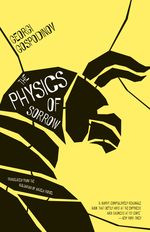
By the standard of an author’s handling of complex thematic ideas, Georgi Gospodinov’s The Physics of Sorrow, beautifully translated by Angela Rodel,is an excellent book. Gospodinov takes the conceptual framework within his novel as the ability of literature to overcome the restrictions of memory. Taking major cues about this subject from both Borges and Sebald (see Gospodinov’s extensive use of diagrams and photographs throughout the text), the author explores memory through a tightly woven set of fantastic experiences among the ever-changing society of Bulgaria in the 20th and early 21st centuries, and does so profoundly.
The novel centers on a narrator who describes himself as an “empath,” that is, someone who is able to access the entire set of memories of those close to him, but whose power fades as they grow older. “I remember being born as a rose bush, a partridge, as ginkgo biloba, a snail, a cloud in June (that memory is brief), a purple autumnal crocus near Halensee, an early blooming cherry frozen by a late April snow, as snow freezing a hoodwinked cherry tree . . .” the narrator says, suggesting that he has a form of memory that is not subject to the limitations most human beings face. Later, the narrator notes that, “The aging of an empath is a strange and painful process. The corridors toward others and their stories, which once were open, now turn out to be walled up. House arrest in your own body.” Gospodinov is creating a literary game akin to Borges’s infinite library, in that he is calling into question the reliability of memory and the creative spirit through an illustration of its limitations.
more here.
Vladimir Nabokov Writes to His Wife
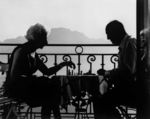
One of Nabokov’s most striking peculiarities was his near-pathological good cheer — he himself found it “indecent.” Young writers tend to cherish their sensitivity, and thus their alienation, but the only source of angst Nabokov admitted to was “the impossibility of assimilating, swallowing, all the beauty in the world.” Having a husband who was so brimmingly full of fun might have involved a certain strain; still, the fact that Véra was not similarly blessed is just a reminder of the planetary norm. Indeed, their first long separation came in the spring and summer of 1926, when she decamped to a series of sanitariums in the Schwarzwald in the far southwest, suffering from weight loss, anxiety and depression.
Véra was gone for seven weeks, and Vladimir wrote to her every day. Spanning more than a hundred pages, the interlude is one of the summits in the mountain range of this book. He endeavored not only to raise her spirits (with puzzles, riddles, crosswords, which she almost invariably solved) but also to love her back to health — with punctual transfusions of his buoyant worship. Here one finds oneself submitting to the weird compulsion of the quotidian, because he tells her everything: about his writing, his tutoring, his tennis, his regular romps and swims in the Grunewald (for her the Black Forest, for him the Green); he tells her what he is reading, what he is eating (all his meals are itemized), what he is dreaming, even what he is wearing. Also, very casually, almost disdainfully (as befits the teenage millionaire he once was), he keeps noticing that they don’t seem to have any money.
more here.
The rediscovery of Shelley

“Millions to fight compell’d, to fight or die
In mangled heaps on War’s red altar lie.
The sternly wise, the mildly good, have sped
To the unfruitful mansions of the dead.”
Two hundred and four years later, in our time of Syrian carnage, these lines from thePoetical Essay on the Existing State of Things still ring out with undimmed force and urgency. Passionate, grandiloquent and angry, they sound like the protest music of a teenage student — which is indeed what they were, though the title page declared the author to be “A Gentleman of the University of Oxford”. That same gentleman, the 18-year-old Percy Bysshe Shelley, would get himself expelled from the university shortly afterwards for refusing to answer questions about his authorship of a much more incendiary tract: The Necessity of Atheism. So, although irony isn’t the quality we usually associate with the most histrionic of the Romantic poets, his ghost must have been chuckling this week as the Bodleian celebrated the long-lost text as the 12-millionth book in its collection, now publicly available for the first time since its rediscovery a decade ago. In Shelley’s own brief stint at the university in 1810-11, the library was closed to undergraduates.
With their occasionally overwrought emotion, the Romantics can seem tonally alien yet somehow culturally familiar. If their rhetorical flamboyance sits awkwardly with our contemporary cool (“Oppressors’ venal minions! hence, avaunt! / Think not the soul of Patriotism to daunt . . . ”), there was much about their self-casting as outsiders that the troubadours of the 1960s embraced.
more here.
Why Writers Run
Nick Ripatrazone in The Atlantic:

Freedom, consciousness, and wildness: Running offers writers escape with purpose. When confronted with “structural problems” in her writing as the result of a “long, snarled, frustrating and sometimes despairing morning of work,” Joyce Carol Oates would ease her writing blocks with afternoon runs. For Oates and many other writers, running is process and proves especially useful for the type of cloistered, intensive work they do. But in many ways running is a natural extension of writing. The steady accumulation of miles mirrors the accumulation of pages, and both forms of regimented exertion can yield a sense of completion and joy. Through running, writers deepen their ability to focus on a single, engrossing task and enter a new state of mind entirely—word after word, mile after mile.
More here.
Peggy Guggenheim: the mistress of Modernism
Iona McLaren in The Telegraph:
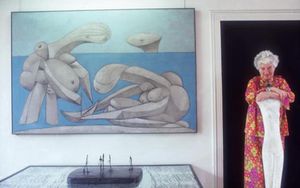
They were missing the point: for all its flaws, Peggy Guggenheim’s midlife memoir is hysterically funny. Gore Vidal called her unaffected and efficient style “almost as good as Gertrude Stein… and a lot funnier”. But sympathetic readers like Vidal were, and had always been, few. The insecurity that gave her, Francine Prose argues in this generous biography, is a clue to the nervous promiscuity that she sustained into her grand old age in the Venetian Palazzo Venier dei Leoni, now the Peggy Guggenheim Collection.
More here.
In Paris, a Night Disrupted by Terror
Pamela Druckerman in The New York Times:
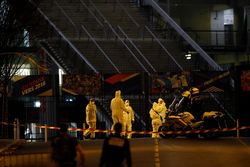
…My hostess makes up some extra beds for the night. The couple from the dinner party are trying to figure out whether they can drive home, west of Paris. Their kids are fine, but now they’re home alone. My husband is still inside the stadium. The French president, who was also at the stadium for the France-Germany match, says France’s borders are closed. Apparently schools will be closed too. I learn the French word for curfew: couvre-feu. On the news they’re reporting that many people have died inside Le Bataclan. The numbers are unfathomable.
My kids are asleep. Their babysitter isn’t. All I keep thinking is: What will I tell them when they wake up?
More here.
The Syrian Kurds Are Winning!
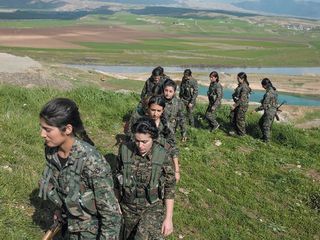
To editorialize, I hope this is true. Jonathan Steele in the NYRB:
Anyone searching for a sliver of light in the darkness of the Syrian catastrophe has no better place to go than the country’s northeast. There some 2.2 million Kurds have created a quasi state that is astonishingly safe—and strangely unknown abroad. No barrel bombs are dropped by Bashar al-Assad’s warplanes. No ISIS executioners enforce the wearing of the niqab. No Turkish air strikes send civilians running, as Turkish attacks on Kurdish militia bases do across the border in Iraq.
Safety is of course a relative concept. Car bombs and suicide attacks by ISIS assassins regularly take lives in this predominantly Kurdish 250-mile-wide stretch of Syria between the Tigris and Euphrates rivers, but by the standards of the rest of the country it is quiet.
The 2.2 million Kurds make up a tenth of the Syrian population. During the protests of 2011—the Arab Spring—they, like their Arab counterparts in other Syrian cities, publicly demonstrated for reform in Qamishli, the region’s largest city. But Assad was milder toward them than he was to other protesters elsewhere. He gave citizenship to 300,000 stateless Kurds and in July 2012 even withdrew most of his combat troops from the area on the grounds that they were needed more urgently in the Syrian heartland of Aleppo, Damascus, and the cities in between.
Kurdish militias known as the People’s Protection Units (YPG) quickly organized the support of much of the Kurdish adult population under thirty and took control of the region, which they divide into three “cantons” and which they call Rojava (i.e., West, meaning western Kurdistan, from roj, the Kurdish word for sun). The other Kurdish regions are in Turkey, Iran, and Iraq.
Over the next three years the YPG trained and built a well-disciplined, though lightly armed, military force and set up an efficient system of local government. It is a measure of the Assads’ repression that, whereas in Turkey bans on the Kurdish language were lifted in 1991, they were kept in place for another two decades in Syria. As a result most adults in Rojava speak better Arabic than Kurdish. Now in charge of their own statelet, Kurdish leaders are reviving the use of the Kurdish language in schools and on TV and radio stations.
More here.
There’s a Hidden Connection Between Pi and Quantum Mechanics
Jennifer Ouellette in Gizmodo:
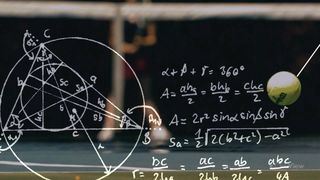
Physicists have uncovered a hidden connection between a famous 350-year-old mathematical formula for pi, everyone’s favorite irrational number, and quantum mechanics. At least one mathematician has pronounced the discovery“a cunning piece of magic.”
The English mathematician John Wallis published his formula for calculating pias the product of an infinite series of ratios in 1655. In a paper published this week in the Journal of Mathematical Physics, University of Rochester physicists announced they had discovered the same formula popping out of their calculations of a hydrogen atom’s energy levels.
Wallis isn’t well known today outside of academic circles, but he rubbed elbows with some of the the greatest names in science in his era. Initially he intended to become a doctor when he started university at the tender age of 13, but he was far more interested in mathematics, and showed a knack for cryptography in particular. It began as just a hobby, but years later, he applied his skills deciphering coded Royalist dispatches on behalf of their political rivals, the Parliamentarians. (The two parties were in the midst of a civil war at the time.) Eventually he became part of the group of scientists who founded the Royal Society of London. There, his love of math blossomed into a bona fide academic pursuit.
Among his peculiar skills: he could perform complicated mental calculations in his head — something he did frequently, given his tendency toward insomnia. One such feat was recorded in the Society’s Philosophical Transactions in 1685: Wallis had calculated the square root of a 53-digits (27 digits in the square root) one sleepless night, and recorded it from memory the next morning.
More here.