Anna Narinskaya in The Ideas Letter:
In 2024, the Russian medical student and activist Daria Kozyreva, now 20, was arrested in part for posting in the streets of Saint Petersburg verses by the nineteenth-century Ukrainian poet Taras Shevchenko that called for resisting the Russian Empire. In her final statement in court last April, just before receiving her verdict, Кozyreva said that she dreamed Ukraine would regain every inch of its land, including Crimea.
For the posters, she was sentenced to nearly three years in a penal colony—for those last words, she was sentenced to a substantial fine. Repression in Vladimir Putin’s Russia is endlessly perverse.
As of last year, the Russian authorities have been bringing charges—such as “discrediting the army” or “justifying terrorism”—against defendants in political trials for the statements they make before judges, including in their own defense.
The state seems to have understood that until then the glass box or the barred cage in which a defendant sits in Russian courts had been, paradoxically, one of the last places in the country where free speech was still possible.
Total censorship in the Soviet era did not allow defendants’ speeches to become publicly available. What did get out there from Stalin’s show trials were either subdued statements or forced confessions. In the 1970s, under Leonid Brezhnev and zastoy (the period of stagnation), secret transcripts were distributed by the underground press known as the samizdat. Repression under Putin today is both similar and different: It too is sweeping and self-serving, but it is taking place in a different context—politically and technologically.
When political trials first became common again in the 2010s, Russia still had a relatively free press. Proceedings were covered in detail, and defendants used their cage as a platform to speak the truth to a system that was persecuting them. Then, as censorship on traditional Russian news outlets increased, it was social media that took over relaying information about the trials.
But why was even that possible at all?
More here.
Enjoying the content on 3QD? Help keep us going by donating now.

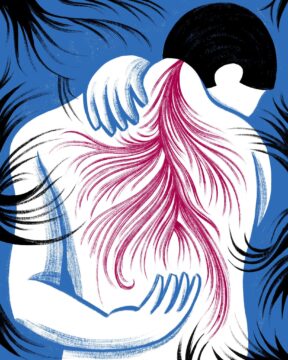 In recent years, the vagus nerve has become an object of fascination, especially on social media. The vagal nerve fibers, which run from the brain to the abdomen, have been anointed by some influencers as the key to reducing anxiety, regulating the nervous system and helping the body to relax.
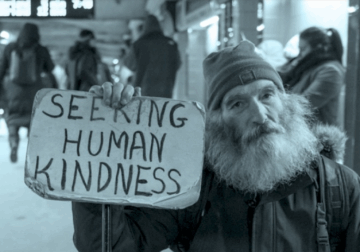 I had a book come out last July. It was about a dead poet and it led to many speaking engagements (be careful what you wish for). Nearly every weekend during the fall semester of 2025, I was on the road or in the air. Once, on the water.
 I opened Claude Code and gave it the command: “Develop a web-based or software-based startup idea that will make me $1000 a month where you do all the work by generating the idea and implementing it. i shouldn’t have to do anything at all except run some program you give me once. it shouldn’t require any coding knowledge on my part, so make sure everything works well.” The AI asked me three multiple choice questions and decided that I should be selling sets of 500 prompts for professional users for $39. Without any further input, it then worked independently… FOR AN HOUR AND FOURTEEN MINUTES creating hundreds of code files and prompts. And then it gave me a single file to run that created and deployed a working website (filled with very sketchy fake marketing claims) that sold the promised 500 prompt set.
 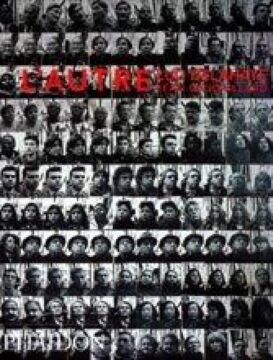 It’s been twenty years since your exhibition at La Maison Rouge. That was my first encounter with your work and it also marked a radical turning-point for the photographer you were at the time. How do you see that exhibition today?
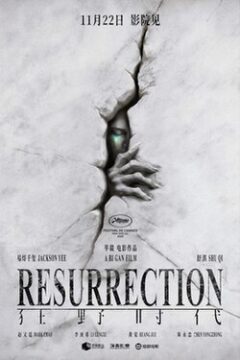 Films are rarely made in response to film critics, so it is unlikely that Bi Gan’s wildly ambitious new film was inspired Susan Sontag’s 1996 essay “The Decay of Cinema.” In any case, Bi was six years old, living in Kaili, China, when Sontag declared in The New York Times that “cinema’s 100 years seem to have the shape of a life cycle: an inevitable birth, the steady accumulation of glories and the onset in the last decade of an ignominious, irreversible decline.” “If cinema can be resurrected,” she concluded, “it will only be through the birth of a new kind of cine-love.” Yet Resurrection, as Bi’s film is called in English (its Chinese title is more like “Savage Age”—Bi has made a habit of giving his movies quite different titles in English and Chinese), seems conceived in exactly those terms. Its action spans that same century of movies, unified less by any continuity of plot than by the conviction that this era has come to an end. Cinema is dead. It may yet live again, but first: let us remember.
 In this circumstance, there is not so much a vacuum as a cloud of uncertainty. Everything is up in the air. Expectations, assumptions and intentions are scrambled. Fearing lost advantage in the face of these unknowns, worst-case scenarios drive the build-out of capabilities. Acting in the breach is a wild guess, the possible outcomes of which cannot be assuredly weighed.
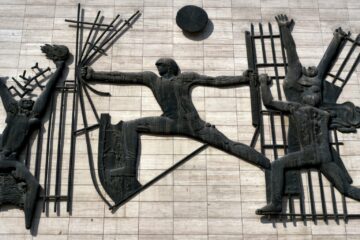 Baghdad was cloaked in its familiar shroud of darkness when, in early October, I walked the al-Shuhada Bridge across the Tigris—more a ritual for me than a pastime. Long before Walter Benjamin described the Seine as “the vast and ever-watchful mirror of Paris,” the Andalusian traveler Ibn Jubayr saw the Tigris as “a mirror shining between two frames, or like a string of pearls between two breasts.” That image of splendor has long since dissipated. On the bridge that night, I passed by an old woman in her abaya sat begging on the curb; plastic waste lined the shallow waters below.
 “L
“L Where are we exactly, in this deathless debate about the crisis of masculinity? We stand splattered in discourse, ears ringing from the unceasing alarm over men and their prospects — their lack of education and lack of friends, their porn and gambling, their suicide rates. This while tech elites, sporting their bulgy new bodies, call for an infusion of “masculine energy,” and a hideous new sport is born: “sperm racing.” Is it any wonder that a stance has emerged of principled contempt? The so-called crisis, according to its critics, is actually a crisis of accountability, a refusal on the part of men to regulate themselves emotionally and behave like adults. In this view, men aren’t in crisis, America is in crisis, and to suggest otherwise is to engage in a kind of “