Should Wine Criticism Strive for Objectivity?

by Dwight Furrow

If by “objectivity” we mean “wholly lacking personal biases”, in wine tasting, this idea can be ruled out. There are too many individual differences among wine tasters, regardless of how much expertise they have acquired, to aspire to this kind of objectivity. But traditional aesthetics has employed a related concept which does seem attainable—an attitude of disinterestedness, which provides much of what we want from objectivity. We can’t eliminate differences among tasters that arise from biology or life history, but we can minimize the influence of personal motives and desires that might distort the tasting experience.

“Disinterestedness” (a barbarous term but it’s the one we have to work with)   refers to a kind of experience in which an object is perceived “for its own sake”, not merely for its usefulness at achieving some other goal. The idea is that in genuine aesthetic appreciation we must consider the object itself without the distraction of practical concerns or personal desires that govern ordinary life. By bracketing or suspending ordinary desires and everyday practical concerns, we are able to have a contemplative, imaginative experience that enables the full range of aesthetic properties of an object to emerge. Immanuel Kant, the philosopher most responsible for this concept, argued that the appreciation of genuine beauty is possible only via disinterested attention, which he thought of as a distinctive type of experience quite separate from everyday experience.

In professional wine evaluation this goal of disinterested attention governs the procedures used in tasting wine. Blind tasting, where tasters do not know the producer, region and in many cases the varietal, is essential to realizing this goal. So is the use of standardized assessment criteria, agreed upon aroma and flavor grids, the practice of spitting to avoid excess alcohol consumption, etc. Read more »

The Wasteland of Solitude

by Claire Chambers

At the moment, I’m working hard to try to finish my book in time for its autumn deadline. It’s part of a two-monograph project. The first book came out with Palgrave Macmillan in 2015 under the title Britain Through Muslim Eyes: Literary Representations of Britain, 1780−1988. Now I’m working on a second volume, Muslim-Identified Novels of Britain, 1988-Presentwith a chapter on Rushdie’s The Satanic Verses, then chapters on the 1990s, 2000s, and – at the risk of present-dayism – two on the 2010s.

This last month or so I’ve been desperately trying to get the 2000s chapter fit for human consumption. I’ve borrowed a trick from my compatriot from West Yorkshire, David Peace, and am listening to music from each of the decades I’m writing about. YouTube also spins me off into a world of relevant tunes that put me in the mood for writing.
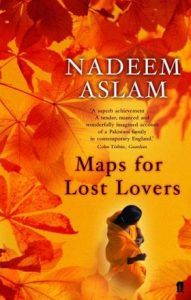
This has sent me on an interesting and at times disturbing trail in the last few weeks, as I’ve been working on fiction by another West Yorkshire author, Nadeem Aslam. Aslam’s 2004 novel Maps for Lost Lovers is alternately lyrical and overwritten, but is genuinely invested in women’s experiences and human rights. The novel is also partly about the increasing separation over time between different communities from the Indian subcontinent living in Britain, especially after the 1971 War that resulted in Bangladesh’s independence. Read more »

Shouting Secrets

by Daniel Ranard

The fact that anything happens securely on the web should be mind-boggling. In some ways, the internet is like a group of people shouting at each other across an open field. How can you hold a secret conversation when anyone might be listening?  How do you prevent imposters, when you can’t always see the face behind the shout?

Imagine trying to establish, say, paperless currency. How do I pay you?  Maybe I just yell that I’m giving you ten (invisible) dollars.  But you won’t be sure that it’s really me, or that I really have the money. And when you try to spend it later, how will anyone know I gave it to you?

One solution is for everyone to place their trust in some individual or organization. When we have a private message to deliver, we whisper it to our trusted messenger, who passes it along in secret. Likewise, when I want to pay you, I tell a trusted organization – the bank. They check it’s really me, then subtract money from my virtual balance, notifying you that you’ve been “paid.”

Most of us prefer not to trust strangers unless we need to. So how can we conduct ourselves on the internet, without ceding power to any one group?

No, I’m not about to start preaching bitcoin or other cryptocurrencies. I just want to share some satisfyingly clever ideas from cryptography, which accomplish the seemingly impossible. Read more »

Incels, Pickup Artists, and the World of Men’s Seduction Training

by Anders Wallace

On Monday, April 23rd, a 25-year old man named Alek Minassian drove a rented van down a sidewalk in Toronto, killing eight women and two men. The attack was reminiscent of recent Islamist terror attacks in New York, London, Stockholm, Nice, and Berlin. Just before his massacre, he posted a note on Facebook announcing: “Private (Recruit) Minassian Infantry 00010, wishing to speak to Sgt 4chan please. C23249161, the Incel Rebellion has already begun! We will overthrow all the Chads and Stacys! All hail the Supreme Gentleman Elliot Rodger!” The phrase paid homage to a young man named Elliot Rodger. In 2014, Rodger shot and killed six people in Isla Vista, California, before taking his own life.

Minassian and Rodger were members of an online subculture called “incels.” Like a 21st Century American psycho Norman Bates, they killed women because they felt sexually rejected by them. Incels are a particularly vicious subculture of the manosphere. The manosphere is a digital ecosystem of blogs, podcasts, online forums, and hidden groups on sites like Facebook and Tumblr. Here you’ll find a motley crew of men’s rights activists, white supremacists, conspiracy theorists, angry divorcees, disgruntled dads, male victims of abuse, self-improvement junkies, bodybuilders, bored gamers, alt-righters, pickup artists, and alienated teenagers. What they share is a vicious response to feminists (often dubbed “feminazis”) and so-called “social justice warriors.” They blame their anger on identity politics, affirmative action, and the neoliberal state, which they perceive are compromising equality and oppressing their own free speech. Their heated resentment warps postmodern (post-1960s) countercultural beliefs currently in vogue among alt-right provocateurs like Milo Yiannopoulos and Alex Jones: specifically, that Americans need to liberate their consciousness from lies and falsehoods borne out by corporate manipulation, government conspiracies, and politically-correct social norms.

Very few people would become so inflamed by the perception of sexual rejection that they would wantonly kill strangers. But sexual abuse, rape, and other types of gendered coercion are rampant in U.S. society. The recent #MeToo movement has shown a spotlight on these men, though mostly only the very rich and successful ones. Behind computers and in bedrooms across the nation, hundreds of thousands of men nurse a seething sense of anger, shame, and resentment coupled with entitlement and stifled desire. Some of these men choose not to kill or rape (though they may, from the privacy of their skulls, want to do both those things). These men are trying to fix their dating lives through masculine kinds of self-help. These are men’s pickup, dating, and seduction communities. Read more »

Sunday, May 20, 2018

The next Elena Ferrante?

Aida Edemariam in The Guardian:

Between 2001 and 2015, sales of translated fiction grew by 96%. One reason, argues Daniel Hahn, who last year established a prize for first translations, is that publishers seem to be taking more account of what people actually want to read. For a long time, he says, the emphasis was on “quite challenging, highbrow literary fiction,” which led to an unhelpful conflation of “difficult” with “translated”. Then Christoper MacLehose published Stieg Larsson’s The Girl With the Dragon Tattoo, which promptly sold 12,000 copies, in hardback. “It seems to me,” says Lisa Appignanesi, chair of this year’s Man Booker international prize, which is announced on 22 May, “we have become much more interested in literature which is not conventional; there are different traditions on the continent, which are not quite so emphatically led by character and the movement of plot.”

The important thing, then, is to be led by readers. Colm Tóibín, when not writing his own fiction, commissions books for a tiny imprint called Tuskar Rock. Two of their translated books are shortlisted for this year’s Booker international prize – Like a Fading Shadow by Spanish author Antonio Muñoz Molina and The World Goes On, by Hungarian novelist Laszlo Krasznahorkai. Some years ago, Tóibín was asked to introduce Krasznahorkai at a reading in Edinburgh, and “noticed that the venue was full”. At which point he realised that readers in English were no longer getting their information about books from traditional sources, and that it was important to work out how they were doing it and “try to tap into it”. So, in that spirit, we have looked around Europe – in this year when we are preparing to leave it for ever – to find out what Europeans are reading, and what we’ll be reading next.

More here.

Henry Kissinger: How the Enlightenment Ends

Henry A. Kissinger in The Atlantic:

Three years ago, at a conference on transatlantic issues, the subject of artificial intelligence appeared on the agenda. I was on the verge of skipping that session—it lay outside my usual concerns—but the beginning of the presentation held me in my seat.

The speaker described the workings of a computer program that would soon challenge international champions in the game Go. I was amazed that a computer could master Go, which is more complex than chess. In it, each player deploys 180 or 181 pieces (depending on which color he or she chooses), placed alternately on an initially empty board; victory goes to the side that, by making better strategic decisions, immobilizes his or her opponent by more effectively controlling territory.

The speaker insisted that this ability could not be preprogrammed. His machine, he said, learned to master Go by training itself through practice. Given Go’s basic rules, the computer played innumerable games against itself, learning from its mistakes and refining its algorithms accordingly. In the process, it exceeded the skills of its human mentors. And indeed, in the months following the speech, an AI program named AlphaGo would decisively defeat the world’s greatest Go players.

More here.

What Can Chimpanzee Calls Tell Us About the Origins of Human Language?

Michael Wilson in Smithsonian Magazine:

Chimpanzees are among human beings’ closest living relatives, and they share with us many unusual traits. Like humans, chimps make and use tools; join together in groups to hunt animals like monkeysdefend group territories; and sometimes gang up on and kill their enemies.

One trait that seems to set humans apart from every other species, however, is a fully developed languageOther animals communicate, but only humans appear able to talk about an unlimited variety of topics. Language enables us to make plans, negotiate with and teach one another.

How and why language evolved remains a mystery. Much of the evidence of human evolution comes from fossils, but fossil bones don’t tell us much about soft tissues or the sounds early human ancestors made. Studying the communication patterns of our living relatives can help solve the mystery.

More here.

Why do we fear plane crashes when the ride to the airport is more dangerous?

Tom Keane in the Boston Globe:

The day after a Southwest jet engine exploded, killing one, I’m in a Lyft heading toward Logan Airport, bound for my own trip on the same airline.

“Have a safe flight,” the driver tells me as he drops me at Terminal A. His well-meaning words shake me. I feel a hard knot of panic in my chest.

On board, I initially choose an aisle seat. On that ill-fated plane, it was a woman sitting by the window who was nearly sucked out and later died. But then, in some small show of courage, I move over to the window. I soon regret the decision. In the air, my knuckles are white as I grip my chair, looking out nervously at the jet engine just behind me. As we roll to a stop on the runway, I send a relieved text to friends: “Landed!”

In truth, my drive from my home to the airport was more dangerous than my flight. In 2016, more than 40,000 people died on American roads. Meanwhile, the Southwest death was the first in nine years in American skies. The chance of being killed in the air is almost infinitesimally small. But the odds of dying in a car: Much higher.

More here.

Human nature matters

Skye Cleary and Massimo Pigliucci in Aeon:
A strange thing is happening in modern philosophy: many philosophers don’t seem to believe that there is such a thing as human nature. What makes this strange is that, not only does the new attitude run counter to much of the history of philosophy, but – despite loud claims to the contrary – it also goes against the findings of modern science. This has serious consequences, ranging from the way in which we see ourselves and our place in the cosmos to what sort of philosophy of life we might adopt. Our aim here is to discuss the issue of human nature in light of contemporary biology, and then explore how the concept might impact everyday living.

The existence of something like a human nature that separates us from the rest of the animal world has often been implied, and sometimes explicitly stated, throughout the history of philosophy. Aristotle thought that the ‘proper function’ of human beings was to think rationally, from which he derived the idea that the highest life available to us is one of contemplation (ie, philosophising) – hardly unexpected from a philosopher. The Epicureans argued that it is a quintessential aspect of human nature that we are happier when we experience pleasure, and especially when we do not experience pain. Thomas Hobbes believed that we need a strong centralised government to keep us in line because our nature would otherwise lead us to live a life that he memorably characterised as ‘solitary, poor, nasty, brutish, and short’. Jean-Jacques Rousseau embedded the idea of a human nature in his conception of the ‘noble savage’. Confucius and Mencius thought that human nature is essentially good, while Hsün Tzu considered it essentially evil.

The keyword here is, of course, ‘essentially’. One of the obvious exceptions to this trend was John Locke, who described the human mind as a ‘tabula rasa’ (blank slate), but his take has been rejected by modern science. As one group of cognitive scientists describes it in From Mating to Mentality (2003), our mind is more like a colouring book, or a ‘graffiti-filled wall of a New York subway station’ than a blank slate.

More here.

On Stedman Jones, ‘Karl Marx: Greatness and Illusion’

Terence Renaud reviews Gareth Stedman-Jones’s new book in H-Net:
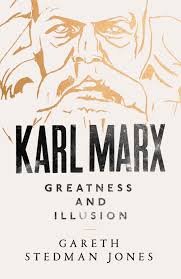
[R]ecent, uplifting engagements with Marxism stand in contrast to Gareth Stedman Jones’s new biography of Marx. While it too aims to shatter the “monumental mythology” that has surrounded the German philosopher since the late nineteenth century, the book hardly uplifts the reader. Reading Karl Marx: Greatness and Illusion is a deflationary experience. Its author commits himself absolutely to reconstructing Marx’s life and work according to their original, nineteenth-century context. According to him, all later iterations of Marxism overinflated Marx’s legacy. So this is an anti-Marxist biography of Marx, or “Karl,” as the author whimsically calls him. In his wide-ranging and impressive attempt to restore the original Marx, Stedman Jones hopes also to politically neutralize him.

The book is divided into twelve chapters, framed by a prologue and epilogue, and fortified by maps, illustrations, and copious notes. “Tome” might accurately describe a 750-page volume, but this one does not feel too long as far as biographies go. Many of those pages satisfy Stedman Jones’s desire to place Marx and his contemporaries “in a landscape larger than themselves” (p. xv). Every major public figure, and plenty of minor ones too, get their potted histories: no need to consult Wikipedia. The author’s erudition is evident in his descriptions of Rhineland radicalism in the 1830s and ’40s, debates over religion in Berlin, and mass democratic politics across Europe in the mid- to late nineteenth century.

Appropriately enough, the book starts with a chapter about the impact of the French Revolution on the adjacent German lands as well as the post-Napoleonic Restoration that began in 1815. Three years later, Karl Marx was born into an assimilated Jewish family in Trier. He had a normal bourgeois childhood and eventually attended university in Bonn and Berlin. Despite initially studying law at his father’s behest, the young Marx inclined toward poetry and philosophy. Stedman Jones devotes several pages to the love poems that Marx wrote for his fiancée, Jenny von Westphalen. The portrait we get is of a romantic young man who spurned convention, ignored his parents’ wishes, drank too much, and rushed headlong into radical politics.

More here.

Human Rights and Neoliberalism

Nils Gilman in the LA Review of Books:

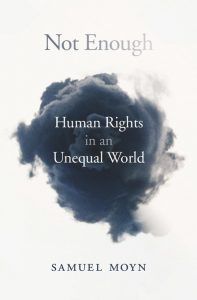
THIS MARVELOUS BOOK is a history of one of the hardest things to explain: why something did not happen. Histories of non-events are inherently difficult to write because of the methodological commitment of historians to stick close to documentary sources, and things that don’t happen rarely leave an obvious documentary trail. In this case, the non-event that Samuel Moyn describes in his new book, Not Enough: Human Rights in an Unequal World, is the institutionalization of a political ethic of material egalitarianism.

The book takes the form of an intervention into two huge historical debates, the first about the history of neoliberalism and the second about the history of human rights, a field whose current contours Moyn helped to define with his 2010 book The Last Utopia: Human Rights in History. The puzzle he seeks to explain is: How is it that the era of neoliberalism, commonly said to have begun in the mid-to-late 1970s, coincides almost perfectly with the triumphant rise of a discourse of human rights? In other words, how can it be that an era whose ethical self-conception was rooted in a transnational movement to prevent abuses such as torture, disenfranchisement, and political imprisonment has also been an era in which national and global economies were remade in ways that have allowed wealthy capital owners to capture the large majority of economic productivity gains, creating in-country inequalities not seen since the late 19th century?

More here.

Sunday Poem

Israeli Patrols Kill 90 Dogs in Arab Town

.... —The New York Times, April 14, 1995

Mother,
I’m living in sin
with an Egyptian Jew
raised in Paris.
We stroll
in Central Park.
Her mutt, Gaulois,
off the leash.
How lucky
he is not in Hebron
where gods
kill dogs
for sport.

by Rafiq Kathwari
from In Another Country,
Doire Press, 2015

Saturday, May 19, 2018

Can we treat psychosis by listening to the voices in our heads?

T. M. Luhrmann in Harper’s:

Hearing voices is, it turns out, surprisingly common. In 1894, a team led by Henry Sidgwick, a philosopher at the University of Cambridge, published the Census of Hallucinations, which surveyed 17,000 people in the United Kingdom and found that around 10 percent of them reported having seen, heard, or felt something “which impression, so far as you can discover, was not due to any external physical cause.” Many more recent studies have supported that observation. In 1983, two psychologists, Thomas Posey and Mary Losch, modified Sidgwick’s basic question and found that the rate skyrocketed to 70 percent when participants were given the opportunity to say that they had heard a voice but decided that it wasn’t real. And as many as 80 percent of people who have lost a loved one report hearing, seeing, or feeling them in the months after their death.

For years, I have spoken with such people. I study the odd and the uncanny—voices, visions, the supernatural. I seek out people who have experienced otherworldly events, and as I have published my research they have sought me out in turn. People have told me that while they were driving, God spoke up from the back seat and said that he would always love them, or that as they stood looking at the ocean, the waves became light and language. Others have shrugged and said that they were speeding and God’s voice came over the radio to tell them to slow down.

More here.

Solar And Wind Lock-In Fossil Fuels, And That Makes Saving The Climate Harder And More Expensive

Michael Shellenberger in Forbes:

Privately, many climate and energy experts admit that the fastest, easiest, and cheapest way to decarbonize energy supplies is with nuclear power.

How could they not? France and Sweden proved it.

As a result, the two nations enjoy vastly cheaper and cleanerpower than solar and wind-heavy Germany and Denmark.

And yet many of the same experts proclaim publicly, “We need a clean energy mix!” — one that includes solar and wind.

Why?

The reason has nothing to do with technology, engineering, or economics and everything to do with politics.

As a result, we are at grave risk of locking in fossil fuels and making the decarbonization of energy harder, slower, and more expensive than it needs to be.

More here.

It’s Time for Technology to Serve all Humankind with Unconditional Basic Income

Scott Santens:

Imagine a year where what we’ve long taken for granted, that technology destroys jobs but also creates new and better jobs, is discovered to no longer be true. Instead, machines permanently displace human labor, and what new jobs are created, are mostly worse jobs.

An ever decreasing percentage of the population is employed, and for a majority of those left in the labor market, incomes decrease, hours worked increase, monthly income variance grows more extreme, time between jobs grows, jobs themselves become more akin to tasks, employer-provided benefits become more rare, and the bonds that hold society together begin to fray as inequality grows ever more extreme.

What year do you predict such a future comes to pass? 2030? 2040? 2050 and beyond if even then?

The answer will vary nation by nation, but in the US, the answer is right around 1990. Yes, it already happened. It’s not in the future. It’s in the past.

More here.

William Trevor’s quiet artistry

Jon Banville at The New Statesman:

William Trevor was the literary heir of Chekhov, Maupassant and the James Joyce of the short-story collection Dubliners. He was one of the great contemporary chroniclers of the human condition, in all its pathos, comedy and strangeness. As a writer he looked at the world with an always surprised but never scandalised eye, and his writer’s heart was with those awkward and obscurely damaged souls who cannot quite manage the business of everyday life – all of us, that is.
The philosopher John Dewey beautifully designated Ralph Waldo Emerson “the poet of ordinary days”. The same can be said of Trevor. As every maker of fiction knows – and, indeed, as every poet knows, too – the most difficult thing to write about is the so-called ordinary. Emerson himself declared that “a man is a god in ruins”, and although Trevor’s epiphanies are small-scale and even mundane, nevertheless the god is radiantly manifest in all his work. What this wonderful writer shows us is that in fact there is nothing ordinary about the ordinary.

more here.

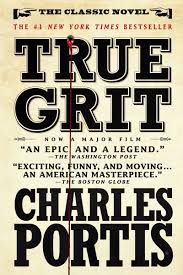
True Grit’s Perfect First Paragraph

Emily Temple at Literary Hub:

Fifty years ago today, the first installment of Charles Portis’s True Grit was published in the Saturday Evening Post. It was reprinted in book form by Simon & Schuster later that year, adapted into a movie (with John Wayne!) the year after, and became a bestseller. It had entered into the murky realm of cult literary classic when it was adapted to film for a second time (with Jeff Bridges!) in 2010, and now I’d rate it as Pretty Famous. If you haven’t read the novel, I will tell you that—even for someone who doesn’t typically go in for Westerns—it is wonderful, due in large part to its narrator, Mattie Ross. There may be action and adventure between these pages, but Mattie Ross’s voice is what makes this novel unforgettable. As Ed Park once put it, Mattie’s “steadfast, unsentimental voice—Portis’s sublime ventriloquism—maintains such purity of purpose that the prose seems engraved rather than merely writ.”
more here.

J. Robert Oppenheimer and Black Holes

Jeremy Bernstein at the LRB.

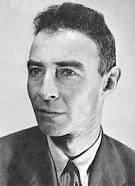
With the death of Stephen Hawking and the discussion it produced on black holes it was a little surprising that there was little or no mention of the man who created the subject, J. Robert Oppenheimer, who died in 1967 at the age of 62. He often said that the J stood for nothing but I have a copy of his birth certificate on which his first name is given as ‘Julius’. In his day Oppenheimer was the most celebrated physicist in the United States. His portrait had been on the cover of Time magazine and he was on first-name terms with much of the Washington establishment, until he lost his security clearance in 1954.

It was said by people who had known him before that the experience changed him profoundly and he appeared diminished. He did not appear diminished to me when when I arrived at the Institute for Advanced Study in Princeton in 1957 and was ushered into his office. The first thing he asked me was what was ‘new and firm’ in physics.

more here.