
by Ashutosh Jogalekar
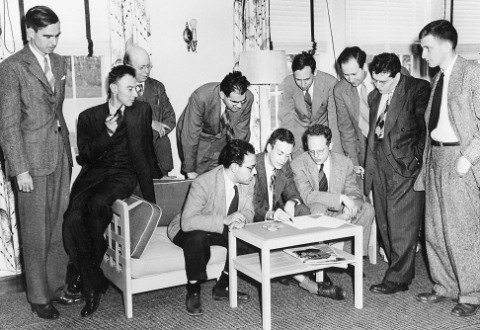 A new theory seldom comes into the world like a fully formed, beautiful infant, ready to be coddled and embraced by its parents, grandparents and relatives. Rather, most new theories make their mark kicking and screaming while their fathers and grandfathers try to disown, ignore or sometimes even hurt them before accepting them as equivalent to their own creations. Ranging from Darwin’s theory of evolution by natural selection to Wegener’s theory of continental drift, new ideas in science have faced scientific, political and religious resistance. There are few better examples of this jagged, haphazard, bruised birth of a new theory as the scientific renaissance that burst forth in a mountain resort during the spring of 1948.
April 2, 1948. Twenty-eight of the country’s top physicists met at the Pocono Manor Hotel near the Delaware Water Gap in Pennsylvania. Kept apart from their first love of fundamental research in physics by the war, they were eager to regroup and rethink the problems which had plagued the heights of their profession before they were called away for war duty to Los Alamos, Cambridge and Chicago.
The listing of participants provides a rare snapshot of one of those hallowed transitions in the history of science, a passing of the torch. Both the old and the new guards were there. The old guard was represented, among others, by Niels Bohr, Paul Dirac and Eugene Wigner – the men who had formulated and then shaped the material world in its quantum mechanical image during the 1920s and 30s. The new guard was represented by Richard Feynman, John Wheeler and Julian Schwinger – the swashbuckling young theorists who wanted to take quantum theory to new heights, even if it meant challenging the old wisdom. J. Robert Oppenheimer who led the conference represented a prophet of the middle ground; a guide joining old hands with new. In retrospect, a clash of worldviews seems almost inevitable. Read more »
 “Griselda was fighting against the patriarchy the only way she knew – through her unquenchable lust for venison.”
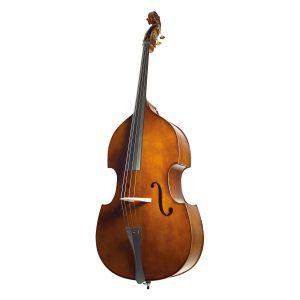 by Christopher Bacas
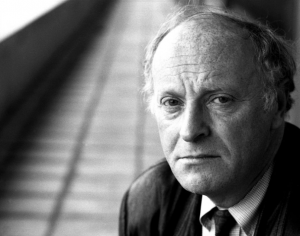 In 1964, when Joseph Brodsky was 24, he was brought to trial for “social parasitism.” In the view of the state, the young poet was a freeloader. His employment history was spotty at best: he was out of work for six months after losing his first factory job, and then for another four months after returning from a geological expedition. (Being a writer didn’t count as a job, and certainly not if you’d hardly published anything.) In response to the charge, Brodsky leveled a straightforward defense: he’d been thinking about stuff, and writing. But there was a new order to build, and if you weren’t actively contributing to society you were screwing it up.
 The older you get the more difficult it is to learn to speak French like a Parisian. But no one knows exactly what the cutoff point is—at what age it becomes harder, for instance, to pick up noun-verb agreements in a new language. In one of the largest linguistics studies ever conducted—a viral internet survey that drew two thirds of a million respondents—researchers from three Boston-based universities showed children are proficient at learning a second language up until the age of 18, roughly 10 years later than earlier estimates. But the study also showed that it is best to start by age 10 if you want to achieve the grammatical fluency of a native speaker.
 I think I know what it feels like to be “red-pilled,” the alt-right’s preferred metaphor for losing one’s faith in received assumptions and turning toward ideas that once seemed dangerous.
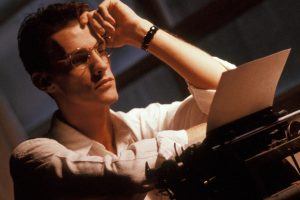 The Writer exists in two worlds: the world he’s creating and the world in which he wears the same shirt a lot. The Writer successfully holds each world responsible for his failings in the other, a Ping-Ponging of accountability that frees him to wake up around elevenish.
 This is a time of much division. Families and communities are splintered by polarizing narratives. Outrage surrounds geopolitical discourse—so much so that anxiety often becomes a sort of white noise, making it increasingly difficult to trigger intense, acute anger. The effect can be desensitizing, like driving 60 miles per hour and losing hold of the reality that a minor error could result in instant death.
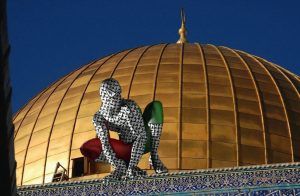 When Muhammad bin Salman, Saudi Arabia’s Crown Prince, visited New York earlier this year, the face of Ahmed Mater, the kingdom’s most celebrated artist, was beamed onto an enormous billboard in Times Square. In recent years, he has been feted at exhibitions in London, New York and Venice. He dominates the Saudi art scene so thoroughly that his peers struggle for attention. “He’s the only artist anyone writes about,” says one Saudi curator. In 2017 Mater was appointed as artistic director of the Prince’s cultural and educational foundation, entrusted to promote art across the kingdom and liberalise the school system. He plays a crucial role in the enormously ambitious plan for economic and social transformation, which aims to wean the country off reliance on oil revenues, strip down the power of clerics and dispel a reputation for medieval obscurantism and misogyny.
 I lost my heart from the moment I first saw it. Cill Rialaig is about as far west as you can go in Europe without falling off the edge. A magical place set in a wild landscape full of ghosts and memories, it’s a pre-famine village that clings to a steep slope, 300ft above the sea in Kerry, on the west coast of Ireland.
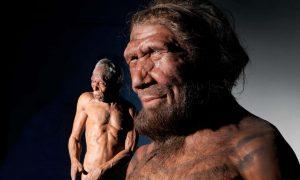 Scientists are preparing to create “miniature brains” that have been genetically engineered to contain Neanderthal DNA, in an unprecedented attempt to understand how humans differ from our closest relatives.