
by Michael Liss
Celebrate with me. 
May is graduation month, and my children are among the graduates. My son marched two weeks ago for his Masters, and, if you are reading this on Memorial Day, it might be at the very same time I watch my daughter receive her Bachelor of Music. Go get ‘em, kids.
Perhaps your joy need not be vicarious—you have your own family skittering across the podium. One of the special pleasures of this time of year is that so many of your friends and relations are also submerged in a sea of caps and gowns, blurry pictures, hugs, and the dreaded Elgar Pomp and Circumstance Earworm. They announce themselves with each vibration from your iPhone, a kaleidoscope of happy, and occasionally goofy, images. Can we all stipulate that the whole outfit looks a bit silly?
Graduation also reminds you that time passes (way too fast). Your kids’ time, and your time. You’ve changed, just as has the five-year old who came bouncing out of her room, a huge grin on her face, ready for the first day of Kindergarten. You are a little older (just a little) and a little more “robust,” and your times in the Road Runners races are “moving” in the wrong direction.
It doesn’t matter. There are your children, not looking little at all, promising you a peculiar type of immortality. They are going to go do things, great things, going to change the world. They are the discoverers, the communicators, the creators. They will wash away any imperfections you’ve left and build things bigger and better. They really are the future.
You’ve celebrated with me. Now, indulge me. Read more »

 30 years ago I moved from the UK to New York City and I gave up my car. I had mixed feelings about doing so at the time – I was only 21 and driving was still a novelty and an expression of independence. When I moved out of New York City to upstate 13 years later, I again became a car owner and regular driver. After my divorce, when I moved back to New York City, I once again gave up my car, this time happily. I would honestly be thrilled if I never had to get behind the wheel of a car again. I don’t enjoy driving, I’m not the most confident driver (I cannot reverse to save my life even after over 30 years of driving) and I generally would prefer to be driven. My transportation needs are now taken care of by a combination of public transport, ride sharing services and a boyfriend with a car who is very good about driving me around. And thanks to online shopping, the retail convenience of a car ownership has almost totally disappeared. As far as I’m concerned, this is a perfect state of affairs.
  The freer the market, the more people suffer.
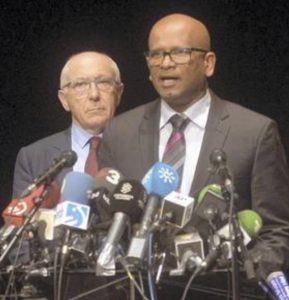 Four years ago, I was in a hideout of the Basque separatist group Eta in southern France, surrounded by explosives, revolvers, grenades and rocket launchers. I was present as the chief of the commission to verify a ceasefire and begin the group’s disarmament. It followed more than three years of difficult discussions with Eta leaders, Basque politicians and Basque civil society. We convinced Eta’s leaders that clinging to weapons was going to help neither themselves nor the Basque people.
 About a year ago I met up for the first time with a woman I knew only online. Articulate and funny, she is a brilliant writer who studied literature in graduate school. So I was surprised that, when I mentioned a recent novel I liked, my new friend responded with head-shaking resignation. “I can’t see how anyone justifies talking about books anymore,” she said. Our nation was so overwhelmed with causes demanding attention and action, she suggested, that it had entered a state of constant emergency, whereby pursuits both personal and political must be pitted against one another to determine which are essential.
 John Preskill
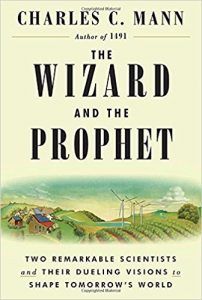 In
In 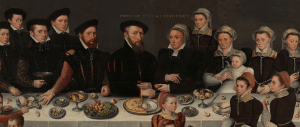 To pick up on almost any story in the news these days—political, financial, sexual, or environmental—is to be informed in the opening monologue that the rule of law is vanished from the face of the American earth. So sayeth
 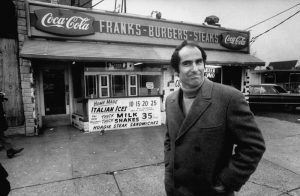 Marco Roth in n+1:
 David Adler in the NYT:
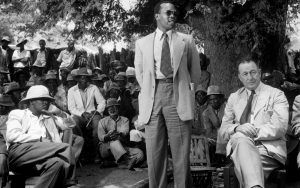 Andreas Wimmer in Aeon:
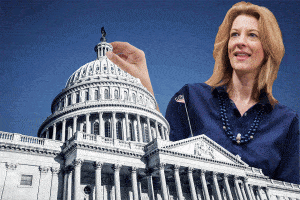 Zach Carter in The Huffington Post:
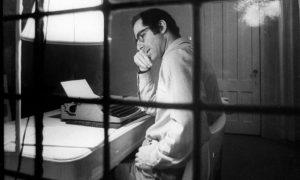 Writers of genuine originality are always divisive. Roth alienated not just the occasional reader but entire communities, reviled, first, by world Jewry, and later by world feminism. This choric hostility was in both cases essentially socio-cultural, and not literary. You can understand the historical uneasiness, but World Jewry got it wrong about Roth, a proud Jew as well as a proud American. And the feminist objection is impetuously sweeping; it detects no distance between Roth and his (often deplorable) narrators. Besides, if you outlaw misogyny as a subject, then you outlaw King Lear, and much else.