
by Robert Fay
I spent my freshman year at a drab suburban college pining for the cosmopolitan life of Boston. I whined and schemed and eventually engineered a transfer to Suffolk University in the city, where I was certain I’d meet fabulous Bohemian people who chain-smoked unfiltered Camels and read Rimbaud and William Blake by candlelight. Suffolk owned three Queen Anne revival buildings in the Back Bay and operated them as pseudo-rooming houses. I was 19 and had seemingly become an Emersonian self-actualized person overnight. I had propelled myself into the middle of a vibrant city, just two blocks from the upper-end of Newbury Street with Tower Records, the Avenue Victor Hugo book shop, the Trident Bookstore Café, Urban Outfitters (still indescribably outlaw in 1991) and Newbury Comics, the city’s punk rock record store.
I had arrived, or so it seemed, until I took stock of this new person and found he was remarkably unchanged, despite the sparkling offerings of the city.
Old problems persisted. The ground rules of interpersonal relations remained mysterious to me. I overshared with acquaintances and got clingy. Good people quickly fled, leaving me withdrawn and depressed, and vulnerable to centripetal forces within.
I desperately wanted to be loved by everyone—the consequences of a cold, unloving home I suppose—and I discovered people, particularly young women, had no patience for needy college sophomores.
Yet that autumn was not without its pleasure. I still recall one glorious week—crimson and vermillion leaves swirling across Commonwealth Avenue—when I curled up in bed with a Signet Classic paperback of Of Human Bondage (1915) by Somerset Maugham. I read the book with teenage abandon. I identified completely with the club-footed Philip Carey and his masochistic attraction to the cruel and vacuous paramour Mildred Rogers, who cared nothing for him, and got her kicks toying with his lap-dog like attention. Read more »
 I have been a practicing Stoic for a few years now, with lulls here and there. Stoicism provides a compelling framework for living in a purposeful and ethical way. The question in my mind is, is it perhaps a little too compelling? In other words, not much fun?




 Roxane Gay’s Hunger is very, very good—the rare memoir that doubles as page-turner. I’m writing this on a flight (Gay’s passages on airplane issues are some of her best: the seatbelt extenders, having to buy two tickets) and the woman across the aisle is reading Difficult Women. “Book Twins!” she just said happily. This never happens. That Gay has reached so many is testament to her skill with empathetic connection. She writes early in Hunger that her “life is split in two, cleaved not so neatly. There is the before and after. Before I gained weight. After I gained weight. Before I was raped. After I was raped.”
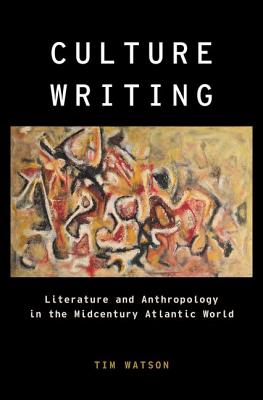 Tim Watson’s Culture Writing surveys the border between anthropology and literature in the years following World War II. Watson provides illuminating readings of British social anthropology in relation to novels by Barbara Pym, and of North American cultural anthropology in relation to novels by Ursula Le Guin and Saul Bellow. There are also chapters on Édouard Glissant and Michel Leiris, working in the French tradition (in which the border between literary and ethnographic writing was configured differently than it was in the Anglo-American tradition). While anthropologists will find much of value in Watson’s individual readings, they may find his broader sketch of their disciplinary history to be seriously askew, as I shall suggest in what follows.
 What happens when a scientific journal publishes information that turns out to be false? A fracas over a recent
  What will a Corbyn government actually do? Brexit aside, British politics has no bigger known unknown. The prospect fills the rich with fear and the left with hope. Both sides assume that Prime Minister
  THERE HAS ALWAYS BEEN a lot of hand-wringing around erotica, especially erotica that centers on female submission. Feminists worry that it perpetuates harmful gender dynamics, while conservatives shudder at the frank depictions of female sexuality. Intellectuals usually dismiss it as smut. In the meantime, millions of people — mostly women — gobble it up. The box office success of Fifty Shades Freed, the third installment in the Hollywood trilogy based on E. L. James’s best-selling BDSM romance series, is only the latest example. How is it, wondered pundits, that this particular movie is a hit at the height of the #MeToo movement? Why are women flocking to see a film about a rich, white man dominating a much younger, much less powerful woman?
 In a squalid, lawless “fugee” camp (the letters R and e have fallen off the entrance gate) that looks and smells like a giant Portaloo, one of the characters in Mohammed Hanif’s ambitious third novel considers running away to the desert. “What’s the worst that can happen,” he thinks. “I’ll starve to death. I’ll roast under the sun. God left this place a long time ago… He had had enough. I have had a bit more than that.” This philosophical passage is spoken by a dog called Mutt, and Hanif’s book is undoubtedly a high-wire act. Red Birds constantly threatens to fall apart, its characters and locations both achingly realistic and elusively metaphysical. But that’s part of its charm: you never know where Hanif’s farce will go next. He starts with an American pilot crashing in the desert near a downgraded refugee camp “full of human scum” he was supposed to bomb. When Major Ellie finally reaches the outskirts of the camp, Mutt introduces him to a teenage refugee named Momo, who is using an old copy of Fortune as his guide to becoming a hotshot businessman.
 Behaviorism, which flourished in the first half of the 20th century, is a school of thought in psychology that rejects the study of conscious experience in favor of objectively measurable events (such as responses to stimuli). Due to behaviorism’s influence, researchers interested in emotion in animals have tended to take one of two approaches. Some have treated emotion as a brain state that connects external stimuli with responses.7 These researchers, for the most part, viewed such brain states as operating without the necessity of conscious awareness (and therefore as separate from feelings), thus avoiding questions about consciousness in animals.8 Others argued, in the tradition of Darwin, that humans inherited emotional states of mind from animals, and that behavioral responses give evidence that these states of mind exist in animal brains.9 The first approach has practical advantages, since it focuses research on objective responses of the body and brain, but suffers from the fact that it ignores what most people would say is the essence of an emotion: the conscious feeling. The second approach puts feelings front and center, but is based on assumptions about mental states in animals that cannot easily be verified scientifically.
 In 2014, two archaeologists,
  It’s no secret that computers are insecure. Stories like the