Robert Butler in MIL:
 IF THERE WERE to be a statue outside the BBC’s new offices in central London that captured the spirit of its modish interior of “workstation clusters”, “back-to-back booths” and “touchdown areas”, and the daily struggle of the 5,500 employees to produce content across multiple platforms for an audience of 240m, it might be that of the anxious, well-fed, middle-aged, middle-class white male, with a lanyard dangling over his hi-vis jacket, who is running late for his meeting and struggling to fold his Brompton bicycle. That would be Ian Fletcher, the over-stretched head of values (played by Hugh Bonneville) and central character in “W1A”, the BBC’s sprightly satire about itself. But Fletcher is not the one who will be on the plinth outside Broadcasting House. In 2016 a statue of George Orwell—paid for by Michael Frayn, Tom Stoppard, David Hare and Rowan Atkinson among others—will be unveiled, a few yards beyond the outdoor ping-pong table.
Orwell spent a mere two years (1941-43) at the BBC, which he joined as a talks assistant in the Indian section of the Eastern Service. No recording survives of him giving a talk, which is perhaps fitting; for what is most striking about his essays and journalism is the tart, compelling timbre of his voice. The critic Cyril Connolly, an exact contemporary, thought that only D.H. Lawrence rivalled Orwell in the degree to which his personality “shines out in everything he said or wrote”. Any reader of Orwell’s non-fiction will pick up on the brisk, buttonholing manner (“two things are immediately obvious”), the ear-catching assertions (“the Great War…could never have happened if tinned food had not been invented”) and the squashing epithets: “miry”, “odious”, “squalid”, “hideous”, “mealy-mouthed”, “beastly”, “boneless”, “fetid” and—a term he could have applied to himself—“frowsy”.
Orwell might well have damned this new honour too. In his studio on the edge of the Blenheim estate in Oxfordshire, Martin Jennings, the sculptor working on the eight-foot likeness, told me that Orwell had made some disobliging remarks about public statues, thinking that they got in the way of perfectly good views. The bronze Orwell will look down on the comings and goings of BBC staff who, returning his gaze, can read some chiselled wisdom from his works on the wall behind him. The Financial Times recently called Orwell “the true patron saint of our profession”, another tribute he would probably resist. “Saints”, he warned, “should always be judged guilty until they are proved innocent.”
More here.

 CVS is a drugstore much like other drugstores, with one important difference: The receipts are very long.
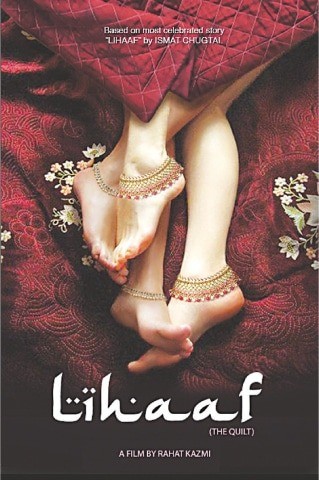 A picture is worth a thousand words. In the case of Indian filmmaker (not to be confused with the Pakistani actor) Rahat Kazmi’s 2018 film Lihaaf: The Quilt, based on Ismat Chughtai’s controversial short story of the same name, the production’s publicity poster says perhaps more than a thousand words.
 Somewhere in my parents’ photo albums there is a picture of me, aged seven or eight, lying in my bed, reading. On the wall, there are postcards from holidays, a poster of space pirate
  Last week Donna Strickland, an associate professor at the University of Waterloo, won the Nobel Prize in Physics. She is the third woman to be awarded the prize in its history—Marie Curie received it in 1903 and Maria Goeppert Mayer in 1963—but as recently as last May, Wikipedia rejected a draft page about Strickland on the grounds that she did not meet “notability guidelines.” The work for which she received the Nobel—generating the “shortest and most intense laser pulses ever created by mankind,” according to the prize committee—is over 30 years old. She published the groundbreaking paper, with co-authors and now co–Nobel winners Gerard Mourou and Arthur Ashkin, in 1985. Between then and now she has won many prizes, but it took a Nobel for her to become Wikipedia-worthy.
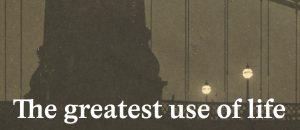 A year ago, on a late afternoon in November, I decided to walk the seven miles from my hotel in Manhattan to Brooklyn’s Community Bookstore. It was a cool day, on the cusp of evening, at a moment when things, even grimy New York-type of things, seem to glow, and I was so busy looking around that I almost didn’t notice the small white sign that someone had placed at the bottom of Brooklyn Bridge. The green lettering was newly painted and read: ‘LIFE IS WORTH LIVING.’
 Last month, Apple unveiled the latest version of its watch, featuring new health-monitoring features such as alerts for unusually low or high heart rates, and a way to sense when the wearer has fallen over and, if so, call the emergency services. In itself, that sounds pretty cool, and might even help save lives. But it’s also another nail in the coffin of social solidarity.
 In the rendering, the structure looks like an enormous golden wave, spilling from the Upper Esplanade of Melbourne’s St Kilda Beach, crossing a busy road and crashing onto the sand. In reality, it would be a canopy of nearly 9,000 flexible photovoltaic panels designed to connect a shopping and entertainment district with the beach while generating renewable energy. Called “Light Up,” the proposal is the winner of a contest sponsored by the Land Art Generator Initiative (LAGI), an
  May 1968 marked the political awakening of my generation. I was a junior at the American College for Girls in Istanbul at the time, feeling the revolutionary winds as a young Jewish woman in a predominantly Muslim society and because of the anti-Americanism precipitated by the Vietnam War. Pictures of napalm attacks on Vietnamese children and adults circulated among us during lunch hours. And when the U.S. Navy’s Sixth Fleet scheduled a visit to Istanbul, and many boyfriends, relatives, and others were clubbed by the police, our sense of political disappointment with and opposition to U.S. policies increased.
 A landmark report from the United Nations’ scientific panel on climate change paints a far more dire picture of the immediate consequences of climate change than previously thought and says that avoiding the damage requires transforming the world economy at a speed and scale that has “no documented historic precedent.”
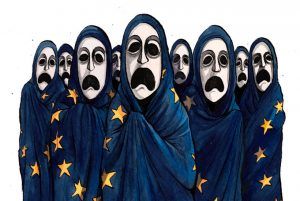 ‘Now Greece can finally turn the page in a crisis that has lasted too long. The worst is over.’ With these triumphant words, Pierre Moscovici, the EU Commissioner for Economic and Financial Affairs, declared an end to the EU’s eight-year €289 billion bailout programme to Greece, the largest rescue in financial history.
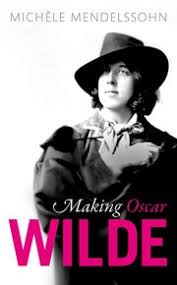 After decades of attention to Oscar Wilde’s 1895 trials and his incarnation of the homosexual subject, a spate of recent publications reconsiders his 1882 American lecture tour, among them David Friedman’s Wilde in America (2014), Roy Morris Jr’s Declaring His Genius: Oscar Wilde in North America (2013), and Sharon Marcus’s “Salomé!! Sarah Bernhardt, Oscar Wilde, and the Drama of Celebrity” (2011). Editors Matthew Hofer and Gary Scharnhorst set the stage for this reappraisal by assembling the first complete and reliable record of Wilde’s interviews in Oscar Wilde in America: The Interviews (2010). While these publications illuminate Wilde’s redefinition of Victorian masculinity, they also highlight his self-promotion, burgeoning celebrity, and vending of aestheticism before he became a gay icon. To this compendium, Michèle Mendelssohn adds an exciting new chapter, or one so old that it deserves fresh examination. She ponders coverage of the Irish aesthete Wilde, which harmonised with racist caricatures of black dandies in American minstrel shows and newspapers. Back in 1882, Lloyd Lewis and Henry Justin Smith’s Oscar Wilde Discovers America offered a whistle stop account of Wilde’s tour replete with historical magazine illustrations, reviews, and gossip, which frequently conflated aestheticism with race matters. A juxtaposition that seemed unremarkable and inoffensive in 1882 receives extensive scholarly elaboration in Mendelssohn’s fascinating book.