
Category: Recommended Reading
The White Rabbit and His Colorful Tricks
Catherine Keyser at Cabinet Magazine:
 In 2015, General Mills reformulated Trix with “natural” colors. Customers complained that the bright hues of their childhood cereal were now dull yellows and purples. Two years later, the company released Classic Trix to stand on store shelves alongside so-called No, No, No Trix, the natural version. This nickname, promising “no tricks,” sounds abstemious; the virtuous customer says no to technicolor temptation. But Trix customers wanted their colors back. As one Tweet put it: “I mean, I get that artificial flavors are bad and all that shiz, but man I miss neon colored Trix.”
What can (or should) the scholar of American culture make of this desire for color? Bright foods are in some sense an invention of a modern food industry that uses dye to intensify visual aesthetics. They also, however, evoke the tropics, brilliant fruits like bananas and oranges that became more broadly available in the United States in the early twentieth century thanks to corporate imperialism and cold storage. Though its colors came from industrial dyes, General Mills hoped to associate Trix with this tropical paradise.
more here.
What Hegel Would Have Said About Monet
T.J. Clark at nonsite:
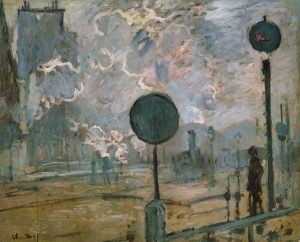 The line of French painting that stretches from Eugène Delacroix’s Liberty Leading the People to Pablo Picasso’s Demoiselles d’Avignon (or from Camille Corot early in the 1820s to Henri Matisse on the eve of the First World War) is a unique episode in recent history. It has established itself as “world-historical,” to borrow a term from G. W. F. Hegel. That is, it continues to speak to aspects—distinctive features—of the modern condition which succeeding ages seem unable to bring into focus, or go on valuing and properly criticizing, without its aid. The tradition’s only rival, if this is the standard, may be German music from Johann Sebastian Bach to Richard Wagner.
The essay that follows is an attempt to speak to the “world-historical” character of French art—to speak to the subject as Hegel himself might have done. Such an account does not displace, or even “go deeper than,” the more familiar ones we have.
more here.
Missy Elliott’s “Supa Dupa Fly”
Doreen St. Félix at The New Yorker:
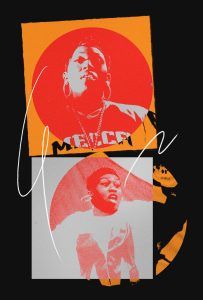 Timbaland and Elliott developed a grammar, collecting extra-musical noises—sighs, women giggling, coughs, babies gurgling—and stacking them so that they became instruments in and of themselves. They weren’t afraid to experiment with sounds that were nearer to the grotesque than the beautiful. One of the most well known is the burping bass on Ginuwine’s sex romp “Pony.” As if a sort of family crest, it recurs on Elliott and Ginuwine’s carnal duet “Friendly Skies.”
Hip-hop artists are musicologists, and sampling is one way histories are folded into the present. The production of “Supa Dupa Fly” is visionary in how it obscures recognizable samples, bending their internal structures to fit the album’s unconventional tempos. “Sock It 2 me,” for instance, samples the menacing beginning of a horn progression from the Delfonics’ “Ready or Not,” but not its resolution, drawing out its flitting darkness to anchor the entire song.
more here.
Cancer drug’s stumbles prompt calls to rethink how immune therapies are tested
Heidi Ledford in Nature:
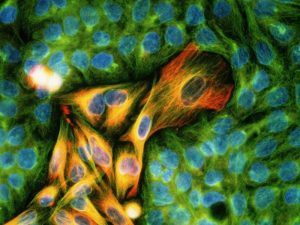 The stunning failure of a once-promising cancer drug has got some researchers arguing that the field has moved too fast in its embrace of therapies that unleash the immune system. The drug, epacadostat, blocks a protein called IDO that hobbles immune cells if left unchecked. Early trials suggested that the drug could be a powerful weapon against some advanced cancers when paired with existing therapies that bolster the body’s immune response to tumours. But a large, controlled study of epacadostat was halted in April after the drug failed to show benefits. Now, a researcher who helped to conduct some of the first trials of the drug says that it was pushed into large clinical studies too soon — and that the same could be true of other cancer immunotherapies in development. “People ask me right now, ‘What are you excited about?’” says Jason Luke, an oncologist at the University of Chicago in Illinois who aired his concerns last week at a meeting of the Society for Immunotherapy of Cancer in Washington DC. “And I say, ‘Unfortunately, little to nothing,’ because almost none of this is done properly.”
Early data from small trials of epacadostat, which is made by Incyte of Wilmington, Delaware, excited researchers. Luke recalls one trial participant with advanced cancer who was so weak that it was difficult for him to travel to the clinic. From the first dose, the man showed improvement. But Luke now attributes those gains to the treatment given alongside epacadostat in the trial: an approved immunotherapy called pembrolizumab, made by Merck of Kenilworth, New Jersey.
After Incyte and Merck reported in April that a larger trial of epacadostat and pembrolizumab had failed, other companies announced that they were halting their own programmes to develop cancer drugs that block the IDO protein. “The field has completely evaporated,” says Luke, who notes that more than 1,000 participants were once enrolled across various studies of IDO-inhibiting drugs. This failure should be a wake-up call for other cancer researchers, says Felipe Campesato, a cancer immunologist at Memorial Sloan Kettering Cancer Center in New York City. “We can take that challenge as an opportunity for improvement, and maybe a turning point in the field.”
More here.
Mirror Humans
Kelly and Zach Weinersmith in Delancyplace:
 Let’s talk about mirror humans: “Oh, you haven’t heard of mirror humans? Let’s back up a moment.
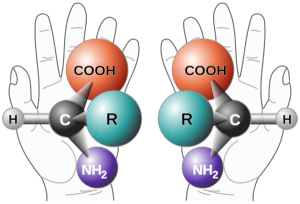
“Life is made of lots of little molecules, and these molecules make up important bigger molecules, like DNA, RNA, and proteins. Some molecules exhibit what is called chirality, from the Greek word for ‘hand.’ If a molecule has chirality that basically means there is a mirror version of it. “To wrap your head around ‘mirror versions’ of things, think about your hands. They look exactly the same, but no matter how you rotate your left hand, it won’t be exactly the same as the right. If you have your palms up, your left thumb will point left and your right thumb will point right. Each hand has all the same parts, but they are flipped, as if through a mirror. “When you have two molecules that are mirror images of one another, one of these molecules is designated as the left-handed version and the other as the right-handed version. Intriguingly, life seems to favor a certain handedness for particular tasks. For example, almost all amino acids (which you may remember from previous chapters are the building blocks of proteins) are in the left-handed form. Why nature abhors right-handed amino acids is a topic of debate, but even the amino acids we find in space tend to be left-handed.
“But screw nature. Whatever her reasoning is, there is no known physical reason we couldn’t create an organism out of completely opposite-handed molecules in the lab — a ‘mirror organism,’ if you like. Some scientists, including Dr. [George] Church [of Harvard], are working to create (simple) mirror organisms, with the hope creating larger and larger such creatures. Why exactly would we want this? Well, for one, it’s awesome. You create something that looks like a nice little kitty, but is totally incompatible with the rest of the life on the planet, perhaps even the universe. For example, mirror-opposite organisms would need to eat mirror food in order to be able to digest it. They would also be undigestible to all predators. Best of all, a mirror-opposite organism would be completely immune to all diseases, because all living parasites and pathogens evolved to infect organisms with normal chirality.
“And if it worked, hey, we could scale up to making mirror-opposite humans.
More here.
Wednesday Poem
February 11
The moon is out. The ice is gone. Patches of white
lounge on the wet meadow. Moonlit darkness at 6 a.m.
Again from the porch these blue mornings I hear an eagle’s cries
like God is out across the bay rubbing two mineral sheets together
slowly, with great pressure.
A single creature’s voice—or just the loudest one.
Others speak with eyes: they watch—
the frogs and beetles, sleepy bats, ones I can’t see.
Their watching is their own stamp on the world.
I cry at odd times—driving, or someone touches my shoulder
or has a nice voice on the phone.
I steel myself for the day.
.
by Nellie Bridge
from Echotheo Review
Tuesday, November 20, 2018
The One Direction Fan-Fiction Novel That Became a Literary Sensation
Bianca Bosker in The Atlantic:
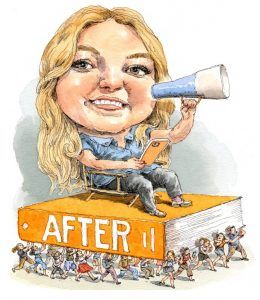 One afternoon in the summer of 2013, Anna Todd was in the checkout line at Target when, as most of us do, she pulled out her phone. Then she propped her elbows on her shopping cart and began to type.
Todd was 24 years old and living near Fort Hood, Texas, with her husband, a soldier she had married a month after graduating high school, and their newborn, who suffered daily seizures. While caring for her son and taking online community-college courses, she helped support the family by babysitting for a neighbor and working the beauty counter at Ulta. For fun, she read. Wuthering Heights, Twilight, The Things They Carried. Since the previous fall, she’d also indulged an addiction to One Direction fan fiction—stories featuring the boy band in imagined scenarios. After blazing through all that she could find online and then tiring of waiting for updates from erratic authors (many of them teens juggling writing and school), Todd decided to attempt her own series. She called it After and wrote on her smartphone whenever she could steal a moment—while shopping for groceries, waiting to get her teeth cleaned, riding in friends’ cars. She used a pseudonym (imaginator1D) and hid her alter ego from family and friends. “My husband just thought I had a phone addiction or something,” she has said.
More here.
New Proof Shows Infinite Curves Come in Two Types
Kevin Hartnett in Quanta:
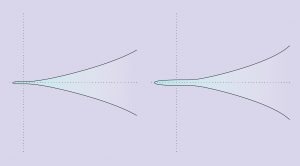 Elliptic curves seem to admit infinite variety, but they really only come in two flavors. That is the upshot of a new proof from a graduate student at Harvard University.
Elliptic curves may sound exotic, but they’re unspectacular geometric objects, as ordinary as lines, parabolas or ellipses. In a paper first posted online last year, Alexander Smith proved a four-decade-old conjecture that concerns a fundamental trait of elliptic curves called “rank.” Smith proved that, within a specific family of curves, and with one qualification, half of all curves have rank 0 and half have rank 1.
The result establishes baseline characteristics of objects that have intrigued mathematicians for centuries, and that have increased in importance in recent decades.
“We’ve been thinking about this for over 1,000 years, and now we have some probabilistic sense about [elliptic curves]. That’s super important,” said Shou-Wu Zhang, a mathematician at Princeton University who advised Smith at the outset of the work, when Smith was an undergraduate at Princeton.
More here.
Alain de Botton: Why You Will Marry the Wrong Person
Electronic monitoring can reduce the incarcerated population and keep the public safe
Barry Latzer in the National Review:
 New York’s governor, Andrew Cuomo, just announced a bail-reform program. Details were not yet available at press time, but it’s clear that Cuomo intends to release thousands of arrested persons, even suspected felons, without bail.
Meanwhile, across the Hudson, New Jersey has already launched its bail-reform plan. It replaces money bail with an algorithm that scores recently arrested defendants on dangerousness plus the likelihood of their appearance at court hearings. In the first three months of operation, three-quarters of the state’s defendants were released. After six months, New Jersey’s non-sentenced jail population declined 20 percent and was 35 percent lower than it had been two years earlier.
That’s good for the defendants, who don’t have to spend time in jail in the event that they’re unable to make bail. But is it safe for the public? As with virtually every other criminal-justice reform, these experiments increase public risk. Any reform that keeps parolees, probationers, or pretrial defendants out of jail or prison, either by making their sentences shorter or by replacing incarceration with release to the community, is risky.
More here.
Tuesday Poem
The Cutting Reason
I go back to the island,
see the house, no longer home,
breathe the sea, to breathe the sea.
Walking the streets, Belfast on Orange
Eve. The two of you, sipping tea. Bewley’s.
Pane of glass, the glass between –
and when my skinned heart finally stops
beating and beating, a lambeg drum,
I know, having walked away,
the cutting reason why I came.
by Catherine Graham
from Pupa
Insomniac Press, Toronto 2003
Why Space Colonization Will Disappoint You
Micah Meadowcroft at The New Atlantis:
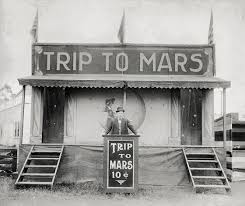 Hannah Arendt reflected on the significance of humanity’s desire for the stars in her 1963 essay “The Conquest of Space and the Stature of Man.” Man, she said, has not found a new place for himself after his self-displacement in modernity’s rejection of old orders. We stand alienated from ourselves and nature. And as we see deeper into the firmament, and account for more of nature, we only better know the scale of our disorientation, the smallness of our vision. Science cannot bound the cosmos into a comfortable domain, for “this observed universe, the infinitely small no less than the infinitely large, escapes not only the coarseness of human sense perception but even the enormously ingenious instruments that have been built for its refinement.” But neither does modern science really wish to find a place for man in all this space, for the questions that would require would produce answers for man that act “as definitions and hence as limitations of his efforts.”
This alienation calls for some kind of transcendence — a need to find ourselves and discover where we are.
more here.
Widows Rewrites The Heist Movie
Philippa Snow at The Baffler:
 It occurred to me, when thinking about Ronnie’s bathroom scene, that this is not McQueen’s first time depicting the repressed, deep-seated trauma of a wealthy but unhappy individual on film: that Shame, whose central character appeared to have developed sex-addiction in the wake of some unspecified, formative trauma—maybe psychic, maybe physical—addressed a similar, if not entirely symmetrical, ache. The sex addict, Brandon, as played in the key of Patrick Bateman by the Irish actor Michael Fassbender, also contained his introspection and his self-injurious anger within the confines of the bathroom. Often, his releases there were masturbatory. So, on some level, was the movie; lacking detailed and elucidating background information, Brandon’s tragedy became the tragedy of a successful, very handsome white man tortured by the need to regularly have sex with one or more women who resemble fashion models. (Brandon’s kookily sad sister, Sissy, is so white that she is played by Carey Mulligan, and is called Sissy. His apartment, in what might be seen as a reflection of his inner turmoil, is white and expensive, but lit so that above all else, it looks blue.)
more here.
Debussy: A Painter in Sound
Matthew Aucoin at the NYRB:
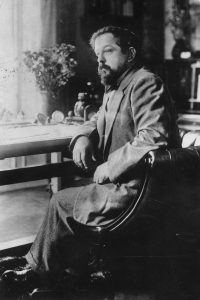
For modern listeners, Debussy practically defines French music, by which I mean that the essential qualities of his music—not only his sensuous delicacy but also his aversion to the harmonic behavior characteristic of late-nineteenth-century German music, a dense chromatic motion that tends to constantly, restlessly build to orgiastic climaxes, as in Wagner and Strauss—have come to be seen as also essentially “French” qualities. Walsh makes clear, however, that Debussy, far from simply amplifying or exemplifying the dominant tendencies of his musical milieu, consciously and stubbornly swam against the current, especially when it came to the heavy influence of German music on French composers. Wagner was the unavoidable presence in late-nineteenth-century Paris, but Debussy traced the blame for that influence further back, to Gluck. Debussy was quietly radical in his preference for Rameau’s “delicate and charming tenderness” over what he perceived as the Germanic “affectation of profundity or the need to double underline everything.”
more here.
The Freedom to Be Free at Work
Nicholas Smith in IAI:
 If we were to stop and ask ourselves how our lives might be improved, one likely answer that might occur to us is that we should spend less time at work. At least that is what the statistics suggest.
…In her book The Human Condition (1958), Arendt argued that most of what we now do when we say we ‘work’ has the essential character of what she calls ‘labour’. Labour resembles the artisanal work of previous times in that it is a means to an end, but unlike work in its true sense, which leaves some enduring useful object behind, it produces something to be consumed, and is done for the sake of empowering one’s consumption. Labour is our ‘metabolism with nature’, a phrase Arendt borrows from Marx, which ties us to the eternally recurring cycle of life. Labouring activity, no less than the behaviour of any other living organism, inherently lends itself to scientific measurement and enhancement. For this reason, well-meaning efforts to humanise labour were, in her view, futile and ill-conceived. But labour, however highly valued it is in the modern world, represents only one aspect of the human condition. Human beings are also capable of what Arendt calls ‘speech and action’, in which they deliberate over matters of common concern and act together. It is only through action in this true sense, Arendt believed, that human beings show themselves to be more than members of a species, or cogs in a machine, and appear to themselves in their uniqueness and plurality. When we act, in this sense, we break out of the cycle of endless repetition and bring about something genuinely new, something unpredictable. In the making and retelling of history, Arendt thought, we attain a kind of immortality, or at least some redemption of our earth-bound, life-bound condition, our condition qua labouring animal.
More here.
How Can We Unleash the Immune System?
Denise Grady in The New York Times:
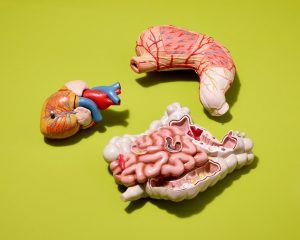 Cancer has an insidious talent for evading the natural defenses that should destroy it. What if we could find ways to help the immune system fight back? It has begun to happen. The growing field of immunotherapy is profoundly changing cancer treatment and has rescued many people with advanced malignancies that not long ago would have been a death sentence. “Patients with advanced cancer are increasingly living for years not months,” a recent editorial in the journal JAMA said. It added that longer survival means that health workers in just about every specialty — not just oncologists — will be taking care of people who are living with cancer or recovered from it. Immunotherapy accounts for much of the progress. Still, it does not help everyone, side effects can be ferocious, and so can the expense. Overall, immunotherapy works in fewer than half of patients — but it can bring remissions that last years. Is this as good as it gets? Probably not. The field is still young, hundreds of clinical trials are underway and basic researchers are trying to find ways to fine-tune the treatments they have already developed, as well as find new ones.
So far, the two main forms of immunotherapy approved by the Food and Drug Administration for cancer are drugs called checkpoint inhibitors and CAR-T cells. Both involve a workhorse of the immune system — T-cells, a type of white blood cell whose job is to kill cells that have turned malignant or become infected with viruses.
More here.
Monday, November 19, 2018
Performing Jewish Memory in Germany
by Abigail Akavia
November 9th was the 80th anniversary of Kristallnacht. In Leipzig, where I live, as all over Germany, a series of events took place to commemorate the victims of that night of Nazi-led pogroms.
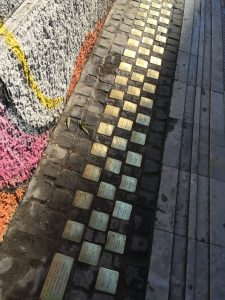
The western part of Leipzig is a former industrial wasteland. Now rapidly gentrifying, it is still home to those who wear their counter-culture cred on their sleeve, sometimes literally—punks, students, artists, and dreadlocked parents walking the streets barefoot with toddlers strapped on their backs. Here, on the trendy Karl-Heine boulevard, on the night of November 9th, “Stolpersteine” became little ground-level shrines. Stolpersteine are small square brass plates inscribed with the names and life-dates of victims of Nazi extermination or prosecution, installed on the sidewalk where these victims last lived or worked. To raise public awareness of Kristallnacht, flowers and candles were placed on the Stolpersteine, drawing attention to their presence as memorials, their normally subdued existence. A private initiative led by German artist Gunter Demnig since 1992, Stolpersteine can be found in towns throughout Germany and Europe.
Some in the Jewish community have objected to this form of commemoration, viewing as disrespectful the notion that remembrance plaques are placed where they can be treaded on—indeed, the reality and explicit purpose of Stolpersteine. The long grid in Thessaloniki shown above seems the exception rather than the rule, for in most cases, Stolpersteine are not aesthetically prominent. On regular days here in Leipzig, Stolpersteine do not command much attention. This kind of incessant yet unobtrusive, subliminal reminder of the horrors of the Nazi regime seems like an apt counterpoint to the way many Israelis (such as myself) view their relationship with Germany. In the last two decades or so, more and more Israeli Jews have moved to Germany, to work or permanently live here, including those whose ancestors were direct victims of the Nazis. Our relationship with the past seems reflected in the kind of commemoration the Stolpersteine enact: the Holocaust is a fact. It happened right here. Sometimes, we pause, the mere thought of it knocking the wind out of us. But most of the time, we move on. Read more »
Beware of literature!
by Emrys Westacott
 “Beware of literature!” This warning occurs in Jean-Paul Sartre’s 1938 novel Nausea as an entry in the diary of the narrator, Antoine Roquentin. In context, it concerns the way that literary narratives falsify our experience of events by investing them with an organization and structure that our experiences in themselves, as we live them, do not have. When Bilbo Baggins finds the ring in The Hobbit, Tolkein tells us that although Bilbo didn’t realize it at the time, this would turn out to be a turning point in his life. When married couples recall their first meeting, their account inevitably packages the event as a “beginning,” even though they may have had no inkling of this at the time.
There is, of course, some self-conscious irony in the fact that the warning to “beware of literature” appears in the middle of a literary work. Shades of the liar paradox, in fact. If we should be suspicious of literature, then we must be suspicious of the work that tells us to beware of literature: in which case we should perhaps trust literature, including works that advise us not to…..and so on.
The warning goes against an idea often touted that literature is a vehicle for expressing and revealing Truth. Perhaps not truth of the scientific variety, but some sort of insight, wisdom, or moral lesson concerning human nature, human relationships, and the human condition, that is best communicated through art rather than by means of discursive argument, and which resists reduction to a simple formula. This idea is naturally appealing to the literati, especially at a time when the onus seems to be on anyone not working in STEM fields to justify their existence, or at least their salary.
Recently, though, I have been struck by a particular problem with such claims, at least insofar as they pertain to fiction. Read more »
Monday Poem
Coincidence
last night as I went in to bed
I threw the switch to kill the light
and as if I’d thrown
the breaker of the universe,
every light was doused,
every light below … behind … above … beyond
was dead except the light inside my head
the window did not show
the steadfast street-lamp’s
amber glow
the tiny stars strewn below
of town, always lit at night
as I looked out and down,
were gone
the range clock light
did not blink
the red dot toaster
LED was fully bled
so there we were
myself and me
power out
in deepest night
instead
unmoored
still seeing still being
by the light inside
my head
.
Jim Culleny
11/11/18