
Enjoying the content on 3QD? Help keep us going by donating now.
Category: Recommended Reading
Friday, March 14, 2025
Robotaxis Are Here
Tomas Pueyo in Uncharted Territories:

In the beginning, you’ll take self-driving cars because they’re new and fun: “Look, it’s moving the wheel alone!” It will help that you’ll look at the stats and know that they have fewer accidents than human drivers.
Then, you’ll notice that self-driving cars are more convenient. You don’t need to talk with a human, manage their expectations, fear their driving skills, suffer their eating or smoking… You will start changing your habits, and instead of ordering an Uber or hailing a cab, you’ll default to Waymo or Tesla’s robotaxi.
Then, you’ll notice that they tend to be cheaper! At first, they will be just a bit cheaper. Then, prices will drop more every year. You’ll forget about human cabs.
More here.
Enjoying the content on 3QD? Help keep us going by donating now.
Bill Gates: What it will really take to feed the world
Bill Gates at Gates Notes:
 In the introduction to his latest book, How to Feed the World, Vaclav Smil writes that “numbers are the antidote to wishful thinking.” That one line captures why I’ve been such a devoted reader of this curmudgeonly Canada-based Czech academic for so many years. Across his decades of research and writing, Vaclav has tackled some of the biggest questions in energy, agriculture, and public health—not by making grand predictions, but by breaking down complex problems into measurable data.
Now, in How to Feed the World, Vaclav applies that same approach to one of the most pressing issues of our time: ensuring that everyone has enough nutritious food to eat. Many discussions about feeding the world focus on increasing agricultural productivity through improved seeds, healthier soils, better farming practices, and more productive livestock (all priorities for the Gates Foundation). Vaclav, however, insists we already produce more than enough food to feed the world. The real challenge, he says, is what happens after the food is grown.
More here.
Enjoying the content on 3QD? Help keep us going by donating now.
The Life and Work Of Elaine May
Lizzy Harding at Bookforum:
 ELAINE MAY DIDN’T SET OUT to become a director. What she really wanted to do was write. Her first film, A New Leaf, came about partly because it was 1968 and Paramount knew it would look good to hire a woman director. And partly because May wouldn’t sell her script without being guaranteed director approval—the only way to ensure her work didn’t get turned into something else entirely. The studio said no but told her she could direct the film herself; they also wouldn’t let her cast the female lead, but the part was hers if she wanted it. As May tells it, she had been offered $200,000 for the script alone, but as writer-director-star, she received just a quarter of the original fee. “You can’t expect to get that much the first time you direct,” her manager explained. Charles Bluhdorn, the industrialist who owned Paramount, told May that he was going to make her the next Ida Lupino. On the first day of shooting, when the crew asked May where she wanted the camera, she couldn’t find it. “I began sort of on one foot,” May remembered, “and just continued that way.” It was a fitting start for a woman who had become famous for improvising.
more here.
Enjoying the content on 3QD? Help keep us going by donating now.
Stephen Asma: Can You Be Friends with a Robot?
Enjoying the content on 3QD? Help keep us going by donating now.
Chatting With Elaine May
Enjoying the content on 3QD? Help keep us going by donating now.
Taking Tech to Task
Martha Bayles in The Hedgehog Review:
 In March 2019, heavy rains in California led to a brilliant carpet of orange poppies in Walker Canyon, part of a 500,000-acre habitat reserve in the Temescal Mountains southeast of Los Angeles. Run by a state conservation agency, the reserve was mainly a local attraction until a twenty-four-year-old Instagram and YouTube influencer with tens of thousands of followers posted two selfies of herself amid the poppies. The result, as technology critic Nicholas Carr explains in his book Superbloom (named after the viral hashtag #superbloom), brought a Woodstock-size influx of selfie-seekers who “clogged roads and highways,” “trampled the delicate flowers,” and in general “offered a portrait in miniature of our frenzied, farcical, information-saturated time.”
Today, Walker Canyon is closed until further notice. But the frenzied farce continues, as Donald Trump’s electoral victory sets the Big Tech companies against one another in a new, more politically visible way. If you’re wondering how we arrived at this pass, Carr is your man. An eloquent, levelheaded writer, he has been sticking pins into the hot-air optimism of Big Tech since 2001, when, as editor of the Harvard Business Review, he published several politely skeptical articles on the uses of what was then the new “information technology.” Less politely, and with sharper pins, Superbloom appraises the past and present of that technology and issues a warning about its future.
More here.
Enjoying the content on 3QD? Help keep us going by donating now.
Ghosts Among The Philosophers
Matyáš Moravec at Aeon Magazine:
 ‘I assume that the reader is familiar with the idea of extra-sensory perception … telepathy, clairvoyance, precognition and psycho-kinesis. These disturbing phenomena seem to deny all our usual scientific ideas … Unfortunately the statistical evidence, at least for telepathy, is overwhelming … Once one has accepted them it does not seem a very big step to believe in ghosts and bogies.’
These words weren’t published in the pages of an obscure occult journal or declared at a secret parapsychology conference. They weren’t written by a Victorian spiritualist or a séance attendee. In fact, their author is Alan Turing, the father of computer science, and they appear in his seminal paper ‘Computing Machinery and Intelligence’ (1950), which describes the ‘imitation game’ (more commonly known as the ‘Turing test’) designed to establish whether a machine’s intelligence could be distinguished from that of a human.
The paper starts by setting up the now-famous thought experiment: a human, a machine, and an observer who asks questions.
more here.
Enjoying the content on 3QD? Help keep us going by donating now.
Ogres are cool
Colin Burrow in The London Review of Books:
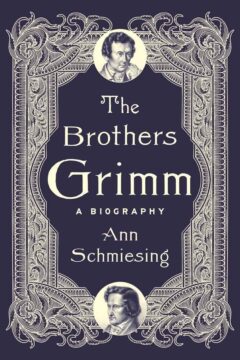 The hyper-courtly Sir Thomas Wyatt wrote a verse satire in the mid-1530s that begins: ‘My mother’s maids, when they did sew and spin,/They sang sometime a song of the field mouse.’ Wyatt goes on to relate the song, which is pretty much the story of the town mouse and the country mouse as told by Horace in his Satires with some added shivers of late Henrician courtly horror. Did Wyatt’s mother’s maids read Horace? Were they reciting a folk tale they had received by oral transmission? Or (more probably) were the maids a fiction designed to mask a satire on what it was like to be a courtier in the later reign of Henry VIII – an experience which, for want of a better term, could be described as ‘grim’?
More here.
Enjoying the content on 3QD? Help keep us going by donating now.
Peto’s Paradox: How Gigantic Species Evolved to Beat Cancer
Hannah Thomasy in The Scientist:
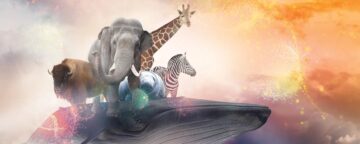 Consider for a moment the blue whale. Weighing up to 200 tons, this majestic creature is believed to be the largest animal that has ever existed on planet Earth. It also has a remarkably long lifespan of 100 years or even more.
In theory, the blue whale should be highly susceptible to cancer: It has quadrillions of cells that could acquire the requisite oncogenic mutations, and its extended lifespan provides plenty of time for this to occur. In fact, when researchers applied an equation for estimating human colorectal cancer risk to a whale-sized organism, it predicted that virtually all blue whales would develop this form of cancer by age 80.1 Conversely, the same equation scaled down for mice predicted that they would essentially never get colorectal cancer, even if they lived for 90 years. This is, of course, not the case. Despite their brief lifespans, mice have a one to four percent chance of developing this type of cancer, similar to the human lifetime risk of about four percent.2,3 And while the exact incidence of colorectal cancer in blue whales is not known, it is certainly not 100 percent.
More here.
Enjoying the content on 3QD? Help keep us going by donating now.
Friday Poem
A Rainy Morning
A young woman in a wheelchair
wearing a black nylon poncho spattered with rain
is pushing herself through the morning.
You have seen how pianists
sometimes bend forward to strike the keys,
then lift their hands, draw back to rest,
then lean again to strike just as the chord fades.
Such is the way this woman
strikes at the wheels, then lifts her long white fingers,
letting them float, then bends again to strike
just as the chair slows, as if into a silence.
So expertly she plays the chords
of this difficult music she has mastered,
her wet face beautiful in its concentration,
while the wind turns the pages of rain.
by Ted Kooser
Enjoying the content on 3QD? Help keep us going by donating now.
Thursday, March 13, 2025
It began with a rabbit: Unraveling the mystery of memory
Tim Vernimmen in Knowable Magazine:
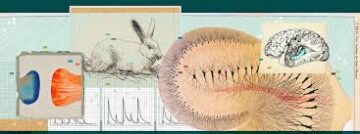 On a rainy day in July 2024, Tim Bliss and Terje Lømo are in the best of moods, chuckling and joking over brunch, occasionally pounding the table to make a point. They’re at Lømo’s house near Oslo, Norway, where they’ve met to write about the late neuroscientist Per Andersen, in whose lab they conducted groundbreaking experiments more than 50 years ago.
The duo only ever wrote one research paper together, in 1973, but that work is now considered a turning point in the study of learning and memory. Published in the Journal of Physiology, it was the first demonstration that when a neuron — a cell that receives and sends signals throughout the nervous system — signals to another neuron frequently enough, the second neuron will later respond more strongly to new signals, not for just seconds or minutes, but for hours.
More here.
Enjoying the content on 3QD? Help keep us going by donating now.
Mark Blyth talks with two inequality experts about the puzzling politics of inequality
It goes like this: inequality has profound effects on our economy, society, and lives. It has also been growing, and today is at historically high levels. Given all that, why does inequality never seem to be a topic around which we organize our politics?
Too complicated? Too boring? Too unsolvable?
The answers that Mark got made him rethink the question itself, and hopefully will make you see inequality in a new light, too.
Guests on this episode:
- Charlotte Cavaille is an assistant professor of public policy at the University of Michigan’s Gerald R. Ford School of Public Policy, and author of “Fair Enough? Support for Redistribution in the Age of Inequality”.
- Branko Milanovic is a senior scholar at the Stone Center on Socio-Economic Inequality at the CUNY Graduate Center.
Enjoying the content on 3QD? Help keep us going by donating now.
It’s Not Nature, It’s Not Nurture, It’s a Möbius Strip
Dalton Conley in the New York Times:
 Since Sir Francis Galton coined the phrase “nature versus nurture” 150 years ago, the debate about what makes us who we are has dominated the human sciences.
Do genes determine our destiny, as the hereditarians would say? Or do we enter the world as blank slates, formed only by what we encounter in our homes and beyond? What started as an intellectual debate quickly expanded to whatever anyone wanted it to mean, invoked in arguments about everything from free will to race to inequality to whether public policy can, or should, level the playing field.
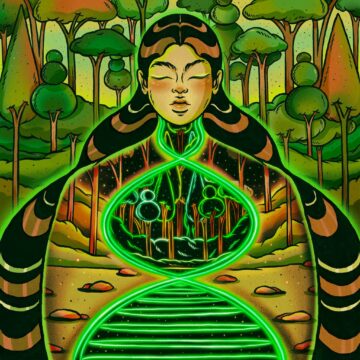
Today, however, a new realm of science is poised to upend the debate — not by declaring victory for one side or the other, nor even by calling a tie, but rather by revealing they were never in opposition in the first place. Through this new vantage, nature and nurture are not even entirely distinguishable, because genes and environment don’t operate in isolation; they influence each other and to a very real degree even create each other.
The new field is called sociogenomics, a fusion of behavioral science and genetics that I have been closely involved with for over a decade. Though the field is still in its infancy, its philosophical implications are staggering.
More here.
Enjoying the content on 3QD? Help keep us going by donating now.
Sean Carroll on Complexity in the Universe
Enjoying the content on 3QD? Help keep us going by donating now.
If critique could kill, neoliberalism would long be dead
Blake Smith in The Hedgehog Review:
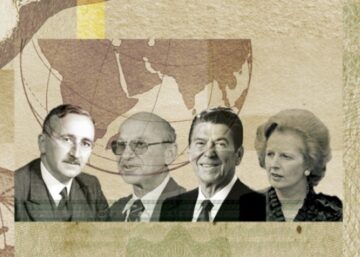 If critique could kill, neoliberalism would long be dead. So far, however, neither decades of intellectual opposition from the left and right nor the past decade of populist politics has done more than erode some measure of neoliberalism’s ideological preeminence. Talk from the right of “pro-family” policies, such as tax breaks and subsidies for having children, or moves by the Biden administration to secure domestic manufacturing of critical high-technology goods may hearten neoliberalism’s foes (even as they further blur the ideological map of American politics). Neither, however, offers anything like a consensus to replace the vision that, since the crises of the 1970s, has, with whatever degree of discontent, guided our collective thought and action.
Half a century ago, as the OPEC oil embargo and an unprecedented combination of inflation and unemployment disrupted the shared understanding of economics and politics that had oriented Western elites after World War II, neoliberalism became identified with a range of tactics for restoring economic growth. Understanding what neoliberalism is, and what its relation to liberalism might be, has been a central task for intellectuals ever since.
More here.
Enjoying the content on 3QD? Help keep us going by donating now.
Man survives with titanium heart for 100 days – a world first
Smriti Mallapaty in Nature:
 An Australian man in his forties has become the first person in the world to leave hospital with an artificial heart made of titanium. The device is used as a stopgap for people with heart failure who are waiting for a donor heart, and previous recipients of this type of artificial heart had remained in US hospitals while it was in place.
The man lived with the device for more than three months until he underwent surgery to receive a donated human heart. The man is recovering well, according to a statement from St Vincent’s Hospital in Sydney, Australia, where the operations were conducted. The Australian is the sixth person globally to receive the device, known as BiVACOR, but the first to live with it for more than a month. “This is certainly an important development in the field,” says Julian Smith, a cardiac surgeon at the Victorian Heart Institute at Monash University in Melbourne, Australia.
More here.
Enjoying the content on 3QD? Help keep us going by donating now.
Thursday Poem
We
are out-of-focus and we are
flesh. Some call this panting
love. So much is about
breath. Small at night. Large
in our wakefulness, largest
when the body mates, when the moment
rides on its own rising. Only then
are we safe. —from
ourselves. —Our fears, our hates. Blood.
A little dust and a little water.
Sun and moist seed
shivers and climbs. Call this blind,
call this a movement toward light.
by Mark Irwin
from Quick, Now, Always
BOA Editions, Ltd. Brockport, NY, 1996
Enjoying the content on 3QD? Help keep us going by donating now.
Wednesday, March 12, 2025
Twenty Steven Pinker Quotes
Steve Stewart-Williams at The Nature-Nurture-Nietzsche Newsletter:
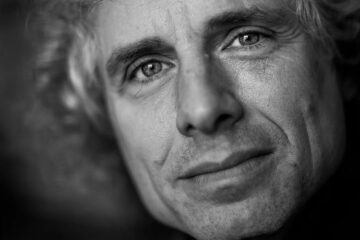 [SSW: The next quote is Pinker’s rebuttal of a common response to Judith Rich Harris’s claim that parents have little impact on their kids.] “‘So you’re saying it doesn’t matter how I treat my children?’ What a question! Yes, of course it matters… First, parents wield enormous power over their children, and their actions can make a big difference to their happiness… It is not OK for parents to beat, humiliate, deprive, or neglect their children, because those are awful things for a big strong person to do to a small helpless one… Second, a parent and a child have a human relationship. No one ever asks, ‘So you’re saying it doesn’t matter how I treat my husband or wife?’ even though no one but a newlywed believes that one can change the personality of one’s spouse. Husbands and wives are nice to each other (or should be) not to pound the other’s personality into a desired shape but to build a deep and satisfying relationship.”
More here.
Enjoying the content on 3QD? Help keep us going by donating now.
‘Next-Level’ Chaos Traces the True Limit of Predictability
Charlie Wood in Quanta:
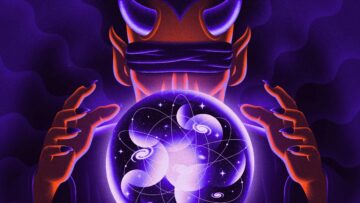 The French scholar Pierre-Simon Laplace crisply articulated his expectation that the universe was fully knowable in 1814, asserting that a sufficiently clever “demon” could predict the entire future given a complete knowledge of the present. His thought experiment marked the height of optimism about what physicists might forecast. Since then, reality has repeatedly humbled their ambitions to understand it.
One blow came in the early 1900s with the discovery of quantum mechanics. Whenever quantum particles are not being measured, they inhabit a fundamentally fuzzy realm of possibilities. They don’t have a precise position for a demon to know.
Another came later that century, when physicists realized how much “chaotic” systems amplified any uncertainties. A demon might be able to predict the weather in 50 years, but only with an infinite knowledge of the present all the way down to every beat of every butterfly’s wing.
In recent years, a third limitation has been percolating through physics — in some ways the most dramatic yet.
More here.
Enjoying the content on 3QD? Help keep us going by donating now.