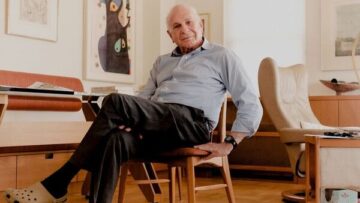
A Unified Theory of the Handbag: Was an accessory the secret to evolution?

Audrey Wollen in The Yale Review:
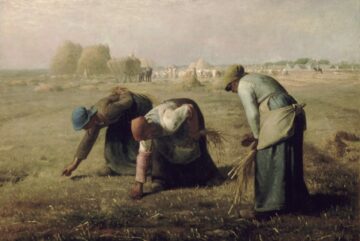
There is a phrase to describe the first twelve weeks of human life: “the fourth trimester.” Some mammal babies slip out of their mother’s body wrapped in their own ghost, something between alive and not—a gaunt cloud, wetting the dust. A deluge of liquid and cramped muscle, sunset-colored. Within seconds, limbs flex and cohere, the spectral casing tears (sometimes licked off by a corrugated tongue), and suddenly, slowly, there is a new creature on earth. In comparison to our fellow animals, we humans are still virtually fetal for the first few months of our lives. Always born prematurely, we depend on the parent’s body for warmth, sustenance, or any significant relocation. Our flat bones still stray, like ancient continents shuffling across cranial oceans. At birth, we can’t even lift up our own heads. We can’t look around the room, let alone lollop alongside our herd, flock, pack, or pod.

More here.

Enjoying the content on 3QD? Help keep us going by donating now.
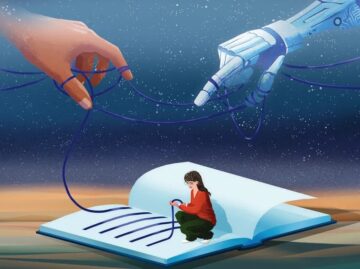
AI Anxiety: Can writing at Harvard coexist with new technologies?

Serena Jampel in Harvard Magazine:

I recently copy-pasted an essay I’d written on Boston abolitionist movements into ChatGPT. “Chat,” I commanded, “please list three ways this essay is successful, and three areas for potential improvement.” The machine spat out an answer instantly, and as I watched it unfold, I was mesmerized. The computer pointed out that my thesis could have been more argumentative, suggested areas that could be more concise, and highlighted phrases I’d inadvertently repeated. In short, it did everything that I, a tutor at the Harvard Writing Center, am paid to do. And it took only 10 seconds.

Not all the advice was useful, but as a semi-professional writer and editor, I felt reasonably confident that I could separate the good tips from the chaff. The best part about my AI tutor was that it never tired, and I could correct it all I wanted. “That’s bad advice,” I typed, not caring that it was rude. It promptly revised its suggestions.

I feel obligated to issue the disclaimer that this paper was years old, and I used AI to revise it out of curiosity.

More here.

Enjoying the content on 3QD? Help keep us going by donating now.

Tuesday, March 18, 2025

Memos of Blood and Fire: Scenes from the working-class university

Peter Coviello at n + 1:

As anyone who has had the job can attest, the enterprise of being chair of an English department—or, in my case, “head,” a term meant to designate a role still more managerial—comes with more than its share of these scenes of demoralized compliance and low-grade surrender. “A two-fisted engine of aggravation and despair” is how I recently described the gig to a friend, and it’s hard to find anyone who would disagree. So imagine my surprise, my wonder even, in having found for myself a nourishing antidote to all the in-built tedium, joylessness, and metastatic irritation. Yoga? Hypnosis? Ketamine? No. It has appeared in nothing so much as the revelation that my colleagues are, in ways and degrees I hadn’t quite grasped, extraordinarily good at what they do.
I don’t just mean that they write beautiful and field-shifting books that widen the circumference of humanist knowledge and proffer solace and delight. I mean something else. For instance: do you have any idea what kinds of foresight, acuity, and procedural fluency are required to run, say, a program designed to teach collegiate writing to thousands of new students previously unfamiliar with the concept? Can you imagine the resolve, the patience, and the extremes of pedagogical inventiveness necessary to keep lessons lively rather than rote, to make the axiomatically laborious and frustrating enterprise of learning how to write a scene of curiosity, imagination, even nourishment?

More here.  [Thanks to Margit Oberrauch.]

Enjoying the content on 3QD? Help keep us going by donating now.

Sean Carroll’s Mindscape Podcast: Alison Gopnik on Children, AI, and Modes of Thinking

Sean Carroll at Preposterous Universe:

We often study cognition in other species, in part to learn about modes of thinking that are different from our own. Today’s guest, psychologist/philosopher Alison Gopnik, argues that we needn’t look that far: human children aren’t simply undeveloped adults, they have a way of thinking that is importantly distinct from that of grownups. Children are explorers with ever-expanding neural connections; adults are exploiters who (they think) know how the world works. These studies have important implications for the training and use of artificial intelligence.

More here.

Enjoying the content on 3QD? Help keep us going by donating now.

Our Disintegrating Societies: On What Divides Us

Jon Mills at the Politics and Rights Review:

As we observe our current world order becoming less cohesive, more volatile, socially fractured, politically polarized, and hence arguably less predictable, it becomes increasingly difficult to understand why.
Difference, prejudice, and group identification in opposition to alterity, as well as tolerance and cooperation based in mutual self-interest, have always existed among civilized collectives; but within today’s multicultural societies tolerance has given way to contempt, if not outright animosity, directed toward others without filters or restraint.

It is not uncommon to witness verbal aggressiveness, uncouth swearing, and intimidation displayed toward strangers while having a morning coffee. Such unbridled disdain in public spaces has sometimes led to civil disobedience—even violence, where interpersonal courtesy, mutual respect, and common decency have given way to what some people feel are acceptable ways of expressing their acrimonious attitudes and opinions, what we may call the new abnormal.

If I may venture a hypothesis, I would say two main reasons that divide people in our contemporary societies are…

More here.

Enjoying the content on 3QD? Help keep us going by donating now.

How often are children genetically unrelated to their presumed fathers?

Audrey Curry in Science:

On the wall of his living room in Lier, Belgium, Werner van Beethoven keeps a family tree. Thirteen generations unfurl along its branches, including one that shows his best known relative, born in 1770: Ludwig van Beethoven, who forever redefined Western music with compositions such as the Fifth SymphonyFür Elise, and others. Yet that sprig held a hereditary, and potentially scandalous, secret.
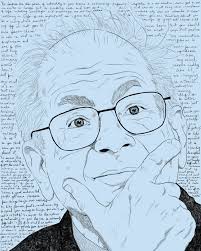
That Beethoven, Werner learned to his dismay in 2023, is biologically unrelated to Werner and his contemporary kin. This uncomfortable fact was brought to light by Maarten Larmuseau, a geneticist at KU Leuven who specializes in answering a question relatively few others have explored: How often do women have children with men they’re not partnered with?

In most societies, kinship is at least partly socially constructed, and for example can include adoption and stepfamilies. Yet questions about biological paternity have roiled families and fueled cultural anxieties for eons. Male authors have written about hidden paternity for millennia, including in Greek dramas and The Canterbury Tales; William Shakespeare and Molière wrote plays about it. Knowing a child’s biological father is also important for forensically identifying cadavers, recording accurate medical histories, and charting the manifold ways in which people structure families around the world.

More here.

Enjoying the content on 3QD? Help keep us going by donating now.

The Last Decision by the World’s Leading Thinker on Decisions

Jason Zweig in The Wall Street Journal:

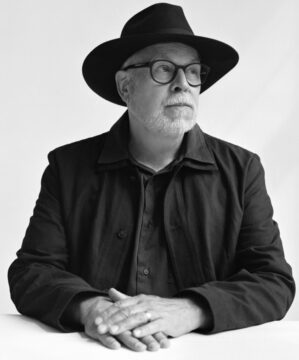
In mid-March 2024, Daniel Kahneman flew from New York to Paris with his partner, Barbara Tversky, to unite with his daughter and her family. They spent days walking around the city, going to museums and the ballet, and savoring soufflés and chocolate mousse. Around March 22, Kahneman, who had turned 90 that month, also started emailing a personal message to several dozen of the people he was closest to. On March 26, Kahneman left his family and flew to Switzerland. His email explained why:
This is a goodbye letter I am sending friends to tell them that I am on my way to Switzerland, where my life will end on March 27. 

Kahneman was one of the world’s most influential thinkers—a psychologist at Princeton University, winner of the Nobel Prize in economics and author of the international blockbuster “Thinking, Fast and Slow,” first published in 2011. He had spent his long career studying the imperfections and inconsistencies of human decision-making. By most accounts—although not his own—Kahneman was still in reasonably good physical and mental health when he chose to die.

Kahneman was widely mourned nearly a year ago when his death was announced. Only close friends and family knew, though, that it transpired at an assisted-suicide facility in Switzerland. Some are still struggling to come to terms with his decision.

More here.

Enjoying the content on 3QD? Help keep us going by donating now.

Tuesday Poem

The Sea Turtle

Shoulder-deep in the sea turtle’s nest,
I search for remains, nothing alive.
The tiny turtles would have climbed
over each other, forming a living ladder
out of their sandy birth canal
leaving only the unhatched and dead behind.
Mongoose would have gotten any stragglers.
I am here only to count egg shells.
My hand reaches bottom and scoops up
sand and bits of leathery shells. In their midst,
I find a black soft lump, a hatchling left behind.
It remains listless until I gently stroke its belly
until its life flickers and catches hold
as a flame lays claim to a
candle wick.
It doesn’t have much of a chance.
Pelicans already circle. But waiting until night
so it can follow the moon to the
water is a death sentence too. I place it on
the sloping beach and whisper a prayer.
Without a backward glance
it paddles towards the water.
The waves are merciless,
cartwheeling it in the foam.
Head over tail. Head over tail.
But it finds a current and starts its slow
submerged swim, a speck in the sea.
Too far in to return, the turtle breaks the
glimmering surface and takes its first
sea-borne breath.

by Mary Palmer
from
Rattle Magazine, 3/4/2029

Enjoying the content on 3QD? Help keep us going by donating now.

Monday, March 17, 2025

The Joy of Forgotten Books

Philip Graham at Persuasion:

My wife Alma Gottlieb is an anthropologist, and for years we had lived in small villages in West Africa, among the Beng people of Côte d’Ivoire. In 1993, during our third extended stay, news of my father’s death back in the U.S. arrived in the village, too late for us to return for his funeral. Stunned, I couldn’t decide what to do, how to mourn, until village elders offered to give my American father the ceremonies of a traditional Beng funeral. After days of elaborate ritual, the village’s religious leader, Kokora Kouassi, confided to us that my father now visited him in his dreams—from Wurugbé, the Beng afterlife—with messages of farewell and comfort. The Beng believe the dead exist in an invisible social world beside the living, and Kouassi’s dreams were meant to assure me that my father wasn’t far away at all. Instead, he hovered invisibly beside me.
Soon after, I began to receive, unbidden, the first sketches of ten fictional characters. I understood immediately that they were all ghosts—American ghosts, but existing in an afterlife similar to Wurugbé. And they were all surprises. Among them was a car repairman who discovers in his afterlife the pleasures of Books on Tape; a 1950s entomologist hiding her sexual identity who, as a ghost, continues her research in an ants’ nest; a Civil War-era teenager beset by an ambiguous religious vision; the ghost of a Depression-era reporter who leaves far behind the restrictions of her former newspaper’s women’s craft page; and above all, Jenny, the ghost of a three-year-old child who, through her longing, encounters and absorbs the memories of these diverse ghosts—ghosts whose lives and afterlives encompass overlapping eras of nearly 200 years of American history. Jenny’s embrace of these inadvertent mentors opens within her windows of empathy into the difficult, essential gift of otherness.

For the next 30 years, I wrote and rewrote this novel, while publishing four other books of fiction and nonfiction. Learning the territories of this afterlife that had risen from somewhere deep within me, as well as Jenny’s challenge of balancing a growing crowd of selves within her, became the one steady creative project of my life.

More here.

Enjoying the content on 3QD? Help keep us going by donating now.

Scientists Discover a Trait in Speech That Foreshadows Cognitive Decline

Claire Lancaster at Science Alert:

Can you pass me the whatchamacallit? It’s right over there next to the thingamajig.

Many of us will experience “lethologica”, or difficulty finding words, in everyday life. And it usually becomes more prominent with age.

Frequent difficulty finding the right word can signal changes in the brain consistent with the early (“preclinical”) stages of Alzheimer’s disease – before more obvious symptoms emerge.

However, a recent study from the University of Toronto suggests that it’s the speed of speech, rather than the difficulty in finding words that is a more accurate indicator of brain health in older adults.

The researchers asked 125 healthy adults, aged 18 to 90, to describe a scene in detail. Recordings of these descriptions were subsequently analysed by artificial intelligence (AI) software to extract features such as speed of talking, duration of pauses between words, and the variety of words used.

More here.

Enjoying the content on 3QD? Help keep us going by donating now.

Kenneth Roth: There can be no ‘Israel exception’ for free speech

Ken Roth in The Guardian:

The Trump administration’s threatened deportation of Mahmoud Khalil seems to reflect a dangerous disregard for freedom of expression – a blatant example of official censorship to curb criticism of Israel.

Khalil was a recent graduate of Columbia University’s School of International and Public Affairs. He holds a green card, giving him permanent residence status, and is married to a US citizen. They are expecting their first child soon. Immigration agents arrested him last week in his university housing and sent him for detention from New York City to Louisiana. He had been a leader of protests against Israeli war crimes in Gaza.

Beyond that, the facts are contested. His friends called him “kind, expressive and gentle”. A Columbia professor described him as “someone who seeks mediated resolutions through speech and dialogue. This is not someone who engages in violence, or gets people riled up to do dangerous things.”

But Donald Trump, hailing his arrest, suggested Khalil was among students “who have engaged in pro-terrorist, anti-Semitic, anti-American activity”. The administration has presented no facts to back up these assertions, but even were it to do so, the suggestion that permissible speech can be a basis for deportation is deeply troubling.

More here.

Enjoying the content on 3QD? Help keep us going by donating now.

The Man Who Wants to Save the Planet by Nuking the Earth’s Crust

Joe Banks in Vice:

In January, a paper appeared on arXiv, a website of non-peer-reviewed scholarly articles. Written by Andy Haverly, a 25-year-old Microsoft software engineer from Washington State, its proposition was a modest one—that we should try firing the largest nuclear bomb in history into the Earth’s crust in order to sequester 30 years’ worth of COemissions in underwater rock. In Haverly’s mind, the 81 gigaton nuclear bomb would be buried somewhere between 3 and 5km beneath the seabed of the remote Kerguelen Plateau, where the surrounding waters of the Antarctic Ocean themselves have a depth of 6 to 8km. This explosion would be well over a thousand times larger than the 50 megaton ‘Tsar Bomba’ test, the current largest nuclear explosion in history, detonated in 1961 by the Soviet Union in the Arctic Circle. (For reference, that explosion was around 3,800 times the strength of the bomb dropped on Hiroshima during World War II. Apparently recycling isn’t going to cut it any more.)

According to Haverly, who doesn’t have a background in climate science or nuclear engineering but is currently studying for a PhD in quantum computing at Rochester Institute of Technology, the bomb would pulverize a vast amount of basalt rock (3.86 trillion tons, to be precise) into tiny pieces. Theoretically, this would then react with CO2 in the ocean to form stable carbonate minerals that lock the carbon away permanently. The deep ocean waters would, he claims, safely contain the blast.

More here.

Enjoying the content on 3QD? Help keep us going by donating now.

’Thinking, Fast and Slow’ writer Daniel Kahneman chose to end his own life

From Mint:

Nobel Laureate and a psychologist, best known for his work on psychology of judgment and decision-making as well as behavioural economics, Daniel Kahneman took the decision of ending his own life, a Wall Street Journal report said. The report, published on Friday, said that shortly before Kahneman died in March last year, he sent an email to his friends saying that he was choosing to end his own life in Switzerland. “I have believed since I was a teenager that the miseries and indignities of the last years of life are superfluous, and I am acting on that belief. Most people hate changing their minds,” he said, “but I like to change my mind. It means I’ve learned something…” read the email Kahneman wrote to his friends before flying to Switzerland.

While the world mourned his death last year, only close friends and family knew that it transpired at an assisted-suicide facility in Switzerland. “Some are still struggling to come to terms with his decision,” the report said. His last email went on to say: “I am not embarrassed by my choice, but I am also not interested in making it a public statement. The family will avoid details about the cause of death to the extent possible, because no one wants it to be the focus of the obits. Please avoid talking about it for a few days.”

More here.

Enjoying the content on 3QD? Help keep us going by donating now.

Sunday, March 16, 2025

Covid’s Deadliest Effect Took Five Years to Appear

Siddhartha Mukherjee in The New York Times:

Covid was a privatized pandemic. It is this technocratic, privatized model that is its lasting legacy and that will define our approach to the next pandemic. It solves some problems, but on balance it’s a recipe for disaster. There are some public goods that should never be sold. Dr. Gounder checked off the basic mechanisms by which public health experts confront a pandemic: They create systems to understand and track its cause and spread; they identify the people most at risk; they deploy scalable mechanisms of protection, like air and water sanitation; they distribute necessary tools, such as vaccines and protective gear; they gather and communicate accurate information; and they try to balance individual freedoms and mass restrictions.

In the case of Covid, each of these responsibilities became increasingly relegated to the private sphere. In one of President Trump’s first national speeches about Covid, he told the nation, “You’re going to be hearing from some of the largest companies and greatest retailers and medical companies in the world.” And so we did.

As the new administration engulfs Washington, we are witnessing the further, and perhaps final, phase of this retreat. In its first weeks, the Trump administration announced far-reaching cuts in the Centers for Disease Control and Prevention as well as reportedly severe restrictions on the kind of research its employees can conduct. It moved to dismantle the U.S.A.I.D., even though the agency funds crucial health efforts around the world, including an early detection system for epidemics. The president proposed slashing funding for medical research at universities. And of course, to lead the Department of Health and Human Services, he chose Robert F. Kennedy Jr., who might have done more than anyone else alive to recast the miracle of vaccines as a dark and dangerous conspiracy.

More here.

Enjoying the content on 3QD? Help keep us going by donating now.

Sunday Poem

Amber

Inside the sugar maples’ locked branches
something clear has begun
to come loose; it will be caught, held,

plied with intense heat.
I pity the pink tips of those branches,
their forced march in the dark

before the clocks catch up.
And I pity myself, swaddled bones
scraping food from the same black pot.

I hear the maples, their drip.
I watch the sky above the sap house
darken with ash, light up

with sparks as the boiling continues
into the night and the crude
outlines of the bright windows beckon.

I zip my high-necked dress up the back,
its straight silver teeth obediently close;
I’m so cold it feels like music.

by Amy Dryansky
from How I Got Lost So Close To Home
Alice James Books, 1999

Enjoying the content on 3QD? Help keep us going by donating now.