Jenny Singer in The Washington Post:
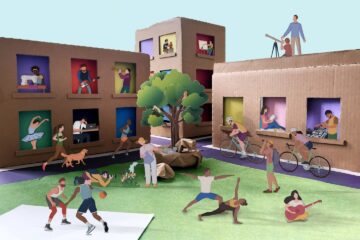 It’s a first date. The drink in your hand is mostly ice. You’ve talked about your jobs, your days, your dogs. The conversation lulls, and you can feel the question coming. “So,” the person across the table asks, “what do you do for fun?”
Enjoying the content on 3QD? Help keep us going by donating now.

Jenny Singer in The Washington Post:
Enjoying the content on 3QD? Help keep us going by donating now.
Hannah Thomasy in The Scientist:
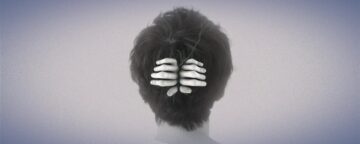 If the world of Severance was real, your “innie” would be reading this article at work, oblivious to the fact that your “outie” intends to spend the evening scouring the internet for these very answers. While the Severance procedure—surgical implantation of a chip into the brain to create separate conscious agents with access to separate streams of memory and experience—is purely fictional at present, another brain-splitting surgical procedure, called a corpus callosotomy, is entirely real and has been in use since the 1940s. Instead of separating work life and personal life, this procedure separates the right and left hemispheres of the brain by severing the major line of communication between them, a thick bundle of nerves called the corpus callosum.1 This surgery was used to treat severe and refractory epilepsy; in many patients, it helped control seizures by preventing aberrant neural activity from spreading between the hemispheres.
More here.
Enjoying the content on 3QD? Help keep us going by donating now.
Marco Roth at The Feckless Bellelettrist:
 I had been on my way out for a smoke, and had stopped to hold the heavy bronzed steel and glass door for a woman whose long gray ponytail and colorful mismatched knitwear looked pleasingly hippie-ish.
Our third was a construction engineer from the ongoing renovations next to the entrance: reflective safety vest, button down plaid shirt, muddy work boots. The woman popped open a large purple umbrella, looked at me, and patted it. She was offering to share.
I explained that I was just there to smoke and return to the library. We wished each other good afternoon. Next, she invited the foreman. He was only on his way to get a coffee and check on his crew, he said, but he accepted, put away the phone, then said something that made her laugh. They linked arms and set off up over the slick mossy brick path like lovers.
I tried remembering the last time I’d seen such a spontaneous act of random generosity—also accompanied by playful good humor—between two people from such different walks of life, strangers to each other. This kind of solidarity—even against the relatively mild elements—would be unimaginable now in my former city, at, say, the crowded side entrance to the New York Public Library on 42nd street, or at a Brooklyn subway station.
Cities have energies and those energies can change, curdle, or waste away.
More here.
Enjoying the content on 3QD? Help keep us going by donating now.
Alexander Nazaryan in the New York Times:
 Even chatbots get the blues. According to a new study, OpenAI’s artificial intelligence tool ChatGPT shows signs of anxiety when its users share “traumatic narratives” about crime, war or car accidents. And when chatbots get stressed out, they are less likely to be useful in therapeutic settings with people.
The bot’s anxiety levels can be brought down, however, with the same mindfulness exercises that have been shown to work on humans.
Increasingly, people are trying chatbots for talk therapy. The researchers said the trend is bound to accelerate, with flesh-and-blood therapists in high demand but short supply. As the chatbots become more popular, they argued, they should be built with enough resilience to deal with difficult emotional situations.
More here.
Enjoying the content on 3QD? Help keep us going by donating now.
Enjoying the content on 3QD? Help keep us going by donating now.
Yascha Mounk at his own Substack:

Published by the United Nations Sustainable Development Solutions Network and the Wellbeing Research Centre at Oxford University, the basic message of the report has remained the same since its launch in 2012. The happiest countries in the world are in Scandinavia; this year, Finland is followed by Denmark, Iceland and Sweden. America, despite being one of the richest large countries in the world, persistently underperforms: this year, the United States only comes in 24th out of the 147 countries covered in the report, placing it behind much poorer countries like Lithuania and Costa Rica.
I have to admit that I have been skeptical about this ranking ever since I first came across it. Because I have family in both Sweden and Denmark, I have spent a good amount of time in Scandinavia. And while Scandinavian countries have a lot of great things going for them, they never struck me as pictures of joy. For much of the year, they are cold and dark. Their cultures are extremely reserved and socially disjointed. When you walk around the—admittedly beautiful—centers of Copenhagen or Stockholm, you rarely see anybody smile. Could these really be the happiest places in the whole wide world?
More here.
Enjoying the content on 3QD? Help keep us going by donating now.
From Phys.Org:
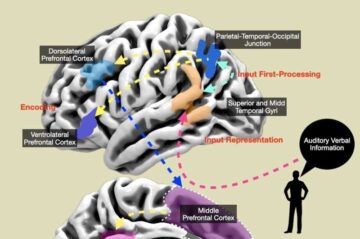 The new study, published in Brain Communications, found that shrinkage in the front and side of the brain (prefrontal, temporal and cingulate cortices, and the hippocampus) was linked to difficulty remembering words. The new discovery highlights how the network that is involved in creating and storing word memories is dispersed throughout the brain.
This is particularly crucial for helping to understand conditions such as epilepsy, in which patients may have difficulty with remembering words. The researchers hope that their findings will help guide neurosurgical treatment for patients with epilepsy by helping surgeons to avoid parts of the brain important for language and memory, that may otherwise be affected, when doing operations.
More here.
Enjoying the content on 3QD? Help keep us going by donating now.
Enjoying the content on 3QD? Help keep us going by donating now.
Edd Gent in Singularity Hub:
 Wearable devices are popular these days, but they’re largely restricted to watches, rings, and eyewear. Researchers have now developed a thread-based computer that can be stitched into clothes. Being able to sense what our bodies are up is useful in areas like healthcare and sports. And while devices like smartwatches can track metrics like heart rate, body temperature, and movement, humans produce huge amounts of data that devices tethered to specific points of the body largely miss. That’s what prompted MIT engineers to create a fabric computer that can be stitched into regular clothes. The device features sensors, processors, memory, batteries, and both optical and Bluetooth communications, allowing networks of these fibers to provide sophisticated whole-body monitoring.
“Our bodies broadcast gigabytes of data through the skin every second in the form of heat, sound, biochemicals, electrical potentials, and light, all of which carry information about our activities, emotions, and health,” MIT professor Yoel Fink, who led the research, said in a press release. “Wouldn’t it be great if we could teach clothes to capture, analyze, store, and communicate this important information in the form of valuable health and activity insights?” The MIT team has been working on incorporating electronics into fibers for more than a decade, but in a recent paper in Nature they outline a breakthrough that significantly boosts the sophistication of the devices they can build.
More here.
Enjoying the content on 3QD? Help keep us going by donating now.
When you are old and grey and full of sleep,
And nodding by the fire, take down this book,
And slowly read, and dream of the soft look
Your eyes had once, and of their shadows deep;
How many loved your moments of glad grace,
And loved your beauty with love false or true,
But one man loved the pilgrim soul in you,
And loved the sorrows of your changing face;
And bending down beside the glowing bars,
Murmur, a little sadly, how Love fled
And paced upon the mountains overhead
And hid his face amid a crowd of stars.
Enjoying the content on 3QD? Help keep us going by donating now.
To meticulously reproduce a photograph by hand is to know it most intimately—to pore over its details and devote inordinate amounts of time to re-creating a moment captured in a flash. Such exacting realism commits to the specificity of its subject, elevating its significance in turn. And yet, despite the level of care and determination relating to the practice, Photorealism has largely been looked down upon as cheap illusionism, slick eye candy, or conservative fluff in the art-historical canon of the past half century. Though long associated with crass commercialism and advertising, Photorealism’s easy legibility and apparent superficiality belie more complex depths. Turning purported deficits and liabilities into strengths, curator Anna Katz has staged a thoughtful reappraisal of American Photorealism, both as an historical movement (emerging in the late 1960s and ’70s, when cameras became widely available) and as an ongoing strategy prevalent among contemporary artists.
In “Ordinary People: Photorealism and the Work of Art since 1968,” Katz undertakes a recuperative project, positioning Photorealism in its American flowering as an extension of progressive political impulses.
more here.
Enjoying the content on 3QD? Help keep us going by donating now.
Michael Autrey at The American Scholar:
 To forage is to look for things that aren’t lost. Birding, mushrooming, hunting agates in the wet sand at ebb tide or arrowheads in the sagebrush along the edge of a dry playa—everything I’ve spent time seeking has been right where it belonged, indifferent to whether it was found. If I failed to see birds when I could hear them or gather mushrooms when I could smell them, I considered it a failure to live in the right relation to my senses. The most apt phrase I know for the necessary state of attunement comes from psychoanalysis. The analyst, in Freud’s idealized therapeutic environment, cultivates “evenly hovering attention”—hard to cultivate, harder to maintain, no matter how early one starts.
I was introduced to foraging early, not long after I could walk. My great-aunt Jara would take me by the hand, and as we ambled, she pointed at each mushroom we came across, mixing nicknames and Latin names: Russula, cep, amanita, slippery jack. My mother’s family came to the United States as refugees from what was then Czechoslovakia. As in so much of Eastern Europe, mushrooming is cultural, the people mycophilic.
more here.
Enjoying the content on 3QD? Help keep us going by donating now.
Arlin Cuncic at Verywell Mind:
 You know that creepy phenomenon where some people remember historic events differently than others? Like when people thought the classic kid’s book was called the “Berenstein Bears” instead of its actual title, the “Berenstain Bears.” Yep, this weird event is called the Mandela Effect.
Basically, the Mandela effect refers to a situation in which a large mass of people believe an event occurred when it did not. The term originated in 2009 by Fiona Broome, after she discovered that she, along with a number of others, believed that Nelson Mandela had died in the 1980s (when he actually died in 2013).
Where does the Mandela effect come from—and why do these strange perceptions of history keep happening?
More here.
Enjoying the content on 3QD? Help keep us going by donating now.
Benjy Barnett in Aeon:
 When I’m birdwatching, I have a particular experience all too frequently. Fellow birders will point to the tree canopy and ask if I can see a bird hidden among the leaves. I scan the treetops with binoculars but, to everyone’s annoyance, I see only the absence of a bird.
Our mental worlds are lively with such experiences of absence, yet it’s a mystery how the mind performs the trick of seeing nothing. How can the brain perceive something when there is no something to perceive?
For a neuroscientist interested in consciousness, this is an alluring question. Studying the neural basis of ‘nothing’ does, however, pose obvious challenges. Fortunately, there are other – more tangible – kinds of absences that help us get a handle on the hazy issue of nothingness in the brain. That’s why I spent much of my PhD studying how we perceive the number zero.
More here.
Enjoying the content on 3QD? Help keep us going by donating now.
Enjoying the content on 3QD? Help keep us going by donating now.
Noah Smith at Noahpinion:
 I’ve been waiting a long time for this book. Late in 2021, Ezra Klein wrote a New York Times op-ed titled “The Economic Mistake the Left Is Finally Confronting”, in which he called for a new “supply-side progressivism”. Four months later, Derek Thompson wrote an article in The Atlantic titled “A Simple Plan to Solve All of America’s Problems”, in which he called for an “abundance agenda”. Many people quickly recognized that these were essentially the same idea. Klein and Thompson recognized it too, and teamed up to co-author a book that would serve as a manifesto for this new big idea. Three years later, Abundance has hit the stores. It’s a good book, and you should read it.
The basic thesis of this book is that liberalism — or progressivism, or the left, etc. — has forgotten how to build the things that people want. Every progressive talks about “affordable housing”, and yet blue cities and blue states build so little housing that it becomes unaffordable. Every progressive talks about the need to fight climate change, and yet environmental regulations have made it incredibly difficult to replace fossil fuels with green energy. Many progressives dream about the days when government could accomplish great things, and post maps of imaginary high-speed rail networks crisscrossing the country, yet various progressive policies have hobbled the government’s ability to build infrastructure.
More here.
Enjoying the content on 3QD? Help keep us going by donating now.
Enjoying the content on 3QD? Help keep us going by donating now.
Things persist in time, events have limited duration.
A stone is a thing. We can ask, “Where will it be
tomorrow?” Conversely, a kiss is an event. It makes
no sense to ask where a kiss will be tomorrow.
……………. The world is made up of a network
……………. of kisses, not stones:
The basic units, the terms by which we comprehend
the world, are not in some specific point in space.
They are, if they are at all, in both a where and a when,
spatially and temporally delimited. They are events.
In fact, with a closer look, even things that are most
“thinglike” are but long events. The hardest stone
in light of what we’ve learned — of chemistry, of physics,
mineralogy, geology, from psychology, are but
complex vibrations of quantum fields, momentary
interactions of forces, a momentary process that
keeps its shape, holding itself in equilibrium before
disintegration, before turning again into dust.
by Carlo Rovelli
from The Order of Time—Chapter 6
Riverhead Books, NY, 2017
Enjoying the content on 3QD? Help keep us going by donating now.
Rick Moody at Salmagundi:
 I saw Eraserhead in Providence in late 1979, I think, and I suspect it was at the Avon on Thayer Street. I liked cheeseball, poorly-constructed horror films in those days and I think Lynch’s film was being sold as midnight cult film fare, a more horrifying Rocky Horror Picture Show. So I went. At a similar moment, in undergraduate school at Brown University, I was also taking, or had just taken, Keith Waldrop’s survey course on this history of the silent film, which had offered me my first interaction with Bunuel and Dali’s Un Chien Andalou. In my recollection these experiences are utterly conjoined. Like the Bunuel film, Eraserhead scared me very thoroughly—it was merciless and unforgiving and also very funny—and likewise it established in my mind a set of filmic values (for which Un Chien Andalou was also partly responsible), antithetical to the barbarous Hollywood values, and from these I never really strayed: 1) cheap is fine, 2) black and white tells you some things, 3) good sound design is crucial, 4) non-actors are very often better than actors, 5) subjectivity is in a circular container, and thus the reiterations, 6) linearity in storytelling is a con, and 7) when in doubt stick a lady in a radiator and have her sing.
more here.
Enjoying the content on 3QD? Help keep us going by donating now.
Rebekah Wallace at Aeon Magazine:
 What do the angelic forces of the Heavenly Host have to do with orgasms? The answer, according to the 12th-century philosopher and theologian Maimonides, was simple. Some invisible forces that caused movement could be explained by God working through angels. Quoting a famous rabbi who talked about ‘the angel put in charge of lust’, Maimonides commented that ‘he means to say: the force of orgasm … Thus this force too is called … an angel.’
Before the discovery of gravity, energy or magnetism, it was unclear why the cosmos behaved in the way it did, and angels were one way of accounting for the movement of physical entities. Maimonides argued that the planets, for example, are angelic intelligences because they move in their celestial orbits. While most physicists would now baulk at angelic forces as an explanation of any natural phenomena, without the medieval belief in angels, physics today might look very different. Even when belief in angels later dissipated, modern physicists continued to posit incorporeal intelligences to help explain the inexplicable.
more here.
Enjoying the content on 3QD? Help keep us going by donating now.