
by Andrea Scrima
David Krippendorff is a US/German interdisciplinary artist and experimental filmmaker. Based in Berlin, he grew up in Rome, Italy, and studied art at the University of Fine Arts in Berlin, Germany, where he graduated with an MFA. His paintings, drawings, prints, films, and videos have been shown internationally, including at the New Museum (New York), ICA (London), Hamburger Kunsthalle (Hamburg), and the Museum on the Seam (Jerusalem). He has participated in three biennials (Prague, Poznan, Tel Aviv).
Krippendorff’s short film Nothing Escapes My Eyes is currently part of the group exhibition “The Women Behind” at the Museum on the Seam; it was also shown at the Belgrade City Museum for the 56th October Salon in 2016 and has been screened at numerous international film festivals, winning twice as Best Short Film. Kali, a short film based on Brecht’s Threepenny Opera, also features Palestinian actress Hiam Abbass; it premiered at the Braunschweig International Film Festival in 2017.

Andrea Scrima: David, I’d like to begin with a question about your previous work. For decades now, you’ve been incorporating imagery from popular culture; earlier works, particularly There’s No Place Like Home, Sleeping Beauty, and The Beautiful Island, drew on the hidden subtexts in well-known American movies, such as The Wizard of Oz and Gilda. What was the motivating force behind this line of inquiry?
David Krippendorff: I grew up on classic American movies. The Wizard of Oz was an intrinsic part of my childhood, so it felt very natural to work with these films, because I had a personal relationship to them. My interest was in uncovering the ideologies and desires present in these films, but hidden beneath a polished layer of glamour and storytelling. I’m also fascinated by how thin the boundaries have become between the personal and the mediated experience, and films—with their almost mythological function—are the perfect material for this inquiry. Read more »
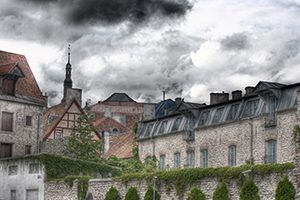 In the middle of the night of March 24, 1992, a pressure seal failed in the number three unit of the Leningradskaya Nuclear Power Plant at Sosnoviy Bor, Russia, releasing radioactive gases. With a friend, I had train tickets from Tallinn, in newly independent Estonia, to St. Petersburg the next day. That would take us within twenty kilometers of the plant. The legacy of Soviet management at Chernobyl a few years before set up a fraught decision whether or not to take the train.
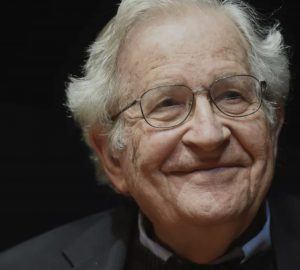 Noam Chomsky was aptly described in a New York Times book review published almost four decades ago as “arguably the most important intellectual alive today.” He was 50 then. Now he is 90, and on the occasion of his December 7 birthday, the German international broadcasting service Deutsche Welle
  In the spring of 2015, with my colleagues at the Breakthrough Institute, I helped to organize and publish
 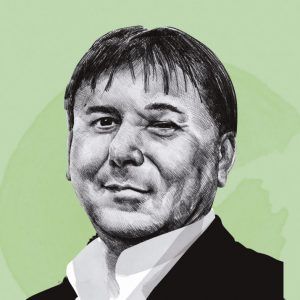 Ivan Krastev’s last book landed like a warning shot on the desks of policymakers across the Continent. In his short 2017 volume, “After Europe,” the Bulgarian thinker warned that what had been until then widely regarded as a series of isolated shocks — the migration crisis, Brexit, the election of U.S. President Donald Trump, and the rise of
  You take a flight from New York to London. Thousands and perhaps millions of people — including ticket agents, baggage handlers, security personnel, air traffic controllers, pilots, and flight attendants, but behind the scenes also airline administrators, meteorologists, engineers, aircraft designers, and many others — cooperated to get you there safely. No one stole your luggage, no one ate your in-flight food, and no one tried to sit in your seat. In fact, the hundreds of people on the airplane, despite being mainly strangers, behaved in an entirely civilized and respectful manner throughout.
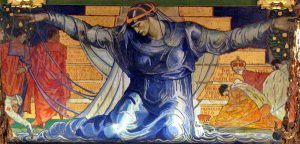 Here’s a little lesson about crying – historical crying – from another class I teach, “Literatures of American Indian Removal.” Once upon a time, the State of New Hampshire tried to claim Dartmouth College as its state university. In 1818, the case went to the Supreme Court, where John Marshall, as chief justice, presided. Dartmouth was represented by Daniel Webster. . . . It is, Sir, as I have said, a small college, and yet, there are those who love it . . . In an impassioned speech, Webster cited love as the private passion that draws a fairy circle of protection around the small college, keeping away publics that cannot possibly feel correctly. Webster’s oratory was so moving that the great judge wept openly on the bench. John Marshall, who shaped the Supreme Court into the powerful third arm of government that we now rely on it to be, was moved to tears. Dartmouth was founded to educate Native men, but immediately abandoned that project. That abandonment was partly why New Hampshire felt it could be claimed as public. But Marshall’s court decided it would remain private. The decision is a cornerstone of the American corporation. The corporation, he wrote, “is chiefly for the purpose of clothing bodies of men, in succession, with these qualities and capacities that corporations were invented, and are in use. By these means, a perpetual succession of individuals are capable of acting for the promotion of the particular object like one immortal being.” Corporations are immortal bodies, made up of successive generations of white men clothed in the invisibility cloak of power.
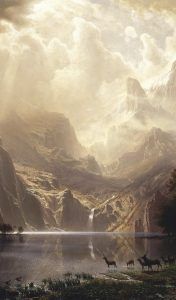 Have you ever felt awe and exhilaration while contemplating a vista of jagged, snow-capped mountains? Or been fascinated but also a bit unsettled while beholding a thunderous waterfall such as Niagara? Or felt existentially insignificant but strangely exalted while gazing up at the clear, starry night sky? If so, then you’ve had an experience of what philosophers from the mid-18th century to the present call the sublime. It is an aesthetic experience that modern, Western philosophers often theorise about, as well as, more recently, experimental psychologists and neuroscientists in the field of
  In this series, economists debate whether catastrophic global warming can be stopped while maintaining current levels of economic growth. Enno Schröder, Servaas Storm, Gregor Semieniuk, Lance Taylor, and Armon Rezai find there is a tradeoff between growth and decarbonization, while Michael Grubb responds with more optimism.
 Right now the greatest threat to the eurozone and one of the most significant tail risks for the world economy is the unresolved standoff over the Italian budget and its public debt running to 133% of GDP. If Italy were not a member of the eurozone, if it had its own central bank debt at this level would be a matter of concern rather than alarm. But Italy is tied to the euro, the response of the ECB in a crisis is unpredictable and speculation about Italy leaving the euro is idle. Both the political and economics costs are too vast to contemplate seriously.
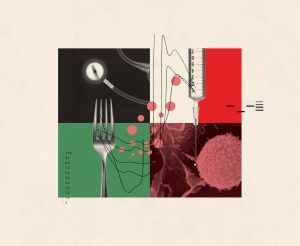 In the 1920s, Otto Warburg, a German physiologist, demonstrated that tumor cells, unlike most normal cells, metabolize glucose using alternative pathways to sustain their rapid growth, provoking the idea that sugar might promote tumor growth. You might therefore expect the medical literature on “sugar feeding cancer” to be rich with deep randomized or prospective studies. Instead, when I searched, I could find only a handful of such trials. In 2012, a team at the Dana-Farber Cancer Institute in Boston divided patients with Stage 3 colon cancer into different groups based on their dietary consumption, and determined their survival and rate of relapse. The study generated provocative data — but far from an open-and-shut case. Patients whose diets consisted of foods with a high glycemic load (a measure of how much blood glucose rises after eating a typical portion of a food) generally had shorter survival than patients with lower glycemic load. But a higher glycemic index (a measure of how much 50 grams of carbohydrate from a food, which may require eating a huge portion, raises blood glucose) or total fructose intake had no significant association with overall survival or relapse.
 Aerial is Kate’s third masterpiece, along with The Dreaming and Hounds of Love. What constitutes a “masterpiece” is only established by the ultimate critic, time; but even producing three contenders for the title in a single career puts a songwriter in the most exclusive company. “Bertie” is a madrigal about her young son, whose birth and upbringing accounted in no small part for the 12-year hiatus. By now my wife and I had a small child of our own whose toothy grin was for us, too, “The most truly fantastic smile / I’ve ever seen”. “Mrs Bartolozzi”, surely the only song by a major artist whose lyrics include washing machine onomatopoeia, portrays a housekeeper of a certain age. The drudgery of her life smothers her own memories and desires, and puts me in mind of a 21st-century Miss Kenton from Kazuo Ishiguro’s The Remains of the Day. The song “How to Be Invisible” contains a Macbeth-esque recipe for invisibility that is, Kate-ishly, both quotidian and magical: “Eye of Braille / Hem of Anorak / Stem of Wallflower / Hair of Doormat.” Disc one’s last song is my desert island Kate song: “A Coral Room”. Musically, this ballad for piano and vocal is one of her sparsest. Lyrically, it’s one of her richest, describing an underwater city, dreamy and abandoned and swaying and recalling Debussy’s prelude La Cathédrale Engloutie. The city is deep memory, crawled over by the spider of time, perhaps from the hills of time in “Moments of Pleasure”. Speedboats fly above and planes – perhaps a black Spitfire or two – come crashing down.