
Catherine Taylor at The Believer:
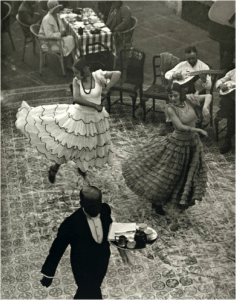 My classes occupy me fully. Codo means elbow. Rodilla means knee. Tobillo means ankle, Muy pronunciado means very steep. Adquirido means acquired. Me llena means it satisfies me, it fills me up. The classes exhaust and complete me. When I come home, I lie down and keep the shutters closed. My t-shirt is always damp and sweaty. I think about kissing and open my mouth to the air. The patterns of the dance repeat even when I am lying down; they won’t leave and this is confusing and pleasurable. One teacher tells us to tip our foot outward to show off its “lady parts.” My ankle hurts every day. “Don’t just do the steps,” she says, “dance.” I make a kind of friendship of glances with the body next to mine day after day. Some days, there is a raised eyebrow about the other woman who races ahead of the beat. No corré! the teacher yells. No corré! Joder. You’re fucking us up. Uno dos tres. Quatro cinco seis. Seite. Ocho. Nueve. Diez. Un Dos. Uno dos tres. In the changing room, it is so loud, you have to shout in five different languages. There is more Spanish than English, more English than German, more German than Japanese, more Japanese than French. Everyone is racing, stripping off stretchy tops, baring sweaty breasts, wriggling into dry tops, stepping out of silly long black lycra skirts.
more here.
 Publishing loves a trend, and the current one is for books by and about women. As many women as possible, in some cases: books such as Can We All Be Feminists?: Seventeen writers on intersectionality, identity and finding the right way forward for feminism (Virago), edited by the activist June Eric-Udorie, anthologize many voices to better illustrate the complexities of modern “feminisms”. Eric-Udorie’s title is a response to
  The philosopher Daniel Dennett has described evolution as a sort of “universal acid” that “eats through just about every traditional concept, and leaves in its wake a revolutionized world-view, with most of the old landmarks still recognizable, but transformed in fundamental ways.” Fearing this corrosive idea, opposition in the US to evolution mainly came from Right-wing evangelical Christians who believed God created life in its present form, as described in Genesis.
 Democracy is an information system.
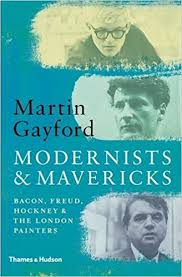 Bacon’s various London studios became notorious for their chaotic admission of decadence and squalor. The most famous of these was his studio at 7 Reece Mews in South Kensington, which was posthumously donated in its entirety to the Hugh Lane Gallery in 1998. The first-floor studio at Reece Mews was reached by climbing a steep wooden staircase with a thick rope used as a makeshift handrail. Visitors entering through the narrow studio door were immediately confronted by a deluge of materials. Detritus mounds of old paint tins, tubes and slashed canvasses reached up toward the pale skylight. The floorboards were covered in a congealing mass of magazines, photographs, catalogues. Bacon’s maxim was that “chaos breeds images” and he absorbed the anarchic atmosphere of his studio space into his developing art practice and aesthetic. Spontaneity and chance were portals of discovery. He drew inspiration for his nightmarish scenes from the photographic collage of screaming dictators, hysterical patients, bullfighters and wrestlers strewn beneath his easel across the studio floor. Images suddenly suggested themselves on the rough unprimed canvass in the slip of a brush or an accidental spatter of pigment. A single strong stroke could define the outline of a man’s jaw, a cloth smearing animate a recoiling movement. Bacon even brashly mixed dust from the floorboards into one of his early paintings to capture the charcoal texture of a suit lapel.
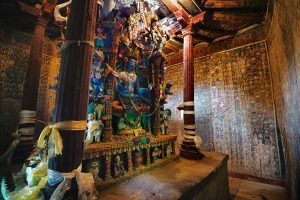 Peter van Ham’s Alchi, the third volume of a monumental trilogy published by Hirmer on the Buddhist art of western Tibet, must be one of the finest art books ever produced. Its subject, the site of Alchi, sits on the bank of the Indus River in Ladakh, in the high mountain ranges to the east in what is now the Indian state of Kashmir, some thirty-five miles northwest of the capital city of Leh. Unlike Guge, the subject of van Ham’s second volume, Alchi is relatively accessible—good roads now connect Alchi to Leh and (a little less smoothly) to the haunting monastery of Lamayuru, still farther to the north and west.
 Is it possible to have mild tyranny? It sounds like an oxymoron, and certainly not the kind of thing citizens in a democracy might choose. But when you consider the relationship many of us have with technology there is something gently tyrannical involved. In theory we are free to abandon our computer screens, at liberty not to check our phones. In practice we are ensnared in digital networks for most of our waking hours (and longer, for those with smart watches that monitor sleep patterns). In submission to devices, we surrender vast quantities of personal data. Somewhere in the information harvested by powerful tech companies – Amazon, Apple, Facebook and Google – there is a reliable account of where you are, where you are going and who you will see. With a bit of algorithmic extrapolation, it is possible also to predict how you feel.
 CRISPR bombshell: Chinese researcher claims to have created gene-edited twins
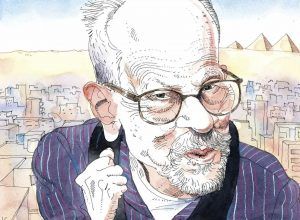 I met Naguib Mahfouz once. It was in the winter of 2006, and I’d been living in Cairo for three and a half years. The writer Gamal Al-Ghitani, an old friend of Mahfouz’s, provided me with an introduction to one of his weekly gatherings. I went to a Holiday Inn in the suburb of Maadi. The hotel faced the Nile across four lanes of traffic. There was a metal detector at the front door. Ever since he was nearly killed by a young fundamentalist in 1994, Mahfouz no longer frequented the downtown cafés where he had met friends and fellow writers for half a century.
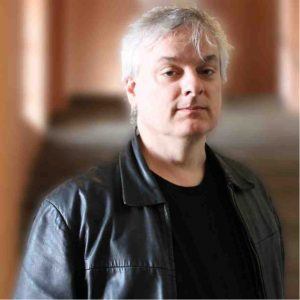 The “Easy Problems” of consciousness have to do with how the brain takes in information, thinks about it, and turns it into action. The “
 The earliest letters are sometimes very funny, as Larkin tries on attitudes. At Oxford he claims to be lumbered with ancient and/or mentally defective tutors; his work appears in magazines but is no good; he is upbraided when he reads for pleasure. He tailors his tone to the recipient: bluff and undeluded for Sydney Larkin (‘Pop’), safely and tenderly domestic for Eva (‘Mop’) and affectionately satirical for his older sister, Kitty. He includes some moody Oxford scenery: ‘the playing fields wait for the games of this afternoon; through the unecstatic street the gowned bicycles are whirling.’ This is pretty sophisticated for an eighteen-year-old – partly a parody of the promised bicycle races in Auden’s ‘Spain’, partly the kind of ‘re
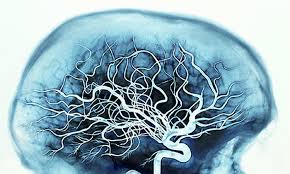 Culture shapes who we are, so it follows that it would also shape our manifestations of stress, mental disorder, emotion. Yet, that also implies a kind of messiness that modern psychology and psychiatry, particularly the American kind, have spent the last 100 years struggling to tidy up.
 It is worth noting