
David Mitchell at The Guardian:
 Aerial is Kate’s third masterpiece, along with The Dreaming and Hounds of Love. What constitutes a “masterpiece” is only established by the ultimate critic, time; but even producing three contenders for the title in a single career puts a songwriter in the most exclusive company. “Bertie” is a madrigal about her young son, whose birth and upbringing accounted in no small part for the 12-year hiatus. By now my wife and I had a small child of our own whose toothy grin was for us, too, “The most truly fantastic smile / I’ve ever seen”. “Mrs Bartolozzi”, surely the only song by a major artist whose lyrics include washing machine onomatopoeia, portrays a housekeeper of a certain age. The drudgery of her life smothers her own memories and desires, and puts me in mind of a 21st-century Miss Kenton from Kazuo Ishiguro’s The Remains of the Day. The song “How to Be Invisible” contains a Macbeth-esque recipe for invisibility that is, Kate-ishly, both quotidian and magical: “Eye of Braille / Hem of Anorak / Stem of Wallflower / Hair of Doormat.” Disc one’s last song is my desert island Kate song: “A Coral Room”. Musically, this ballad for piano and vocal is one of her sparsest. Lyrically, it’s one of her richest, describing an underwater city, dreamy and abandoned and swaying and recalling Debussy’s prelude La Cathédrale Engloutie. The city is deep memory, crawled over by the spider of time, perhaps from the hills of time in “Moments of Pleasure”. Speedboats fly above and planes – perhaps a black Spitfire or two – come crashing down.
more here.
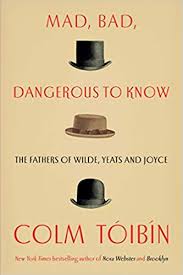 This book is, in its sly way, far more substantial than it might at first seem – more, indeed, than it presents itself as being. Colm Tóibín’s subject is the influence of their fathers on the artistic thought, attitude and writings of three great Irish literary artists: Oscar Wilde,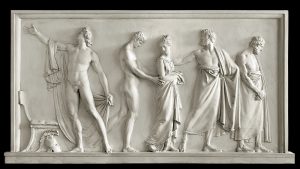
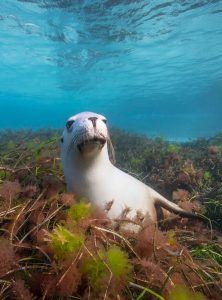 Philip Hamilton, a seasoned underwater photographer, has spent the past five years seeking out the stars of the seas, but also the smaller, lesser-known creatures. In his book, “Call of the Blue”, there are pin-sharp close-ups of a hawksbill turtle and a great white shark – and of a tiny xeno crab and a strange group of Lambert’s worm sea cucumbers. There are also great splashes of colourful reefs and gaudy anemones, and a silvery view into the mouth of a whale shark, the largest fish in the world. Coursing through this visual warmth is an icy current: essays and interviews with scientists, photographers and “ocean guardians” – people who are devoted to protecting the oceans. Though they are clearly fascinated by all things oceanic, the stories they tell are more terrifying than any tiger shark. The waters are warming; as a result, corals are bleaching and dying, leaving creatures of all types homeless and vulnerable. We are catching too many fish and filling the oceans with plastic. “Large marine animals have survived five mass extinctions millions of years ago,” Hamilton writes. “However, many of them are now at the brink of disappearing for good.”
 In the current political climate of populism and xenophobia, it is tempting to simply close the door and withdraw from public affairs. Indeed, there is a pervading sense that there is no alternative to our polarised politics, neoliberal capitalism and corruption. Pleas for solidarity among nation-states seem to be easily overshadowed by resentment towards foreigners and nostalgia for lost national glory. And yet, it is precisely such retreat into the private realm that Hannah Arendt warned against during the 20th century. It is during moments of political crisis that individual potential for new beginnings matters most; it is in times of political division that we are faced with the task of cooperating and finding a way to share our fragile world.
  An appalling statistic appears toward the end of “No One at the Wheel,” Samuel Schwartz’s valuable primer on self-driving cars: In the century since the automobile arrived on the scene, 70 million people have been killed by it, and four billion injured.
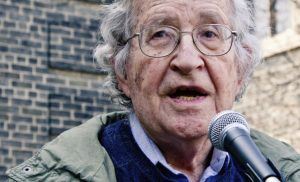 As a scientist, Chomsky always locates the question of rational choice at the centre of any debate about issues of real public interest. That is not to say, though, that he is concerned with rationality alone. Far from it, in fact. Chomsky has written extensively about how a ‘rational’ debate can be so constructed as to completely undermine – indeed, subvert – the irreducible moral values implicit in a choice.
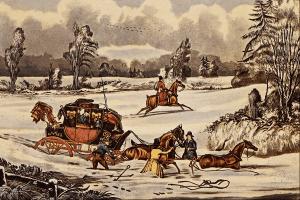 No dignity is perfect which does not at some point ally itself with the mysterious. The connexion of the mail with the state and the executive government—a connexion obvious, but yet not strictly defined—gave to the whole mail establishment an official grandeur which did us service on the roads, and invested us with seasonable terrors. Not the less impressive were those terrors because their legal limits were imperfectly ascertained. Look at those turnpike gates: with what deferential hurry, with what an obedient start, they fly open at our approach! Look at that long line of carts and carters ahead, audaciously usurping the very crest of the road. Ah! traitors, they do not hear us as yet; but, as soon as the dreadful blast of our horn reaches them with proclamation of our approach, see with what frenzy of trepidation they fly to their horses’ heads, and deprecate our wrath by the precipitation of their crane-neck quarterings. Treason they feel to be their crime; each individual carter feels himself under the ban of confiscation and attainder; his blood is attainted through six generations; and nothing is wanting but the headsman and his axe, the block and the sawdust, to close up the vista of his horrors. What! shall it be within benefit of clergy to delay the king’s message on the high road?—to interrupt the great respirations, ebb and flood, systole and diastole, of the national intercourse?—to endanger the safety of tidings running day and night between all nations and languages?
 China’s rise as a tech powerhouse has dovetailed with Silicon Valley’s growing, and often vividly expressed, distrust toward democracy itself. Always steeped in libertarian pique—not long ago, technologists expressed hope for floating ad-hoc nation-states or, as Larry Page
 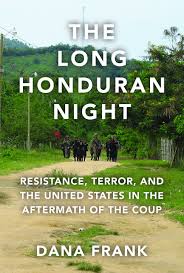 In her new book,
 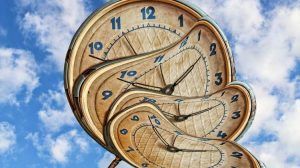 In 2015, when cognitive neuroscientist Devin Terhune was hit by a car, the impact took less than a second, but he felt it to be much longer. “I was riding [my bike] very fast, and so when I hit the car I went flying back around 15 feet or more,” he says. “Objectively, I’m sure the whole thing probably unfolded in less than a second but I experienced flying through the air as lasting at least 5 seconds—it felt very slow.” Time stretched out from milliseconds to seconds and Terhune lived first-hand something we experience in less dramatic ways each day. We measure time in set amounts— seconds, minutes, and hours. But the way time feels is more slippery. Ten minutes while you’re bored is an eternity and those same ten minutes with your best friend disappear like nothing. This flexibility in perceiving time is only enhanced when psychedelic drugs enter the mix. A
 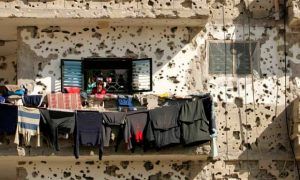 There has been nothing so dramatic as a “war” in the Gaza Strip since 2014, but the Israeli military has nonetheless killed more than 200 Palestinians there this year. On a single Friday in March, snipers took the lives of 52 protesters. Most weeks, the casualties dribble in more slowly: two or three or seven are shot while demonstrating along the fence that confines them; or, unsuspecting, they are blown apart by missiles fired from drones and F16s. Only when the toll is particularly high, or an unusual proportion of the dead are children, do the international media take notice. Then there is the siege that Israel has imposed on the territory since Hamas took power in 2007 and the many deaths that this has more obliquely caused – along with the shortages of nearly all goods necessary for survival, regular power outages and lack of drinking water. Most Gazans are unable to travel even for emergency medical care outside the narrow boundaries of the Strip, generating a sense of suffocation and despair. You may have skimmed an article reporting that the UN predicted, in 2015, that the privations of the
  Many writers and an increasingly sizable cadre of readers admire John Williams’s novel, Stoner, without reservation. Stoner itself is not about drugs; rather, it evokes a character both monumental and flinty. A third-person account of a farm boy who becomes, laboriously, a college professor of English, it celebrates in measured prose the integrity of one whose name (as John Keats wrote for his own epitaph) “was writ in water.”
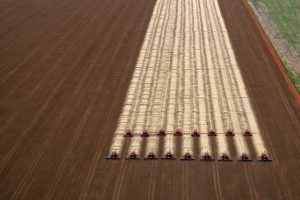 If the world hopes to make meaningful progress on climate change, it won’t be enough for cars and factories to get cleaner. Our cows and wheat fields will have to become radically more efficient, too.
 Despite its obvious significance, Brexit is a mere sideshow when compared to the muffled but more fundamental disintegration taking place across the European Union. The political center is not holding in the key member states. Nationalism is on the march everywhere. Even pro-European governments have, in practice, abandoned all blueprints for genuine consolidation and are increasingly drifting toward re-nationalization of banking systems, public debt, and social policy.
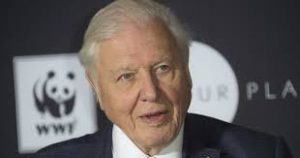 You’re probably used to hearing Sir David Attenborough’s sonorous, British voice describe the miracles of
 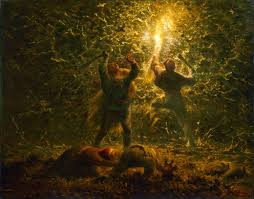 This expungement was part of a global shift in the way the night sky would come to be viewed, not as particular to the individual cultures in whose lives they played both practical and mythical parts but rather, as the historian Elizabeth Green Musselman writes, a “celestial blanket [that] covered the globe in one fabric.” The blanket of stars heralded “a one-world empire,” and those with the telescopes named each point of light and the constellations they formed when strung together, overlaying the vast kaleidoscope of names and stories that the heavenly bodies held for peoples in every tiny portion of the globe. The International Astronomical Union would eventually standardize the constellations with official names in order to avoid what one modern astronomer called “a chaotic situation.”