
Rachel Cooke in The Guardian:
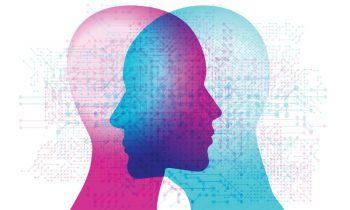 What do little girls like? As a child, I preferred Lego to dolls and, if asked what I wanted to be when I grew up, was apt to reply: a detective, or a reporter. My parents were scientists, so our household was in some ways less obviously gendered than most (though I went on to do an arts degree, two of my sisters read biochemistry and maths at university). Nevertheless, it was always in the air: the way girls should be, and therefore are. By the time I was a teenager, I’d learned to feel quite odd about certain of my tastes and aptitudes. I’d also internalised various stereotypes. I took great pride, for instance, in my map-reading – not because map-reading is intrinsically difficult, but because some small part of me accepted that women are not supposed to be any good at it.
No wonder, then, that reading Gina Rippon’s careful and prolonged demolition of the myth of the “female brain” left me with a powerful sense of relief. Here, at last, are things I’ve long felt instinctively to be true, presented as demonstrable facts. Professor Rippon is a researcher in the field of cognitive neuroscience at the Aston Brain Centre at Aston University, Birmingham, and an advocate for initiatives to mitigate the under-representation of women in Stem subjects. In The Gendered Brain, she shows how we first arrived at the conviction that the female brain is “different” (and thus inferior), how this misperception persists into the 21st century, and how the latest breakthroughs in neuroscience can, and should, dispel such fallacies for ever. It is a highly accessible book. It’s also an important one. Quite apart from how interesting the science contained within it is, it has the power – if only people would read it – to do vastly more for gender equality than any number of feminist “manifestos”.
More here.
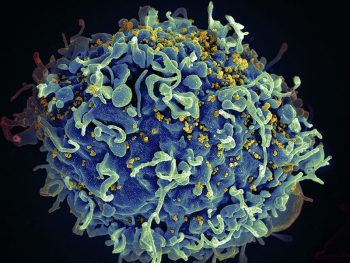 A person with HIV seems to be free of the virus after receiving a stem-cell transplant that replaced their white blood cells with HIV-resistant versions. The patient is only the second person ever reported to have been cleared of the virus using this method. But researchers warn that it is too early to say that they have been cured. The patient — whose identity hasn’t been disclosed — was able to stop taking antiretroviral drugs, with no sign of the virus returning 18 months later. The stem-cell technique was
 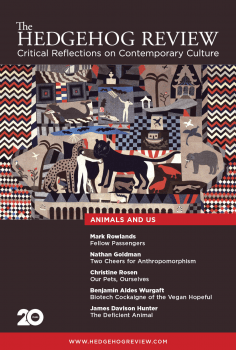 Imagine you are on a bus ride to an unknown destination. The road is little more than a dirt track, littered with potholes, and you are constantly bounced around in your seat. There is no air conditioning. Sweat is dripping down your back and you are starting to smell. The same is true of your fellow travelers. Some of them have brought livestock and other animals on board. Kids are screaming; the bathrooms are blocked and overflowing. It is clear that no one on the bus has any idea where you are going, and only the haziest idea of where you are coming from. Nevertheless, all around you people are making up stories—ungrounded in logic and untethered to evidence—about where they are going to alight and what their prospects will be once they get there.
 Quantum mechanics is our best theory of how reality works at a fundamental level, yet physicists still can’t agree on what the theory actually says. At the heart of the puzzle is the “measurement problem”: what actually happens when we observe a quantum system, and why do we apparently need separate rules when it happens? David Albert is one of the leading figures in the foundations of quantum mechanics today, and we discuss the measurement problem and why it’s so puzzling. Then we dive into the Many-Worlds version of quantum mechanics, which is my favorite (as I explain in my forthcoming book
  Citizens of
  But beyond the pleasure of Dreyer’s prose and authorial tone, I think there is something else at play with the popularity of his book. To put it as simply as possible, the man cares, and we need people who care right now. Dreyer’s English is, beyond a freakin’ style guide, the document of a serious person’s working life. At sixty, Dreyer is at the top of his game and profession, an honorable profession he has worked diligently at for more than three decades. To write a book is to care deeply and in a sustained way about something; to copyedit a book is to care deeply and in a sustained way about someone else’s deep and sustained caring. And to have copyedited books for one’s adult life is to have spent one’s adult life caring about other people’s words and the English language. As he writes in the introduction:
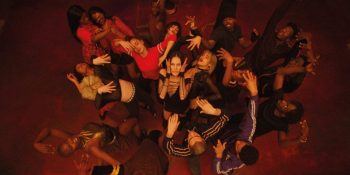 GASPAR NOÉ’S CLIMAX is an encyclopedia of ways in which the human body can bend and break, a sailor’s knot guide of the contortions possible with four limbs, a trunk, and a head, skulls seemingly empty here of thoughts other than sex and death. Set in an isolated school somewhere outside of Paris where a troupe of hip-hop dancers have assembled for intensive rehearsals before an impending American tour, the movie unravels in something like real-time as, cutting loose at the end of a day’s work, they dip into a punchbowl of sangria before discovering that one of their group has spiked it with LSD, precipitating a collective freak-out.

 High in the mountains of Central America lives a little known creature called Alston’s singing mouse. This rodent, which spends its life scuttling around the floor of the cloud forest, may not seem like it has much to tell us about ourselves. But the mouse produces remarkable songs, and researchers
  The man for whom the word “Emergency” must have been invented (“serious, unexpected, and often dangerous situation requiring immediate action”) pulled the pin out of yet another hand grenade.
 Just about everyone who visits the famous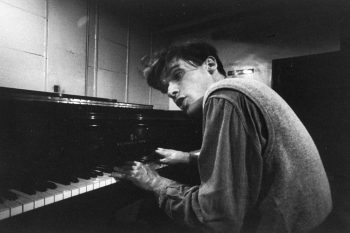
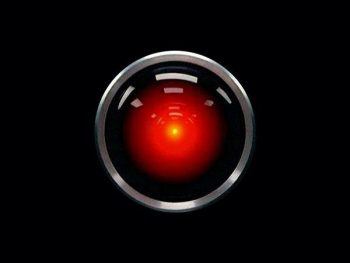 My seventy-something year old uncle, who still uses a flip phone, was talking to me a while ago about self-driving cars. He was adamant that he didn’t want to put his fate in the hands of a computer, he didn’t trust them. My question to him was “but you trust other people in cars?” Because self-driving cars don’t have to be 100% accurate, they just have to be better than people, and they already are. People get drunk, they get tired, they’re distracted, they’re looking down at their phones. Computers won’t do any of those things. And yet my uncle couldn’t be persuaded. He fundamentally doesn’t trust computers. And of course, he’s not alone. More and more of our lives have highly automated elements to them,
  The Anna Karenina Fix
 In the Third Essay of On the Genealogy of Morality, Nietzsche levels a powerful attack on the modern Platonistic conception of mind and nature, urging us to reject such “contradictory concepts” as “knowledge in itself,” or the idea of “an eye turned in no particular direction, in which the active and interpreting forces, through which alone seeing becomes seeing something, are supposed to be lacking.” More recently, Donald Davidson’s attack on the dualism of conceptual scheme and empirical content, and thus of belief and meaning, requires us to see inquiry into how things are as essentially interpretative.