LETTER TO GOD
The dogs were tired and bewildered,
stunned by the ways they’d been treated
by men—yelled at, kicked around, left unfed
in the cold and the rain. Not to mention
the usual predations of time and illness:
cold creak of the hips, tumor and clouded eye,
ears that ceased to help at all …
What could they do,
To whom might they appeal?
The wisest among them
—that was his reputation—
suggested that a letter be drafted to God;
only by appeal to a higher authority
might their plight be considered.
But once the questions were written,
who would carry it? Who knew how
to imagine the way?
The ablest was chosen—a retriever,
he could walk for days,
nearly incapable of flagging,
and his entire being knew the imperative,
to carry. But how will you carry it,
they asked? In my mouth. No, they cried,
you’ll drop it every time you bark.
And then the wisest made this plan:
they’d roll their plea into a scroll,
tightly, and their hero would open
his legs, and lift his tail, and carry
the missive inside him,
where he was sure to keep it
until he reached the gates of paradise.
And off he trotted, head high, and tail,
only a slight delicacy in his walk
betraying discomfort, into the fields
with their blonde grasses, upstream,
off toward the border of the world.
Do I need to tell you he never returned?
Why Lord, the letter read, did you put
a wicked clockspring in our bellies?
Our eyes glaze, our old hips refuse
a step, we can’t even lift a leg
to mark a trail. Why given these indignities
are we further subject to the harrowing
of men, we who stand before them
all expectation, why are we met with blows,
or worse? In every town of this world
you’ve given us, in pen and shelter,
in cellar and alley and hole in the dirt,
we your children await your reply.
Therefore, when each dog meets a stranger,
it’s necessary to sniff beneath the tail:
perhaps, this time, this is the returning messenger;
it’s still possible a reply might reach them.
by Mark Doty
from School of the Arts
Harper Collins, 2005

 You know a book has entered your bloodstream when the ground beneath your feet, once viewed as bedrock, suddenly becomes a roof to unknown worlds below. The British writer
 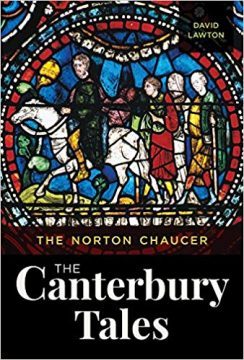 Today we’re going to discuss the Canterbury Tales. You’ve just written a biography of Geoffrey Chaucer. What would someone learn from your biography about Chaucer that they might not have known before?
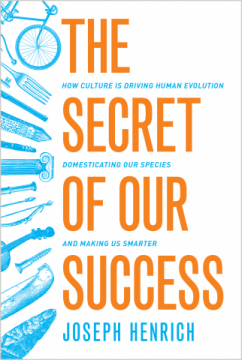 “Culture is the secret of humanity’s success” sounds like the most vapid possible thesis.
 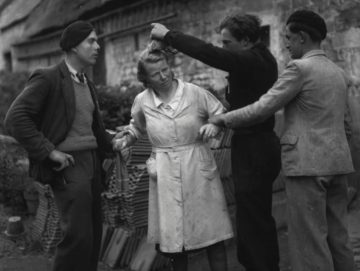 They called it the épuration sauvage, the wild purge, because it was spontaneous and unofficial. But, yes, it was savage, too. In the weeks and months following the
 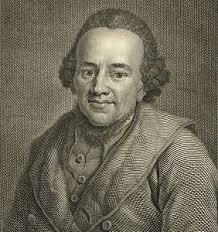 Mendelssohn’s Wiki page says his grave has been reconstructed. Not surprising: grand historical narratives are everywhere legible in Berlin’s built environment. The Jewish cemetery where he’s buried became part of East Berlin after the war, falling into even further disrepair after the Nazi years. His grave, as well as many others, was only reconstructed in the 2000s.
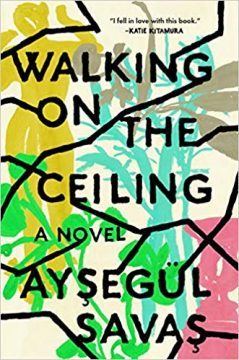 In a 2017 essay for the magazine Fare, Ayşegül Savaş described a game she played as a high school student in Istanbul. She and a friend strapped on backpacks and pretended to be foreigners in Istanbul’s tourist quarter. The purpose of “the tourist game,” Savaş remembered, “was to talk to people in English of varying accents, throwing in a handful of mispronounced Turkish words.” They asked locals for directions to Istanbul landmarks, had their pictures taken in front of palaces and felt “overjoyed when our identities were not revealed, all the more if anyone showed an interest in us and asked where we were from.” The game, Savaş explained, “made us feel like we were in control while giving us the freedom to explore as we pleased; our city took on new wonder when viewed from the imaginary foreign gaze.”
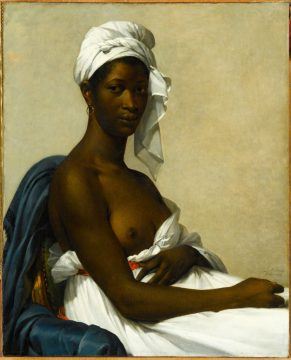 For a long time, and even very recently, artworks with black models—or by black artists—were collected sparingly by museums, in part because they weren’t considered to fit into any standard art-historical narratives. Between 2008 and 2018, for instance, only 2.4 percent of purchases and donations in thirty of the best-known American museums were works by African American artists, according to an analysis by In Other Words and ARTNews. Only 7.6 percent of exhibitions concerned African American artists. From Modernism through postwar Abstract Expressionism, work by black painters still represented a catch-22: they were either too much about the black experience and thus didn’t seem to fit into the European timeline of art history, or they were too reliant on the abstract when the few museums that did collect black artists wanted figurative works that represented “the black experience.” “It’s pretty hard to explain by any other means than to say there was an actual, pretty systemic overlooking of this kind of work,” said Ann Temkin, the curator of painting and sculpture at the Museum of Modern Art in New York, in a recent
  If scientists want to simulate a brain that can match human intelligence, let alone eclipse it, they may have to start with better building blocks—computer chips inspired by our brains. So-called neuromorphic chips replicate the architecture of the brain—that is, they talk to each other using “neuronal spikes” akin to a neuron’s action potential. This spiking behavior allows the chips to consume very little power and remain power-efficient even when tiled together into very large-scale systems. “The biggest advantage in my mind is scalability,” says
 The question of what kinds of physical systems are conscious “is one of the deepest,
  Granted, the U.S. was by this point pretty much dead to me, as I had determined from periodic visits that it was in the interest of my sanity to avoid the country altogether. Frida Kahlo once observed: “I find that Americans completely lack sensibility and good taste. They are boring, and they all have faces like unbaked rolls.”And yet this, perhaps, is the least of the problems.
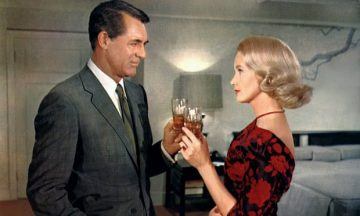 Mistrust all enterprises that require new clothes,” says EM Forster in A Room With a View, adapting a quote from
  In addition to resources, the advocates of cultured meat have a philosophy ready to hand. Many of them are self-described utilitarians, readers of the works of philosopher Peter Singer, in particular his 1975 book
 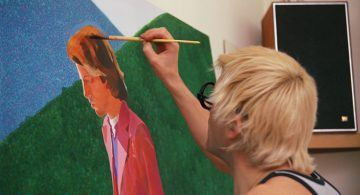 The painting made headlines last November for the price it took at auction, though this datum doesn’t interest me. More significant is the return of a too-little-revived film that documents Portrait of an Artist’s charged iterations and the circumstances surrounding them. After watching A Bigger Splash a few weeks before its premiere at Cannes in 1974, Hockney said he was “utterly shattered” by it, his anguish spiked further by a film-director friend who favorably—if somewhat incongruously—likened it to “a real Sunday Bloody Sunday,” John Schlesinger’s astute, London-set, big-studio-backed 1971 drama about a love triangle (two men, one woman). More felicitous comparisons might include Wakefield Poole’s Boys in the Sand (1971), a gay XXX landmark in which a Fire Island natatorium becomes a pleasure palace, not to mention Robert Kramer’s Milestones (1975), an epic dirge on the failed dreams of the New Left in the US, which was also devised as a docufiction. (Hazan and Mingay would return to this genre with 1980’s Rude Boy, centering on the Clash.) But as for movies about making (art) and unmaking (a relationship), I can think of none better, or more sinuous—as serpentine as Hockney’s enunciation of a favorite descriptor.
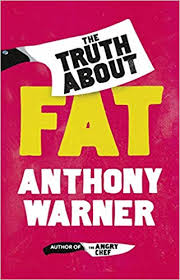 Written in the sharp and irate debunking-of-bad-science mode that has become his stock-in-trade, Warner’s book The Truth About Fat reveals that many of the most widely accepted views on the causes of obesity are simplistic, scientifically unsound or immoral. The book is a thought-provoking corrective to the idea that obesity is simply the result of eating too much and moving too little, which puts the blame squarely on the obese. With verve, mastery of the available data, and a gripping narrative, Warner demonstrates that obesity is a highly complicated problem that requires intricate strategies if it is to be addressed effectively. Books that take a complexity-theory approach are not normally an easy sell, given that they refuse to provide neat solutions to pressing problems, and Warner’s certainly pulls the rug of comforting certainties from under the reader’s feet. Almost all existing strategies in the fight against obesity are flawed and inefficient at best, he says, and may even be making things worse.