
Samanth Subramanian in The New Yorker:
 Nine months can make a person, or remake her. In October, 1997, Arundhati Roy won the Booker Prize for her first novel, “The God of Small Things.” India had just turned fifty, and the country needed symbols to celebrate itself. Roy became one of them. Then, in July of 1998, she published an essay about another such symbol: a series of five nuclear-bomb tests conducted by the government in the sands of Rajasthan. The essay, which eviscerated India’s nuclear policy for placing the lives of millions in danger, wasn’t so much written as breathed out in a stream of fire. Roy’s fall from darling to dissident was swift, and her landing rough. In India, she never attained the heights of adulation again.
Not that she sought them. Through the decades since, Roy has continued to produce incendiary essays, and a new book, “My Seditious Heart,” collects them in a volume that spans nearly nine hundred pages. The book opens with her piece from 1998, “The End of Imagination,” but India’s nuclear tests were not Roy’s first infuriation. In fact, in 1994—after she had graduated from architecture school, and around the time that she was acting in indie films, teaching aerobics, and working on her novel—she wrote two livid articles about a Bollywood movie’s unscrupulous depiction of the rape of a real, living woman. That tone has never faltered. Every one of the essays in “My Seditious Heart” was composed in the key of rage.
More here.
 Why organisms began having sex, rather than simply reproducing asexually as life did for billions of years—and still does, in the case of single-celled organisms and some plants and fungi—is a bit of a mystery. Sexual reproduction evolved around a billion years ago or more, despite the additional energy required and the seeming hinderance of needing to find a suitable mate. Prevailing theories hold that sex became the dominant form of reproduction due to the benefits of greater genetic diversity, allowing offspring to adapt to changing environments and keeping species one step ahead of parasites that evolved to plague the parents.
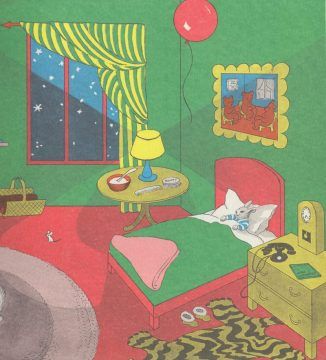 Something unsettling resides at the heart of the most beloved books for very young children—that is, the literature for illiterates. This note is a belated attempt to grapple with the horror of infinite regression as it manifests in certain of these works, and perhaps to sound the alarm for parent-caretaker voice-over providers who are too sleep-deprived to notice what’s actually going on.
 In 1990, using the name Smog, the singer and songwriter Bill Callahan released his début album, “Sewn to the Sky.” It’s a discordant, inscrutable, and periodically frustrating collection of mostly instrumental, low-fidelity noise, and contains few hints of the lucid and tender folk music that he would be making almost thirty years later. In 1991, Callahan signed with Drag City, a Chicago-based independent record label that specializes in oddball rock and roll. He began collaborating with the producers Jim O’Rourke, who was later a member of
  There is no concise answer to the question ‘what is Bauhaus?’ First it was a school with a specific curriculum in art and design. Later, it became a style and a movement and a look (geometric, elegant, spare, modern) that could be found to greater and lesser degrees in art, craft and architecture all over the world. But in retrospect, I think it is fair to say that Bauhaus was always an attempt to fuse the craft and aesthetic ideas of a pre-modern age with the realities of 20th century industry and technology. Bauhaus wanted to find out how materials like concrete and steel and glass could be beautiful and could be shaped and designed in such a way as to serve the aesthetic needs of humankind. In this, Bauhaus was very much in the spirit of the movements that preceded it, like Arts and Crafts and Art Nouveau. But Bauhaus went further than any of those movements in its embrace of what we now think of as the Modern with a big ‘M’. Some would say it went too far.
 Israeli physicists think they have confirmed one of the late Stephen Hawking’s most famous predictions by creating the sonic equivalent of a black hole out of an exotic superfluid of ultra-cold atoms. Jeff Steinhauer and colleagues at the Israel Institute of Technology (Technion) described these intriguing experimental results in
  The debate over meritocracy has been intensifying. Is it a good thing? A bad thing? Do we want it or don’t we?
 Editors’ note: This is the third installment in a new series, “Op-Eds From the Future,” in which science fiction authors, futurists, philosophers and scientists write Op-Eds that they imagine we might read 10, 20 or even 100 years from now. The challenges they predict are imaginary — for now — but their arguments illuminate the urgent questions of today and prepare us for tomorrow. The opinion piece below is a work of fiction.
 It’s a source of great irony and outrage that the Turkish authorities have decided to investigate
  About a year ago, some—but not all—of the mice in
  Unlike talk of, say, badgers or ermine, talk of beavers seems always to be the overture to a joke. So powerful is the infection of the cloud of its strange humor that the beaver seems at least in part to blame for the widespread habit, among certain unkind Americans, of smirking at the mere mention of Canada. Nor is it the vulgar euphemism, common in North American English and immortalized in Les Claypool’s heartfelt ode, “
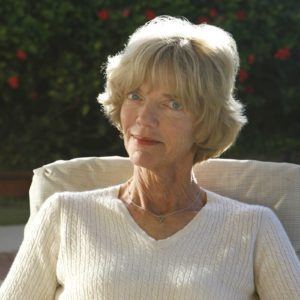 It’s fun to spend time thinking about how other people should behave, but fortunately we also have an inner voice that keeps offering opinions about how we should behave ourselves: our conscience. Where did that come from? Today’s guest, Patricia Churchland, is a philosopher and neuroscientist, one of the founders of the subfield of “neurophilosophy.” We dig into the neuroscience of it all, especially how neurochemicals like
  Noam Chomsky: There have been changes, even before the recent shift you mention. Both parties shifted to the right during the neoliberal years: the mainstream Democrats became something like the former moderate Republicans, and the Republicans drifted virtually off the spectrum. There’s merit, I think, in the observation by Thomas Mann and Norman Ornstein that increasingly since the Newt Gingrich years—and strikingly in Mitch McConnell’s Senate—the Republican Party has become a “radical insurgency” that is largely abandoning normal parliamentary politics. That shift—which predates Donald Trump—has created a substantial gap between the two parties. In the media it’s often called “polarization,” but that’s hardly an accurate description.
 The life and career of the gifted Glaswegian writer Catherine Carswell was marked by such alarming and recurrent notoriety that her present obscurity is baffling. In 1908, still in her twenties and working as a newspaper critic, Carswell made headlines when a judge ruled that her husband, who suffered from murderous paranoid delusions, was of unsound mind at the time of their wedding. Although the couple had a daughter, Carswell got the marriage annulment she’d fought for and an enduring legal precedent was set. In 1930, she became a pariah in Scotland thanks to her sexually frank biography of national poet-hero Robert Burns, which offended zealous keepers of the Burns myth. One reader saw fit to send the author a letter containing a bullet, with the suggestion that she “leave the world a better, brighter, cleaner place.” Then, in 1932, Carswell’s biography of her friend D.H. Lawrence, The Savage Pilgrimage, was sensationally withdrawn from stores amid accusations of libel—not from the subject, who died in 1930, but from John Middleton Murry, the writer and critic. Murry, Lawrence’s posthumous biographer and the widower of Katherine Mansfield, had a tangled and volatile history with the late novelist and his wife, Frieda. An angry Lawrence once told Murry he was “an obscene bug sucking my life away.”