
Joe Moran at The Guardian:
 Each chapter explodes a common myth about language. Shariatmadari begins with the most common myth: that standards of English are declining. This is a centuries-old lament for which, he points out, there has never been any evidence. Older people buy into the myth because young people, who are more mobile and have wider social networks, are innovators in language as in other walks of life. Their habit of saying “aks” instead of “ask”, for instance, is a perfectly respectable example of metathesis, a natural linguistic process where the sounds in words swap round. (The word “wasp” used to be “waps” and “horse” used to be “hros”.) Youth is the driver of linguistic change. This means that older people feel linguistic alienation even as they control the institutions – universities, publishers, newspapers, broadcasters – that define standard English.
Another myth Shariatmadari dismantles is that foreign languages are full of untranslatable words. This misconception serves to exoticise other nationalities and cultures, making them sound quaint or bizarre.
more here.
 Katia Moskvitch in Quanta:
 Thomas Meaney in The American Historical Review:
 Quinn Slobodian and William Callison in Dissent:
 Nikole Hannah-Jones in the NYT:
 One of the occupational and intellectual hazards of being a historian is that current events often seem far less new to oneself than they do to others. Recently a leftish liberal friend told me that the United States under the Donald Trump had “become a lethal society.” My friend cited the neofascist Trump’s: horrible family separations and concentration camps on the border; openly white-nationalist assaults on four progressive nonwhite and female Congresswomen; real and threatened roundups of undocumented immigrants; fascist-style and hate-filled “Make America Great Again” rallies; encouragement of white supremacist terrorism; alliance with right-wing evangelical Christian fascists.
 So god says
  Noam Chomsky: The technical work itself is in principle quite separate from personal engagements in other areas. There are no logical connections, though there are some more subtle and historical ones that I’ve occasionally discussed (as have others) and that might be of some significance.
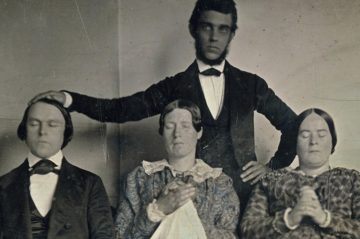 ‘Bunk’ means baloney, hooey, bullshit. Bunk isn’t just a lie, it’s a manipulative lie, the sort of thing a con man might try to get you to believe in order to gain control of your mind and your bank account. Bunk, then, is the tool of social parasites, and the word ‘debunk’ carries with it the expectation of clearing out something that is foreign to the healthy organism. Just as you can deworm a puppy, you can debunk a religious practice, a pyramid scheme, a quack cure. Get rid of the nonsense, and the polity – just like the puppy – will fare better. Con men will be deprived of their innocent marks, and the world will take one more step in the direction of modernity.
 Iftikhar was my favourite taxi driver while I lived in London. An elderly Muslim from Lahore, he spoke in lilting, lyrical Punjabi typical of that part of the world. In June 1999, as India and Pakistan fought the Kargil war, he was driving me to Heathrow when the conversation turned to the conflict. I asked what he thought. ‘Doctor sahib‘, he said, ‘when my mother had me, she was suffering from tuberculosis. She was weak and her milk had dried up. Her nextdoor neighbour was a Sikh woman who had also given birth. My mother asked her to breastfeed me. When you ask me about the war, what can I say? I was born of one mother’s womb; another mother suckled me. How can I choose?’
 Tokyo is a city of darkness, a city of light. Each melts into the other. At its center, the city of light blacks out, and at bridges and crossroads, at the margins around train stations, the city of darkness shines, gleaming.
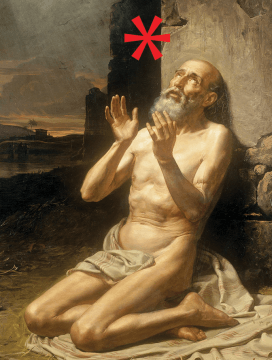
 But how can we think of YHWH as indicating a path away from injustice and oppression? One way we might try to understand Amos’s sense of YHWH in the central passages of the chiasmus is with reference to the notion of wonder. Abraham Joshua Heschel, a prominent twentieth-century theologian, rooted his theology in the teaching of the prophets and particularly in his observation that “to the prophets wonder is a form of thinking … it is an attitude that never ceases.” Importantly, for Heschel, wonder is a real-world experience—one that is latent in every person—resulting from even the most mundane aspects of life. “We do not come upon it only at the climax of thinking or in observing strange, extraordinary facts but in the startling fact that there are facts at all: being, the universe, the unfolding of time,” he writes in God in Search of Man. “We may face it at every turn, in a grain of sand, in an atom, as well as in the stellar space.”
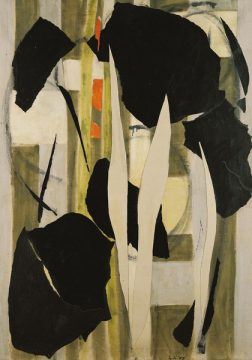 The Prophecy pictures were made in tragic circumstances. By 1956 Krasner’s marriage to Jackson Pollock was all but broken. In August that year, while Krasner was in Europe, Pollock’s Oldsmobile came off the road at speed, killing himself and Edith Metzger, a friend of his lover, Ruth Kligman. Kligman survived the crash. The paintings Krasner made in response to the horror – and this is almost always her strength – are deeply engaged with other people’s imagery. Fighting with De Kooning’s Woman, as she does throughout – fighting and feeding on his colour, the scale and shape of his Cubist body parts, his bad faith fascination with Marilyn Monroe gorgeousness (bad faith because his irony is so obviously an alibi for gloating) – is her way of discovering what ‘woman’, that terrifying abstraction, meant for her. Out of the engagement comes the originality. Dripping paint, for example, was already a tired Ab Ex trademark by 1956, by no means De Kooning’s exclusive property. But no one had made dripped paint so unlovely, so impatient and passionless, as Krasner did the pinks and whites in Birth. (The tone of the title is undecidable.) For the fight with De Kooning to end in victory, other painters’ weaponry had to be taken out of the closet, some of it distinctly old-fashioned. Krasner was never up to date. Three in Two, for example, evokes explicitly, and not just in its title, the savage Jungian splitting and swapping of genders that Pollock had gone in for a decade earlier, during the time of Two and Male and Female. Behind those paintings lay Picasso, specifically Les Demoiselles d’Avignon. Krasner was monstrously confident that she could mobilise this big machinery without in the least repeating its moves – or rather, that she could use the moves to deliver an entirely new, and dreadful, sense of closeness and inhumanity. Embrace, for example, is Les Demoiselles churned into viscera.
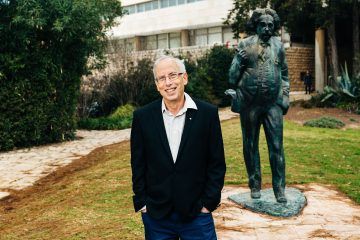
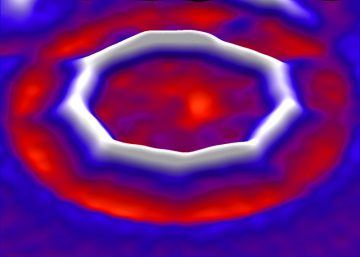 Long after most chemists had given up trying, a team of researchers has synthesized the first ring-shaped molecule of pure carbon — a circle of 18 atoms. The chemists started with a triangular molecule of carbon and oxygen, which they manipulated with electric currents to create the carbon-18 ring. Initial studies of the properties of the molecule, called a cyclocarbon, suggest that it acts as a semiconductor, which could make similar straight carbon chains useful as molecular-scale electronic components. It is an “absolutely stunning work” that opens up a new field of investigation, says Yoshito Tobe, a chemist at Osaka University in Japan. “Many scientists, including myself, have tried to capture cyclocarbons and determine their molecular structures, but in vain,” Tobe says. The results appear in Science
 I concur that Trump, as surely as Lee Atwater, marshals racist tropes. But I doubt the last claim: “Instrumental racists” believe that voters will perhaps respond only to racism. And I doubt that voters, in fact, respond only to racism. Something distinct and deeper is at work. This deeper force explains nearly all of Trump’s most odious and irresponsible comments, not just the racist ones. It helps explain why so many conservatives and Republicans were caught off guard by Trump’s rise and the resonance of his bigotry. And it helps clarify what the left sees and doesn’t see about racism. Once leftists understand it, they will find it easier to defeat the identitarian right.
 There are many mysteries surrounding quantum mechanics. To me, the biggest mysteries are why physicists haven’t yet agreed on a complete understanding of the theory, and even more why they mostly seem content not to try. This puzzling attitude has historical roots that go back to the Bohr-Einstein debates. Adam Becker, in his book What Is Real?, looks at this history, and discusses how physicists have shied away from the foundations of quantum mechanics in the subsequent years. We discuss why this has been the case, and talk about some of the stubborn iconoclasts who insisted on thinking about it anyway.